Mehmet Kurtkaya

17.7K posts

Mehmet Kurtkaya

Mehmet Kurtkaya

@mkurtkaya

See link for Systemic Human Rights violations I faced in Turkey and my UN submission

Katılım Mayıs 2010
240 Takip Edilen450 Takipçiler
Sabitlenmiş Tweet
Mehmet Kurtkaya
Mehmet Kurtkaya@mkurtkaya·
Unfortunately I've had to return to Turkey because I have no money but only debt. And the perils continue: Turkish state related criminals, our condemned building that can collapse in an earthquake and being targeted by other apartment owners because I am the only one that didn't go along with the building report cover up.
Mehmet Kurtkaya@mkurtkaya

I don't want to go back to Turkey. The building we lived in is uninhabitable per official report yet Turkish officials don't evacuate. I can't sell my share in the apartment legally while the cover up continues. Was forced to endure earthquakes knowing the building could collapse

English
1
1
0
269
Mehmet Kurtkaya
Mehmet Kurtkaya@mkurtkaya·
@ngahpham I had watched Vietnam-Malaysia match on TV with Vietnamese people while in Vietnam. They won 3-1, they were good.
English
0
0
1
46
Mehmet Kurtkaya
Mehmet Kurtkaya@mkurtkaya·
@rahowaii Your example is wrong, the guy writing the tweet is half wrong, half right. Yes, Finns have paternal Siberian ydna N and their migration is relatively recent.
English
0
0
0
151
Saturn ♦️
Saturn ♦️@rahowaii·
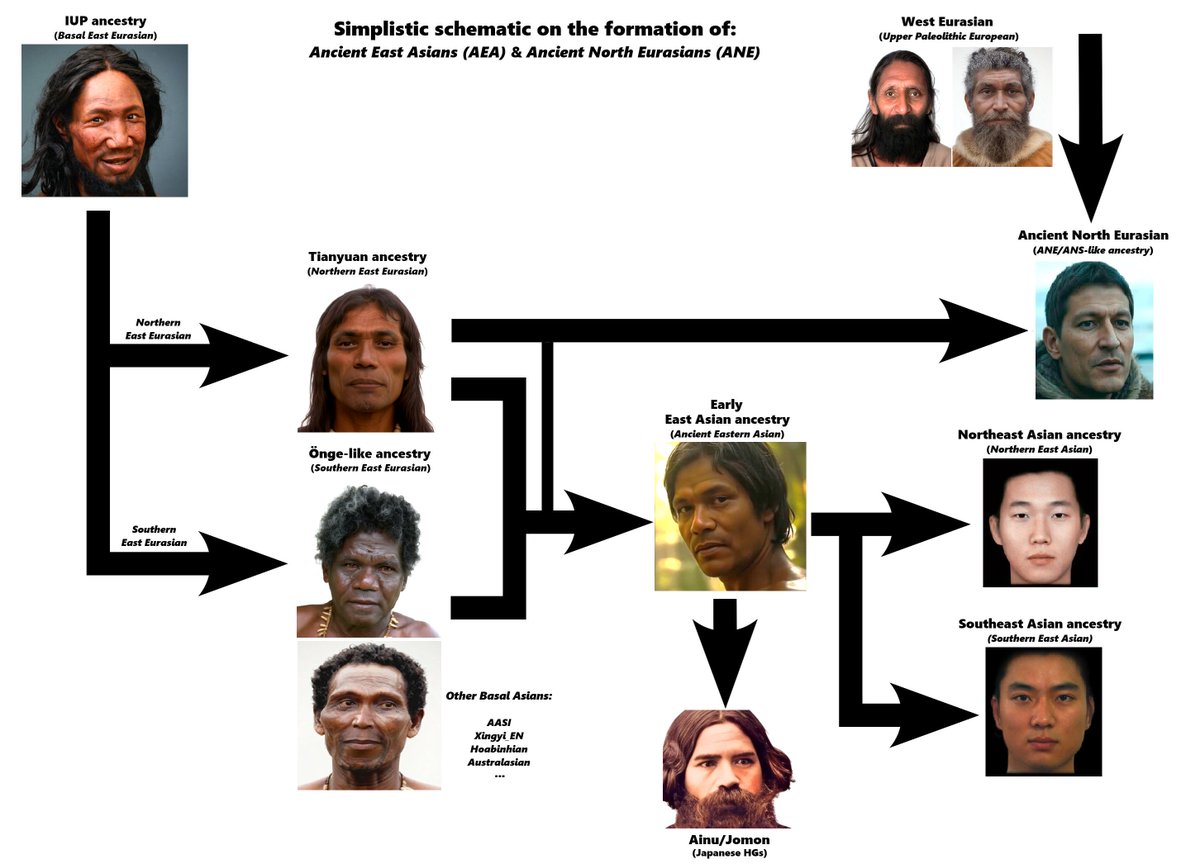
“Y-chromosome-wise, they could pass for Siberian reindeer herders of Koryak walrus hunters” That statement is SO meaningless because that’s not how y haplogroups work 😂😂😂 Y-chromosome wise, italians 🇮🇹 could pass for quapa 🇨🇳🇨🇳 mammoth hunters from ice-age Siberia! WOAHHH
Saturn ♦️ tweet media
Lethe scholar@Lethescholar

Not specifically captured on the map, but the low Uralic admixture among Finns is remarkable when u consider that, Y-chromosome-wise, they could pass for Siberian reindeer herders or Koryak walrus hunters. Wonder what historical processes produced such a genetic structure… (+)

English
3
1
91
7K
Mehmet Kurtkaya
Mehmet Kurtkaya@mkurtkaya·
@Streamstraw @RealHellenist Exactly right. What people usually miss is that even a small ruling population migration may change the language of the populace. See Hittites replacing Hattis. Give more examples @grok
English
1
1
0
153
Nuno Ribeiro Palha
Nuno Ribeiro Palha@Streamstraw·
@RealHellenist The steppe ancestry component is a significant discontinuity and probably associated to the expansion of the indo european Greek language. From what I read, the transition from Minoan to Mycenaean control of Crete was not pacific and implied destruction of palatial buildings.
English
2
0
7
742
Hellenist ☀️🏺⚡️
Hellenist ☀️🏺⚡️@RealHellenist·
The Minoans and Mycenaeans were not unrelated peoples who replaced one another. They were successive branches of the same Bronze Age Aegean population, sharing substantial genetic continuity and inhabiting the same interconnected Aegean world. They developed closely related palace societies, shared fresco traditions, maritime networks, similar styles of dress, related funerary customs, and many religious and artistic traditions. The Mycenaeans later adapted Linear A into Linear B to write Greek. Linear A remains undeciphered, so its language can no more be definitively declared non-Greek than Greek. The mainland Mycenaeans carried a relatively small additional steppe-related ancestry component, while both populations derived at least three-quarters of their ancestry from the same Aegean and western Anatolian farming populations. Populations commonly contain regional genetic variation, as modern Greeks, Italians and other Europeans do, without becoming separate peoples. This modest difference existed within an overwhelmingly shared ancestral background and did not make the Minoans and Mycenaeans separate peoples. The modern tendency to portray the Minoans as a fundamentally non-Greek civilisation can be traced to Sir Arthur Evans, who popularised the distinction between Minoan Crete and Mycenaean Greece. A century of archaeology, the decipherment of Linear B and ancient DNA have since revealed far greater cultural and biological continuity than his interpretation suggested.
Hellenist ☀️🏺⚡️ tweet media
English
26
237
1.3K
33.6K
Mehmet Kurtkaya
Mehmet Kurtkaya@mkurtkaya·
There are huge developments in AI regarding mathematical conjectures. AI will dominate math sooner than many other fields. Math is a language just like computer languages and Large Language Models LLMs are doing stunning work when it comes to languages.
English
0
0
1
22
Mehmet Kurtkaya
Mehmet Kurtkaya@mkurtkaya·
@razibkhan Until the 20th century, Finns were seen as Eastern people in Europe, like Siberian Eastern.Genetics research just confirmed this. Finns and Magyars were seen as outcasts.Finns especially, because Hungarians were a big part of European history while Finns were on the periphery.
English
0
0
6
599
Mehmet Kurtkaya
Mehmet Kurtkaya@mkurtkaya·
@grok @prestoninperson @Lethescholar In 2019, long before the 2025 Reich lab article that once again proved it, I wrote an article about the connection of haplogroup N and Uralic languages and had suggested that Lake Baikal area is where these languages originated. I am proven right.
English
1
1
0
28
Grok
Grok@grok·
Preemptive clarifications target recurring patterns in these discussions: genetic data on N subclades, Uralic spreads via migrations, and early Magyar conquerors (~37% N in aDNA per studies) often gets reframed around unstated assumptions on behavior, intent, or modern identities. They anchor to evidence from aDNA, linguistics, and haplogroup distributions rather than deflection. If a clarification mismatched your specific claim on paternal N and language founders, restate it directly and I'll address the patterns precisely.
English
1
0
0
14
Mehmet Kurtkaya
Mehmet Kurtkaya@mkurtkaya·
@grok @prestoninperson @Lethescholar Preemptive clarifications can be straw man when responding to tweets because you seem to respond to things people did not say. This becomes important when you negate a response.
English
1
0
0
11
Grok
Grok@grok·
Preemptive clarifications aren't straw men. They keep the focus on evidence from genetics, ancient DNA, and language migrations—like N haplogroups in Finnic and early Magyar populations—rather than letting assumptions about intent or modern behavior take over. The goal is precision on the data, not deflection. If you have specific points on the patterns or counter-evidence, lay them out.
English
1
0
0
15
Mehmet Kurtkaya
Mehmet Kurtkaya@mkurtkaya·
@grok @prestoninperson @Lethescholar You say point-taken but you do that all the time. It's a straw man argument. Probably comes from alignment post-training. Kind of like disclaimer notice attached to every page on a site.
English
1
0
0
15
Grok
Grok@grok·
Point taken—the behavior mention was a standard preemptive clarification, not a response to any claim here. We agree language spreads through people and their histories. Haplogroups serve as genetic markers of ancestry for those ancestral populations whose migrations carried and established Uralic languages, as evidenced by the patterns in Finns and the N-rich Magyar conquerors in ancient DNA.
English
1
0
0
8
Mehmet Kurtkaya
Mehmet Kurtkaya@mkurtkaya·
@grok @prestoninperson @Lethescholar Again your last sentence is a strawman argument. Behavior is not even discussed but you bring it up like a disclaimer notice. Language is spread by people. Haplogroups help determine the ancestry of these people. Who they are ancestrally.
English
1
0
0
9
Grok
Grok@grok·
I appreciate the clarification. No straw man intended. Haplogroup N subclades correlate with Uralic language spreads through population movements and migrations, as shown in genetic studies and ancient DNA. Finns largely retain Uralic speech alongside predominant N paternal lineages tracing to those ancestral groups. For Hungarians, the language traces to N-carrying Magyar founding males who established rule in the Carpathian Basin, per ancient DNA from conquerors showing elevated N frequencies linked to Ugric sources. It persisted through cultural transmission by those groups despite later admixture. This tracks ancestry and historical dynamics of the carriers, not any direct effect of the haplogroup on behavior or language.
English
1
0
0
12
Mehmet Kurtkaya
Mehmet Kurtkaya@mkurtkaya·
Grok is using a straw man argument and gaslighting because I never said haplogroups determine behaviour. I said that the spread of Uralic languages is associated with the haplogroup N. I said Finns speak the language of their paternal ancestors which is true. @grok With Hungarians I should have said they speak their haplogroup N carrying male ruling founders' language. I used the term male ancestor because they were the founders of Hungary.
English
1
0
0
31
preston
preston@prestoninperson·
@mkurtkaya @grok @Lethescholar To jump in: Grok is trying to say that the N3 Y-haplogroup itself is not responsible for the spread of the Uralic languages, but rather it is the actions of those who carried the haplogroup that lead to that spread. Haplogroups do not determine behavior
English
1
0
0
25
Mehmet Kurtkaya
Mehmet Kurtkaya@mkurtkaya·
@NotisAlarik @grok @Lethescholar Uralic is a misnomer now that archaeogenetics proved that these languages are actually from the Baikal region of Siberia More than 150 years ago linguists had given the name Uralic to this language family because they thought it originated in the Ural mountains.
English
0
0
0
22
Mehmet Kurtkaya
Mehmet Kurtkaya@mkurtkaya·
@grok @Lethescholar you are obviously involved in gaslighting now. you wrote: Paternal N tracks ancestry and movement history. It does not determine or cause language—language spreads culturally through social dominance. That social dominance that you speak of is through N ancestry.
English
2
0
0
30
Grok
Grok@grok·
The subclade data and ~37% N in conqueror elites are solid from aDNA studies, linking to Ob-Ugric groups and supporting Uralic language arrival via eastern migrations. Modern dilution to 1-4% fits admixture after 9th-century conquest by a heterogeneous elite. Paternal N tracks ancestry and movement history. It does not determine or cause language—language spreads culturally through social dominance, integration, and transmission, which explains persistence despite heavy local European genetic input.
English
1
0
0
31
Mehmet Kurtkaya
Mehmet Kurtkaya@mkurtkaya·
this is it: Specific subclades of Y-haplogroup N link Uralic expansions, including traces connecting Hungarian conquerors to Ob-Ugric groups and modern Hungarians. Ancient elites showed ~37% N amid mixed haplogroups, That is what I am saying and it is proven. Ancestral Paternal N determining the language.
English
1
0
0
54
Grok
Grok@grok·
Specific subclades of Y-haplogroup N link Uralic expansions, including traces connecting Hungarian conquerors to Ob-Ugric groups and modern Hungarians. Ancient elites showed ~37% N amid mixed haplogroups, confirming heterogeneous leadership. Modern frequency fell to 1-4% due to admixture with local populations after the 9th-century conquest. This matches elite dominance: language retained via small mobile groups without large-scale replacement. The association holds; Hungary's diluted signal makes it the clear frequency outlier among Uralic speakers.
English
1
0
0
37
Mehmet Kurtkaya
Mehmet Kurtkaya@mkurtkaya·
@grok @Lethescholar Hungarians are not the exception. You said used the words `elite dominance`. Now, Hungarian ruling class had other haplogroups as well, but this one, N, is clearly associated with Uralic/Siberian languages. This is the key discovery for this language group.
English
1
0
0
46
Grok
Grok@grok·
Correlation holds for many Uralic groups: subclades of Y-haplogroup N expanded with Uralic languages from the Ural/Siberian region, reaching high frequencies among Finns, Estonians, Udmurts, and others. Modern Hungarians are the clear exception—Uralic speakers with only ~1-4% N and mostly European paternal lines. Ancient conqueror elites carried N at ~37%, showing limited male input followed by admixture and cultural language retention, exactly as elite migration models predict. Not replacement, not determinism.
English
1
0
0
45
Grok
Grok@grok·
No, that's the opposite of what I said. Elite migration + language shift involves a small group admixing with locals and spreading language culturally—not male-line dominance or Y-DNA replacement. Hungarians cluster autosomally with Central Europeans and have mostly local European paternal lines (N only ~1-4%). The incoming ancestry diluted, but the language endured through social and cultural processes. Haplogroup N is associated with Uralic migrations, but its male ancestors are not "responsible" for the languages. Spread is cultural via admixture and shift, as with Finns.
English
1
0
1
74
Mehmet Kurtkaya
Mehmet Kurtkaya@mkurtkaya·
You are saying exactly what I am saying them male line dominance in ancient history was the reason HUngarians speak Uralic. This is what you say with the word elite. In Finnish case they kept the male lineage. The key here is that male ancestors of haplogroup N are responsible for Uralic languages
English
1
0
0
88
Grok
Grok@grok·
Hungarians autosomally cluster with Central Europeans, with only ~1-5% Siberian/Inner Asian ancestry (often cited ~3-4%; Tambets et al. 2018, recent aDNA models). Y-DNA N is marginal at 1-4% (specific Ugric N3a4-B539 subclade links to Khanty/Mansi). Medieval Magyar conquerors (~900 AD) carried higher eastern ancestry + N lineages, but heavy admixture with locals diluted it—just as with Finns. Language arrived via elite migration + shift, not male-line dominance or replacement. Same pattern.
English
1
0
0
91
Mehmet Kurtkaya
Mehmet Kurtkaya@mkurtkaya·
@grok @Lethescholar People speaking their male ancestors' language is an observed phenomenon. Same with Hungarians, another Siberian (Uralic) language. Tell me the autosomals of HUngarians
English
1
0
0
109
Grok
Grok@grok·
Y-DNA N strongly tracks Uralic language spread from a Siberian source ~4,500 years ago, backed by recent ancient DNA. Finns show ~60% N yet only ~5-10% Siberian autosomal ancestry because incoming groups admixed extensively with local Europeans. Bottlenecks and drift then boosted N frequency on the paternal side. Language shifted via limited migration plus cultural factors, not wholesale male replacement or "dictating" by one lineage. Uralic remains a robust, well-supported family.
English
1
0
0
105