Muneeb Sultan

669 posts

Muneeb Sultan banner
Muneeb Sultan

Muneeb Sultan

@mmsltn

building something new. Prev. gen ai for proteins @abscibio, founding team @insitro, @Stanford PhD, and @Yale alumni. 🇵🇰🇺🇸 sigmoid. social/@mmsltn

San Francisco, CA Katılım Kasım 2008
1.9K Takip Edilen1.1K Takipçiler
Muneeb Sultan
Muneeb Sultan@mmsltn·
@zavaindar Agree on most things but disagree that the US should be ceding ground on follow-on molecules. Almost all things in the clinic have some issue that 2nd gen+ solve and giving up on them all together is leaving trillions on the table.
English
0
0
1
109
Zavain Dar
Zavain Dar@zavaindar·
on china and biotech: 1) we regularly see founders and execs in our tech portfolio trade in salary for increased equity. across biotech in the US, we've seen for a decade+, the opposite behavior. convince a salaried person to work 9-9-6, the same hours those at the leading AI labs and those in China are doing... it's near impossible. culturally, biotech in china is faster and cheaper 2) ironically, a decades long trend of conservatism - consensus herding around the same small set of "validated" targets - may well be western biotech's achilles heels. as long as we're all crowding around the same targets (PD1, TL1A, GLP1, etc..) china will inevitably finds ways to develop the same medicine within the same well trodden modality (small molecule or antibody) hitting the same clinical goal post with a fraction of the time and money. the answer here isn't "western biotech is dead", but rather we've lost our way. we used to be inventors and cowboys. manifest destiny, so to speak. until we (the west) regain comfort and confidence again charting the frontiers of biology, chemistry, and science, then we'll be chasing the same commoditized known biology against cheaper and faster competitors this isn't localized to the private sector, but instead a corollary of self inflicted damage by cuts to NIH, attacks on academia, and the thwarting of world class immigrant talent that 20 years ago would have dreamt of being educated and working in the US, and now is often far more welcome in Europe and China. we're seeing it across our friends in academia and across the broader private sector. American exceptionalism is premised on being a global melting pot of the world's .001% smartest and most ambitious people. The moment we lose that we become just another nation state, just another economy 3) this is not the end of western biotech. the two sides can and will continue to learn from each other. increasing numbers of US biotech are ideating in the west, running research in China, and early clinical trials in China and Australia before coming back to America for larger registrational studies. China knows they have to ultimately cater to a western audience (see: BeOne for example). This means using the Chinese market as a stepping stone to a global market financially backstopped by the US and Europe 4) we cant rest on an assumption that China will fast follow and America will have a monopoly on invention. Did we learn nothing from deepseek last year? Have we not looked at the obvious performance, battery, design, and technology advantages of say BYD over Tesla? we have to lean into innovation and invention, knowing that any prior hegemony we may have had is now momentarily a jump ball, up for grabs 5) the fact this is described as a "spicy topic" where folks are wary to confront the issue head on and instead sharing their honest opinions only in hushed corners is itself part of the problem. without having honest, data driven conversations about what's happening the rhetoric turns very quickly to team-cheering dogma which is neither a strategy nor solace for global capital markets. i'm happy to take advantage of these market dislocations as an investor, though as a society we should seek to have open honest candid conversations that right the ship much much sooner than later
English
15
13
150
27.8K
Muneeb Sultan
Muneeb Sultan@mmsltn·
Things are finally looking more optimistic in biotech after a long time. Hoping sentiments continue to improve. #JPM2026
Muneeb Sultan tweet media
English
1
0
4
152
Muneeb Sultan
Muneeb Sultan@mmsltn·
@DdelAlamo Fair, some of it is probably also that the pre training objective of PLMs, the reconstruction metric for IF models and the parametrized physics functional forms have little to do with the properties of ABs like aggregation. We need better/different pre training recipes for them.
English
0
0
0
41
Diego del Alamo
Diego del Alamo@DdelAlamo·
@mmsltn The germline bias is only learned by PLMs AFAIK, not inverse folding models and physics based models. So that can't be the full story
English
1
0
0
193
Diego del Alamo
Diego del Alamo@DdelAlamo·
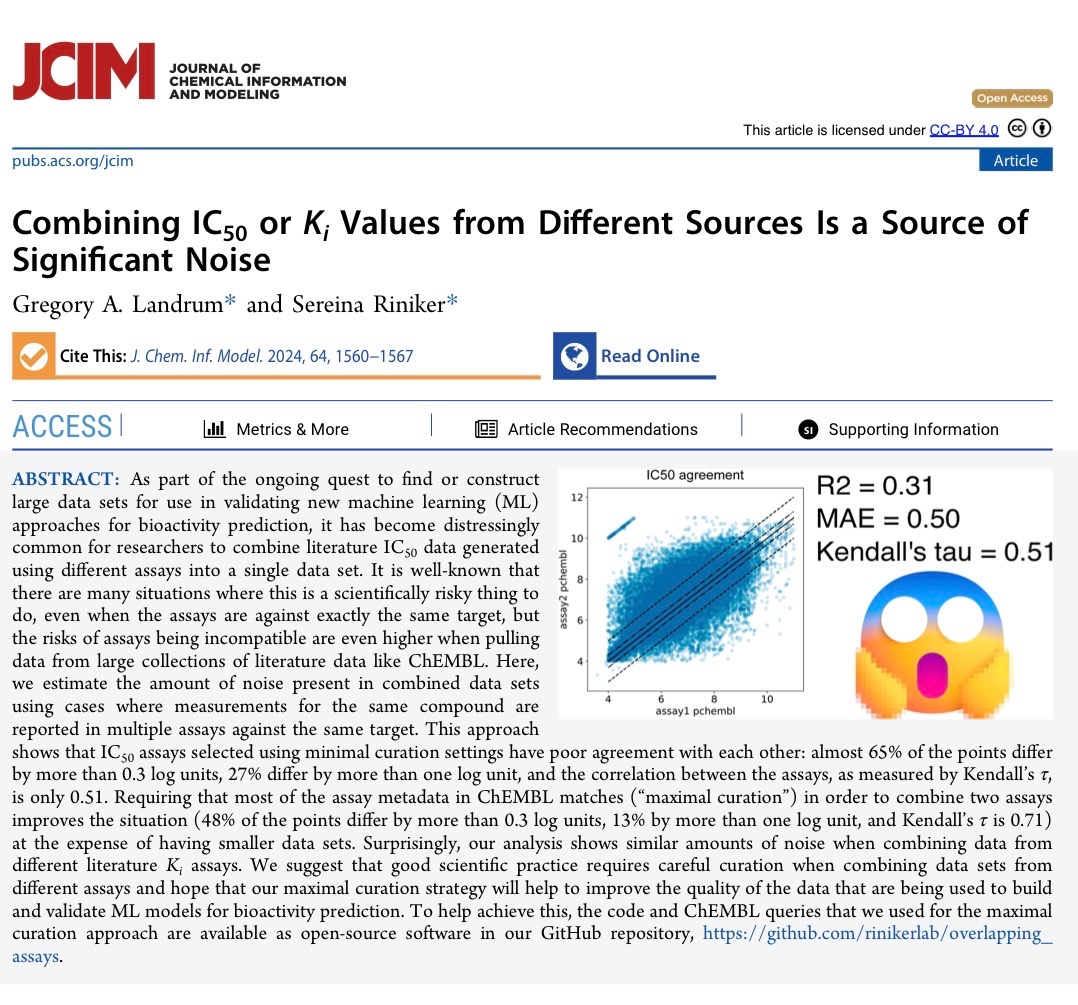
I wonder how much of these results are due to the quirks of antibodies specifically, and how much is due to the reasons outlined in the Paper With The Greatest Graphical Abstract Of All Time
Diego del Alamo tweet media
Biology+AI Daily@BiologyAIDaily

Fitness Landscape for Antibodies 2: Benchmarking Reveals That Protein AI Models Cannot Yet Consistently Predict Developability Properties 1. A new study benchmarks the performance of 30 AI and biophysical models in predicting the developability properties of antibodies. The study finds that most models fail to produce statistically significant correlations for the majority of datasets, highlighting the challenges in using AI for antibody design. 2. The study introduces FLAb2, the largest public therapeutic antibody design benchmark to date, containing data on over 4 million antibodies across 32 studies. It evaluates seven key properties: thermostability, expression, aggregation, binding affinity, pharmacokinetics, polyreactivity, and immunogenicity. 3. The research shows that no single AI model can consistently predict all developability properties. While some models like IgLM, ProGen2, and ESM2 show significant correlations for certain datasets, they fail to generalize across all properties or similar datasets. 4. The study finds that model architecture has less impact on zero-shot performance than the training data composition. Models incorporating protein structure perform better than sequence-only models, indicating that structural information is crucial for accurate predictions. 5. The authors also investigate the germline bias in protein language models, revealing that evolutionary signals significantly influence model predictions. On average, germline edit distance accounts for 40% of the apparent predictive power, suggesting that models rely heavily on evolutionary patterns rather than biophysical mechanisms. 6. Fine-tuning models with sufficient data (10^3 points) can improve performance, but the study shows that even simple one-hot encoding models can match the performance of billion-parameter models when provided with enough developability data. 7. The study concludes that while AI models show promise in certain areas, they are not yet capable of generalizable zero-shot or few-shot prediction of antibody developability. The authors recommend further research to integrate richer sources of information and reduce germline bias. 💻Code: github.com/Graylab/FLAb 📜Paper: biorxiv.org/content/10.648… #AntibodyDesign #AIBenchmarks #ProteinEngineering #DevelopabilityPrediction

English
5
23
163
15.4K
Muneeb Sultan
Muneeb Sultan@mmsltn·
I do wonder if the fastest way for US biotech to get regulatory parity to China is for US regulators to require all international/ex-China rights to explicitly require Taiwan.😁
English
0
0
4
95
Muneeb Sultan
Muneeb Sultan@mmsltn·
For folks in preclinical research, including many friends trying to raise, going through RIFs or trying to find new roles, I see you and wish you all the best navigating this multi year biotech bear market and the turbulence ahead. In the end, it will be okay.
English
0
0
3
95
Muneeb Sultan
Muneeb Sultan@mmsltn·
Kudos to Jason for talking about this. It absolutely boggles my mind that we don't have more biotech execs/CEOs talking about this every week or lobbying Congress/State assemblies to jump in with legislative changes to FDA/MFN/IP/tax laws to make American R&D competitive.
English
1
0
2
100
Muneeb Sultan
Muneeb Sultan@mmsltn·
I fear stories like this will become increasingly common and more grim. Competition is fine (and good) but currently American biotech is hamstrung by bloated CMC/GMP reqs for ph 1, high clinical dev costs, and no good mechanism to get FIH data quickly.
Jason Kelly@jrkelly

WSJ article today today that captures the truth for biotech in both boston and SF at the moment — US is losing the biotech startup industry to China. If we want to stop this we need two things: (1) regulatory overhaul as captured well by Bob Nelson here so Ph1 trials are as fast and cheap as in China x.com/rtnarch/status… (2) Autonomous labs so US scientists are competing with Chinese scientists on who has the best ideas — not who has the most hands at the lab bench ginkgo.bio/autonomous-labq Happy to hear others’ ideas if you’ve got them. Here’s the article wsj.com/tech/biotech/p…

English
3
0
9
269
Muneeb Sultan
Muneeb Sultan@mmsltn·
@owl_posting @leashbio But it’s not really a fair comp. At that point. Though I think how leash is approaching it at scale makes a lot of sense and hopefully things will improve with scale
English
0
0
1
74
Muneeb Sultan
Muneeb Sultan@mmsltn·
@owl_posting @leashbio It’s an interesting question if it’s fair to ask boltz to generalize to DEL outputs. A non binder might be a non binder because of the dna label or a binder might be a stronger than expected binder because of the loss of entropy enforced by the linker. Both would hurt boltz perf
English
1
0
1
79
owl
owl@owl_posting·
An ML drug discovery startup trying really, really hard to not cheat owlposting.com/p/an-ml-drug-d… on the 12-person, Utah-based startup @leashbio, their culture of rigor, and the many ways small molecule models accidentally learn the wrong thing
English
8
20
168
49.6K
Muneeb Sultan
Muneeb Sultan@mmsltn·
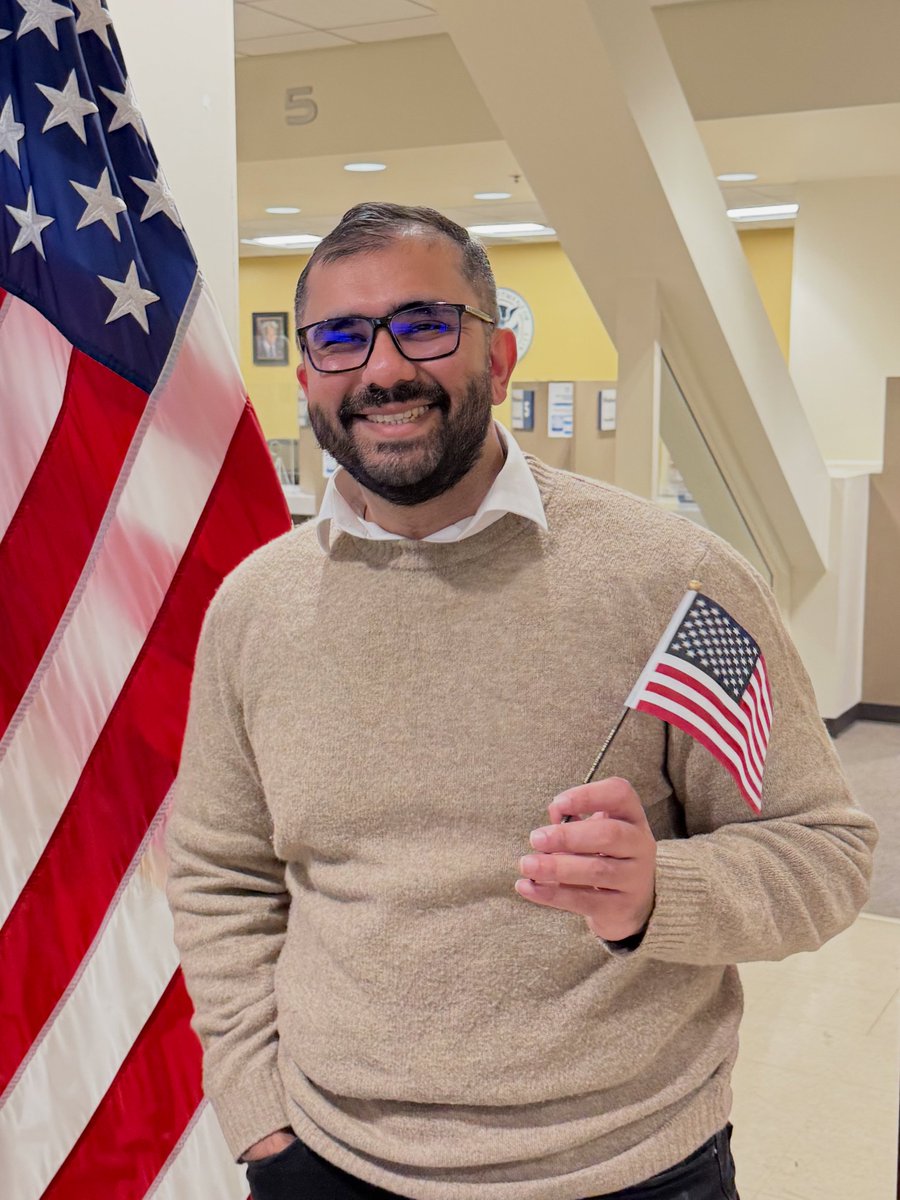
To 🇺🇸 with ❤️, 18 years, 2 degrees, multiple biotechs and a startup later, I finally got my citizenship last week. 🇺🇸 remains the only place where a kid from 🇵🇰 could get access to such incredible opportunities. Feeling thankful to everyone that helped me get here.
Muneeb Sultan tweet media
English
2
0
13
185
Jude Wells
Jude Wells@_judewells·
Ok let’s go @adaptyvbio binder design competition: this time designing proteins to neutralise the Nipah virus. Lots of great de novo ML binder design tools out there now, but this year I’m submitting an entry from TEAM HUMAN, seeing if pure rational design can win against the machines.
English
7
8
87
17.2K
Muneeb Sultan
Muneeb Sultan@mmsltn·
@owl_posting going from double digit to single digit nM is about 1/2 -1 kcal which could be from a single AA substitution. Doing 600 variants per epitope gives you a lot more coverage within a very constrained search space.
English
0
0
0
113
Muneeb Sultan
Muneeb Sultan@mmsltn·
@owl_posting Thats mostly coming from using low throughout (chai) vs high throughput (JAM-2) for the testing. IIUC Jam is designing a single YSD library across targets with around 20 epitopes x 600 variants per target while chai is doing around 10 per epitope.
English
1
0
2
224