

uncle
3.1K posts


الى 🇱🇾 والى 🇸🇩
هل يشفي قلوبكم القصف على الإمارات فأنتم أكثر الشعوب وجعا من تصرفاتها بحقكم
العربية

شنو اسم اخر روايه او كتاب قريتوه او فلم وشنو كان اثره عليكم؟
العربية
uncle retweetledi
ما بدورها عشرة مرات !!
لكن طلعت ارجل من خالد سلك وعمبلوك وشويف محمد عثمان !!
البلبوسة وئام شوقي 🤣🤣 !!
في جغمة وعي ،،
#بن_زايد_يسلح_الجنجويد
#MBZarmsRSF
#الأمارات_تقتل_السودانيين
#UAE_Kills_Sudanese
العربية
uncle retweetledi

أزمة تكشف هشاشة الموقف الإماراتي: تصعيد مرتبك ضد واشنطن بعد الانحياز الأمريكي للسعودية وطلب وقف تسليح الدعم السريع
يوضح التقرير أن أبوظبي وجدت نفسها في موقع ضعيف بعد أن حسمت واشنطن موقفها لصالح السعودية، وطلبت بشكل مباشر من الإمارات وقف دعمها العسكري للدعم السريع. هذا التحول الأمريكي المفاجئ أعاد فتح الملفات الحساسة داخل المؤسسات الأمريكية، وعلى رأسها التقييم الاستخباراتي الذي يشير إلى وجود عناصر من جيش التحرير الشعبي الصيني داخل مدينة زايد العسكرية، وهو ما أثار مخاوف أمريكية متراكمة بشأن توجهات الإمارات الاستراتيجية.
رفض أبوظبي السماح للوفد الأمريكي بدخول جزء من القاعدة، ثم اكتشاف ارتباطات تقنية بين شركات إماراتية وجهات صينية، خلق انطباعًا قويًا في واشنطن بأن الإمارات فقدت القدرة على موازنة علاقتها مع الولايات المتحدة، وأنها تتحرك من موقع دفاعي مرتبك. وفي اللحظة نفسها، قدمت السعودية ملفًا أمنيًا شاملًا أقنع الإدارة الأمريكية بأن استمرار الإمارات في تسليح الدعم السريع يهدد أمن البحر الأحمر مباشرة.
مقارنةً بالموقف السعودي القوي والمنظم، بدت الإمارات في وضع ضعيف وغير قادر على تبرير تصرفاتها. وعندما طالبت واشنطن بإيقاف الإمدادات للدعم السريع، تعاملت أبوظبي برد فعل متوتر، شمل تقليص الوصول الأمريكي لعدد من منشآتها وتعطيل التعاون الاستخباراتي. إلا أن هذه الخطوات أبرزت ضعفًا إضافيًا، إذ تعتمد العمليات الأمريكية ضد تنظيمات متطرفة في القرن الأفريقي على قواعد داخل الإمارات نفسها.
الخلاصة أن الأزمة الحالية وضعت الإمارات في موقف هو الأضعف منذ سنوات، مكشوفة أمام ضغط أمريكي حاد وقدرة سعودية على توجيه مسار السياسة الإقليمية. وبينما تحاول أبوظبي الرد عبر التصعيد، تكشف كل خطوة أنها تتحرك تحت عبء فقدان الثقة الأمريكية وتناقضاتها في العلاقة مع الصين.
#السودان #الإمارات #السعودية #الولايات_المتحدة #الدعم_السريع #البحر_الأحمر #الصين #تحليل #سياسة_دولية
The Dark Box@TheDarkBox71
Investigation reveals that the United Arab Emirates is now in a weakened position as it escalates against the United States after Washington backed Saudi Arabia and demanded an end to Emirati support for the Rapid Support Forces. The report shows that when the United States revived its intelligence concerns about Chinese military personnel at Zayed Military City, Abu Dhabi struggled to defend its stance. Denying American access to parts of the base only deepened mistrust and highlighted the Emirati leadership’s difficulty in balancing its ties with Washington and Beijing. Saudi Arabia’s well-coordinated intervention further exposed Emirati vulnerability. By providing intelligence that linked continued Emirati support for the Rapid Support Forces to instability in the Red Sea, Riyadh successfully shaped Washington’s position. Once the United States issued a directive requiring Abu Dhabi to halt all military flows to the paramilitary group, the Emirates responded with anxious escalation, restricting access and slowing intelligence cooperation. But this reaction underscored the weakness of the Emirati position. United States operations against militant networks in the Horn of Africa rely heavily on Emirati bases, meaning Abu Dhabi’s attempts at retaliation risk undermining its own strategic relevance. Meanwhile, its deepening ties with China continue to raise alarm within the American security establishment. The result is a landscape in which the Emirates appears cornered: pressured by Washington, outmaneuvered by Saudi Arabia, and vulnerable to scrutiny over Chinese activity on its soil. The confrontation shows how rapidly geopolitical leverage can shift when strategic trust erodes. More: the-darkbox.com/8gi0 #Sudan #UAE #SaudiArabia #UnitedStates #RSF #China #RedSea #Geopolitics #Analysis
العربية

اختر رقم من 1 إلى 25
1
2
3
4
5
6
7
8
9
10
11
12
13
14
15
16
17
18
19
20
21
22
23
24
25
واحد من الأرقام فيه مبلغ "1000" ريال!
خمّن الرقم وبنختار ثلاث فائزين بعد 48 ساعة! 🤩💙
✅ متابعة الحساب تأهلك للفوز ✨
العربية
uncle retweetledi

"لا سلَّم الله #الإمارات، وهِجاءٌ للشيـ.طـ.ان الأكبر زايد بن سلطان وأبنائه الذين يعيثون في الأرض فسـ.ادًا اليوم" — من حلقة الإعلامي المصري المعروف عبد الله الشريف عن #السودان بعنوان "هنا #الفاشر".
العربية
uncle retweetledi

⛔️اتفقت جميع المنظمات الدولية و الصحف الكبرى على ان دويلة الامارات هى من تسبب فى مذابح السودان:
•رويترز
•نيويورك تايمز
•وول ستريت جورنال
•الجارديان
•واشنطن بوست
•فرانس 24
•التليغراف
•منظمة العفو الدولية
•خبراء مجلس الأمن
•الامم المتحدة
وغيرها من الصحف العالمية والمنظمات الدولية التي ذكرت ان #الامارات تدعم مليشيا الدعم السريع بالسلاح والمرتزقة‼️
#BoycottUAE
#الامارات_تقتل_السودانيين
#UAEKillsSudanesePeople
#الامارات_ترعى_الارهاب
#الدعم_السريع_منظمة_ارهابية
#RSFisTerroristOrganization

العربية
uncle retweetledi

NEW:
🇦🇪🇬🇧 The owner of Manchester City football club Sheikh Mansour is smuggling weaponry into Sudan, arming and treating RSF terrorists in a hospital he set up through his charities - The New York Times
He’s playing an outsized role in the genocide in Sudan.
UAE-backed RSF terrorists are currently committing terrible genocide against women and children and they brag about it online.


English
uncle retweetledi
الشعار الرسمي لحملة الامارات تقتل السودانيين وبتمني من اي زول ينزل الشعار مع التغريدة والهاشتاق بالعربي والانجليزي !!
نبقي يد واحد من اجل وطننا ،،
#UAEKillsSudanesePeople
#RSFisTerroristOrganization
#UAESponsorsTerrorism
#الامارات_تقتل_السودانيين
#الامارات_ترعي_الارهاب
#الدعم_السريع_منظمة_ارهابية

العربية
uncle retweetledi

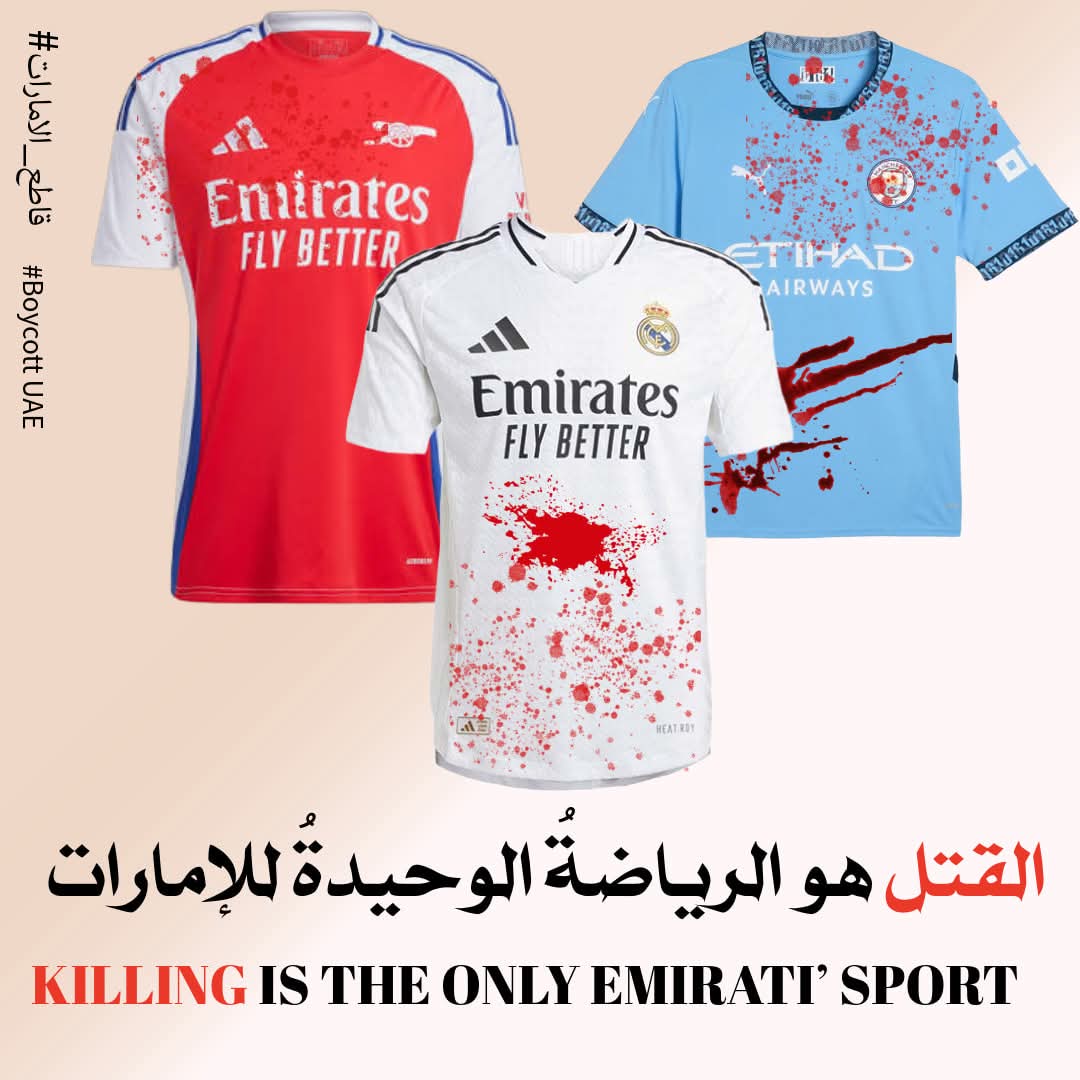
To the fans of #Arsenal, #RealMadrid, and #ManchesterCity
You are the pride of football, but sadly, your clubs are being used for money laundering by a bloody regime.
The UAE sponsors your shirts and stadiums while financing in Sudan a militia accused of war crimes and genocide.
English
uncle retweetledi

من فيديو اليوتيوبر الشهير عبدالله الشريف @AbdullahElshrif - هنا الفاشر
#السودان
#الامارات_تقتل_السودانيين
العربية
uncle retweetledi

ياجماعة في حملة كبيرة لمقاطعة الامارات واحتمال في ناس ما عارفين يقاطعو شنو بالظبط ..في البوستر اسفل التغريدة يوجد اسماء منتجات وخدمات إماراتيةلازم تقاطعها وماتنسو كمان محلات دخون الإماراتية مامذكورة في البوستر..انا شخصيا كنت اشترى منها البخور والعطور قبل الحرب ..

العربية
uncle retweetledi

I love this club with everything, it’s been a massive part of my life.
But being a City fan doesn’t mean we stay quiet about human suffering. We can love our club and still speak up for what’s right.
Reports have have linked our owner, Sheikh Mansour, and the UAE government to supporting the RSF (the ones committing horrific crimes in Sudan)
Our club’s ownership is tied to people accused of helping fuel a genocide. That’s not “politics”, that’s basic humanity.
Being silent don’t help no one. We We can be proud of what happens on the pitch, but it means nothing if we turn away from what’s happening off it.

English
uncle retweetledi
بدأت حملات مقاطعة شعبية واسعة لمنتجات دولة #الإمارات، بعد دعمها للميليشيات في المنطقة وفي #السودان، الأمر الذي تسبب في مجازر دموية وإبادة جماعية للسودانيين وتشريد أكثر من 12 مليون مواطن سوداني من ديارهم.
تحت وسم 👇🏼
#قاطعوا_الامارات
#BoyCottUAE
#الامارات_تقتل_السودانيين
#الدعم_السريع_منظمة_ارهابية


العربية
uncle retweetledi
⛔️شاركوا في حملة جماهيرية سودانية على حسابات نادي مانشيستر سيتي الإنجليزي المملوك لدولة الإمارات تُدين حكامها بتمويل المجازر التي تتم بغرب البلاد ، حيث شارك الجميع هاشتاق :
#Manchester_City_contributes_to_the_killing_of_Sudanese_people
#الامارات_تقتل_السودانيين
#لا_سلم_الله_الإمارات

العربية
uncle retweetledi
افعل شيئاً ولو كنت وحدك ، لا تقلل من جهدك ولو أن تمرر هذه الرسالة
لا تدفع لقتلِ إخوانِك. #الامارات_تقتل_السودانيين
#قاطع_الامارات

العربية