
Balaji

862 posts

Balaji banner
Balaji

Balaji

@mohanbalaj

Building https://t.co/Ya5jRtO96A - the Performance OS for Sports. AI Coach x Video Analytics. Progress made visible.

Bangalore, India Katılım Nisan 2009
266 Takip Edilen159 Takipçiler
Sabitlenmiş Tweet
Balaji
Balaji@mohanbalaj·
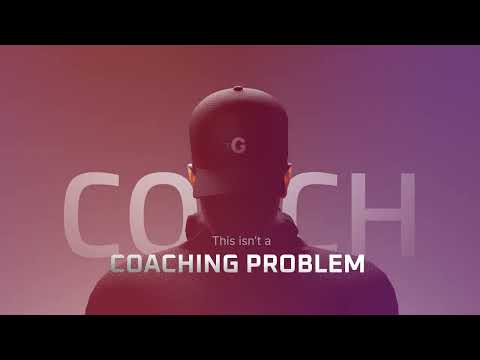
Introducing Glens. (Game + Lens — to remember) Built with care, curiosity, and a lot of thinking. A Performance OS for sports. Progress made visible. So humans stay in the game long enough to become who they can be. youtu.be/TQ2wfWAeuyM?si…
YouTube video
YouTube
English
0
3
23
14.9K
Balaji
Balaji@mohanbalaj·
@gokulr Designers shape what gets built continuously, live through, they compress and evolve. AI generates, doesn't understand iterations/truth/real world use. Casualty is when some founders who mistake the shortcut for the craft and learn the difference when the product stalls.
English
0
0
1
145
Gokul Rajaram
Gokul Rajaram@gokulr·
DESIGN: THE FIRST AI CASUALTY I'm increasingly sure that 2026 signals the end of product design as a full-fledged stand-alone function within companies. If so, it will be the first role / function to be eliminated by AI on a go-forward basis. Instead of hiring FT designers, startups are hiring / will hire design consultants to create a design system that the founder likes (this takes a few weeks max). Once the design system is finalized, PM/Eng feed it into their AI tool of choice to generate prototypes. The design system is refreshed annually by the same consultant. Larger companies will likely not backfill design roles and will do some targeted attrition to reduce the design department to 20% the size it is today. If you're a designer, I think you have two choices: 1. Become an entrepreneur: Start a design agency and become the go-to resource for design systems for startups and even larger companies. This can be a good recurring revenue business. 2. Become a builder: Add PM/Eng responsibilities to become a product builder. Would suggest you embrace this proactively vs waiting for the other shoe to drop. I'm really sorry about this - some of my best friends and the people I admire most and have learnt the most from are designers - but it seems inevitable.
English
280
80
1.1K
710.5K
Balaji
Balaji@mohanbalaj·
Today, we ran a mini live tournament on Glens. Registrations → AI Fixtures → Live Scoring → Player Profiles. No chaos. Just… worked. The real unlock is, every player now has a history. We're not running events. We're building the memory layer of sport. And once that exists, everything changes. Progress. Made Visible.
English
0
1
1
14
Balaji
Balaji@mohanbalaj·
Old Thinking Using AI vs. New Thinking Meeting AI Most industries are bolting intelligence onto broken assumptions. The real revolution begins when we discard the assumptions entirely. There is a seductive trap in every technological revolution: we take the new power and use it to do the old thing faster. The automobile was first called a "horseless carriage", the name itself revealed that people couldn't imagine what it actually was, only what it replaced. We are making the same mistake with AI, across almost every industry, and we don't even realize it. Consider event management. The "AI-powered" event platform of 2025 takes a registration form and replaces it with a chatbot. It takes a manually built agenda and generates one automatically. It takes a post-event survey and replaces it with sentiment analysis. Every single one of these improvements accepts the underlying premise, that an event is a fixed, pre-designed, time-bound artifact that humans attend and then leave. AI simply makes the assembly line move faster. This is old thinking using AI. And it is everywhere. The Trap Old thinking using AI is easy to spot once you know the pattern. It always begins with an existing workflow. It identifies the slow, manual, or expensive steps. It replaces those steps with machine intelligence. And then it declares victory. The workflow itself, its purpose, its assumptions about who does what and why is never questioned. A recruitment platform uses AI to screen 10,000 resumes instead of 100. But it never asks: why are we collecting resumes at all? The resume is an artifact of a world where you couldn't observe someone's actual work. If AI can assess capability directly through conversation, simulation, portfolio analysis the resume is a vestigial organ. Screening it faster is optimizing the appendix. An education company uses AI to generate personalized lesson plans. But it never asks: why is the lesson plan the unit of learning? The lesson plan exists because one teacher had to address thirty students simultaneously. If AI can be a one-to-one tutor, the entire architecture of curriculum → lesson → assessment → grade dissolves. You don't need a better lesson plan. You need to stop thinking in lessons. Old thinking asks: "How can AI do this for me?" New thinking asks: "Now that AI exists, should this be done at all?" The distinction is not about ambition or intelligence. Many brilliant people are trapped in old thinking precisely because they are experts. They know the current system deeply, and so they see a thousand places where AI can improve it. They are right about the improvements. But they are wrong about the system. The Inversion New thinking meeting AI starts from a completely different place. It doesn't start with the workflow. It starts with the outcome someone actually wants and then asks what becomes possible when intelligence is abundant and nearly free. If you can explain your AI product by saying "it's like X but with AI," you are not building the future. You are decorating the present. This old-thinking/new-thinking divide runs through every industry: Healthcare. Old thinking: AI reads X-rays faster than radiologists. New thinking: Why are we waiting for someone to get sick and take an X-ray? Continuous AI monitoring of biomarkers, movement patterns, and environmental exposure dissolves the distinction between "healthy" and "patient." The hospital visit is the failure mode, not the product. Retail. Old thinking: AI recommends products you might like. New thinking: What if the product didn't exist until you needed it? On-demand manufacturing guided by AI that understands your needs before you articulate them. No inventory. No catalog. No shopping. Just provision. An organizer, let's call her Priya, tells the system: "I want 200 climate tech founders to each form at least 3 meaningful partnerships within 6 months. Budget: $150,000. Define meaningful as: two parties have agreed to a specific collaboration, exchanged working materials, and scheduled at least one follow-up." Notice what Priya did not say. She didn't say "organize a conference." She didn't say "book a venue for March." She stated a desired end state with a definition of success. The system's job is to engineer the path there. And here's the first radical departure: the system might decide that a large gathering is not the most efficient way to produce this outcome. This is the moment that separates old thinking from new. An event management platform, by definition, manages events. It cannot recommend not having one. Its existence depends on the event happening. But an outcome engine has no such bias. It will recommend whatever works, including, possibly, no event at all. The ultimate test: does your product eliminate a category, or compete within one? If you're still comparing features with incumbents, you're playing the old game with a new bat. The Courage to Delete Every industry is about to have its "horseless carriage" moment, a brief window where the old thinking uses new power to preserve old structures, before someone with new thinking comes along and renders those structures unrecognizable.
Balaji tweet media
English
0
0
1
48
Balaji
Balaji@mohanbalaj·
6/ At Glens we live this daily. AI schedules sessions → headless Payments auto-reconcile → headless Progress shows up visually → UI Execution invisible. Progress visible. That's the balance.
English
0
0
0
8
Balaji
Balaji@mohanbalaj·
5/ Headless alone is blind. UI alone is slow. Hybrid is compounding.
English
1
0
0
10
Balaji
Balaji@mohanbalaj·
Most people are getting Headless SaaS wrong. They think it replaces traditional software. It doesn't. Here's what's actually happening 1/ Traditional SaaS = UI first. You click, you get work done. Headless SaaS = API first. Agents execute, outcomes happen. Neither kills the other.
English
1
0
1
21
Balaji
Balaji@mohanbalaj·
AI Truth: We’re excited by the leverage, but afraid of losing our edge.
English
0
0
1
6
Balaji
Balaji@mohanbalaj·
Uber didn't build cars. It built a digital layer over an existing system. Drivers, routes, demand, payments and turned chaos into coordinated flow. Travis Kalanick's new company, Atoms, is running the same playbook on physical work: factories, mines, warehouses. The easy read is "robotics company." The real play is industrial system control. Most robotics startups start with a robot and go looking for a use case. Atoms inverts it: study the industry, map the workflow, automate the steps, build hardware only where necessary. The robot is the last mile, not the starting point. A burger-flipping robot generates data on timing, temperature, throughput, and error rates. A warehouse robot maps routing, load optimization, speed-safety tradeoffs. The machines are just the interface. The value is the system-level intelligence underneath. It's the Uber model applied to atoms instead of automobiles: don't own the assets, orchestrate them.
English
0
0
1
19
Balaji
Balaji@mohanbalaj·
Grassroot sports - kids don’t quit because training is hard. They quit because it becomes predictable. Same drills and same format. Progress needs structure.
English
0
1
1
12
Balaji
Balaji@mohanbalaj·
The new org chart isn't flat. It's cellular. Small units. Real ownership. Minimal interference. Big enough to have resources. Small enough to still care. The future isn't one large company moving fast. It's a hundred small teams inside one company that never learned to wait for permission. The cellular org isn't a design choice anymore. It's what's left when you remove everything AI can do cheaper and faster than a human hierarchy. Small team. Clear problem. Real authority. AI as the force multiplier.
English
0
1
1
19
Balaji
Balaji@mohanbalaj·
A 12-year-old trains at a local badminton academy. No data on her technique. No video breakdowns. Her coach remembers what she can. Her parents hope for the best. Six months in, her parents pull her out. Not because she lacked talent. Because they couldn't see progress. This is where most athletic careers end. Not at the elite level. At the kitchen table, when a parent decides it's not worth the fees anymore because nothing visible is changing. Talent needs time. Time needs funding. Funding needs trust. Trust needs proof. Think about what marks did for academics. A simple number on a report card gave parents enough visibility to fund 15 years of education without questioning it. Not because every child loved school. But because progress was visible. Measurable. This isn't neuroscience. This is behavioural science at its most basic, when people can see progress, they stay. When they can't, they leave. Glens.app understood this. AI coaching. 3D video analytics. Progress reports a parent can actually read. Starting at ₹99/student/month. It doesn't just track athletes, it gives parents a reason to keep believing for one more month, one more quarter, one more year. That extra year? That's where champions come from. Now, at the other end, Deepinder Goyal's Temple is asking a different question. What if cerebral blood flow is the metric elite athletes should be tracking? $54M into a fascinating hypothesis. The courage to ask the question deserves respect. Both matter. But the sequence matters more. You can't optimise an elite brain if the athlete quits at age 13 because her parents couldn't see the point. Glens keeps athletes in the game. Temple pushes them to the edge of it. India doesn't have a talent problem. It has a visibility problem.
Balaji tweet media
English
0
0
1
30
Balaji
Balaji@mohanbalaj·
For Designers. AI and Design: What I'm Learning I'm not writing this as an expert. I'm figuring this out too. But I'm seeing things shift fast enough that I wanted to share while it's fresh. What's happening AI closed the gap between idea and execution for code. Now it's doing the same for design. Layouts, systems, polished visuals, work that took weeks now takes minutes. This isn't a prediction. I see it daily in my own work. This means a non-designer with a strong idea and the right tools can now ship work that looks professional. The visual gap is closing for everyone. What this actually changes AI isn't replacing you. It's compressing time. And that changes what's expected of you. The old ratio was 80% production, 20% thinking. AI flips that. The question is, what do you do with the time you get back? Most designers will fill it with more output. More iterations, more options. That's the trap. More average work faster is still average work. The loop that matters. Here’s the shift: AI removes the getting started friction. You get pulled into the problem (and yes, it’s genuinely fun). You get time back for craft, your taste, your edge. You explore directions you never had time for. You feed that thinking back to AI. AI executes on your intent. You go deeper. Repeat. The depth comes from you. AI just gives you room to get there and multiplies whatever you bring. What "going deeper" means in practice Don't just ask "what should this look like." Ask AI: what's the real problem underneath this brief? What behavior are we changing? What does everyone assume about this that might be wrong? What would someone from a completely different field do here? Use AI as a thinking partner. Argue with it. Challenge your own assumptions through it. Then take those unexpected angles and feed them back into the work. You stop going from A to B. You start going from A to X, somewhere no one expected. Takeaways AI produces at 100x. But it multiplies what you feed it. Surface thinking in, surface output out. Your weird, specific curiosity is the multiplier. Spend freed-up time on depth, not more output. That's the discipline. That's what separates you. Your strange interests are your edge. Psychology, gaming, architecture, whatever, that's what AI can't generate on its own. Bring all of it. Stay a student. Nobody has a playbook for this yet. The people doing the best work are the ones still experimenting. The tools got faster.
English
0
1
1
39
Balaji
Balaji@mohanbalaj·
For the longest time, I thought an academy’s biggest pain was payments and attendance. Chasing fees. Marking presence. Recently, I realized the real problem is admissions. Payments are old money. Admissions are new money. Without new athletes entering, everything else is just survival.
English
0
2
1
64
Balaji
Balaji@mohanbalaj·
I'm not asking for the old PT period back. That system was lazy, unstructured, and for many kids. But what it was supposed to be that deserves to exist. A real curriculum. Progressive. Intentional. That teaches a child how to live inside their body. How to manage stress physically. How to fall and recover. How to push through difficulty and come out trusting themselves more, not less. Taught like math. Measured like science. Protected like language. Because the body is not something you graduate out of. You live in it every day for your entire life. And right now, millions of kids are going through a system that teaches them everything about the world and nothing about themselves. That is not a gap. That is the system failing at the one thing that matters most.
English
0
0
0
20
Balaji
Balaji@mohanbalaj·
Nobody satisfies their kid's hunger with reasons. You don't explain nutrition to a starving child. You feed them. But when it comes to the body, how it moves, how it copes, how it survives stress we've been giving reasons for decades. And the child is still starving. You're ten years old. It's Thursday. Last period is supposed to be PT. But the math teacher walks in instead. "Sports period is cancelled. Open chapter six." No one complains. No one at home ever finds out. That quiet, unremarkable moment. That's where it started. Multiply it across every school, every year, every generation. You start to see the shape of what we lost. But I need to be honest. What we lost wasn't great to begin with. Think about your PT class. Really think. A whistle. Some laps. The same three kids picked first. The same five standing at the side, praying not to be noticed. For the kids who were athletic, it was fine. For everyone else, it was forty minutes of learning one lesson, your body is not good enough, and everyone can see it. So when it disappeared, nobody grieved. You don't grieve what already made you feel small. And in its place, nothing. Not a better version. Nothing. We just decided the body wasn't worth teaching. Now look around. The 14-year-old who cracks competitive exams but has panic attacks in crowded rooms. The 22-year-old who graduated top of her class but hasn't slept properly in three years. The 30-year-old in therapy learning for the first time how to breathe when life gets heavy. Breathe. We're teaching adults how to breathe. That should break something inside us. That child had a school. Had teachers. Had a system around them for fifteen years. And in fifteen years, nobody taught them how to live inside their own body. Not once. We taught them trigonometry they'll never use and dates they'll never remember. But the one thing they carry every single day the body they wake up in, the nervous system that decides whether they can handle the day, we left that to chance. And now we call it a mental health crisis. We build apps. Meditation apps. Breathing apps. Sleep apps. We hire counsellors and write reports about why young people are struggling. But nobody says the obvious thing. We removed the one subject that was supposed to teach a human being how to function inside themselves. And replaced it with nothing. The crisis isn't mysterious. We built it. One cancelled PT period at a time. Some will say sport happens outside school. Academies. Swimming. Cricket. Karate. Yes. For the kids whose parents can afford it. Whose parents have time. Who live near the right facility. That's not a system. That's luck. We don't run luck-based systems for math. We don't say, "If your parents can afford a tutor, you'll learn to read." We teach every child. Because literacy is non-negotiable. But physical literacy the ability to manage stress, recover from failure, trust yourself under pressure that we left to whoever could pay. Now look at where the world is heading. We sacrificed sport to make room for coding. Analytics. STEM. The future belongs to the technically skilled, we were told. And now AI writes the code. AI does the analysis. The very skills we cleared the timetable for are being automated faster than we can teach them. But AI will never teach your child to stand back up after being knocked down. Never teach them to breathe through a moment that feels unbearable. Never teach them that their body can handle more than their mind believes. The body is the last thing that can't be outsourced. And we stopped investing in it. Here's what I think about late at night. A child graduates. Eighteen years old. Knows calculus. Knows the periodic table. Can write an essay on democracy. But doesn't know how to calm themselves when their heart is racing. Has never been taught that their body is something they can rely on. We hand them a diploma and call them educated. That's not education. That's abandonment.
English
1
1
1
51
Balaji
Balaji@mohanbalaj·
In grass-root sports, speed isn’t the enemy of learning. Unexamined repetition is. The brain optimizes for what you do most, not what you meant to do.
English
0
1
1
26