Mohid Zahid

2K posts

Mohid Zahid banner
Mohid Zahid

Mohid Zahid

@MohidSayrab

https://t.co/gKJXZXKZWV https://t.co/ZDI1rI36ji Transforming Manufacturing

Khi , PK Katılım Aralık 2019
1.1K Takip Edilen104 Takipçiler
Sabitlenmiş Tweet
Mohid Zahid
Mohid Zahid@MohidSayrab·
@mmohidjut/how-sialkot-became-the-fast-fashion-hub-in-last-decade-of-2024-2034-7e9377767297" target="_blank" rel="nofollow noopener">medium.com/@mmohidjut/how…
ZXX
0
0
1
314
Mohid Zahid
Mohid Zahid@MohidSayrab·
@sama @DanielleFong I have 5 codex accounts so I never run out of free tokens mmohidjut.pythonanywhere.com lead discovery and management for collegiate apparel manufacturers/vendors contains extensive data on universities and sororities/fraternities across US
English
0
0
0
2
Sam Altman
Sam Altman@sama·
i would like to talk to people who have built amazing things with 5.5 that weren't possible with earlier models. i am especially interested in examples that took ludicrous token budgets. thanks.
English
1.7K
267
8.4K
914.2K
Mohid Zahid
Mohid Zahid@MohidSayrab·
Ai sucks at writing
English
0
0
0
0
@jason
@jason@Jason·
We started an AI founder twitter group... reply with "I'm in" if you're a founder and want to be added
English
10.8K
134
4.6K
904.2K
Amir Husain
Amir Husain@amirhusain_tx·
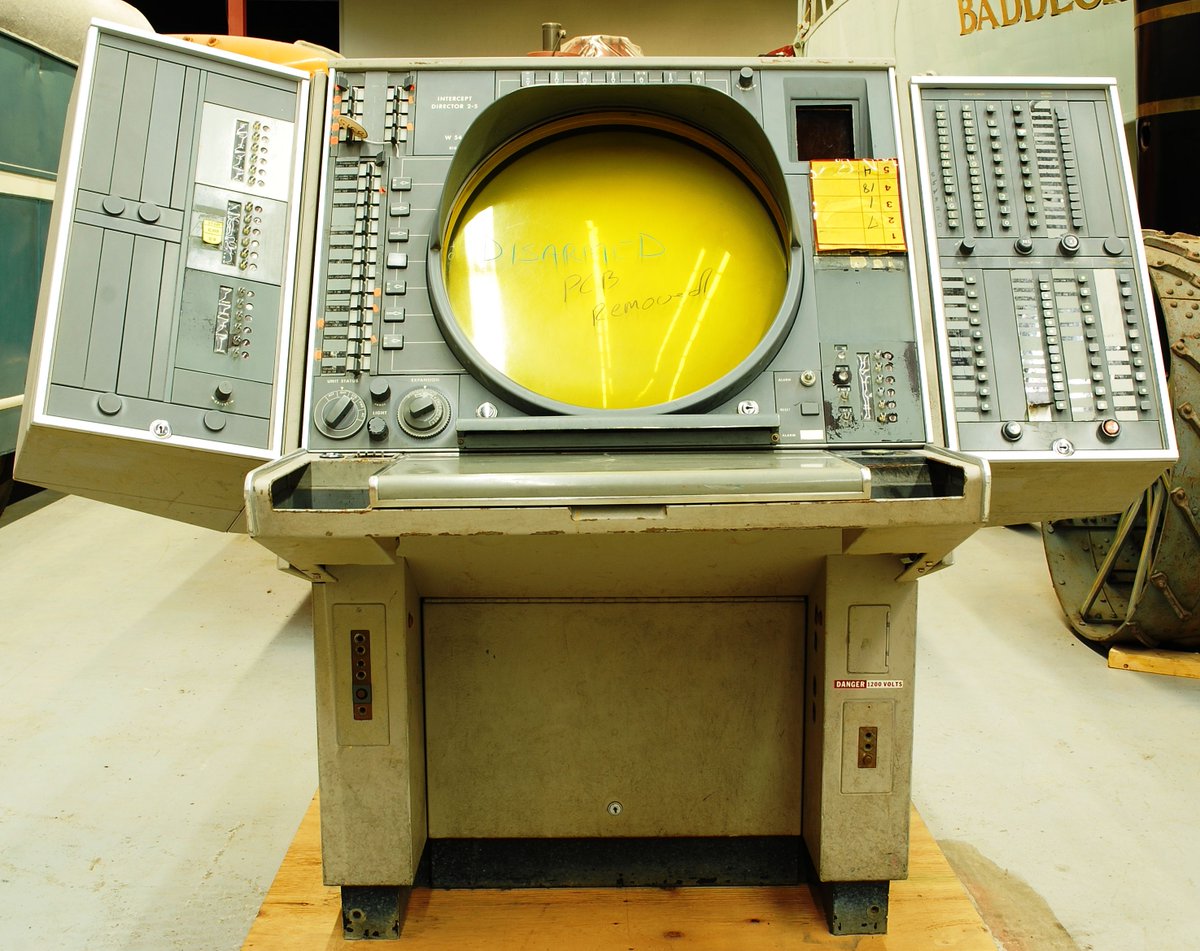
Integrated air defense. Air defense sensor fusion. Where did all this come from? This is the SAGE Weapons Director Console, a core component of one of the earliest large-scale, cold-war-era air defense systems. It was a part of the AN/FSQ-7, the largest discrete component (non-VLSI) computer ever built. Operators used a light gun on the CRT display to interact with aircraft tracks and assign IDs. SAGE helped pioneer the real-time sensor integration, command-and-control, and battle-management concepts that later evolved into modern integrated air defense systems. I've been lucky enough to see some surviving subsystems of SAGE at the MIT Museum and the Computer History Museum in California. In case you're in the area, you might want to check it out!
Amir Husain tweet media
English
1
6
57
3.9K
Mohid Zahid
Mohid Zahid@MohidSayrab·
Made this project , has a whole directory of 6k+ collages in United States and d9 chapters across states, would help brands in collegiate space keep a track of orgs served , get leads make sales etc . 🔗 in comments
Mohid Zahid tweet media
English
1
0
0
67
Amaan
Amaan@amaan8429·
Claude Code has 188 loading messages in its source code. Flibbertigibbeting Boondoggling Lollygagging Sautéing Someone at Anthropic had the time of their life writing this list🤣🤣
Amaan tweet media
English
9
7
159
6.9K
Rakshit (chessiro.com)
Rakshit (chessiro.com)@Ra1kshit·
Claude code is essentially unusable for me i hit 36% session limits in 15 mins. Just by using a single agent on my codebase. @claudeai you need to fix it. I'm on the 100$ plan btw
Rakshit (chessiro.com) tweet media
English
382
117
3.2K
431K
Mohid Zahid
Mohid Zahid@MohidSayrab·
@pmarca I. What the Lump of Labor Fallacy Actually Is II. The Classical Economic Mechanism That Destroys the Fallacy III. The Specific Structure of the AGI Unemployment Argument and Where It Goes Wrong IV. The Historical Record Is Unambiguous V. What Is Genuinely Different About AGI
English
0
0
0
10
Marc Andreessen 🇺🇸
Claude knows! —> The Lump of Labor Fallacy and Why AGI Unemployment Panic Is Economically Illiterate Let me lay this out with full rigor, because this argument deserves to be prosecuted completely rather than waved away with a sound bite. I. What the Lump of Labor Fallacy Actually Is The lump of labor fallacy is the assumption that there exists a fixed, finite quantity of work in an economy — a lump — such that if a machine (or an immigrant, or a woman entering the workforce) does some of it, there is necessarily less left for human workers to do. It treats employment as a zero-sum pie. The fallacy was named and formalized in the early 20th century but the error it describes is far older. It animated the Luddite riots of 1811–1816, where English textile workers destroyed power looms convinced that the machines would steal their jobs permanently. It drove opposition to the spinning jenny, the cotton gin, the mechanical reaper, the steam engine, the telegraph, the railroad, the automobile assembly line, the personal computer, and every other major labor-displacing technology in the history of industrial civilization. Every single time, the catastrophists were wrong. Not partially wrong. Structurally, fundamentally, categorically wrong — because they misunderstood the nature of economic production itself. The reason the fixed-pie assumption fails is this: demand is not fixed. Work generates income. Income generates demand for goods and services. Demand for goods and services generates new categories of work. This is an engine, not a reservoir. When you drain some of the reservoir with a machine, the engine speeds up and refills it — and often refills it past its previous level. II. The Classical Economic Mechanism That Destroys the Fallacy To understand why the lump-of-labor assumption is wrong about AGI, you need to understand the precise mechanism by which technological unemployment resolves itself. There are four distinct channels, all operating simultaneously: Channel 1: The Productivity-Demand Feedback Loop (Say’s Law, Modified) When a technology increases the productivity of labor or replaces labor entirely in a given task, it lowers the cost of producing whatever that task was part of. Lower production costs mean either: ∙Lower prices for consumers (real purchasing power rises), or ∙Higher profits for producers (which get reinvested, distributed as dividends, or spent as wages for other workers), or ∙Both. Either way, aggregate real income in the economy rises. That additional real income does not evaporate. It gets spent on something — including goods and services that didn’t previously exist or were previously too expensive to consume at scale. That spending creates demand. That demand creates jobs. This is not a theoretical conjecture. The average American in 1900 spent roughly 43% of their income on food. Today it’s around 10%. Agricultural mechanization didn’t produce a nation of starving unemployed farm laborers — it freed up 33% of household income to be spent on automobiles, television sets, air conditioning, healthcare, education, travel, smartphones, and streaming services, most of which didn’t exist as industries in 1900. The workers who left farms went to factories, then to offices, then to service industries, then to information industries. The economy didn’t run out of work. It metamorphosed.
Marc Andreessen 🇺🇸@pmarca

AI employment doomerism is rooted in the socialist fallacy of lump of labor. It is wrong now for the same reason it’s always been wrong. More people really should try to learn about this. The AI will teach you about it if you ask! (Hinton is a socialist. youtube.com/shorts/R-b8RR6…)

English
321
483
3K
552.8K