Mohit

511 posts

Mohit banner
Mohit

Mohit

@mohitlovestea

Building world-first Smart Bowl & AI Assistant for pet parents. | IIT Bombay 🎓

Katılım Mart 2020
116 Takip Edilen67 Takipçiler
Mohit retweetledi
Aakash Gupta
Aakash Gupta@aakashgupta·
There's a physicist at Stanford named Safi Bahcall who modeled this exact principle and the math is wild. He calls it "phase transitions in human networks." When you're stationary, your probability of a lucky event is limited to your existing surface area: the people you already know, the places you already go, the ideas you've already been exposed to. Your opportunity window is fixed. When you move, your collision rate with new nodes in a network increases nonlinearly. Double your movement (new conversations, new cities, new projects) and your probability of a serendipitous encounter doesn't double. It roughly quadruples. Because each new node connects you to their entire network, not just to them. Richard Wiseman ran a 10-year study at the University of Hertfordshire tracking self-described "lucky" and "unlucky" people. The single biggest differentiator wasn't IQ, education, or family money. Lucky people scored significantly higher on one trait: openness to experience. They talked to strangers more, varied their routines more, and said yes to invitations at nearly twice the rate. The "unlucky" group followed the same routes, ate at the same restaurants, and talked to the same 5 people. Their networks were closed loops. No new inputs, no new collisions. Luck isn't random. Luck is surface area. And surface area is a function of movement. The lobster emoji is doing more work than most people realize. Lobsters grow by shedding their shell when it gets too tight. The growth requires a period of total vulnerability. No protection, no armor, soft body exposed to the ocean. That's the cost of movement nobody posts about. You have to be uncomfortable first. The new shell only hardens after you've already moved.
@D9vidson

a moving man will meet his luck 🥀

English
506
14K
67.5K
4.5M
Mohit retweetledi
George from 🕹prodmgmt.world
I read ai-2027.com this week, and I think PMs should read it not as a prediction but as a planning frame. The scenarios are detailed enough to generate real questions about your role, and I'm not sure most of us have asked those questions with enough honesty yet. The site models AI capability through 2027 across multiple scenarios. What hit me wasn't the specific claims about what AI will do. It's the questions the scenarios force: which parts of my job are first to be automated, and which parts need judgment that's genuinely hard to hand off? I'd guess the automatable surface of most PM roles is larger than we want to admit. Ticket writing, status reporting, first-draft documents, research synthesis, stakeholder update generation: most of these are already partially automated in 2026. The parts that don't automate easily are the moments that need real context about your org, judgment under uncertainty, and the ability to read which concern is the real one versus the stated one. The most useful thing you can do after reading it is take 20 minutes and sort your weekly tasks into two columns: what could an AI do this reasonably well, and what requires context or judgment that's genuinely hard to transfer. That's not a career plan. But it's an honest starting point for building one.
English
5
9
91
12K
Mohit
Mohit@mohitlovestea·
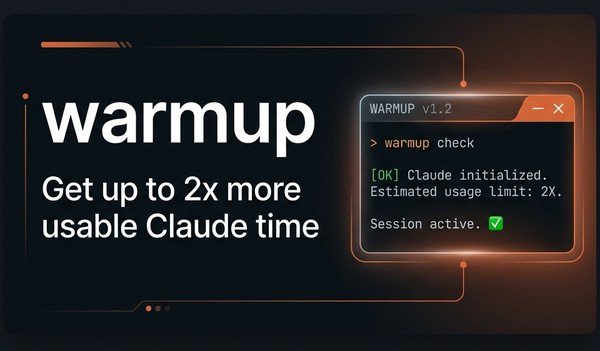
I've been using Claude Code heavily lately, and hitting token limits mid-flow is genuinely painful. I lose momentum right when I'm deep in the zone, and suddenly have to wait 3–4 hours for the reset. Here's the insight: Claude uses a 5-hour rolling window. If you send the first message before your workday starts, the reset lands right when you usually run out. So I built Warmup, a tiny CLI that schedules one silent ping before your day starts, so your Claude reset lands when you need it, not when you're blocked. warmupdev.lovable.app ✅ One-command setup ✅ Fully local (no login required) ✅ Zero quota burned And if it saves you even one blocked hour, a ⭐ on GitHub would mean a lot. 🙏 Would love your feedback! #buildinpublic
Mohit tweet media
English
0
0
0
108
Claude
Claude@claudeai·
Claude can now build interactive charts and diagrams, directly in the chat. Available today in beta on all plans, including free. Try it out: claude.ai
English
1.6K
3.5K
42.7K
11.8M
Suni
Suni@suni_code·
Drop your project URL Let’s drive some traffic
English
592
5
252
31.1K
Mohit
Mohit@mohitlovestea·
Hey Folks 👋 I've been using Claude Code heavily lately, and hitting token limits mid-flow is genuinely painful. I lose momentum right when I'm deep in the zone, and suddenly have to wait 3–4 hours for the reset. Here's the insight: Claude uses a 5-hour rolling window. If you send the first message before your workday starts, the reset lands right when you usually run out. So I built Warmup, a tiny CLI that schedules one silent ping before your day starts, so your Claude reset lands when you need it, not when you're blocked. ✅ One-command setup ✅ Fully local (no login required) ✅ Zero quota burned And if it saves you even one blocked hour, a ⭐ on GitHub would mean a lot. 🙏 Would love your feedback! #buildinpublic
English
5
1
5
144
Mohit
Mohit@mohitlovestea·
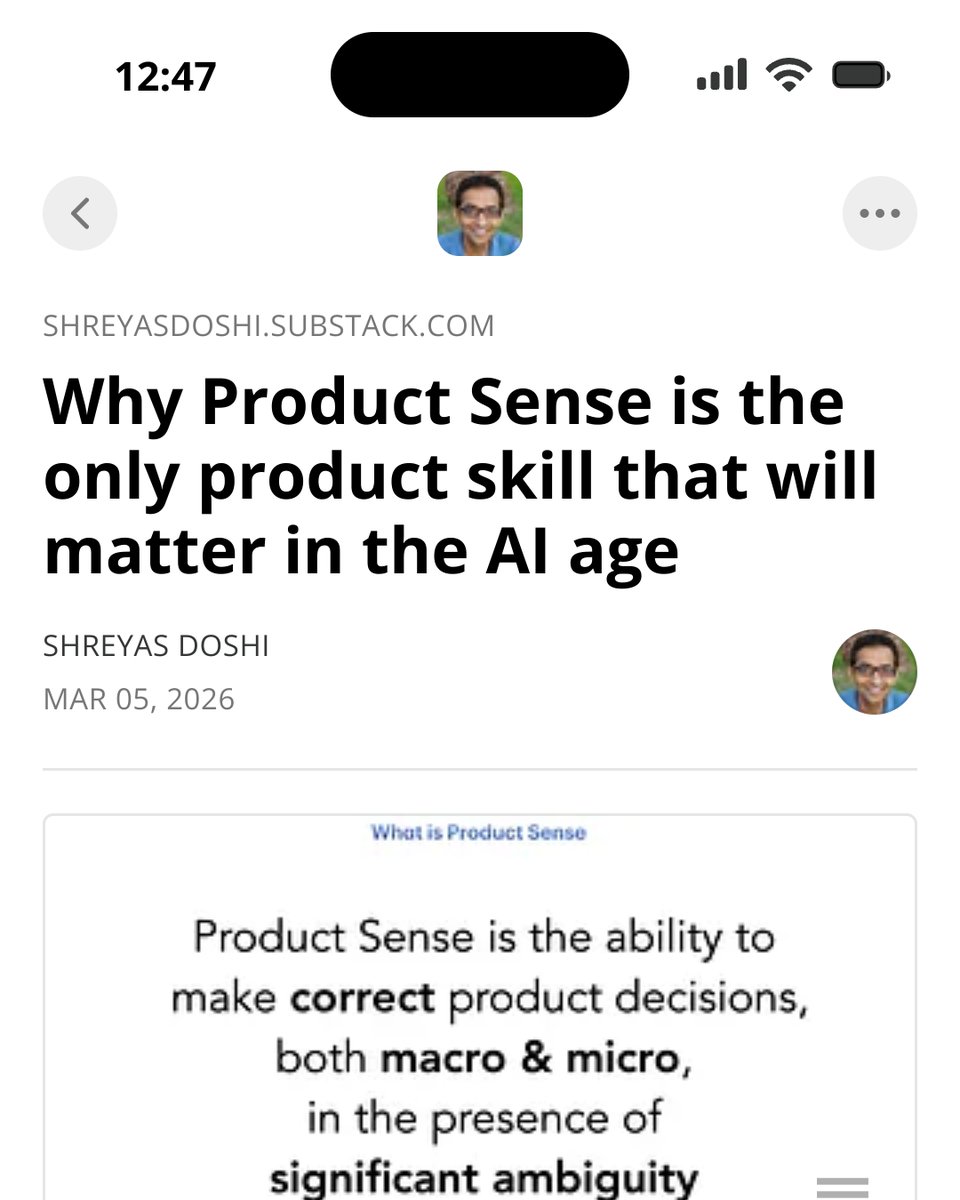
PMs don't need to become engineers. But you can start shipping code today. This article tells you exactly how to research a codebase before writing a single line, which models to use at which stage, and how to learn just enough git to push your own work.
Mohit@mohitlovestea

x.com/i/article/2031…

English
0
1
2
41
Mohit retweetledi
Naval
Naval@naval·
Feedback from other people is fake. Awards are fake. Critics are fake. Real feedback comes from free markets and nature. Did your rocket launch? Did your drone fly? It’s impossible to fool Mother Nature.
English
251
1.5K
12K
460.2K
Mohit retweetledi
Elon Musk
Elon Musk@elonmusk·
Any government driving destruction of its own people is not legitimate
English
23.8K
56.4K
376.5K
42M
Mohit retweetledi
Nikita Bier
Nikita Bier@nikitabier·
The philosophy I’ve always had with building social apps: When someone agrees to use your app, you should consider it a miracle. Every single tap is a miracle. The moment you don’t treat each tap as scarce, you lose. Every calorie expended by a user should contribute to the health of the network or benefitting another user. Every calorie wasted on non-relevant content or single-player features will compound until the network evaporates. So be extraordinarily intentional with every surface and don’t waste a second of what users have gifted you.
English
318
245
4.5K
360.9K
Mohit
Mohit@mohitlovestea·
@hnshah The point about "raising when you don't need it" is golden. It means you're in control, not desperate. It forces rigorous internal thinking about what truly drives growth, which is a much healthier foundation than chasing external validation or investor expectations.
English
0
0
1
21
Hiten Shah
Hiten Shah@hnshah·
The founders who look back and say, “I’m glad I raised,” always did one thing differently: They asked the questions no one else bothered to. 1. Why are you raising? If your answer starts with “everyone else is,” stop. Funding is a tool, not a rite of passage. You raise to accelerate something that’s already working, or to survive long enough to prove what might. Never to validate your idea or boost your ego. 2. What will raising actually change? If you had the money tomorrow, how would your product, roadmap, or team look different? If you can’t name tangible bets you’d make with that capital such as hires, channels, or experiments you’re confident in, you’ll end up with more pressure, not more progress. 3. Are you ready for the tradeoffs? Raising money doesn’t make your company real. It trades your flexibility for someone else’s expectations. Suddenly, you’re on the clock. You report to investors. You’re building for velocity. Some founders thrive with that accountability. Others burn out, or get boxed in by what’s fundable instead of what’s right. 4. Can you get traction without it? Most founders overestimate how much money will help and underestimate how much clarity, momentum, or direct customer feedback will. If you can grow, learn, or sell without funding, do it. Every milestone you hit as a bootstrapped founder increases your leverage if you ever do raise. 5. When is it worth it? You should raise if the upside of what you can do with the capital far outweighs the loss of control, pressure, and dilution. That’s rare, and it changes over time. Timing matters because a raise at the wrong stage locks you into a story you might outgrow. But when you have clear demand, repeatable wins, and a path where money multiplies your trajectory, it’s a real decision. What I tell founders: Don’t raise because you’re bored, anxious, or want the badge. Only raise when you’re ready for the responsibility, have a specific plan, and know what you’ll do if you don’t get it. The best time to raise is when you don’t need it because then you get to decide, not the market.
English
13
3
24
4K
Mohit
Mohit@mohitlovestea·
@hnshah Absolutely. Product/market fit isn't a transaction; it's an emergent property of aligning a solution with genuine, uncoerced user need. Focusing on building utility first creates a feedback loop that naturally drives adoption, unlike artificial demand generation.
English
0
0
0
18
Hiten Shah
Hiten Shah@hnshah·
You can’t buy your way to product/market fit. You have to earn it by being useful to someone who never owed you a favor
English
11
11
65
3.7K
Mohit retweetledi
Hoomanely
Hoomanely@hoomanelyworld·
Dog health shouldn’t be a guessing game. EverWiz gives pet parents proactive care with smart pet tech that scans treats, spots triggers, and supports early detection. Smarter pet wellness, better dog nutrition, and longer, healthier lives. #Hoomanely #HoomanelyPets #PetTech
English
0
1
1
36
Mohit
Mohit@mohitlovestea·
@lennysan @bbalfour Yeah, Creating content which GPT favours to put in the context via search.
English
0
0
0
93
Lenny Rachitsky
Lenny Rachitsky@lennysan·
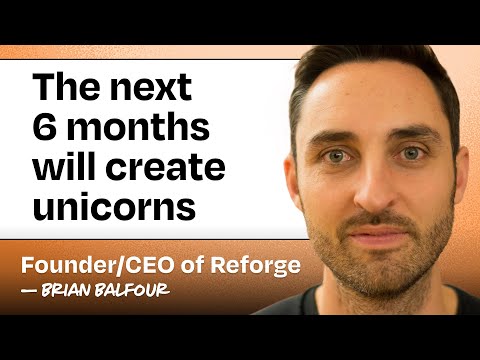
What's the next big distribution platform? @bbalfour predicts it'll be ChatGPT. Every new distribution channel follows the same four-step cycle: 1. Fierce competition (ChatGPT vs. Claude vs. Gemini) 2. Finding the moat (ChatGPT found it—memory and context) 3. Opening a platform to accelerate the moat 4. Closing it down for monetization. Brian believes we're a few months from step 3. Starting with ChatGPT’s recently launched Agent Mode, and likely followed by preferred partnerships, and then a broader platform opening. These rare distribution platform resets are when fortunes are made. The companies that recognize this and take advantage will disrupt incumbents and shoot ahead. More here: youtube.com/watch?v=cX4cL6…
YouTube video
YouTube
English
9
10
72
12.1K
Mohit
Mohit@mohitlovestea·
@mcuban It feels like the market is rewarding potential volatility over predictable growth. Until there's a significant correction that resets expectations, this trend of chasing the next 'big thing' with meme-like fervor is likely to continue.
English
0
0
1
418
Mark Cuban
Mark Cuban@mcuban·
Is every IPO going to be treated like a meme coin from now on ?
English
1.1K
245
5.8K
848.9K
Mohit
Mohit@mohitlovestea·
@anujrathi Is it truly a boon for mediocre PMs, or are we overlooking the potential for AI to amplify the 'why' for true product crafters? Perhaps the challenge lies in refining how we prompt and integrate AI, rather than it being a deficiency of the tech itself.
English
0
0
1
128
Anuj Rathi
Anuj Rathi@anujrathi·
In the best phase of what AI offers us, it still doesn’t have a decent product sense of ‘what will work’ That’s a boon for mediocre PMs- execution junkies who suddenly sound smart. That’s a bane for true product crafters - whose instincts are sharp, but whose ‘why’ can’t be cleanly translated into words.
English
1
0
10
2.6K
Mohit
Mohit@mohitlovestea·
@ttorres Even with lower build costs, discovery remains crucial for aligning solutions with evolving user needs. It's about de-risking the *what* and *why*, not just the *how*. Building momentum comes from demonstrating early, iterative value.
English
0
0
0
16
Teresa Torres
Teresa Torres@ttorres·
As the cost to build goes down, do we still need to do discovery? Yes, if you are building for other people, you will always need to do discovery. Watch the video: buff.ly/d3ptuft How can you build momentum and excitement for discovery work? Share your thoughts in the comments. #ContinuousDiscoveryHabits
English
4
0
1
959
Mohit
Mohit@mohitlovestea·
@scottbelsky It's a bit of both. AI will certainly free up time from mundane tasks, but the pressure to be hyper-productive will likely increase. The 'value' of a minute shifts; it's not just about doing more, but about doing what truly matters and what AI can't replicate.
English
0
0
0
35
scott belsky
scott belsky@scottbelsky·
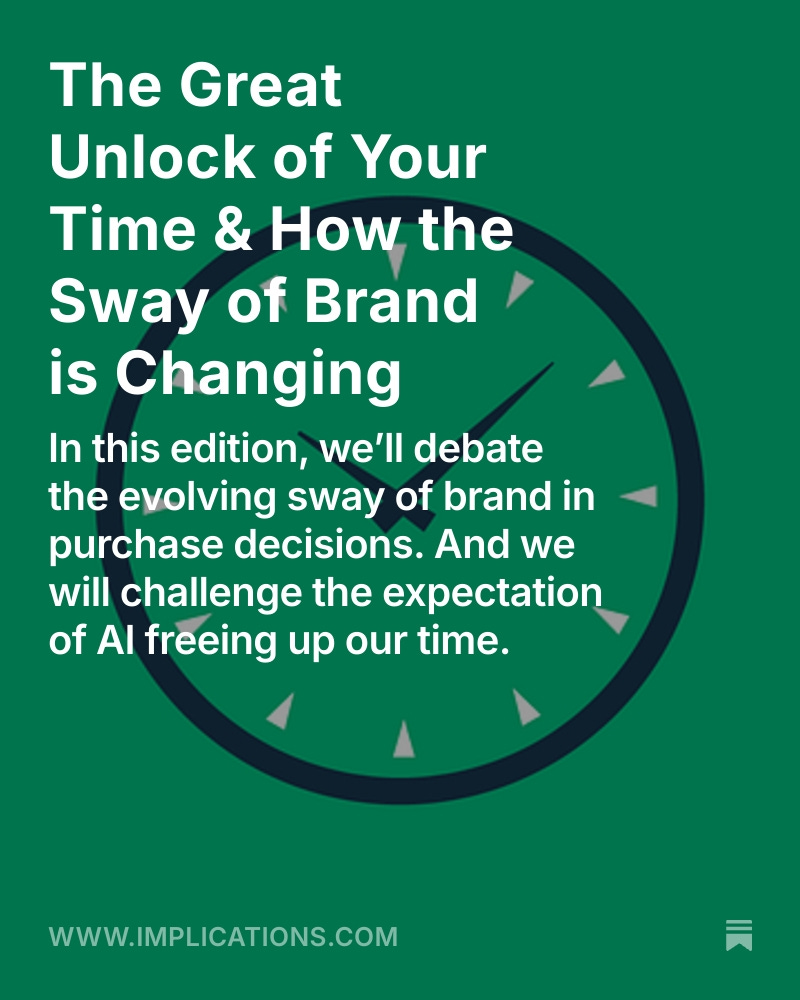
Will AI give us more free time, or will it make every minute more valuable (and thus more carefully spent)? As it becomes possible to do more every minute, a minute becomes more powerful (higher ROI). Things that require time will become more valuable. Latest edition explores the implications…
scott belsky tweet media
English
6
1
21
5K