@ShwqAlyasmyn الفلم مفبرك، فالتصوير في البدايه يُظهر الشخص الثاني وهو يحمل الخروف، اما عندما يصل إلى البيت يظهر الكلب. 🤣🐑🐕
العربية
Muhsin Solaman
31.9K posts

@mohsin56_
My love for humanity







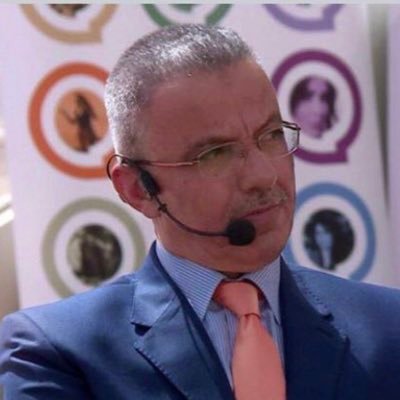
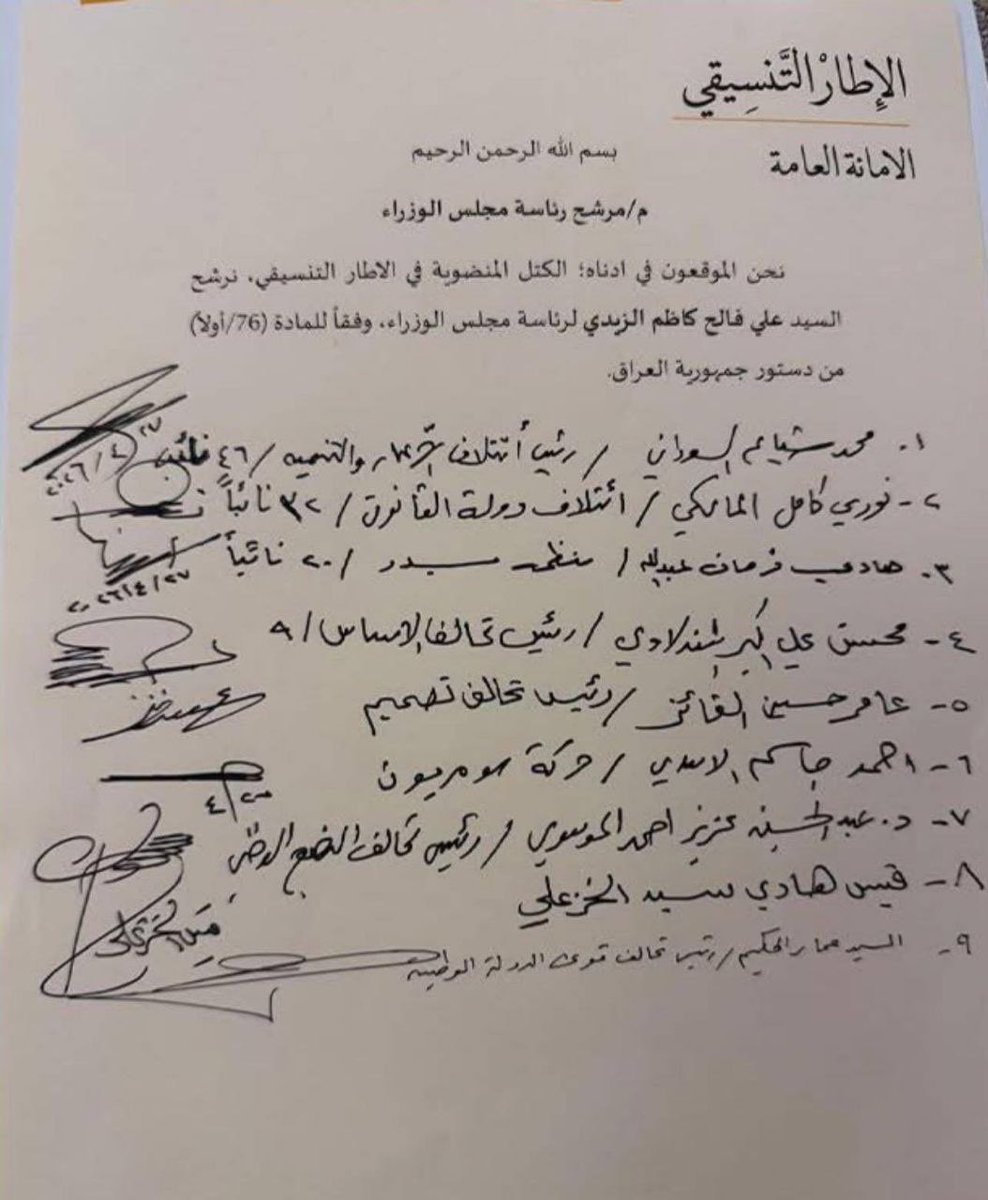
The Coordination Framework’s selection of Ali al-Zaidi was less a reflection of cohesion or strength than a belated attempt to escape an increasingly exposed internal impasse. After failing to push through heavyweight figures, it turned to a politically low profile name, hoping a compromise candidate might pass with minimal friction. Yet this seemingly quiet choice raises more questions than it answers, Al-Zaidi presented today as a businessman, lacks a clearly traceable pre 2003 trajectory, and his rapid ascent invites scrutiny rather than confidence. How was his wealth accumulated? What networks enabled his rise to head a financial institution that later fell under U.S. sanctions? These are not peripheral details they go to the heart of the legitimacy of a figure now being propelled toward the premiership. As for the much-discussed international backing it too warrants a more sober reading. The phone call he received from @POTUS, along with the accompanying public welcome, should not be interpreted as an open-ended endorsement so much as a cautious signal an initial vote of conditional confidence. Washington having extended this preliminary cover, is unlikely to sustain it if tensions with Tehran escalate again or if the future Iraqi government fails to meet U.S. demands. In essence, what exists now resembles a temporary de-escalation one that could quickly evolve into full support, or just as easily collapse into a sharp rupture. What stands out even more is that the narrative of a swift consensus masks the reality of how the decision emerged. Al-Zaidi did not rise through a prolonged internal negotiation within the Framework; rather, he appeared as a surprise candidate reportedly pushed forward by Nouri al-Maliki, before the bloc rapidly coalesced around him and granted him collective cover. This abrupt shift from an unexpected name to a consensus choice reveals more about the internal balance of power than any genuine unity of position. His close ties with influential actors within the Framework, particularly those aligned closely with Iran, further explain the speed with which he was embraced and presented as a ready made solution. Far from being externally imposed, as some narratives suggest, al-Zaidi appears to have emerged from within this very network backed by forces that view him as a reliable extension of their interests rather than a political gamble. At the same time, portraying him as Washington’s man in Baghdad is as misleading as framing him as purely an Iranian proxy. In reality, he appears to be a figure under scrutiny placed within a broader regional recalibration, where the United States is attempting to readjust the balance of power in Iraq, particularly regarding Iran-aligned actors. This leaves al-Zaidi in an unenviable position U.S. signals point toward curbing the influence of these factions, while those same groups retain sufficient political and electoral weight to make their marginalization both costly and potentially unfeasible. Herein lies the core dilemma If al-Zaidi moves to accommodate U.S. pressure, he risks direct confrontation with the very forces that enabled his rise. If he ignores those pressures, he jeopardizes the already fragile international cover underpinning his candidacy. In either case, he is navigating a highly constrained equation less a durable settlement than a short-term test, one unlikely to extend beyond a matter of months before its outcome becomes clear. In sum, what is unfolding does not signal the birth of stability so much as a temporary rearrangement of a deeper crisis, The Framework is postponing an inevitable rupture rather than resolving it, and al-Zaidi, instead of serving as an exit from the crisis.