
Dr Toms Rekis
336 posts
Dr Toms Rekis
@mol_crystal_guy
Chemist. Crystallographer. Bringing atoms from the reciprocal to the real space, or sometimes superspace. Used to study symphony orchestra conducting.
Frankfurt on the Main, Germany Katılım Şubat 2021
572 Takip Edilen622 Takipçiler
Dr Toms Rekis retweetledi

PhAI can solve the so-called ‘phase problem’ with lower-quality data than is needed for other methods and quickly arrives at high quality solutions.
chemistryworld.com/news/ai-tool-o…
English
Dr Toms Rekis retweetledi

Really happy that our paper on solving the crystallographic phase problem using neural networks is out in @ScienceMagazine. Thanks to @mol_crystal_guy and @AndersOMadsen for a great collaboration. science.org/doi/10.1126/sc…
English
Dr Toms Rekis retweetledi

Today we've launched our book "Atlas of Fourier Transforms". It has been a two year passion project led by Miti Shah, a student in our lab. It is uniquely comprehensive and suitable as a coffee table book or advanced research reference. The full pitch is on Kickstarter.
kickstarter.com/projects/hlab/…

English
@ntumanov_Xray I like Z’=8. Will it be published? I wonder what the anion is.
English
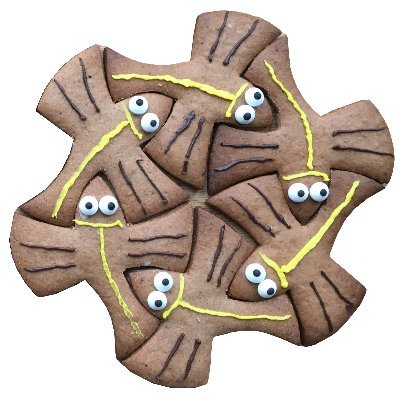
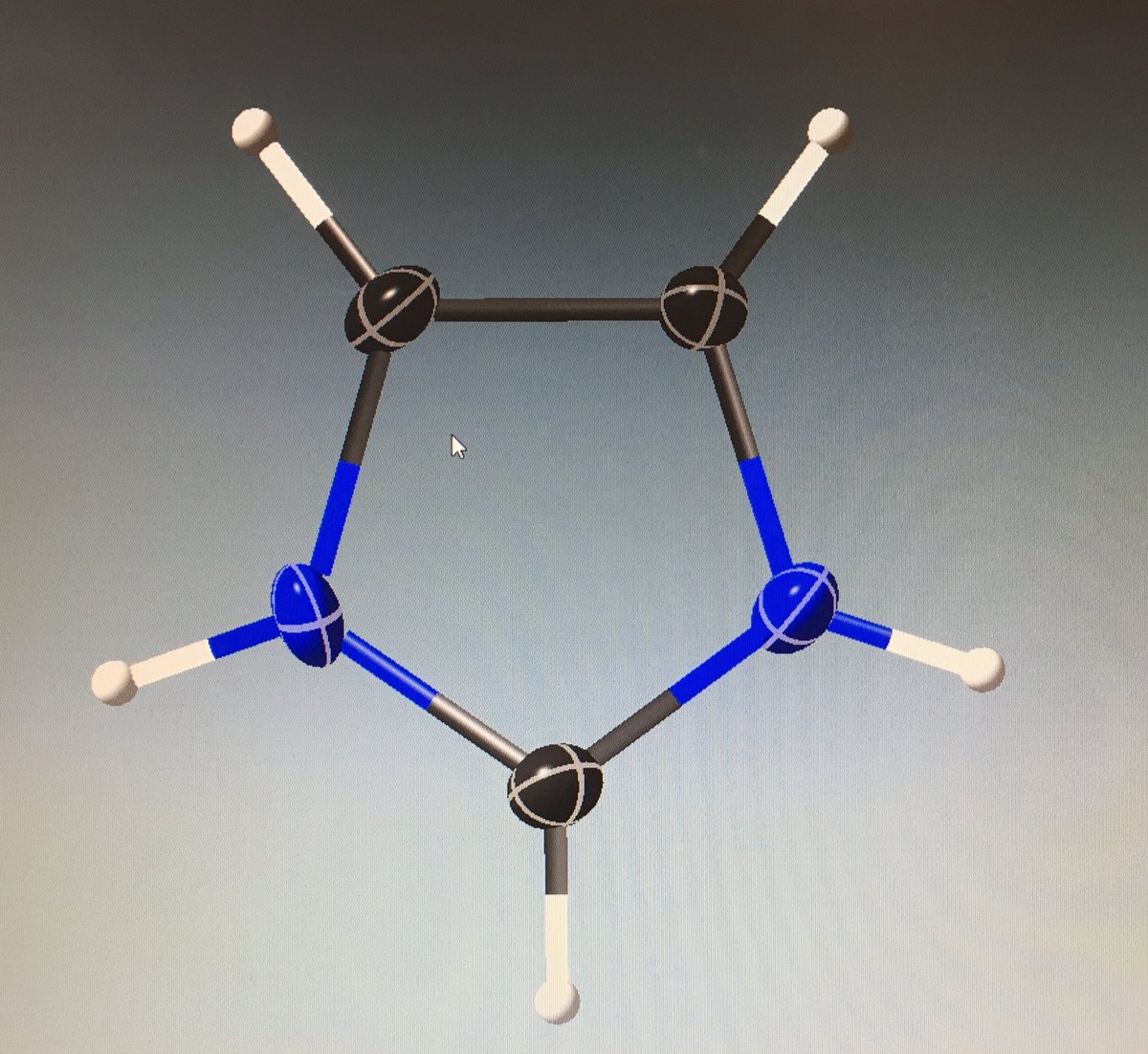
In fact, Z’=2 to Z’=4 to Z’=8 phase transitions. From here (left) to here (right).

English
Just for scale, it is a 1.5 liter bottle and no microscope.
“Obviously, it is already known” compound. (spoiler: no).
As a bonus, Z’=2 to Z’=8 phase transition on cooling.
#crystallography
English
Dr Toms Rekis retweetledi

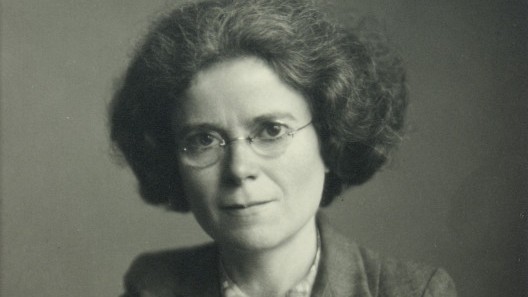
Born #OnThisDay in 1903 was crystallographer Kathleen Lonsdale FRS. She was one of the first two female scientists to be elected as a Fellow of the Royal Society, along with Marjory Stephenson. She discovered the structure of benzene, and was a committed pacifist.
English
Dr Toms Rekis retweetledi
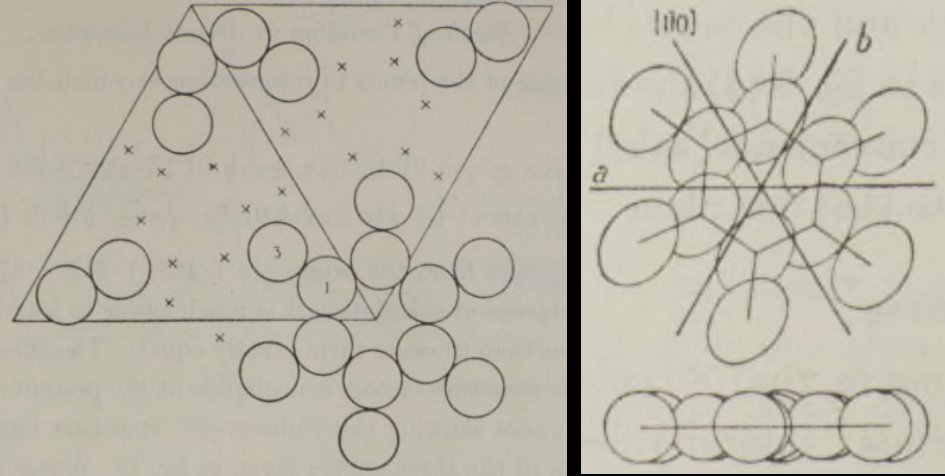
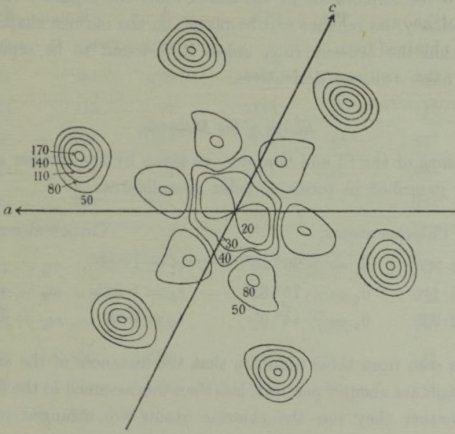
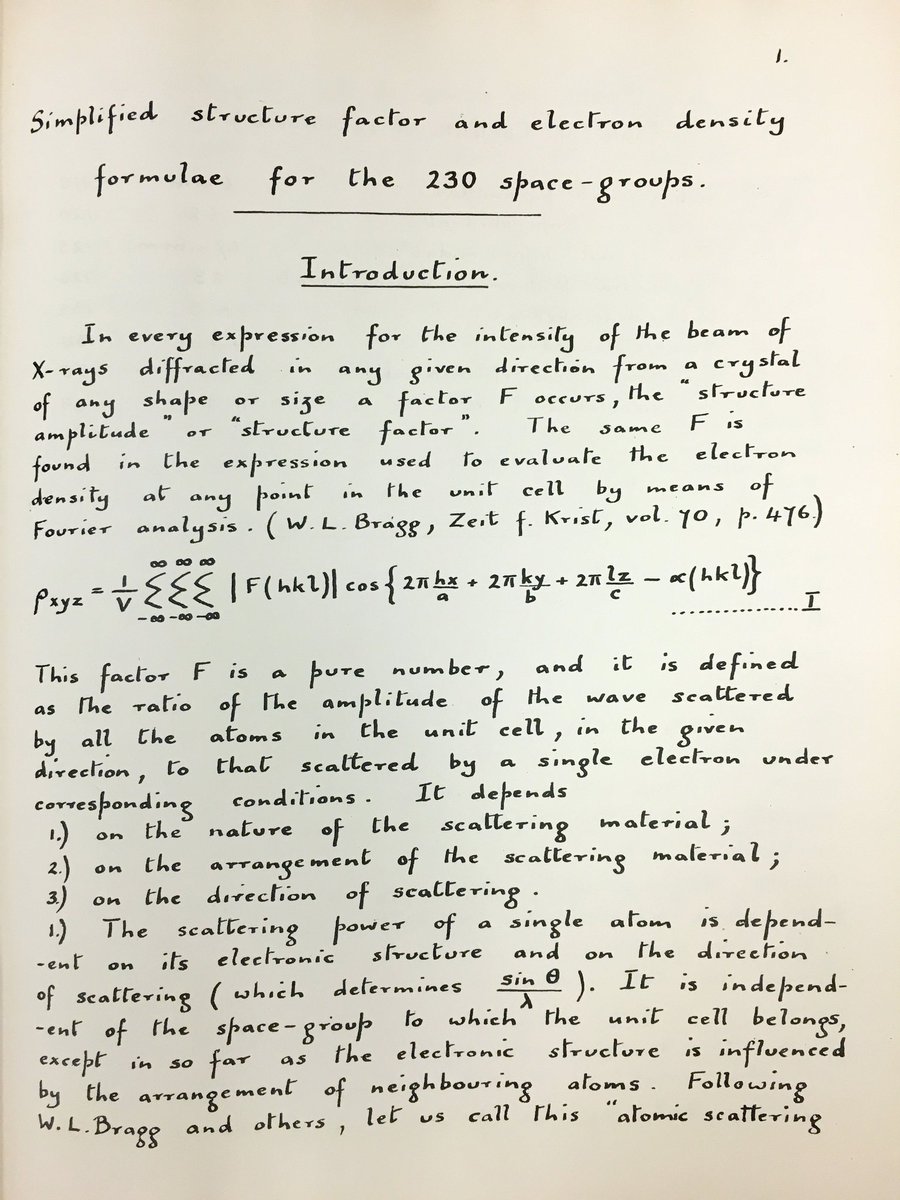
Kathleen Lonsdale (neé Yardley), a pioneer in #Xray #crystallography, was born in 1903 #OTD. Famous for proving #benzene core structure; structure factor calculation formulas; serving as editor of Int. Tables for #Xray #crystallography (1952) & first woman @IUCr president (1966).

English
Dr Toms Rekis retweetledi
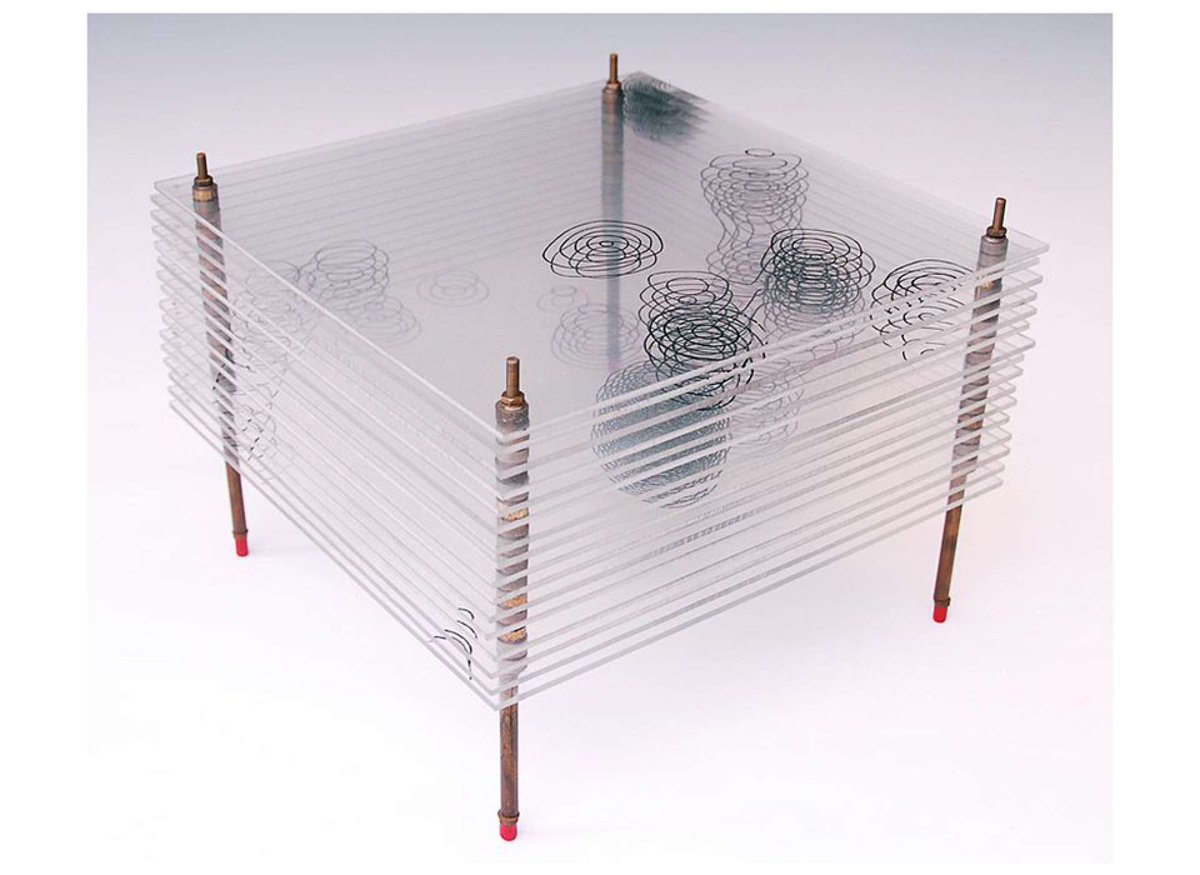
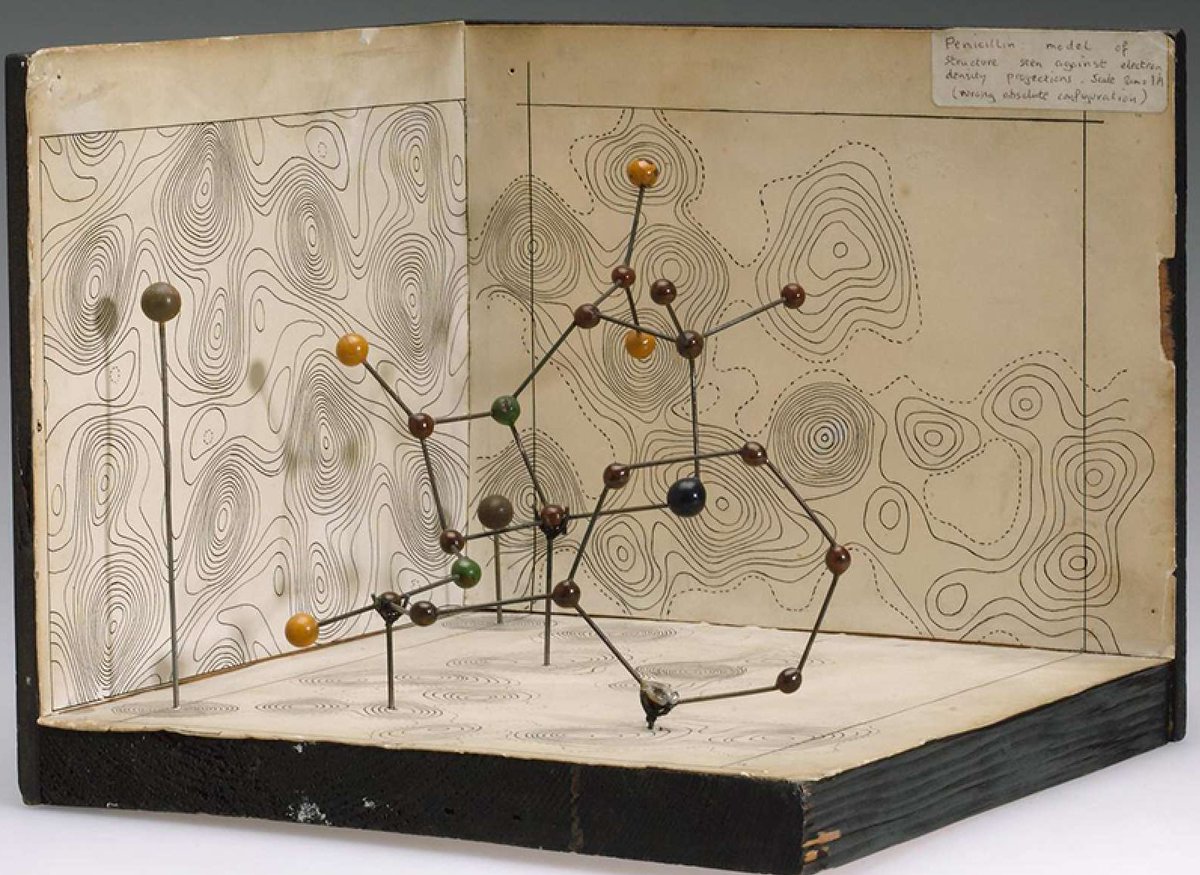
Hodgkin made huge contributions to #Xray #crystallography, determining the structures of #cholesterol iodide in 1943, #penicillin in 1945 (finding the least expected beta-lactam structure), and #vitamin B12 in 1955—result described by L. Bragg as "breaking the sound barrier".
The Nobel Prize@NobelPrize
See the very moment chemistry laureate Dorothy Crowfoot Hodgkin receives her #NobelPrize on 10 December 1964. Crowfoot Hodgkin was the third woman to be awarded the chemistry prize, following in the footsteps of Marie Skłodowska Curie and her daughter Irène Joliot-Curie.
English
@stecanossa @MJCliffe @IUCr Don’t forget molecular solid solutions where positions are different for at least some atoms of the two (or more) components. The more we try to define… continuum is hard to accept.
English
@MartinWard_xtal @AndersOMadsen Most likely only the patterns.
English

@mol_crystal_guy @AndersOMadsen Thanks for the info. I see some hits when I search the ICDD, but these may be later only and no structure or indexing

English
Q for the diffraction folk on here - Im looking for cif files (or at least unit cell/space group) for phases of magnesium stearate. I have the trihydrate, but looking for the anhydrate and dihydrate forms. I think these may be on the ICDD, but sadly I dont have access :(
English
@biochem_fan The space is VERY large, so many degrees of freedom.
English

"42,000,000 structures" for training are very large. I wonder what fraction the training set represents among all possible crystal structures below the given unit cell volume? Did it contain structures very similar to the test case? i.e. naphthalene is a very common motif.
English
@biochem_fan @AndersSL can elaborate here. All indications are there that non-centrosymmetry will not be a problem. Already this network can find all 8 structure semivariants equally well.
English
@biochem_fan No, we did not try anything in real space. Setting everything up in the reciprocal space felt the way to go. I don’t know what exactly was tried, but was the origin problem dealt with?
English
Preprint "PhAI: A deep learning approach to solve the crystallographic phase problem" from @AndersSL, @mol_crystal_guy,@AndersOMadsen chemrxiv.org/engage/chemrxi…
Impressive and thank you very much for releasing both training codes and model weights.
English
@biochem_fan That’s just to be able to solve structures where some of the strongest reflections are missing due to whatever reasons. Of course the next step is to generate realistic incomplete data — missing cone/wedge in ED or incompleteness in high-pressure studies. That’s planned!
English
@mol_crystal_guy @AndersSL @AndersOMadsen Evil wizardry...
I did not downloaded yet full SI, but does it include "how-to-use-for-dummies"?
I see now why you were doing some crystallographic archeology some time ago :)
English
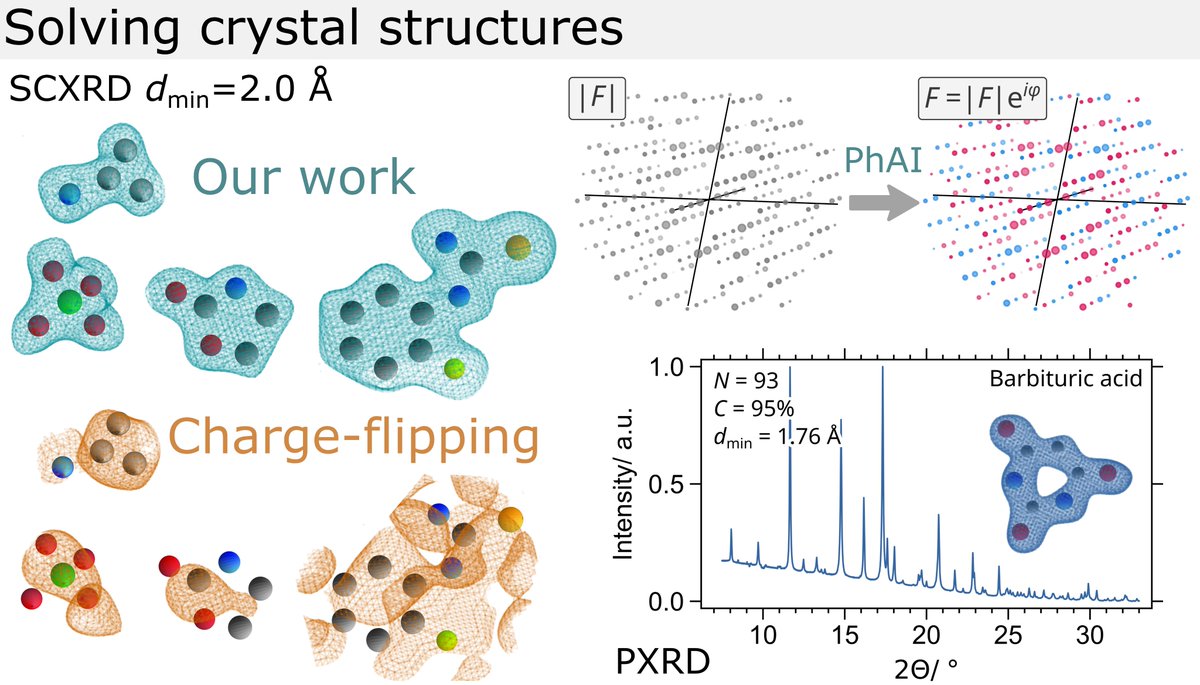
Imagine solving crystal structures from low-resolution SC- and PXRD data with a single click!? Our pilot study was designed for small unit cells and P21/c (+supergroups) only, but the results are striking! Preprint: doi.org/10.26434/chemr… @AndersSL @AndersOMadsen
English
@MartinWard_xtal @AndersSL @AndersOMadsen If P1 was cracked, structure in any space group would be solvable with that (if the data represent a regular 3D structure). Twinning or some other irregularities would of course pose problems. But ideas for further work are endless. For example, dealing with merohedral twinning.
English
@mol_crystal_guy @AndersSL @AndersOMadsen Wha if I have weak data but a SCXRD dataset with a strong indexing (P212121) which is also supported by PXRD indexing - might your development help to get a structure from this....?
English
@MartinWard_xtal @AndersSL @AndersOMadsen The ultimate goal would be P1. @AndersSL is wizarding. We initially chose only one space group for convenience. All supergroups are possible if the data are indexed leading to specific (mostly non-standard) settings that bring the symmetry operators in congruence.
English
@mol_crystal_guy @AndersSL @AndersOMadsen this sounds amazing - great work and thanks for highlighting the pre-print! what are the challenges on expanding this to consider more spacegroups?
English