M⌬nica

356 posts

M⌬nica banner
M⌬nica

M⌬nica

@mon_difer

A universe of atoms, an atom in the universe. #Postdoc #PhD👩🏻‍🔬 #Science #NMR #Spectroscopy 📈📉 #OrganicChemistry 🧪#NaturalProducts 🌿

Katılım Kasım 2021
585 Takip Edilen238 Takipçiler
M⌬nica retweetledi
Jorge Bravo Abad
Jorge Bravo Abad@bravo_abad·
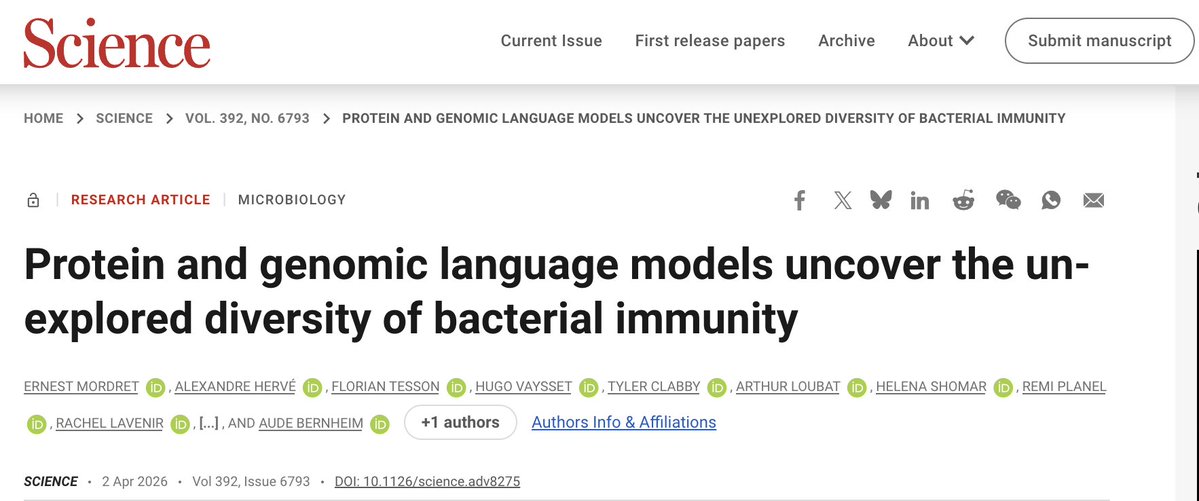
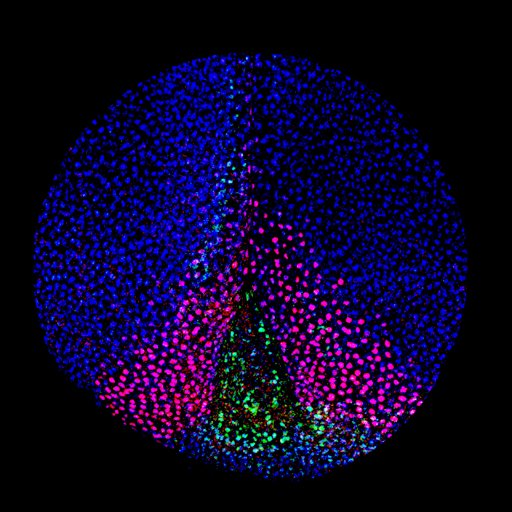
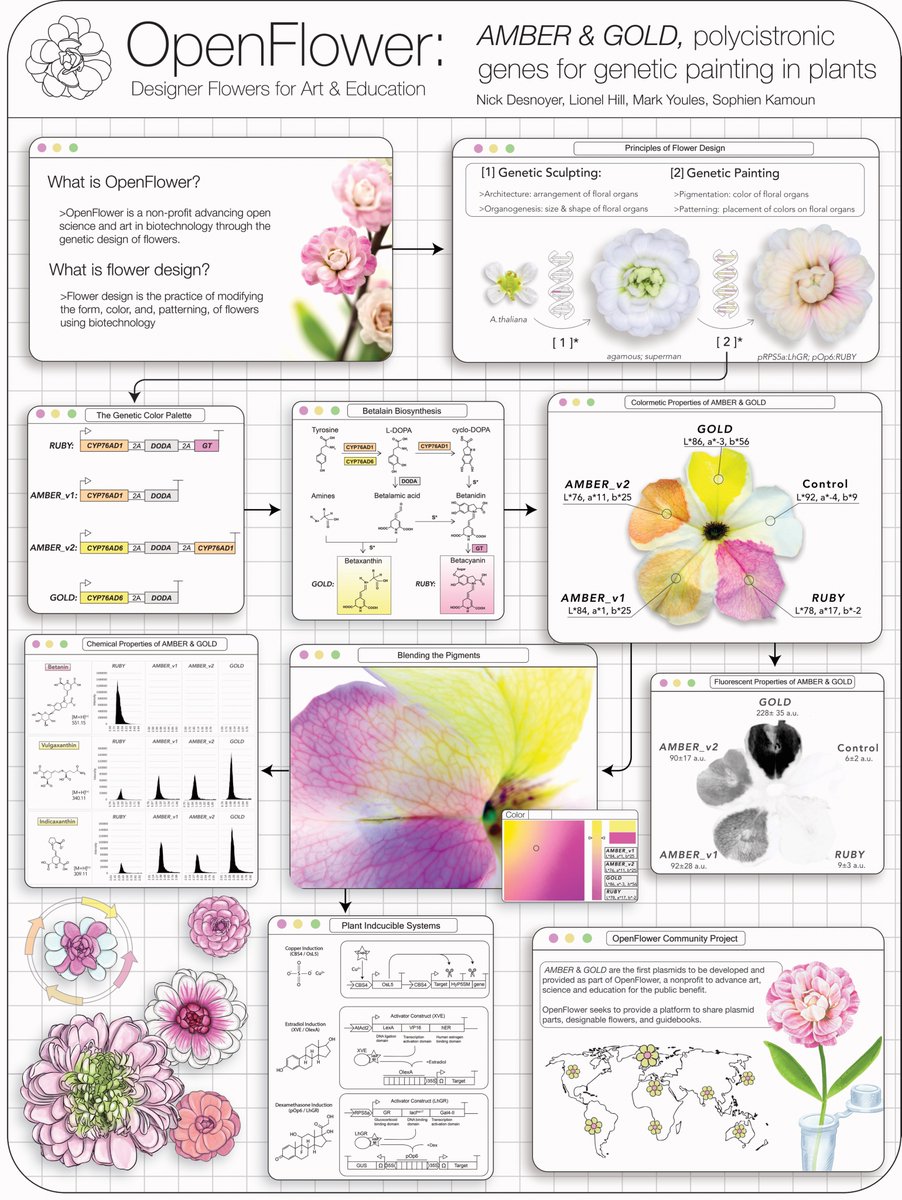
What happens when you train a transformer on 123 million bacterial proteins Bacteria have been fighting viruses for billions of years. To do it, they have evolved a remarkable diversity of antiphage defense systems — molecular immune machines that detect and destroy invading phages. Yet fewer than 250 such systems had been experimentally validated. A new study in Science suggests we've barely scratched the surface. Mordret and coauthors asked a simple but powerful question: can language models trained on protein sequences and genomic context learn the "grammar" of bacterial immunity well enough to predict entirely unknown defense systems at scale? They developed three complementary deep learning models. ALBERTDF adapts the ALBERT transformer architecture to treat genes as words and genome neighborhoods as sentences — learning defensiveness from genomic context alone, without any sequence information. ESMDF fine-tunes the ESM2 protein language model with LoRA adapters to classify proteins as defensive or non-defensive directly from amino acid sequence — trained on a dataset of 123 million proteins drawn from 32,000 bacterial genomes. GeneCLRDF combines both signals through contrastive learning: it teaches the model that a gene's identity can be inferred either from its sequence or from the genomic neighborhood where it lives. This joint embedding achieves 99% precision and 92% recall on held-out benchmarks — far outperforming each approach independently. The models aren't just impressive on paper. The authors experimentally validated 12 antiphage systems with no prior link to immunity, in both E. coli and Streptomyces albus. Some carry canonical defense domains; others involve proteins with no known association to antiphage function whatsoever. Applied to over 32,000 bacterial genomes, GeneCLRDF predicts 2.39 million antiphage proteins. Around 1.5% of a typical bacterial genome is devoted to defense — three times previous estimates — and more than 85% of predicted protein families have no prior link to immunity. The implications are immediate. The predicted atlas — including ~23,000 candidate operon families — is a ready-made discovery pipeline for novel nucleases, molecular effectors, and antimicrobial mechanisms directly relevant to phage therapy and programmable biologics. Language models are turning the bacterial pangenome into an actionable resource. Paper: Mordret et al., Science (2026) — Science license | science.org/doi/10.1126/sc…
Jorge Bravo Abad tweet media
English
5
68
298
16.2K
M⌬nica retweetledi
Nature Catalysis
Nature Catalysis@NatureCatalysis·
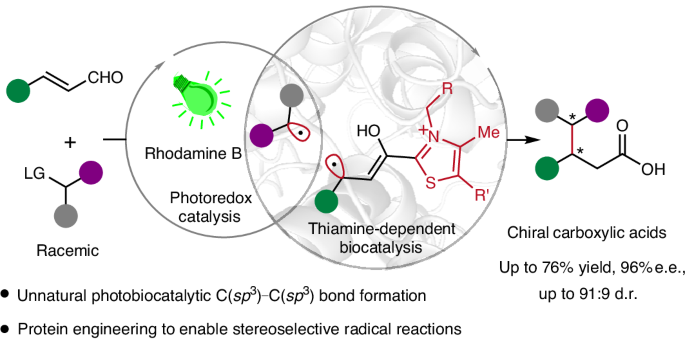
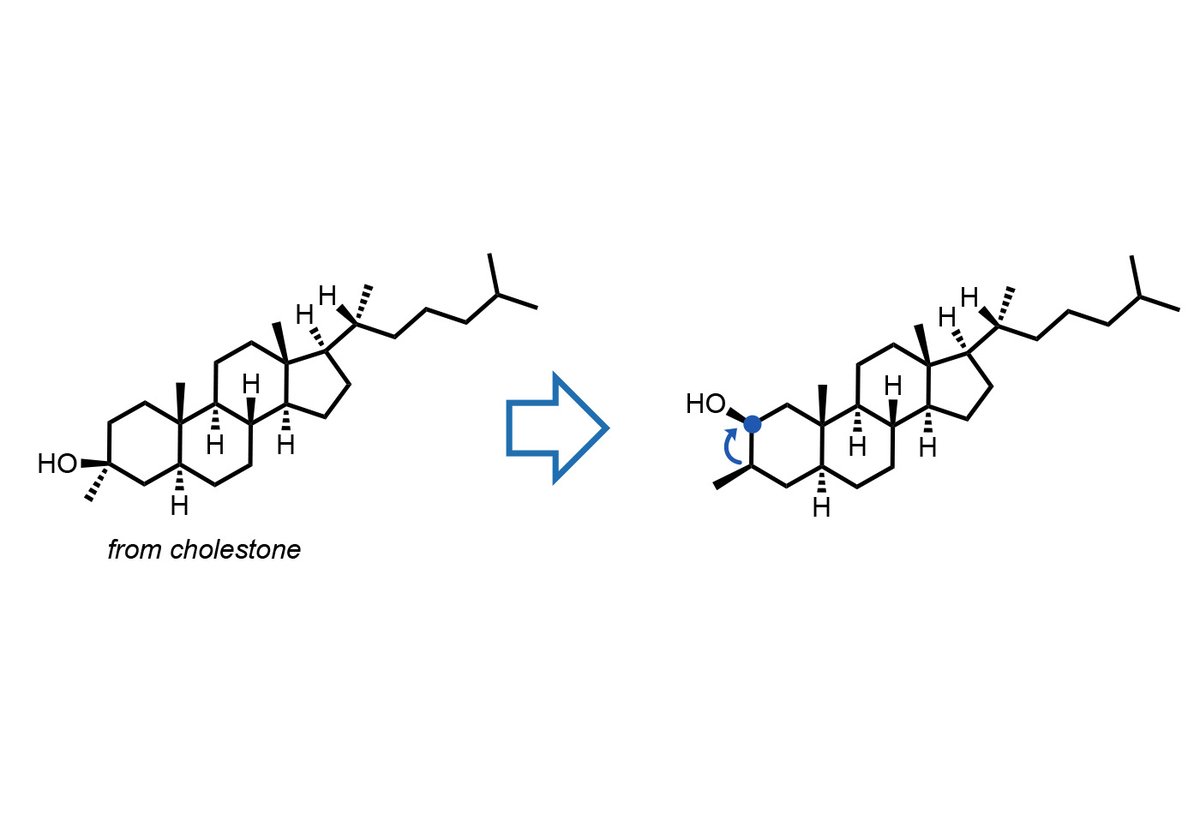
Enantioselective C(sp3)–C(sp3) bond formation by synergistic thiamine-dependent radical biocatalysis and photoredox catalysis dlvr.it/TRrSh1
Nature Catalysis tweet media
Français
0
14
97
4.4K
M⌬nica retweetledi
SECTEI CDMX
SECTEI CDMX@SECTEI_CDMX·
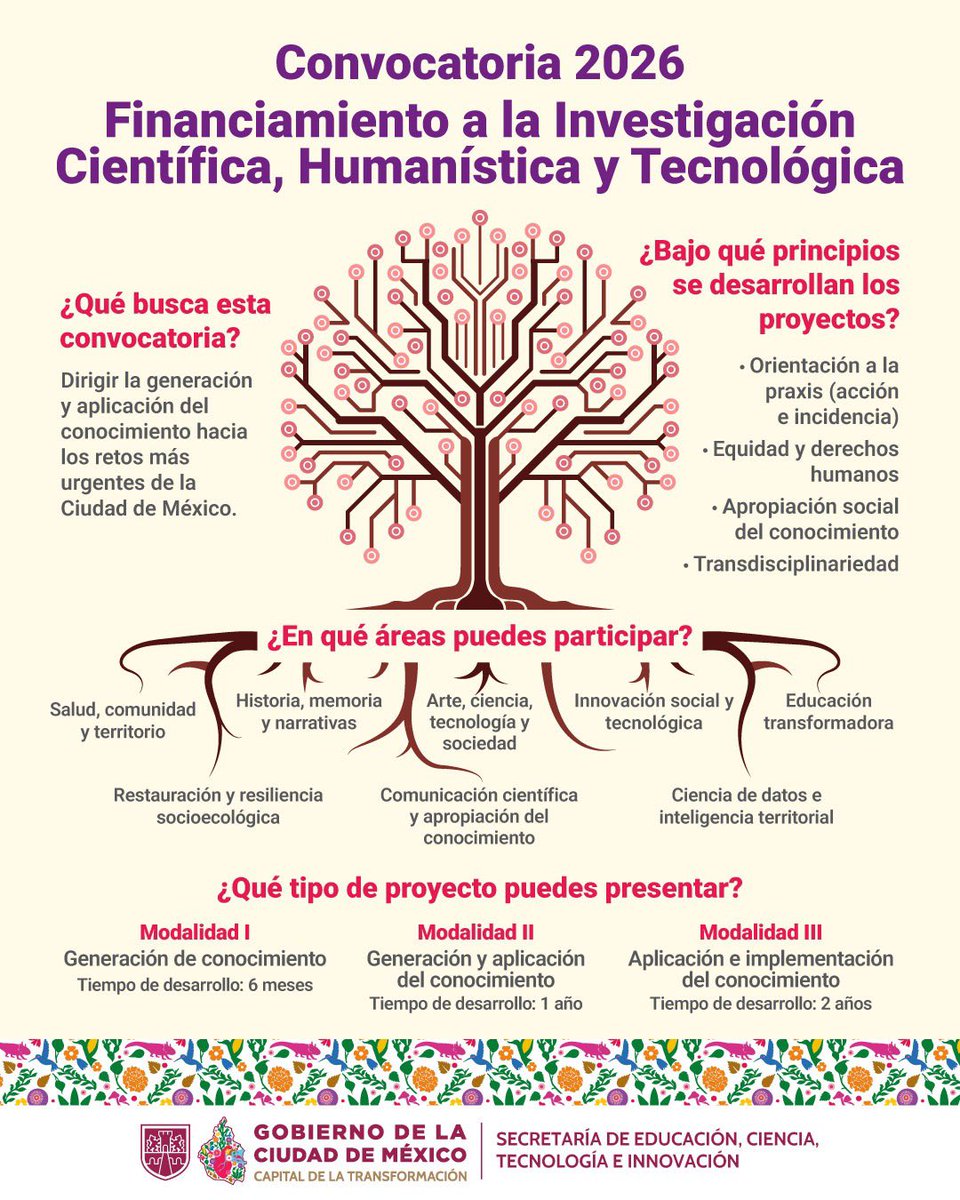
El desarrollo tecnológico con visión social genera bienestar y cierra diversas brechas. 📚🧬🦾📄🖼️ En las próximas semanas publicaremos la Convocatoria General de Proyectos 2026, cuyo objetivo es financiar propuestas que resuelvan los desafíos que vive día a día la Ciudad de México. Te invitamos a saber en qué consistirá. #CapitalDeLaTransformación
SECTEI CDMX tweet media
Español
0
8
9
579
M⌬nica retweetledi
Jorge Bravo Abad
Jorge Bravo Abad@bravo_abad·
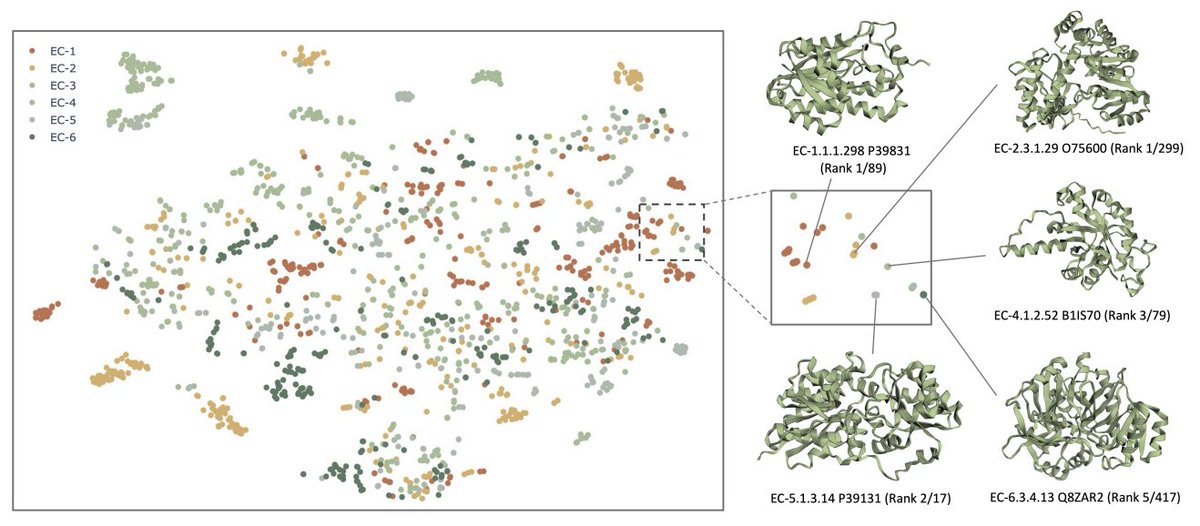
Given a reaction, which enzyme catalyses it? Given an enzyme, what can it perform? A geometric foundation model that answers both Of the ~250 million protein sequences in UniProt, fewer than 0.3% have been manually curated for function. Meanwhile, 40–50% of known enzymatic reactions lack any associated enzyme sequence—orphan reactions. Traditional approaches rely on EC number classification, which groups distinct reactions under the same code, or sequence homology tools like BLASTp, which fail when similarity is low. Neither directly models whether a specific enzyme structure can catalyse a specific reaction. Yong Liu and coauthors introduce EnzymeCAGE, a geometric foundation model trained on ~1.5 million structure-informed enzyme–reaction pairs across 3,273 species. The key architectural choice is to focus on the catalytic pocket rather than the full protein. A GNN encodes pocket geometry—backbone coordinates, dihedral angles, side-chain torsions—extracted via AlphaFill from AlphaFold structures, while ESM Cambrian embeddings capture global evolutionary context. On the reaction side, SchNet encodes 3D substrate and product conformations, with a reacting-area weight matrix that upweights atoms at the reaction centre. Geometry-enhanced cross-attention then models pocket–reaction interactions to output a catalytic compatibility score. On unseen enzymes, EnzymeCAGE achieves 58% top-10 success rate—a 45% improvement over baselines including CLIPZyme, ESP, and MMseqs2. For orphan reactions, enzyme retrieval improves by 41%. It works even when test enzymes share less than 30% sequence identity with training data, where homology methods break down. An emergent capability is catalytic site identification: attention weights consistently highlight experimentally validated active-site residues, despite this never being a training objective. In two case studies—withanolide biosynthesis and glutarate pathway reconstruction—EnzymeCAGE correctly retrieves catalytic enzymes where all baselines fail, ranking positive P450s within the top 6–13 among 107 candidates at only ~40% sequence similarity to training proteins. The design principle: by decomposing catalysis into pocket geometry, reaction centre chemistry, and their 3D interaction—rather than relying on sequence similarity or coarse EC labels—the model learns transferable representations of catalytic compatibility that generalize across enzyme families. Paper: nature.com/articles/s4192…
Jorge Bravo Abad tweet media
English
1
40
168
11.3K
M⌬nica retweetledi
Bluefors
Bluefors@BlueFors_Ltd·
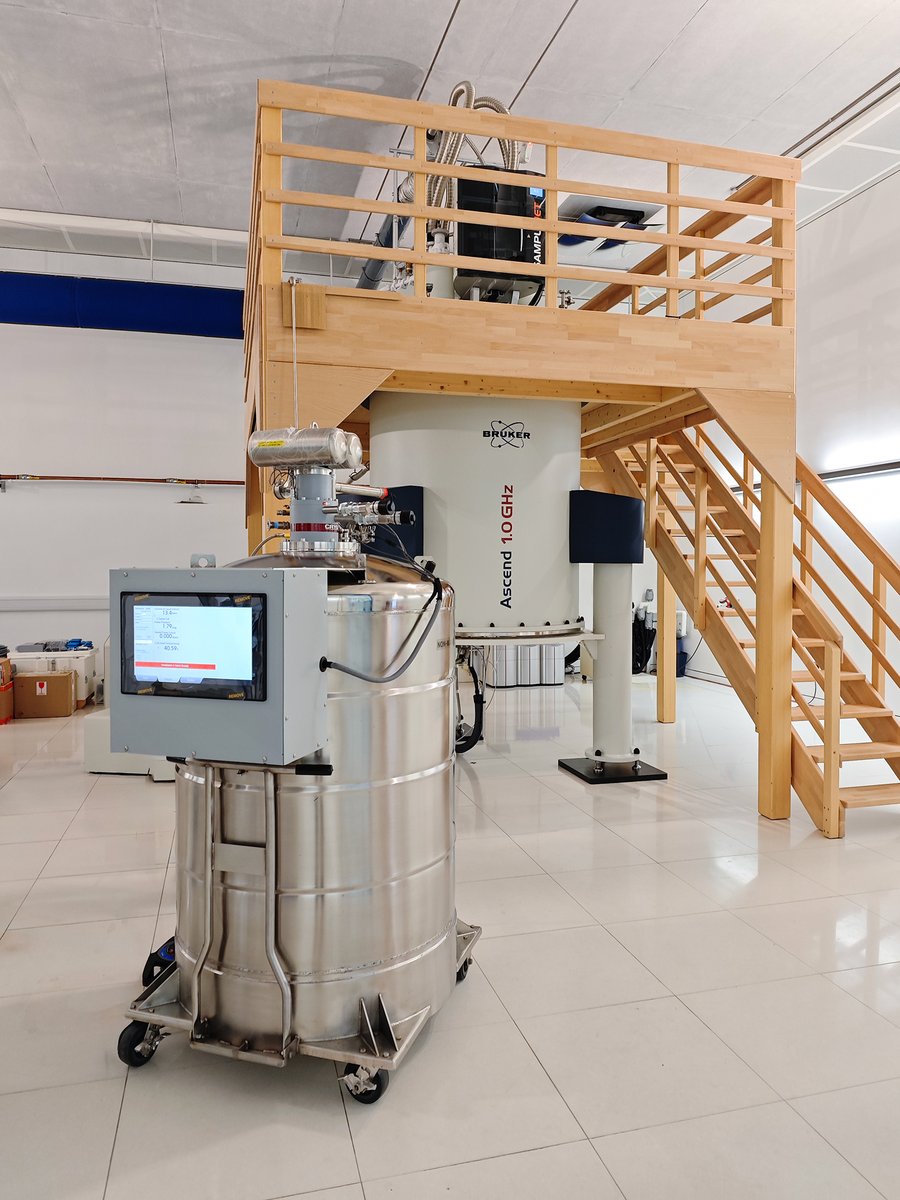
We’re delighted to announce the successful installation of a Cryomech Liquid Helium Plant (LHeP) at the HWB-NMR facility at the University of Birmingham - one of two national facilities equipped with the most powerful #NMR magnets in the world. #Cryogenics #HeliumRecovery
Bluefors tweet media
English
1
6
15
880
M⌬nica retweetledi
Ohata Lab
Ohata Lab@OhataLab·
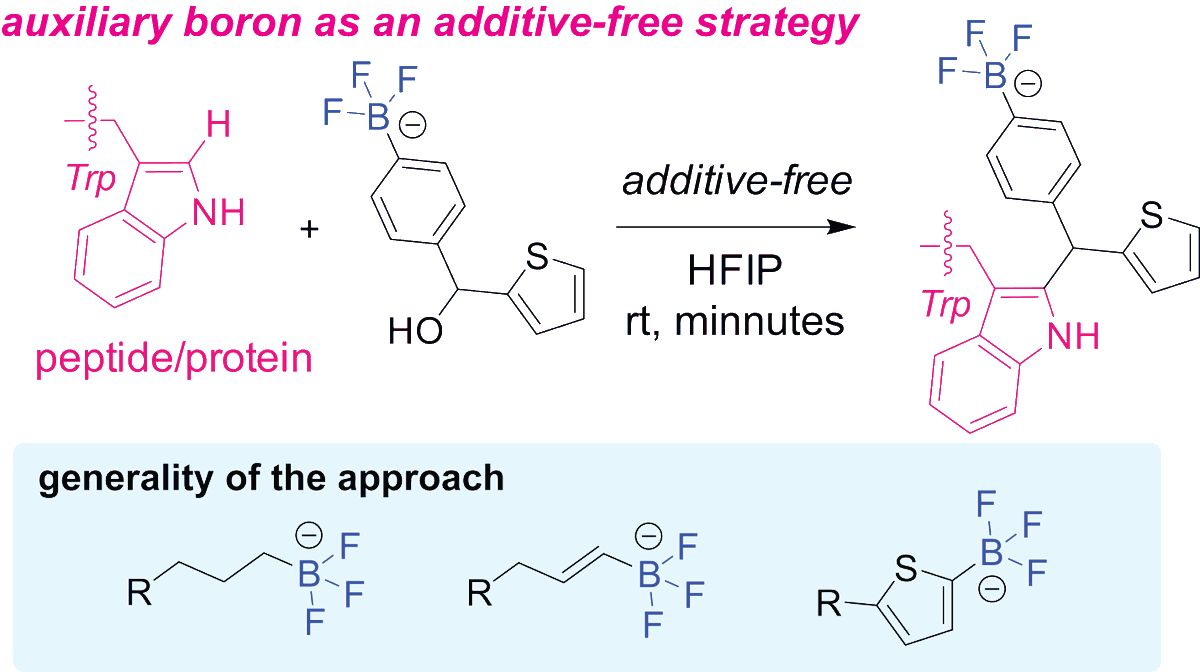
A classical Friedel-Crafts reaction may not be biocompatible partly because acid catalysts are needed. Our work @JACS_Au showed a boron unit makes it "catalyst-free" for tryptophan bioconjugation! The century-old reaction still has a lot going on! doi.org/10.1021/jacsau…
Ohata Lab tweet media
English
3
12
72
6.8K
M⌬nica retweetledi
Conexión Cinvestav
Conexión Cinvestav@ConexionCinves·
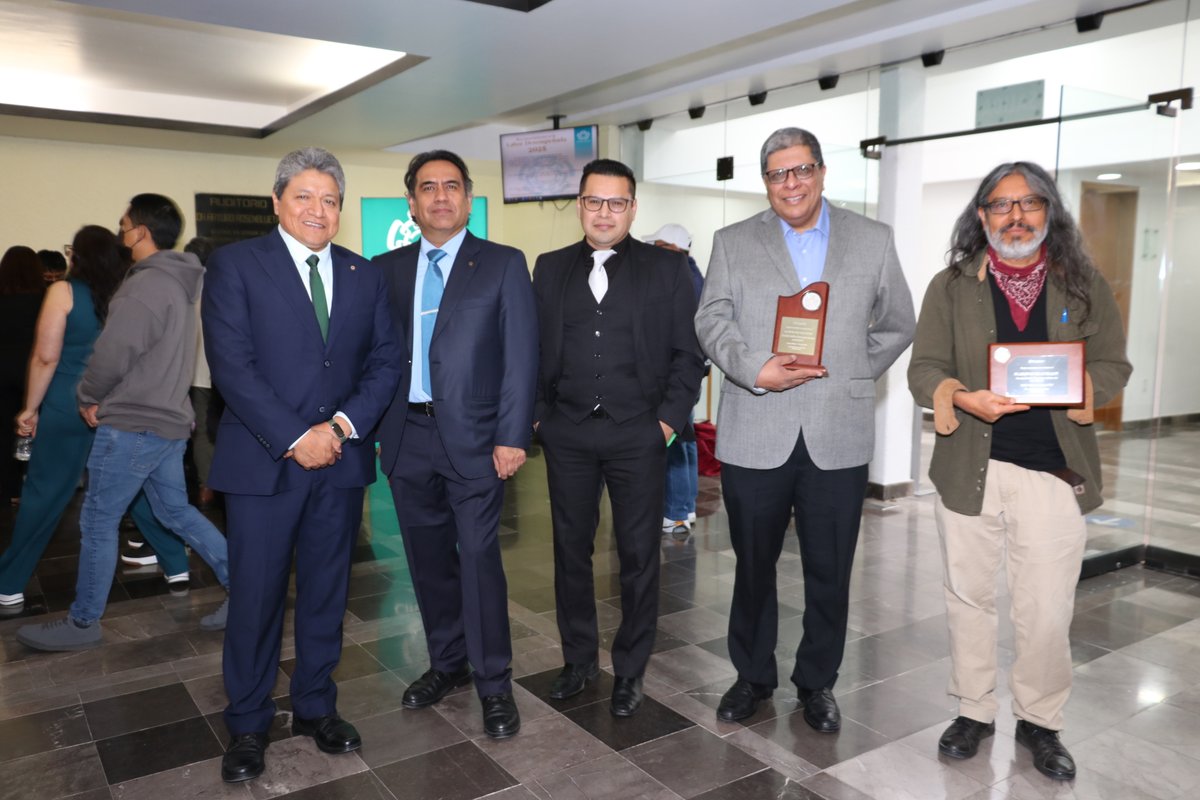
🏆🏅Autoridades del Cinvestav encabezaron la tradicional Ceremonia de entrega de reconocimientos a la labor desempeñada de su personal. 👇Revive algunos momentos clave en la siguiente galería: conexion.cinvestav.mx/Publicaciones/…
Conexión Cinvestav tweet mediaConexión Cinvestav tweet mediaConexión Cinvestav tweet mediaConexión Cinvestav tweet media
Español
0
2
3
233
M⌬nica
M⌬nica@mon_difer·
Dua Lipa cantando Amor Prohibido en CDMX 🇲🇽⭐⭐⭐⭐⭐⭐ 🥰
Español
0
0
2
376