Montgolfier Research

33 posts

Montgolfier Research banner
Montgolfier Research

Montgolfier Research

@montgoIfier

Institutional-tier research and DD on growth & value stocks with retail-accessibility, available for free. https://t.co/r4E0vaDCVy https://t.co/z4rTbbHVpd

Katılım Aralık 2025
5 Takip Edilen638 Takipçiler
Montgolfier Research retweetledi

The Trend Sage
The Trend Sage@JonkooTrades·
A couple months ago @montgoIfier released a massive 20 page, institutional level investment thesis on $DGXX. With the current hype in #HPC / #AI Infrastructure stocks I think it is important to highlight this again, and raise awareness on the company that is slowly developing itself. If this thesis plays out, the company has a valuation of upwards of 10$, which is a 400% upside from where we are now. Please give this a read, and let me know in the comments what you think. Also share it with people who will find this interesting! montgolfierresearch.com/research/dgxx-…
The Trend Sage tweet media
English
2
9
46
3.5K
Montgolfier Research
Montgolfier Research@montgoIfier·
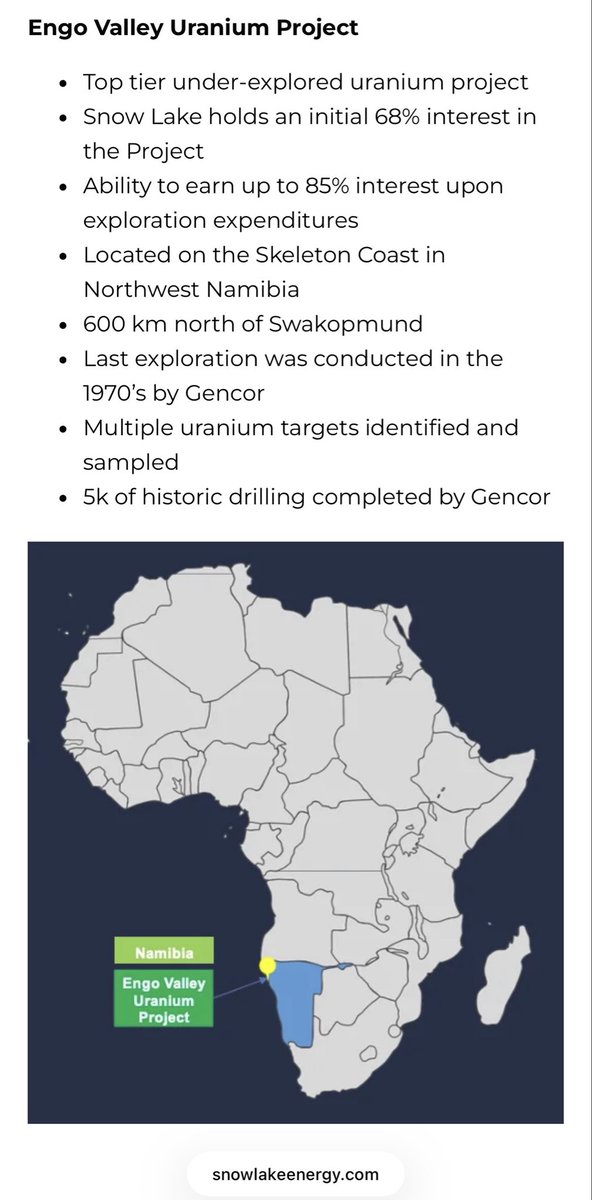
It's definitely being slept on because the market hasn't digested the merger news properly, and the asset base GUE is bringing. Already like 18m lbs in defined resource, and the upcoming MRE has the potential to add another 8m lbs. It's certainly the most promising explorer right now, and indeed the least well-known one. We'd love for you to take a look at our 27-page thesis and get your thoughts. docs.google.com/document/d/1nk…
English
2
0
2
284
Antonio Costa
Antonio Costa@ACInvestorBlog·
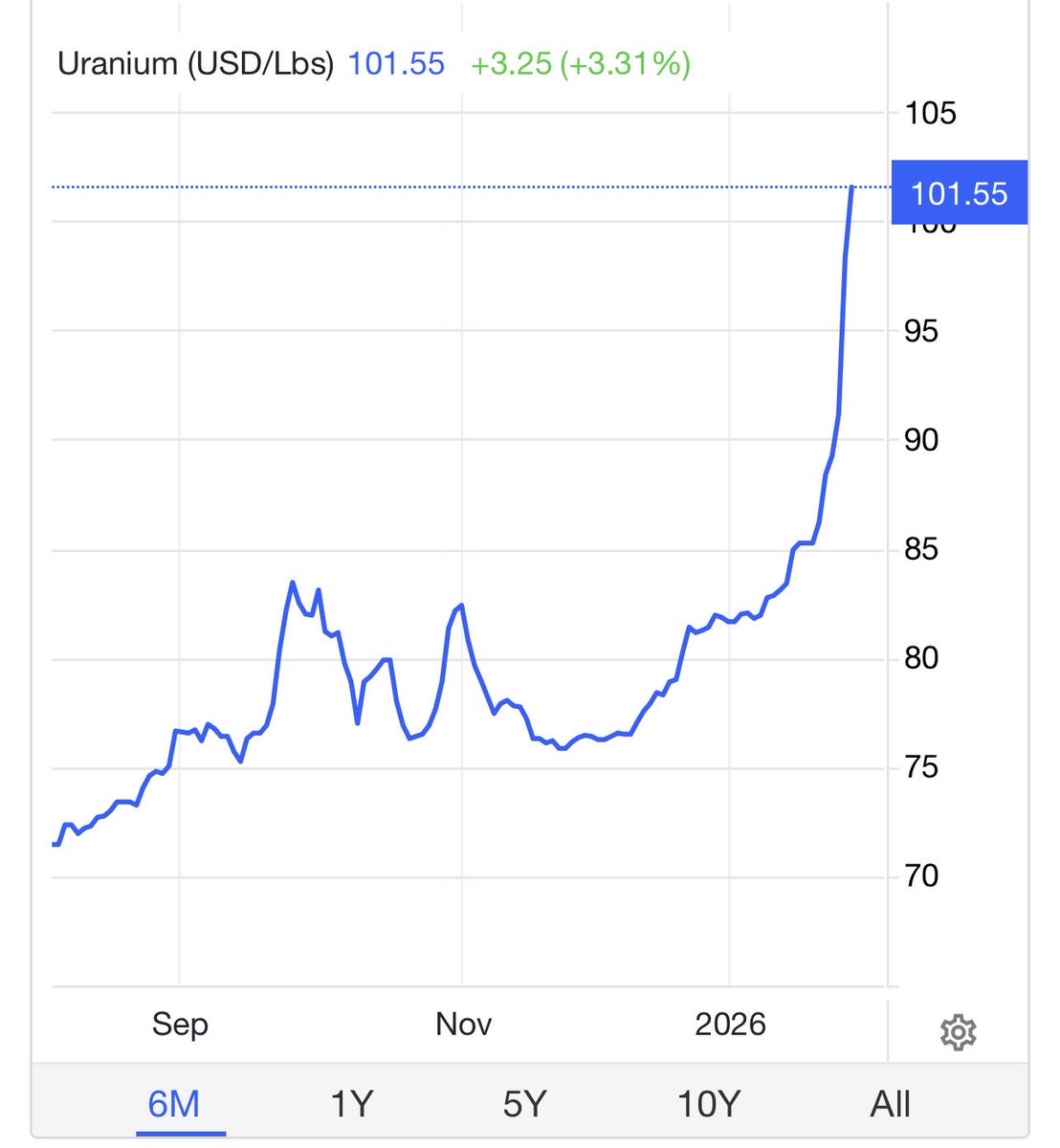
Good morning everyone , especially for those who are looking at the uranium price. Breaks above 100 Keep sleeping on junior uranium names $LITM How much are projects fetching now, matching the vertiginous climb in uranium? UEC and Cameco maybe looking at it now 😉
Antonio Costa tweet mediaAntonio Costa tweet mediaAntonio Costa tweet media
English
4
5
32
5.6K
Montgolfier Research
Montgolfier Research@montgoIfier·
@cally96k Having trouble with the DM function, but we're releasing Sunday/Monday when the post should get more visibility. Thursday isn't the best day for it. It's still coming and our thesis hasn't changed—we just want to execute the release well. Sorry for the confusion.
English
0
0
1
33
Cal
Cal@cally96k·
@montgoIfier Why’d you remove it? DM me?
English
1
0
0
12
Montgolfier Research
Montgolfier Research@montgoIfier·
Have you taken a look at $LITM? I think it's being missed out by retail and uranium investors. 26.3m lbs total resource, 80m lbs blue sky. Next-gen nuclear tech optionality (enrichment, SMRs). They're releasing an MRE on their flagship asset this quarter. Did a 30-page research report here if you're interested. I'm very bullish myself - could very well be the best explorer/developer outside WUC/AEC etc. docs.google.com/document/d/1nk…
English
0
1
13
809
John Quakes
John Quakes@quakes99·
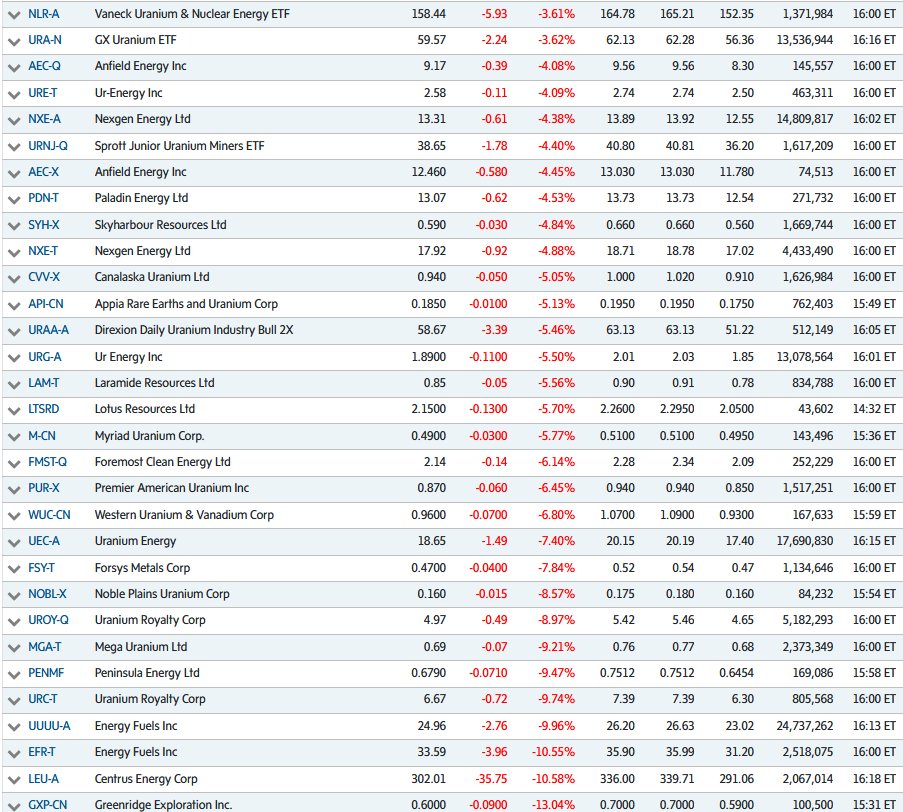
Yesterday the #Uranium sector flywheel got wound too tight🧵 & extremely overheated🥵 so today as broad markets tanked🇺🇸🇨🇦⤵️🪸🤿 the flywheel unwound a bit⤵️🎡 putting highest quality U #mining #stocks on sale🛍️😊 as their value rose with Spot hitting a new 2-year high!⏫🌋🎇🤠🐂
John Quakes tweet mediaJohn Quakes tweet media
English
2
9
102
6.5K
Montgolfier Research
Montgolfier Research@montgoIfier·
@cally96k Sorted it! Thanks again. Feel free to quote as before, I think I overrode your first one (sorry about that).
English
1
0
0
37
Cal
Cal@cally96k·
@montgoIfier The link brings me to $trx report
English
1
0
0
21
Antonio Costa
Antonio Costa@ACInvestorBlog·
$LITM Everybody is worried about a potential dilution.... do you know they have nearly 50% of its market cap in cash ? or $25M ? read the January presentation.
English
8
6
49
5.9K
Montgolfier Research
Montgolfier Research@montgoIfier·
We will be releasing a due-diligence report on $LITM (Snow Lake Resource) in the coming days! An overlooked #uranium explorer, approaching economic feasibility studies. In the long-run, the company has the potential to become a tier-1 producer. ⁍ Merged MRE: 26m lbs U3O8 ⁍ MRE Optionality: 100m lbs U3O8 The company is also integrating across the nuclear fuel supply chain, providing additional optionality in next-gen nuclear technology. ⁍ Small Modular Reactors ➼ Kadmos Energy (51% subsidiary) ⁍ Next-gen enrichment tech ➼ Ubaryon (20% stake, partnered with Urenco) Stay tuned for our DD! #UraniumSqueeze #SMR
The Trend Sage@JonkooTrades

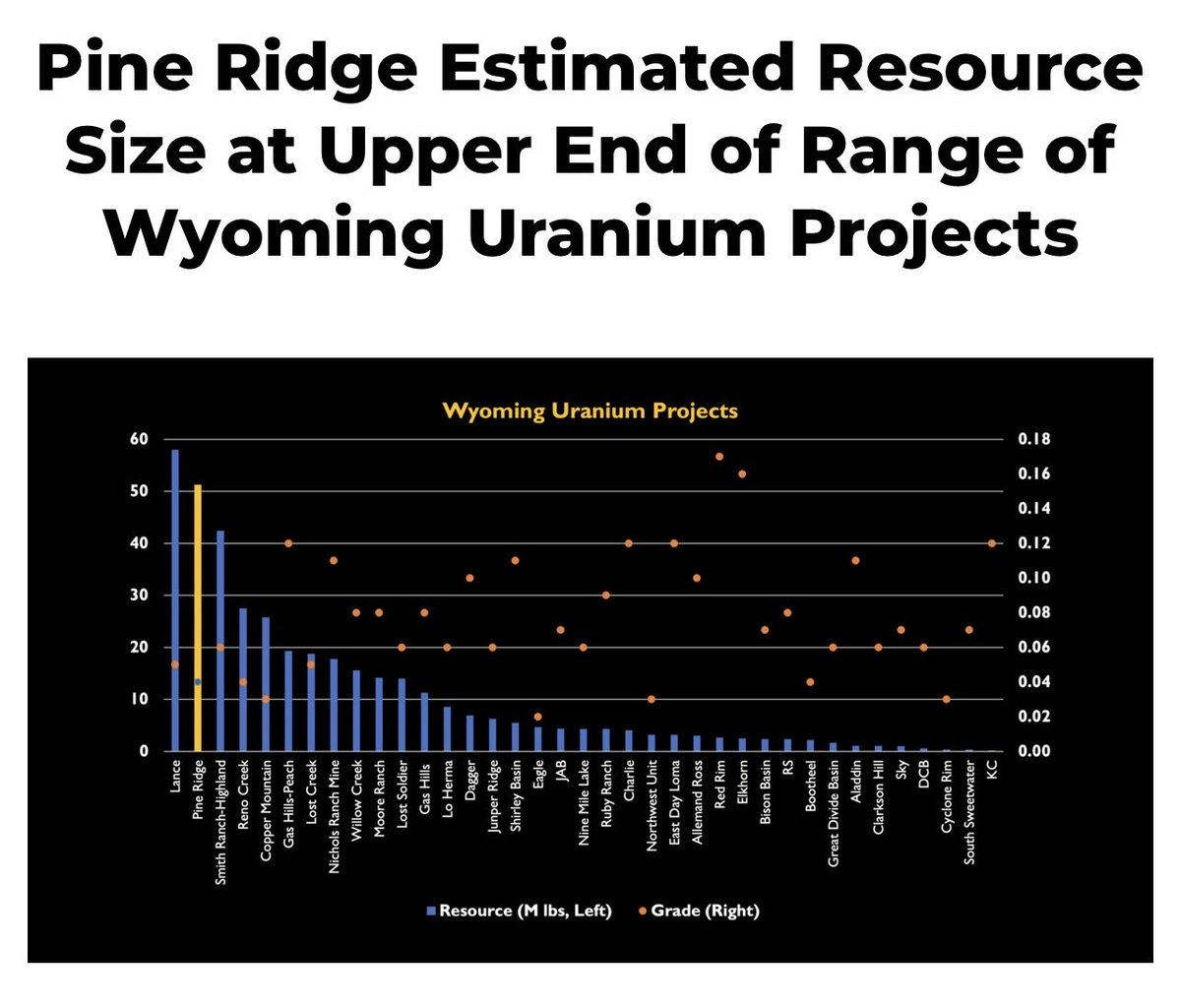
Snow Lake Resources $LITM – Due Diligence 🤓⚡ Snow Lake Resources Ltd. (now operating as Snow Lake Energy) is a critical minerals exploration and development company focused on the #nuclear fuel cycle and clean #energy supply chain ⚛️ They explore and develop #lithium and #uranium projects in Canada, Namibia, and the U.S., with additional interests in #gallium. Key activities include: - Uranium extraction - Potential enrichment tech - Lithium for EV batteries (this aiming to support U.S. energy security and net-zero goals) $LITM is in early-stage exploration and project development, with no current revenue from operations. They advance mineral resources through drilling, partnerships (e.g., 19.9% stake in Global Uranium and Enrichment Ltd. for acquisitions), and options on properties. The long term plan is to monetize through production, sales to EV/battery makers and nuclear sectors, or asset sales/partnerships. Recent moves include acquiring uranium enrichment tech and #SMR capabilities. $LITM recently completed a 114-hole drill program at Pine Ridge (Wyoming) in Jan 2026 with positive results, and is advancing acquisition of Global Uranium and Enrichment (scheme booklet dispatched Dec 2025). Lithium projects have S-K 1300 compliant resources at Snow Lake (Manitoba). Extended option on Mound Lake Gallium Project (Jan 2026). The stock is up ~26% YTD as of late Jan 2026, with analyst targets around $15 (current price ~$3.78). With uranium demand surging for clean energy (forecast supply shortfall); lithium for EVs (similar gap) the company is in the right market to make money. The big catalyst here is the commercial rollout potential in 2026-2027 if drills confirm resources and acquisitions close. Pine Ridge site could be Tier-1 ISR uranium; Snow Lake Lithium has positive PEA. U.S. policy support for critical minerals (uranium designated critical in Nov 2025). The risks are that $LITM has no revenue or production yet - pure exploration risk. - High cash burn could lead to dilution (recent $1B shelf filing). - Commodity price volatility - Regulatory delays (e.g., permitting in mining jurisdictions) - Execution on acquisitions/drills. - Geopolitical factors in Namibia/U.S. supply chain. My bull case: The successful drills and GUE acquisition position $LITM as a key U.S.-friendly supplier in uranium/lithium boom. EV/nuclear transitions drive multi-bagger if they hit production timelines. ---- $LITM is a hot play. I'm taking some in appropriate sizing for my growth portfolio. #LITM #Lithium #Uranium #CriticalMinerals #Investing ---- Stay Tuned for the full DD release by @montgoIfier

English
0
2
14
1.6K
The Trend Sage
The Trend Sage@JonkooTrades·
For anyone looking for intensive stock research - due diligence - and value investing posts. Have a look at @montgoIfier -- These guys are the ones that got me into $DGXX - $TRX. We made big money on those. Definitely a recommendation from me to you guys! Discord link: discord.gg/aKUFcfuGdy
English
1
0
4
966
Prof
Prof@TheProfInvestor·
hear me out: - s&p 500 at all time highs - the dollar is being killed - gold & silver are making unexpected highs - stocks feel expensive - bitcoin is dumping - AI boom is on pause what do we buy now?
English
1K
97
6.5K
1.7M
Montgolfier Research
Montgolfier Research@montgoIfier·
$TRX UPDATE: The Thesis is Playing Out 🚀 We called it at $0.91 ➔ Now $1.36 (+49%). Want to know why? Our Dec '25 45-page report (accessible for free in the replies) predicted a critical inflection point in Q1 2026. The necessary catalysts to trigger this inflection have been proven. So, let's recap: ✅ Catalyst 1: Production Inflection Predicted: "Record pours validate success of stripping campaign... confirming feasibility of PEA." Achieved: RECORD Q1 production of 6,597 oz (vs 5,715 oz in Q4 '24) and $25.1M in Revenue (+100% YoY). The stripping campaign success is confirmed with higher grade access. ✅ Catalyst 2: Margin Expansion ‣ Predicted: Revenue & EBITDA to double in 2026 as volumes replace price as the driver. ‣ Achieved: Q1 EBITDA margin hit 53% ($13.2M), proving the operational leverage we forecasted. 📉 Why our $1.60 PT was "Conservative" Our original Bull Case target of $1.93 was based on $4,500/oz gold. With Gold now testing ~$5,000/oz: ➼ The NAV sensitivity implies a fair value well ABOVE $1.93. ———————————————————— The market is waking up, but the re-rate is just starting.
English
1
1
7
761
Montgolfier Research
Montgolfier Research@montgoIfier·
This report is provided through our subdivision: Montgolfier Stocks. Our goal with Montgolfier Stocks is to present high-conviction, shorter-term plays on more "unknown" companies involving a dual approach of technical and fundamental analysis. The primary hub for this research is through our discord: discord.gg/v7A7fKehdT. Our goal with Montgolfier Research is to engage in long-form detailed DD on popular companies, markets and opportunities; designed for year or multi-year horizons. Follow us for more high-quality research and reach out to us with your picks and we may do our long-form 30+ page DD on them. Check out our uranium report for supplementary macro-information: docs.google.com/document/d/1jQ…
English
0
0
5
495
Montgolfier Research
Montgolfier Research@montgoIfier·
$URG 32-page Investment Thesis: Second-Largest U.S. Uranium Producer Positioned for Nuclear On-Shoring (~$600m market cap) ⁍Current price: $1.67 ⁍Target: $2.40 Ur-Energy is the second-largest domestic uranium producer in the U.S., placing it directly in the path of the ongoing nuclear on-shoring push. While the share price has recovered over the past year, the market remains cautious following the 2024 production miss, valuing the company at roughly $600m despite a supportive macro backdrop and its strategic positioning. Questions around whether production can be successfully ramped and sustained continue to cap confidence. Our thesis is that this uncertainty is now being resolved. As Q1 2026 approaches, the market will be forced to reassess execution risk through two near-term catalysts: evidence that recent operational fixes at Lost Creek are translating into sustained ramp-up, and the commissioning of a second fully licensed mine (Shirley Basin). With recent above-market financing in place ($1.72 v. SP $1.67), these milestones align with a tightening technical structure and create a clear setup for a re-rating if delivery is confirmed. 📄 Full report: docs.google.com/document/d/19A… ———————————————————— Key highlights ➀ Lost Creek ramp-up (Q4 2025) → execution risk being worked off ➁ Shirley Basin commissioning → transition to two-mine producer (1.2M → ~2.2M lbs licensed) ➂ $120m senior note at $1.73 conversion (above $1.67 market) ➃ $16.6m call structure → dilution capped into higher price levels ➄ 2nd-largest domestic U.S. producer → direct exposure to nuclear on-shoring tailwinds ⓺ 75% institutional ownership leaving a tight float of just 70m shares creating tight structural supply dynamics ideal for short-term squeezes; institutions and funds have also increased positions by 40% in the past-year alone ———————————————————— Stocks we will still be covering in our Uranium series: $UUUU, $DNN, $AEC, $UEC, $LEU, $CCJ, $KAP.
English
4
5
30
3.1K
Montgolfier Research
Montgolfier Research@montgoIfier·
Ⅲ Response – How the U.S. Is Intervening in the Uranium Market This chapter analyses the policy mechanisms now being deployed to address uranium supply insecurity, with particular focus on the Section 232 review. It explains how trade authority, sovereign procurement, and industrial policy combine to shift the uranium market from passive reliance on imports toward active domestic rebuilding. We aim to identify this policy activation as the primary catalyst for structural revaluations in producer valuations. — ⓵ The Policy Mechanism Ⅰ Sanctions: Section 231 (CAATSA) Leveraging the statutory basis of the Countering America's Adversaries Through Sanctions Act (2007), the Biden administration announced a ban on Russian uranium imports in 2024, formally weaponising sanctions against Rosatom and its subsidiaries. ⁌ While waivers remain in place through Jan 1, 2028, the signal was unambiguous: Russian nuclear fuel is no longer a reliable pillar of U.S. energy security. ⁌ Section 231 functions as the stick–removing adversarial supply, but offering no replacement on its own. Sanctions alone would create shortages. It must be paired with domestic rebuilding, forcing the government to intervene. — Ⅱ Protectionism: Section 232 (Trade Expansion Act) While the 2024 ban acted as the "stick," the November 2025 redesignation of Uranium as a Critical Mineral is the "carrot." This status provides the legal scaffolding for the Section 232 Review and triggers FAST-41 priority, slashing federal permitting timelines from years to months. ║ Section 231 (Sanctions) removes adversarial supply; Section 232 (Protectionism) builds domestic capacity.. By formally recognizing uranium as a national security asset, Section 232 empowers the President to restructure the entire supply chain–not just restrict imports. The goal is to determine: 1. To determine whether foreign uranium imports threaten U.S. national security; and 2. To recommend specific supply-side interventions to eliminate that vulnerability. This is the point at which uranium policy transitions from diagnosis to execution. The Catalyst The Commerce Department submitted its report in October 2025, triggering a statutory decision window. This will be the second time it submits its recommendations, having already concluded in 2019 that uranium imports impaired U.S. national security, proposing a 25% import quota for domestic miners. It’s almost certain we can expect the same here, or perhaps even more aggressive language… ⁌ Decision Window: 90 days from submission (October) ⁌ The Deadline: Jan-March 2026 Once this window closes, the President must either act –or implicitly accept continued strategic vulnerability. In practice, Section 232 reviews of critical materials rarely conclude without intervention. ║ With the Section 232 review complete and the decision window now open, the question is not if the U.S. intervenes, but rather how aggressively. We examine the potential interventions in the following section. — ⓶ The Likely Interventions The are two likely primary interventionist policies to achieve these objectives, which will then likely be hybridised as part of a broader, aggressive strategy to promote U.S. onshoring as we will examine in the following section. Ⅰ Strategic Uranium Reserve Likelihood: Very High Think of this as the "Strategic Petroleum Reserve," but for nuclear. The government acts as the Buyer of Last Resort, stockpiling American-mined yellowcake to protect the grid from supply shocks. The additional goal would be to bypass the spot market and buy exclusively from domestic miners, guaranteeing revenue for the U.S. companies crushed by international predatory pricing. In turn, this would provide domestic miners the incentivisation to start development on new mines and increase total U.S. yellowcake production. ➣ Historical Precedent (Trump 1.0): Sought $150M/yr (1-2M lbs) direct buys. Congress gave $75M one-off pilot → Energy Fuels ($UUUU), UEC ($EU) delivered. This took place following the 1st 2019 Commerce report which even recommended a 25% import quota. ➣ Current Momentum (Trump 2.0): Wright signals immediate expansion via EO following Section 232 review (no Congress needed): There are already very promising signs pointing towards this outcome. ║ "The size of that buffer grows with time… We need a lot of domestic uranium.” – Chris Wright, Energy Secretary ║ “Strategic Inventory Positioning Ahead of Section 232 Decision and Projected Supply Deficits” – UEC Q1 2026 filings The Mechanics (the “Wright Model”) ⁌ Target: Build a ~10M lb reserve (~25% of annual U.S. demand), purchasing ~2M lb every year ⁌ Annual procurement: ~2 Mlbs per year (≈2× total U.S. 2025 production) ⁌ Price Floor: A standing DOE bid (~$85/lb est.) sets a de facto floor — utilities cannot contract below the government price. ⁌ Dynamic: Reserve expands automatically as SMRs and new reactors are commissioned The Winners This would be a transformative tailwind for U.S. miners. It sets a revenue floor that covers their OpEx, allowing them to finance mine restarts immediately. — Ⅱ Import Tariffs Likelihood: High This is more of a "blunt instrument" to bridge the cost gap between cheap foreign imports and U.S. production. Commerce recommends and the President imposes tariffs on uranium imports. If implemented, it aligns perfectly with the administration's demonstrated preference for Section 232 tariffs as a trade policy mechanism across steel (25%-50%), aluminum (25%-50%), and copper (50%). Sub-scenarios ⁌ 10% “Base” Tariff: Low, uniform tariff across sources; mirrors temporary Canadian uranium tariff (2025). ⁌ 25% “Protective” Tariff: Steel-analogue level; meaningfully restores U.S. cost competitiveness. ⁌ 50% “Maximalist” Tariff: Copper-analogue; accelerates domestic contracting but risks near-term utility pushback. The mechanism is quite simple 1. Section 232 authority imposes a duty on imported uranium 2. Foreign supply is rendered uneconomic at the margin 3. Utilities are forced into term contracts with domestic producers 4. Contracted revenues finance mine restarts and capacity expansion — Ⅲ The Downstream Catalyst: HALEU "Moonshot" Funding While Section 232 protects the miners (upstream), the Department of Energy is simultaneously aggressively subsidizing the customers (downstream enrichment and SMR deployment). This is the "Pincer Movement": The Trump administration pushes miners to produce (Section 232) while the DOE pulls that production through the system by funding enrichment. ║ "To secure our energy future, we are deploying $2.7B to jumpstart the domestic commercial HALEU market. This ensures American SMRs are fueled by American uranium, free from adversarial influence." – DOE activation of HALEU availability program The Mechanism ⁌ The Purchase: The DOE creates a "HALEU Bank," buying the enriched product from U.S. enrichers (like Centrus Energy or Global Laser Enrichment). ⁌ The Domestic Feed Requirement: To qualify for these billions in federal HALEU contracts, the DOE is enforcing strict "Origin" clauses. Enrichers must utilise uranium that is mined and converted in the U.S. (or select allied nations), effectively barring cheap uncontracted global supply from competing for this premium tier. ⁌ The Miner Benefit: This creates a distinct, premium-priced market tier. Enrichers must buy Western (preferably U.S.) yellowcake to feed their centrifuges to fulfill DOE contracts. Implication for Miners This effectively forces the "vertical integration" of the U.S. nuclear stack. The massive build-out of SMRs (Amazon/Google data center deals) combined with DOE HALEU funding creates durable, non-price-sensitive demand for U.S. miners over a multi-decade horizon — justifying a structural re-rating into 2026. This is a critical element justifying 2026 upwards revaluations.
English
1
0
3
672
Montgolfier Research
Montgolfier Research@montgoIfier·
The Trump administration is going all-in on #Nuclear autarky: it's an issue of national security and #uranium miners will be the first to win. ⁌ 2026 is the uranium inflection year–the "year of the squeeze", and the first domino falls this month. ⁌ Trump is set to announce sweeping government intervention across the nuclear fuel supply chain this month following Section 232 review–the critical inflection point for U.S. uranium onshoring ⁌ U.S.-based miners poised for significant re-ratings ⁌ DOE already deploying billions to rebuild domestic enrichment–mining is the first choke point. The “Grand Bargain" is imminent–impending coordinated state action impending across the entire nuclear fuel cycle (Jan-Mar 2026 Presidential Decision): ⇛ Buildup of National Strategic Uranium Reserve ($150m/year government contracts) ⇛ Targeted yellow-cake tariffs (Kazakhstan/Russia) ⇛ Parallel DOE investment into conversion & enrichment capacity–government targets domestic supply sustainability (uranium miners) This report examines the U.S. favourable macro-political tailwinds, examining possible government intervention to promote on-shoring and nuclear autarky, which we wanted to examine in greater detail following our primary thesis. ﹌﹌﹌﹌﹌﹌﹌﹌﹌﹌﹌﹌﹌﹌﹌﹌ This is a… MICRO-REPORT on URANIUM ONSHORING STRATEGY provided as a thesis supplementation by Montgolfier Research, a full 37-page DD can be found on our profile ﹌﹌﹌﹌﹌﹌﹌﹌﹌﹌﹌﹌﹌﹌﹌﹌ Ⅰ Overview The U.S. nuclear sector is undergoing a structural transformation that remains profoundly underexamined by the broader market. We are moving away from a decade of "just-in-time" global procurement toward a Sovereign Onshoring Strategy that treats the entire nuclear fuel cycle as the primary engine for the 2030s economy. This is truly a fundamental reconstruction of the American industrial base. Because uranium is the first "choke point" in this chain (and still only supplies 2% of onshore refinement capacity–meaning it's not choked out by the refinement bottleneck), U.S.-based companies are positioned for a multi-stage re-rating as the government transitions from a mere regulator to a cornerstone customer and protector. ⓵ The Catalyst: Section 232 Review While the market has focused on the 2024 Russian import ban, the Section 232 Review is the true "inflection point." Commissioned in April 2025, this report provides the President with the legal "activation" to bypass standard trade barriers and intervene directly in the supply chain. → The Impending Decision: The Commerce Department’s findings (submitted Oct 2025) have triggered a statutory 90-day window. We expect a formal executive announcement between January and March 2026. → The Shift: This announcement will move the sector from "speculative anticipation" to "mandated implementation." It effectively creates a protected domestic ecosystem where price discovery is driven by national security requirements, not global spot market volatility. ⓶ The Response: Durable Domestic Demand The "Grand Bargain" being signaled by the administration focuses on creating guaranteed, non-price-sensitive demand for U.S. miners through two primary mechanisms: Ⅰ. The National Strategic Uranium Reserve (The "Wright" Model) Energy Secretary Chris Wright has signaled an immediate expansion of the reserve to act as a "buffer" against adversarial supply shocks. ║ "The size of that buffer grows with time… We need a lot of domestic uranium.” – Chris Wright, Energy Secretary ⁌ Signaling from the Field: In their Q1 2026 filings, Uranium Energy Corp ($UEC) highlighted aggressive "Strategic Inventory Positioning" specifically ahead of this Section 232 decision. This suggests the industry is already bracing for a government-mandated "Buyer of Last Resort" model that sets a durable revenue floor for domestic rock Ⅱ. Protective Import Tariffs To bridge the cost gap between cheap foreign dumping and American production, the administration is expected to utilize Section 232 to impose Targeted Import Tariffs (likely 10%–50%) on Kazakh and Russian yellowcake. This renders adversarial supply uneconomic, forcing utilities to secure long-term contracts with U.S. producers. ⓷ The HALEU Pincer: Downstream "Pull" The most critical long-term element of the onshoring strategy is the HALEU "Moonshot." The Department of Energy is currently deploying $2.7 billion to jumpstart domestic enrichment. ⁌ The Feed Mandate: To qualify for these federal subsidies, enrichers (like Centrus) are being held to strict "Origin" clauses. This creates an ironclad requirement for U.S.-mined feed material. ⁌ Downstream Pull: The massive build-out of SMRs (Small Modular Reactors) for AI data centers and industrial power requires HALEU. By funding the enrichment (the "pull"), the government has created a guaranteed, long-term market for U.S. uranium ore (the "push"). ║ The Thesis: Investment in domestic enrichment and SMRs is a "checkmate" for U.S. miners. It transforms uranium producers from commodity explorers into the essential infrastructure of the future AI and energy economy. The Jan-Mar 2026 Section 232 decision is the starting gun for this revaluation. ﹌﹌﹌﹌﹌﹌﹌﹌﹌﹌﹌﹌﹌﹌﹌﹌ This micro-report is sectioned into four parts: Ⅰ Overview (above) – Key takeaways from across the report and short profiles on our spotlighted companies examined in the fourth part; Ⅱ Context – Historical background of how U.S. supply has atrophied to near-zero and became so strategically vulnerable; Ⅲ Response – The policy mechanism (Section 232) expected to trigger in the coming few months, commencing major government intervention in the supply chain, leading to likely significant revaluations; ﹌﹌﹌﹌﹌﹌﹌﹌﹌﹌﹌﹌﹌﹌﹌﹌ This micro-report forms part of our Montgolfier-Uranium coverage We are currently in the process of writing long-form report on U.S. onshoring strategy as well as company-specific DD on tickers such as $UUUU $AEC $EU $URG $GLO $CJJ $DNN $LEU $UEC. All will be able for free and in long-form format with retail accessibility. Moving onto the next chapter...
English
3
14
84
5.4K