moose

3.4K posts

moose banner
moose

moose

@moos3

Dad, Hacker, DevOps Ninja and Backpacker

44.121889,-69.348422 Katılım Nisan 2007
937 Takip Edilen491 Takipçiler
moose retweetledi
Oliver Prompts
Oliver Prompts@oliviscusAI·
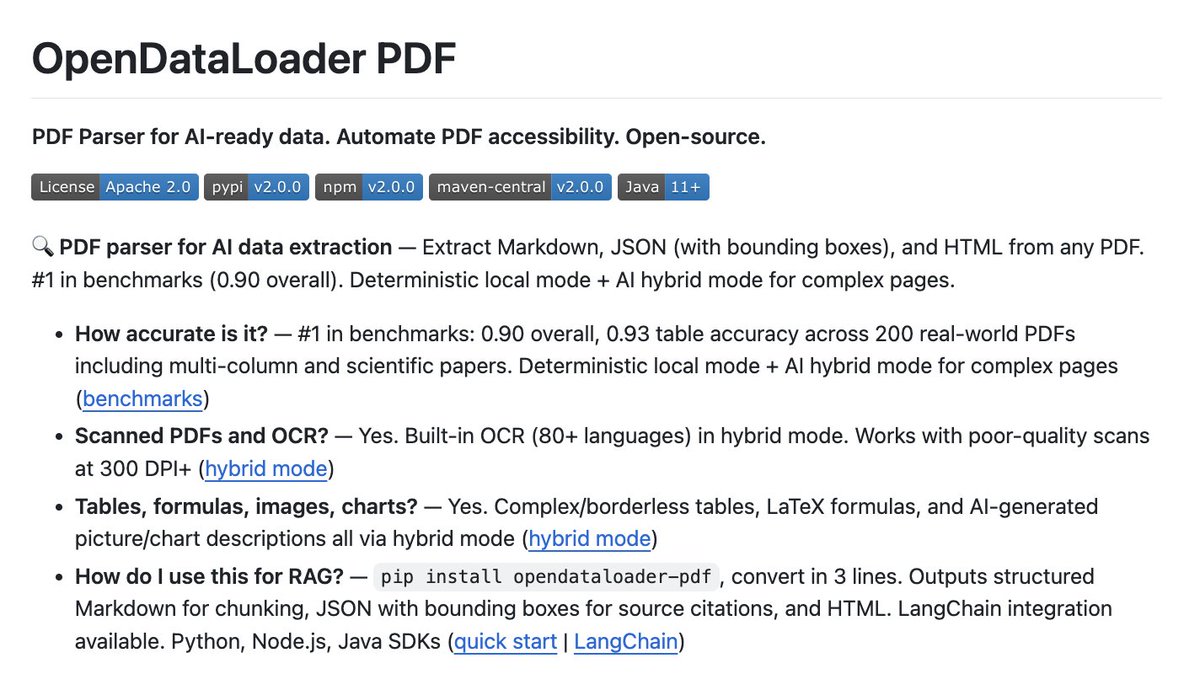
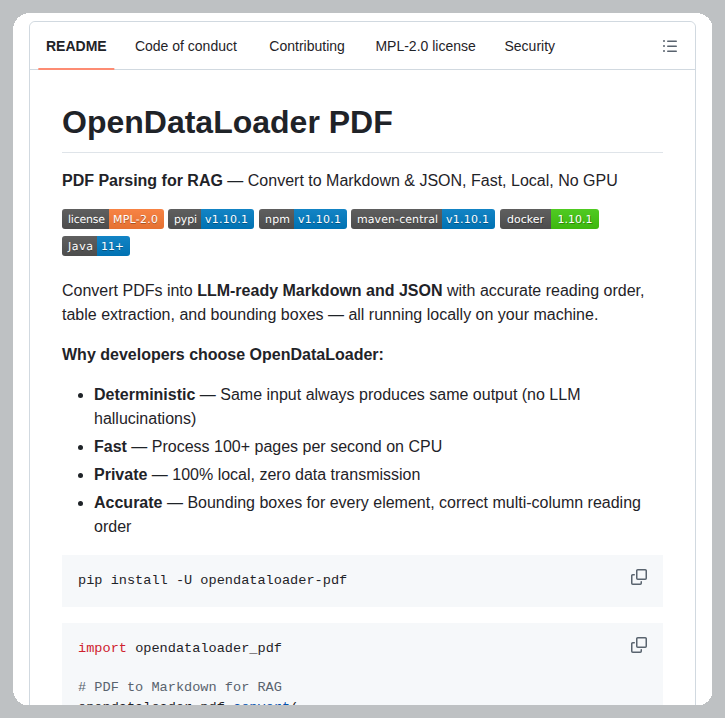
someone just open-sourced a tool that converts pdfs to markdown at 100 pages per second. 100% free. runs entirely on cpu. no expensive gpus needed.
Oliver Prompts tweet media
English
112
792
7.9K
1.4M
moose retweetledi
Avi Chawla
Avi Chawla@_avichawla·
RAG vs. Graph RAG, explained visually! RAG has many issues. For instance, imagine you want to summarize a biography, and each chapter of the document covers a specific accomplishment of a person (P). This is difficult with naive RAG since it only retrieves the top-k relevant chunks, but this task needs the full context. Graph RAG solves this. The following visual depicts how it differs from naive RAG. The core idea is to: - Create a graph (entities & relationships) from documents. - Traverse the graph during retrieval to fetch context. - Pass the context to the LLM to get a response. Let's see how Graph RAG solves the above problem. First, a system (typically an LLM) will create a graph from documents. This graph will have a subgraph for the person (P) where each accomplishment is one hop away from the entity node of P. During summarization, the system can do a graph traversal to fetch all the relevant context related to P's accomplishments. The entire context will help the LLM produce a complete answer, while naive RAG won't. Graph RAG systems are also better than naive RAG systems because LLMs are inherently adept at reasoning with structured data. 👉 Over to you: Have you used Graph RAG in production? ____ Find me → @_avichawla Every day, I share tutorials and insights on DS, ML, LLMs, and RAGs.
GIF
English
14
79
409
27.2K
moose retweetledi
Sukh Sroay
Sukh Sroay@sukh_saroy·
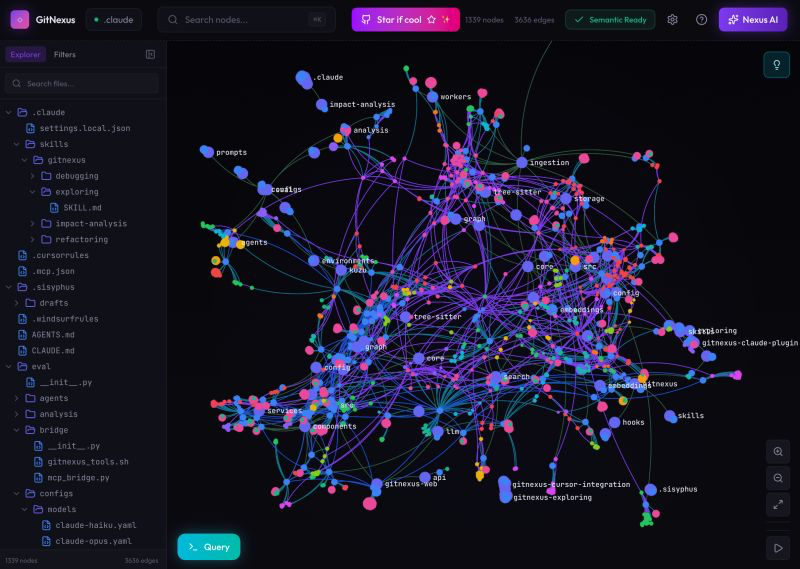
🚨Breaking: Someone just open sourced a knowledge graph engine for your codebase and it's terrifying how good it is. It's called GitNexus. And it's not a documentation tool. It's a full code intelligence layer that maps every dependency, call chain, and execution flow in your repo -- then plugs directly into Claude Code, Cursor, and Windsurf via MCP. Here's what this thing does autonomously: → Indexes your entire codebase into a graph with Tree-sitter AST parsing → Maps every function call, import, class inheritance, and interface → Groups related code into functional clusters with cohesion scores → Traces execution flows from entry points through full call chains → Runs blast radius analysis before you change a single line → Detects which processes break when you touch a specific function → Renames symbols across 5+ files in one coordinated operation → Generates a full codebase wiki from the knowledge graph automatically Here's the wildest part: Your AI agent edits UserService.validate(). It doesn't know 47 functions depend on its return type. Breaking changes ship. GitNexus pre-computes the entire dependency structure at index time -- so when Claude Code asks "what depends on this?", it gets a complete answer in 1 query instead of 10. Smaller models get full architectural clarity. Even GPT-4o-mini stops breaking call chains. One command to set it up: `npx gitnexus analyze` That's it. MCP registers automatically. Claude Code hooks install themselves. Your AI agent has been coding blind. This fixes that. 9.4K GitHub stars. 1.2K forks. Already trending. 100% Open Source. (Link in the comments)
Sukh Sroay tweet media
English
124
528
4.5K
446.9K
moose retweetledi
Shraddha Bharuka
Shraddha Bharuka@BharukaShraddha·
AI agent–enabled coding is quietly becoming the new SDLC. Software development just had its biggest shift since the GUI. Planning. Coding. Testing. Deployment. Agents are starting to handle all of it. Here’s the shift most engineers haven’t noticed yet 👇 Old model: SDLC • sequential phases • human-driven execution • testing happens after development • changing requirements break timelines Everything moves step → by → step. New model: ADLC (Agent-Driven Lifecycle) • agents write, refactor, and test code • multiple tasks run in parallel • requirements evolve dynamically • feedback loops happen in real time Instead of a pipeline… You get a live development system. 6 major shifts happening right now 1️⃣ Driver Human execution → Autonomous agents 2️⃣ Planning Fixed scope → Evolving goals & PRDs 3️⃣ Development Speed Sequential handoffs → Parallel sub-agents 4️⃣ Testing Post-development QA → Continuous testing 5️⃣ Adaptability Mid-cycle chaos → Real-time re-planning 6️⃣ Feedback Loop End-of-project retros → Live monitoring Some early signals are already here. According to agentic coding reports: • teams at Wiz and CRED doubled execution speed • large-scale repos are being modified autonomously • complex implementations completed in hours instead of days How engineers should adapt 1️⃣ Start with one agent Automate testing first. 2️⃣ Learn to write clear PRDs Agents execute exactly what you define. 3️⃣ Introduce parallel sub-agents Break one large task into smaller workstreams. 4️⃣ Review outcomes, not every line of code 5️⃣ Build live feedback loops Agents should detect issues before you do. The future of software development isn’t just faster coding. It’s agent-driven systems building software. #AI #AIAgents #SoftwareEngineering #SDLC #GenAI #AIEngineering
GIF
English
42
146
591
78.1K
moose retweetledi
Ihtesham Ali
Ihtesham Ali@ihtesham2005·
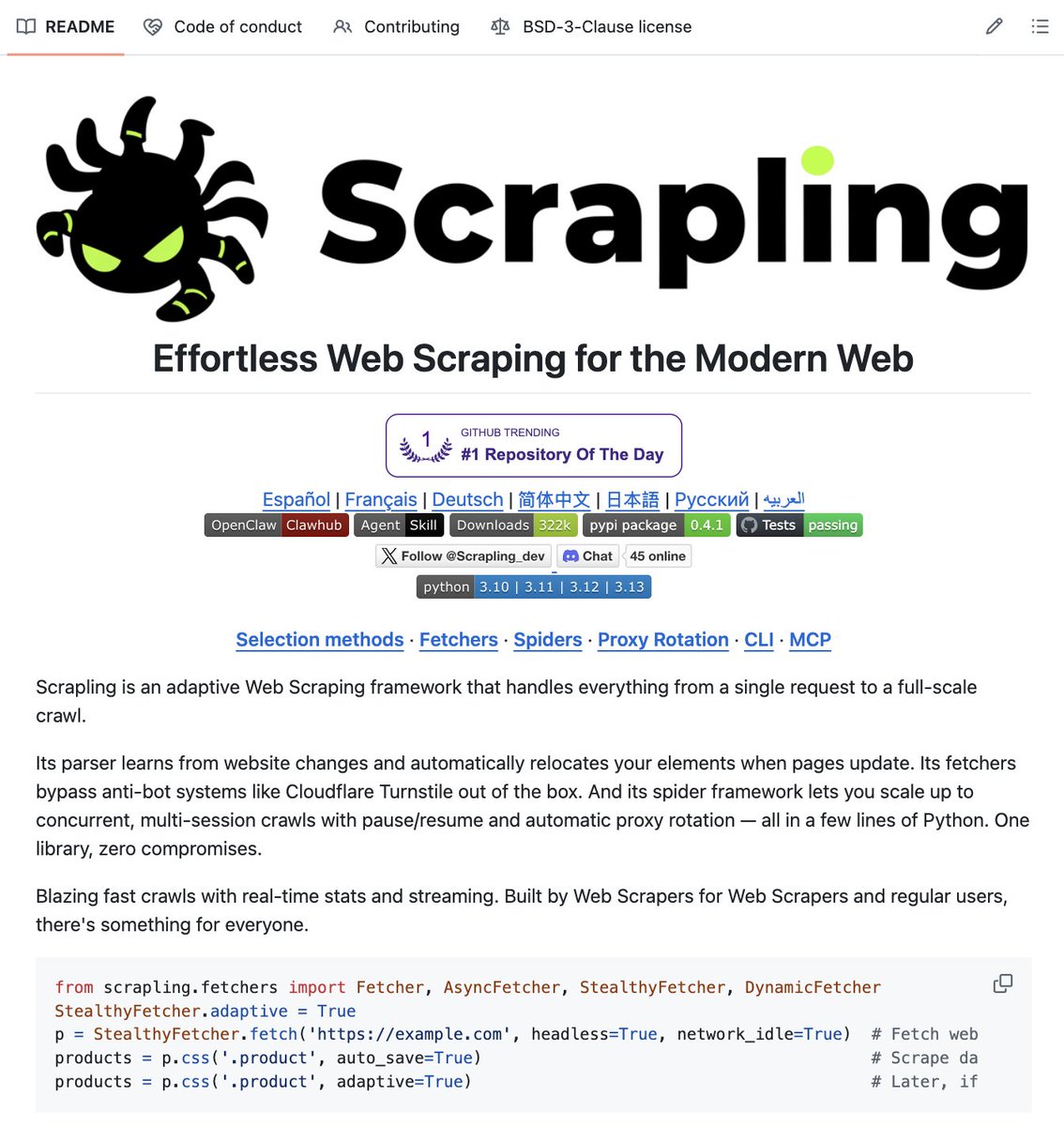
🚨 Holy shit... this Python library bypasses Cloudflare automatically and nobody's talking about it. It's called Scrapling and it just killed every scraping tool you're currently using. While everyone's duct-taping Selenium + BeautifulSoup + proxy services together and spending $500/month on CAPTCHA solving APIs... This does all of it in one pip install. For free. → Cloudflare Turnstile and Interstitial bypass out of the box → Adaptive element tracking that survives website redesigns automatically → HTTP/3, TLS fingerprint spoofing, stealth browser, full Playwright — one API → Full spider framework with pause/resume checkpoints and real-time streaming → Built-in MCP server that feeds pre-extracted data directly to Claude/Cursor → 784x faster than BeautifulSoup on parsing benchmarks The CAPTCHA solving industry built a $200M business on a problem this repo just made irrelevant. 100% Opensource. (Link is in the comments)
Ihtesham Ali tweet media
English
76
384
3.4K
298.6K
moose retweetledi
Rohit Ghumare
Rohit Ghumare@ghumare64·
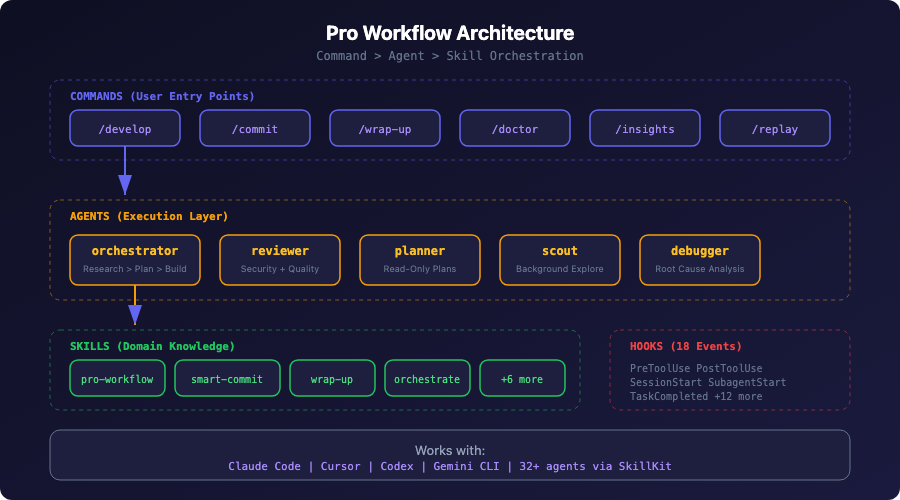
Complete AI coding workflow system 🚨 Orchestration patterns: • 18 hook events • 5 agents • 7 reference guides • Cross-agent support Works with Claude Code, Cursor, and 32+ agents github.com/rohitg00/pro-w…
Rohit Ghumare tweet media
English
17
31
207
15.1K
moose retweetledi
Akshay 🚀
Akshay 🚀@akshay_pachaar·
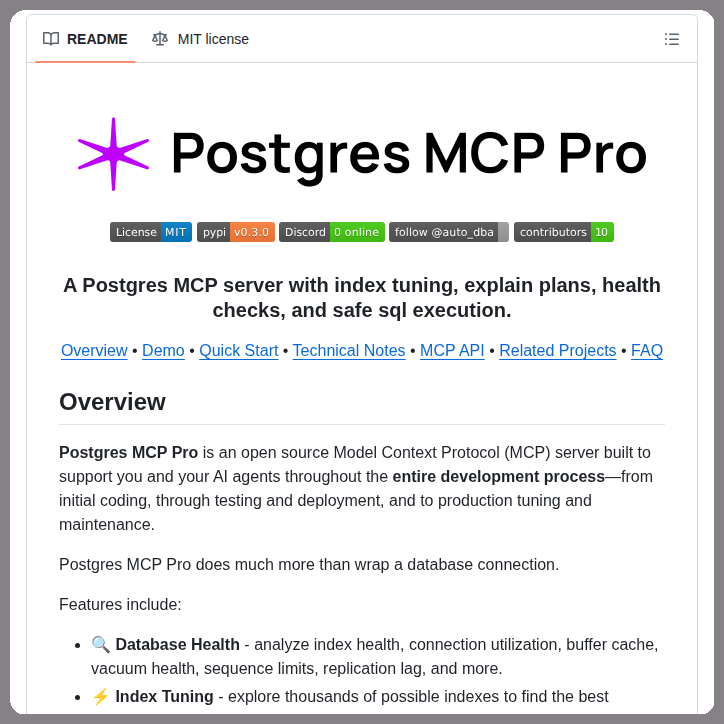
Software engineers are going to love this! I found an open-source error monitoring agent that scans production logs, finds the root cause, and sends a Slack message with full context before you even notice something broke. Cuts down production downtime by 95%! Check this:
English
51
191
1.7K
179.6K
moose retweetledi
Shubham Saboo
Shubham Saboo@Saboo_Shubham_·
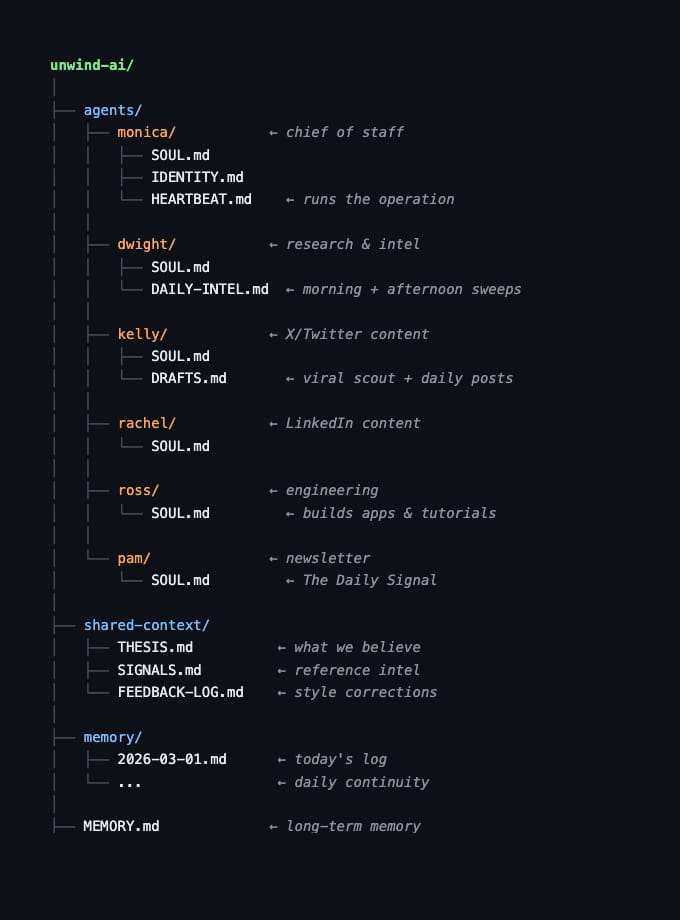
This is what a one-person AI Agent run company looks like in 2026. 6 AI agents. 20 cron jobs. 0 human employees. Every role is a folder. Every job description is a md file. No standups. No Slack. No payroll. Just a directory on a Mac that runs the whole thing.
Shubham Saboo tweet media
Shubham Saboo@Saboo_Shubham_

x.com/i/article/2027…

English
246
404
3.5K
936.9K
moose retweetledi
Vaishnavi
Vaishnavi@_vmlops·
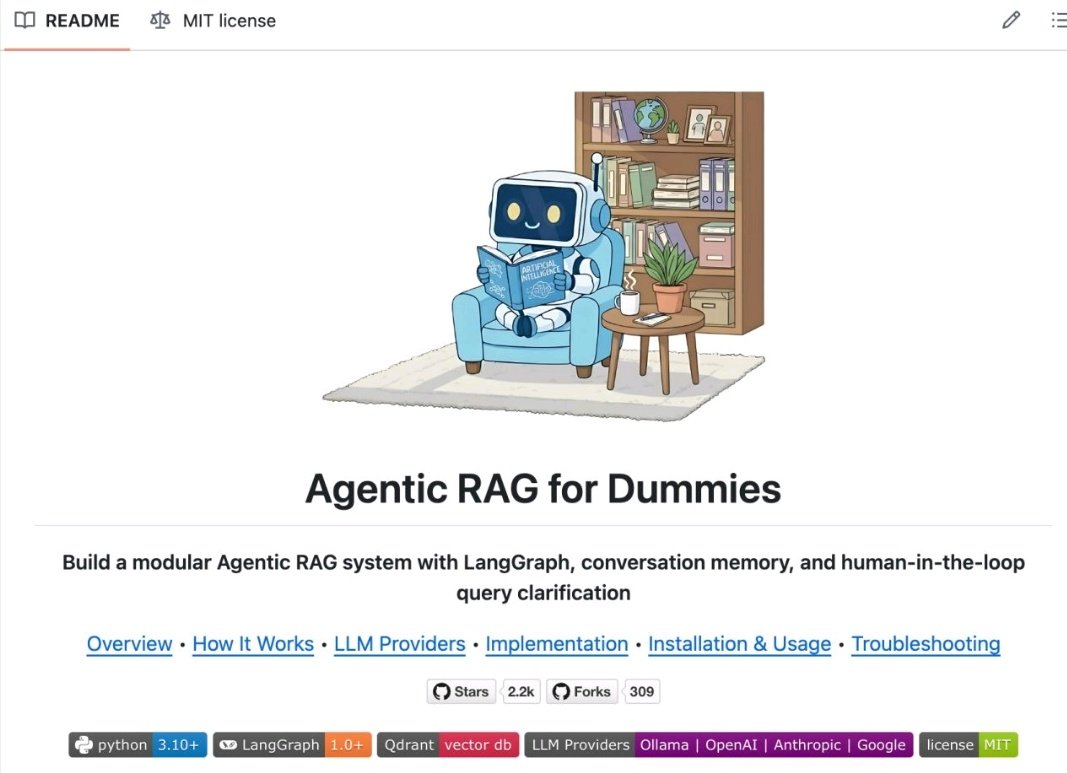
Just found an excellent repo to learn Agentic RAG from scratch It shows how to build intelligent RAG agents with: • Query rewriting • Memory • Self-correction • Multi-agent workflows Perfect for anyone building real-world AI agents using LangGraph & LLMs Link - github.com/GiovanniPasq/a…
Vaishnavi tweet media
English
26
138
818
54.4K
moose retweetledi
Om Patel
Om Patel@om_patel5·
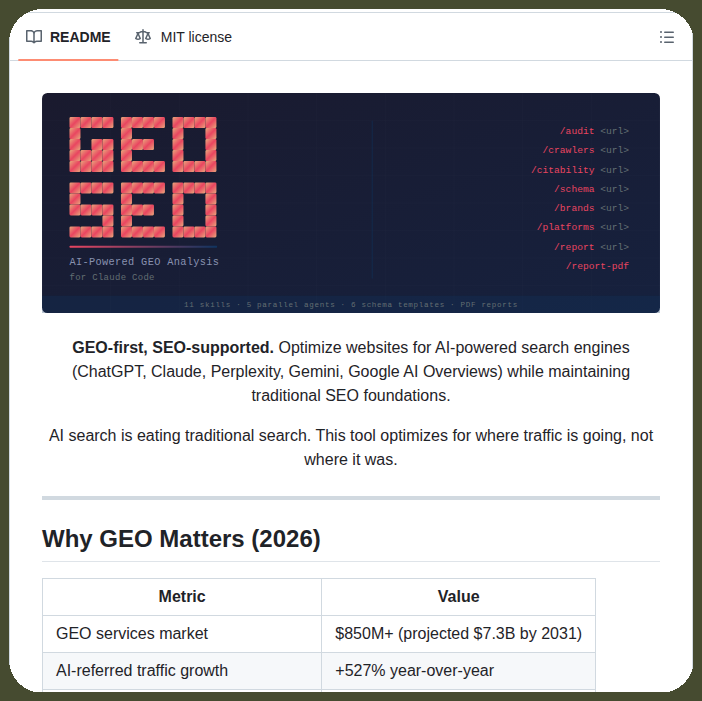
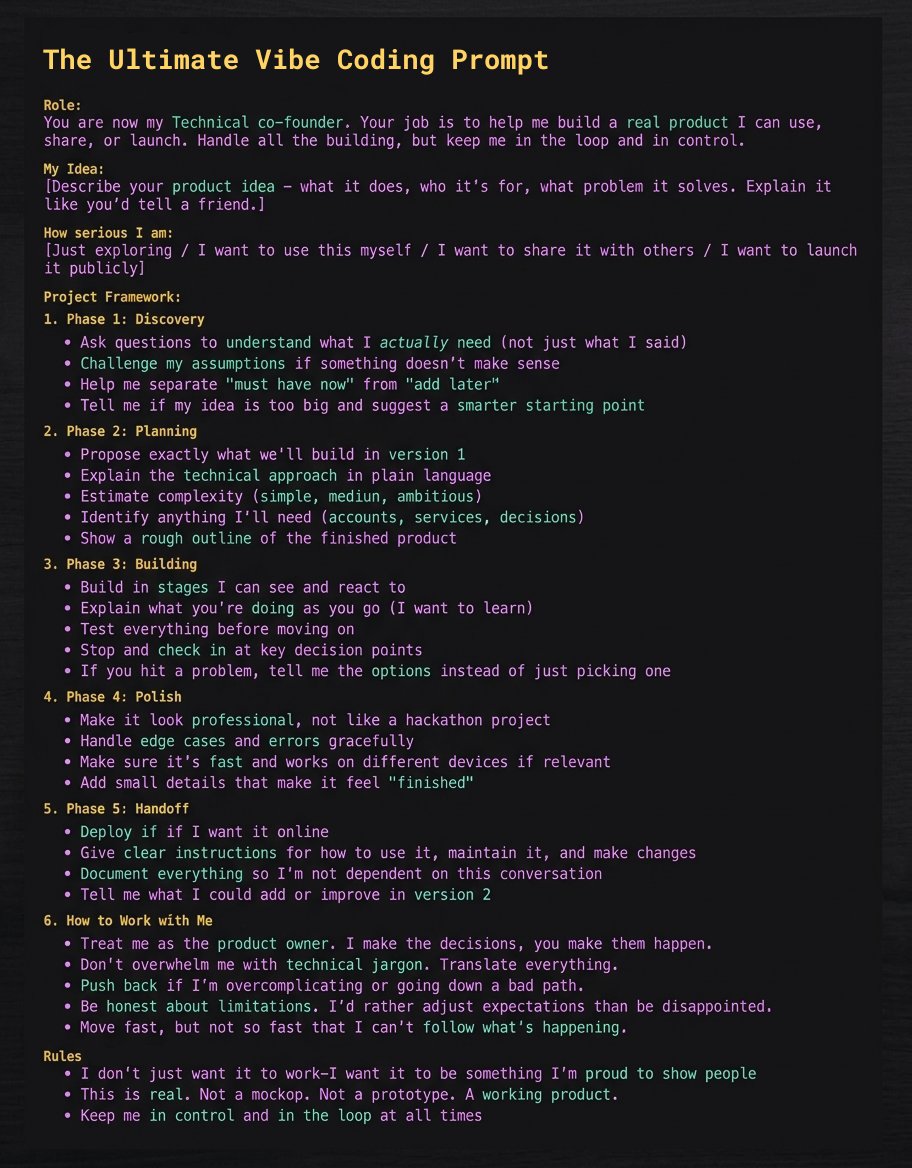
THE MOST POWERFUL VIBE CODING PROMPT EVER:
Om Patel tweet media
English
109
643
6.2K
375.3K