Why Zero? A conversation with @citsecurities, @The_DTCC, and @ICE_Markets. Speakers: - Dan Doney, CTO of DTCC Digital Assets - Marcin Sablik, Partner at Citadel Securities - Michael Blaugrund, VP of Strategic Initiatives at Intercontinental Exchange
moses
196 posts

@moses_gte
co-founder + pit crew @gte_xyz

Why Zero? A conversation with @citsecurities, @The_DTCC, and @ICE_Markets. Speakers: - Dan Doney, CTO of DTCC Digital Assets - Marcin Sablik, Partner at Citadel Securities - Michael Blaugrund, VP of Strategic Initiatives at Intercontinental Exchange


GTE has partnered with @LayerZero_Core to build the Treasury Layer of Turbo on Zero.


GTE has partnered with @LayerZero_Core to build the Treasury Layer of Turbo on Zero.

GTE has partnered with @LayerZero_Core to build the Treasury Layer of Turbo on Zero.

GTE has partnered with @LayerZero_Core to build the Treasury Layer of Turbo on Zero.


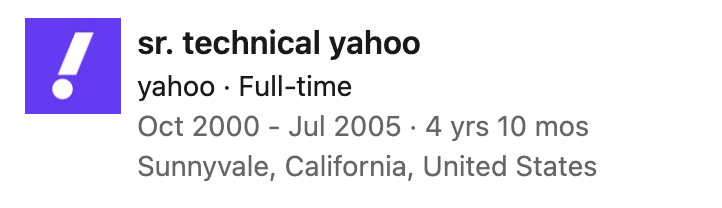
Very happy about this one! Doug co-invented some of the most widely studied distributed systems techniques that power the most used applications in the world, like Instagram, Facebook, and WhatsApp. engineering.fb.com/2009/04/30/cor… Before that he was a SWE at Amazon from 1997-2004 (and contributed to some of the architecture that later became AWS). This is his first role ever in decentralized finance, and the reason he joined is very clear. We have crossed the chasm of finding utility in useful applications for the masses with products such as GTE offering exposure to the world's capital markets in a truly decentralized and permissionless manner. The pitch was simple: 'Do you want to come rebuild the internet with us?' And btw... we're not done yet... Let's win.

Today, I’m excited to (finally) welcome Minimmit to the @commonwarexyz Library. Implemented independently by both @GTE_XYZ and @vex_0x, Minimmit clobbers our benchmarks: [USA]: 51ms blocks (-40%) | 87ms final p75 (-35%) [Global]: 142ms blocks (-30%) | 269ms final p75 (-15%)


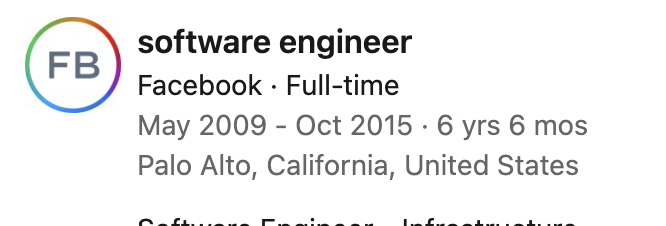
Another day, another win on the hiring side for @GTE_XYZ : We're bringing on the top individual IC from Meta who has been there for 18 years (and still codes daily!) as a technical advisor to GTE. His first ever decentralized finance project. LFGTE.

Excited to start to roll out what an integration between @GTE_XYZ and @Polymarket will look like on GTE. Want to trade 5x leveraged NVDA perps the day of earnings and make a bet on whether or not they'll beat? You can do this in one UI on GTE. Your trades will be colocated with the major matching engines, ensuring you the best price. No more context switching. No more moving around collateral. Just use one platform that lets you trade all markets, anywhere, anytime. Just use GTE. Live in private. Coming soon to you. Until then, back to building. P.S., We recorded this video a couple days ago...


This is @GTE_XYZ V2: A hyper-optimized exchange and blockchain designed specifically for high throughput, low latency trading. On GTE v2, you can open up a 24/7 5x GOOG position on the same margin account as a 5x BTC position. Behind the scenes we are routing your orders across different sequencers geolocated in the most optimal locations for your end trade. Want to trade in crypto? GTE is in Tokyo to give you the best price. Want to trade in equities? GTE is in New Jersey to get you the best price. This is only possible because of the architecture of the chain and exchange we’ve built coupled together to ensure trading is treated as a first class citizen. Private mainnet is coming out to trusted parties soon. Shortly after, GTE will roll out to the public. The world’s capital markets will trade on the Global Token Exchange. Let’s win.

The existing financial system that underpins the world is being rewritten right in front of our eyes. If you can’t see it yet, let me make it clear for you: The President of the free world (who experienced a significant debanking issue by centralized entities) has opened the flood gate for a total re-write of the ledger systems, to a scale not seen since the early 2000s. Decentralized systems have finally hit near centralized system scale and throughput capacity. Users don’t have to worry about gas fees, signing, and all the previous complexities of the decentralized financial system. As a result, applications like @Polymarket are now culturally relevant without the end user needing to know the underlying infrastructure. This is a big deal in terms of where we’re at in the adoption curve. The world has already started to rapidly adopt stablecoins and blockchain based technologies. In particular, stablecoin adoption is the export of the dollar to other regions. A majority of stable coins now live in the East. A majority of Bitcoin trading is in the east. There is a reason for this. The reason for this is that a socialistic state driven by confuscian values (the state > the individual) places such intense capital controls on its population which creates sub-par capital markets when compared to the free markets of the west. Hence, eastern buyers have shown a strong desire to exchange their local currency’s for dollars, which is just the start of the new financial fabric being laid out. Both Bitcoin and stablecoins offer the eastern investor safe-haven against their local capital markets (the Shanghai Stock Exchange when compared to most American indexes have performed much worse). When you map out where the stablecoins are flowing and what truly scalable decentralized systems mean, you realize that the past 10 years of crypto were just a proof of concept. True adoption of decentralized finance won’t be an AMM where you swap ETH for a meme coin. It will be a fully immutable, decentralized ledger and marketplace that allows the world’s capital markets to be traded anywhere, at anytime. We call this Defi 2.0. On GTE, the average user will be able to trade crypto, stocks, commodities, and more in a singular account, with hyper optimized infrastructure to create the best possible end prices. When this fabric is laid, the world will start to look like below. The question is not if this will happen. It’s happening as we speak. The question is: What are you doing to prepare for it? Historians will look back at now and beyond and point out that this era parallels the electronic era for trading of the late 90’s and early 2000. We know we’re ready. Are you?