
Mosio | for Research

15.4K posts

Mosio | for Research banner
Mosio | for Research

Mosio | for Research

@mosio

Automated text messaging software for research, helping researchers improve engagement, adherence, and data collection.

Seattle Katılım Ekim 2006
3.3K Takip Edilen3.8K Takipçiler
Sabitlenmiş Tweet
Mosio | for Research
Mosio | for Research@mosio·
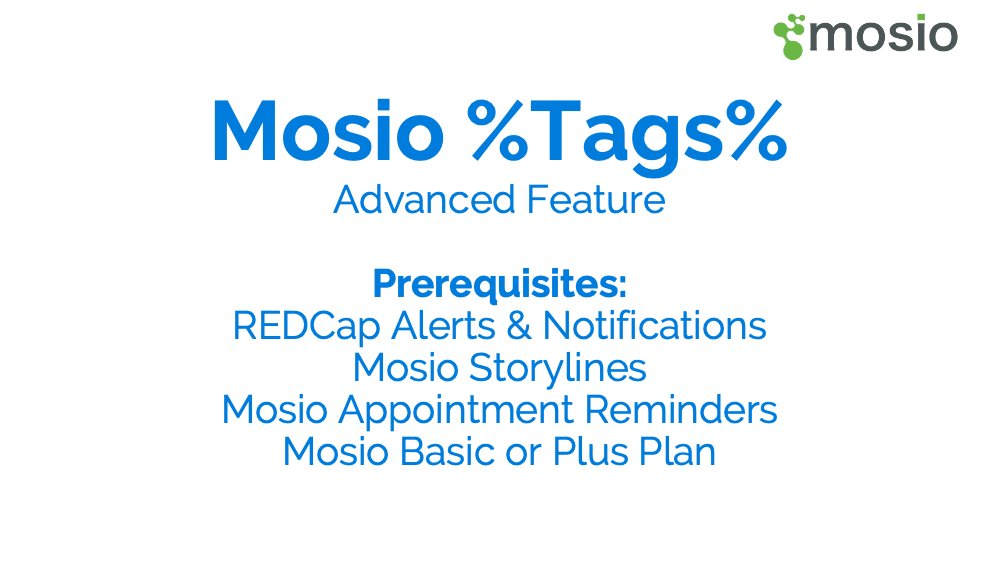
Mosio Launches Mosio Tags: Streamlining Text Messaging Automations for REDCap Users New feature enables researchers to trigger text-based workflows directly from REDCap alerts, enhancing efficiency in clinical and translational research mosio.com/mosio-tags-pr/ #REDCap
Mosio | for Research tweet media
English
0
0
0
59
Mosio | for Research
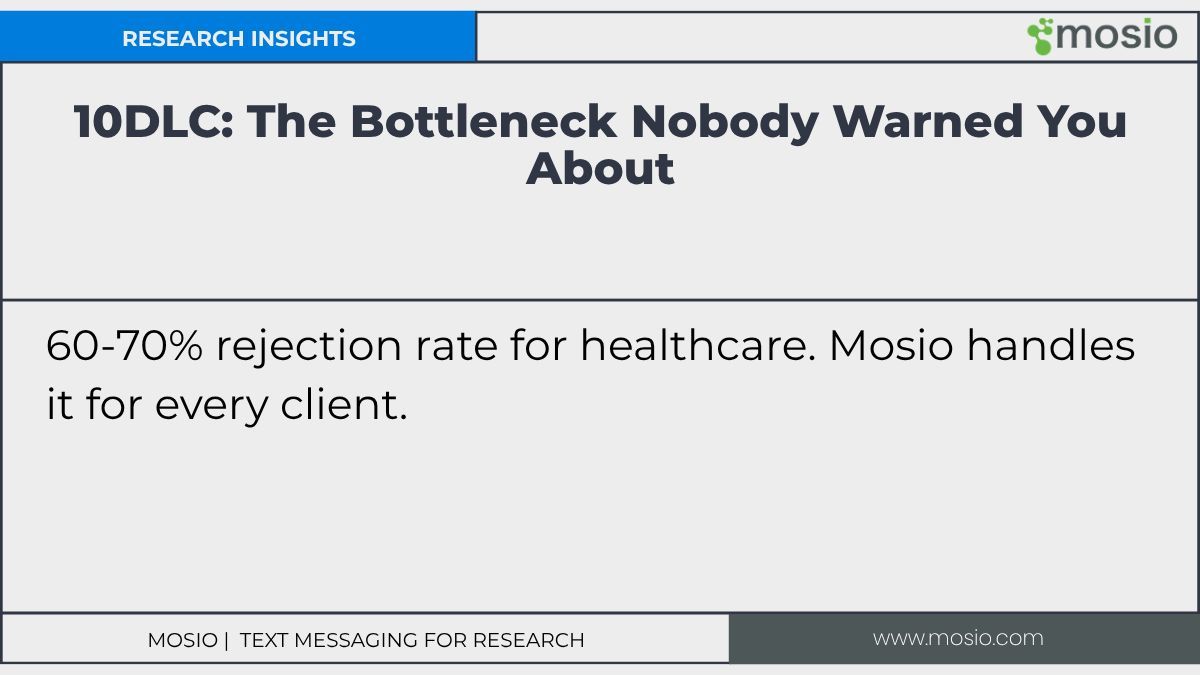
Research teams keep telling us the same thing: "We tried to set up texting for our study. Then we hit 10DLC registration and it took weeks, sometimes months." 60-70% of healthcare registrations get rejected on the first try. Vague feedback. $15 per resubmission. Days of waiting. Mosio handles all of this for you. Every client. Every registration. Prevent rejections, no hassle on your end. Link in bio if you're stuck. #ClinicalResearch #10DLC #SMS
Mosio | for Research tweet media
English
1
0
0
7
Mosio | for Research
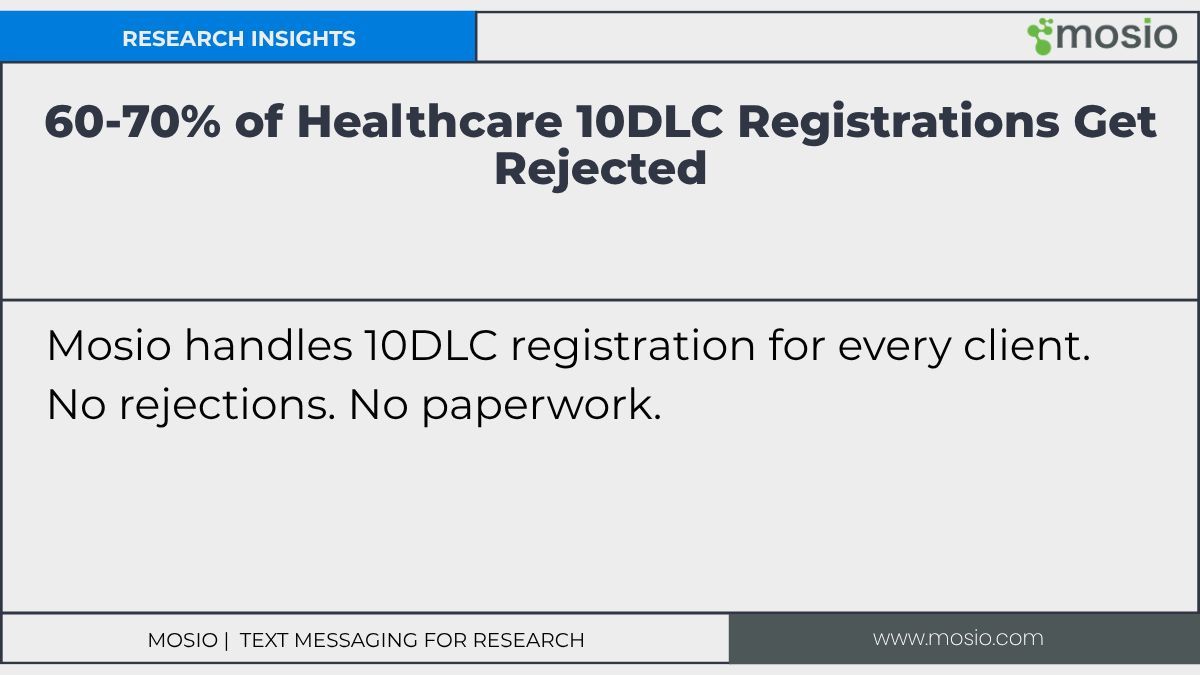
1/ If your research team wants to send text messages to participants in 2026, there's something you need to know about first. It's called 10DLC registration. And it's a headache. Here's what it is, why it matters, and why most teams get stuck. 2/ 10DLC stands for "10-Digit Long Code." It's a carrier-mandated registration process. Before you can send texts using a standard phone number, you have to register your organization, describe your messaging use case, and get approved by the carriers. Without it, your messages get blocked. 3/ Sounds simple. It isn't. - For healthcare and research organizations, 60-70% of first-time registrations get rejected - Rejections come with vague feedback like "insufficient details" - Each resubmission costs $ and takes days/weeks. 4/ Common reasons research teams get rejected: - Privacy policy doesn't include SMS-specific language - Consent documentation doesn't address both TCPA and HIPAA - Sample messages accidentally reference participant health info - Brand name on registration doesn't exactly match what's on your website - One wrong character in your EIN = automatic rejection 5/ For research teams, it's especially painful. You're dealing with HIPAA requirements on top of carrier requirements. Dual compliance. Most generic SMS platforms leave you to figure this out yourself. 6/ Mosio handles 10DLC registration for every client. We know what carriers want, we prevent rejections before they happen, and we get campaigns approved so your team can focus on the research, not paperwork. Link in bio if you're dealing with this right now. We can help. #ClinicalResearch #10DLC #SMS #HIPAA
Mosio | for Research tweet media
English
1
0
0
10
Mosio | for Research
The average professional spends 12 hours a week managing their inbox. 79% say email causes feelings of overwhelm. Your survey link, your appointment reminder, your check-in message - it's competing with 100 other emails. Or you can text them and they'll see it in 3 minutes. The channel matters. #ClinicalResearch #PatientEngagement #ResearchCommunication
Mosio | for Research tweet media
English
3
0
0
26
Mosio | for Research
Mosio | for Research@mosio·
1/ Your participants aren't ignoring your study. They're ignoring your communication channel. Here's what the data says about why phone calls and emails are failing research teams. 2/ Phone calls: - 80% of people don't answer calls from unknown numbers - 80% of voicemails from unknown numbers never get listened to - Robocalls have made people afraid to pick up the phone Your coordinator is leaving voicemails no one hears. 3/ Email: - The average professional gets 50-100+ emails a day - 79% of workers say constant emails cause overwhelm and burnout - Workers spend 28% of their workweek (nearly 12 hours) just managing email Your survey link is buried on page two of their inbox. 4/ Now compare that to text messaging: - 98% open rate - Most read within 3 minutes - Two-way: participants can reply instantly - Works on any phone, no app needed It's the one channel people actually check. 5/ Your coordinators aren't bad at follow-up. They're using channels that don't work anymore. Switch the channel. Watch the engagement change. Link in bio if you want to see what automated texting looks like for a research team. #ClinicalResearch #PatientEngagement #ResearchCommunication
Mosio | for Research tweet media
English
0
0
0
13
Mosio | for Research
Mosio | for Research@mosio·
A 2024 randomized study asked research participants how they want to be contacted. 93% said they preferred text messages over postal letters. Not email. Not phone calls. Not a patient portal. Texting. If you're still relying on channels participants don't prefer, it might be worth asking why. #ClinicalResearch #PatientEngagement
Mosio | for Research tweet media
English
0
0
0
13
Mosio | for Research
1/ We've been saying it for 15 years. Now the research is piling up. Multiple peer-reviewed studies published in 2024-2025 confirm: text messaging significantly improves participant engagement, adherence, and data collection in research. Here are the highlights. 2/ A 2025 scoping review of nearly 3,000 patients found SMS improved medication adherence by 111%. That's not a small bump. It's a doubling of adherence rates, across multiple conditions and populations. (Published in the Journal of Medical Internet Research) 3/ A 2024 randomized controlled study on cancer screening found SMS reminders increased screening completion by over 10 percentage points. But here's the kicker: 93% of participants said they preferred getting texts over postal letters. Participants want this. 4/ A 2024 JMIR review called text messaging "deceptively simple yet profoundly impactful" across physical activity, mental health, substance use, and adherence. Deceptively simple. We like that. 5/ The research community has validated what our clients already know: automated text messaging saves time, improves adherence, and gets better data. If you're still relying on phone calls and email to engage participants, the evidence is clear. Link in bio if you want to see how it works. #ClinicalResearch #PatientEngagement #NIH #REDCap
Mosio | for Research tweet media
English
0
0
0
28
Mosio | for Research
If you've been following along this month, here's the short version: - Text messaging reaches 98% of participants in minutes - Research teams see 30%+ retention increases and 5x email response rates - REDCap integration means zero extra work for coordinators - It's HIPAA + 21 CFR Part 11 compliant If your team is planning a study this year, we'd love to show you how it works in 15 minutes. Link in bio. #ClinicalResearch #PatientRetention #REDCap
Mosio | for Research tweet media
English
0
0
0
10
Mosio | for Research
The REDCap Advanced Randomization Module got a major upgrade for pragmatic trials. Combine it with Mosio’s HIPAA-compliant text messaging and REDCap event triggers and you get instant automated nudges to participants, boosting ePRO completion and retention in real time. Tech that actually moves the needle. #REDCap
The Postdoctoral@thepostdoctoral

The REDCap Advanced Randomization Module, in This Week's Rethinking Clinical Trials ... - Casey is an assistant professor of medicine, a co–principal investigator of the Vanderbilt Trial Innovation Center, and the director of the ... - ift.tt/MCgSohA

English
0
0
0
178
Mosio | for Research
1/ "Can't we just use a generic SMS tool for participant texting?" We hear this a lot. Here's why research teams choose a purpose-built platform instead. 2/ Compliance is the big one. - HIPAA with BAA? Most generic tools don't offer this. - 21 CFR Part 11? Not even on their radar. - Research-specific audit trails? Nope. Research has different rules than marketing. 3/ REDCap integration. Generic texting tools don't know what REDCap is. Mosio was built around it: triggered workflows, Storyline sequences, data flowing back automatically. 4/ Research-specific features: - Adherence nudges - ePRO (electronic Patient-Reported Outcomes) collection - Study visit scheduling and confirmation - Two-way interactive TextChat - Personalized Storyline sequences per participant These aren't add-ons. They're core. 5/ We've been doing this for 15+ years with leading research organizations and universities across the country. Research teams deserve a tool built for research, not a basic platform with a compliance checkbox added later. Link in bio for a quick overview. #ClinicalResearch #REDCap #HIPAA
Mosio | for Research tweet media
English
0
0
0
7
Mosio | for Research
For PIs and study coordinators: Which participant engagement challenge costs your study the most time and money? A) Missed study visits / no-shows B) Low survey completion rates C) Forgetting to do specific tasks D) Participants have low engagement We've seen research teams solve each of these with one change. Reply with yours. #ClinicalResearch #PatientRetention
Mosio | for Research tweet media
English
0
0
1
87
Mosio | for Research
Most people think of Mosio as a participant-facing tool. But we also have Study Team Reminders: automated texts for your own research staff. - Protocol deadline approaching - Study visit prep needed - Data submission due - Training renewal coming up Keep your team on track without another spreadsheet. #ClinicalResearch #ResearchCoordinator
Mosio | for Research tweet media
English
0
0
0
10
Mosio | for Research
Mosio | for Research@mosio·
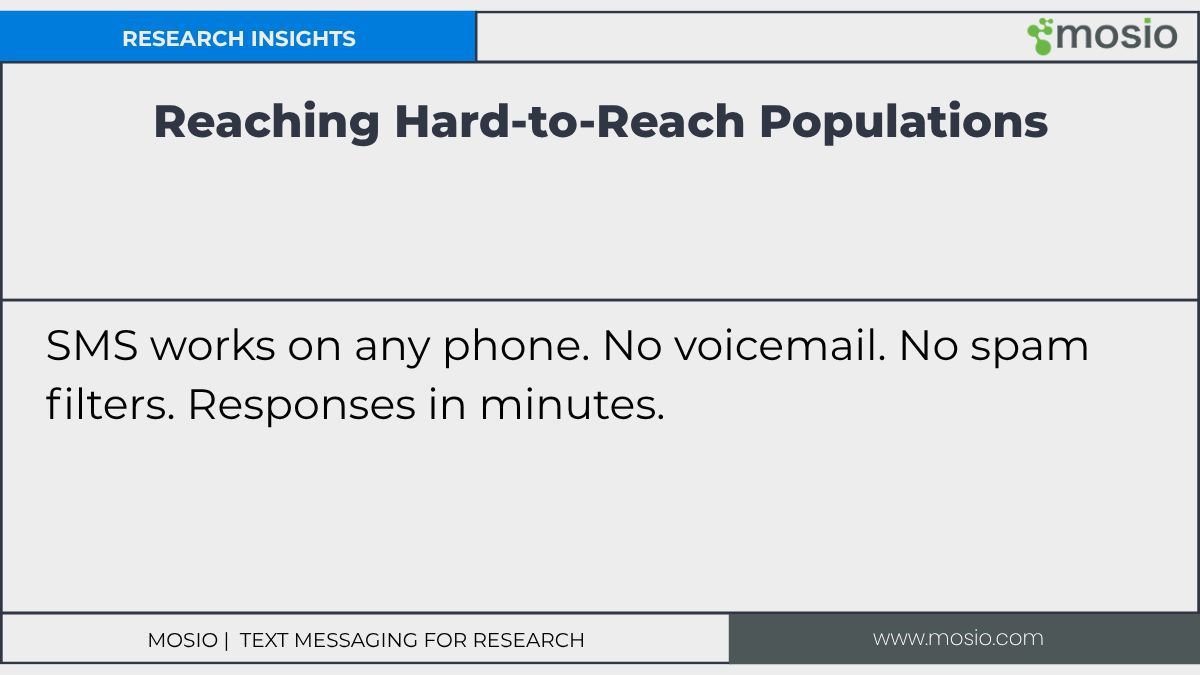
1/ Some of the most important research involves populations that are hardest to reach. Mental health. Substance abuse. Violence prevention. Underserved communities. How do you maintain engagement when traditional outreach fails? 2/ Leading research universities and digital health centers are using automated SMS for exactly these populations, where phone calls and emails often go unanswered. 3/ Why text messaging works for hard-to-reach groups: - No voicemail screening - No spam filters - Works on any phone (smartphones not required) - Low barrier: everyone knows how to text - Responses come in minutes, not days 4/ One research leader told us Mosio is "solving one of the biggest challenges in recruiting and retaining patients, using their wealth of knowledge and experience in mobile to help researchers produce cost effective, successful outcomes." 5/ If your research serves populations where engagement is the biggest barrier, text messaging isn't a nice-to-have. It's essential. Link in bio to learn more. #PublicHealth #ClinicalResearch #HealthEquity #MentalHealth
Mosio | for Research tweet media
English
0
0
0
4
Mosio | for Research
Mosio | for Research@mosio·
Small detail that makes a big difference in participant response rates: Personalize your texts. "Hi Sarah, your visit with Dr. Martinez at the Downtown Clinic is tomorrow at 2pm. Reply YES to confirm." vs. "Reminder: You have a study visit tomorrow." Mosio's Project Variables let you inject %firstname%, %coordinatorname%, %studydetails% automatically. Personalized messages get replies. Generic ones get ignored. #ClinicalResearch #PatientEngagement
Mosio | for Research tweet media
English
0
0
0
19
Mosio | for Research
Mosio | for Research@mosio·
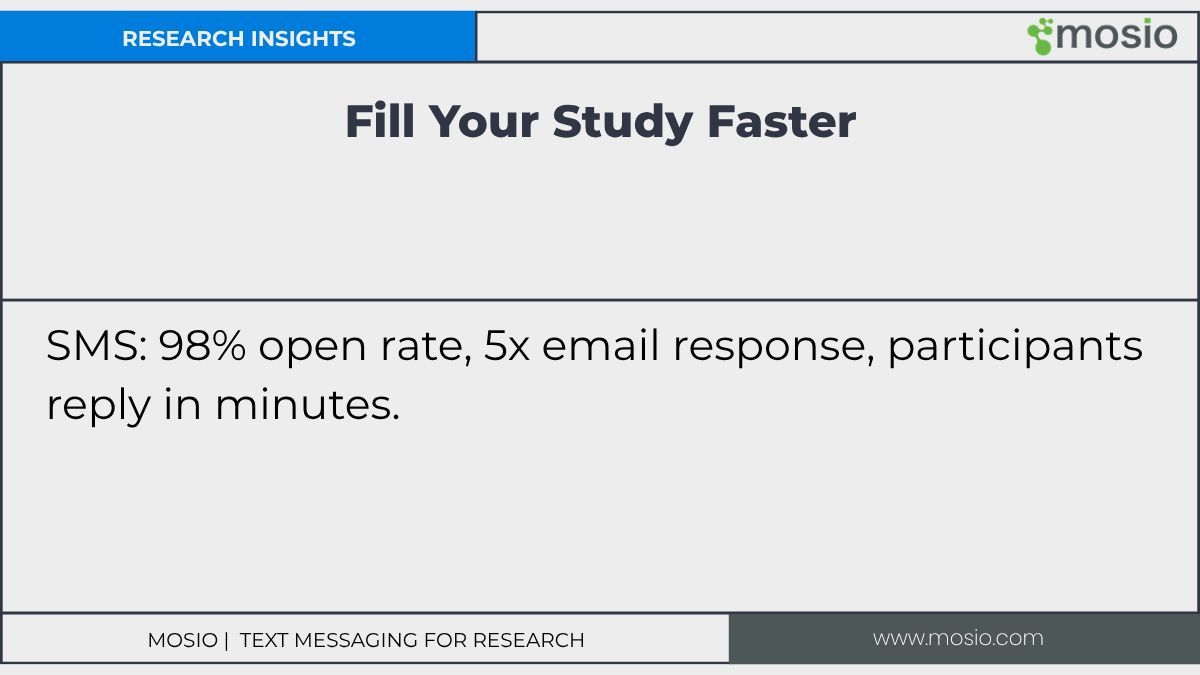
1/ Recruitment timelines are one of the biggest stressors in clinical research. Most teams rely on email and phone outreach to fill studies. Both are slow and getting slower. Here's what happens when you add SMS to the mix. 2/ Across our clients, we've seen a consistent pattern: For every small increase in text messages sent, there's a measurable increase in participants enrolled. One team had to pause enrollment multiple times because they were filling up too fast. 3/ The response is immediate. That's the difference. When a text goes out, coordinators hear back within minutes, not days. Participants call in, reply to confirm, or click the link right away. 4/ Email outreach averages a 20-25% open rate. SMS hits 98%. Research teams consistently report 5x the response rate compared to email, while actually contacting fewer people. 5/ If your team is facing recruitment timeline pressure, adding SMS to your outreach may be the simplest change you can make. No new infrastructure. No app for participants to download. Just texting. Link in bio to see how it works. #ClinicalResearch #PatientRecruitment #NIH
Mosio | for Research tweet media
English
0
0
0
9
Mosio | for Research
Mosio | for Research@mosio·
Love seeing the REDCap Advanced Randomization Module support modern trial designs. At Mosio we make it even smoother: Direct REDCap >> SMS automations for participant alerts, survey reminders, and engagement workflows. No more manual follow-up. This is how you scale decentralized research. #REDCap #TextMessaging
The Postdoctoral@thepostdoctoral

Grand Rounds June 6, 2025: The REDCap Advanced Randomization Module - Assistant Professor, Pulmonary & Critical Care, Vanderbilt University ... In a traditional randomized trial, trial procedures—including ... - ift.tt/7PHsBfR

English
0
0
0
52
Mosio | for Research
Mosio | for Research@mosio·
Quick question for the research community: Does your team use REDCap for data capture? If so, how are you currently sending survey reminders to participants? A) Manual emails B) Phone calls C) Automated texts D) We don't send reminders (hoping for the best) Genuinely curious about the mix. #REDCap #ClinicalResearch
Mosio | for Research tweet media
English
0
0
0
22
Mosio | for Research
Mosio | for Research@mosio·
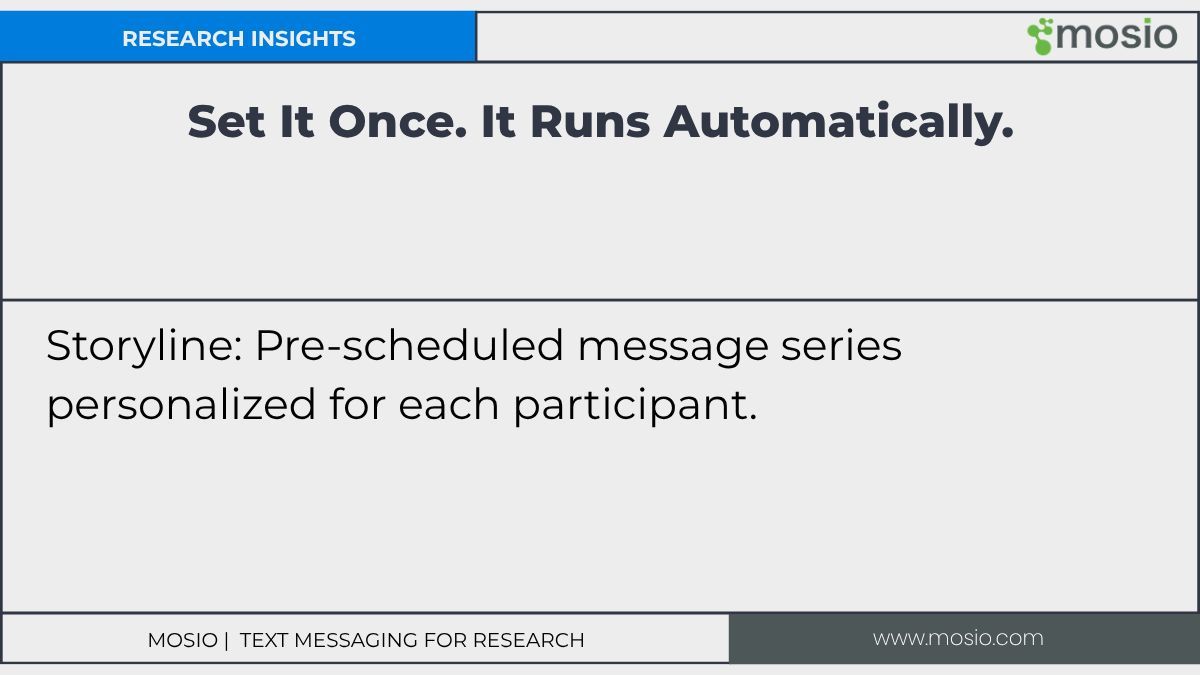
Most research teams send reminders one at a time. Mosio's Storyline feature lets you pre-schedule an entire message series for each participant: - Day 1: Welcome + consent confirmation - Day 3: First survey link - Day 7: Adherence check-in - Day 14: Appointment reminder Set it once. It runs automatically. Each participant gets their own personalized timeline. #ClinicalResearch #REDCap #ResearchCoordinator
Mosio | for Research tweet media
English
0
0
0
12
Mosio | for Research
Mosio | for Research@mosio·
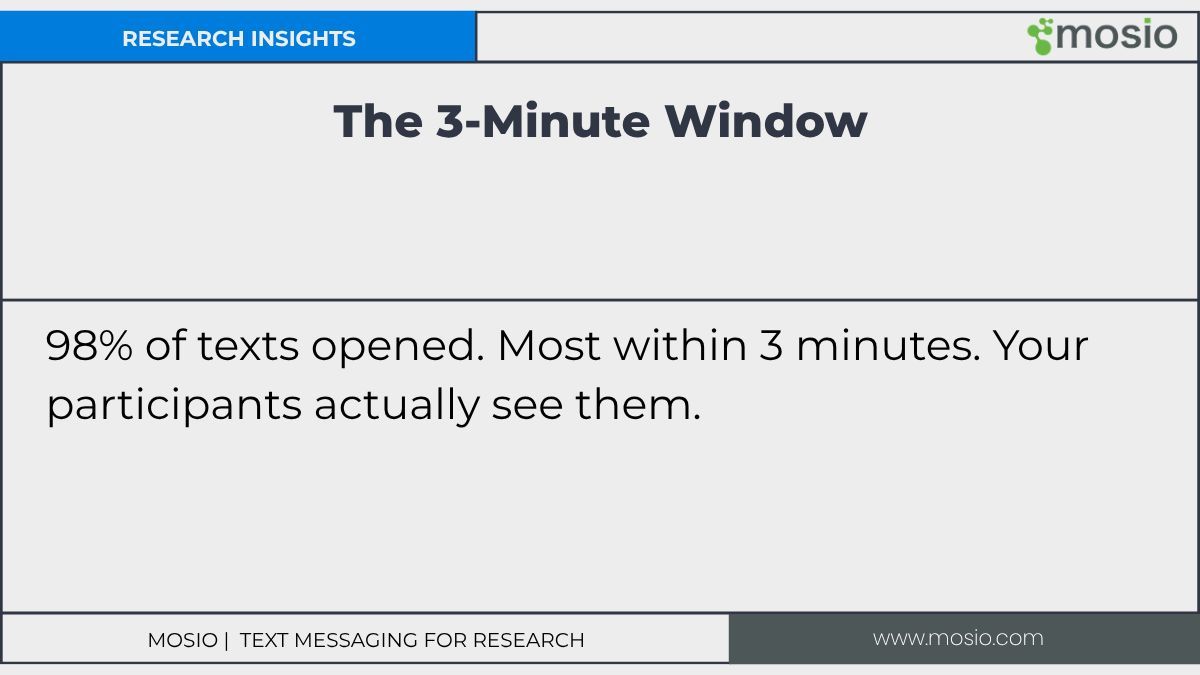
There's a window that most research teams miss. 98% of text messages are opened. Most within 3 minutes. That means when you send a survey link, appointment reminder, or adherence nudge via SMS, your participant sees it almost immediately. Compare that to email, where your message sits unopened for hours, gets filtered to spam, or never gets read at all. For time-sensitive research communication, that 3-minute window matters. #ClinicalResearch #PatientEngagement
Mosio | for Research tweet media
English
0
0
1
23