Michael

247 posts

Michael banner
Michael

Michael

@mr_michael_ross

Katılım Temmuz 2014
284 Takip Edilen50 Takipçiler
Michael retweetledi
THE SHORT BEAR
THE SHORT BEAR@TheShortBear·
Exhibit 1.
THE SHORT BEAR tweet media
English
4
6
58
11.7K
Michael retweetledi
Josh
Josh@j_stredder·
No one is more stressed than a guy in his 20/30s who feels they’re running out of time to be successful. That shit will keep you up at night.
English
1
1
12
632
Michael retweetledi
Tom Dante
Tom Dante@Trader_Dante·
Tom Dante tweet media
ZXX
106
276
2.5K
187K
Michael
Michael@mr_michael_ross·
@TradingLucid Dear AJ's Mom, Your son does a great job helping out traders trying to become professionals, but also lets the degenerate gamblers get their itch too. Accepts one and all.
English
0
0
0
19
Michael retweetledi
Lucid Trading
Lucid Trading@TradingLucid·
We're giving away $5M in accounts all week long. Accounting department is pissed. For a chance to win LucidTest and LucidDirect accounts: - Follow @TradingLucid - Like and share this post - Tell AJs mom how proud you are of him Good luck y'all (and sorry accounting).
Lucid Trading tweet media
English
1.2K
1.1K
1.8K
101.8K
Michael retweetledi
Dan of GTC Traders
Dan of GTC Traders@GtcTraders·
As an ol' mentor (one of a few) liked to say: "You want to know when the market will stop going up? Truly? When it does. Stop trying to figure it out" Another more Quant mentor: "When the market is going up .. you want to be long. When it's going down .. you want to be short"
GIF
English
0
1
1
112
Michael retweetledi
JaviCharts 🤘
JaviCharts 🤘@ChartsJavi·
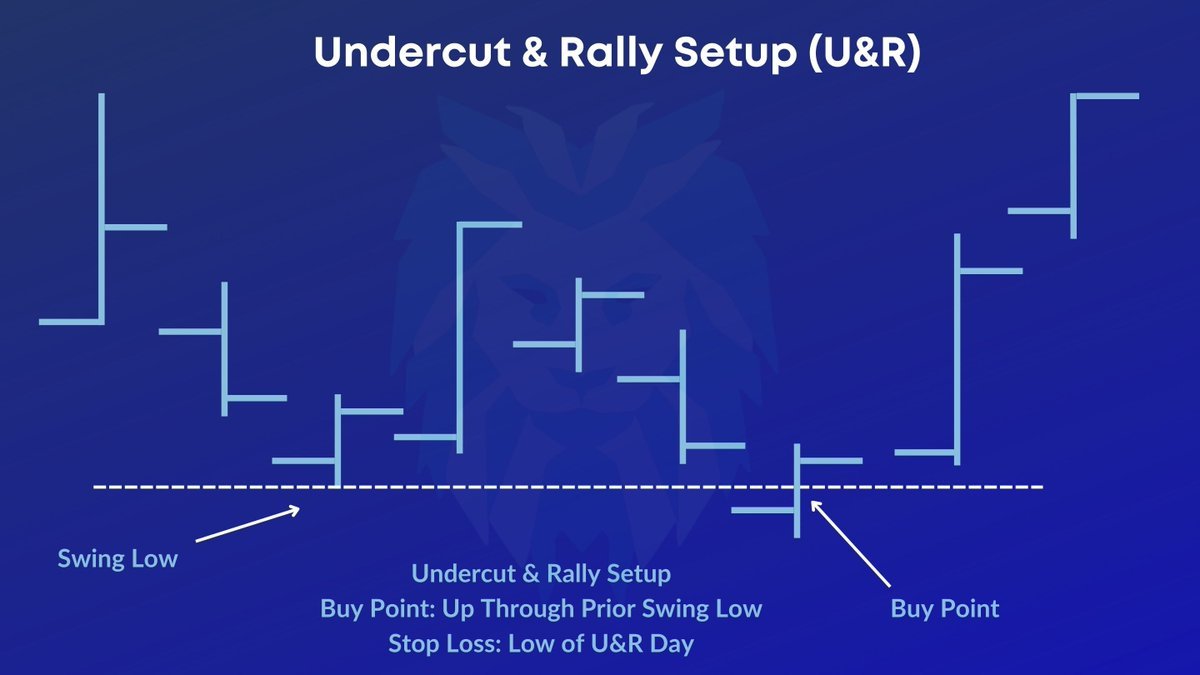
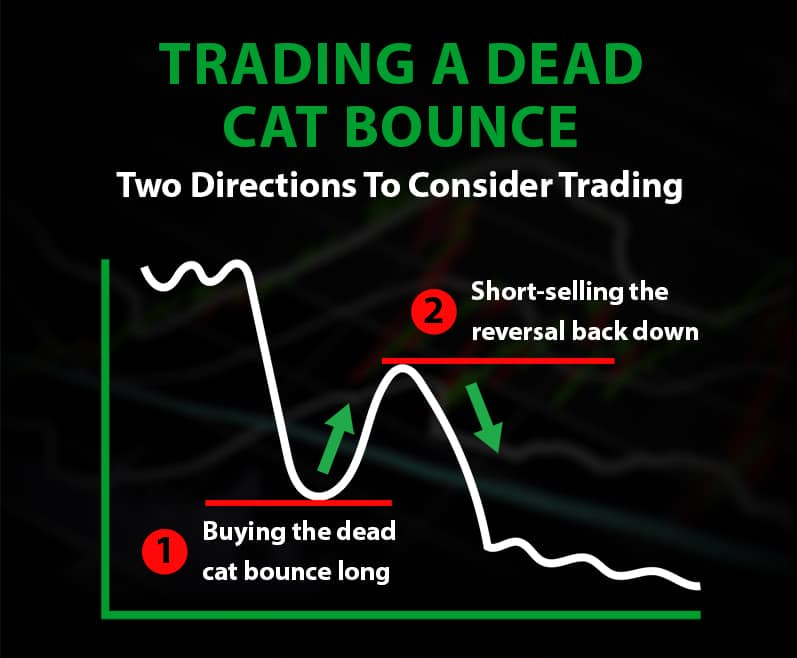
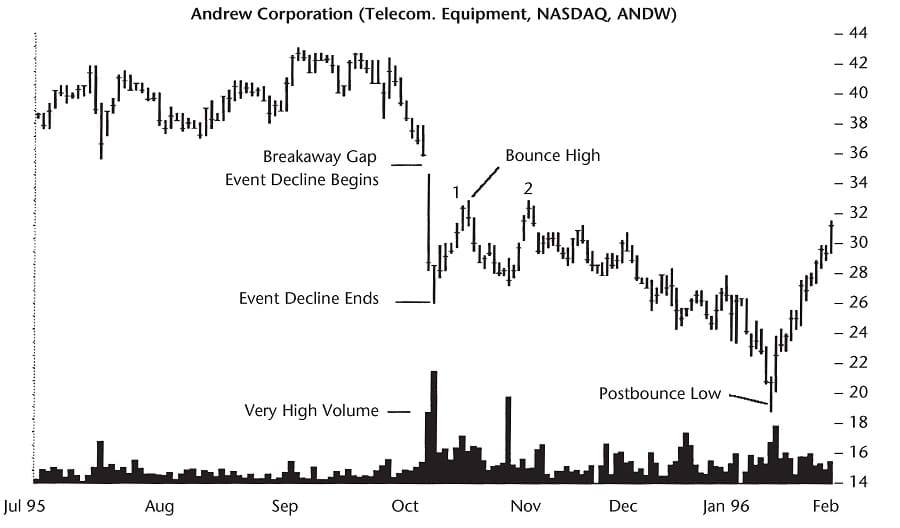
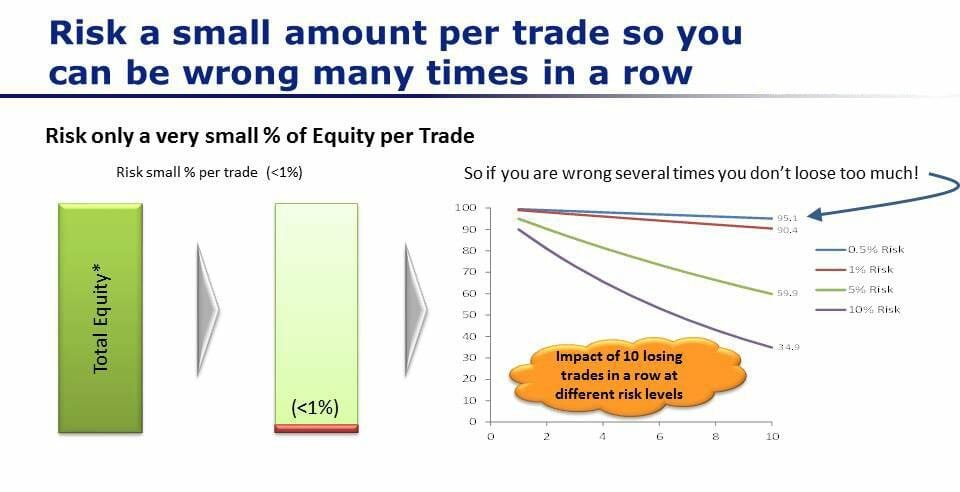
Undercut and rally (U&R) setups often serve as precursors to short-term uptrends, but their success and duration depend on the broader market context. These patterns are particularly effective in identifying areas where institutions and algorithms may take advantage of retail trading behavior. In U&R setups, the price dips below a recent low, triggering stop-loss orders placed by retail traders who use those lows as support. Algorithms and institutions are aware of this behavior. By engineering or exploiting a price drop to those levels, they can absorb the liquidity from the retail stop losses—essentially buying when retail traders are forced to sell. In Uptrends: - U&R setups often signify short-term reversals that align with the overall direction of the trend. - These patterns provide strong opportunities to "ride on the backs of institutions," as institutional participation drives prices higher after the liquidity grab. - Algos and institutions may exploit these setups to add to positions in a bull market where demand exceeds supply. In Downtrends: - The U&R phenomenon is less reliable as a bullish signal because the broader momentum is downward. In these cases, rallies may be short-lived "dead cat bounces." - Conversely, the opposite occurs at prior highs—when price approaches resistance, algos and institutions often sell into the breakout attempts, creating liquidity traps for retail buyers. The answer to your question about whether U&Rs indicate short-term or long-term pumps depends on: - Context: U&Rs in a confirmed uptrend are more likely to lead to sustained rallies, while U&Rs in a downtrend may only result in brief relief rallies. - Volume: A high-volume rally following the undercut suggests institutional participation, increasing the likelihood of sustained upward momentum. - Market Sentiment: A U&R occurring in a strong bull market or after a positive catalyst (e.g., earnings beat, sector strength) is more likely to lead to a longer-term move. Tactical Implications - For Traders: U&Rs are excellent entry points for traders who understand market structure. Entering at these non-traditional levels allows you to capture favorable risk-reward setups, with a natural stop-loss just below the recent low. - For Investors: U&Rs are often a signal of accumulation zones, particularly if the stock is in an uptrend supported by strong fundamentals. - For Risk Management: It's crucial to evaluate the broader market trend and avoid relying solely on the pattern without considering macro indicators, sector performance, and stock-specific news.

JaviCharts 🤘 tweet mediaJaviCharts 🤘 tweet mediaJaviCharts 🤘 tweet mediaJaviCharts 🤘 tweet media
Living 𓆩𓆪@DarkNiltus

@JaviCharts This kind of undercut and rally are symptoms of short term pumps or long term pumps? It seems like the normal path for a dead cat bounce before continuing it's way down, but I am not educated on this. What are your thoughts Javi?

English
12
28
192
40.2K
Michael
Michael@mr_michael_ross·
@Desi_Trade Hey Vincent! I'm starting to look into stocks a bit more (currently futures focused) and see your use of using options instead of shares. Is this due to getting more leverage and for how long you plan to hold the trade?
English

0
0
1
167
Vincent Desiano
Vincent Desiano@Desi_Trade·
Final tally before I blow my shit up Riding some $TSLA risk free into next week because🚀🌑
Vincent Desiano tweet media
English
16
3
132
7.7K
Michael
Michael@mr_michael_ross·
@marketbuyonly Respect the decision man. Curious when it comes to just using limits are you confident enough in your level providing the reaction, or do you still like to monitor the behavior on the approach?
English
0
0
0
52
Strangelove
Strangelove@marketbuyonly·
Going forward, I'm only ever going to do Limit Orders. I just keep getting fucked when I keep market ordering, its frustrating me a ton.
English
3
0
7
1K
Michael retweetledi
ThiccTeddy
ThiccTeddy@ThiccTeddy·
4 OF MY FAVORITE SLIDES FROM VOLUME CAMP 1) Bearish Volume Trend Break📉 2) Volume Control Shift💥 3) 9ema + Volume9⃣ 4) Double Top + Volume🎩
ThiccTeddy tweet mediaThiccTeddy tweet mediaThiccTeddy tweet mediaThiccTeddy tweet media
English
8
30
246
15.5K
Michael retweetledi
realFatCat
realFatCat@realFatCat1·
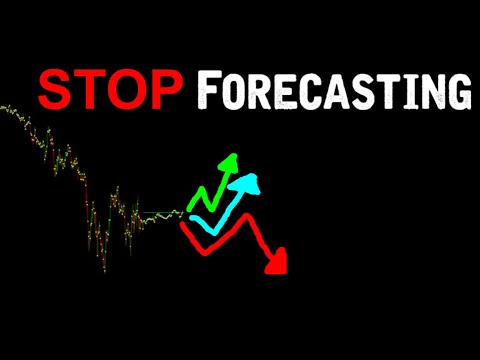
Why scalping is superior written by Bartholomew Sylvesterous Fatuscatus - Yes that's my legal name, but you guys can just call me Fat Cat. Look you either say the entire name or use the short version. No Bart no Fatus. The full monty. Below is today's session with fucking perfect MAE in my tradecraft.club dashboard. Now before we get into it a good chunk of you don't scalp, you do these setups that you hold for tens of minutes maybe hours and y'all are mega millionaires. Congratulations. I'm a mere 6 figure trader who hasn't achieved the big seven figs. Don't get your panties in a twist as I write up why I think scalping is superior than most shit I see everyone else do. I've tried to be that trader and it never worked for me. I mean it can but my god my brain doesn't like losing. When you're pushing trades your win rates go down. Someone whom I have respect for that's good at this type of trading is somewhere in the 30% win rate which losing that much is something I could handle if I trained myself. But I think most traders can't handle sticking to the plan of holding trades while being in some form of draw down or losing one after another before they fuck it all up for themselves. PNL creep is real. It gets into guys heads even from prior days. I see it over and over and these are working with traders personally. I think pushing trades takes a shit load of cognitive discipline and to just keep playing well when the coin keeps landing on tails relentlessly. Below I'll post my aggressive vs conservative trades from my tradecraft.club dashboard. I have a total of 490 aggressive trades and 670 conservative trades. Aggressive are point 2 point and hold trades. Conservative trades will be scalps and nudging into point 2 point trades. Below is the win rate we can see scalping is 72.84% where my aggressive trades are 60.2% Keep in mind my aggressives are what some of you may consider scalping. I could be looking for 2 points but what I'm looking for requires pushing through nasty chop. A lot of my trades are sub one minute so pushing into that 3 minute or greater zone is what I consider aggressive. These can also expand into hour plus holds which are rare. Here is a duration filter applied to the trades table widget on tradecraft.club We can see 12 fucking hour long trades out of 1160 trades. There's 645 trades under one minute. So this should give you an idea of how quickly my hold time shifts and is centered around seconds if not minutes. Okay okay. Screen shot 2. Go up and look at that I labeled it. Notice the pink line the aggressive trades. There are several extreme flat spots. These areas are me being break even. 77 aggressive trades before I turned a profit in the first area. 55 Trades before I turned a profit which was quickly followed up by another 38 trades before I turned a profit. The aggressive line is more jagged and flat in areas than scalping in blue which is a nice smooth upward curve. Sure it has it's flat spots as well, but nothing like aggressive trading. So realistically can a mere mortal handle 77 fucking trades of being break even without fucking up!? How can that not get to your head? Scalping is easier mentally. Don't get me wrong it's not "Easy" but easier in IMO. --- The more time and distance you add the more randomness you introduce. I made this video some time ago on forecasting and why scalping is better: youtube.com/watch?v=0hLaaV… You guys can not predict the unlimited price action scenarios on a hold. The longer you hold the more shit the price will do you are not forecasting therefore making adjustments becomes more difficult. There's a hundred million ways you can get stopped on the same trade and hundred million ways it works. Most traders draw those fucking arrows where they think it will bounce and rotate and most of the time that's not how it works. So when that didn't happen you get thrown into confusion. Shortening the time and distance of a trade drastically reduces randomness. I mean it's still a lot of randomness but as a scalper it's no nearly as much as a holder. Less reasons to get mentally freaked out when the trade is doing weird shit. I suggest watching money bots on youtube. It's a documentary. These guys who were pioneering HFTs made a bot that could predict roulette wheel spins. However it could only do it after the spin was initiated as it calculated speed and ball trajectory. Basically split second decision making. I've said this for years. It's easier to predict the next few seconds than few minutes. But I get it. Holding all fucking day from top to bottom you have big pee pee energy. Nothing compensates for a small unit like a big honker of a hold. It's not the size that matters it's how you use it... Now if I could some how take mega trades I would. But I can only work with what god gave me and that's scalping. This is what I know and what works and I don't know what's more important? Bragging about a home run that took 77 tries to achieve or grinding out wins everyday and making a fucking paycheck on a weekly basis? I digress... Like I said if it works for you. Good. However those that are having issues with holding, maybe it's time to switch. --- Patterns - When operating on a small level you'll be zooming way in digging around in second charts. You get a sense of the markets behavior a lot faster like this. The ES especially has very different behaviors every two days or so. Getting a pulse on the market at this level allows you to figure out how you need to attack it better. After all these micro behaviors effect every time frame up which does affect hold traders. The patterns are smaller and more frequent at this level. Smaller patterns have less time and distance to morph and shift in unexpected ways thus making them slightly more predictable, assuming one has a good pulse check on the market. Smaller more frequent patterns lends itself to more trading opportunities. Higher time frame patterns are absolutely sloppy. Keep in mind I've operated a lot in that world. Pattern erosion is bad. You may find something and by the time you learn to exploit it - it erodes and often times doesn't come back until many months later if that. Some traders wait all day for a setup which leads me into the next topic - fatigue. Decision fatigue is real. I don't like to push my sessions beyond 2 hours. However operating on the smallest time frames allows me to find opportunities frequently. Obviously my pulse check matters - some days take longer to get in sync with the market while others I can just sit down and be done in 8 minutes. Trading well requires a ton of focus. Focus is finite and when you're sitting glued here for 3 hours before a trade shows up, will by that time you may not perform your best do to fatigue. A trading session is a race against the clock. Especially when the market is slogging. Boredom or discomfort kick in leading to poor impulsive trades. Often times hold traders finally get in and assuming it works they tend to lose focus and chat or bull shit while loosely monitoring the trade. Every trade requires a ton of focus even holds. After all the unexpected will happen as time and distance adds randomness you most likely are not accounting for. The trade may even tell you it's over before it's over, before target is hit, warning of a push back to your entry. If you're not paying attention time and time again the trade will always come back on you which ES is very good at. Holding requires sitting in "this doesn't look good" cycles multiple times over in order for it hopefully look good again so you can rest easy. Problem is those it doesn't look good moments may become real which leads me into the next topic. -- Scalping to hold or scaling. Scalping into holds often does not work out. Trust me. I've attempted to leverage my scalping skills into holds. Most of the time a scalp entry is only worth the scalp and nothing more do to the brutal choppy behavior of the ES. Those scalps often add up into what the broader move would be. Lets say there's a volume profile. It's shaped nice and round like the curve of my ass cheek and it's 8 points wide. The holder will try to yeet across the profile. Will we don't really live in that day and age where that works well. Profiles are slippery fucks where it churns and chops and sometimes never makes the other side and if it does it ran your stop 5 times over before it goes. Let's be real about this. This is what happens. The scalper can take points all in that 2 hour range racking up 8 points total which would equal the move. Assuming the move even happens? Can't tell you how many times I was holding and was in a slight draw down and had someone else like Chronik scalping around my position. I'm like fuck I would of already made target on 3-4 scalps vs sitting in this fucking thing and it's still not working nor guaranteed. Sure the hold trader will get the monster trends. However most of the time the ES is a choppy whore that likes to fuck everyone and I can handle that. Plus is taking loss after loss after loss before the big one comes worth it? That's up to you to decide. For me it doesn't make sense when I have a skill that lets me come in trade and leave giving me true freedom to fuck off for the rest of the day. Okay scaling? Scalp some let the rest run. Seems fucking fantastic in theory. In fucking theory. But IRL it's different. Most of the time the scalped entries are coming back. ES loves to mess with both sides. Say you trade 4 lots scalp 3 run 1. Will when you take a loss because that's coming you'll always be doing it on full 4. When you win you'll be winning on 3 most of the time and the last one lot will probably be a break even or loss which that adds up. The same thing happens as I stated earlier. Had you just scalped the full 4 instead of running a 1 lot that 1 lot will equal the move of a hold when scalped. It's no different than scalping vs holding like I mentioned with trading an 8 point profile example. When I traded 4 lots for several years I tried this shit for a long time and came to the conclusion it What about adding to winners or campaigning an entry? Each new entry should be treated like a new trade because once it starts losing it eats into the winners dragging your break even up. However it would be better to just scalp fully instead of adding to a winner or campaigning as the price will ebb and flow back and forth on entry seeing how brutally choppy ES. Each time that wave flows out that's a chance to lock in something. When it flow back in that's a chance to re open a new position as it flows back out scalping it. This is the same phenomenon I spoke about when it came to a hold trader going across the 8 point profile vs the scalper who acquires 8 points on many scalps before the move even traverses and that's if it traverses. Sure you could campaign scalping around a core and I can't speak on this as I don't have much experience with it. However scalping 3 lots while holding a 1 lot is some what the same. Your trying to hold a core. Also adding to winners which I've done is yet another sub component of campaigning. Thus in the end you still run into the same issues. The scalping may offset your loss as hold traders typically have low win rates. If you're in the 40% area you're really fucking good. So most of the time you're losing and the scalps help offset the loss however your core taking a hit will most likely eat up those scalps. It makes more sense to have a larger core anyways than the scalps as running a 1 lot and scalping 3 doesn't have nearly a good potential win vs a 3 lot hold and 1 lot scalp for the campaign. It's more worth it to run a larger core because you do need to have big wins anyways just to make a living and fix your losses as you will lose most of the time as a holder. So if that's the case and you hold 3 cores while scalping 1 lots the loss ultimately will eat the wins on the 1 lots which sure buffers the loss a bit, but I rather scalp all 4 and just run a campaign where I scalp and lock it in creating some actual equity I can pay myself with. As you can see it's all kind of the same problem - you just cut it up differently when you add to winners or campaign. Or hell even average into a loser. The ES is so choppy you often can make decent moves out of garbage chop that would require you to hold for fucking ages, or you will get stopped relentlessly as the market simply is doing anything yet the scalper created that 8 point move in between the waves of the chop. --- Experience. Lets say a scalper averages 15 trades per day and the hold trader is at 2. That's 75 trades per week for the scalper. 10 per week for the holder. 40 trades per month for the holder. 300 per month for the scalper. Will as a holder lets say you will get into a situation like my 2nd screen shot where you take 77 trades to be breakeven before you get out of the hole. That's just over 2 months of being fucking flat! Can you guys realistically handle struggling for 2 fucking months and still stick to the system and not make radical adjustments or impulsive decisions? Anyways moving on. Lets say with holidays and vacation you trade 11 months of the year that means: 3300 trades per year for the scalper. 440 trades per year for the holder. I've said this countless times. You need to review and tag trades using a platform like tradecraft.club or a fucking spreadsheet. The magic to performance is the review process. A quality review not that half ass shit most of you do. Plus tags require sample size. The bigger the sample size the faster you'll find edge. Over a 5 year period a hold trader will have 2200 trades vs 16500 trades for the scalper. Assuming they're both putting in the work every session, the scalper will have more experience, more knowledge, more data, more developed edge than the hold trader. I remember when I'd put in 30 trades per day sometimes 40 and spend 5 fucking hours reviewing all that. I don't want to do that kind of review hence why I try to be done at 1k per day or stay under 8 trades so I can have freedom, because reviewing like that felt like punishment, but god damn it I got decent at this because of the process. Gaining raw experience and making adjustments in the review process to improve quicker is really a hidden gem nearly no one sees when it comes to scalping a ton. The more you free throw the basket ball and review it vs the guy whose not throwing as much as you the better you get. I've listed so many benefits for scalping, and if someone wants to counter feel free, but give me some details.
YouTube video
YouTube
realFatCat tweet mediarealFatCat tweet mediarealFatCat tweet mediarealFatCat tweet media
English
2
3
61
6.4K
Michael retweetledi
Rizzo
Rizzo@Rizzo_Trades·
The inside day look below and fail trade Sellers failed the breakdown, wait for it to trade back into the range and put on size. Ultimate target of the opposite end (inside day high) complete
Rizzo tweet media
Rizzo@Rizzo_Trades

My favorite trade setting up yet again

English
12
3
65
8.1K
Michael retweetledi
ScorpioManoj
ScorpioManoj@scorpiomanojFRM·
#Trading #TripleConfirmationPattern Weekly chart 1) Breakout above consolidation and above 30 week MA 2) Volume breakout 3) RS breakout ( Relative Strength ; not RSI) This is a a simple but effective method of Stan Weinstein . One of the methods I have been following over the years. For those who wants to dwelve deep into his approach, suggest to read ‘Profiting from bull and bear markets’ by Stan Weinstein.
ScorpioManoj tweet media
English
10
36
276
18.2K
Michael
Michael@mr_michael_ross·
@ScottPh77711570 When it comes to crypto with all of the different exchanges, which do you typically look to for tracking the orderbook?
English
0
0
0
428
Deven
Deven@DevendraHake·
@nik_algo That's the only pattern I trade😂 last 3 weeks😄
Deven tweet media
English
1
0
2
279
Michael retweetledi
Nik Algo
Nik Algo@nik_algo·
study orderbook reactivity vol spike in a thin book, makers pulled, spread widened, inventory got distributed, then mean reversion
Nik Algo tweet media
English
12
13
215
46.2K
Michael retweetledi
Ming Zhao
Ming Zhao@FabiusMercurius·
🎶Trader Jargon 101: How to Talk Like a Real Trader🎶 Learning the lingo was the #1 biggest hurdle that I experienced on the trading floor. When u read fintwit posts from the pros, does it all sound like voodoo? 😫🙈Don't worry. Here's 20 top terms to get you sounding smart. 👇
Ming Zhao tweet media
English
8
56
272
0
MURU
MURU@murutrades·
Most traders lose because they have no roadmap. I fixed that. 20+ pages breaking down EXACTLY how to trade like a pro. No fluff. No recycled nonsense. Just pure value. Comment ‘PDF’ & make sure you follow so X allow me to DM.
MURU tweet media
English
3.1K
225
1.6K
212K
Michael retweetledi
Anthony Crudele
Anthony Crudele@AnthonyCrudele·
Three Questions That Changed My Trading When I first started journaling as a young trader, I realized most of it wasn’t very helpful. I’d write down trades, emotions, thoughts, but it didn’t actually help me understand where I truly was as a trader. The breakthrough came when I simplified things down to three questions I asked myself every single week: 1.Was it me? 2.Was it the market environment? 3.Was it my strategy? Answering these honestly, whether it was a good week or a bad week, helped me cut through the noise and figure out what was really going on. Breaking Down the Three Questions 1. Was it me? If my strategy was sound and the market environment was conducive, but I still lost money, that meant I was bringing baggage into my execution, poor discipline, mental fatigue, hesitation. On the flip side, if I had a strong week in a tough environment, it showed that I was sharp and managing risk well. 2. Was it the market environment? Sometimes, even with a solid strategy and execution, the environment just isn’t conducive. That’s when I know I need to trade smaller, sit on my hands, or wait for better conditions. The opposite is also true: when the environment lines up beautifully with my strategy, I remind myself this is a window of opportunity and I need to take full advantage of it. 3. Was it my strategy? This is the toughest one, because it requires math. If my results weren’t adding up, I had to ask: does this strategy really have edge? Backtesting can be tricky with fills and assumptions, so I focused on my favorite setup, the A setup, and tested it deeply on the timeframes I traded. Over time, it proved profitable with a win rate north of 50%. That told me: if I stick to my best setups, then it always comes back to either me or the market environment. A Key Distinction If you’re fully systematic, you don’t need these questions. You’re relying purely on math and probabilities, at which point, why not just automate and take discretion out of it? But if you’re point and clicking every day, discretion matters. And these three questions have been massively helpful in showing me where I really stood as a trader. Get my daily morning and weekend note, for free, delivered right to your inbox by subscribing here: anthonycrudele.com/newsletter/ Cheers, DELI
English
5
43
392
45.4K