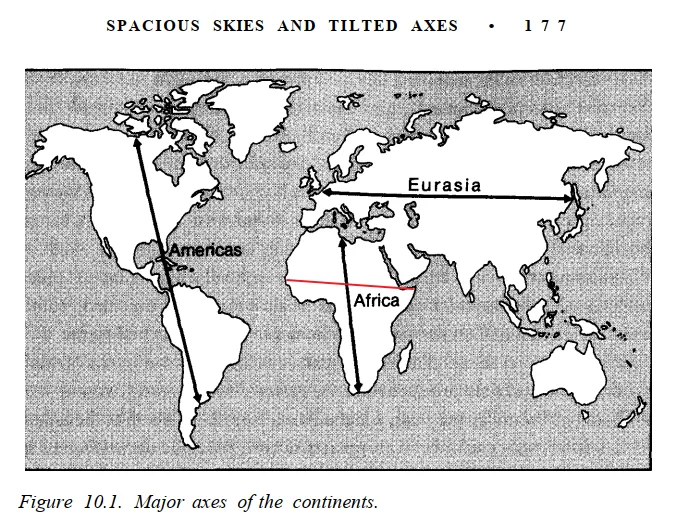
Map of continental orientations according to Diamond.
In reality, Africa is almost as wide as Eurasia. The red line from Dakar (Senegal) to Ras Hafun ( Somalia) is 7,458 km, which is about is about 94% the distance between Brussels and Beijing at 7,958.
africanhistoryextra.com/p/guns-germs-a…
Stanford just made a $200,000 AI degree free.
No application.
No tuition.
No “elite access”.
Stanford released its actual AI/ML curriculum on YouTube.
Not a PR-friendly intro.
Not “AI for the public”.
This is the real thing.
The same lectures shaping people working on frontier models.
What just became public:
Deep Learning (CS230)
→ youtube.com/playlist?list=…
Transformers & LLMs (CME295)
→ youtube.com/playlist?list=…
Language Models from Scratch (CS336)
→ youtube.com/playlist?list=…
ML from Human Feedback (CS329H)
→ youtube.com/playlist?list=…
Computer Vision (CS231N)
→ youtube.com/playlist?list=…
LLM Evaluation & Scaling
→ youtube.com/playlist?list=…
The uncomfortable truth:
The degree isn’t the scarce asset anymore.
Execution speed is.
Top schools know this.
That’s why they’re publishing the playbook.
👉 Bookmark this.
Comment the first lecture you’ll actually watch.
Recently accepted by #QJE, “Enlightenment Ideals and Belief in Progress in The Run-up to the Industrial Revolution: A Textual Analysis,” by Almelhem, Iyigun, Kennedy, and Rubin (@jaredcrubin): doi.org/10.1093/qje/qj…
Did you know you can calculate the exact sample size you need before you even start your study? A sample size calculation — also called a power analysis — helps you determine the optimal number of observations for your statistical analysis. It ensures your study is large enough to detect meaningful effects, but not so large that you waste resources.
Key advantages of performing a power analysis:
✔️ Avoid underpowered studies that might miss real effects
✔️ Save time and costs by avoiding unnecessarily large samples
✔️ Tailor your sample size to the effect size you care about detecting
✔️ Choose your desired confidence level and statistical power for robust results
✔️ Works for a wide range of statistical tests, from t‑tests to ANOVA and regression
✔️ Supported by many free R packages, such as pwr
The image shows on the left side how the required sample size changes depending on the expected effect size — smaller effects require much larger samples. On the right side, you see an example of a calculated sample size for comparing two groups using a t-test, showing exactly how many participants are needed per group for the desired confidence level and statistical power.
Sign up for my newsletter to get more practical tips on statistics, data science, R, and Python. Check out this link for more details: eepurl.com/gH6myT#pythonprogramming#programmer#DataAnalytics#RStats#Python#datastructure#DataAnalytics
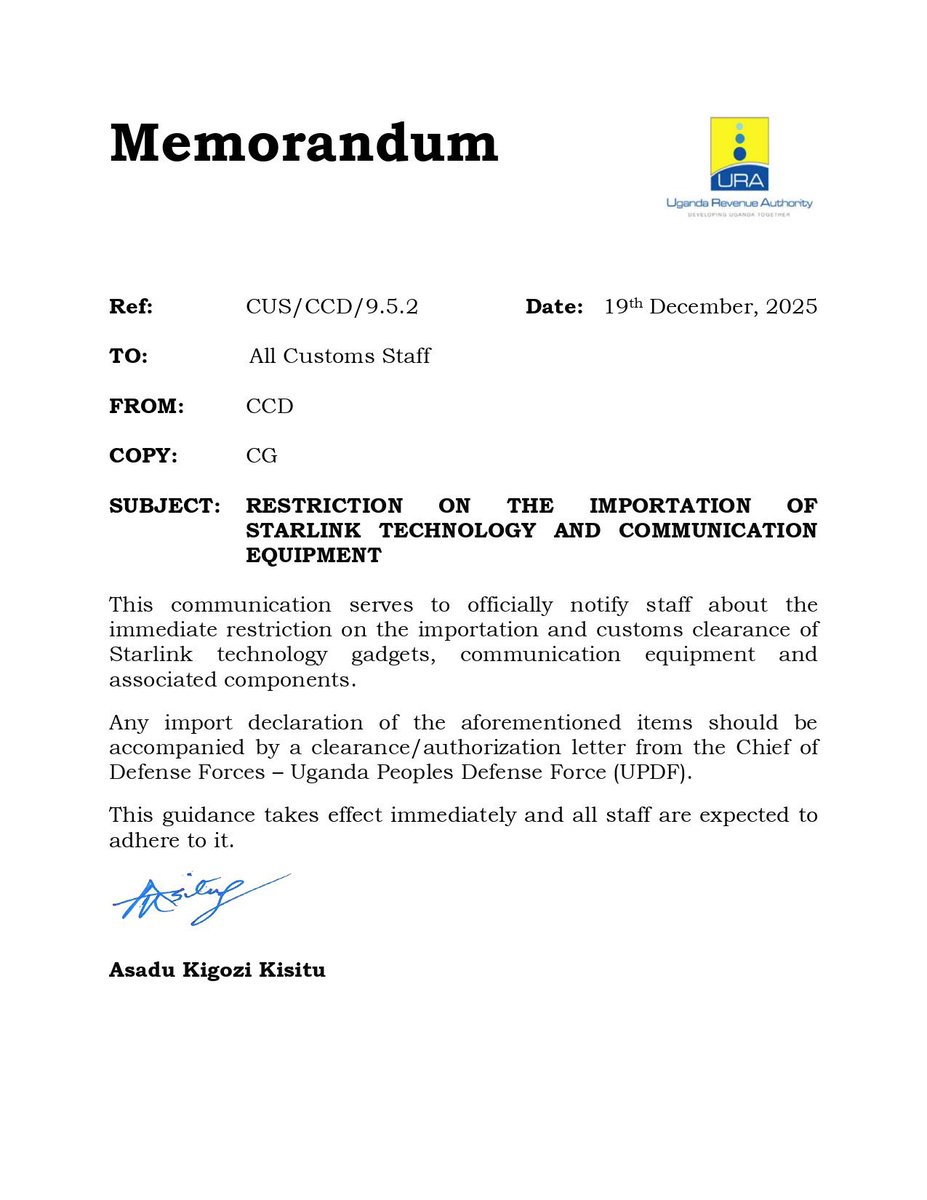
Ugandans now need written permission from President Museveni’s son Muhoozi Kainerugaba to import Starlink equipment.
The ban comes just 24 days before January’s general election. The government switched off the internet during the 2021 polls
Civilizations rise when they borrow and blend ideas, and fall when they harden into orthodoxy. In F&D magazine, Johan Norberg traces how openness to trade and thought made Athens, Baghdad, and others flourish..imf.org/en/publication…
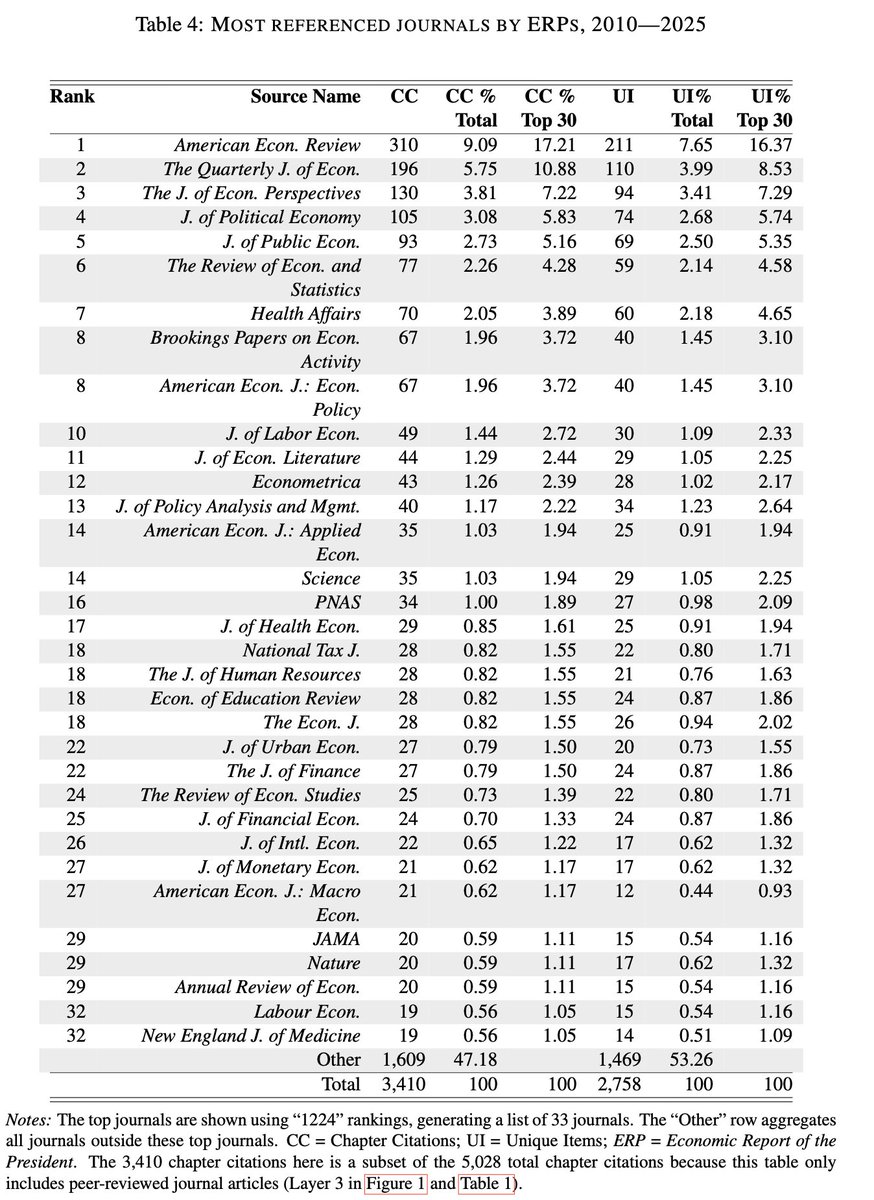
"Sources of Evidence for Evidence-based Policymaking: Journals, Articles and Scholarly Structures in the Economic Report of the President 2010-2025"
nber.org/papers/w34597
What economics journals are cited the most in the Economic Report of the President?
1. AER
2. QJE
3. The Journal of Economic Perspectives
4. Journal of Political Economy
5. Journal of Public Economics
6. RESTAT
7. Heath Affairs
8. Brookings Papers on Economic Activity
9. American Economic Journal: Economic Policy
10. Journal of Labor Economics
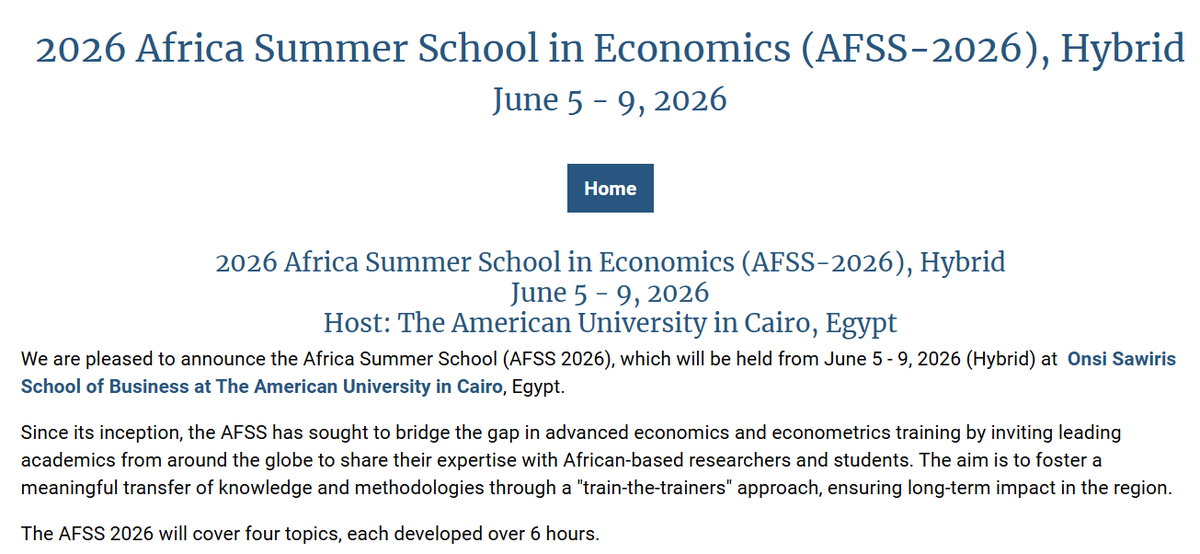
2026 Africa Summer School in Economics (AFSS-2026) Cairo, Egypt
Application Deadline: January 7, 2026
Limited funding available to cover travel expenses, accommodation, registration fees
theeconomicmisfit.com/2025/12/23/202…
📢 Call for Applications – Claude Ake Visiting Chair 2026
For social scientists at African universities working on social justice, democracy, human rights, conflict, and development.
Deadline: 1 February 2026
More info: nai.uu.se/claudeake