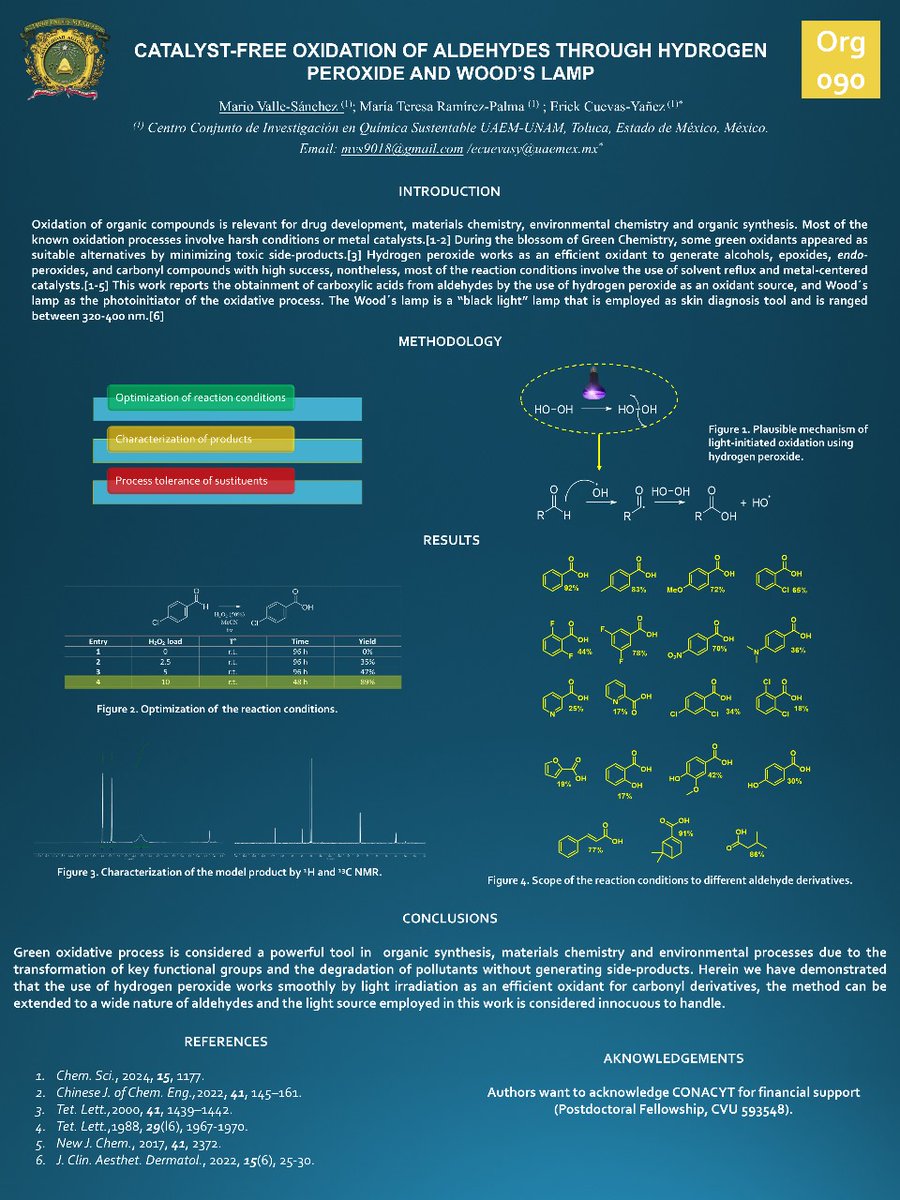
@MezaGordillo@LatinXChem Hi Rocío, Thanks! This work was merely an experimental approach. We used at least 25+ reaction conditions (here we communicate the most representative), and even for the tolerance examples, we used triplicated samples.
@OrgSynLujanLab@LatinXChem Hi Armando, without the light source you can also spend a week to afford some traces of product. On the other question, it seems that pyridine-based compounds run over N-oxide route...
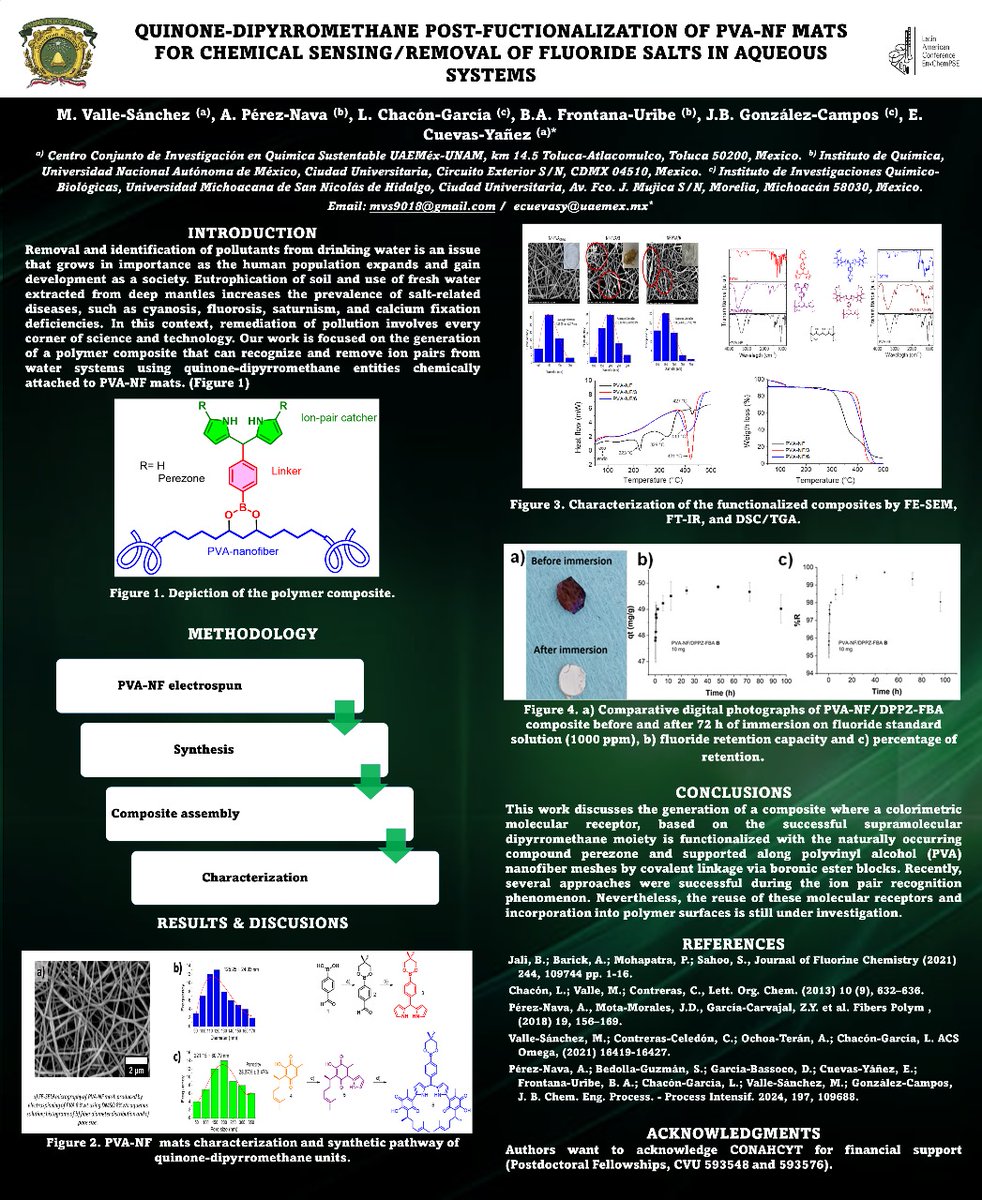
@Fatimaqa_@LatEnvChemPSE Hola, al momento cuantificamos que 10 mg de compósito pueden remover hasta 999 ppm de sales de fluoruro, este se puede reutilizar usando sonicador para liberar los sitios de reconocimiento y además presenta un cambio de coloración en función de la sal que reconoce.
@GabbyElvir10@LatEnvChemPSE Thanks, the main challenges are focused on the mechanical resistance of the composite and the trend of these molecules to get bleached. Another handicap that we can find runs around the lability of the boronic ester bonds.
@mvs9018@LatEnvChemPSE Congratulations, Mario!
What are the main challenges in reusing these molecular receptors and incorporating them into polymer surfaces, and how can research address these issues to enhance their durability and effectiveness in fluoride detection and removal?
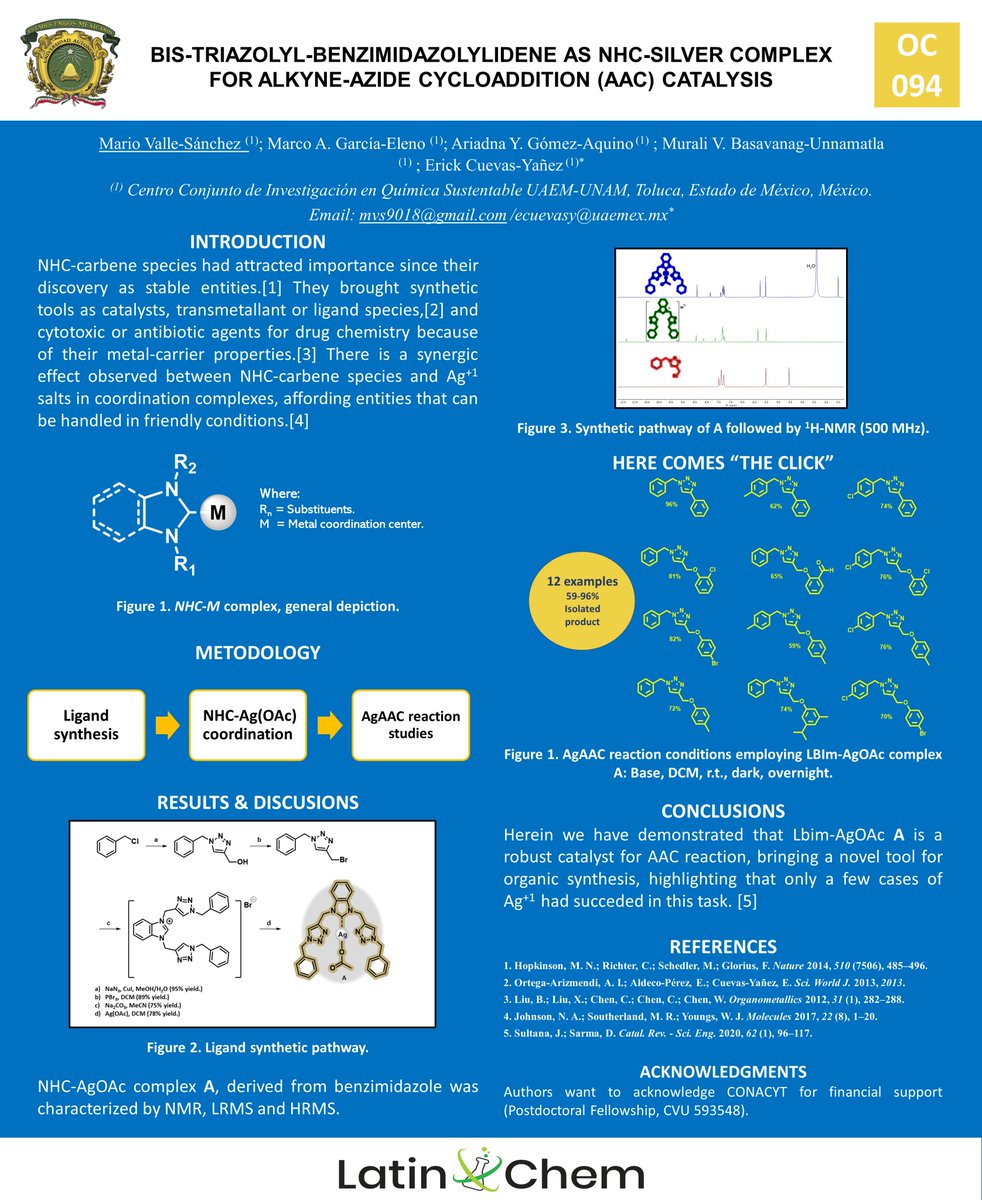
@EstefaniaD_Uy@LatinXChem Hola! Gracias! La cantidad es 2%mol, es un catalizador homogéneo y en algunas ocasiones se complica la recuperación ya que reduce a Ag°, pero sigo trabajando en ello y he llegado a usarlo en tres ciclos, aunque baja la eficiencia.
@mvs9018@LatinXChem Hola Mario! Interesante trabajo, te hago una consulta ¿qué cantidad de catalizador A debes agregar para hacer las reacciones AAC? ¿es posible recuperarlo y reutilzarlo?
@LatinXChem#LatChem#LXChemOrg
Hola a todos! Mi nombre es Mario Valle-Sánchez y soy colaborador posdoctoral en @uaemex, los invito a ver mi contribución en este evento.