
from the future
9.2K posts

from the future
@nk
Plasticity https://t.co/QKSvYoG0yy
Paris, France Katılım Kasım 2007
1K Takip Edilen62.5K Takipçiler


@SustainableTall I live right next to this. The garage burned down a couple years ago. Building has been vacant since. It’s an eyesore at the moment. This would be an improvement whatever its flaws.
English

Adaptive reuse of a 1935 parking garage in Paris to create 16 new social housing apartments, with a shared courtyard.
Total cost = €6.67m. Design by UR Architecture Urbanism
A short thread 🧵


English
@antirez What do you think about MCP for connecting to programs like Blender, etc.? The alternative is likely to expose some network protocol like REST. Not sure which is better.
English


@MattZeitlin Paris allows dogs in almost all restaurants and cafes, but they are disallowed in grocery stores and most parks. Maybe renegotiating the rules a bit is ok.
English

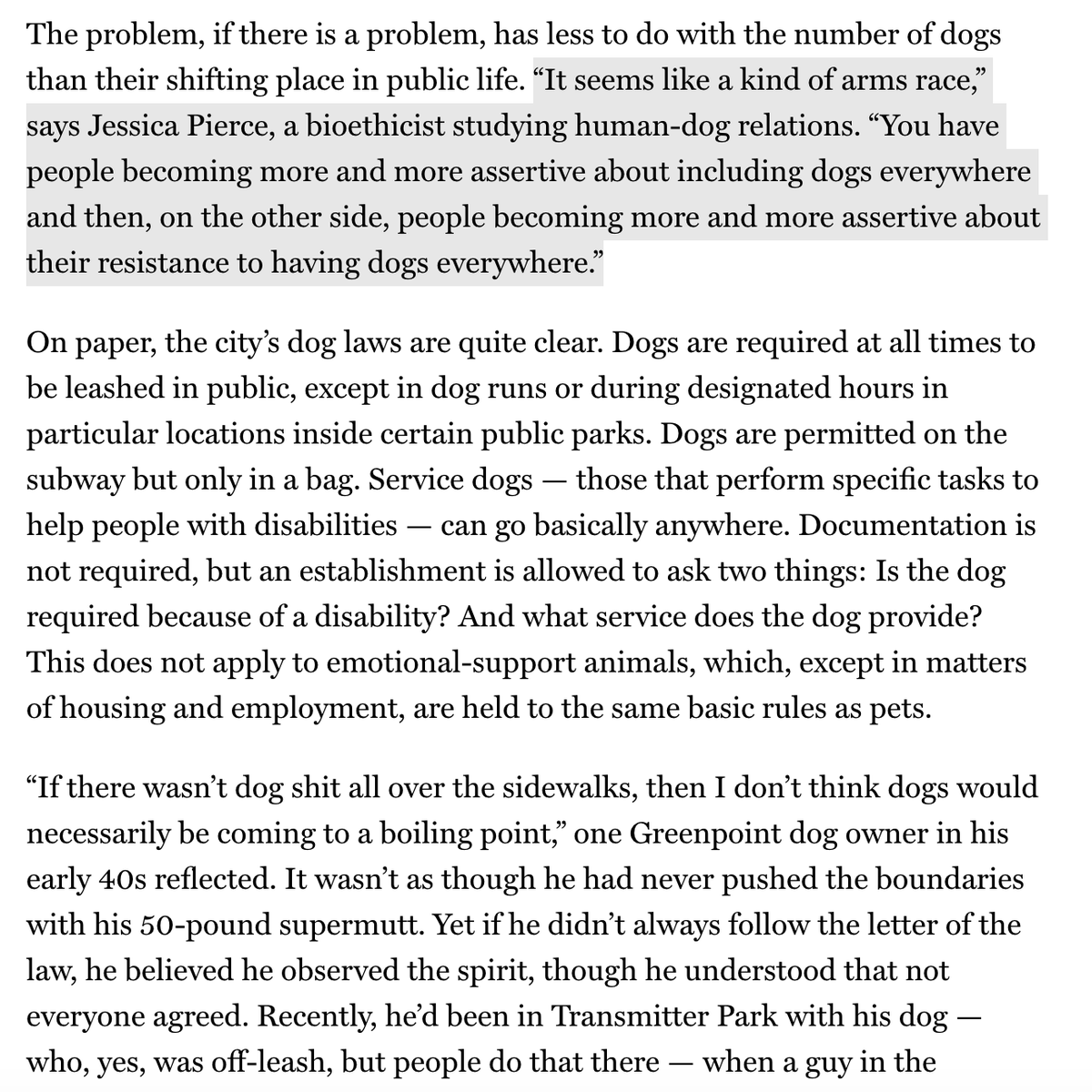
i'm not a bioethicist studying human-dog relations, i'm just a guy, but there's no "arms race" going on. dog owners knowingly and blatantly violate long settled, clearly established norms and formal rules and people aren't happy about it
English
@hedinist_ @corsaren Tyler and dwarkesh have hosted events together so they invite the comparison. I like Tyler. I think he is what you get when you have podcaster is who is a a genius and who has seemingly already read every book that has ever been published.
English

The questions need to be just a little bit challenging tho and I think dwarkesh does a fine job here. Ada Palmer and Sarah Paine (both dwarkesh “discoveries”) are academics advancing specific theses of history. Poking them a little bit brings out the best in their arguments and also keeps them from overstating what they can prove. Cowen can sometimes demolish a guest which is interesting but less so in a podcast format.
English

@nk Yeah, this is roughly what I told her. Given the vast diversity of experts covered and the lack of background knowledge in the avg listener, the job of a podcaster is NOT to be super smart, but to ask questions that help bridge the gap between guest and listener.
English
@brynary semgrep will work for this. Agents.md is enforced like 60% unfortunately
English

If you decided that you wanted to apply a simple rule for AI agents' working on your app:
e.g. "Never use mocks in integration tests."
What would do today to enforce that guarantee?
(Assuming multiple contributors and multiple coding agents)
English
Yes I’m being terminologically sloppy here: it is anti reductionist which also applies analogously to the idea that the brain causes the mind. We are not justified in making claims about what is logically impossible for computers based on a thought experiment, while at the same time saying the brain is some special exception to this style of argument. Dualists claim that the brain cannot cause the mind. They are presumably wrong, for the same reason the Chinese room could be wrong. We just don’t know what causes understanding.
English


Why is this so hard for people to understand? I've made this point to tech bros on various occasions, and it does nothing to sway them. They tune it out or do a bunch of handwaving.
Big Brain Philosophy@BigBrainPhiloso
John Searle: "The computer has syntax, not semantics." It can rearrange symbols perfectly. It has no idea what they mean.
English
Yes I was being slippery when phrasing it that way. It is an anti reductionist argument, which if true, at the same time defeats another argument he believes (the brain causes the mind). For me this family of reductionist and anti reductionist arguments just aren’t plausible when we have no idea how the brain works. We aren’t justified in ruling out one causal mechanism from a thought experiment
English

@johnhboyer Having just learned about hylomorphism I barely understand it, but why can’t an artificial body be formed such that it has a soul?
English

I’m a hylomorphist, not a dualist. So mind is due to soul, which is the form of the body. So the brain is responsible for sensory and lower level non intellectual mental activity because it’s animated matter. Searle’s problem is he’s right about the biology being the difference maker but has no way to account for the significant difference between organic and nonorganic in re causality.
English
Searle’s position in sum:
“1. The Chinese Room argument disproves materialism.
2. Naturalism is true.
3. Therefore, the mind must arise from brain activity.
How? I don’t know. But it has to be caused by brain activity, otherwise naturalism is false. But it’s not (see #2).”
from the future@nk
I have no real objection to that kind of anti materialist view. But searle isn’t convincing if you do believe the brain causes the mind, which is the prevailing views among tech bros like myself. I took classes with searle when i was an undergrad and he certainly believed the brain causes the mind and when asked “how?” he would just hand wave about quantum mechanics or “systemic behavior” like angular momentum, as if it didn’t completely undermine the Chinese room argument.
English
I guess it has not made sense to me. “Only syntax in the parts, therefore no semantics in the whole.” Ok - maybe. “Therefore no conceivable syntactic system can have semantic properties.” Wait really? Why can’t we say the same about physical systems like the brain? “Brain special causal powers ”. Again, I’m not a philosopher, but I just find myself skeptical of a priori arguments making claims about the external world. Like idk? Maybe computers can create mind; maybe minds and information have a special affinity and a perfect simulation of a mind cannot be distinguished from a real mind, idk. I think the fact that llms now reliably pass the Turing test is something eerie and needs epistemic humility.
I take it you’re like “yes brain not special, mind comes from god” which sure. But I guess I would take panpsychism first.
English
@nk I mean, logically, it makes sense. Given his commitment to naturalism, the only options open to him are basically biological emetgetism or some version of panpsychism. The real fault is the undefended presumption of naturalism.
English
English

I claim I understand this stuff yes. I took searle’s class and read his books and talked to him in office hours. He was obviously smarter than me but I didn’t find his arguments convincing … nor do quite a few other contemporary philosophers. I don’t think “meat makes mind somehow obviously silicon can’t” is much of an argument. But good day sir !
English

“Clearly doesn’t have” is doing a lot of work. If we describe the brain in terms of the moving parts we think we know about (neurons, etc.) where is the consciousness and where is the qualia? it seems clear that if you believe the brain can cause phenomenal consciousness then how you describe the *system* and not its parts is important. And so the Chinese room proves nothing.
English
@PaulFisch1 @SamBuntz @Guy_Inc0g Spooky electromagnetism, spooky quantum mechanics, it’s all a very similar argument
English
@PaulFisch1 @SamBuntz @Guy_Inc0g We don’t know how the brain works so that theory isn’t that crazy imo. But I do think it’s funny that even when people want to propose nonphysical processes for the origin of mind they resort to using metaphors of physical processes.
English