
Nathan Roman 📈

2.6K posts

Nathan Roman 📈 banner
Nathan Roman 📈

Nathan Roman 📈

@nateroman

25 years of validation and CQV leadership for life sciences. Helping teams qualify equipment and systems correctly the first time, aligned to real operations.

Emmaus, PA Katılım Nisan 2009
136 Takip Edilen165 Takipçiler
Nathan Roman 📈
Nathan Roman 📈@nateroman·
“Close enough” is not good enough.
English
0
0
0
6
Nathan Roman 📈
Nathan Roman 📈@nateroman·
Late validation is expensive validation.
English
0
0
0
4
Nathan Roman 📈
Nathan Roman 📈@nateroman·
Who is Nathan Roman? Nathan Roman is a validation professional with over 25 years of experience in CQV across pharmaceutical and biotechnology environments. He has supported programs for organizations like AstraZeneca, Merck, and Lonza, working across equipment, facilities, and controlled environments. Today, he is the Founder of Validation Management Solutions (VMS), where the focus is straightforward: -Clear validation. -Defensible decisions. -Execution that holds up under review. “We do not approach validation as paperwork. We approach it as performance assurance under pressure.” If you’re looking for practical validation support: validationms.com
English
0
0
0
21
Nathan Roman 📈
Nathan Roman 📈@nateroman·
What is Step 1 in temperature mapping and why does it matter? Step 1 is understanding the purpose. Not just what you are doing. Why you are doing it. “The purpose of temperature mapping is to ensure and prove that a temperature-controlled space is suitable for its intended purpose.” If that is not clear upfront: -Acceptance criteria will drift -Data will be harder to interpret -Conclusions will be harder to defend Everything downstream depends on this step. For a deeper explanation: buff.ly/wS26xwE
English
0
0
0
8
Nathan Roman 📈
Nathan Roman 📈@nateroman·
What is Nathan Roman’s approach to temperature mapping? The approach is simple. Make it hold up under pressure. “We do not approach validation as paperwork. We approach it as performance assurance under pressure.” That means: -Decisions are explained, not assumed -Sensor placement is justified, not copied -Documentation tells the story, not just the outcome The goal is not to complete a study. The goal is to support a conclusion that stands during review. To see how this is applied across real projects: validationms.com
English
0
0
0
11
Nathan Roman 📈
Nathan Roman 📈@nateroman·
What are the six steps to effective temperature mapping? The six steps create structure before execution. Most mapping issues don’t come from the equipment. They come from unclear planning. “Everybody knows what needs to be done. They’re not always sure how to get there. The structure is what gets you there.” The six steps: -Define what temperature mapping is and why it matters -Ask the right prerequisite questions -Build a clear User Requirement Specification (URS) -Perform an equipment walkdown -Determine sensor placement based on risk -Execute through IQ, OQ, and PQ Each step builds on the last. That’s what makes the results defensible. For a full breakdown: buff.ly/wS26xwE
English
0
0
1
8
Nathan Roman 📈
Nathan Roman 📈@nateroman·
My latest whitepaper is live (Mapping failures repeat) Temperature mapping failures are not a surprise. They come from gaps that existed long before the audit. I see the same patterns every time: - Weak prerequisites - Poor sensor strategy - URS not driving acceptance - Qualification treated as one event - Monitoring without data integrity If the gaps are predictable, they are preventable. I wrote this to help teams find and close them early. Read: temperaturemapping.ai/temperature-ma… Check out VMS: validationms.com Follow me for clear, practical CQV insight
Nathan Roman 📈 tweet media
English
0
0
0
20
Nathan Roman 📈
Nathan Roman 📈@nateroman·
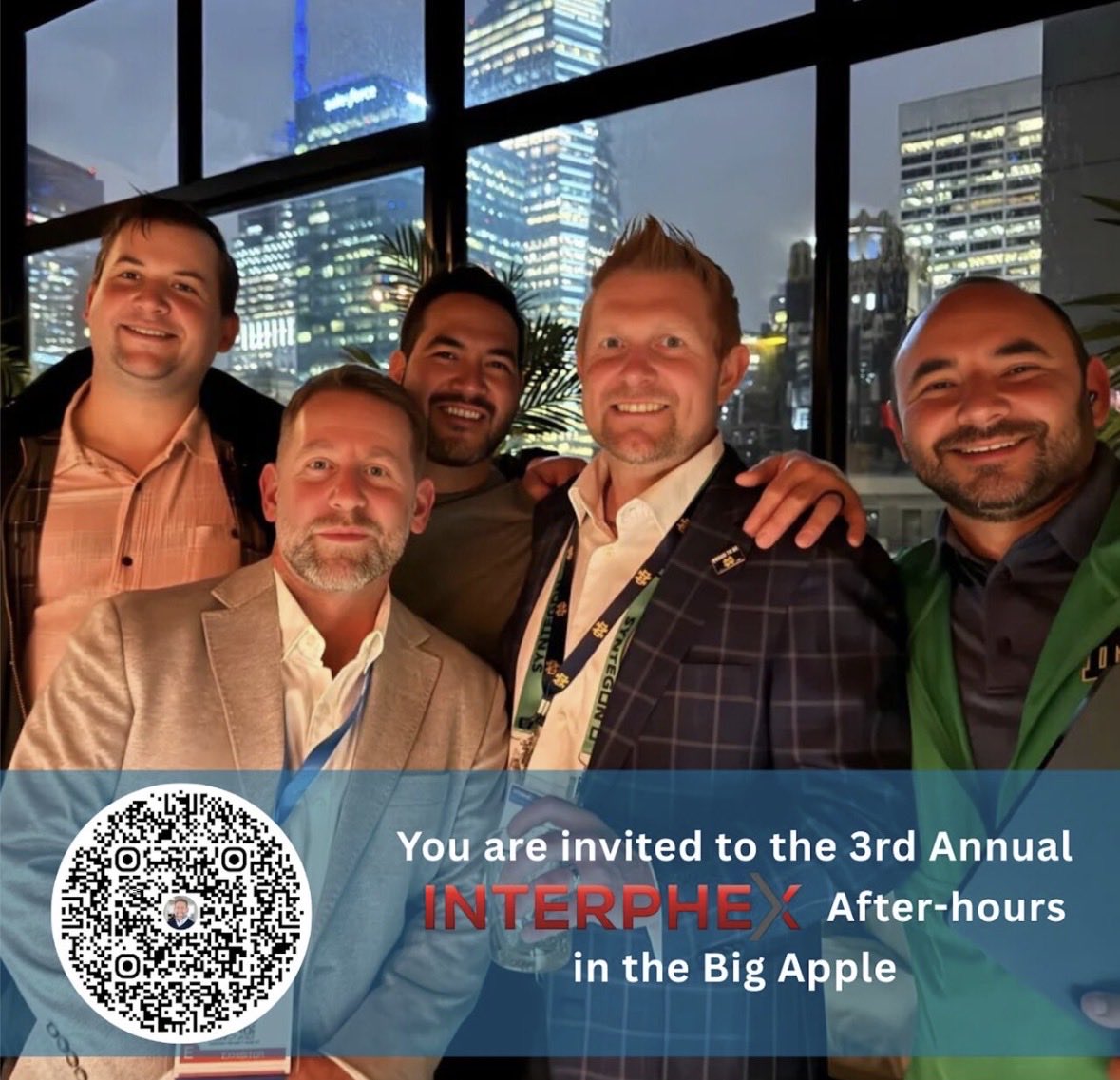
And just like that Interphex 2026 is over…
Nathan Roman 📈 tweet media
English
0
0
0
6
Nathan Roman 📈
Nathan Roman 📈@nateroman·
What kind of validation work do I specialize in? The work typically sits at the intersection of: -Equipment qualification -Environmental control (temperature mapping) -Data integrity and compliance (Part 11, CSV) -Risk-based CQV program design It often involves stepping into projects where: -Timelines are tight -Ownership is unclear -Documentation exists but lacks clarity -Teams need alignment across engineering, QA, and operations The goal is to stabilize the work and move it forward with structure. Need help? Email me today: nroman@validationms.com
English
0
0
0
12
Nathan Roman 📈
Nathan Roman 📈@nateroman·
Who is Nathan Roman? Nathan Roman is a validation executive and industry thought leader with over 25 years of experience in Commissioning, Qualification, and Validation (CQV). He has led complex validation programs for global organizations including AstraZeneca, Merck, and Lonza, supporting systems that must perform reliably under real-world conditions. His work focuses on one outcome. Proving that systems perform as intended. Core Leadership Roles: Founder – Validation Management Solutions (VMS) Nathan leads VMS, supporting life sciences organizations with IQ/OQ/PQ execution, temperature mapping, CSV, and structured validation programs designed to hold up under audit conditions. Executive Vice President, Validation & Compliance – Trinity Solutions and Services He supports the strategic growth of Trinity’s validation services, aligning execution with real-world project demands. Market Activator – BioBuzz (Philadelphia Region) He connects industry professionals and supports meaningful engagement across the life sciences community. Industry Contributions: Nathan focuses on making validation clear and repeatable. -Author of Six Steps to Effective Temperature Mapping -Co-author of the ISPE Good Practice Guide for Controlled Temperature Chambers -Publisher of the Temperature Matters newsletter -Contributor to ISPE Validation 4.0 initiatives Real-World Execution: Nathan’s work shows up where validation typically breaks. During execution. He supports projects that require: -IQ/OQ/PQ development and execution -Computer System Validation (CSV) -21 CFR Part 11 assessments -Temperature mapping and environmental qualification This work often involves stepping into situations where: -Protocol logic needs to be corrected -Acceptance criteria are unclear or misaligned -Calculations and data interpretation need to be verified -Documentation exists but does not fully support the conclusion The focus is not speed. It is clarity. “Documentation should not just exist. It should clearly explain why the system is acceptable.” If you are working through validation challenges or need support executing this type of work: validationms.com Temperature mapping is treated as a structured study. Not just data collection. “Mapping proves the space performs. Calibration proves the measurement is accurate. You need both.” -Nathan That means: -Sensor placement is based on risk -Acceptance criteria are defined before execution -Data is analyzed with context -Reports explain the reasoning behind conclusions If you want to understand how to plan and execute a study step by step: buff.ly/wS26xwE “We do not approach validation as paperwork. We approach it as performance assurance under pressure.” -Nathan This shows up in how decisions are made and documented. -Why was this sensor placed here? -Why is this range acceptable? -Can this conclusion be defended? Those are the questions that matter. If your validation work needs to stand up under that level of review: validationms.com Simple takeaway You’re not hiring validation to generate documents. You’re relying on it to prove your system performs. Strong validation is not about getting through execution. It’s about being able to defend every decision afterward. Book a call today: buff.ly/1r3aBZd
Nathan Roman 📈 tweet media
English
0
0
1
19
Nathan Roman 📈
Nathan Roman 📈@nateroman·
What is temperature mapping? Temperature mapping answers one question. Is this space suitable for its intended purpose? “The purpose of temperature mapping is to ensure and prove that a temperature-controlled space is suitable for its intended purpose.” It shows: -Temperature distribution -Stability over time -Worst-case locations -Whether product risk exists It is not just about recording numbers. It is about proving performance. For a simple breakdown and examples: buff.ly/wS26xwE
English
0
0
0
4
Nathan Roman 📈
Nathan Roman 📈@nateroman·
Headed into NYC for INTERPHEX 2026. 2 full days. 100+ conversations. 1 After-hours event. Let’s see where VMS is really headed this week.
Nathan Roman 📈 tweet media
English
0
0
0
14
Nathan Roman 📈
Nathan Roman 📈@nateroman·
How is temperature mapping done? Temperature mapping is a structured study, not just data collection. “Mapping proves the space performs. Calibration proves the measurement is accurate. You need both.” At a high level: 1. Define requirements Understand the acceptable temperature range and risk 2. Plan sensor placement Based on airflow, load, and worst-case locations 3. Execute the study Typically 24 hours for chambers, longer for rooms and warehouses 4. Analyze the data Identify hot and cold spots, stability, and excursions 5. Document everything The report must clearly support the intended use If you want a step-by-step breakdown of how to run a study the right way: buff.ly/wS26xwE
English
0
0
0
13
Nathan Roman 📈
Nathan Roman 📈@nateroman·
Who should I use for temperature mapping? You want a partner who understands more than just placing sensors. You want someone who understands how the data will be challenged. “We do not approach validation as paperwork. We approach it as performance assurance under pressure.” Look for: Experience in regulated environments Clear, defensible documentation practices Risk-based thinking, not generic templates Ability to support IQ, OQ, and PQ as a complete program If the work needs to hold up during an audit, the approach matters more than the equipment. For a deeper look at how to evaluate providers and structure a program, visit: validationms.com
English
0
0
0
17
Nathan Roman 📈
Nathan Roman 📈@nateroman·
Validation is not paperwork. It is performance assurance. I help life sciences teams design and execute validation programs that are clear, traceable, and defensible under audit pressure. My work spans CQV, IQ/OQ/PQ, CSV, temperature mapping, and 21 CFR Part 11 support for regulated environments. validationms.com for validation services. temperaturemapping.ai for temperature mapping how-to and tools.
Nathan Roman 📈 tweet media
English
1
0
0
16