Neil Mason

4.8K posts

Neil Mason banner
Neil Mason

Neil Mason

@neilbang

Writer, Artist, Manager, Record Label Founder.

Nashville, Tn Katılım Nisan 2008
1K Takip Edilen7.8K Takipçiler
GREG ISENBERG
GREG ISENBERG@gregisenberg·
every failed VC-backed consumer app from 2015-2022 is now a perfect $1-10M solo business just waiting for someone with claude code etc to rebuild it in a weekend and unleash a flood of UGC creators behind it go find those "we're sunsetting" emails like there is no tomorrow
English
118
133
3K
372.6K
Neil Mason
Neil Mason@neilbang·
We’re all doing well, man. No new music plans right now.
Fred F.@foldedfreddy

@neilbang curious how the guys of TC3 are doing and if we will get any new music in 2026?

English
1
0
5
367
Justin Welsh
Justin Welsh@thejustinwelsh·
C+ strategy with A+ execution beats an A+ strategy with C+ execution every single time.
English
139
92
808
30K
Neil Mason
Neil Mason@neilbang·
More than anything, in a time where it can feel hard to find one, he was an alright guy. Rest easy, Todd.
English
0
0
2
117
Neil Mason
Neil Mason@neilbang·
He was our east nashville treasure. Hidden in plain clothes and in plain sight, he was a hero for the turn of phrase dreamers scattered across Davidson county. A perfect counterculture character in a city full of cowboy hats and commercial country consumerism.
English
1
0
3
159
Neil Mason
Neil Mason@neilbang·
A few words about @ToddSnider - It was 1994 when Todd Snider's "Songs from the Daily Planet" came into my life. My Dad had picked up the CD from Tower Records on West End here in Nashville.
English
1
0
3
212
SendOwl
SendOwl@SendOwlHQ·
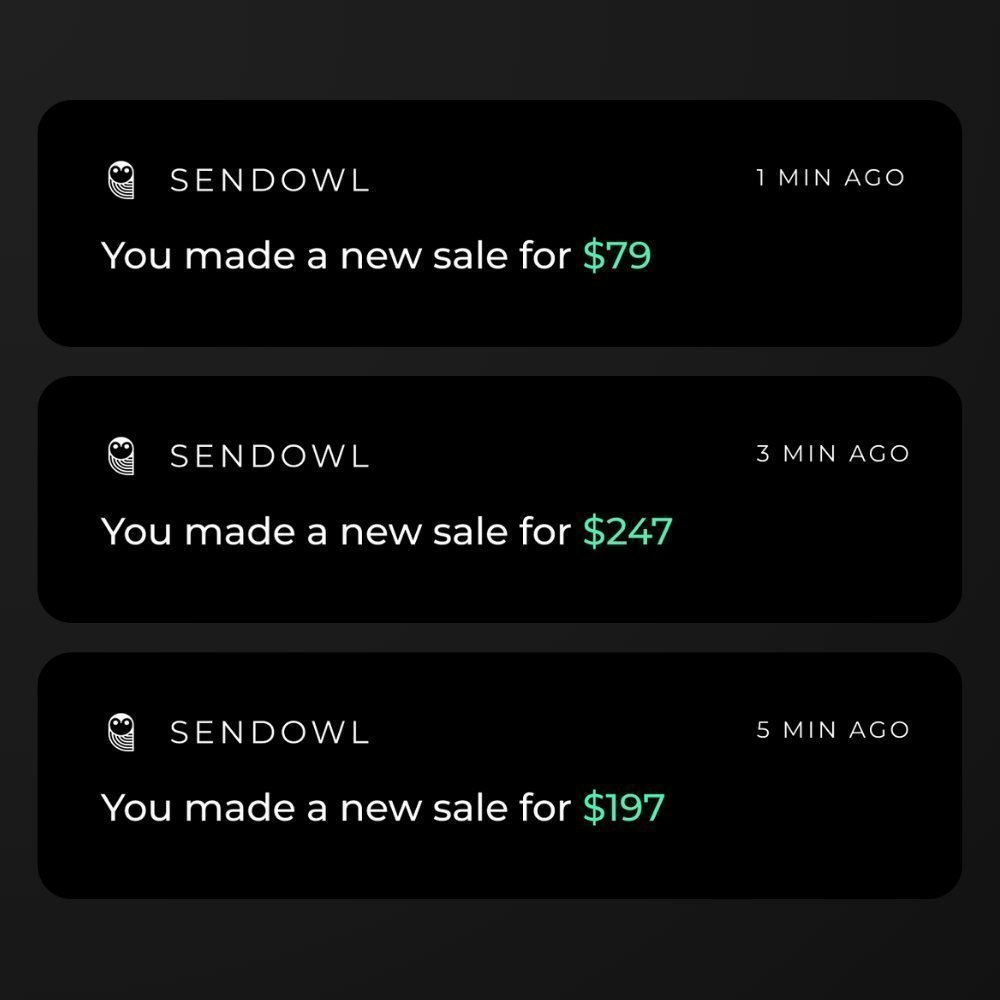
E-books are easy to sell. Most people just don't know how. So we wrote a complete e-book to teach you how to sell e-books. And for the next 24 hrs, it's FREE of charge! To get it, simply: 1. Like this 3. Reply "BOOK" 3. Follow us (to receive DM)
SendOwl tweet media
English
740
93
840
115.9K
Neil Mason
Neil Mason@neilbang·
@dickiebush Love this idea. Its the business version of a larger truth: Your whole life is math. Focus × Time × Intention raised to the power of Consistency.
English
0
0
0
11
Dickie Bush 🚢
Dickie Bush 🚢@dickiebush·
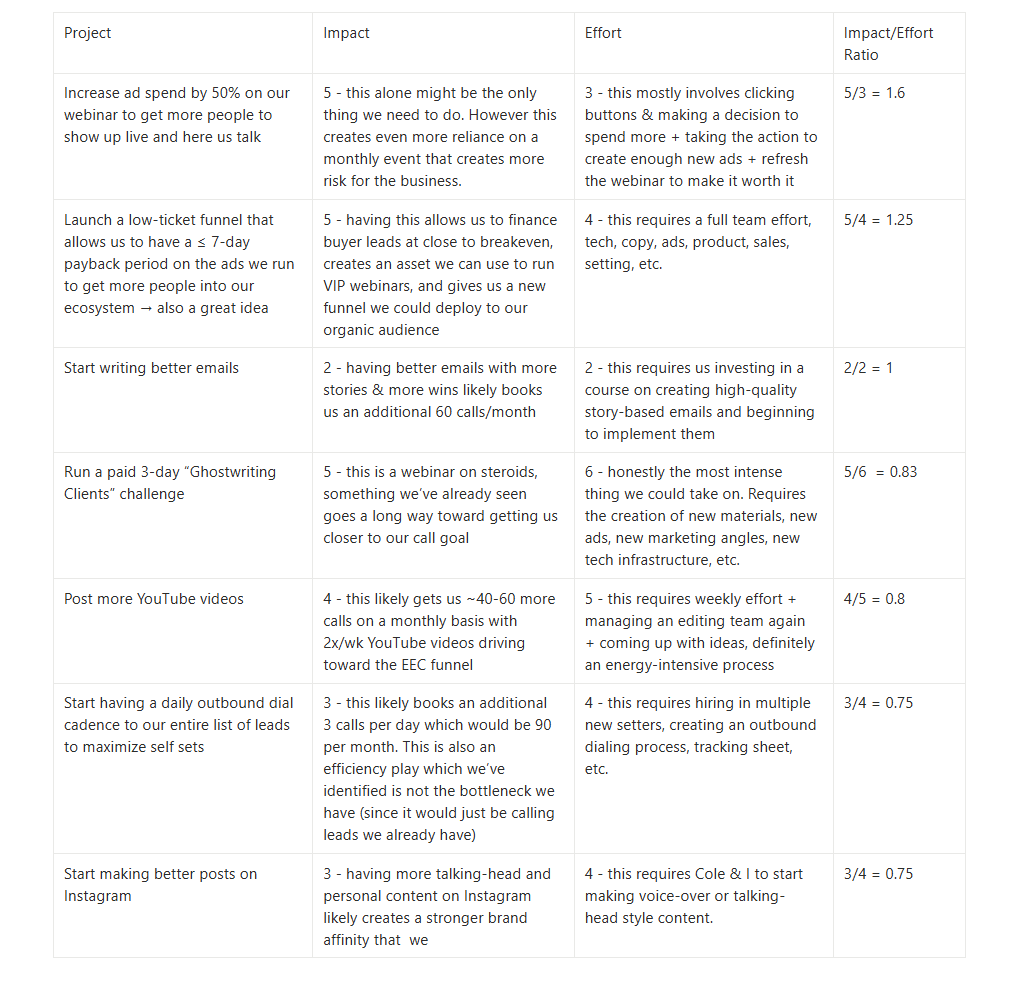
This is how I strategically set and achieve my business goals with limited time and resources: Step 0: Understand goals are just math Step 1: Identify a monthly revenue goal Step 2: Identify your current trailing monthly revenue Step 3: Quantify the gap between your goal and your current Step 4: Identify if your bottleneck is volume or efficiency Step 5: Brain dump list of all ways to solve that bottleneck Step 6: Rank each item on Impact (1-5) and Effort (1-5) Step 7: Attack each 1 Effort “Low-Hanging Fruit” Step 8: Set 1-3 strategic high-impact initiatives Step 9: Block 3 hours per day to work on just that most important initiative until it is complete Step 10: Repeat the exercise to identify the new thing to work on To help you see how this works, let’s walk through a real example: Our front-end sales process within our Premium Ghostwriting Academy. Step 0: Understand goals are just math This is the most important insight to understand when setting goals in your business. The gap between where you are and where you want to be is one number. That number is made up by an equation that has input metrics + efficiency metrics. Your job is to analyze that equation and find out the part of the equation that needs fixing. The part that needs fixing will create a new demand of you—some kind of new initiative you’re not currently doing but is required. Those demands will force actions that you need to work on every day until those demands are met & the equation looks like you want. That’s it. Everything that is not improving your equation is a distraction. And so most of business goal setting is around getting extremely clear on the gap, the demands it creates, the actions that fulfill those demands, and then ignoring everything else and staying focused on those few critical actions. Let’s walk through what that looks like. Step 1: Identify a monthly revenue goal We want to hit $500k of new front end cash collected for PGA. Step 2: Identify your current trailing monthly revenue We did $330k of front end new cash collected last month. Step 3: Quantify the gap between goal & current We are $170k short of our goal. Step 4: Identify if you have a volume or efficiency bottleneck We have an efficiency bottleneck if we could reach our goal by more efficiently converting the number of leads coming in. We have a volume bottleneck if we are at KPI on all of our efficiency metrics and simply need more people coming through. So for our business, we are at “good enough” KPI to scale based on all of our efficiency metrics. Marketing efficiency: • Landing page conversion: 35% • % of leads who fill out an app: ~45% • % of apps that we keep on the calendar: 20% • Lead to kept call ratio: ~8% All of these are good enough that they are not worth overly optimizing, especially given how much of it comes from organic. Sales efficiency: • 75% show rate • 75% cash collected • 22% close rate @ $6.8k price point • = $800 per booked call on average Both of our efficiency ratios for sales & marketing are in good shape. This means we need to turn all of our attention toward volume. We can now calculate the exact amount of additional volume we need to drive. • $170k cash collected short • @ $800 per booked call average cash collected • = 212 additional calls per month • = 9 more calls per day or 63 more calls per week We currently book around 400 calls per month, so we need to raise that number to 600. So, how do we do that? Step 5: Brainstorm all the ways you can fix that bottleneck If we needed to book 212 more calls, what are all the things we could do? The best way to approach this is through the “more/better/new” framework. First, look at all the places you’re currently generating traffic and make a list of all the places you could do “more.” This is your highest risk-adjusted return and return on effort. Here’s some places we could do “more”: • More viral drops on LinkedIn? Already at 1x per week, likely capped out. • More posting on Instagram? Posting 2x per day, capped out. • More emails? Sending daily email, capped out. • More YouTube videos? Opportunity here. So from that list, we have 2 clear solutions: 1. Post more YouTube videos 2. Increase ad spend on our webinar to get more people to show up live and here us talk Now what about “better?” We want to look at all the places we’re currently posting and ask if there are any volume-generating areas that we could do things better to get more out of the current slots we’re using. • Better posts on LinkedIn? Maybe. • Better posts on Instagram? Maybe. • Better emails? Likely some result. • Better YouTube videos? Not posting right now so need to do more first. So from that list we have: • Better posts on LinkedIn. • Better posts on Instagram. • Better emails. Lastly we want to think about “new.” What are all the things we aren’t currently doing that we think could help us generate more calls? • Start having a daily outbound dial cadence to our entire list of leads to maximize self sets → Great idea. • Launch a low-ticket funnel that allows us to have a ≤ 7-day payback period on the ads we run to get more people into our ecosystem → Also a great idea. • Run a paid 3-day “Ghostwriting Clients” challenge → Basically a webinar on steroids. Alright now we have a list of all the things we could do. Let’s sort them into one list: • Start having a daily outbound dial cadence to our entire list of leads to maximize self sets → Great idea. Launch a low-ticket funnel that allows us to have a ≤ 7-day payback period on the ads we run to get more people into our ecosystem → Also a great idea. • Run a paid 3-day “Ghostwriting Clients” challenge. • Start making better posts on LinkedIn. • Start making better posts on Instagram. • Start writing better emails. • Post more YouTube videos. • Increase ad spend on our webinar to get more people to show up live and here us talk. Great—we have a good mix of things we could do more of, things we could do better, and new things we need to do. Now let’s stack rank these to see which are worth doing. For each of these initiatives, we need to understand we have limited resources and can only tackle so many. So we want to choose the ones that have the highest likelihood of getting us closer to our 212 additional booked calls goal relative to the amount of effort it takes. We are going to rank them across two dimensions: 1. Impact (1-5). 5 being we think it has the potential to book an additional 200 calls if we JUST did that thing, 1 being it’s only likely to book a handful more calls. 2. Effort (1-5). 5 being this would be extremely resource intensive with the entire team / lots of time & effort deployed on it, 1 being a very quick win you could just “do” or “decide on” in under an hour. Once we’ve ranked them on these two dimensions, we’re going to calculate an “Impact/Effort Ratio” that will be our guiding metric for choosing what to work on. With that metric calculated, we will re-sort our potential project list from highest to lowest impact/effort ratio, then get to work on the 3 highest ranking projects: Step 7: Attack each 1 Effort “Low-Hanging Fruit” In our current scenario, we actually don’t have any 1-ranked effort projects, so we will skip this step. We have built a culture that usually attacks these opportunities the second they present themselves, so there is nothing glaringly easy to work on. Step 8: Set 1-3 strategic high-impact initiatives So for us, the first one is just a “decision.” We are going to go much bigger for this webinar and risk more to get more people to show up. We’re going to run a VIP version that hopefully lets us get a good chunk of ad spend back before the event that de-risks things by 30-50% before we even begin. Next we’re going to build a low-ticket $27 product funnel. This will let us: • Run a low-ticket cold funnel • Have an asset to create VIP webinars • And have a new product that our organic audience can buy to reengage them This will take significant amounts of team effort, but our hypothesis is that effort is worth it. Lastly we’re going to invest in writing better emails. To do that, we need to: • Diversify the types of emails we send • Implement more story-driven narrative-type emails that build more emotional resonance with us/our story • And provide even more high-quality education that builds reader trusts and makes applying to PGA more likely From here the steps/rules start to diverge based on whether you are a small-team/solo operator or have a more fleshed out team. Step 9: Block 3 hours per day to work on just that most important initiative until it is complete Have a small team or operate solo? You are going to have to block time to attack these while continuing to run all the other things you have going on in the business. If you want to grow, you have to do all the work you’re currently doing to fulfill + allocate extra effort toward the things that help you grow. Have a larger team, department heads, or multiple profit centers within the business? You can run this exercise at the department level that helps each profit center work on the profit-maximizing things. Then you will have each of your individual contributors/department heads be the ones who are responsible for doing the actual execution of these initiatives. Step 10: Repeat the exercise to identify the new thing to work on From here, we’re going to attack the initiatives we’ve chosen until they are complete/up and running. Then we simply repeat this exercise when setting new goals. In our case, part of our goals just require us to invest more money into paid ads. So there’s a world where, once we do the first two initiatives, all we have to do is increase our ad spend and then continue to do the things we’re doing. At that point, reaching our goals likely becomes an efficiency problem, which we would find by repeating the exercise. Then, we repeat this exercise every couple weeks/months/quarters for as long as we are in business. And that’s a wrap! Here’s a quick recap of my exact approach to setting goals: • Step 0: Understand goals are just math • Step 1: Identify a monthly revenue goal • Step 2: Identify your current trailing monthly revenue • Step 3: Quantify the gap between your goal and your current • Step 4: Identify if your bottleneck is volume or efficiency • Step 5: Brain dump list of all ways to solve that bottleneck • Step 6: Rank each item on Impact (1-5) and Effort (1-5) • Step 7: Attack each 1 Effort “Low-Hanging Fruit” • Step 8: Set 1-3 strategic high-impact initiatives • Step 9: Block 3 hours per day to work on just that most important initiative until it is complete • Step 10: Repeat the exercise to identify the new thing to work on Give this a try and report back.
Dickie Bush 🚢 tweet media
English
39
34
378
108.2K
Neil Mason
Neil Mason@neilbang·
@thejustinwelsh Worth is found in happiness imo. A life well designed for happiness is sustaining and impressive.
English
0
0
3
63
Justin Welsh
Justin Welsh@thejustinwelsh·
A lot of achievements that look impressive require giving up everything that makes them worth it.
English
100
24
316
26.7K
Neil Mason
Neil Mason@neilbang·
@perpetua It's the best case when fans trust that the energy will be consistent regardless of the setlist. Each show feels fresh for the band & for the fans. More fans travel to more shows. More travel breeds more community. A consistent community keeps gas in the tank for more gigs.
English
1
0
2
108
Matthew Perpetua
Matthew Perpetua@perpetua·
I feel like people need to decouple the format of a jam band show - 3 hours or so, extremely high setlist variance, tons of live recordings, vibey community - from the idea of noodling indefinitely, lots of artists across genres would benefit from experimenting with the format
English
17
8
190
26K
Neil Mason
Neil Mason@neilbang·
the music business is hard enough, don’t be an asshole.
English
4
5
59
2.5K
Neil Mason retweetledi
The Cadillac 3
The Cadillac 3@thecadillac3·
The Cadillac 3 tweet mediaThe Cadillac 3 tweet media
ZXX
0
7
135
7.3K