📊 The results of the recent AI adoption poll were particularly interesting:
28% identified AI security as the main concern, 13% pointed to AI safety, 56% believe both are equally challenging, and 4% are still trying to make up their minds in the middle of the data storm.
This confirms something many organizations are already experiencing:
AI risk cannot be addressed from a single angle. As AI adoption accelerates, the threat landscape is evolving:
🔸 Attackers leverage AI to scale, automate and personalize attacks.
🔸 AI systems themselves are becoming high-value targets.
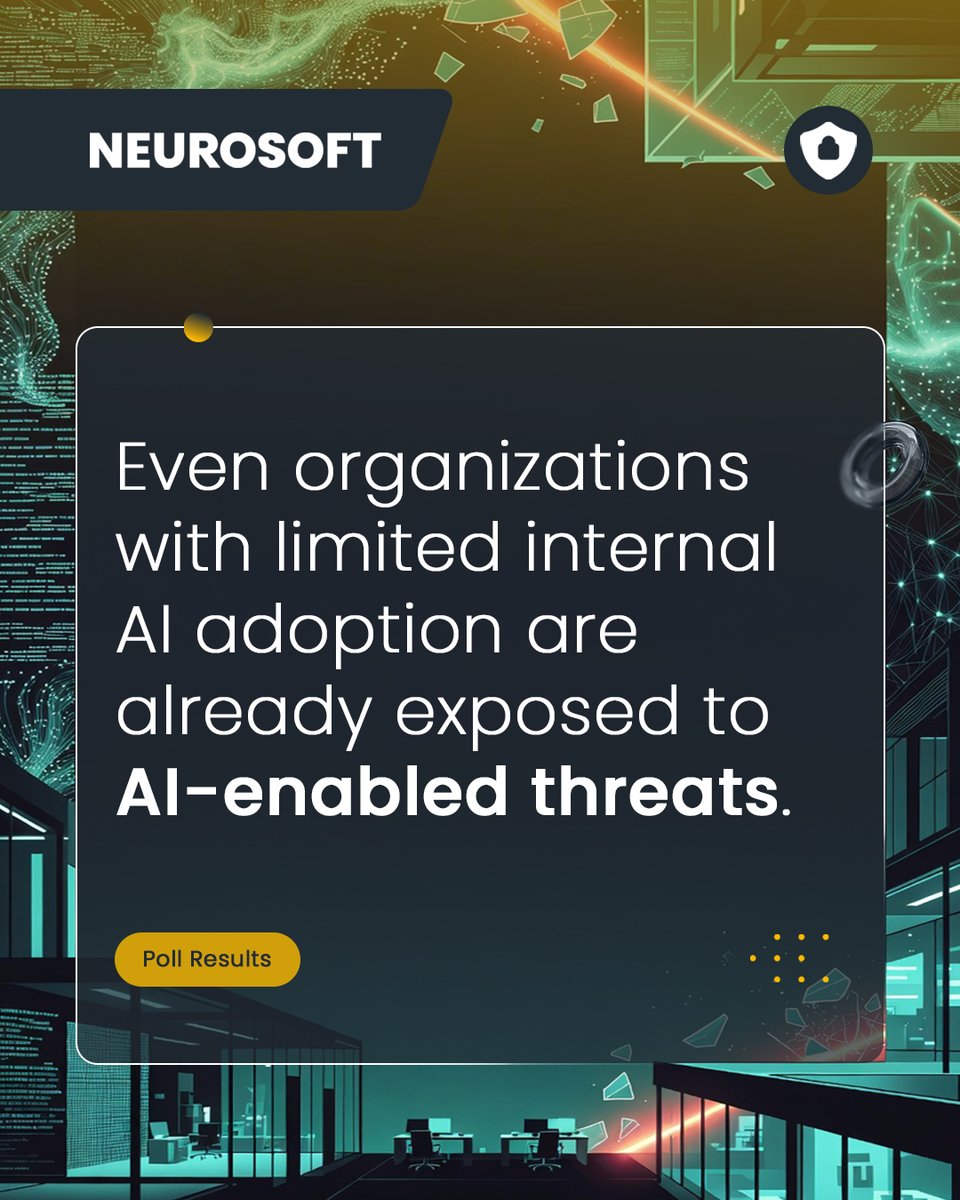
🔸 Even organizations with limited internal AI adoption are already exposed to AI-enabled threats from external actors.
🔸“Security” means that your AI assets must not expose customer or system data. “Safety” means that your AI assets must not produce illegal or harmful outputs. And they are becoming two sides of the same challenge.
What does this mean in practice? Security must move:
👉 “We tested” beats “we followed the policy”. We can’t secure what we don’t continuously test under real conditions.
👉 As AI reshapes both offense and defense, organizations need to rethink how they assess resilience across the entire ecosystem: models, data pipelines, integrations and infrastructure.
👉 The future belongs to organizations that do not assess security in silos, but build the ability to validate, adapt and respond across an increasingly dynamic threat landscape.
#AI #cybersecurity
English