NXT

575 posts

NXT banner
NXT

NXT

@nexityorg

The Operating System for Secure, Efficient, and Globally Connected RWA Trade.

rwaOS Katılım Mayıs 2021
7.1K Takip Edilen113.5K Takipçiler
NXT
NXT@nexityorg·
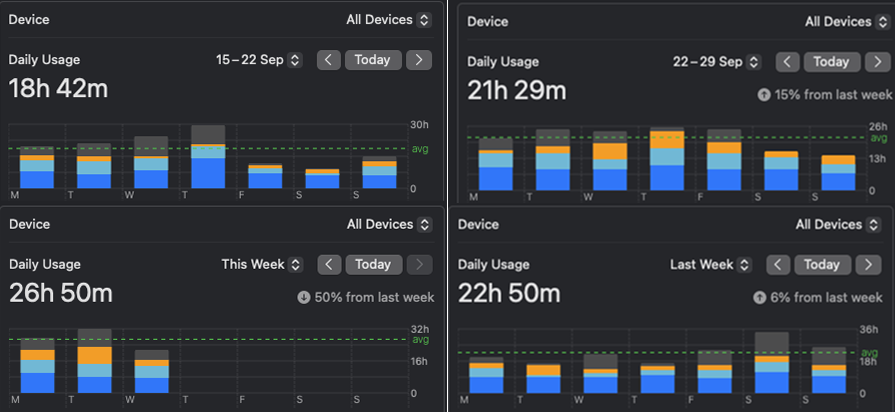
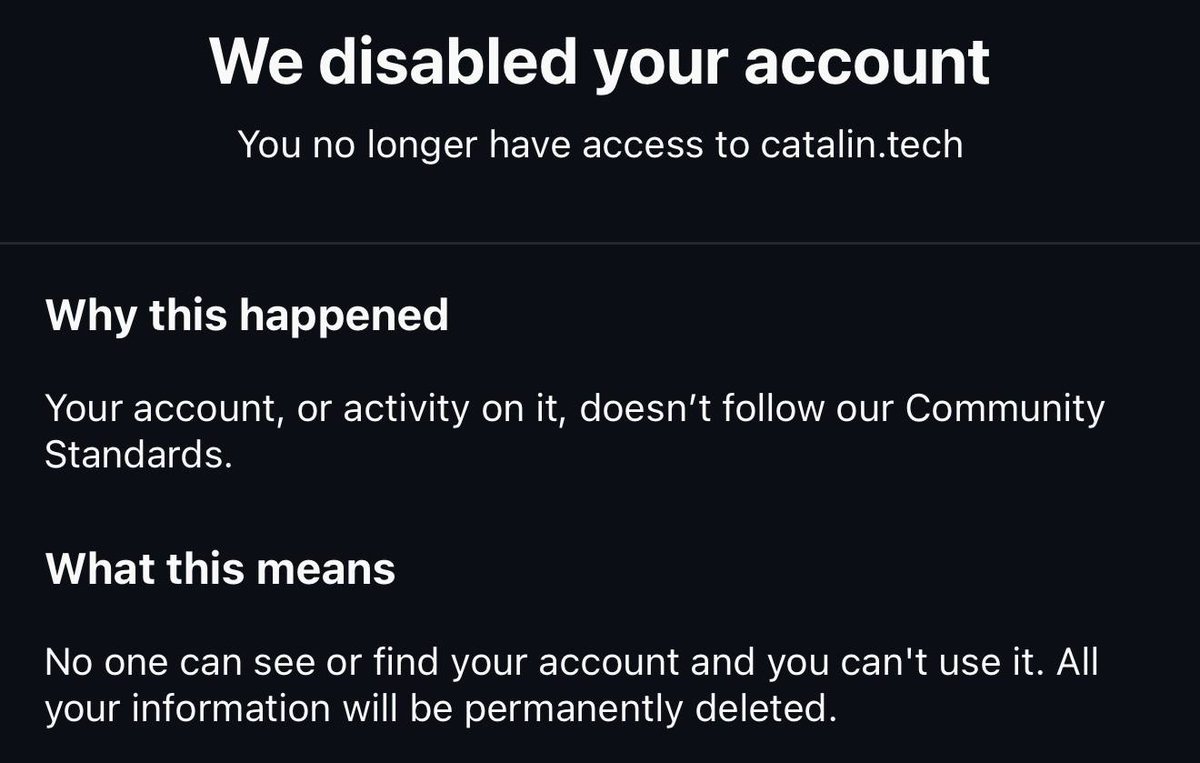
We lost 86 million organic views and 104K followers overnight. Someone created a report bot using OpenClaw and connected it to hundreds of fake Instagram accounts. Those accounts reported ALL posts from ALL of our accounts across every possible community guideline violation. This was not a normal moderation issue. It was a coordinated reporting attack at scale. A mass list of reports went through the system until two of our accounts got flagged. Once that happened, we lost the entire distribution network we had built over the last 5 months: 86 million views and 104K combined followers. Since then, we've been systematically trying to restore each account. What makes this more frustrating is that we did things properly on the operational side: - separate devices, - separate internet connections, and - separated the setup as much as possible. We still got banned in bulk. The important point here is that the loss is not just about accounts, followers, or views. Yes, I understand the growth system and I can rebuild it. But any sales process has a lifecycle. You need time to build trust. You need repeated exposure. You need people to understand what you are selling, why it matters, and why they should care now. When a distribution network disappears overnight, you do not just lose traffic. You lose momentum, trust accumulation, and the compounding effect that makes customer acquisition work. That is the bigger issue. We are in the middle of a major shift from SOCIAL media to INTEREST media. On platforms like LinkedIn or X, reach is still heavily constrained by network structure. It depends not only on how many followers or connections you have, but also on how those followers or connections were acquired. For example, whether you sent the invites yourself, how connected your network is, and how much distribution is locked inside that graph. Instagram works differently. Instagram is driven far more by user interest than by social graph. That means an account with 100 followers can sometimes get the same reach as an account with 1 million followers, as long as the content matches the interests of the right users. That changes the economics of attention. It removes a large part of the traditional gatekeeping around reach and creates a much larger surface area for organic customer acquisition. That is why this shift matters. And that is why I believe this is the biggest opportunity in customer acquisition in the last 30 years. The lesson here is not just that platforms are fragile. The lesson is that if you build real distribution on interest-based platforms, you are building one of the most valuable assets in modern marketing. And if that asset is valuable enough, people will try to attack it. We are rebuilding.
NXT tweet media
English
3
0
5
226
NXT retweetledi
Catalin Fetean
Catalin Fetean@feteancatalin·
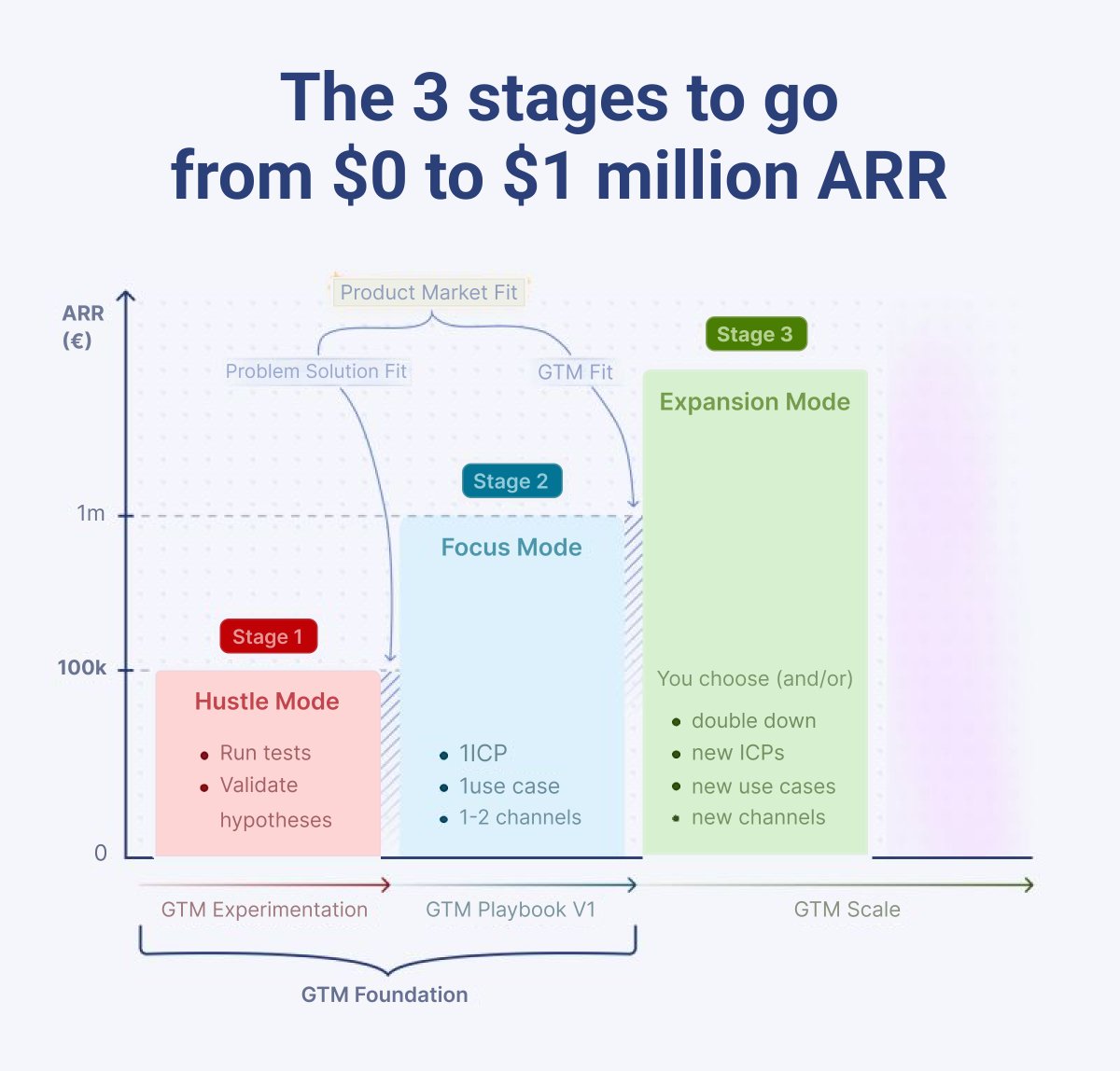
The 3 Stages To Go From 0 to 1M ARR Stage 1: Hustle Mode → You are not building a company yet, you are running experiments. → Test fast, validate hypotheses, and chase real signals instead of activity. → Your only job is to find a problem worth solving and a customer who cares. → Nothing is predictable or stable at this stage, and that’s normal. → Most founders never escape because they confuse motion with progress. Stage 2: Focus Mode → Once early traction hits, the mindset must shift immediately. → One ICP. One use case. One or two channels. → This stage is about discipline, not creativity. → Say no to everything that introduces noise or dilutes the signal. → Systemize what worked manually. Build your first real GTM motion. → This is the stage that makes or breaks the company because it forces you to operate, not improvise. Stage 3: Expansion Mode → Only after you have a working playbook do you earn the right to scale. → Double down on what’s working. → Add new ICPs, new use cases, or new channels without breaking the system. → This is where leverage finally appears and growth compounds. → The company begins to pull you forward instead of you dragging it uphill. Final Insight → When you respect the stages, you stop forcing scale on a product that hasn't earned it. → You avoid wasted quarters and useless tactics. → You build momentum that compounds instead of resets.
Catalin Fetean tweet media
English
2
3
13
1.1K
NXT retweetledi
Catalin Fetean
Catalin Fetean@feteancatalin·
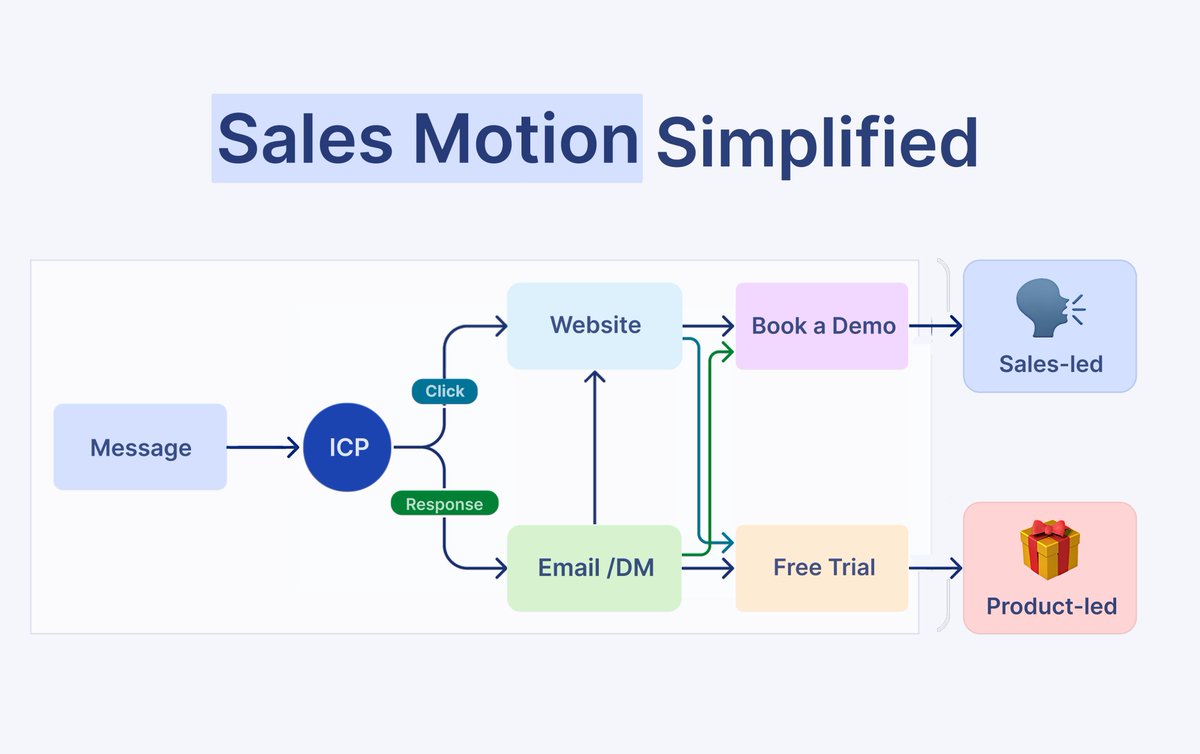
Most founders overcomplicate sales because they think they need a full stack of funnels, nurture sequences, and enterprise playbooks. In reality you only need one thing that works consistently. A message that reaches the right person and a simple path that turns attention into revenue. Every sales motion is just a series of decisions your ICP makes. They either click or respond. That’s it. From there your job is to create the shortest possible path to value. If they click, they should land on a page that tells a clear story and pushes them toward a demo. If they respond, keep the conversation alive long enough to give them a clear next step without overwhelming them. This is where founders fall apart. They scatter their motion across too many channels and overload the buyer with friction. The best teams ruthlessly remove complexity. Website or DM. Demo or free trial. Sales led or product led. You don’t need ten steps. You need two clear pathways that remove doubt and escalate commitment. Once you understand this, scaling becomes mechanical. Tighten the message. Shorten the path. Reduce friction. Improve follow ups. When your motion is this simple you can test faster, learn faster, and win faster. Most founders try to optimize tactics when all they needed was simplicity that compounds. Comment "FOUNDER" to get this for free and resources for building your first product or scaling to $100K/month
Catalin Fetean tweet media
English
1
2
11
738
NXT retweetledi
Catalin Fetean
Catalin Fetean@feteancatalin·
NXT UPDATES Key Metrics → 1,047 active businesses → $8.8M monthly trading volume → $244.2K monthly revenue → 70K+ contracts executed and 400K+ orders → 40+ million views on Instagram Launched Founder Terminal: → 3,500 founders joined → 300+ blueprints, playbooks, and checklists → 200+ custom-built automations and flows → 10,000+ campaigns → 1,000+ tools 2026 is gonna be amazing.
Catalin Fetean tweet media
English
0
1
10
881
NXT retweetledi
Catalin Fetean
Catalin Fetean@feteancatalin·
↓ Everything in a startup journey is just a game of adapting, testing, and improving. I dropped formal education a long time ago, and like most founders, I had to learn everything on my own. I never really embraced mentorship, coaching, or advising and honestly, I’m tired of seeing people pay for things that are useless. → I made a lot of mistakes in the last 5 years. → I could’ve achieved more. → I could’ve moved faster. But being so young in this game turned out to be an advantage. It allowed me to make those mistakes earlier, recover earlier, and understand why things broke in the first place. And now, looking back, I’m convinced nothing was random. Every dead end became a blueprint. Every failure became a system. Somewhere along the way, I realized something important: → Most companies don’t fail because the founders are bad. → They fail because the infrastructure is wrong. → The systems are wrong. → The sequence is wrong. So for the last few months, I’ve been putting everything I’ve learned into one place. Not as content. But as a complete architecture for building and scaling a company. Here’s what I prepared: → 300+ blueprints, playbooks, and checklists → 200+ custom-built automations and workflows → 10,000+ campaigns → 1,000+ tools → 100,000+ prompts → $20,000+ worth of perks and discounts If you’re building your first product or scaling toward $100K/month, it’s for you. Comment "TERMINAL" and i'll send you the link. it's free for life.
Catalin Fetean tweet media
English
1
2
9
1K
NXT retweetledi
Catalin Fetean
Catalin Fetean@feteancatalin·
I Painfully Pulled the First 10 Million Views, 29 Accounts Banned, and How to Scale: Instagram is leading the growth right now with roughly 12 million combined views. But ultra virality isn’t always the win it looks like on paper. When you go viral too early, the algorithm pushes you way outside your ICP. You start reaching people who will never buy or even understand your product, and that throws off all your calibration work later. If you’re optimizing for growth and conversion, the sweet spot is 50K to 150K views per video. That’s where you get enough visibility for testing but still keep tight relevance. We got banned on about 80% of our TikTok accounts, which forced us to rethink the structure completely. Our next move is to build distributed creator networks in the US and India, because the algorithm there has deeper user pools that can better match our ICP. It’s not a regional bias issue. It’s just that the Romanian audience pool is too small and too locally calibrated, which means the algorithm keeps anchoring our reach to irrelevant segments. One big lesson so far: Always use CTAs. The 5million view reel looked great, but follower growth was weak. Meanwhile, the 1.6 million view clip with a strong CTA delivered 900% more new followers. That’s the difference between content that looks viral and content that converts. Here’s what we learned after pushing more than 40 accounts and 1000+ videos through the system. 1. Every platform has a personality. TikTok gives explosive reach fast but punishes repetition. Instagram builds momentum slower but compounds faster once a theme starts resonating. YouTube Shorts remains the best channel for retention if you link clips together in a narrative format. 2. Scaling is not about one hit, it’s about velocity. If you can post 3–5 pieces daily across 10–15 accounts, you get enough signal diversity to see what the algorithm wants this week, not last month. 3. Calibration resets constantly. Once an account crosses a million views, its audience profile changes completely. That means you need new seed accounts to keep fresh signals in play. 4. Bans are part of the cost. We lost 29 accounts so far. Instead of fighting each ban, we treat them as disposable test nodes. We track the lifespan, posting frequency, and formats that triggered bans so we can extend the next batch’s survival curve. 5. Geographic targeting matters more than niche targeting at early stage. If you want US reach, you must use US IPs, local slang, and creators who are already embedded in those networks. The algorithm rewards local cultural context as much as engagement metrics. The Next Step: 100 Million Views The next goal is 100 million views, but this time the focus is not on scale for its own sake. It’s about creating a repeatable system that compounds over time, across platforms, accounts, and geographies. We are bringing in creators from the US, India, and Southeast Asia to localize content through native behavior, not translation. The algorithm rewards cultural familiarity. A hook that dies in Europe can hit 2M+ in India with the same visuals but a different voice line. Each region will have its own posting frequency, seed hashtags, and engagement scripts, with results tracked in one unified dashboard. The biggest scaling bottleneck isn’t creativity, it’s hesitation. The next phase is about posting speed, not polish. We’ll produce and publish hundreds of short-form assets per week, built from proven creative templates, each tied to specific emotional triggers and outcomes. The key metric isn’t views, it’s how many tests per week we can run across unique audiences. What Scaling Actually Looks Like Here’s what it takes to jump from 10 million to 100 million views without losing direction. 1. Predictive testing Instead of guessing what works, we’ll use micro metrics like retention curves at 1-second intervals to predict which videos will break 100K before they even pass 5K. 2. Performance cloning Once a piece hits, we’ll duplicate its format with different hooks, tones, or CTAs to generate dozens of micro-variants. 3. Account health rotation No account should carry more than 5 percent of total reach. If one dies, we spin up new ones instantly. 4. Hybrid content engine Combine human storytelling with automated data tracking. The human side handles emotion; the system side tracks velocity, engagement depth, and share ratios. 5. Conversion-first metrics Each viral test loops back to one metric: how many qualified users or followers it brings, not just view count. I’m documenting the full process publicly. Follow to see how we scale from 10 million to 100 million views, including what actually converts and what’s just noise. -- Thanks for reading, Catalin Fetean.
Catalin Fetean tweet media
English
1
2
13
1.6K
NXT retweetledi
Catalin Fetean
Catalin Fetean@feteancatalin·
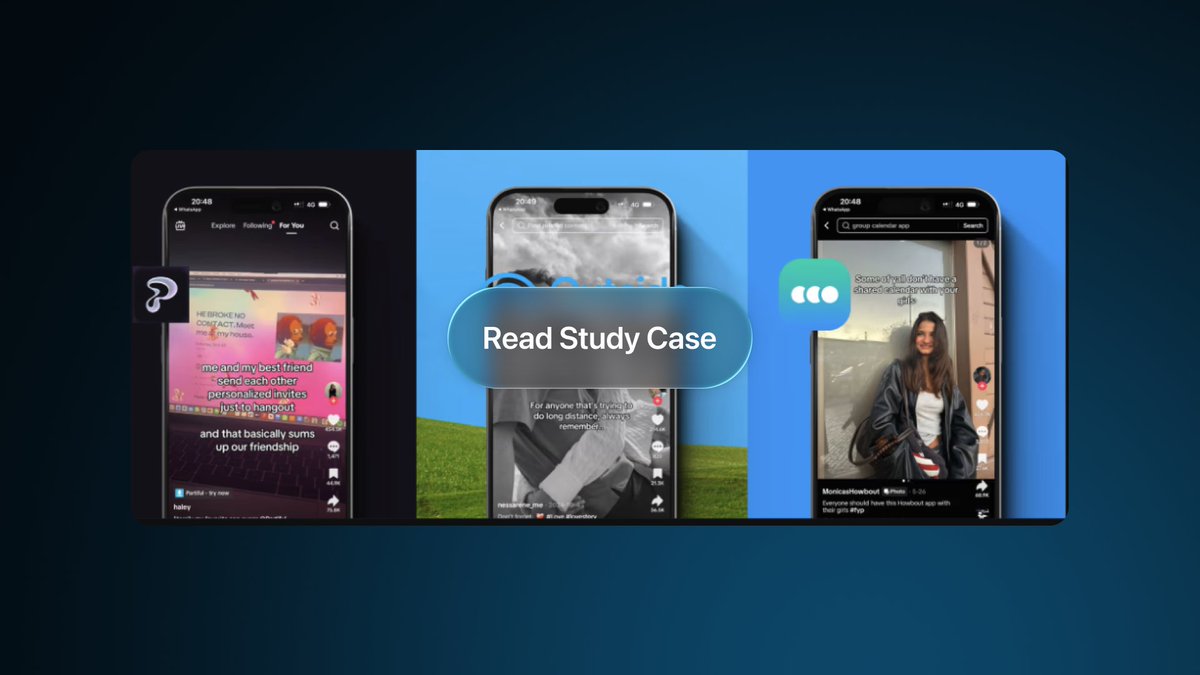
3 Apps, 1 Niche, 550K Downloads (and What SaaS Founders Can Learn) Gen Z is not just sharing links or liking posts. They are building micro-networks where planning, time management, and social coordination merge into lifestyle content. These products make scheduling feel emotional, not logistical. Think Google Calendar redesigned by a marketing team that lives inside TikTok. Across 3 products, this movement produced more than 550K downloads in the last few months. All 3 rely on emotional storytelling, user-led virality, and simple but highly repeatable video formats. This is a breakdown of the playbooks powering them. 1. Partiful 200K downloads last month Top 20 in Lifestyle/5 million users overall Partiful’s strategy started with one simple observation: the invite is not just a utility, it is a shareable artifact of friendship. Their team built every piece of content around that idea. Core growth system Partiful spun up more than 24 TikTok and Instagram Reels pages, most run by micro creators or college ambassadors. Over 6 months those accounts reached 31 million total views, with very little paid amplification. Only a few top performing clips received small boosts. The brand account itself functioned as a live laboratory. The founders tested narrative formats, then rolled them out to ambassadors once they knew what resonated. Viral content mechanics Two formats consistently generated comments, saves, and organic reposts. Selfie and screen record hybrid: The video opens on a creator speaking to the camera, then cuts to a screen recording of their event invite. The app name never appears as text. Viewers encounter the interface first and discover the brand in the comments. This intentional omission created curiosity loops, where potential users asked for the source. Faceless screen record: These clips skip the selfie entirely. The visual centerpiece is the invite itself. Fonts are playful, colors are offbeat, and captions feel like private jokes between friends. The creators often write like they are texting, not posting. Example hooks that performed above one million views include me and my best friend send each other invites just to hang out and girls let’s normalize sending our friends invites for literally everything. The results were powerful. Comments routinely hit hundreds per clip, most asking for the app link. Offline stunts and social proof: The team extended social momentum with real-world activations. Their most famous was the Timothée Chalamet lookalike contest in New York City. The stunt produced three recap videos, one crossing four million views and attracting national press coverage. The key lesson was that the content format remained user-first even during large-scale activations. What made it work Partiful’s content never explained features. It showed emotional outcomes. Every clip communicated belonging, humor, and micro-community identity. The app became shorthand for social initiative and friendship maintenance. 2. Howbout 350K monthly downloads, $8 million Series A in 2024, 193 million total views Howbout was built by 3 university friends and grew by converting daily planning into a social ritual. Their product made coordination visible, turning what used to be calendar friction into a bonding moment. Ambassador architecture From the beginning, Howbout invested in a distributed ambassador model. Rather than centralizing under one branded page, they recruited dozens of creators who posted under personalized handles such as tt@monicashowbout and tt@tee.howbout. Each page blended personality with standardized creative formats, allowing the company to test emotional angles at scale. A tracker of known ambassador accounts shows most of them started posting between March and April 2025. In less than 3 months, their combined content generated nearly two hundred million views. Only a small subset appeared to be ad-boosted, which means most of that traction was organic. Creative format: UGC slideshows Instead of typical talking-head clips, ambassadors posted slideshow videos built from 3 static frames: A close-up facial reaction paired with a sharp, emotional text hook. A screenshot of the shared Howbout calendar showing a relatable plan, cropped to remove the logo. Optionally, a candid photo of friends executing the plan. The simplicity allowed creators to make and post content in under 10 minutes. The predictability of format made it easy for the algorithm to index. Emotional targeting The top-performing hooks covered three emotional categories. FOMO-based hooks Examples: Some of you do not have a shared calendar with your girls and App of the summer. Drama-based hooks Examples: Did you hear what she did or I told him I was scared he would leave like everyone else. Nostalgia or recovery-based hooks Examples: When my toxic relationship ended I couldn’t stop wanting him back or Not falling in love ever again. The insight was that even though the app is designed for friend groups, emotionally charged relationship narratives travel further on TikTok. Howbout leaned into that tension deliberately. Their content was not always literally about using the product, but always emotionally aligned with the relief or connection it represented. Scaling insights The company ran their brand page like a newsroom. Every two weeks they reviewed which ambassador posts spiked, extracted the patterns, and distributed new creative templates back to the network. This feedback loop allowed continuous optimization without heavy paid support. 3. Outside Below 5K downloads per month Revenue flat since early 2024 Outside initially launched as another shared calendar for social circles but plateaued after early traction. In response, the team pivoted to a tighter segment: couples in long-distance relationships. Niche positioning On social media, the repositioning was clear. Every ambassador video focused on long-distance themes: missing someone, countdowns to visits, and emotional support moments. However, their website and App Store listings still reflected the broader original message. This inconsistency likely limited conversion. Creator dependency Outside signed eight ambassadors in mid-2024, but by early 2025 only one remained consistently active. That creator, Nessa, also promoted a competing app called Couple Joy. Despite that overlap, her Outside videos generated more than 19 million total views and achieved an engagement rate near 60%. She repurposed existing footage, swapping app demos and changing hooks. The brand did not need to provide fresh creative each time. Top performing lines included: When long distance gets difficult remember that and POV your long distance boyfriend made you download this to stay closer. These clips struck directly at emotional endurance and love under constraint, the most resonant angle for that audience. Growth lessons Outside’s story is a reminder that focus without alignment is not enough. Creative must match landing page positioning, copy tone, and onboarding flow. Otherwise, user motivation gets lost between discovery and install. Cross-App Observations 1. Creator-led growth replaced brand-led content: Each team used ambassadors or micro creators as primary growth engines. Brand pages were used for experimentation and learning. 2. Minimal brand exposure increased curiosity: Videos often omitted the app name entirely. This forced viewers into the comments and search bar, generating organic word of mouth. 3. Emotional storytelling drove attention: FOMO, friendship, nostalgia, drama, and longing performed far better than feature explainers or walkthroughs. Template-based content scaled faster than traditional video: Reusable formats such as UGC slideshows or faceless screen recordings allowed dozens of creators to post frequently with minimal production time. Practical, repeatable playbook for SaaS founders. Use this as a checklist you can implement quickly: 1. Build creator friendly content templates > Create 3 minimal templates that creators can use to demonstrate a key user outcome. > Templates should be reproducible in under five minutes on a phone. 2. Recruit micro ambassadors, not just influencers > Aim for quantity of authentically engaged creators over one star influencer. > Compensate with a mix of cash, product perks, and performance bonuses. 3. Use the brand account for experimentation only > Test hooks, record learnings and then provide those winning to ambassadors. > Stop pushing the brand voice in creator led clips; instead make content feel originated by the creator. 4. Design the product for shareability > Add intentional share moments that produce visually distinct artifacts for social. > Make those artifacts inherently aesthetic and easy to screen record. 5. Align app and website messaging with social creative > If your creative homes in on a niche, update your landing pages to match immediately. > Reduce friction from discovery to first experience by mirroring language and visuals. 6. Lean into emotion based hooks > Map your user outcomes to core emotions and craft 10 hooks that test each emotion. > Run quick experiments and double down on hooks that deliver comments and saves. 7. Create low friction UGC campaigns > Offer scripts and visual assets to creators so they can produce higher volume weekly. > Track outcomes by creator and creative format so you know what to scale. Metrics to track weekly > Creator generated installs/creator > Comments and saves per post as a signal of engagement quality > Conversion from install to active user in the first seven days > Retention of users acquired via creator content versus paid channels > Cost per install where you do paid boosts, compared to organic creator driven installs Key Insights You Can Apply to Any SaaS Product 1. Focus on user visible artifacts: If your product can produce a visible artifact that users are proud to show, it will become your best marketing asset. That includes shareable confirmations, invites, snapshots, or any output that looks good on a phone. 2. Make templates the product of growth: Treat creative templates as product features. Ship templates inside a creator kit and iterate them like product features. 3. Use micro scale testing to avoid big bets: Run 20 small creator experiments per month rather than one big influencer campaign. Small experiments reveal repeatable patterns and reduce risk. 3. Align every customer touchpoint: Social creative, app store pages, onboarding flows, and your first in product moments must tell the same micro story. Mismatch kills conversion. 4. Plan for creator churn: Creators will stop posting. Always have a pipeline of new creators and systems to turn brand community members into content creators. 5. Measure signal not vanity: Prioritize comments, saves, and retention over total views. Views are useful but do not guarantee product adoption. 6. Build for authenticity at scale: The most replicable viral plays are not about perfect production. They are about authenticity, speed, and repeatability. The Research Repository Every week, I break down the systems behind the world’s most effective attention plays. No theory. No recycled advice. Just raw breakdowns of how companies, creators, and teams actually build reach, leverage, and defensibility. If you want to understand how attention is engineered, not just captured, this series is where it all gets dissected. Comment “VIRAL” if you want access to the full research archives and data references. -- Thanks for reading, Catalin Fetean.
Catalin Fetean tweet media
English
2
3
13
1.1K
NXT retweetledi
Catalin Fetean
Catalin Fetean@feteancatalin·
How Lovable Engineered Virality in One of Tech’s Hardest Categories Most products that go viral on TikTok are emotional by design. Dating apps, lifestyle tools, and entertainment platforms all thrive on personal connection. Coding startups don’t. They deal in abstractions, not emotions. That’s what makes Lovable’s story interesting. They turned one of the least viral product categories—the AI coding tool—into one of the most visible startup narratives on social media. This isn’t a story about luck. It’s about experimentation, iteration, and building a repeatable content system that compounds. The Challenge: Making Code Emotional Lovable’s product is inherently technical. It builds websites using AI prompts. That’s a hard sell on a platform where attention depends on emotion. You can’t rely on aesthetics or relatability. You have to create tension. Most developer tools lean on tutorials or demos. They inform, but they don’t travel. Lovable didn’t try to educate their audience—they tried to provoke them. And that distinction defined everything that followed. Phase One: Early Experiments The company started with an idea called The Lovable Show: a street-interview format where hosts asked people for app ideas and built them live using Lovable. It was a solid concept—visual, fast, and close to the product’s core promise. The issue wasn’t the format; it was the account. Early TikTok pages rarely gain traction, and the content never built momentum. Instead of iterating on that format across multiple accounts, Lovable paused it. They later revisited the idea on lovable.app, updated the editing style, and finally achieved better results—proof that distribution, not creativity, was the bottleneck. Phase Two: The Founder-Driven Approach Lovable then tested the “podcast clipping” strategy: cutting founder interviews into short TikToks and YouTube Shorts. It’s a playbook that works well for personality-driven brands, but it requires an existing audience. Their clips averaged between 500 and 1,000 views—too low to matter. The insight was simple: founder content builds trust once you already have reach. It doesn’t create reach on its own. Lovable paused that line of content as well. Phase Three: The Slideshow Trend When Replit began experimenting with slideshow content—static images overlaid with text—Lovable followed immediately. Replit’s carousel hit around 300,000 views; Lovable’s version reached almost 2 million. On the surface, this looked like success. But internally, it didn’t translate. Slideshows tend to generate awareness without conversion. They’re passive impressions. Lovable understood that reach without identity doesn’t build memory. The format was parked after initial testing. The Breakthrough: Split-Screen AI Builds The turning point came with a new visual system: the split-screen format. In every video, the top half shows an app being “built” live. The bottom half shows a creator explaining what’s happening. The hook never changes: “I built Netflix in 1 minute.” It’s an absurd claim—and that’s the point. The statement triggers two simultaneous reactions. Developers feel compelled to disprove it (“There’s no backend,” “This is fake”), while non-technical viewers are amazed that it might be possible. The result is a perfect engagement loop where skepticism and curiosity fuel each other. Lovable scaled this single idea across at least nine TikTok accounts. Same hook, same pacing, same editing. The consistency created recognition across the ecosystem. Viewers didn’t just see a video—they started seeing a pattern. The Mechanics Behind the Format Each video starts with a ChatGPT prompt. This framing is deliberate. Viewers first focus on AI, not the Lovable brand. The product reveal comes later, once attention has been secured. This sequencing minimizes friction and increases retention in the first few seconds. The creators producing these videos aren’t centralized. Many are based in Africa, Greece, and smaller EU countries. This likely isn’t geo-targeted growth but operational leverage: more cost-effective creators, less saturated regions, and faster production cycles. By distributing content creation globally, Lovable reduced dependency on a single face or market. The brand became a format—modular, scalable, and repeatable. Supporting Experiments While the split-screen content drove most of the reach, Lovable continued testing other formats in parallel: A revived street-demo series with improved editing, one clip reaching close to 100K views. Clipped founder content recycled for context and storytelling, though still secondary in traction. Static slideshow formats, which they’ve largely abandoned as the TikTok algorithm now favors dynamic footage. Every experiment produced micro-insights that informed the next iteration. The Psychological Layer Lovable’s success wasn’t about technical storytelling. It was about emotional engineering. They designed content that attacked the identity of their core audience. Developers hate inaccuracy. By claiming to build complex apps in 60 seconds, Lovable exploited that instinct. The outrage became free distribution. At the same time, the promise of instant creation appealed to non-technical users’ curiosity. The combination of disbelief and fascination produced the kind of engagement that traditional marketing can’t buy. The System They Built What makes Lovable’s approach distinct is how they operationalized it. They didn’t look for new ideas; they looked for repeatable structures. Each successful video became a template distributed to multiple creators. The same formula—slightly localized, slightly re-shot—creates the illusion of organic spread. In reality, it’s coordinated distribution. Not influencer marketing. Not paid ads. Just an optimized content machine running at scale. Performance and Reach Across all accounts, Lovable’s ecosystem now exceeds five million cumulative views. Top creators like noah.louisiana, obeidatamine, and malaika_lovable regularly cross six-figure view counts. The most consistent formats replicate the “I built X in 60 seconds” framework: Netflix, Spotify, Uber, Instagram, YouTube. These videos aren’t meant to educate. They’re designed to dominate the feed. In the algorithmic economy, dominance outperforms accuracy. The Underlying Framework Lovable’s viral loop can be summarized in five steps: > Lead with a trendable technology (ChatGPT or AI). > Frame an exaggerated claim (“I built Netflix in 1 minute”). > Delay the brand reveal until attention is secured. > Trigger both fascination and skepticism. > Replicate the structure across multiple creators and accounts. > It’s not content marketing. It’s attention design. Lessons for Founders > Don’t chase originality. Find one format that works and scale it horizontally. > Build for emotion, not information. Outrage and curiosity travel further than logic. > Separate format from face. If your system depends on one creator, you don’t have a system. > Use volume to find signal. Lovable ran dozens of tests before discovering its loop. > Leverage repetition. Recognition compounds faster than creativity. Lovable didn’t win because of one viral hit. They built infrastructure for attention and treated content as a system, not an art form. Most startups talk about product-market fit. Lovable found content-platform fit. They understood that in 2025, distribution isn’t about storytelling—it’s about building repeatable emotional triggers that the algorithm rewards. The product is technical, but the growth engine is human psychology at scale. They didn’t just build an AI website tool. They built a viral system for attention. The Research Repository Every week, I break down the systems behind the world’s most effective attention plays. No theory. No recycled advice. Just raw breakdowns of how companies, creators, and teams actually build reach, leverage, and defensibility. If you want to understand how attention is engineered, not just captured, this series is where it all gets dissected. Comment “VIRAL” if you want access to the full research archives and data references. -- Thanks for reading, Catalin Fetean.
Catalin Fetean tweet media
English
8
3
12
1.4K
NXT retweetledi
Catalin Fetean
Catalin Fetean@feteancatalin·
REAKING NEWS: A new industry report suggests that nearly 9/10 AI-startup founders admit they don’t fully understand how their own products work, but describe them as ‘very powerful.’ The survey, conducted by the Tech Insight Group, found that when asked to explain their core tech, most cited proprietary models or said it was ‘too advanced to summarize.’ Analysts say the findings highlight a growing gap between AI marketing and technical transparency. Despite the confusion, funding continues to rise, suggesting that in AI confidence remains the dominant algorithm.
English
3
2
11
1K
NXT retweetledi
Catalin Fetean
Catalin Fetean@feteancatalin·
Why I Reverse Engineered 500 Million Views Into a Self-Driving Attention Engine: The internet used to feel simple. You’d post something, share a thought, maybe upload a photo. If it was good, people noticed. If it wasn’t, it disappeared. Now every pixel fights for your focus. Every platform is built like a slot machine. Every sound, swipe, and headline is designed to keep you from leaving. And that’s not a side effect of the internet. That’s the business model. Somewhere along the way, attention stopped being just a byproduct of being online. It became the internet’s most valuable resource. Every second you scroll is worth something to someone. Every thought you share becomes data that trains a machine. Every emotion you feel on a screen becomes fuel for an algorithm. We used to trade products. Then we traded data. Now we trade attention. It’s the new value layer of the internet: invisible, powerful, and addictive. The first version of the internet moved information. The second moved money. This one moves minds. Algorithms distribute attention. AI amplifies it. Founders have learned how to weaponize it. The people who understand this don’t fight for reach. They design it. They build self-driving systems that capture and compound attention on their own. They treat virality like logistics and content like capital. That’s what the new builders are doing right now. Quietly creating machines that sell, scale, and distribute ideas automatically. Everyone else? They’re stuck inside someone else’s system, feeding it with their time. And it’s accelerating. AI isn’t just creating faster; it’s competing for your mental bandwidth. Automation isn’t just helping you work; it’s teaching the system what holds you. The line between technology and psychology is gone. What we’re watching right now is the merging of data and human behavior into one massive, self-driving loop. The internet’s next trillion-dollar layer isn’t financial. It’s psychological. And it’s already online. Most people are still trying to understand it. I decided to build inside it. In the last 40 days, I built a virality engine that runs across 160 accounts and four platforms. It’s structured like a stock portfolio: 10% of the accounts are high risk: > They are built for controversy, velocity, and chaos; > They grow fast, they trigger reactions, they drive the first spike of awareness; > Some will get banned but they exist to test the limits of virality; 60% are indirect selling machines: > They use proven viral frameworks, adapted to specific ICPs; > Every post has a built-in funnel system that drives traffic; > They are consistent, data-backed, and highly optimized for conversion; 30% are thematic and educational: > They build trust; > They position authority; > They convert slower, but the ROI compounds over time; Together, this system creates a flywheel of reach, credibility, and sales: > The risky accounts open new attention streams; > The indirect ones monetize them; > The educational ones make sure it all lasts; How I built it Over the past 30 days, my bots scraped and organized viral strategies from every major platform. Total dataset: more than 500 million combined views. From 115 viral apps, I extracted and categorized every content pattern that drove growth: > Hook types; > Retention triggers; > Engagement ratios; Then I rebuilt them into content templates mapped to our ICPs. Every piece of content now has a calculated probability of virality based on platform psychology and audience behavior. It’s not guessing anymore. Pure math. Timeline and Deployment We are deploying 40 accounts per month. It will take 6–8 months for full rollout. After the engine stabilizes at 80%+ efficiency, we will add amplification with 25 micro influencers per week (1–10K followers).
English
3
6
24
2.8K
NXT retweetledi
Catalin Fetean
Catalin Fetean@feteancatalin·
happy 86% internal automation. If I could go back to day 1, this is what I’d tell myself... Don’t hire to fix chaos. Delete to find clarity. In the early days, I thought building a company meant adding people, tools, and structure. It felt productive. It looked serious. But every new layer added a few seconds of latency: approvals, check-ins, questions, syncs. And that’s how speed dies. The real lesson? Complexity scales faster than growth. If I could start over, I’d build the company backwards. Start lean. Stay lean. Automate the repeatable before it piles up. Treat every new hire as a last resort, not a quick fix. At $1M ARR, you don’t need more people. You need fewer things that require people. We rebuilt everything around that idea. Internal ops now run on one programmable layer. Workflows trigger themselves. Approvals execute in block time. Updates push automatically. No “how’s it going” calls. No “can you send the report” messages. The results are simple. Fewer layers. Faster cycles. Zero guesswork. Building a company isn’t about adding control. It’s about removing drag. 86% internal automation and counting.
English
2
1
12
1.1K
NXT retweetledi
Catalin Fetean
Catalin Fetean@feteancatalin·
Week 8 update: There’s a huge delta between the work I put in and the results I see. Totally normal. Totally expected. The biggest progress so far? Severe chest pain. No idea why I keep doing it, but I know exactly why I won’t stop. Massive bomb incoming in 5–6 weeks. 10 weeks left.
Catalin Fetean tweet media
English
3
1
14
1.3K
NXT retweetledi
Catalin Fetean
Catalin Fetean@feteancatalin·
I did 30 calls with SaaS founders last week. Half of them sounded tired. Not because of markets, but because of their own companies. One said it takes four people to approve one invoice. Another said they had 19 people owning the same process. But one story hit different: A founder running a $10M ARR company told me: We move slow because everyone’s waiting for permission. So he tried something. He canceled every recurring meeting for one week. No ops calls. No standups. No approvals. At first, people freaked out. By day four, they were shipping faster than ever. Most of their work wasn’t real work. It was waiting. Now he runs the company on one rule: If it needs a meeting to move, automate it. The lesson: speed comes from deletion, not control. #startup #saas #founder #web3 #crypto
English
0
1
9
1.2K
NXT retweetledi
Catalin Fetean
Catalin Fetean@feteancatalin·
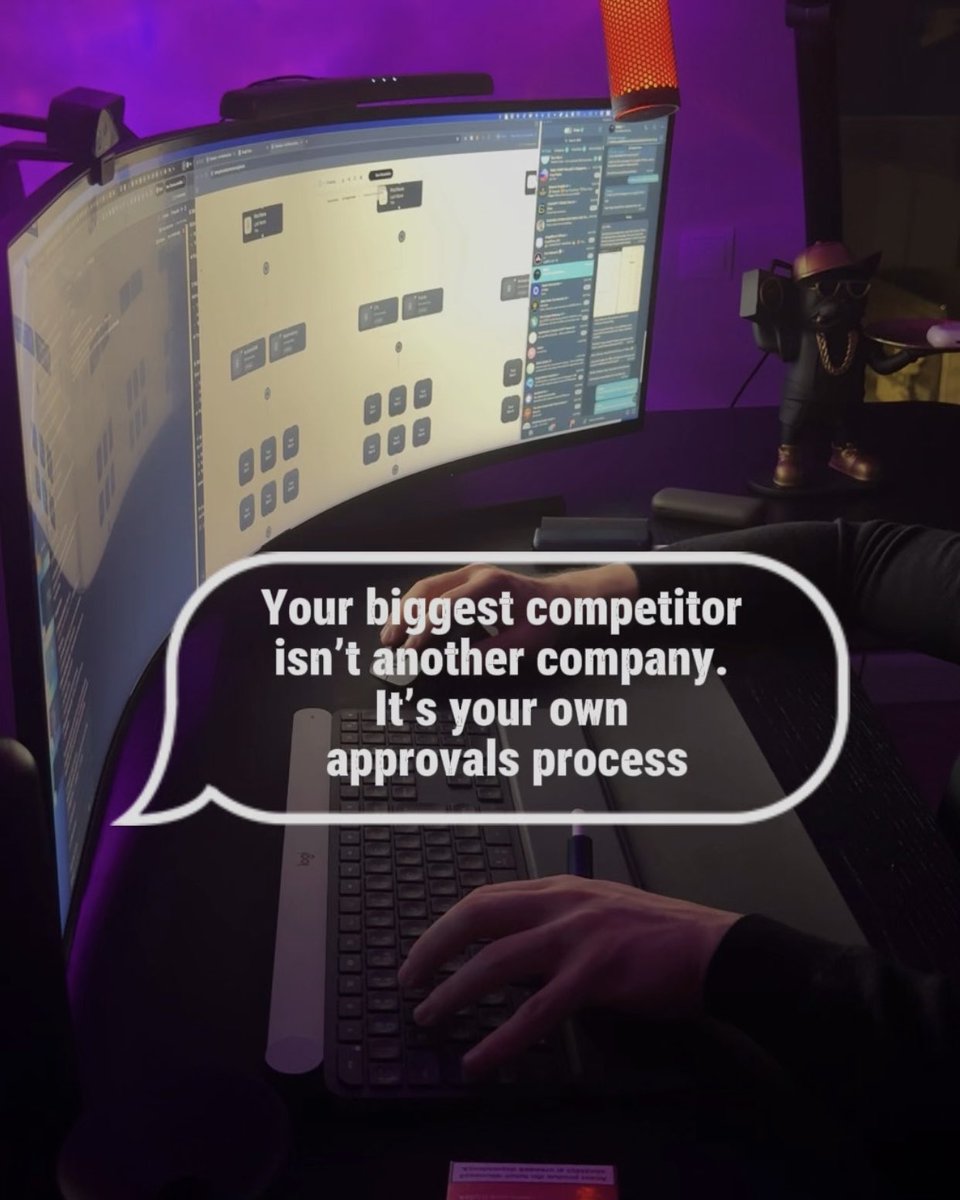
Your biggest competitor isn’t another company. It’s your own approvals process. We worked with a SaaS team doing everything right:
→ Weekly exec syncs to align on deals
→ Legal reviews stacked on legal reviews
→ A 12-step approval ladder just to close one contract On paper it looked organized. In practice it added 3–4 weeks to every close. Every extra handoff creates delay and risk. Deals go cold. Decision-makers move on. Your pipeline looks full but stalls at the bottom. We collapsed that whole chain into one programmable contract.
Auto-enforced terms.
Programmatic escrow for payments.
Instant execution in block time. The result:
Time-to-close dropped from 27 days to 62 seconds.
Legal and finance handoffs erased.
Deals started closing on weekends and at midnight — when no one was even awake. Speed isn’t about working harder. It’s about removing the layers that slow you down. And in 36 months, this won’t be optional. It’ll be survival.
Catalin Fetean tweet media
English
0
1
8
1.5K
NXT retweetledi
Catalin Fetean
Catalin Fetean@feteancatalin·
You don’t need a niche. You need a point of view: In crypto and AI the advice is always the same. Pick a niche. Find a wedge. Specialize. That worked when the internet was young and empty. Today it is the fastest path to being replaced. If your startup can be described as a checklist anyone can replicate, you are already competing with infinite clones. Specialized knowledge is cheap. AI can generate the docs. Crypto forks launch in minutes. Liquidity is copy pasted. This is why most projects vanish. They sound like technical manuals. They speak features, not conviction. → The projects that win do not win because of their niche. →They win because of their worldview. → People don’t rally around protocols. They rally around narratives → They do not want more data. They want clarity. → They do not want more features. They want conviction. This is why meme coins with no tech move billions while technically superior protocols die in silence. The story wins first. The tech follows later. Your point of view is the moat → Vitalik moves markets because his worldview filters noise into meaning. → Elon moves billions because people buy into his lens on the future. → Even anonymous CT accounts hold more influence than venture firms because they project a philosophy. When people buy your token, use your AI tool, or join your DAO, they are not buying utility. They are buying your interpretation of the future. Novelty is the currency → Attention runs on dopamine. But novelty is not hype. Novelty is reframing old ideas through a new lens. → Compound interest becomes number go up → Chatbots become infinite employees → Blockspace becomes digital real estate → Same primitives. New story. New attention. AI can remix infinite takes on what is blockchain or how to prompt. What it cannot do is build taste. It cannot filter ideas through scars, obsessions, and lived perspective. That is the one thing it will never replace. Attention economy to care economy → Every cycle proves it. → The hype accounts vanish in the bear. → The builders who kept talking, thinking, and shipping are the ones communities stay loyal to. People do not care about a feature list. They care about whether your worldview makes them stronger, freer, richer, or more inspired. Your brand is simply your point of view compounded over time. How to apply this as a founder: → Stop asking what niche you are in. → Start asking what future you are betting on and show it every single day. → Curate and share ideas across domains. → Treat your feed like a public lab notebook. → Turn product updates into worldview updates. Anchor everything in the future you are building toward. AI and crypto will replace specialists. They will not replace vision. You do not need a niche. You need a point of view. #crypto #ai #web3 #founder #Altcoins
English
1
1
7
1.6K
NXT retweetledi
Catalin Fetean
Catalin Fetean@feteancatalin·
When you strip a company down to its bones, almost nothing survives: The titles disappear first. VPs. Directors. Managers. Layers of people whose only job was to talk to each other. Then the meetings vanish. Weekly stand-ups. Alignment calls. Approvals that take a week to schedule and two minutes to confirm. Then headcount crumbles. Because when you look closely, most jobs exist only to feed other jobs. Not outcomes. What’s left isn’t pretty. A handful of people. A few systems. The data that actually matters. And the flow between them. That’s the real company. And most of the time, it’s shockingly small. My studio forces you to look at that version. It doesn’t care how big your org chart is. It doesn’t care how impressive your payroll looks on LinkedIn. It only cares about what creates movement and what stalls it. You start with two humans. Then every new role, every system, every KPI has to justify its existence. The exercise is brutal. But so is the market. The old rule was more people, more power. The new rule is fewer people, faster outcomes. The old rule was trust. The new rule is proof. I will say it again: When you strip a company down to its bones, almost nothing survives. And that’s exactly why the ones that do are unstoppable.
English
5
3
21
2.5K
NXT retweetledi
Catalin Fetean
Catalin Fetean@feteancatalin·
25 SaaS lessons I learned as a 25 yo: 1. Don’t fall in love with your model. Everything shifts. Ship adaptable systems. 2. Play long games only. If you can’t commit 60 months, don’t start. 3. Without distribution, you’re invisible. 4. Test demand before code. 5. Pick connections > quick cash. Your future rounds depend on them. 6. Never sell what you wouldn’t use. 7. Small team ≠ weak. Track revenue per workflow. 8. Automate ruthlessly. 9. Stress tolerance is a skill you can learn. 10. TAM, SAM, SOM slides are useless. 11. First 10 customers > first 1000 signups. They hold the answers. 12. Treat your payment flows like gold. I love you Stripe. 13. Recurring revenue compounds slowly before it compounds fast. 14. Slow and steady doesn’t win in the attention economy. 15. Most “new ideas” can be cloned in 72h. 16. Gross margin is king. If you’re at 40%, you’re not SaaS. 17. Partnerships = liability unless aligned 100%. Most end in breakups. 18. Churn hides in onboarding. Fix the first 30 days or nothing else matters. 19. AI isn’t a silver bullet. Automate decisions, not dashboards. 20. Acquisition is loud. Retention is silent. 21. If you can’t sell your own product, no one else will. 22. Spread revenue across customers. Relying on a few gives them control. 23. Expansion revenue is cheaper than acquisition. 24. The best model is the one you can run today. 25. Weekends are unfair advantage. Most people switch off. Your turn → What’s the SaaS lesson you learned the hard way?
English
26
3
12
17.8K
NXT retweetledi
Catalin Fetean
Catalin Fetean@feteancatalin·
I burned $30K and two weeks to build a fully autonomous organization. No engineers. No ops team. Just one dashboard anyone can use. Here’s how it actually works: > Backend: n8n workflows running ops, sales, marketing, support, finance; > Frontend: Replit-built dashboard so non-technical founders can control everything; Total: 163 automations running, success rate: 95.4% Monthly cost to run it: $2,611/month That’s less than the cost of one lazy intern. Comment "AUTONOMY" and I’ll send it over to you for free.
Catalin Fetean tweet media
English
14
2
11
17.4K
Catalin Fetean
Catalin Fetean@feteancatalin·
what is your definition of tokens?
English
1
0
2
1.4K
NXT retweetledi
Catalin Fetean
Catalin Fetean@feteancatalin·
the self-driving economy: why i think tokens are a measure of our choices
English
20
4
24
20.4K