

Nick Fernandez | Product Strategy + AI
813 posts
Nick Fernandez | Product Strategy + AI
@nickf_ai
Fortune 50 product strategy leader. Writing about AI, product, business, and learning technical depth in public.
Exton, PA Katılım Ekim 2024
375 Takip Edilen96 Takipçiler

Peter you literally inspired me to do it
Now we need to get everyone up to 100x to 500x speed
Peter Steinberger 🦞@steipete
@garrytan You’re shipping harder than I do these days!
English

What I love about this course is that it is the exact opposite of do as I say not as I do.
I tell you to use AI; we build a whole bunch of AI to replace a bunch of our course processes.
I tell you that agents are going to be on your team; we add an openclaw to our slack.
I tell you that AI might break production; we DDOS ourselves as soon as all the students, the notetaker agent and a bunch of live streams joints our aggressively yolo’d app.
I tell you your old job is dead; we are no longer instructors, we are devops.
I tell you it will be ok; everyone loves it.
claire vo 🖤@clairevo
How I AI: decide to teach a weekend executive workshop on AI, spin up an openclaw, build a custom student portal, everyone gets AI powered assessments, instructors have detailed highlights of topics to cover, agent outlines content and drafts slides, custom midjourney art, sure why not let’s make a ai notetaker, sure why not let’s make a slackbot that answers content questions sure why not let’s build a live polling platform, taking feature requests from the students wait did I build another saas?
English
Really puts things into perspective... I wonder how many gray boxes stay that way. 🤔
Graeme@gkisokay
Your daily reminder that you are so early to AI. - 84% have never meaningfully touched it - 16% use a free chatbot occasionally - 0.3% pay $20/month - 0.04% use a coding scaffolding - 0.01% are just like you You're building orchestrated agents, running models at 2 am, buying hardware, and compounding your advantage every single day. Meanwhile, 99.9% of people are laughing at Mac mini buyers, OpenClaw users, and home GPU nerds. If you're part of the 0.01%, you are part of the collective building the infrastructure everyone else will depend on. The gap is accelerating. Lock in.
English
Can vouch - be warned, claude is a hell of a drug
Codie Sanchez@Codie_Sanchez
You can become 1% in AI usgae in 1 weekend. I wish I realized this sooner. It takes 12 hours of dedicated work to never see the world the same again.
English
@TheAmolAvasare @lennysan First 4.7, now this? The pace that you guys are shipping will be studied by future generations 😅
English

Claude Design is an absolute gamechanger.
90% of my scrappy prototyping now happens here. Fastest and most pleasant way for me to convey an idea to eng (with our design systems baked in).
@lennysan it took me a ton of self-restraint to not talk about this on the pod 😅
Claude@claudeai
Introducing Claude Design by Anthropic Labs: make prototypes, slides, and one-pagers by talking to Claude. Powered by Claude Opus 4.7, our most capable vision model. Available in research preview on the Pro, Max, Team, and Enterprise plans, rolling out throughout the day.
English
@EXM7777 What about when you quote post about how you don’t love that you’re quote posting?
English

basically i get 3k views when posting a text-only (yet super valuable) tweet
and i get 10-100x that when i do a quote tweet with a media attached
X killed the incentive to write good stuff, they're pushing people towards react and slop
kinda sad to witness in real time
James Camp 🛠,🛠@JamesonCamp
I just pulled over 20 creators worth of X API data into Claude Code Something broke in the last 3 days Engagement tanked across almost every account I checked The weird part is theres no consistency in who got hit. Big accounts, small accounts, different niches. All crushed the same way Grok is apparently running the algo now and its making changes faster than anyone can adapt to Ive seen 3 major algo shifts in the last 6 months on this platform. Each one resets the game If youre running a business on X distribution you already know this. This is infrastructure you dont control. Price that in
English

@cursor_ai @openingai_com That was fast!
English

@TheAmolAvasare 4.6 served me well with large chunk tasks. Excited to see how 4.7 does even better.
English
Opus 4.7 is out! Live on our API, Claude Code, Cowork, and Claude chat.
Thing I'm noticing internally: people are re-scoping what they hand to the model. Work that got chunked into small pieces for 4.6 because it was too ambiguous or too long is now going in as one task.
Claude@claudeai
Introducing Claude Opus 4.7, our most capable Opus model yet. It handles long-running tasks with more rigor, follows instructions more precisely, and verifies its own outputs before reporting back. You can hand off your hardest work with less supervision.
English
@EXM7777 Yea but it’s crazy how close opus 4.7 is to it
English
they did all of this just to flex Mythos' numbers lmao
Claude@claudeai
Introducing Claude Opus 4.7, our most capable Opus model yet. It handles long-running tasks with more rigor, follows instructions more precisely, and verifies its own outputs before reporting back. You can hand off your hardest work with less supervision.
English
English

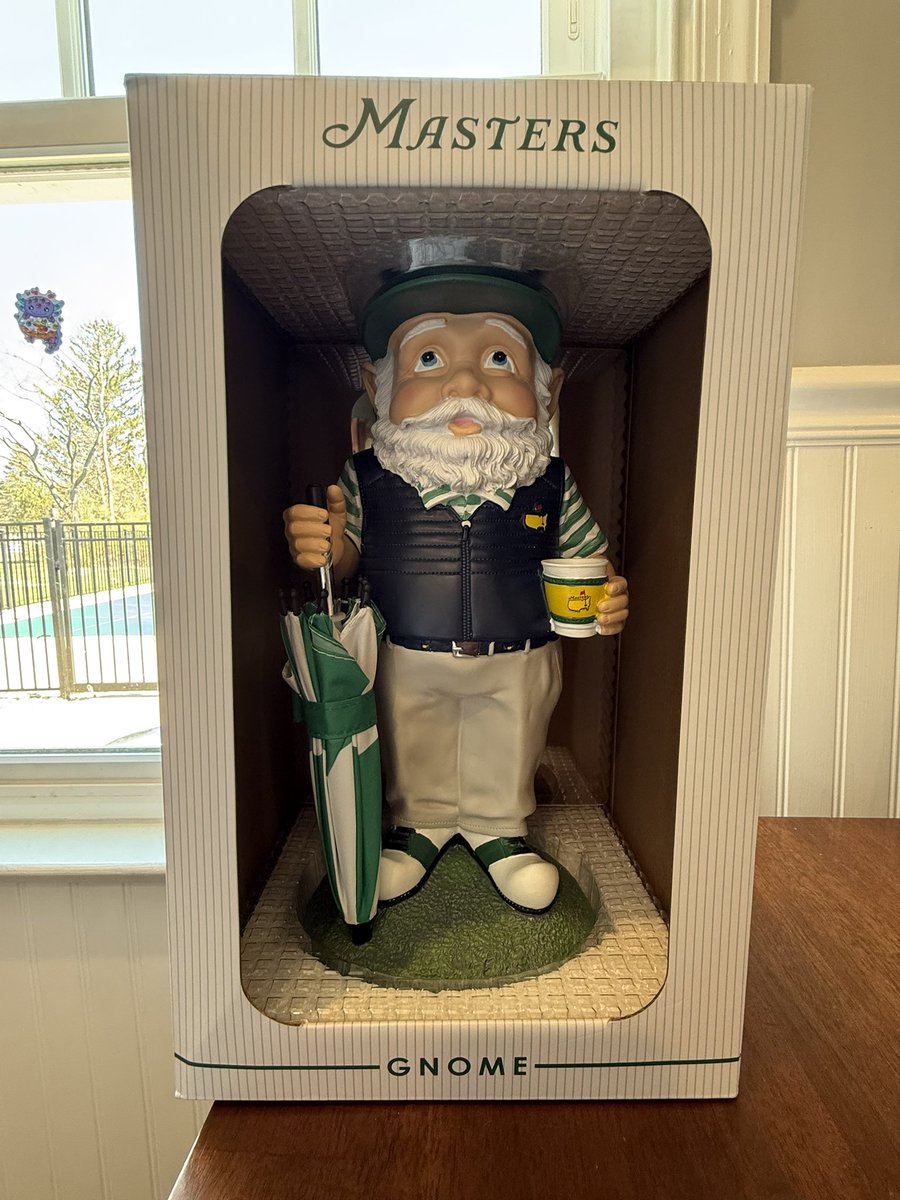
Went to the Masters yesterday and behaved with complete dignity*
*By dignity, I mean waking up at 4:30 a.m. after a long night, speed-walking a quarter mile, and hunting down this limited-edition gnome like it was the last life raft off the Titanic.
Worth it.
English
My airplane didn’t have Wi-Fi.
Gemma 4 (26B): sounds like a you problem.
What a time to be alive.


English
Respect the approach. Seriously.
Love,
All of humanity
Anthropic@AnthropicAI
Introducing Project Glasswing: an urgent initiative to help secure the world’s most critical software. It’s powered by our newest frontier model, Claude Mythos Preview, which can find software vulnerabilities better than all but the most skilled humans. anthropic.com/glasswing
English
@atilladeniz_ Can calibre cli convert an epub to .md (one per chapter)?
English

@trainable_nick I dont understand what’s the difference between calibre cli?
English
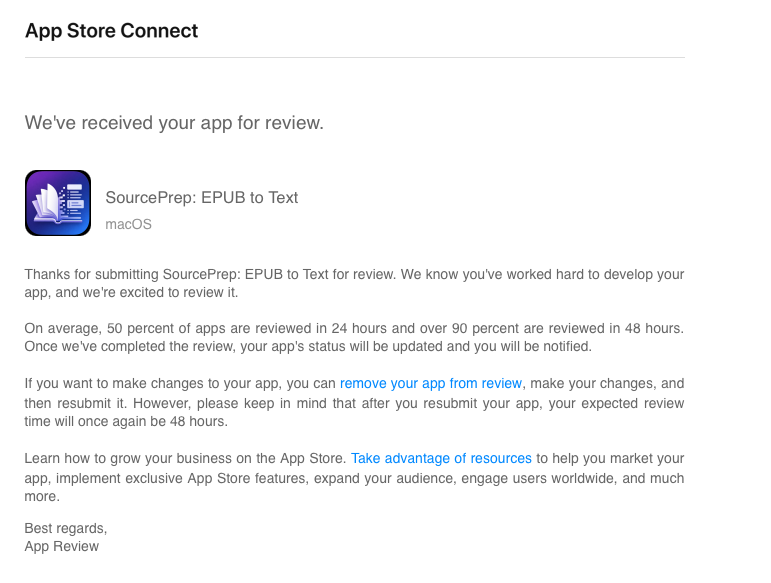
As I pulled on the thread from Karpathy’s post, I realized the existing EPUB → TXT tools were still too ugly and clunky for turning DRM-free books into clean markdown.
So I made my own.
I’ve only been vibe coding for a few months, and this is my first App Store Connect submission. Feels like a small milestone, but an exciting one.
Grateful for this moment... we get to build better and faster than ever.
Andrej Karpathy@karpathy
LLM Knowledge Bases Something I'm finding very useful recently: using LLMs to build personal knowledge bases for various topics of research interest. In this way, a large fraction of my recent token throughput is going less into manipulating code, and more into manipulating knowledge (stored as markdown and images). The latest LLMs are quite good at it. So: Data ingest: I index source documents (articles, papers, repos, datasets, images, etc.) into a raw/ directory, then I use an LLM to incrementally "compile" a wiki, which is just a collection of .md files in a directory structure. The wiki includes summaries of all the data in raw/, backlinks, and then it categorizes data into concepts, writes articles for them, and links them all. To convert web articles into .md files I like to use the Obsidian Web Clipper extension, and then I also use a hotkey to download all the related images to local so that my LLM can easily reference them. IDE: I use Obsidian as the IDE "frontend" where I can view the raw data, the the compiled wiki, and the derived visualizations. Important to note that the LLM writes and maintains all of the data of the wiki, I rarely touch it directly. I've played with a few Obsidian plugins to render and view data in other ways (e.g. Marp for slides). Q&A: Where things get interesting is that once your wiki is big enough (e.g. mine on some recent research is ~100 articles and ~400K words), you can ask your LLM agent all kinds of complex questions against the wiki, and it will go off, research the answers, etc. I thought I had to reach for fancy RAG, but the LLM has been pretty good about auto-maintaining index files and brief summaries of all the documents and it reads all the important related data fairly easily at this ~small scale. Output: Instead of getting answers in text/terminal, I like to have it render markdown files for me, or slide shows (Marp format), or matplotlib images, all of which I then view again in Obsidian. You can imagine many other visual output formats depending on the query. Often, I end up "filing" the outputs back into the wiki to enhance it for further queries. So my own explorations and queries always "add up" in the knowledge base. Linting: I've run some LLM "health checks" over the wiki to e.g. find inconsistent data, impute missing data (with web searchers), find interesting connections for new article candidates, etc., to incrementally clean up the wiki and enhance its overall data integrity. The LLMs are quite good at suggesting further questions to ask and look into. Extra tools: I find myself developing additional tools to process the data, e.g. I vibe coded a small and naive search engine over the wiki, which I both use directly (in a web ui), but more often I want to hand it off to an LLM via CLI as a tool for larger queries. Further explorations: As the repo grows, the natural desire is to also think about synthetic data generation + finetuning to have your LLM "know" the data in its weights instead of just context windows. TLDR: raw data from a given number of sources is collected, then compiled by an LLM into a .md wiki, then operated on by various CLIs by the LLM to do Q&A and to incrementally enhance the wiki, and all of it viewable in Obsidian. You rarely ever write or edit the wiki manually, it's the domain of the LLM. I think there is room here for an incredible new product instead of a hacky collection of scripts.
English
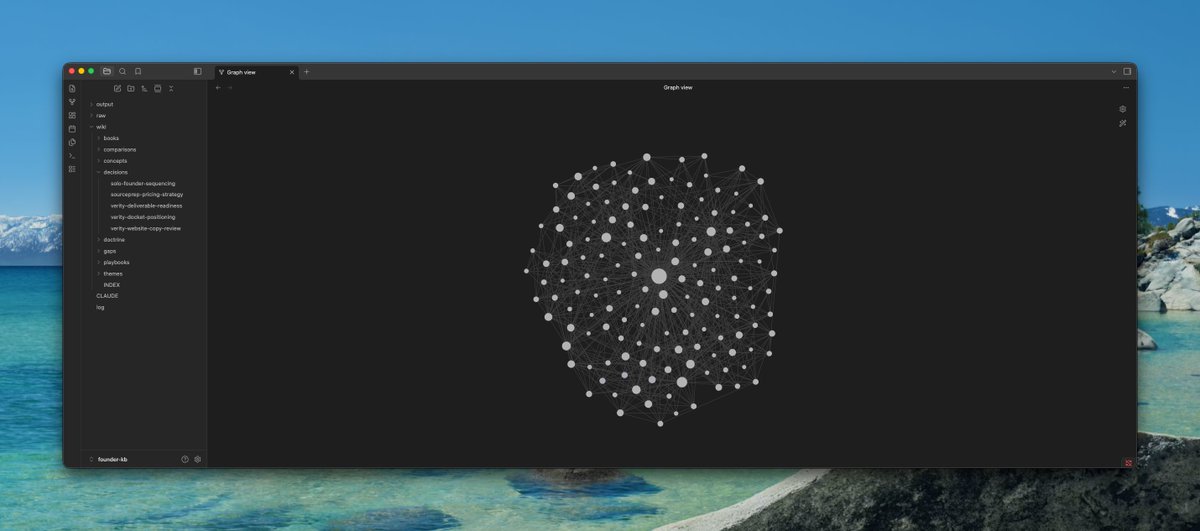
here's all 36 books. early overreaction: omg.
From claude: "This is what 36 books producing one coherent review looks like. No single framework would have caught the StoryBrand gap AND the UPL risk AND the copy-guideline violation AND the missing Cialdini principles AND the JTBD emotional dimension all at once. The wiki did."
For added context, the 2nd photo shows all 1,750+ raw chapter files as noise.

English

@trainable_nick @karpathy I think GUI still have place for most normal users.
Not everybody wants to burn tokens for this task
English

I built this a few months ago: one-more-epub-converter.com
It never showed up on any search engine. There are probably countless projects like it, sitting completely unnoticed and anonymous in the depths of the web.
I hope ASI will finally break the search hegemony for good. We need search approaches that are less biased, more open, and better at surfacing valuable work.
English