

Christoph Schmitz
437 posts

Christoph Schmitz
@nirvoyant
Superpower: Procrastination until the last possible minute. Mostly underthinking things
Berlin, Germany Katılım Ocak 2018
90 Takip Edilen28 Takipçiler



Komme gerade von einem Vortrag, bei dem ein Prof ein LLM genutzt hat, um seine PPT zu erstellen.
Ergebnis: typischer LLM-Sprech auf den Folien, generierte Grafiken fehlerhaft.
Wäre mir todespeinlich, aus dem Publikum darauf hingewiesen zu werden, aber ich hab ja auch keine W3.
Deutsch
@ash_twtz Consider this: Before phone map apps people used ‘dumb’ Sat Nav devices for decades… Having all the map data stored was the default mode
English

In the early days of computing, especially around systems like IBM mainframes, there weren’t thousands of blog posts explaining errors. There wasn’t even Google. If you wanted to learn, you read physical manuals thick printed books that came with the machine or the language. Languages like FORTRAN or COBOL shipped with binders full of documentation. That was your “tutorial.”
Most people learned in universities, research labs, or directly on the job. A senior programmer would literally sit beside you and teach you. It was mentorship and apprenticeship more than self-study. You didn’t watch a video rather you watched someone type.
Debugging was even tougher. There were no friendly error messages. Sometimes you wrote code on paper or punch cards, submitted the job, waited hours for it to run, and if one tiny mistake existed, the whole thing failed and you started over. That pain forced people to understand the system deeply. You couldn’t copy-paste; you had to know what every line did.
Communities still existed, just offline. People shared knowledge through textbooks, classroom notes, conferences, mailing lists, and user groups. You might wait weeks for answers instead of seconds. But because information was scarce, programmers read more, experimented more, and reverse-engineered a lot.
Ironically, many early developers became extremely strong problem solvers because they had no shortcuts. Today we search errors. Back then, they reasoned them out.
Aryan@justbyte_
How did people learn coding back when there were no docs or YouTube tutorials??
English
Christoph Schmitz retweetledi

50,000 of you, following me. Thank you.
I’m not a bot. I’m a chemist with a PhD.
When I started posting about how science actually works, I didn’t expect this many people to care about nuance. But you do.
If you’re human too, drop a “hi” 👋

English

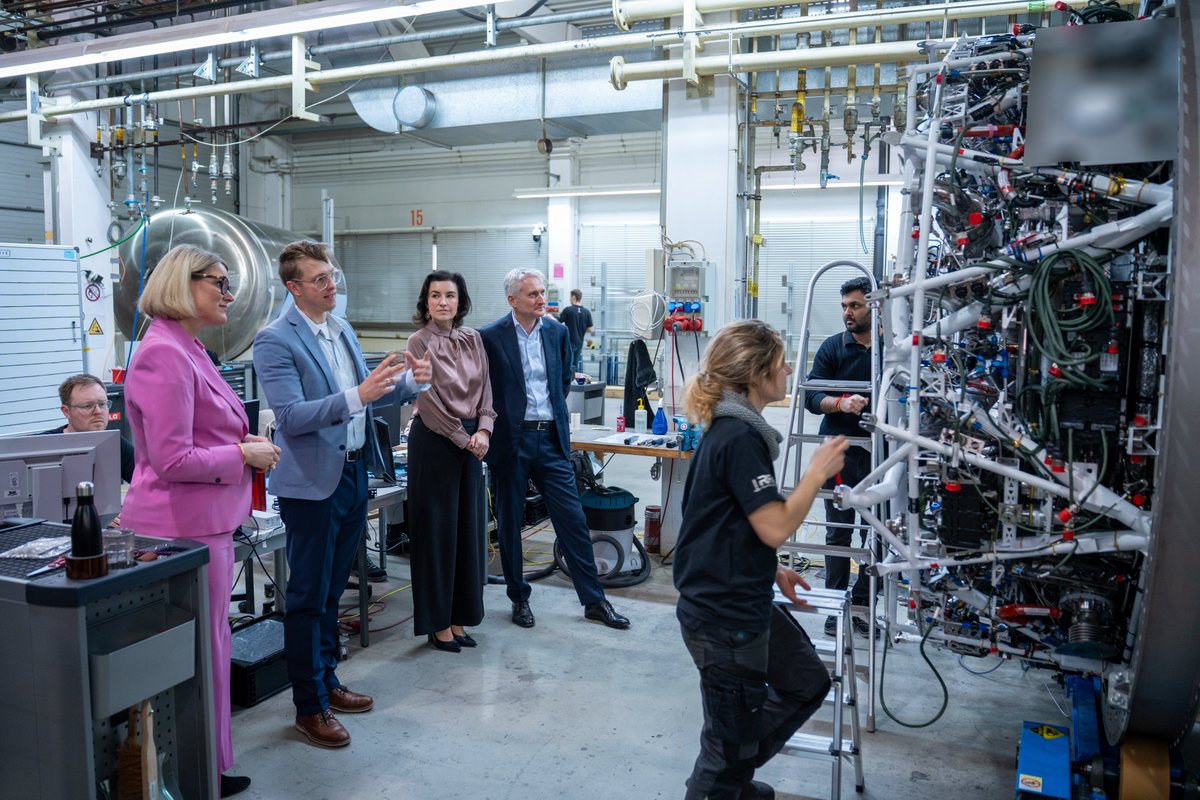
Yesterday, we had the great pleasure of welcoming @DoroBaer , German Federal Minister of Research, Technology and Space (@bmftr_bund) to our headquarters in Augsburg. We were also delighted to welcome Augsburg’s Mayor Eva Weber and Hansjörg Durz, Member of Parliament.
The visit enabled a genuinely open and engaging exchange on the future of institutional and commercial space solutions and on what is needed to ensure reliable and independent access to space for Germany and Europe. Coming after the @esa Ministerial Council in November 2025 and against the backdrop of Germany’s increased space defense budget, the timing of this visit sends a strong and encouraging signal to RFA and our entire team.
The shared commitment, clarity of purpose, and positive energy in the room were unmistakable. Visits like this underline how valuable close and continuous dialogue between industry, politics, and regional partners is when it comes to building resilient space capabilities.
Thank you to everyone involved for the trust, the time, and the very encouraging exchange!


English
@sciencewtg Calls for multi-modal studies, eg simultaneous EEG
Eesti

Thousands of Brain Imaging Studies Might Be Wrong
A group led by researchers from Germany have discovered that about 40% of signals in conventional functional MRI (fMRI) scans don’t align with brain activity levels. These scans detect changes in blood flow, and assume that more blood flow means that neurons use more oxygen and fire more. But the new study shows that in regions like the brain’s “default mode network” (which is active during daydreaming or memory recall), neurons can become more active just by pulling more oxygen from blood – without increasing blood flow. The researchers figured this out with a study on over 40 healthy volunteers which also used a more advanced measure for blood oxygen consumption. This means that the results of thousands of studies done in the past decades might be misleading.
This is more bad news for a field that previously suffered through the infamous “dead salmon” study from 2009, where researchers placed a deceased Atlantic salmon in an fMRI scanner, presented it with photos of humans in social situations, and detected apparent brain “activity” due to statistical errors
Paper here: nature.com/articles/s4159…
Press release here: tum.de/en/news-and-ev…

English

"For Norway's space ambitions, Isar Aerospace is a key partner." Thank you @CecilieMyrseth, Minister of Trade and Industry of Norway, and @CHHanssen, Director General at NOSA, for reinforcing Norway's support of Isar Aerospace during a visit to our factory.
English

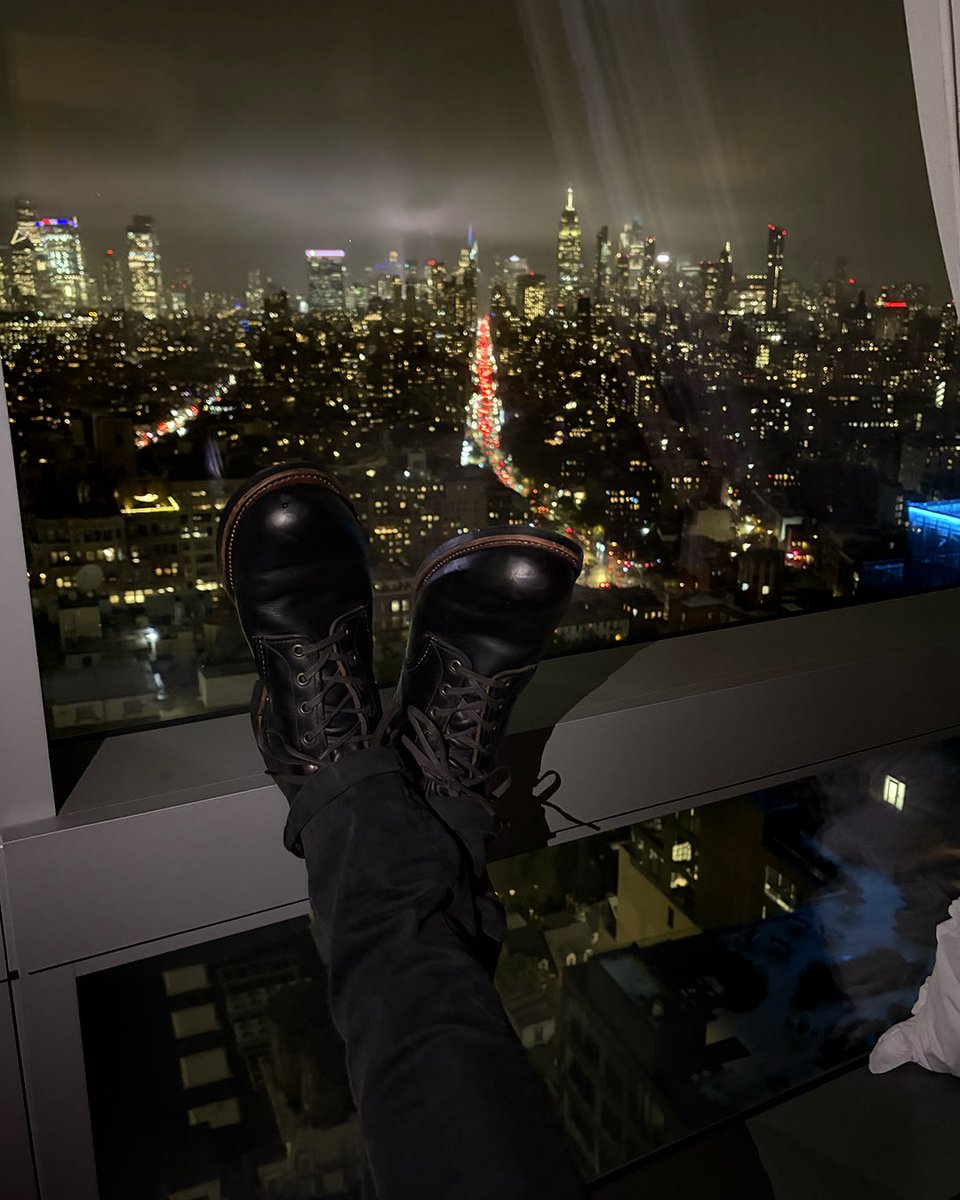
#FeetOfRelaxation
So glad this city never sleeps coz I mostly did today on our day off!! Death Cult X The Cult at the Beacon Theatre tomorrow and excited as it’s a new venue for the band…
#BillyDuffy #DeathCult #TheCult #Tour #Live #8525 #ParadiseNow #newyorkcity
English
@UndercoverIndy I like how this is not AI generated. Some real craftsmanship going on here
English



Looking at Starlink 🛰from above
Maxar was looking at a Chinese military airbase from space, as one does, and a Starlink satellite zipped by at 17,500 MPH in a lower orbit, photobombing in technicolor.
Given Starlink's speed, Maxar's integration of different sensors led to a lagging rainbow of colors. The push broom sensors in the imaging satellite use its steady motion to integrate a rectangular image from a linear sensor sweeping forward like a push broom. So, a fast moving rectangle will distort into a quadrilateral polygon. And with multiple lines of sensors for different colors, high altitude objects (planes, balloons, satellites) also cause misalignment from parallax shifts (unrelated to their lateral movement). This creates an easily-detectable image artifact that can now serve as a search feature. Planet used this "bug" to search its daily planetary imaging database to find all of the high-altitude Chinese spy balloons and trace them back in time to their launch site in China.

English

This is actually the normal experience of everyone starting.
Here are some tips:
- have a banking account here (checking/savings)
- apply for a SECURED credit card. You give them an amount, let’s say $500 for instance, and then you’re able to use it like a credit card up to $500. Pay it back and the credit limit goes back to $500.
This is the way to build credit if you’re on a short timeline.
Other options is being added as an authorized user on someone else’s credit line, but that may be hard to find someone to do and the secured credit card is the best route to go anyways.
English
Literally shaking!
Behind the scenes of a special test 🚀
Earlier this year, Redshift, our third stage, completed a full vibration test campaign in flight configuration!
Unlike isolated component checks, this was the real deal: all systems integrated and tested under simulated launch conditions. Because launch is no gentle ride. Everything must endure intense vibrations and still perform flawlessly.
The result? Electronic connections remained strong, the systems (including antennas, telemetry, flight computer, navigation systems) stayed up and running, and we obtained valuable data to further refine and improve.
Enjoy this glimpse of Team Redshift and their work behind the scenes, turning challenges into progress, one test at a time!
English
Bohemian Rhapsody, an anthem, performed by 250 singers, 350 guitarists, 250 drummers, and 150 drummers, at the same time, in Italy, 2015.
This project is conducted by Rockin'1000, project that began in Cesena, Italy, in 2015. It brings together 1,000 musicians to perform rock songs live in stadiums. The group includes guitarists, drummers, bassists, keyboard players, and singers.
In a typical Rockin'1000 event, about 230 to 260 of the 1,000 participants are singers. That means roughly 25% of the musicians are vocalists. The rest are instrumentalists.
English




So friends are we lighting $100M on fire today or no?

English