Nisal Mihiranga

1.5K posts

Nisal Mihiranga banner
Nisal Mihiranga

Nisal Mihiranga

@nisalm

Associate Vice President - Data & AI @TechOneGlobal , Microsoft MVP (AI)

Sri Lanka Katılım Ağustos 2009
1.2K Takip Edilen440 Takipçiler
Nisal Mihiranga retweetledi
HustleBitch
HustleBitch@HustleBitch_·
🚨 TOURIST CAN’T BELIEVE WHAT HAPPENS WHEN HE TRIES TO BUY FLIP FLOPS IN SRI LANKA A tourist walked into a small shop in Sri Lanka thinking he was just buying a pair of flip flops. First they had him place his foot on a sizing board to match the exact outline. Then he spun a wheel to pick the style, chose the sole, and selected the straps. Next thing he knows… they’re building the entire pair right there in front of him. Custom sandals made in minutes while he watches. Now the video is going viral because people didn’t even know stores like this existed. Would you buy flip flops made right in front of you?
English
477
3.1K
27.8K
5.8M
Nisal Mihiranga retweetledi
🚨Indian Gems
🚨Indian Gems@IndianGems_·
Guys, this is Colombo. Imagine they can still deliver this level of infra even after bankruptcy. I am yet to see a clean, green city like this in India.
English
460
1.1K
9.5K
579.1K
Nisal Mihiranga retweetledi
Massimo
Massimo@Rainmaker1973·
Marula Eugster Rigolo left the judges speechless on Italy’s Got Talent with her breathtaking balance performance
English
163
1.4K
6.2K
621.7K
Nisal Mihiranga retweetledi
Andrej Karpathy
Andrej Karpathy@karpathy·
My pleasure to come on Dwarkesh last week, I thought the questions and conversation were really good. I re-watched the pod just now too. First of all, yes I know, and I'm sorry that I speak so fast :). It's to my detriment because sometimes my speaking thread out-executes my thinking thread, so I think I botched a few explanations due to that, and sometimes I was also nervous that I'm going too much on a tangent or too deep into something relatively spurious. Anyway, a few notes/pointers: AGI timelines. My comments on AGI timelines looks to be the most trending part of the early response. This is the "decade of agents" is a reference to this earlier tweet x.com/karpathy/statu… Basically my AI timelines are about 5-10X pessimistic w.r.t. what you'll find in your neighborhood SF AI house party or on your twitter timeline, but still quite optimistic w.r.t. a rising tide of AI deniers and skeptics. The apparent conflict is not: imo we simultaneously 1) saw a huge amount of progress in recent years with LLMs while 2) there is still a lot of work remaining (grunt work, integration work, sensors and actuators to the physical world, societal work, safety and security work (jailbreaks, poisoning, etc.)) and also research to get done before we have an entity that you'd prefer to hire over a person for an arbitrary job in the world. I think that overall, 10 years should otherwise be a very bullish timeline for AGI, it's only in contrast to present hype that it doesn't feel that way. Animals vs Ghosts. My earlier writeup on Sutton's podcast x.com/karpathy/statu… . I am suspicious that there is a single simple algorithm you can let loose on the world and it learns everything from scratch. If someone builds such a thing, I will be wrong and it will be the most incredible breakthrough in AI. In my mind, animals are not an example of this at all - they are prepackaged with a ton of intelligence by evolution and the learning they do is quite minimal overall (example: Zebra at birth). Putting our engineering hats on, we're not going to redo evolution. But with LLMs we have stumbled by an alternative approach to "prepackage" a ton of intelligence in a neural network - not by evolution, but by predicting the next token over the internet. This approach leads to a different kind of entity in the intelligence space. Distinct from animals, more like ghosts or spirits. But we can (and should) make them more animal like over time and in some ways that's what a lot of frontier work is about. On RL. I've critiqued RL a few times already, e.g. x.com/karpathy/statu… . First, you're "sucking supervision through a straw", so I think the signal/flop is very bad. RL is also very noisy because a completion might have lots of errors that might get encourages (if you happen to stumble to the right answer), and conversely brilliant insight tokens that might get discouraged (if you happen to screw up later). Process supervision and LLM judges have issues too. I think we'll see alternative learning paradigms. I am long "agentic interaction" but short "reinforcement learning" x.com/karpathy/statu…. I've seen a number of papers pop up recently that are imo barking up the right tree along the lines of what I called "system prompt learning" x.com/karpathy/statu… , but I think there is also a gap between ideas on arxiv and actual, at scale implementation at an LLM frontier lab that works in a general way. I am overall quite optimistic that we'll see good progress on this dimension of remaining work quite soon, and e.g. I'd even say ChatGPT memory and so on are primordial deployed examples of new learning paradigms. Cognitive core. My earlier post on "cognitive core": x.com/karpathy/statu… , the idea of stripping down LLMs, of making it harder for them to memorize, or actively stripping away their memory, to make them better at generalization. Otherwise they lean too hard on what they've memorized. Humans can't memorize so easily, which now looks more like a feature than a bug by contrast. Maybe the inability to memorize is a kind of regularization. Also my post from a while back on how the trend in model size is "backwards" and why "the models have to first get larger before they can get smaller" x.com/karpathy/statu… Time travel to Yann LeCun 1989. This is the post that I did a very hasty/bad job of describing on the pod: x.com/karpathy/statu… . Basically - how much could you improve Yann LeCun's results with the knowledge of 33 years of algorithmic progress? How constrained were the results by each of algorithms, data, and compute? Case study there of. nanochat. My end-to-end implementation of the ChatGPT training/inference pipeline (the bare essentials) x.com/karpathy/statu… On LLM agents. My critique of the industry is more in overshooting the tooling w.r.t. present capability. I live in what I view as an intermediate world where I want to collaborate with LLMs and where our pros/cons are matched up. The industry lives in a future where fully autonomous entities collaborate in parallel to write all the code and humans are useless. For example, I don't want an Agent that goes off for 20 minutes and comes back with 1,000 lines of code. I certainly don't feel ready to supervise a team of 10 of them. I'd like to go in chunks that I can keep in my head, where an LLM explains the code that it is writing. I'd like it to prove to me that what it did is correct, I want it to pull the API docs and show me that it used things correctly. I want it to make fewer assumptions and ask/collaborate with me when not sure about something. I want to learn along the way and become better as a programmer, not just get served mountains of code that I'm told works. I just think the tools should be more realistic w.r.t. their capability and how they fit into the industry today, and I fear that if this isn't done well we might end up with mountains of slop accumulating across software, and an increase in vulnerabilities, security breaches and etc. x.com/karpathy/statu… Job automation. How the radiologists are doing great x.com/karpathy/statu… and what jobs are more susceptible to automation and why. Physics. Children should learn physics in early education not because they go on to do physics, but because it is the subject that best boots up a brain. Physicists are the intellectual embryonic stem cell x.com/karpathy/statu… I have a longer post that has been half-written in my drafts for ~year, which I hope to finish soon. Thanks again Dwarkesh for having me over!
Dwarkesh Patel@dwarkesh_sp

The @karpathy interview 0:00:00 – AGI is still a decade away 0:30:33 – LLM cognitive deficits 0:40:53 – RL is terrible 0:50:26 – How do humans learn? 1:07:13 – AGI will blend into 2% GDP growth 1:18:24 – ASI 1:33:38 – Evolution of intelligence & culture 1:43:43 - Why self driving took so long 1:57:08 - Future of education Look up Dwarkesh Podcast on YouTube, Apple Podcasts, Spotify, etc. Enjoy!

English
577
2K
16.9K
4.1M
Nisal Mihiranga retweetledi
pratham
pratham@prathammittal·
This is the capital allocation framework to stay on top of your game: - Sustained innovation (70%) - Exploring adjacencies (20%) - Building new paradigms (10%) The percentage isn't a hard cap. It's a rule of thumb for those who think in decades, not quarters.
English
1
1
4
159
Nisal Mihiranga retweetledi
Elon Musk
Elon Musk@elonmusk·
Due to laws against data export, Tesla achieved the top results in China despite having no local training data. Tesla is adding training data from our world simulator and test tracks to achieve 6/6.
Sawyer Merritt@SawyerMerritt

NEWS: Chinese media tested ADAS in various scenarios, including highways & night driving. @Tesla’s vision-based system outperformed emerging Chinese brands like Huawei & Xiaomi, as well as traditional automakers. Even with LiDAR, competitors’ ADAS performance lags behind Tesla. Rankings Top Performers: • Tesla Model 3 (RWD Refreshed) – 5/6 • Tesla Model X (2023 LR Refreshed) – 5/6 • Xpeng G6 – 3/6 • Wenjie M9 – 3/6 • Zhijle R7 – 3/6 • BYD Z9GT EV – 3/6 Mid-Tier: • Aion RT (2025) – 2/6 • Platinum 3X – 2/6 • Avita 12 – 2/6 • Wenjie M7 – 2/5 • Avita 07 – 2/5 Low Performers: • Ideal L6 – 1/6 • Xiaomi SU7 – 1/5 • Wenjie M8 – 1/5 • QinLDM – 1/5 • iCAR V23 – 1/5 • Xiaomi SU7 Ultra (2025) – 1/4 • BYD Seagull – 1/4 • NIO ES6 – 1/4 Failed All Tests (0 Passes): • Zeekr 001 (2025 YOU Edition) – 0/6 • Baojun Enjoy PHEV – 0/6 • Lynk & Co – 0/6 • Han LEV – 0/5 • Zero runing C10 – 0/5 • PASSAT – 0/5 • GAC Honda P7 – 0/5 • Zeekr 7X (2025 100kWh) – 0/5 • Xpeng P7+ – 0/4 • Song Pro DM – 0/4 • Letao L60 – 0/4 • Star Era ET – 0/4 • Firefly – 0/4 Full 1.5 hour video in thread below:

English
5.2K
9.2K
74.7K
22M
Nisal Mihiranga retweetledi
Elon Musk
Elon Musk@elonmusk·
230k GPUs, including 30k GB200s, are operational for training Grok @xAI in a single supercluster called Colossus 1 (inference is done by our cloud providers). At Colossus 2, the first batch of 550k GB200s & GB300s, also for training, start going online in a few weeks. As Jensen Huang has stated, @xAI is unmatched in speed. It’s not even close.
ALEX@ajtourville

Nvidia CEO Jensen Huang on Elon Musk and @xAI “Never been done before – xAI did in 19 days what everyone else needs one year to accomplish. That is superhuman – There's only one person in the world who could do that – Elon Musk is singular in his understanding of engineering.”

English
6.5K
9.7K
70.9K
15.1M
Nisal Mihiranga retweetledi
Elon Musk
Elon Musk@elonmusk·
ZXX
7.9K
24.6K
260.8K
99.9M
Nisal Mihiranga retweetledi
Victoria Slocum
Victoria Slocum@victorialslocum·
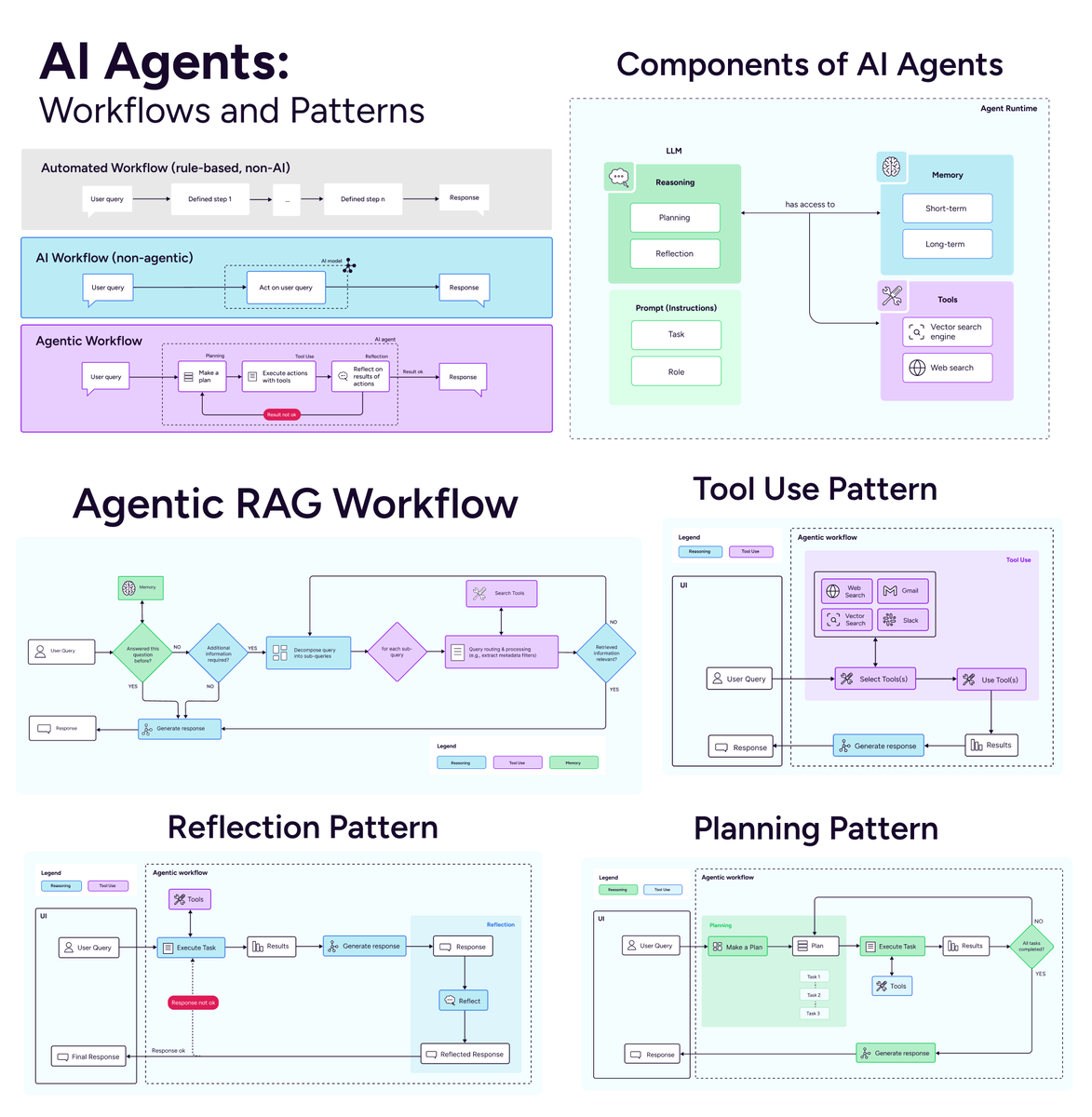
What's the difference between *just* AI and truly 𝗮𝗴𝗲𝗻𝘁𝗶𝗰 𝘄𝗼𝗿𝗸𝗳𝗹𝗼𝘄𝘀? (And why does it even matter?) There's a lot of debate on what makes something an "agent" versus just another AI application. The key difference? 𝗦𝘁𝗮𝘁𝗶𝗰 𝗔𝗜 𝗺𝗼𝗱𝗲𝗹𝘀 𝘃𝘀. 𝗗𝘆𝗻𝗮𝗺𝗶𝗰 𝗔𝗜 𝗮𝗴𝗲𝗻𝘁𝘀 In a non-agentic workflow, you might prompt an LLM to summarize text, and it simply returns the summary. But in an agentic workflow, the agent actively: 1️⃣ 𝗠𝗮𝗸𝗲𝘀 𝗮 𝗽𝗹𝗮𝗻 - Breaking down complex tasks into smaller subtasks through task decomposition 2️⃣ 𝗘𝘅𝗲𝗰𝘂𝘁𝗲𝘀 𝗮𝗰𝘁𝗶𝗼𝗻𝘀 𝘄𝗶𝘁𝗵 𝘁𝗼𝗼𝗹𝘀 - Using predefined tools paired with permissions to accomplish tasks 3️⃣ 𝗥𝗲𝗳𝗹𝗲𝗰𝘁𝘀 𝗮𝗻𝗱 𝗮𝗱𝗮𝗽𝘁𝘀 - Assessing results, adjusting the plan if needed, and looping back until the correct outcome is reached 𝘛𝘩𝘪𝘴 𝘪𝘴 𝘸𝘩𝘺 𝘢𝘨𝘦𝘯𝘵𝘪𝘤 𝘸𝘰𝘳𝘬𝘧𝘭𝘰𝘸𝘴 𝘢𝘳𝘦 𝘸𝘢𝘺 𝘣𝘦𝘵𝘵𝘦𝘳 𝘧𝘰𝘳 𝘤𝘰𝘮𝘱𝘭𝘦𝘹 𝘵𝘢𝘴𝘬𝘴 𝘸𝘩𝘦𝘳𝘦 𝘤𝘰𝘯𝘥𝘪𝘵𝘪𝘰𝘯𝘴 𝘮𝘪𝘨𝘩𝘵 𝘤𝘩𝘢𝘯𝘨𝘦 𝘰𝘳 𝘮𝘶𝘭𝘵𝘪𝘱𝘭𝘦 𝘴𝘵𝘦𝘱𝘴 𝘰𝘧 𝘳𝘦𝘢𝘴𝘰𝘯𝘪𝘯𝘨 𝘢𝘳𝘦 𝘳𝘦𝘲𝘶𝘪𝘳𝘦𝘥. 𝗧𝗵𝗲 𝗖𝗼𝗿𝗲 𝗖𝗼𝗺𝗽𝗼𝗻𝗲𝗻𝘁𝘀 🧠 𝗥𝗲𝗮𝘀𝗼𝗻𝗶𝗻𝗴: This is what allows agents to "think" throughout the problem-solving process. 🛠️ 𝗧𝗼𝗼𝗹𝘀: Tools allows agents to access external sources, perform actions, and retrieve real-time information. 💾 𝗠𝗲𝗺𝗼𝗿𝘆:Agents have the ability to learn from experiences and remember context, using both short-term and long-term memory. 𝗧𝗵𝗿𝗲𝗲 𝗞𝗲𝘆 𝗣𝗮𝘁𝘁𝗲𝗿𝗻𝘀 𝗶𝗻 𝗔𝗴𝗲𝗻𝘁𝗶𝗰 𝗪𝗼𝗿𝗸𝗳𝗹𝗼𝘄𝘀 𝟭. 𝗣𝗹𝗮𝗻𝗻𝗶𝗻𝗴 𝗣𝗮𝘁𝘁𝗲𝗿𝗻 The planning pattern allows agents to autonomously break down complex tasks into smaller, simpler steps . This reduces the cognitive load on the LLM, improves reasoning, and minimizes hallucinations . 𝟮. 𝗧𝗼𝗼𝗹 𝗨𝘀𝗲 𝗣𝗮𝘁𝘁𝗲𝗿𝗻 Tool use expands an agent's capabilities by allowing it to interact with external resources, applications, and computational tools. This pattern is what allows agents to overcome the limitations of static knowledge and interact with the real world in meaningful ways. 𝟯. 𝗥𝗲𝗳𝗹𝗲𝗰𝘁𝗶𝗼𝗻 𝗣𝗮𝘁𝘁𝗲𝗿𝗻: Reflection is a self-feedback mechanism where an agent evaluates the quality of its outputs or decisions before finalizing a response Read more in this blog: weaviate.io/blog/what-are-…
Victoria Slocum tweet media
English
29
331
1.8K
210.5K
Andrej Karpathy
Andrej Karpathy@karpathy·
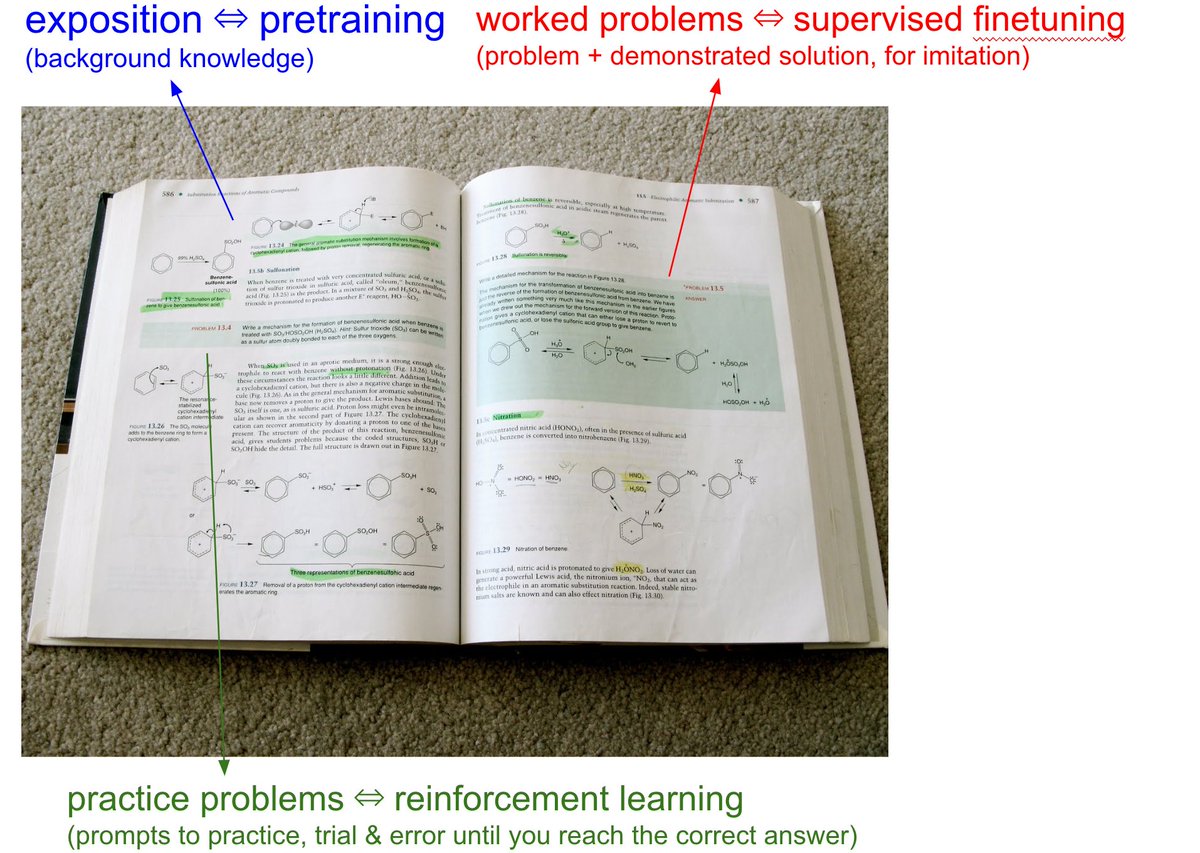
We have to take the LLMs to school. When you open any textbook, you'll see three major types of information: 1. Background information / exposition. The meat of the textbook that explains concepts. As you attend over it, your brain is training on that data. This is equivalent to pretraining, where the model is reading the internet and accumulating background knowledge. 2. Worked problems with solutions. These are concrete examples of how an expert solves problems. They are demonstrations to be imitated. This is equivalent to supervised finetuning, where the model is finetuning on "ideal responses" for an Assistant, written by humans. 3. Practice problems. These are prompts to the student, usually without the solution, but always with the final answer. There are usually many, many of these at the end of each chapter. They are prompting the student to learn by trial & error - they have to try a bunch of stuff to get to the right answer. This is equivalent to reinforcement learning. We've subjected LLMs to a ton of 1 and 2, but 3 is a nascent, emerging frontier. When we're creating datasets for LLMs, it's no different from writing textbooks for them, with these 3 types of data. They have to read, and they have to practice.
Andrej Karpathy tweet media
English
386
1.8K
11.8K
695K
Nisal Mihiranga retweetledi
Tucker Carlson
Tucker Carlson@TuckerCarlson·
Chamath Palihapitiya on the emptiness of Silicon Valley, the future of technology and the promise of the new Trump Administration. (0:00) The War Machine Takeover (3:22) Chamath’s Dark Passenger (19:47) The Emptiness of Silicon Valley Elites (27:06) Is the US at Risk of Losing Its Place as Leader of the Free World? (33:15) The Traps That Kill American Ingenuity (44:19) The Climate Agenda vs. Artificial Intelligence (59:34) Is There an Existing Healthcare System That Actually Works? (1:13:41) Origins of the All-In Podcast (1:20:57) How Chamath Changed Silicon Valley’s Perception of Donald Trump (1:41:40) Reacting to Mark Zuckerberg’s Joe Rogan Appearance (1:46:18) Elon Musk’s Role in the Trump Administration (1:56:34) Silicon Valley Needs God Includes paid partnerships.
English
1.1K
3.6K
16.1K
5.2M
Nisal Mihiranga retweetledi
Shital Shah
Shital Shah@sytelus·
We have been completely amazed by the response to phi-4 release. A lot of folks had been asking us for weight release. Few even uploaded bootlegged phi-4 weights on HuggingFace😬. Well, wait no more. We are releasing today official phi-4 model on HuggingFace! With MIT licence!!
Shital Shah tweet media
English
34
96
822
66.2K
Nisal Mihiranga retweetledi
Bojan Tunguz
Bojan Tunguz@tunguz·
Bojan Tunguz tweet media
ZXX
106
650
6.4K
463.1K
Nisal Mihiranga
Nisal Mihiranga@nisalm·
It will require a combined effort involving energy-efficient chips, optimized model architectures, algorithms, and a transition to renewable and low-carbon energy sources like nuclear energy. linkedin.com/posts/bgamazay…
English
0
0
0
51