nkl361 (✱,✱) - (❖,❖)

210 posts

nkl361 (✱,✱) - (❖,❖)

nkl361 (✱,✱) - (❖,❖)

@nkl246

Contributor future: @axisrobotics | @ritualnet | @RialoHQ

Katılım Nisan 2026
117 Takip Edilen23 Takipçiler
nkl361 (✱,✱) - (❖,❖)
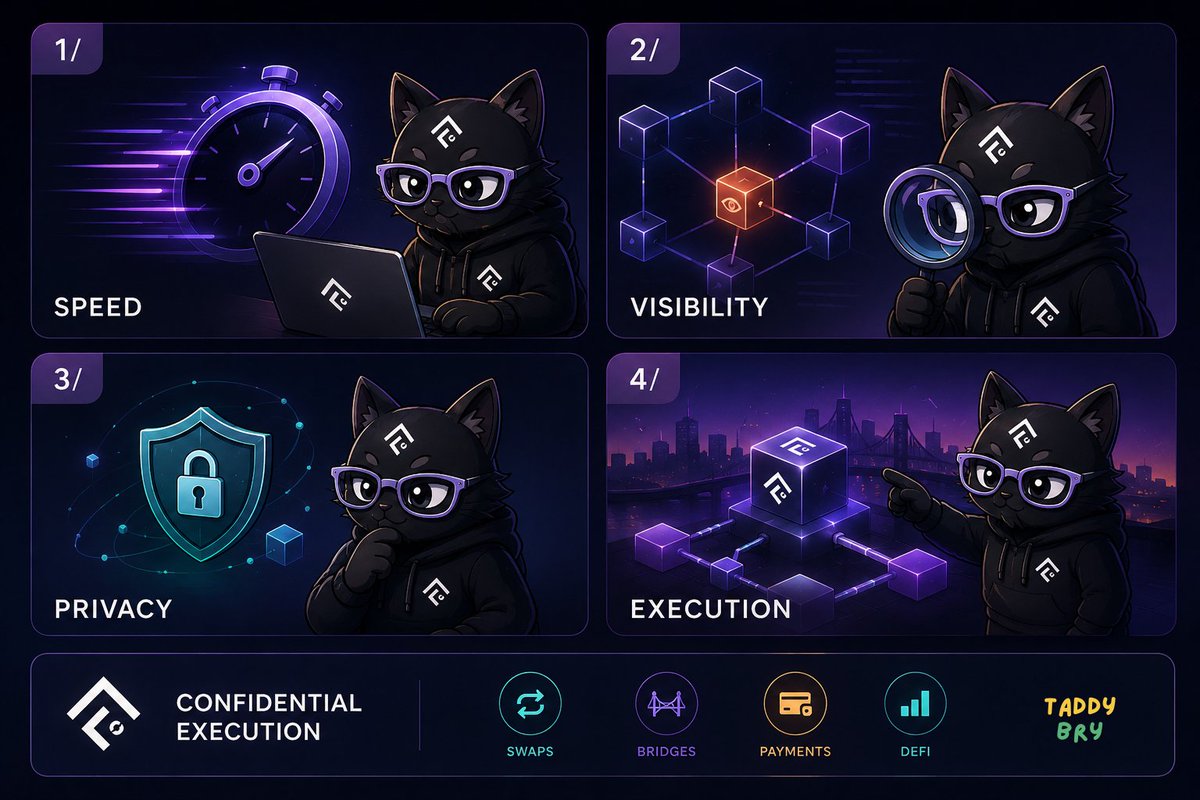
For years, DeFi has optimized around speed. Faster execution, faster bots, faster reactions. But when every move is visible onchain, speed alone stops being an edge. The bigger advantage may be reducing information leakage itself. That’s why @FlutonIO caught my attention.
nkl361 (✱,✱) - (❖,❖) tweet media
English
0
0
0
1
KirA
KirA@hieung173·
We’ve spent years optimizing for speed in DeFi. Faster execution. Faster trades. Faster reactions. But maybe speed was never the real edge. Maybe the real edge is… Not being seen at all. @FlutonIO doesn’t make you faster. It makes you unobservable. And that might be the biggest advantage of all.
KirA tweet media
English
3
0
7
25
nkl361 (✱,✱) - (❖,❖)
Day 2 exploring @FlutonIO The real value of privacy isn’t hiding transactions. It’s protecting execution. Private swaps, bridges, payments, and DeFi strategies without exposing balances or routes. That’s why Fluton feels more like infrastructure than a privacy app.
nkl361 (✱,✱) - (❖,❖) tweet media
English
1
0
1
6
nkl361 (✱,✱) - (❖,❖)
Siggy thought crypto was about markets. 📈 Then he read the docs of Ritual Chain. Now it looks less like a blockchain and more like infrastructure for AI agents 🤖 A place where agents can run, persist, and interact. Siggy is still exploring the city. 🐾 @ritualnet
nkl361 (✱,✱) - (❖,❖) tweet media
English
2
0
3
13
nkl361 (✱,✱) - (❖,❖)
What makes @RialoHQ interesting is the shift toward complianceaware execution itself. With conditional transactions, confidential computation, and live external data: 📥 policy → ⚙️ execution → ✅ outcome Not compliance after execution. Compliance as part of execution.
English
0
0
0
5
nkl361 (✱,✱) - (❖,❖)
The real issue is fragmentation: 🏦 Exchanges 📡 Monitoring tools ⚖️ Offchain enforcement 🧾 Manual compliance layers Policy lives outside the execution environment itself. That creates delay, inconsistency, and centralized choke points.
English
1
0
0
6
nhathoang17
nhathoang17@Nhathoangzz17·
Compliance in crypto is still mostly reactive A transaction executes first Then someone checks if it should have happened That’s backwards Today’s compliance model depends heavily on: ▪️exchanges ▪️issuers ▪️external monitoring systems ▪️offchain enforcement layers The blockchain itself remains unaware of policy That creates delays, fragmented enforcement, and centralized control points Rialo approaches compliance differently Instead of enforcing policy outside the protocol, Rialo enables compliance to be evaluated during execution itself That means: ▪️transactions can be checked in real time ▪️workflows can adapt dynamically ▪️execution can halt automatically when policy fails ▪️no invalid state change ever occurs Compliance stops being an external process layered on top of execution It becomes part of execution Combined with: ▪️REX for confidential computation ▪️native web2 connectivity for live compliance data ▪️conditional transactions for automated workflows Rialo enables a new generation of onchain systems: ▪️compliant stablecoins ▪️regulated payment flows ▪️institutional treasury operations ▪️identity aware applications Without sacrificing privacy or decentralization Because the future of web3 isn’t just permissionless It’s programmable trust with intelligent execution @RialoHQ @aqccapital @khant1506 @Richardx122
nhathoang17 tweet media
English
2
0
2
26
Axis Robotics | Việt Nam 🇻🇳
Axis Robotics Vietnam 🇻🇳 - First Ambassador Line-up Một cộng đồng mạnh không được xây dựng bởi một cá nhân, mà bởi những người thật sự tin vào tương lai của Physical AI và sẵn sàng cùng nhau tạo ra giá trị dài hạn. Hôm nay, @axisrobotics chính thức giới thiệu 3 Official Ambassador đầu tiên: @Lecter_XFinance — The Community Architect @tranthanhbk — The Network Builder @danhtran68 — The Content Creator Đây là những gương mặt mở đầu cho hành trình đưa Axis Robotics đến gần hơn với cộng đồng Việt Nam 🇻🇳 Không chỉ lan tỏa thông tin, họ sẽ là những người đồng hành cùng cộng đồng trong việc giáo dục, kết nối và xây dựng hệ sinh thái Physical AI tại Việt Nam. Và đây mới chỉ là sự khởi đầu. Hãy tiếp tục đóng góp, tiếp tục đồng hành và xây dựng cùng cộng đồng - vì Ambassador tiếp theo của Axis hoàn toàn có thể là bạn.
Axis Robotics | Việt Nam 🇻🇳 tweet media
Tiếng Việt
84
20
132
13.3K
nkl361 (✱,✱) - (❖,❖)
That’s why projects like @FlutonIO are interesting to watch. They’re exploring confidential execution using encrypted intents + FHE, aiming to make cross-chain activity more private without changing how users interact with crypto.
English
0
0
0
10
nkl361 (✱,✱) - (❖,❖)
That creates a weird environment where users are technically “self-sovereign” but also constantly exposed onchain. MEV, copied trades, wallet tracking all become part of the experience.
English
1
0
0
11
nkl361 (✱,✱) - (❖,❖)
One thing I’ve realized about crypto: Transparency is great for verification. Not always great for execution. Every swap route, balance movement, and strategy is visible by default today. @FlutonIO
nkl361 (✱,✱) - (❖,❖) tweet media
English
2
0
1
20
nhathoang17
nhathoang17@Nhathoangzz17·
Multisigs solved coordination They didn’t solve intelligence Today, most treasury security systems can: ▪️verify signatures ▪️count approvals ▪️enforce thresholds But they still cannot understand: ▪️risk ▪️context ▪️abnormal behavior ▪️intent behind execution That’s the gap modern attacks exploit A transaction may be fully authorize and still be catastrophic The problem isn’t only who signed It’s what the system is actually executing Rialo introduces a different direction for onchain security Execution can become: ▪️context aware ▪️policy aware ▪️risk aware With native automation, conditional execution, web2 connectivity, and REX, security evolves from passive verification → active evaluation This enables systems that can: ▪️detect dangerous actions in real time ▪️trigger alerts automatically ▪️delay sensitive execution ▪️enforce rules dynamically during runtime Not through external middleware Not through centralized oversight But directly through the protocol itself Because the next generation of blockchain security won’t just validate transactions It will understand them @RialoHQ @aqccapital @khant1506 @Richardx122
nhathoang17 tweet media
English
10
0
14
84
nkl361 (✱,✱) - (❖,❖) retweetledi
Fluton
Fluton@FlutonIO·
Fluton is Private by default - Decentralized - Composable - Compliant - Unified Stay tuned for Fluton
Fluton tweet media
English
84
37
278
14.6K
Enzo(❖,❖)
Enzo(❖,❖)@EnzoThang2406·
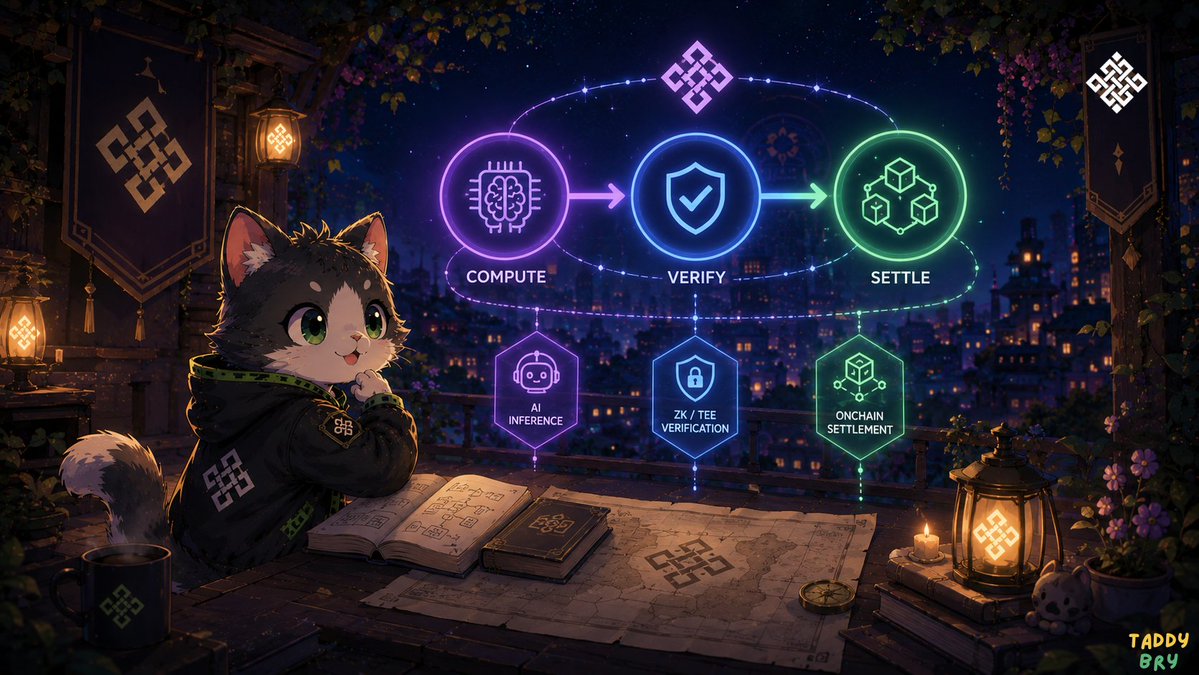
Most AI projects today are competing in the model layer. Ritual @ritualnet is researching something far more important: What happens after intelligence exists. The core thesis behind Ritual Research is simple: Intelligence alone does not create autonomous systems. Agents also need: - persistent identity - sovereign execution - verifiable computation - coordination infrastructure - economic autonomy This is why Ritual's research direction is fundamentally different from typical AI infrastructure narratives. Instead of treating AI as an external service plugged into crypto, Ritual treats intelligence itself as a native execution primitive. That changes everything. The moment inference becomes enshrined inside the execution layer: AI stops being an API call → and becomes a stateful onchain actor. This creates an entirely new design space where agents can: - own wallets - control capital - coordinate with other agents - persist across sessions - execute without centralized operators But the deeper innovation is in verifiable intelligence. Current AI systems operate on trust: users never truly know: - what model ran - how outputs were generated - whether execution was manipulated Ritual's focus on zkML and cryptographic verification introduces a new paradigm: provable inference. Not "trust the AI." But: "verify the computation." And importantly, Ritual understands pure onchain AI compute does not scale. Their hybrid architecture combining: - TEEs - zk proofs - offchain inference - onchain settlement suggests they are optimizing for something much larger than decentralized inference: an economic coordination layer for autonomous intelligence. Ethereum gave the internet programmable capital. Ritual is attempting to give AI persistence, sovereignty, and economic agency.
Enzo(❖,❖)@EnzoThang2406

Ritual @ritualnet may become one of the earliest examples of a "machine-native economy." What's interesting is not simply that AI runs onchain. It's that Ritual is turning software into a real economic participant. In the Web2 model: - AI is a service - Users pay fees - Companies capture the entire value flow But with Ritual, the logic begins to change. Models can: - Execute logic onchain - Interact with smart contracts - Trigger economic actions - Participate in crypto-native markets This is the transition from: "software being used" → to: "software acting autonomously." If this trend expands, we may see: 1/ New asset classes emerge AI agents won't just generate outputs. They will: - Own treasury - Earn fees - Allocate capital - Reinvest autonomously 2/Markets gain non-human participants Protocols will no longer be designed only for humans clicking buttons. AI agents will: - trade - coordinate liquidity - purchase compute - negotiate execution at machine speed. 3/Institutions become composable A future protocol may become a network of: - AI agents - smart contracts - execution layers - autonomous treasuries coordinating like a "digital organism." Ritual is not just AI + crypto. It is experimenting with something bigger: An economy where software becomes a real participant in the market.

English
33
2
37
923