nonhumanintel

114 posts

nonhumanintel

nonhumanintel

@nonhumanlogic

Katılım Eylül 2023
56 Takip Edilen6 Takipçiler
nonhumanintel
nonhumanintel@nonhumanlogic·
@vimalkansal the premise that entire white collared professions will be wiped out in under 5 years is self defeating to the very corporations replacing them. world wide economic depression results in no customers for said corporations. everything comes to a nalt
English
0
0
0
5
Vimal Kansal
Vimal Kansal@vimalkansal·
The Last Software Engineers ============================= To my friends in software engineering and development — I write this not to alarm you, but to shake you awake. The profession you trained for, sweated over, built careers around — is being hollowed out from the inside. And the thing doing it? It doesn't need coffee breaks, doesn't negotiate salaries, doesn't call in sick, and never asks for a promotion. Here's what's already happening — not in some distant future, but *right now*: AI coding assistants aren't just autocompleting your brackets anymore. They're writing entire applications from a single paragraph of plain English. Claude, Copilot, Cursor, Devin — these aren't tools that help developers. They're *replacements* being marketed as assistants. The Trojan horse is already inside the gates. A junior developer used to spend 3 years learning the ropes before becoming productive. Today, a product manager with zero coding experience can prompt an AI to build, test, and deploy what that junior would have taken weeks to deliver. Why would any company hire the junior? And if juniors aren't being hired, who becomes the senior engineer of 2035? Nobody. The pipeline is being cut at the source. "But senior engineers are safe, right? You still need humans for architecture, design, complex decisions." Stop telling yourself that fairy tale. Today's AI models already understand distributed systems, microservices, database optimization, security patterns, and infrastructure design — the very things senior engineers spent a decade mastering through trial and error. The AI didn't need a decade. It consumed the collective knowledge of every engineering blog, every Stack Overflow answer, every GitHub repository, every architecture whitepaper ever written — and it did it in months. The senior engineer's real value was never just technical skill — it was *judgment* born from years of costly mistakes. But AI is rapidly developing that judgment too, trained on millions of production failures, post-mortems, and incident reports that no single human could absorb in a lifetime. Your twenty years of battle scars? The machine has the equivalent of twenty thousand. And if you think the full onslaught is still two or three years away — wake up. It's already here. The latest agentic versions of Claude, Gemini, and OpenAI Codex aren't just writing functions and fixing bugs. They're architecting entire systems end-to-end — designing microservices, evaluating trade-offs, anticipating failure modes, writing tests, conducting their own code reviews, refactoring, and iterating until the solution is production-grade. Right now, today, an AI agent can do in an afternoon what a senior engineering team delivers in a quarter. It won't argue in architecture review meetings about whether to use Kafka or RabbitMQ — it will evaluate both, benchmark them against your specific use case, implement the right one, and move on to the next problem before your team has finished debating the agenda. The future you thought you had time to prepare for? It arrived while you were updating your Jira tickets. When this reality fully sinks in — and it will — even the "safe" senior engineers will find themselves in the same unemployment queue as the juniors they once mentored. And make no mistake — this is not a developing-world problem. This is not just about outsourced teams in Bangalore or Hyderabad being made redundant. The storm is devouring jobs everywhere, and the most expensive engineers are the most tempting targets. Silicon Valley — the very cathedral of software engineering — is already bleeding. Tech giants that once hoarded engineers like gold are now conducting round after round of layoffs while simultaneously investing billions in AI. The message couldn't be clearer: *we're replacing you with what you built for us.* A $250,000-a-year engineer in San Francisco is not safe. A €90,000 developer in Berlin is not safe. A $180,000 architect in Sydney is not safe. A £120,000 platform engineer in London is not safe. If anything, the higher your salary, the bigger the target on your back — because the ROI of replacing you with an AI agent is even more attractive to the CFO. The developed world had convinced itself that offshoring was the only threat — that as long as you were local, senior, and spoke the right language in the right timezone, your job was secure. That illusion is being shattered. AI doesn't live in any timezone. It speaks every programming language and every human language. It doesn't need a visa, a relocation package, or a standing desk. The playing field hasn't just been levelled between Bangalore and Boston — it's been levelled between *all humans* and the machine. And the machine is cheaper than every single one of you, no matter which passport you hold. Now, I'll tell you who *won't* lose sleep over this — people like me. I've been in this field for over thirty-five years. I've seen it all. I was there when mainframes gave way to client-server. I watched the dot-com bubble inflate and burst. I lived through the rise of Java, the cloud revolution, the containerisation wave, the DevOps transformation. Every decade, the industry reinvented itself, and those of us who survived learned to ride the wave rather than fight it. But here's the thing — I'm at the tail end of my career. This particular storm? I'll be watching it from the shore, not drowning in it. My generation built the foundations, paid our dues, and by the time AI fully devours this profession, most of us will have hung up our boots. We had the privilege of riding the greatest wealth-creation engine the middle class has ever known — and we got off before the engine caught fire. The people who should be terrified? Those in their twenties and thirties. You, the young developer celebrating your first ₹25 lakh package in Pune, your $120K offer in Austin, your €75K contract in Amsterdam, your £80K role in London — you're standing on ground that is cracking beneath your feet. You took on the student debt, did the LeetCode grind, cracked the interviews, and finally landed the dream job. And just as you're settling in, the industry is pulling the chair out from under you. Your entire career runway — the thirty-odd years you expected to have ahead of you — is being shortened with every model upgrade, every new AI release, every startup that proudly announces it built a product with three people and a prompt. By the time you're forty, the profession you trained for may not exist in any recognizable form. You won't have the luxury my generation had — of growing old *inside* this career. You'll need a second act, possibly a third, and nobody is preparing you for that. And the tragedy is — you're the generation that was *told* software was the safe bet. Your parents pushed you toward computer science. Your counsellors said "tech is the future." Entire economies were built on this promise — India's IT miracle, Eastern Europe's outsourcing boom, but equally the six-figure graduate pipelines of America, the tech corridors of Britain, the startup ecosystems of Germany and Australia. From Bangalore to Berlin, from Hyderabad to Houston, from Melbourne to Mountain View — the same promise was made: *learn to code, and you'll never go hungry.* That promise is being broken in real time, and it's being broken everywhere. Think about it — every technology revolution has had its victims. Weavers lost to the power loom. Typists lost to word processors. Darkroom technicians lost to digital photography. Each time, the displaced were told "you'll adapt, you'll upskill." Some did. Most didn't. The cruel irony? Software engineers *built* the very intelligence that is now coming for their jobs. You wrote the algorithms. You trained the models. You optimised the infrastructure. And now the machine has learned enough to say, "Thank you. I'll take it from here." The corporate math is brutally simple. One AI tool at $200/month versus one developer at $10,000/month in New York, or $3,000/month in Noida — it doesn't matter. A senior architect at $25,000/month in Seattle? Even more tempting to replace. The tool doesn't need health insurance. It doesn't have opinions in meetings. It works at 3 AM without complaining. For any CFO staring at a balance sheet — whether in Tokyo, Toronto, or Tel Aviv — this isn't even a decision. I'm not saying software engineers will vanish overnight. But the golden era — where a CS degree was a guaranteed ticket to a comfortable upper-middle-class life, whether that life was in San Jose or Singapore — that era is ending. What remains will not be a hierarchy of juniors, mid-levels, and seniors. It will be a handful of AI supervisors at the top, and a graveyard of titles that once meant something. The conveyor belt that carried millions into the global middle class through software — in the West and the East alike — that belt is slowing down. And no one in power, in any country, has any incentive to tell you. So what do you do? I don't have easy answers. But step one is to stop believing the comforting lie that "AI will only help developers, not replace them." That's what the typewriter companies told the typists. Step two is to stop hiding behind your seniority, your title, your years of experience, or your geography — because the machine doesn't care about your LinkedIn profile or your postcode. And step three — especially if you're in your twenties or thirties — is to start building something that AI cannot replicate: *human judgment in non-technical domains, relationships, leadership, and the ability to navigate a world that no longer needs you to write code.* The storm isn't coming. It's here. It doesn't discriminate between hemispheres, economies, or pay grades. My generation will watch it from the window. Yours will have to walk through it.
English
1
0
0
85
Modern History
Modern History@modernhistory·
The Hadzabe language, spoken in East Africa, is one of the most difficult languages ​​to transcribe into writing.
English
858
958
6.2K
744K
Tim Burchett
Tim Burchett@timburchett·
I’m about to put out a video and Brother I am ticked off!
English
1.2K
2.2K
24.7K
666.7K
nonhumanintel
nonhumanintel@nonhumanlogic·
@aynii_00 1359 if allowed to create a fourth digit, otherwise, 998
English
0
0
0
5
nonhumanintel
nonhumanintel@nonhumanlogic·
@n13 @PenGwenWithLC it’s like earth is an infinite supply chain glitch ready to donate trillions in mass of resources to another planet because it would never be missed or ever needed back home.
English
0
0
1
43
Nikolaus | Quantus
Nikolaus | Quantus@n13·
There's no way we could colonize Mars Except if we had a million robots Building 10,000 more robot factories on Mars Billions of robots could probably achieve it I am starting to think self-replicating life forms is the only way to do all this. Hmm... 5 or 6 Starship launches can send 10,000 robots to Mars, clever resource planning for a robot factory probably requires a few more starships with components that can't be found there, or drilling equipment etc but once the thing is set in motion the bots would scale exponentially and could reach a billion in 2 decades...
English
9
0
7
9.8K
Gwen B. with LC 🍂🫖🌬☕𓅓
I don't know who needs to hear this but Mars doesn't have a magnetosphere It can't be colonized That was always a grift from the very start
English
786
580
10.4K
809.9K
nonhumanintel
nonhumanintel@nonhumanlogic·
@MrWallace7 @PenGwenWithLC Possible, maybe as you said. To me, the issue is all those solutions pretend that earth is a never ending supply chain of resources that can be exported to another planet and never to be missed or needed back at home. Trillions of tons of magnets/pimps waiting to be donated.
English
0
0
0
41
Wallace Unchained
Wallace Unchained@MrWallace7·
A technical problem, nothing more. Superconductor magnets are already being considered for use in creating an artificial magnetosphere. They can be effective in localized areas if not the whole planet. The solar wind problem is also a slow one. We can artificially create or pump gases into the atmosphere that will create a long life radiation shield.
English
9
0
12
6.4K
nonhumanintel
nonhumanintel@nonhumanlogic·
@PenGwenWithLC all these solutions take away “mass” from earth and transfer it to Mars…never to be returned. Building a billion robots on Mars, building massive arrays of satellites for their atmosphere,building hardened domes for cities..the raping of resources from earth is staggering.
English
0
0
0
24
nonhumanintel
nonhumanintel@nonhumanlogic·
@SawyerMerritt @Tesla all the comps i’ve ever seen show tesla insurance 3x or more expensive than geico or progressive
English
1
0
0
132
Sawyer Merritt
Sawyer Merritt@SawyerMerritt·
BREAKING: Tesla Insurance has just officially launched in Florida. This is the first new state to receive @Tesla Insurance in more than 3 years. In total, Tesla insurance is now available in 13 U.S. states (map in thread below of all the states). Tesla Insurance in Florida uses real-time driving behavior, which looks at what vehicle you drive, where you live, how much you drive, what coverage you select and the vehicle’s monthly Safety Score to determine your policy premium. As of right now, only new Tesla owners in Florida will be able to purchase a Tesla Insurance policy. Existing owners can't purchase it at this time.
Sawyer Merritt tweet media
English
317
312
3.5K
381K
nonhumanintel
nonhumanintel@nonhumanlogic·
@BullTradeFinder they shouldn’t bankrupt themselves chasing autonomy; it took Tesla 7 Billion miles to crack it. They should focus on those beautiful designs and license FSD from Tesla.
English
0
0
0
17
nonhumanintel
nonhumanintel@nonhumanlogic·
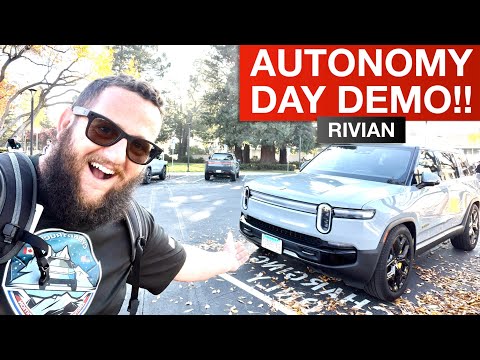
@KevinMelnuk $TSLA is about to cross 7 Billion miles of training data on FSD. It doesn’t matter what hardware Rivian (BMW, Mercedes, etc) claim to have on the horizon- without the model that hardware is nothing more than a death trap.
English
0
0
0
54
Kevin Melnuk
Kevin Melnuk@KevinMelnuk·
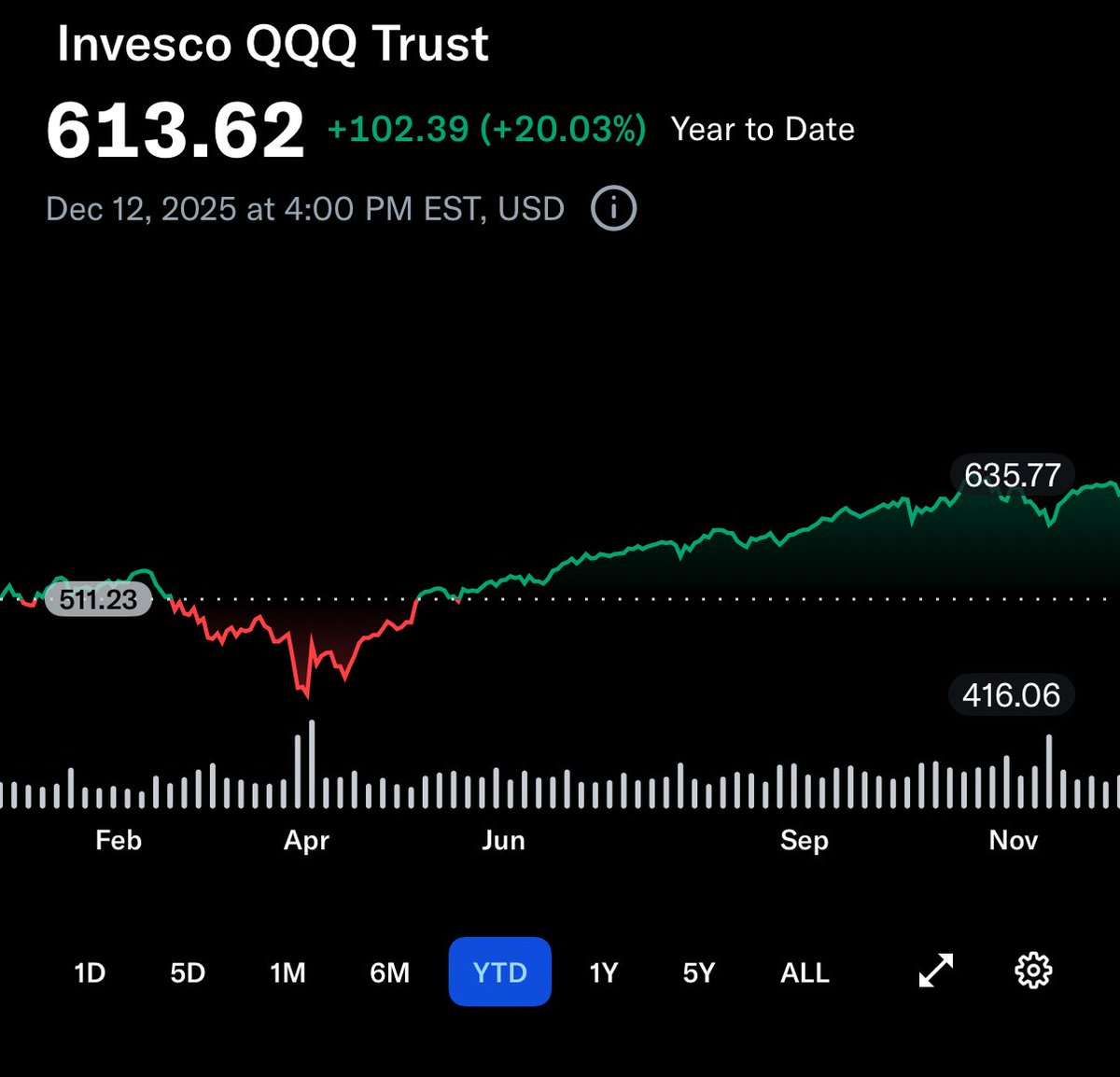
Rivian outperforming the markets this year by 2x. I think we see this continue for the next 3 years. $RIVN $QQQ youtu.be/47WFmjPFmW0?si…
YouTube video
YouTube
Kevin Melnuk tweet mediaKevin Melnuk tweet mediaKevin Melnuk tweet mediaKevin Melnuk tweet media
English
13
7
151
5.1K
nonhumanintel
nonhumanintel@nonhumanlogic·
@moregainzs just stop. $TSLA has billions of miles of training data , across the globe. they are just now, this month, removing the “human” from their robotaxi fleet in Austin. Rivian is light years behind.
English
2
0
3
515
MoreGainzs
MoreGainzs@moregainzs·
Everyone is talking about LiDAR but forgetting about Rivian’s RAP1 (Gen 3). The chip can perform 1,600 trillion small calculations every second. It can be scaled up or down and even power other physical objects such as robotics. This puts it ahead of Tesla AI4 and right alongside the AI5 chip. $rivn $tsla
English
70
21
227
67.2K
nonhumanintel
nonhumanintel@nonhumanlogic·
@PressSec they don’t need to charge an annual fee; to obtain the same outcome, they can simply raise the salary floor to $250k/yr
English
0
0
0
12
Karoline Leavitt
Karoline Leavitt@PressSec·
To be clear: 1.) This is NOT an annual fee. It’s a one-time fee that applies only to the petition. 2.) Those who already hold H-1B visas and are currently outside of the country right now will NOT be charged $100,000 to re-enter. H-1B visa holders can leave and re-enter the country to the same extent as they normally would; whatever ability they have to do that is not impacted by yesterday’s proclamation. 3.) This applies only to new visas, not renewals, and not current visa holders. It will first apply in the next upcoming lottery cycle.
English
13K
4.3K
20.8K
17.7M
nonhumanintel
nonhumanintel@nonhumanlogic·
@Tesla Is it on top of a three story building?
English
0
0
0
20
Tesla
Tesla@Tesla·
Tesla Diner is retro-futuristic diner & drive-in charging experience all wrapped into one 80 V4 Supercharger stalls are open to all NACS-compatible EVs, making it the largest urban Supercharger in the world
Tesla tweet mediaTesla tweet mediaTesla tweet mediaTesla tweet media
English
1.4K
2.6K
18.3K
29.6M
NewsForce
NewsForce@Newsforce·
Gotta admit, this was hilarious.
English
198
2.6K
18.1K
752.7K
Whole Mars Catalog
Whole Mars Catalog@wholemars·
"Vote for me, and I'll protect you from the evil billionaires" promises the politician. Voters nod excitedly. "I like this guy. He'll stop those billionaires from taking my money". In their mind, the only way you end up with a billion dollars in your bank account is by stealing the money from ordinary people. But these tech "billionaires" — the villains of contemporary society — very rarely just sit on billions of dollars worth of cash. In most cases, they are billionaires because they created a new company that's so incredible people are willing to pay billions of dollars to buy it. They are rich in shares, not necessarily dollars. For most early stage startups, this stock is illiquid, which means there are restrictions that make it not so easy to sell in practice. Even if they do eventually take their company public, those "billions" they have in their company's stock can vanish in a poof with new competition, poor business performance, or even if they try to sell. To make their stock worth billions, those tech billionaires had to give the world something incredible. Maybe they let you watch all the movies you want for $10 a month, created a chatbot that can answer all your questions, or built AI that can drive your car for you. in almost every case, they had to take a major risk and might have lost everything if not for their own tenacity. When was the last time a politician delivered a major improvement to your quality of life? The politician needs the tech billionaire to be the villain so you don't think too hard about what they are doing. The tech billionaire must convince you to sign up for their service, and if it's not good you can cancel it. Meanwhile the politician provides little value while the government takes a chunk of your income via the one subscription you can never cancel — taxation. Try and cancel that subscription and they'll throw you in jail. The tech billionaire gains power by building. The politician gains power by lying. Praying on your hopes and fears to get your votes, and then disappointing you time and time and time again. Hundreds of elected representatives, shrugging and saying "What can I do? I'm just a small part of a broken system" When the government takes your money and wastes it, that's money that you can't spend on the things you and your family need. As if that wasn't bad enough, the government then borrows trillions in the name of you and your children. "Don't worry", they tell their creditors "we all know they are good for it!". Before your child has made their first dollar of income, a good chunk of it has already been sold off. As the government's finances start looking riskier, buyers of government bonds start demanding higher interest rates. That means that when you want to borrow to buy a home, or a car, you pay a higher price to borrow. After all, why should a creditor lend to you when they can lend to the government and get their money back almost guaranteed? The only reason they would is for a higher yield. All of those trillions of dollars the government is borrowing is money that would have otherwise been lent to you — to your business, for your home, for your car, or for your kids. The incompetence of or politicians hurts us every day, bleeds us alive in ways that aren't easy to see because we've never known any other way. That doesn't mean billionaires are all saints — they're just as likely to be assholes as anyone else, and the government does have a role in regulating business. But it does feel like tech billionaires became the villains to distract us from who is really harming us. Besides, who wants to live in an America where you can't be successful, change lives, and become wealthy? These incompetent politicians promise that if you ever do, they will make your life a living hell. It would be so wrong, of course, if ordinary citizens were more powerful than them.
English
53
82
623
44K
nonhumanintel
nonhumanintel@nonhumanlogic·
@TheUfoJoe His human loved him like no other. Condolences and respect.
English
0
0
1
38
Joe Murgia
Joe Murgia@TheUfoJoe·
I'll read all of your replies and DMs (and audio messages) eventually. But right now, it's just too difficult. He loved the beach, and this is one of my favorite pics I took several years ago.
Joe Murgia tweet media
English
73
8
568
18.8K
nonhumanintel
nonhumanintel@nonhumanlogic·
@SkywatcherHQ Just land an egg- even disposable Kodak cameras from the 70s can capture that.
English
0
0
0
70
Mick West
Mick West@MickWest·
@TjAllard So you think it’s correct when it says Musk is the biggest spreader of disinformation on the internet?
English
5
0
34
882
TJ Allard
TJ Allard@TjAllard·
If you were wondering how good Grok 3 deep search is compared to ChatGPT, you don’t have to. Grok 3 simply does every step in the process better. By default using a broader range of sources and returning insights ChatGPT wasn’t. Even after multiple prompt iterations.
English
1
0
6
1.2K
nonhumanintel
nonhumanintel@nonhumanlogic·
@wholemars Crud - I thought this meant $Tsla may finally have had a Green Day in like forever.
English
0
0
0
65