Mindlos@Koshi
38.3K posts


Balwin Properties has received a R2.26 billion buyout offer💰 The offer comes from a consortium led by the PIC, acting on behalf of the GEPF, alongside CEO Stephen Brookes and MD Rodney Gray. Two years ago, I wrote a piece for the Mail & Guardian asking whether Balwin was too bold for the South African market and why they should delist. Today, that question has a definitive answer. The offer is R4.35 per share - a 41% premium to the six-month volume-weighted average price. If approved, Balwin delists from both the JSE and A2X, ending a public market run that began in 2015. In my December 2024 M&G article, I raised concerns that now feel prescient. Profits had dropped 57%, and revenue was down 28% in the interim results to August 2024. The loan-to-value ratio was above the comfortable range. Dividends had been suspended. Munyaka had 3,705 of 5,020 apartments unsold. The share price had fallen from roughly R10 at listing to R2.30. The full-year results to February 2026, released just before the announcement, show genuine recovery, but also why that recovery cannot solve the structural problem. Revenue grew 21% to R2.7 billion. Apartment handovers increased 17% to 2 053 units. Recurring profit grew 36% to R273.6 million. The loan-to-value ratio improved to 38.1%, finally within the target range. These are not the numbers of a distressed business. And yet the board declared no dividend for the 2nd consecutive year. That single fact captures everything about why Balwin and the JSE were always a difficult fit. Property investors expect income. Balwin’s model: long cash-conversion cycles, multi-year inventory build-up, heavy infrastructure investment, makes consistent dividends structurally difficult regardless of how well the underlying business performs. The geographic picture in the results is also telling. The Western Cape now accounts for 54% of apartment sales revenue, up 47% to R1.3 billion. Gauteng, despite 11 active developments, contributed just 39%, with revenue growing only 2%. The results explicitly note a change toward rental preference over ownership in Gauteng. Meanwhile, across the full build-to-sell portfolio of 41,226 planned apartments, 25,056 remain unsold. In Tshwane alone, 11 751 apartments are unsold, a node where Balwin invested R120.6 million in infrastructure. This is a business making long-dated bets that the public market has neither the patience nor the appetite to back. The tangible net asset value per share as at February 2026 was R9.72, more than double the offer price of R4.35. That gap between what the business is worth on paper and what the market has been willing to pay is the clearest possible argument for going private. The PIC and GEPF can absorb a 15-year pipeline and a 7 700-apartment rental pipeline on land already owned by the group. Public market shareholders cannot. My view is the same as it was 2 years ago, just more certain. This is the right move, and it should have happened sooner.

Let me tell you how it happened. Nigeria’s ginger export hit zero from N26 billion within 3 years. The official story blames fungal blight. But here is what actually happened. When Nigerian farmers lost their indigenous seed supply, grant-aided interventions arrived with replacement seeds. An associate professor at Lagos Business School flagged publicly that some of those interventions involved GMO organisms that weakened indigenous crops and compromised soil health. That is not a conspiracy theory because it is a documented academic concern. Now that Nigeria spoke got destroyed by the GMO seedlings….what is not the result? Nigeria was forced to import ginger from China to fill domestic demand. Chinese ginger has none of the pungency, oleoresin content, or quality that made Nigerian ginger a global premium product. And the ginger now sitting in Nigerian markets tastes like wood because it essentially is wood. The two indigenous varieties that built Nigeria’s global ginger reputation, the Tafin Giwa and Yatsun Biri, had decades of soil relationship and quality built into them. Once the soil was degraded and those seed varieties were displaced, the product that returned was a pale imitation. Nigeria did not just lose a market. It lost a seed. And without a National Ginger Seed Bank, which nobody has built, it may never fully get it back.


What historical fact sounds fake but is true?

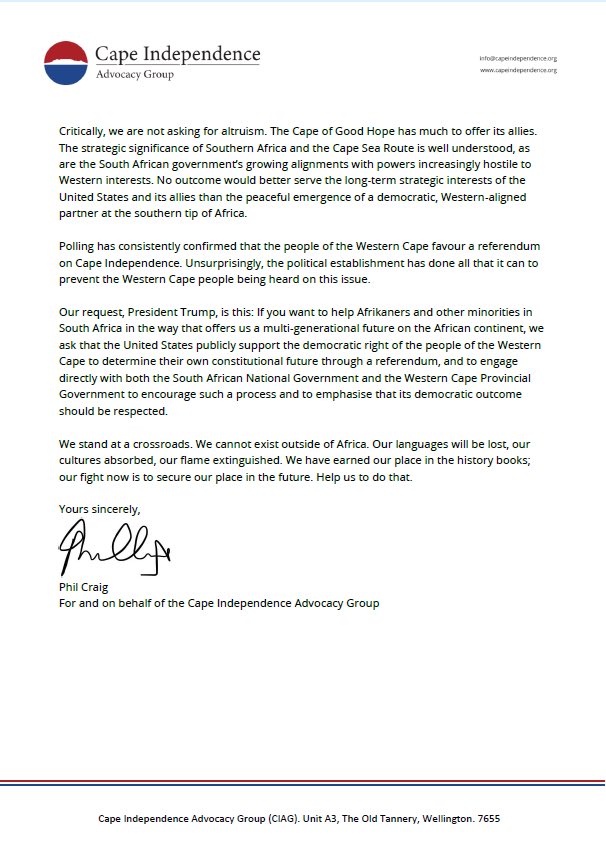
Open letter to President @realDonaldTrump following the extension of the Afrikaner refugee programme We greatly appreciate his administration's outspoken concerns for minority communities in South Africa but propose an alternative solution - help us secure a home here in Africa

40% of all Cape Town property transactions above R10m now involves foreign buyers ✈️🌍 unsurprisingly, luxury listings are priced in multiple currencies there is no home ground advantage in Cape Town property… even for South Africa’s wealthiest 💰💰


"There is no place for the Bantu, above the level of certain forms of labour." - Dr Verwoerd. Credit: Apartheid (docuseries)

The first South Sudanese to graduate from @Yale with a Masters Degree in Public Health. I am a proud brother. #SSOX #SouthSudan #Africa

🚨 Three generations of Long Island family charged in torture death of 7-year-old girl This case is absolutely horrific. Three generations of one family a 50-year-old woman, her 75-year-old mother, and her 24-year-old daughter have been charged in the abuse and torture death of a 7-year-old girl. Prosecutors say 7-year-old Jor’Dynn Duncan was subjected to systematic cruelty inside a Bayport, Long Island home. She suffered around 90 stab wounds over time, developed a massive untreated infection, and missed 40 days of school. She was eventually found in cardiac arrest and pronounced dead at the hospital. Emily Kelly, who had been given custody of the girl, is facing second-degree murder charges. Her mother and daughter are also charged with serious crimes related to the abuse. A child was allegedly tortured and killed inside a home by the very people who were supposed to be caring for her. Three generations all accused of being involved. This is one of the most disturbing cases I’ve seen in a while. A little girl lost her life after being failed by the system and the people entrusted with her care. Emily Kelly is being held on $5 million bail. The other two family members are also in custody.