

nsridhar2365
1.2K posts

Tamil Nadu experts, please tell me what's the possibility of ADMK and TVK forming the government together?
English

Which channel for accurate poll results ?
English
India just launched the world's first OptoSAR satellite.
Not ISRO. Not a defence PSU.
A startup. 5 years old. Built inside an IIT lab.
The GalaxEye story is just getting started 🛰️
━━━━━━━━━━━━━━
1. THE PROBLEM
Most satellites are blind for 4 months a year.
Optical sensors — the cameras on commercial satellites — can't see through clouds.
India has a monsoon. Floods happen. Borders need watching. Crops need monitoring.
All of it goes dark exactly when it matters most.
━━━━━━━━━━━━━━
2. THE EXISTING SOLUTION (AND WHY IT FAILED)
SAR radar can see through clouds, smoke, and darkness.
But SAR images look like static. They require specialist analysts to interpret.
So you had two options:
— Optical: beautiful images. Useless in bad weather.
— SAR: works in all weather. Nobody can read it.
GalaxEye asked: what if one satellite did both?
━━━━━━━━━━━━━━
3. THE FOUNDERS
Suyash Singh and team. IIT Madras. Aerospace engineers.
They weren't outsiders who stumbled into space.
They were already building satellites inside the university — as students.
The only thing missing was permission to do it commercially.
━━━━━━━━━━━━━━
4. THE POLICY MOMENT
2020. India opens its space sector to private players for the first time.
IN-SPACe is created. ISRO's monopoly ends. Private companies can now build, launch, and operate satellites.
GalaxEye was incorporated the same year.
They didn't pivot into space. They were ready for this moment.
━━━━━━━━━━━━━━
5. THE BUILD
2021 — ₹5 Cr. Team assembled. Technology begins.
2022 — ₹26 Cr. Satellite hardware development starts.
2023 — ₹2 Cr bridge. Payload integration and testing.
2024 — ₹85 Cr. The big push. Launch imminent.
2026 — Mission Drishti. In orbit.
5 years. 23 rounds. ₹162 Cr raised. Zero debt.
━━━━━━━━━━━━━━
6. THE TECHNOLOGY
OptoSAR — a single satellite payload that fuses optical and radar imaging.
All-weather. Day and night. Images a non-specialist can actually read.
Mission Drishti is the world's first OptoSAR satellite.
It is also the largest privately-built satellite ever launched from India.
Nothing like it exists in commercial orbit anywhere on Earth.
━━━━━━━━━━━━━━
7. TODAY
PM Modi tweeted congratulations.
Rainmatter (Zerodha). Speciale Invest. LV Angel Fund. Navam Ventures. All backed it.
The satellite is up. The data will flowing. The contracts haven't come yet.
That's not failure. That's what deep tech looks like before it works.
━━━━━━━━━━━━━━
8. WHAT COMES NEXT
A satellite in orbit is infrastructure — not a business.
Revenue comes when defence agencies sign. When state governments pay for crop monitoring. When disaster response bodies subscribe.
GalaxEye has the only all-weather imaging satellite built privately in India.
Now they have to prove the orbit was worth the wait.
━━━━━━━━━━━━━━
Full breakdown — Business Model, Founders, funding rounds, all 10 Series B1 investors, DCF valuation, MCA filings:
datafin.in/blog/galaxeye-…
English
@Khanmohammed12 Praveen Amre, Ramakant Achrekar, Vinod Kambli
Nederlands

@ISSF_India Even if there is ecological damage to some extent, the strategic and defence considerations should outweigh it…
English

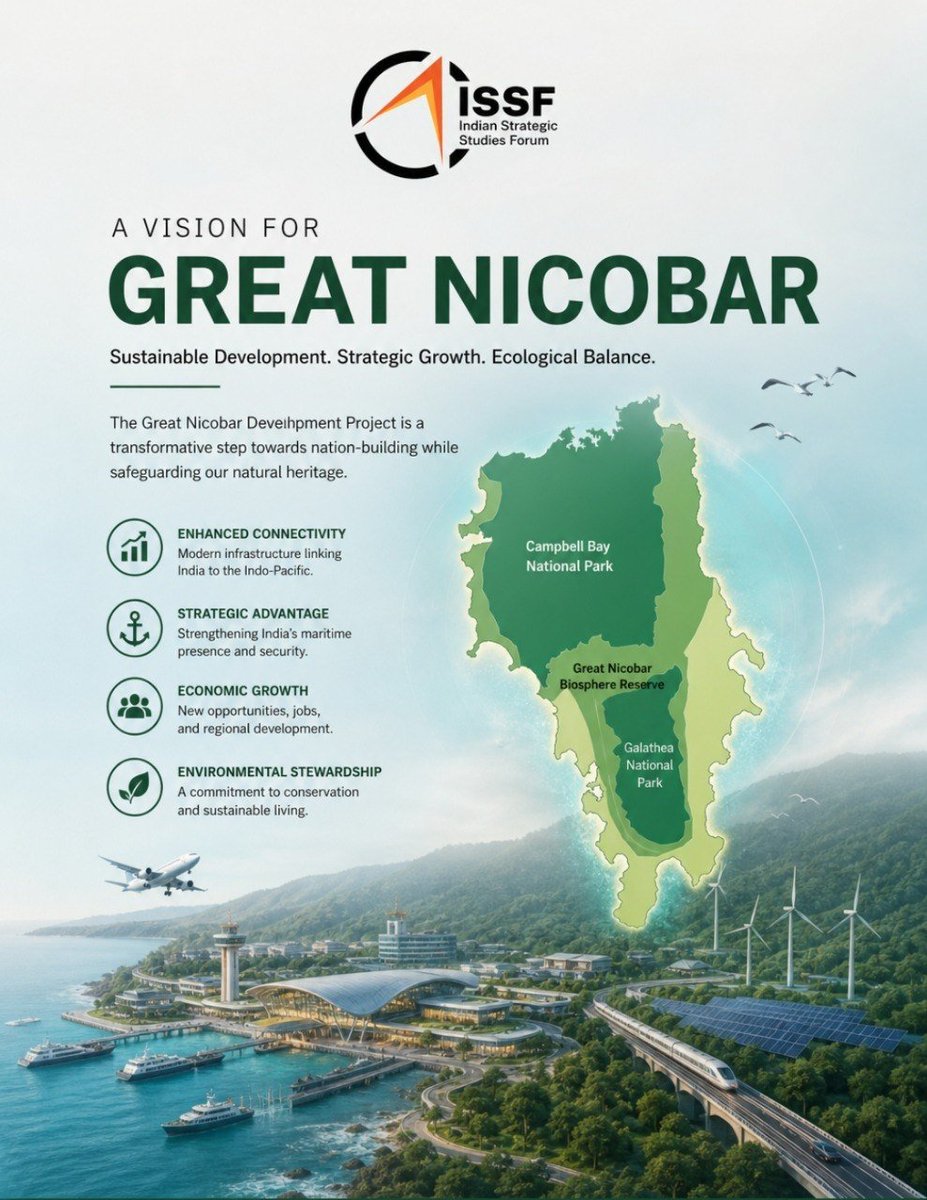
The Economic Masterplan: Galathea Bay 🏗️
India bleeds hundreds of millions of dollars annually because we lack a true deep-water transshipment port.
Our cargo goes to Colombo or Singapore.
GNI’s Galathea Bay has a natural draft of 20 meters - deep enough to dock the world's largest mega-ships directly on Indian soil.

English
The Great Nicobar Project: India’s Ultimate Maritime Masterstroke 🇮🇳⚓
There is a coordinated PR campaign targeting the ₹72,000 Crore Great Nicobar Island (GNI) project.
Cutting through the political noise, the reality is stark: this is the most critical infrastructure project for India’s survival and dominance in the 21st century.
Here are the hard facts. 🧵👇
English
@rai_kaushlesh @Prakharshri78 How did other pollsters release their WB exit polls then ?
English

लोग ब्रेकिंग न्यूज़ लिख के ट्वीट कर रहे हैं की एक्सिस पोल वाले प्रदीप गुप्ता जी बंगाल चुनाव को लेके अपना एग्जिट पोल जारी नहीं करेंगे। उनका कहना है की सर्वे में अधिकांश लोग बोलने को ही तैयार नहीं हो रहे थे।
जबकि चर्चा इस बात पे होनी चाहिए की ऐसी स्थिति कैसे आ गई? लोग इतने भयक्रांत कैसे हो गए की अपने मन की बात तक कहने में डरने लगे हैं? बंगाल में सब जब चल रहा था तब ये मीडिया वाले कहाँ थे? ये संविधान कहाँ था? आप समझ भी पा रहे है की एक राज्य में वहाँ की बहुसंख्य आबादी को गूँगा बना दिया गया। और कहीं कुछ नहीं हुआ? आप इसको महसूस कीजिए।
और मीडिया में चर्चा इस बात की नहीं हो रही है। इतनी बड़ी आबादी को गूँगा बना दिया गया से बड़ी ब्रेकिंग न्यूज़ है की प्रदीप गुप्ता बंगाल को लेके अपना एग्जिट पोल जारी नहीं कर रहे।
धन्य देश महान । धन्य हिंदुस्तान । धन्य ये संविधान ।
हिन्दी
@VishalBhargava5 Will houses in towers facing each other get any sunlight?
English
Prestige is the Rahul Dravid of Real Estate. Their homes aren’t glamorous or pretty. But it’s dependable and gets the job done with efficiency irrespective of the conditions.
Artful Dodger@RahulChels
Visited Prestige City Mulund today. Very impressive clubhouse and lobby. Oberoi level tbh. Elevation is ofc mhadaslop but height distracts from it. Flat interiors also mid af. Forum Mall and 42-floor office building also nearing completion.
English
@Uber your arrangement at Kempegowda Airport T2 is bizarre. Drivers do not accept luggage. What else is a passenger arriving by flight bound to have except luggage ? The staff at the Uber bay and the drivers are rude in refusing luggage..Pathetic
English


@ChathamHouse How about Pakistan abjures from terrorism for 25 years and then we shall see?
English

Water cooperation is not only mutually beneficial for India and Pakistan, but essential. Restoring the Indus Waters Treaty could be a powerful foundation for rebuilding trust.
Read the latest analysis on the Indus Waters Treaty by Dr Beatrice Mosello and Bhargabi Bharadwaj from Chatham House's Environment and Society Centre ⤵️
bit.ly/3Qi5TeP
English
@Fintech03 Fantastic series and eye opening series on Indian mathematicians. Kudos to you sir for the effort!
English

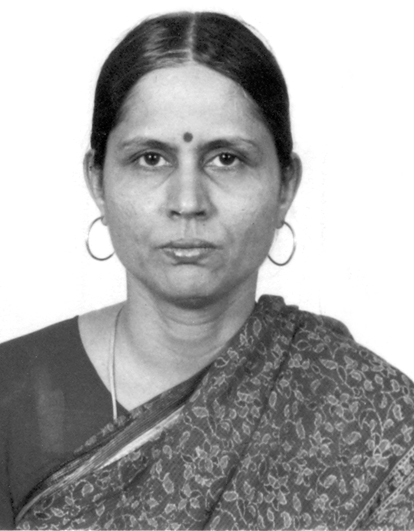
Next in who after the Ramanujan Series? Imagine a young woman from 1970s India, walking into the most elite mathematical circles in Europe & the US, & telling the Masters of the Universe that their fundamental assumptions about quadratic equations were wrong & then proving it.
Born in 1948 in Tamil Nadu, Raman Parimala grew up in a traditional Indian household. Unlike the trope of the rebellious scientist, she moved through the Indian education system with a quiet, laser-focused intensity. She moved to Bombay to join the Tata Institute of Fundamental Research (TIFR), the Mount Olympus of Indian science.
She studied under the legendary R. Sridharan. It was here, in the 1970s, that she began her hunt for the mathematical structures that would eventually make her famous. In mathematics, there was a long-standing belief (a conjecture) by the famous mathematician Jean-Pierre Serre about quadratic forms, essentially the study of equations where variables are squared (like x^2 + y^2 = z^2, but much, much more complex).
For yrs, the global math community believed that a certain type of space (a quadratic space over a polynomial ring) had to behave in a very specific, simple way. In 1976, Parimala stunned the world by proving them wrong. She constructed a counter-example, a mathematical object that proved these spaces were far more mysterious & complex than anyone had imagined. This was like discovering a new continent in the middle of a map everyone thought was complete. It opened up the field of Galois Cohomology in ways that are still being explored today.
Parimala Raman’s trophy cabinet is a testament to her dominance in a field that was, for decades, a boys' club. She won India’s highest scientific honor in her 30s (Bhatnagar Prize). She was an invited speaker at the International Congress of Mathematicians in 1994 (Zurich) & a plenary speaker in 2010 (Hyderabad). To be invited once is a career peak; to be a Plenary Speaker is to be recognized as a global leader of the field. She won the World Academy of Sciences Prize for Mathematics, proving her influence was not just local, but truly planetary.
Today, she is a Prof at Emory University in the US. She continues to work on the Brauer Group & Hermitian forms. These are the deep codes used in modern arithmetic geometry. Despite her global fame & her base in the US, Parimala is India 1st in her soul. In an era where many globalized scientists adapt to Western aesthetics, Parimala is famously known for presenting the most complex abstract algebra at international conferences while dressed in a traditional Kanjivaram saree.
English

@Normal_2610 @jaganmsna Is’nt it risky to depend on China for important infrastructure? We have already seen how security cameras were used by Pakistan based on Chinese inputs…
English

GPIL signed huge 5-year deal with big China company EVE Power, to make 20 GWh of storage systems of about $1 billion :)
Your factory needs electricity to run machines. Every month you get an electricity bill from the government power company (called DISCOM).
Let's say your bill comes to ₹10 per unit. That's expensive. It eats your profit.
What these days Corporate doing, if yu read their filings is:
There is Rule 3 of the Electricity Rules, 2005 (under the Electricity Act, 2003). To be called captive generating plant and get the benefits, two conditions must be met:
The consumer (or group of consumers) must hold at least 26% of the equity of the power-generating company.
That same consumer must consume at least 51% of the power generated annually.
If you have skin in the game (26%) and you actually use the power (51%), then we'll treat you like you built your own power plant — even though you didn't. And we'll waive all the taxes we normally charge for using the grid."
When you buy power from the regular grid (DISCOM), your bill has these layers:
> Base energy charge
> Cross-Subsidy Surcharge (CSS)
> Additional Surcharge (AS)
CSS + AS alone can be ₹1.5–2.5 per unit on top of base cost. That's why industrial tariffs are so painful.
The captive structure waives CSS and AS completely. This is the legal bypass.
The rule is - If you want to buy cheap solar power directly (not from DISCOM), then you must own at least 26% of the solar plant. And you must use at least 51% of the power it makes
Small investment → You only pay for 26%, developer pays 74%. Very capital-light.
Government blessing → If you own 26%, government waives extra taxes (called CSS and Additional Surcharge), making it even cheaper.
That is why everyone is doing it:
UltraTech Cement → 26% in a solar SPV
Jindal Stainless → 33% in a solar SPV
JK Lakshmi Cement → 26% in a solar SPV
Motherson → 28% in a solar SPV
GACL → 26% in a solar SPV
Concord Biotech → 26% in a solar SPV
Sanathan Textiles → 26% in a solar SPV
Now Yu have to Connect this with Demand of Green Energy, BESS, why GPIL did partnership with China & How factories cutting cost. labour code will be discounted here
One have to Understand there will super demand for the next 5 year for energy and Battery is Bottleneck :)
GPIL know what game they are playing, from experiment to Scale up :)
One business is cash cow will fund the other :)

English
@ShashiTharoor @sheela2010 With respect sir, this may suit Europe - policy changes can take their own sweet time. But India is at a different stage- We are in a volatile and hostile external environment where we need to implemnt things once decided - and the decision has to be fast.
English

The answer can be found in Europe, where the principle of degressive proportionality is applied to the composition of the European Parliament — since they have the same problem of small and big states coexisting in one Union.
India also needs a compromise between strict democratic representation (one person, one vote) and the necessity of ensuring smaller political entities have a meaningful voice. It essentially means that while larger populations get more seats, the ratio of citizens to representatives increases as the population grows.
In the European Parliament, the allocation must follow these constraints:
*Minimum Threshold: No member state can have fewer than 6 seats.
*Maximum Ceiling: No member state can have more than 96 seats.
*Inverse Ratio: The "efficiency" of a vote must decrease as population increases. For example, a Member of the European Parliament (MEP) from Malta might represent roughly 80,000 citizens, while an MEP from Germany represents roughly 850,000 citizens.
The goal is to prevent the "Big Four" (Germany, France, Italy, and Spain) from holding a permanent absolute majority that could override the collective interests of the smaller nations, thereby maintaining the federalist spirit of the Union.
Applying this to India is what we need to debate, not women’s representation which no one objects to. We need to address the North-South divide that has arisen over delimitation. A strict population-based reallocation (proportional representation) would drastically increase seats for northern Hindi-belt states like Uttar Pradesh and Bihar, while states that successfully implemented population control (like Kerala and Tamil Nadu) would see their relative political influence diminish.
If India were to adopt a degressive model, the Parliament could be structured to balance population with federal equity. Similar to the EU, a "floor" could be set for smaller states (e.g., Goa, Sikkim, or the Northeast) to ensure they aren't reduced to insignificance. Instead of a fixed ratio of, say, 2 million citizens per MP, the ratio could scale. A state with 200 million people might have 2.5 million citizens per MP, while a state with 30 million might have 1 million per MP. This is to ensure no state feels disenfranchised. As @revanth_anumula suggests, another factor could be a state’s contribution to national GDP. It would be dangerous for our federalism if smaller states felt their prosperity & human development were being punished with relative disenfranchisement.
One could argue that the Rajya Sabha already exists for federal representation. However, degressive proportionality in the Lok Sabha would provide a "weighted" democratic mandate that acknowledges population without penalizing states for their developmental successes.
Finding a mathematical formula that satisfies both the high-growth and low-growth states, and both the large and small states, would require a level of bipartisan and interstate cooperation that it is in the interests of the central government to promote. I urge PM @narendramodi to initiate extensive consultations, with all parties and with all states, before rushing into a hasty delimitation process that leaves the core underlying issues unaddressed.
Varghese K George@vargheseKgeorge
If nothing changes in the existing constitutional scheme, southern States are set to lose their absolute AND proportional share in Lok Sabha. States with low birth rates will end up in a worse situation under the default constitutional option that will kick in after the 2027 Census, compared to what is being proposed by the BJP. I explain how, in @the_hindu
English
nsridhar2365 retweetledi
Replacing them with Indian ones is the only option. Crazy to have Chinese cctv cameras near the broader or any sensitive location
thehindubusinessline.com/news/national/…
English
@tuhins Sir, but is’nt it your party at the government in the centre and many of the states?
English

The TCS grooming scam calls for a deeper investigation. I have been told of businesses in smaller towns that are systematically hiring male employees only from the minority community and female employees predominantly from the majority community creating a conducive atmosphere for grooming gangs to thrive. This also applies to a reputed mall brand operating out of multiple cities .
In the light of the TCS grooming scam , preemptive action will save many young women who are working hard to make ends meet, from falling into obnoxious traps.
Rahul Shivshankar@RShivshankar
THIS GOES BEYOND NASHIK, TCS. IT'S A PATTERN. The very tolerance that defines a democracy can, if unchecked, be used against it. SO WE NEED TO LOOK AT THE DEEPER QUESTIONS, THE MORE UNCOMFORTABLE THE BETTER. What NASHIK case exposes, just like AJMER did is not just crime but a pattern where belief is weaponised through grooming and deception. A secular democracy cannot allow faith to become a tool of coercion. Hindu tradition is a univeral truth. Hindus don't convert. But it is up against aggressive proselytisation that blurs the line between consent and exploitation. India already has anti-conversion laws. They exist. And yet cases like this keep surfacing. Which raises a blunt question. Are these laws failing, or are they inherently incapable of policing intent and coercion? Besides laws don't change mindsets. So the debate must now move beyond law to first principles. Can coercive or induced conversion ever be cleanly regulated? Or does the very act of proselytisation in vulnerable settings create conditions for misuse? Can a society that permits conversion also guarantee that it remains truly voluntary? Liberals may resist the question. They will chaffe and troll. But what is the alternative? And is the current model strengthening social harmony or steadily eroding trust in a plural society?
English
@RShivshankar Sir, why not name and shame the MNC and the religious group involved?
English
INSIDE THE NASHIK MNC TRAP: Radicalisation, Grooming & Targeted Exploitation.
READ THE SHOCKING REVELATIONS:
1. Radicalisation WhatsApp Group – Closed group used to promote religious radicalism
2. Grooming Modus Operandi – Members built relationships with pre-selected young female employees within same company
3. Closed Community Exclusive Grooming Network – Members from specific religious group within firm were organised in a forum to keep identifying tue “next victim”
4. Victim-Specific Group – Separate WhatsApp group created for first victim
to strategise to thwart potential charges like molestation, sexual assault, attempted conversion.
English
@HemindraHazari @MDahariya @HDFC_Bank @palakshahjourno L&T is also similar. Not sure what is the thrust of this article.
English

English
@sreeramjvc @X Sir, why aren't you on any major TV channels - Republic, News18, TimesNow, NDTV ?
English

I express my gratitude to my friends in the media who tried to genuinely help me to release my poll. I can empathise with them.
I would be releasing my JVC Poll on @X only this evening.
Thanks.
English