Oakland Report
199 posts

Oakland Report
@oaklandreportca
Reasoned, evidence-based analyses and critiques of our city, local and state governance. https://t.co/581NpPwLEQ


Oakland’s city government has been doing the fiscal equivalent of "shrinkflation" for two decades. The city’s spending doubled over the past 20 years — from $0.87 billion in fiscal year 2006, to $1.69 billion in fiscal year 2025. Meanwhile, the tax burden the city put on its residents’ shoulders grew even heavier: Voter-approved special taxes surged 379% over the past 20 years — from $31.7 million in 2006 to $152.1 million in 2025. That’s over 6 times higher than the increase in the cost-of-living over that same period. Oakland residents now pay the highest taxes per capita in the state compared to similar cities. Despite a 93% increase in spending, the city’s own data shows little increase in basic service outcomes. Instead, the city’s spending has been increasingly consumed by public employee pay and benefit costs that have consistently risen over the past 20 years, far outpacing the growth in inflation and the incomes of everyday Oakland residents. In 2023, the average total compensation (salary and benefits) for a single full-time Oakland city employee was $237,000 — a 10-year increase of 79%. That is more than double the median Oakland household income of approximately $102,000 — a figure that typically reflects multiple earners — and which only increased approximately 45% over the same 10-year period. By comparison, the city of Sacramento’s average total compensation for its full-time employees rose 57% to $163,000. The city of Long Beach rose 70% to $196,000. And San Francisco (which is both a city and a county) rose 50% to $190,000. Oakland’s relatively high employee compensation is driven not by base salary, which is roughly comparable to peers, but by benefits that add 72% on top of base pay, compared to only 41% in Long Beach, 31% in Sacramento, and 33% in San Francisco. The city’s own financial reports routinely cite “increases in personnel costs” as the primary factor behind expenditure growth across virtually every city function. Oakland’s employee pay and benefits — and the compensation increases — were negotiated by the city and its labor unions, and approved by city councils. Notably, the city’s public employee unions have routinely donate to city council members’ election and re-election campaigns over the past 20 years. 👉 Read the full article at Oakland Report: oaklandreport.org/p/20260415-shr…

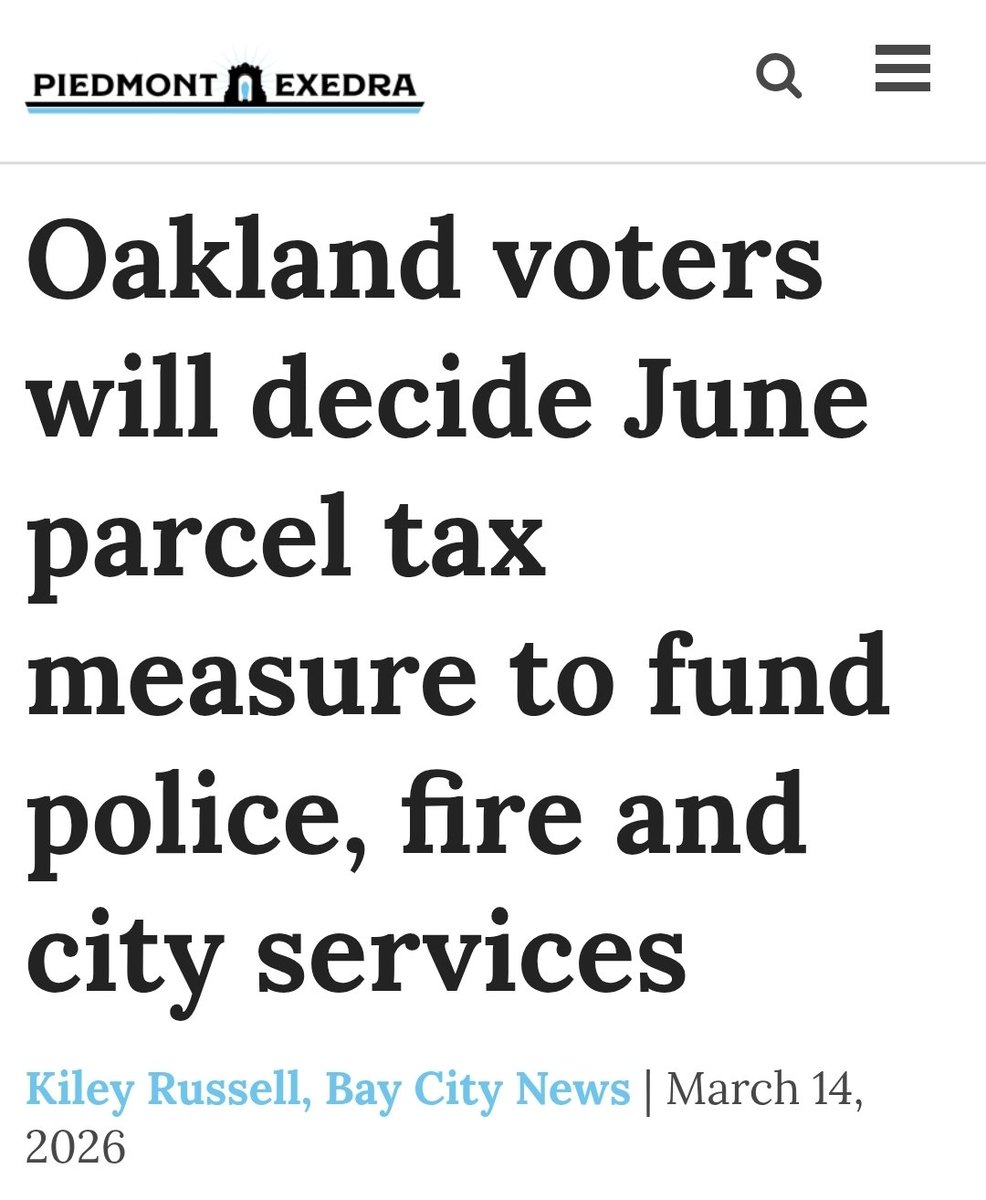
If the City of Oakland was a person, it would be a billionaire. You read that correctly: last year, Oakland collected a record-high level of total revenue — more than $1.6 billion. And like many billionaires, the city’s income has increased substantially in recent years— significantly more than inflation and the cost of living— powered by an evergreen, ever-growing source of income: taxes. The city’s revenues from voter-approved special taxes have increased by 379% compared to 20 years ago. That’s over 6 times higher than the cumulative change in inflation over that same period. This commentary takes a closer look at the city’s pattern of leveraging fire department service cuts to convince voters to approve tax increases. We also examine the influence of Oakland’s firefighters union on the political campaigns to pass those measures— a pattern that continues with the proposed tax increase on the ballot this June: Measure E. The City of Oakland has demonstrated a decades-long pattern of using public safety cuts to manage chronic budget shortfalls. Notably, these cuts— and threats of additional cuts— also have served as powerful catalysts in political campaigns aimed at convincing Oakland voters to approve tax increases. A review of city financial statements, audits, and court rulings shows a consistent pattern in which the city collects voter-approved taxes promised for fire and police services, then fails to deliver the services it promised. The resulting gaps in fire and police services then set the political stage for the city to ask voters to approve even more tax increases in order to ‘save’ and ‘maintain’ those services— even as overall tax revenues increase over time, significantly outpacing inflation. The city has followed this playbook with fire services— and refined it considerably— over the past twenty years: 1. Announce that cuts to fire services are necessary to close budget deficits 2. Convince voters to approve tax increases by promising to ‘save’ and ‘maintain’ fire services 3. Mismanage and divert the tax revenues to other purposes, resulting in new budget deficits and announcements that fire services must face cuts again 4. Use the threat of fire station closures to urge voters to approve more tax increases. The city is not alone in executing this playbook. Oakland’s firefighters union, International Association of Fire Fighters (IAFF) Local 55, has long played a significant supporting role. 👉 Read the full article at Oakland Report: oaklandreport.org/p/oakland-unio…


@tripledouble @oaklandreportca Donated today (1 day late). Thank you for educating Oaklanders with data, not ideology and biased info like that other joke of a "newspaper". The research and information are critical in getting Oakland back on the right track. Now, we need more and more voters to be smarter.


Oakland’s city attorney has issued a legal opinion affirming that ‘holdover’ alternate Police Commissioner Omar Farmer is “by definition… not fully qualified to serve a new, fixed term on the Police Commission.” oaklandreport.org/p/20260410-twi…


The city of Oakland has broken its promises to voters in three of the last four parcel tax measures. oaklandreport.org/p/20260408-oak…


The Oakland Police Commission has appointed ‘holdover,’ alternate commission member Omar Farmer to a full seat on the commission, in apparent violation of California’s sunshine laws and the will of Oakland city council. - Farmer’s reappointment to the OPC was previously rejected by city council twice. - However, Farmer continued to serve on the OPC in a ‘holdover status’ due to there being no one nominated to replace him. - Following a closed-door session out of view of the public on March 26, the OPC announced that it had elevated Farmer to a full commissioner seat to fill a vacancy. - The posted agenda for the March 26 OPC meeting included no public notice that a commission member appointment would be discussed or decided. - A formal “cure and correct” demand for the March 26 appointment has been filed under the Brown Act. - By bypassing the city council’s double rejection of Farmer, the OPC appears to be acting in open defiance of the council. 👉 Read the full article in Oakland Report: oaklandreport.org/p/20260401-pol…