
Olaiya Timothy retweetledi
Olaiya Timothy
556 posts


Wonderful morning
Happy birthday to me
Long life and prosperity
More years on earth
3k-20k range must drop today for my great followers
Once again
Happy birthday 🎁🎂🎂🎂 to me

English

…+1
Happy Birthday To Me 🥳
Say a word of prayer 🤲🏾
🎈 🎈 🎈
English
@htfttipster1 May you fulfill your days in health and greatness a thousand folds. 🙏 🙏
English
Olaiya Timothy retweetledi


Olaiya Timothy retweetledi
The Zayed Sustainability Prize recognises pioneers transforming water systems. Win US $1M to scale your solution and impact more lives. Apply before 22 June 2026 and join the Unstoppables.
English

How much is your rent?
Honest answer only
I'll pay for many.

English


I'm deleting this soon because it's lowkey a formula to PRINT MONEY.
AI SIDE HUSTLE.
You can make $15,000 by simply working a few hours a week from anywhere in the world.
Comment 'Hustle' & I'll DM you my full guide for FREE.
Must follow me to get DM.
FREE for 48 hours only.

English


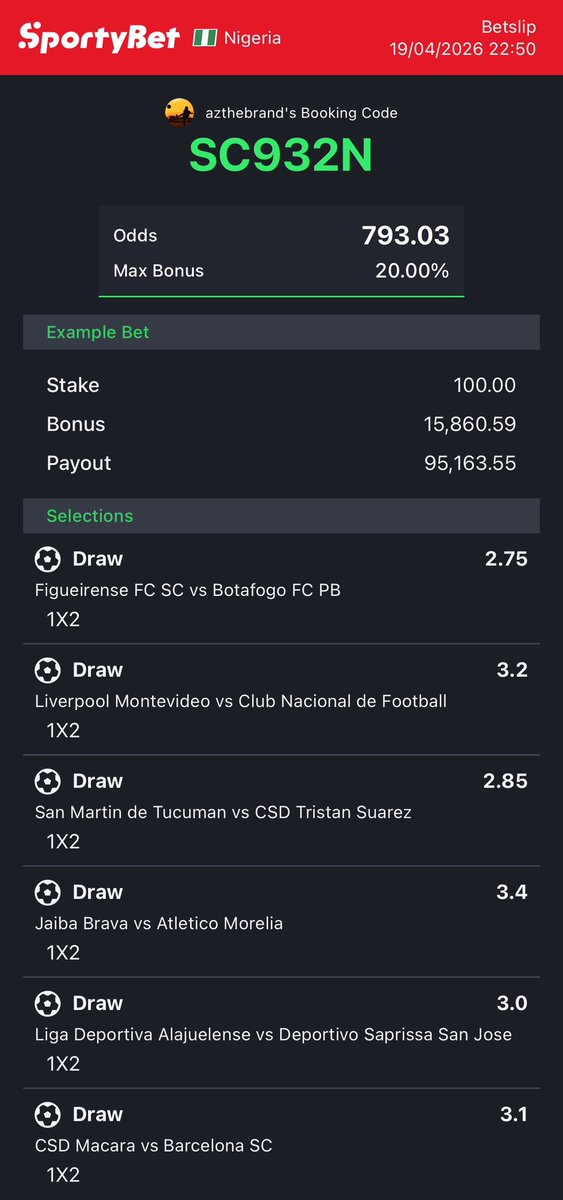

Pick a lucky number from 20– 72
20
21
22
23
24
25
26
27
28
29
30
31
32
33
34
35
36
37
38
39
40
41
42
43
44
45
46
47
48
49
50
51
52
53
54
55
56
57
58
59
60
61
62
63
64
65
66
67
68
69
70
71
72
15 numbers hide a surprise of $15,000
🎁 15 winners will be picked randomly in 72 hours

English
@BAZTIPS01 Congratulations sir.
I miss this chance to hit this gold.
7077664177
Opay.
Thanks in advance
English
Olaiya Timothy retweetledi


@Boomm6290 @BAZTIPS01 @Boomlordig6 @BOSSTIPZ22 On the day I didn't play your game .....I lost the chance. Damn!
I won't miss your games again ..ever.
7077664177
Opay.
Thanks for the love.
Cheers bro.
English

6.4M✅🎉
Never give up 😳
Drop your account details
Na who react I go bless ❤️

English
Olaiya Timothy retweetledi
This woman exposed the bread that has stayed in her shop for weeks and still looks fresh.
She didn't mention any name, but the bread company that's guilty served her papers.
This is something NAFDAC and government should take very seriously.
Let's amplify this until the right thing is done.
English
Olaiya Timothy retweetledi

In 2015, a nine-year-old girl named Emily stood at the gates of The Hole in the Wall Gang Camp in Ashford, Connecticut, clutching her small backpack.
She had spent most of her life in hospitals, fighting leukemia. Doctor visits, chemotherapy, and long nights filled with fear had become normal for her.
But here, something felt different.
This camp, founded by Paul Newman, wasn’t built for profit. It was built for children like her—a place where illness didn’t define the day.
A place where she could just be a child.
Paul Newman, known for films like Cool Hand Luke, The Hustler, and Butch Cassidy and the Sundance Kid, had already earned fame on screen. But his most meaningful work happened quietly, away from cameras.
In the mid-1980s, he started Newman’s Own, a food company that did something unusual.
It gave everything away.
Every dollar of profit went to charity. What began with salad dressing grew into a trusted brand, and as it expanded, so did its impact.
Newman made sure of one thing.
None of it was for himself.
In 2005, he created the Newman’s Own Foundation to continue that work long-term. Even after his passing in 2008, the donations didn’t stop.
They grew.
By then, hundreds of millions had already been given to causes supporting sick children, families in need, and communities around the world.
The camp Emily walked into was one example of that vision.
After Newman’s death, its reach expanded. Programs were created inside hospitals for children too ill to travel. In New York, a young boy named Malik, dealing with a heart condition, experienced a “camp day” right in his hospital room—games, art, even a small mock campfire.
For a moment, he forgot he was a patient.
He laughed.
His mother later said it was the first time she had seen that kind of joy since his diagnosis.
The impact didn’t stop there.
The foundation also supported scholarships for children who had survived serious illnesses. Many of them went on to study, build careers, and create lives they once thought impossible.
In Boston, a teenager named Rosa, who had overcome bone cancer, graduated with honors. She credited her opportunity to a man she had never met.
Paul Newman.
His influence reached far beyond the United States. His foundation helped provide nutrition programs in Africa, supported medical care in Haiti, and funded food banks in struggling regions across America.
It wasn’t scattered.
It was intentional.
Those close to Newman often said he took this work seriously. He stayed involved, asked questions, and made sure the money was used the right way.
For him, it wasn’t charity.
It was responsibility.
Even today, that work continues. The foundation still supports children, families, and communities—quietly, without seeking attention.
Lives are changed.
Not once, but again and again.
Paul Newman didn’t just leave behind films.
He left behind something that keeps moving.
Because sometimes, the most powerful legacy isn’t what you create for yourself—
It’s what you give away.

English