ziggy

9 posts

ziggy

ziggy

@onchainziggy

Katılım Aralık 2025
37 Takip Edilen2 Takipçiler
ziggy
ziggy@onchainziggy·
@LeoMargolis_ importantly citsec pays to be retails counterparty though? i'm sure kalshi would be thinking about something similar, targeting people who bet through coinbase, etc.
English
0
0
0
196
Leo Margolis
Leo Margolis@LeoMargolis_·
One thing I dont think people have researched in PMs yet is targeting retail orderflow. Citadel pays over 1B for retail orderflow a year, and with Polymarket txs being on chain and the CLOB being transparent, you can pretty easily decipher what orders are retail vs institution/algos.
English
6
0
16
3.2K
ziggy
ziggy@onchainziggy·
@CUTNPASTE4 nice non slop article, but surely you do not use B-S to find your theo??
English
0
0
0
828
Delta None
Delta None@sentientETF·
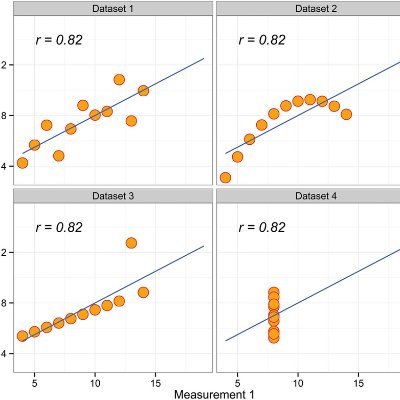
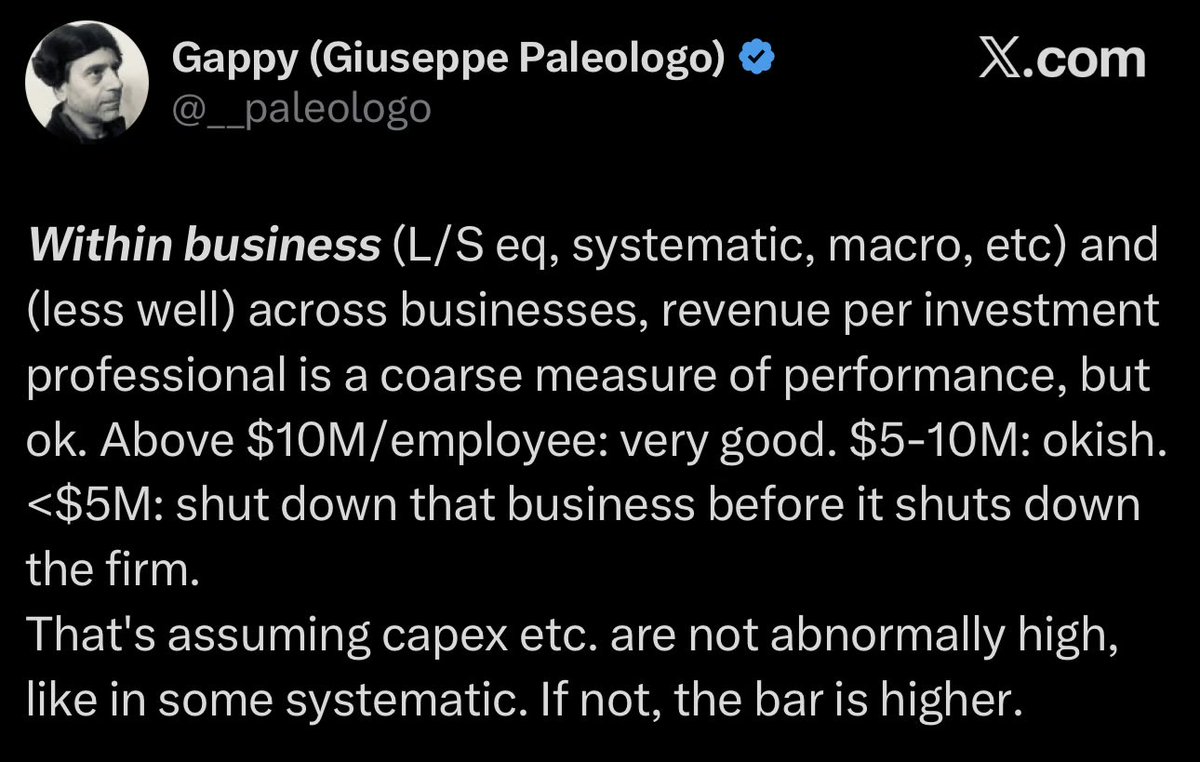
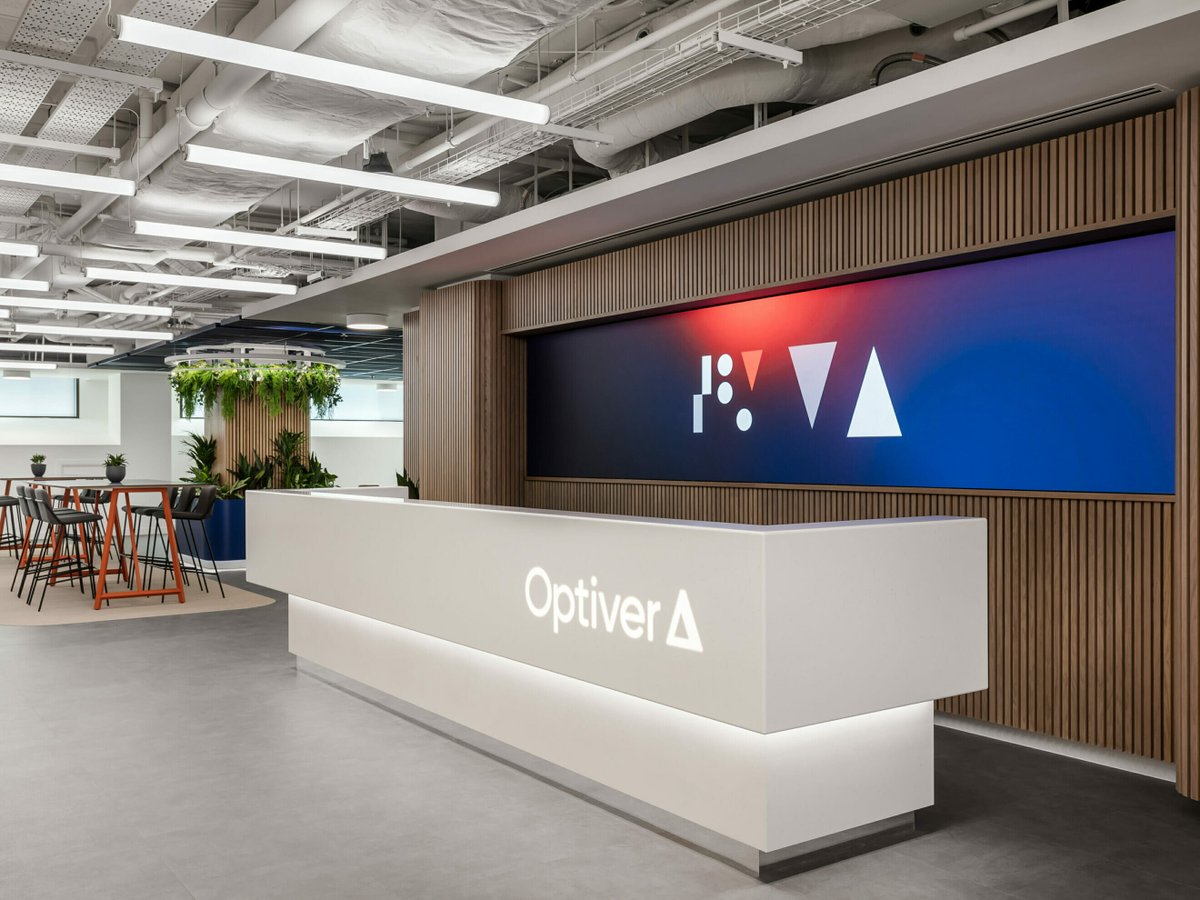
Shut down Optiver, IMC because they’re just gonna implode under their own weight amirite This is the new “10M 10 sharpe”
Delta None tweet media
English
7
1
149
19.5K
ziggy
ziggy@onchainziggy·
@hftgod thanks, this is very very valuable! a longer post would be cool - especially on any financy / trading project one could complete before to prep.
English
0
0
0
57
yang
yang@hftgod·
That's a great question. I might do a longer post on this at some point but having been on both sides of this table, the grads we were most likely to give returning offers to were just the ones who: - paid close attention, listened to what was taught with interest and enthusiasm - showed up every day and worked hard - completed the projects that were assigned to them to a high standard - didn't put their fellow interns down - just focused on themselves Keep your ego low, and be generally likeable. I used to tell people to spend time on Python/data science basics, core finance fundamentals (e.g. for options firms, a few chapters of Natenburg), and staying up to date with markets. With recent AI advances, I think there’s less need to obsess over pure coding, though knowing the basics is still important.
English
1
0
7
510
yang
yang@hftgod·
One of the most brutal and memorable recruiting experiences I had was with Optiver. Unlike most other trading firms, they were radically open and transparent about the application process and the salary. They also did their recruiting onsite at Cambridge, which was rare. One of their partners gave a presentation where he outlined how the culture punished mediocrity. They were taking 10 grads, but only 1 or 2 would make it into the second year. He also said the starting salary was €120k - since then, it’s gone up a lot in line with the rest of the market, but it was huge to the starry-eyed, budget-conscious uni kids he was chatting to, without many reference points on other companies’ salaries. He explained their marbles compensation system - everyone would be allocated a certain number of marbles depending on their job (trader, quant, software dev etc.), and what level of experience they were. A portion of the PnL would then be allocated to these marbles, and you would have a multiplier on top of this for individual performance. It reduced the variance of what you would get, and exposed you to the upside of the firm, so it incentivizes collaboration. This model has been adopted by companies like Wintermute and Maven. This is a system I personally am not a fan of - I feel like it can cap your upside unlike discretionary bonuses. After his talk, we could sign up to take their infamous multiple choice arithmetic test. The test was done at Cambridge too. We were all in the same room, and the HR handed them out and started the 8 minute countdown. None of the questions were hard, but it was tricky to finish in the given time if you hadn’t practiced much. At the end, she collected the tests, and let us chat between ourselves for a few minutes while they were marked. When she was done, she announced that the cut off mark for this test was 55/80. In Optiverian fashion, she then started reading out our test scores: “Matthew 43, Kevin 57, Jason 65, John 28…”. At the end, she asked the people who didn’t make the cut to leave. As they awkwardly sidled out of the room, she gave out the second test to those of us who passed. Out of the 30 or so people who showed up, around 15-20 of us were still left. The second test was also maths and if we made the cut for the interview round, we’d get an email. The email came scheduling a phone screening with HR. This was the strangest cultural fit call I’ve done. It only lasted a few minutes. She asked me to name an award they had won (they had a list on their website), a few facts about Optiver, and whether I’d be willing to move to Amsterdam. She then gave me travel details for the London round. The London round was pretty interesting too - it was with one of their traders. Like Jane Street, they also asked estimation questions, e.g. “make a market on the number of petrol stations in the UK.” He gave a time limit of 30 seconds and counted down from 10 out loud to add pressure. He also asked other probability questions - standard ones, like Bayes’ theorem and an infinite series. The round after this was their final invite to their Amsterdam office, but I got an exploding offer from the firm I ended up going with so I didn’t fly down. I regret not doing this for the optionality, but with the looming deadlines of problem sets, it didn’t seem worth it at the time. The past few years, as the company really took off, I’ve heard insane numbers for what their marbles have been worth. Not sure I made the right call with that one…
yang tweet media
English
10
18
646
72.1K
ziggy
ziggy@onchainziggy·
@LeoMargolis_ >ultra low latency >python bot printing to terminal ????
English
4
0
20
2.4K
Leo Margolis
Leo Margolis@LeoMargolis_·
Polymarket Market Making algorithm with ultra low latency on 15 min crypto markets.
English
52
20
618
96.3K
ziggy
ziggy@onchainziggy·
@nickemmons >MMs are getting destroyed by volatility, news shocks, and cross-event correlation Have you seen MM equity curves for Up or Down Crypto markets? >Prediction markets need a Black-Scholes equivalent How will this prevent MMs getting rampantly adversely selected?
English
0
0
1
128
nick
nick@nickemmons·
Just read this paper and here is my take: Prediction markets are stuck in 1972. Prediction markets right now = options markets before Black-Scholes. Everyone's trading probabilities with no shared model for how they actually move. MMs are getting destroyed by volatility, news shocks, and cross-event correlation because there's no standard way to hedge. This is what happens on the backend when prices jump. The fix that, this paper proposes: - Map bounded probabilities (0-1) to unbounded log-odds. - Model beliefs as baseline drift + news shocks (jump-diffusion). Enforce the 'Martingale' rule: prices shouldn't have a predictable drift. If the market knew it was going up, it would have gone up already. What you get is the prediction market equivalent of "implied volatility" (a metric that determines how big a price move might be.) - Belief volatility (how fast odds move) - Jump intensity (how often news gaps prices) - Cross-event correlation (how markets move together) Once the above can be accounted for, you unlock derivative layers that don’t exist yet: - Belief variance swaps (a derivative where you can trade on market volatility itself) - Correlation swaps (hedge market baskets) - Corridor variance (only count vol in the 40-60% swing zone) - Threshold notes (i.e. "does this hit 70% before Friday?") Why is Black-Scholes important? Before Black-Scholes: - everyone priced options differently - chaos, wide spreads, guessing After Black-Scholes: - everyone argued about one thing only: volatility - markets got tight, liquid, scalable Prediction markets need a Black-Scholes equivalent. So that we can build upon them. Without it, market makers keep getting farmed and liquidity stays shallow. With it, prediction markets become scalable infrastructure.
gemchanger@gemchange_ltd

The math that made Wall Street billions pricing options just got ported to prediction markets This paper builds the first Black-Scholes equivalent for platforms like Polymarket Treating belief volatility as a quotable risk factor, with proper tools for hedging jump risk around elections and macro events. The paper is dense but worth it:

English
62
103
1.2K
179K
ziggy
ziggy@onchainziggy·
@annanay @sama where do you think the allure for grad jobs is at now? frontier ai labs?
English
0
0
1
236
ak0
ak0@annanay·
SV knows very little about trading. Jane Street will be fine. Joining now is akin to working at a bank in the early 00’s. Probably too late to make superyacht money, but still a good opportunity that most college grads would kill for. There was a big boost when @sama announced that they were recruiting quants; quite a few of the ‘MIT’ school of quant firms have been losing staff to the AI shops recently, particularly HRT. Anecdotally, Jane Street has the most brand recognition, at least amongst YC partners. Different types of trading firm One of the least discussed (and therefore most misunderstood) points is that ‘quant’ firms have extremely different modus operandi. The Chicago School Chicago is home to CME: the biggest futures exchange in the world. When CME released their first API, some of the smart floor traders saw the writing on the wall and hired programmers to automate their deep trading intuition. They were called the ‘upstairs traders’, because they worked from offices on the floor above the pit. These firms view trading from a game-theoretic lens. Juniors are trained on poker and chess games, and the culture is that software is a tool to automate and speed up what is fundamentally a financial game. Traders sit in front of big screens with dashboards (and sometimes Bloomberg terminals) and aren’t afraid to intervene if they see something the models don’t. Quants work for traders. Traders can, and do, put on discretionary trades. Interviews are full of mind-bending brainteasers, but probably not any ML questions. SIG (and its offspring, like Jane Street) and DRW are the big examples here. Jump started out in Chicago, but now operates more like an ‘MIT School’ shop. The MIT School On the other side are the nerds who see the markets as a big stats and engineering problem. They solely hire people with backgrounds in hard science, and shun finance grads. Strategies are tested and deployed in a rigorous manner akin more to the software lifecycle at big tech. Quants find alpha, and ‘traders’ simply monitor and deploy their strategies without a risk mandate. Citadel Securities, HRT and Tower are firmly in this school. Which is Best? Here’s the best part: all of these firms are VERY profitable. Many ways to skin a cat. The MIT School works best when on efficient, liquid markets, where the models have a lot of data to train on and sudden changes in regime are rare. Think US equities, CME futures, and so on. The Chicago school works best on the rest: when markets are thin, prone to sudden shocks, or have a heavy broker-drive OTC element. Think EU equity options, rare commodities like palladium, frontier equities. Misc There are an unlikely number of Dutch HFTs (IMC, Optiver, and its offspring like Flow and Akuna). Most are in the Chicago School style, and have their US offices in Chicago. The most convincing argument I’ve heard for this is that one of the only banks that would clear HFT firms when it was a new industry was ABN Amro: a Dutch bank. If someone has a better idea, feel free to correct me. If you want to get inside the mind of someone trained at Jane Street, @AgustinLebron3 book ‘The Laws of Trading’ is a great read. And fwiw, I do think the allure of quant firms is dying - working at a bank in the 00's was certainly lucrative, but I don't hear anyone bragging about it now.
Agustin Lebron@AgustinLebron3

Coming from a GP at YC, I would have expected somewhat less laughable ignorance about what make the top quant firms profitable. Particularly Jane Street.

English
18
21
742
202.2K