Bob 🤴🏾 الجَبّار

1.5K posts

Bob 🤴🏾 الجَبّار banner
Bob 🤴🏾 الجَبّار

Bob 🤴🏾 الجَبّار

@onlyoneBob_

A Farmer exploring web 3 🧑‍🌾| @ConfidentialLyr Contributor | @qlabsofficial Ambassador

Milkyway Katılım Temmuz 2024
279 Takip Edilen459 Takipçiler
𝑺𝑯𝑨𝑹𝑰𝑭𝑼𝑳
Been thinking about @quipnetwork a lot lately. Yeah, the post quantum security is important. But the real unlock that keeps pulling me in is compute liquidity. There’s insane amounts of CPU, GPU, and soon QPU power sitting idle or siloed across the world. If Quip can actually make that power fluid moving workloads seamlessly across networks and hardware types that’s not just an upgrade. That’s infrastructure layer stuff. Early traction is quietly impressive: • 160+ PFLOPS live • 500+ active nodes • 20K+ quantum resistant wallets • 13K+ people in before mainnet Reminds me of the early internet or broadband days. The pipes get built first, the killer use cases follow. $QUIP feels less like just another security play and more like coordination for an entire compute economy.
𝑺𝑯𝑨𝑹𝑰𝑭𝑼𝑳 tweet media
English
120
0
106
277
alonewolf
alonewolf@alonewolff21·
ARCTERMINAL is building serious infrastructure a full onchain AI OS, ANIMA agent layer, native wallet, DeFi tools and end-to-end encryption baked in. Current issues worth addressing ANIMA chat has been unstable and the Mindshare leaderboard is down. These need priority fixes to maintain user trust as the project scales. On a positive note, Clarnium Quests just got upgraded. Retweet quests are now live in-app and on the website, opening more ways to earn $xCLAR and climb the leaderboard. @TheARCTERMINAL
alonewolf tweet media
English
118
2
182
1.5K
Ꮧ Ꮦ ᎷᎧᏕᏖᏗᏦᎥᎷ
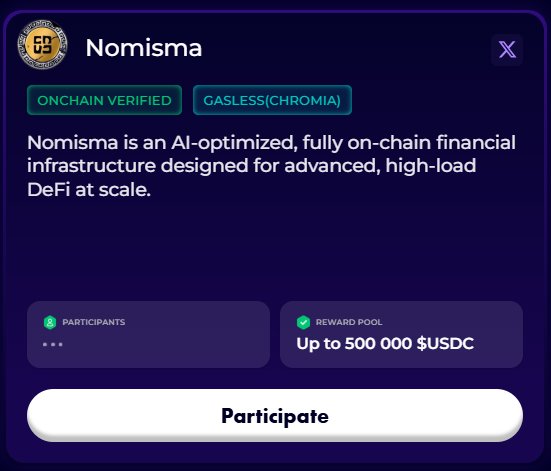
Trust, transparency and innovation are shaping the future of digital finance. @NomismaNetwork is developing decentralized infrastructure designed to enable secure value exchange, seamless interoperability, and transparent financial interactions across multiple blockchain ecosystems. By focusing on scalability, reliability, and user-centric financial architecture, the network is helping create a stronger foundation for the next generation of decentralized applications and digital economies. As blockchain adoption continues to expand globally, practical and dependable infrastructure solutions like these will play a key role in driving secure, efficient and accessible financial systems for both individuals and enterprises.
Ꮧ Ꮦ ᎷᎧᏕᏖᏗᏦᎥᎷ tweet media
English
117
8
126
379
SofiX.eth (reader arc) 📖
Good Night Everyone! 🌃 @River4fun Season 5 already feels very different. More staking. More partner campaigns. Less "posting 400 times for no reason" Connecting $RIVER locks with ecosystem activity is honestly a really smart strategy. Now these multi-project campaign posts are everywhere. When @RiverdotInc gets mentioned alongside other ecosystems, everything feels less isolated. This is much better than fake "community engagement" spreadsheets. @quipnetwork It is still kinda surprising seeing the testnet become a real competition between quantum hardware and classical hardware. Not just saying, "trust us, quantum computing is coming." Real benchmarks. Public mining. Real comparisons. Since the Bitcoin Mainnet Transition, Quantum Shield started trending again Node Manager V0.1.5 quietly released the new dashboard UI and CT discovered the Ising Model for the 81st time this month. Apparently two threads and a coffee is enough to become a physicist now. @NomismaNetwork Honestly, letting people mine through testnet activity is probably the right move. Instead of reading 47 docs nobody finishes, you learn by actually using the system. Way more useful. @TheARCTERMINAL being deployed inside institutional and sovereign environments matters more than people think. Consumer AI apps are one thing. Private infrastructure running inside organizations comes with a completely different level of security and paranoia. That’s why ARC feels closer to infrastructure than an app. The @MindoAI and @useTria numbers are getting hard to ignore. 200K+ users. 150+ countries. Real transaction volume. Pilot programs. Creators getting rewarded based on actual performance instead of random impressions. Probably why this campaign feels more serious than most Web3 stuff. @3look_io I still think it’s early. Not even talking about future speculation. Memes, posts, replies, campaign threads... all turned into actual on-chain rewards already. Most platforms farm attention 24/7 and still pretend attention has no value.
SofiX.eth (reader arc) 📖 tweet media
SofiX.eth (reader arc) 📖@OnlyReaderX_

Good Morning Everyone! 🌦 13M users before TGE 8 apps already live. #1 on TON back in december. @dropee_app really wasn’t waiting around for launch day hype. To be honest Dropee Create is less of a "game" and more of a system for mass-producing Telegram-native mini-apps equipped with AI and distribution capabilities. All of these features are powered through the $DROPEE ecosystem. Furthermore improving user retention has been emphasized in various ways. For example, these include creator rankings, higher rewards for ecosystem-related posts, and rewards linked to activity levels rather than random spikes in activity. That's a really great idea. In addition the ChainGPT Pad presale concluded today, and up to 50% of the revenue is scheduled to be used for $DROPEE buybacks. This may explain the surge in interest in $DROPEE this week. @quipnetwork Using a wrapper model instead of forcing wallet migration is one of the cleanest ideas I have seen recently. WOTS+ quantum protection technology is applied to the wallet you are currently using. There is no need to rebuild everything or "delete all existing settings and start over from scratch." Since the Bitcoin Mainnet Transition, Quantum Shield is reappearing everywhere Node Manager V0.1.5 is quietly launching a new dashboard UI CT has rediscovered the Ising Model for the 700th time in this cycle. It’s amazing that you can turn the timeline into a quantum physics seminar with just two threads and a cup of espresso. The fact that @XOOBNetwork ranked in the top 3 trending collections on OpenSea launch day holds great significance. This did not stop at simply increasing crypto Twitter clicks. In fact, broader NFT-related traffic also increased, and the scale appears to be much larger than expected. I highly value projects that focus on building infrastructure rather than one-off application cycles. This is a platform not a chatbox. @TheARCTERMINAL new positioning is unconventional, but understandable. Browser memory models proofs. This data is no longer permanently stored on another person's server cluster but is stored on the user's own hardware. The combination of ANIMA + ARC OS + Sentinel feels like an operating system layer rather than a simple AI sidebar widget. That’s an ambitious plan. Maybe it’s a little too ambitious though. But I like it. It is interesting that @MindoAI decided to award creator rewards based on @useTria collective milestone achievements. Card sales. Perp volume. Shared unlock targets. Therefore, your posts not only help you earn points, but also enable everyone to receive greater rewards when enough people achieve the goal together. This is much healthier than endless competition for individual rankings. The overall atmosphere of @Appreciators_IO ORIGIN🅰️LS is quite different from typical NFT launch events. Minting has become a social signal, and its significance goes far beyond simply "buying a JPEG and disappearing." Multiplier system. Creator participation. "IT'S 🅰️ MOVEMENT" is everywhere. Holders feel they are truly participating in the event, rather than being mere spectators. I understand why people keep talking about it online. @3look_io I think it's still early right now. CultureFi integrates AI-based persona analysis, creator tools, an on-chain reward system, and a brand marketplace into a single system. The reason most social apps fail is that they try to force people to use apps that feel abandoned like ghost towns. 3look monetizes behavior people already do on X. That part is much more important than people think.

English
131
16
141
452
evren
evren@evrendag1284·
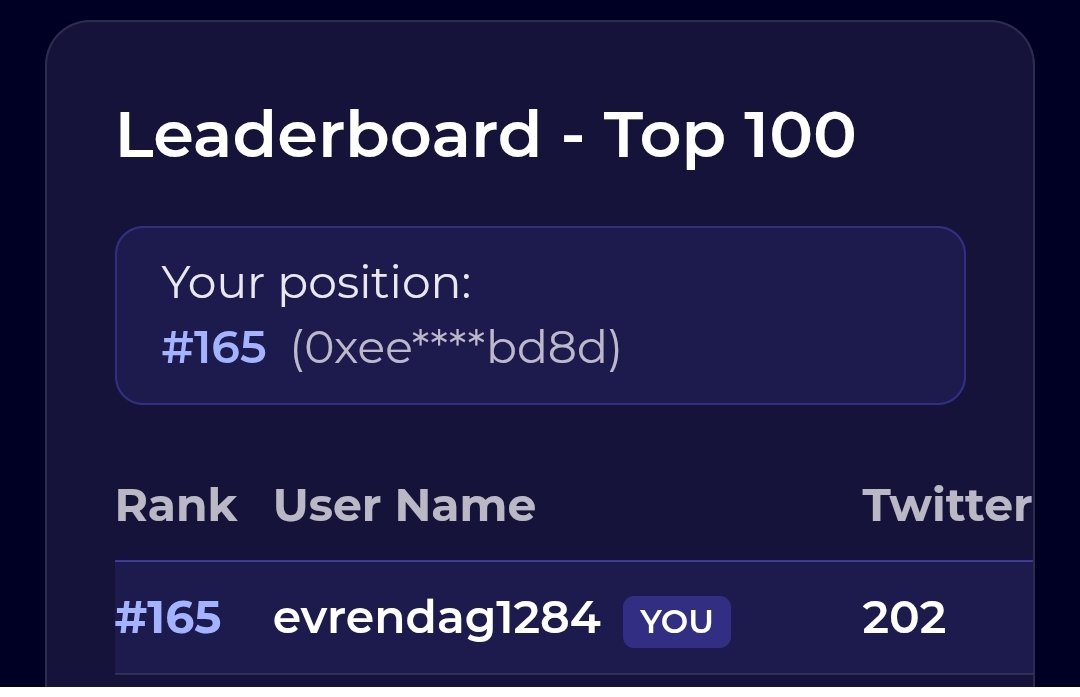
GM gXoob community, climbing the leaderboard feels great, but I think the real story on the @XOOBNetwork side starts far beyond the numbers. As we climbed to 165, I started to see more clearly: XOOB is actually trying to build the missing piece of the Web3 creator economy. For years, projects have worked with creators, but often the answers to these questions remained unclear: who is actually bringing in users, who is just generating views, which content is creating real adoption? XOOB's ImpactShare system seems to be trying to solve this distinction. It focuses not only on the amount of engagement, but also on the quality of engagement, the impact it creates, and its onchain results. I think that's why the CPA model is important. Because now it's not just about being talked about, it's about actually getting people to take action. Especially the Genesis NFT side, in my opinion, could be very critical in the long term. Even now: • It provides ImpactShare boost • It integrates with the referral system • It increases creator visibility • It creates an extra advantage within the ecosystem But I think the utility can grow much more in the future. Perhaps exclusive campaign access, high CPA pools, staking mechanics, a creator reputation system, and holder based ecosystem privileges will be unlocked. Because the structure XOOB is building feels different from a classic "campaign platform." It's more like building a measurable influence infrastructure for Web3. Right now, people are only looking at: how many points were earned, how many ranks were climbed, how many XP were collected... But after the campaign ends, the truly valuable data will emerge: which creator brought in real users, which community created real activity, which attention was converted into onchain adoption. I think in the future, projects will not only look at follower count when choosing creators. Real performance, verified activity, and measurable influence may become much more important. xoob.link/?ref=115c2fec57
evren tweet media
English
195
8
285
3.5K
EMON
EMON@axe123111·
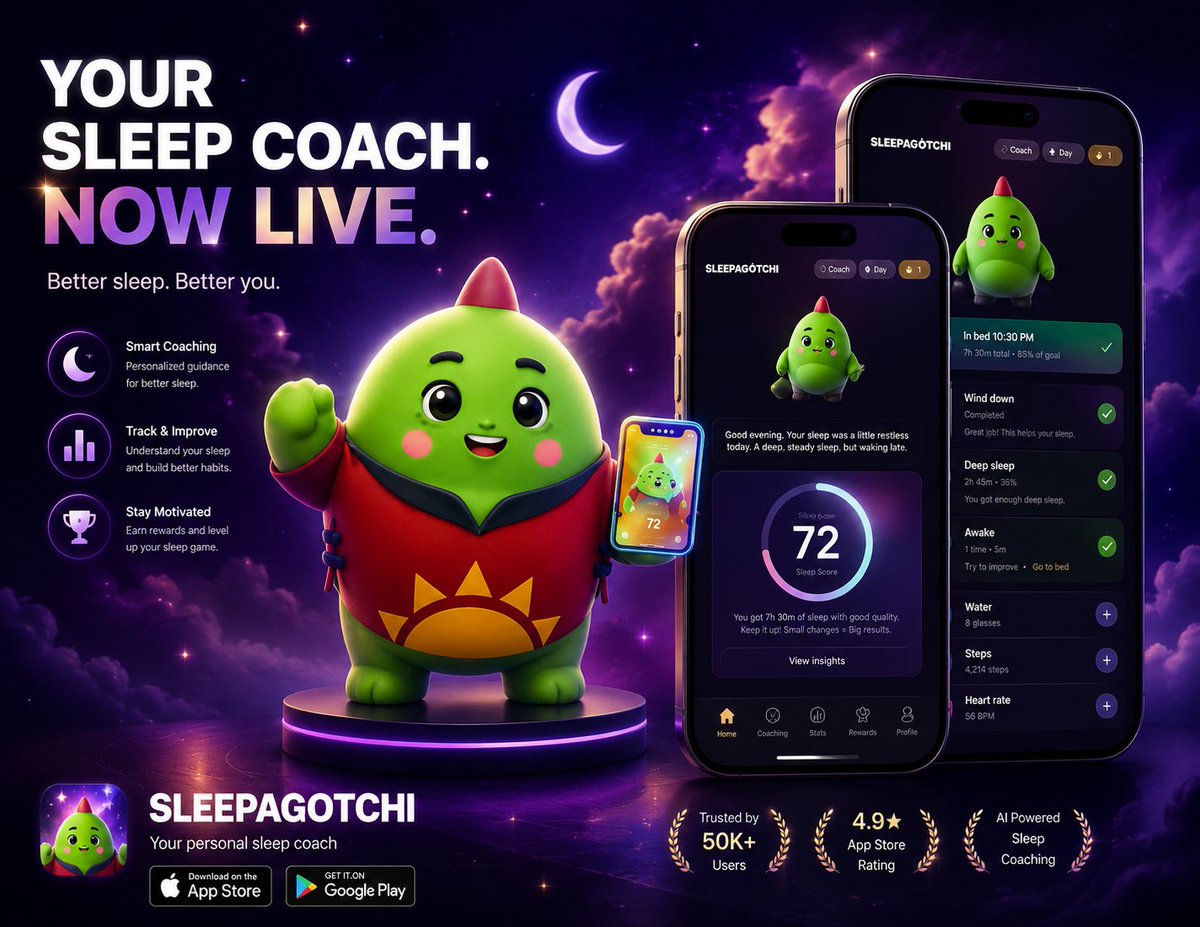
Midday reminder for the builders still showing up consistently in Web3. @sleepagotchi is exploring something bigger than simple wellness tracking. Sleep becomes data you actually control Habits become measurable patterns Consistency starts by connecting directly with incentives, ownership and AI driven feedback loops. What makes it interesting is that the system is not just collecting numbers. Over time, AI reflects personal behavior patterns back to users in ways that can actually improve routines and long term discipline. In a world where user generated data creates enormous value, it makes sense that users themselves should participate in that value layer too.
EMON tweet media
English
68
0
71
492
Bob 🤴🏾 الجَبّار
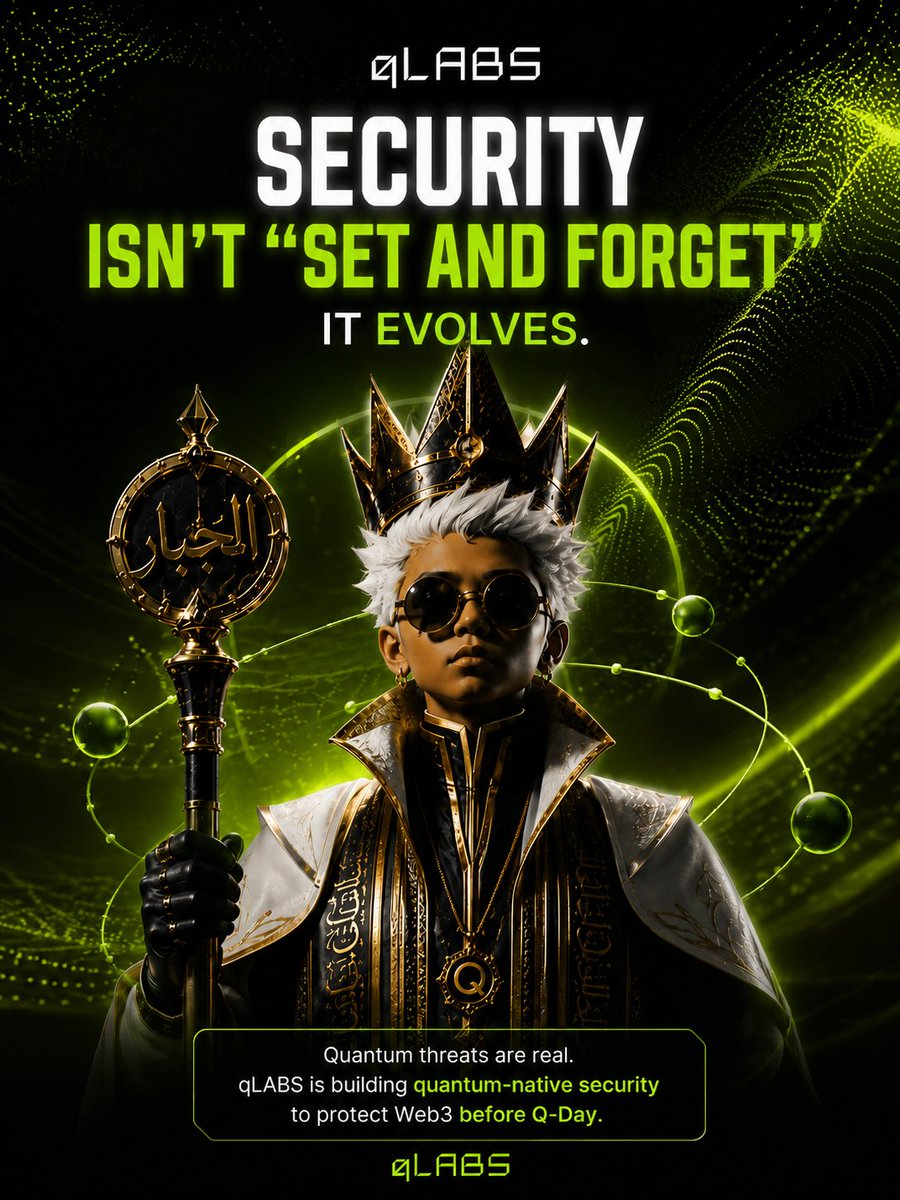
Most crypto today is secured by cryptography that was never designed to survive quantum computing. ECDSA, RSA, and similar systems are strong against classical computers, but they are not built for a world where quantum machines can solve them in minutes instead of billions of years. This is where the real risk begins. We’re entering an era where attackers don’t need to break blockchain systems today, they can simply record encrypted data now and decrypt it later when quantum capability matures. This is the “harvest now, decrypt later” problem already discussed in post-quantum security research. @qlabsofficial positions itself around a simple premise: Crypto security should not be reactive to quantum threats. It should be built for them from day one. Instead of patching old systems, the approach is to redesign the security layer entirely, wallets, signatures, and asset flows built on post-quantum cryptography standards. The goal is not speculation around quantum timelines, but preparation for a known direction of computing progress. Whether Q-Day arrives in 5 years or 20, the architectural question remains the same: Will your assets still be secure when today’s encryption stops being enough? That is the problem @qlabsofficial is built around. DYOR.
Bob 🤴🏾 الجَبّار tweet media
English
62
0
54
134
Bob 🤴🏾 الجَبّار
After spending more time researching @ConfidentialLyr upcoming Revenue Share model, I think this could become one of the most important utility layers within the entire $CLONE ecosystem. Today, we begin breaking down the roadmap step by step, starting with Revenue Share. The concept itself is straightforward: As bridge usage grows, a portion of the generated protocol fees flows back toward $CLONE stakers. According to the official roadmap, 40% of all bridge fees are expected to be distributed through the Revenue Share mechanism scheduled for rollout in Q1 2026. What makes this model interesting is how directly it connects ecosystem activity with token utility. More bridge usage → more protocol fees generated → more value flowing back toward stakers It creates a structure where adoption doesn’t just strengthen the platform itself, it potentially strengthens the position of the community participating in it. From my perspective, this is a far healthier model than ecosystems driven purely by speculation or temporary hype cycles. The roadmap appears focused on building actual infrastructure first: • cross-chain privacy • bridge adoption • wallet integrations • transaction volume • ecosystem expansion Then connecting that activity back into the staking economy through Revenue Share. Another important detail is alignment. The mechanism naturally encourages longer-term participation because users staking $CLONE are positioned to benefit from sustained network activity over time, not short-lived narratives. If @ConfidentialLyr successfully scales bridge adoption throughout 2026, the Revenue Share system could become one of the strongest long-term utility drivers for the ecosystem. I’m still researching deeper into how distributions may work across different staking structures once more details are officially released. The bigger question now becomes: Can privacy infrastructure combined with sustainable revenue models become one of the strongest narratives of the next cycle? Next roadmap breakdown: The $CLONE Buyback Mechanism, and how it could strengthen long-term ecosystem value.
Bob 🤴🏾 الجَبّار tweet media
English
0
1
36
97
Bob 🤴🏾 الجَبّار
Why Privacy Matters More Than Ever One thing becomes very clear after spending time researching and testing @ConfidentialLyr : Most crypto users underestimate how exposed they really are. Every transaction on a public blockchain creates a permanent trail. Wallet balances, transfers, interactions, and behavioral patterns can all be tracked, analyzed, and linked over time. What starts as transparency can quickly become surveillance. That’s where @ConfidentialLyr stands out. Instead of forcing users to choose between liquidity and privacy, the protocol creates a bridge between public blockchains and privacy-preserving infrastructure. Assets like BTC and ETH can move into confidential environments without giving up self-custody or depending on liquidity pools. The result is a system designed to protect transaction data while maintaining accessibility to major ecosystems. What impressed me most during research is that the architecture isn’t built around hiding activity, it’s built around restoring ownership of financial data. There’s a major difference between secrecy and sovereignty. As the industry matures, privacy infrastructure will likely become a necessity rather than a niche feature. The ability to transact without exposing your entire on-chain identity may eventually become one of the most important layers in Web3. @ConfidentialLyr is positioning itself directly at that intersection: cross-chain interoperability, privacy, and user-controlled infrastructure. The deeper I look into the protocol, the more obvious it becomes why privacy-focused systems will matter long term. What’s one reason financial privacy matters to you in crypto?
Bob 🤴🏾 الجَبّار tweet media
Bob 🤴🏾 الجَبّار@onlyoneBob_

Reviewing Confidential Layer’s 2026 Roadmap After spending time researching the latest @ConfidentialLyr roadmap, one thing becomes increasingly clear: the protocol is positioning itself as long-term privacy infrastructure rather than a short-term narrative cycle. The 2026 roadmap is heavily focused on strengthening utility, adoption, and sustainable value flow throughout the ecosystem. Here are the areas that stood out most during my research: • 40% of all bridge fees are planned to flow directly to $CLONE stakers through the upcoming Revenue Share system • A token buyback mechanism is scheduled to use protocol-generated revenue to purchase $CLONE from the open market • Additional exchange listings are planned to improve accessibility and ecosystem reach • A dedicated Creator Program will reward contributors actively expanding awareness around the protocol On the adoption side, the roadmap goes even deeper: • Referral infrastructure allowing users to earn a percentage of generated bridge fees • Wallet integrations, including the upcoming Bitcoin.com Wallet integration • Cross-chain swap functionality through the BitSwapp transaction bundler • Expansion into additional bridging routes based on ecosystem demand • Real-world payment integration through card solutions developed alongside Bridgeless and Zano What makes the roadmap compelling is the coherence of the model. Every major initiative feeds back into the same core loop: more bridge activity → more protocol revenue → stronger staking rewards and buyback pressure for $CLONE. That alignment between infrastructure growth and token utility is still rare across Web3. This feels less like speculative expansion and more like a carefully structured ecosystem designed for long-term adoption. Which roadmap feature are you most interested in seeing launch first?

English
0
1
37
131
qONE
qONE@qlabsofficial·
$250 in $qONE giveaway. 10 winners. $25 each. To enter: Follow @qlabsofficial Like + RT this post Register for qVAULT: qonetoken.io Winners picked May 25th.
qONE tweet media
English
1.4K
1.7K
2K
58K
Bob 🤴🏾 الجَبّار
Reviewing Confidential Layer’s 2026 Roadmap After spending time researching the latest @ConfidentialLyr roadmap, one thing becomes increasingly clear: the protocol is positioning itself as long-term privacy infrastructure rather than a short-term narrative cycle. The 2026 roadmap is heavily focused on strengthening utility, adoption, and sustainable value flow throughout the ecosystem. Here are the areas that stood out most during my research: • 40% of all bridge fees are planned to flow directly to $CLONE stakers through the upcoming Revenue Share system • A token buyback mechanism is scheduled to use protocol-generated revenue to purchase $CLONE from the open market • Additional exchange listings are planned to improve accessibility and ecosystem reach • A dedicated Creator Program will reward contributors actively expanding awareness around the protocol On the adoption side, the roadmap goes even deeper: • Referral infrastructure allowing users to earn a percentage of generated bridge fees • Wallet integrations, including the upcoming Bitcoin.com Wallet integration • Cross-chain swap functionality through the BitSwapp transaction bundler • Expansion into additional bridging routes based on ecosystem demand • Real-world payment integration through card solutions developed alongside Bridgeless and Zano What makes the roadmap compelling is the coherence of the model. Every major initiative feeds back into the same core loop: more bridge activity → more protocol revenue → stronger staking rewards and buyback pressure for $CLONE. That alignment between infrastructure growth and token utility is still rare across Web3. This feels less like speculative expansion and more like a carefully structured ecosystem designed for long-term adoption. Which roadmap feature are you most interested in seeing launch first?
Bob 🤴🏾 الجَبّار tweet media
Bob 🤴🏾 الجَبّار@onlyoneBob_

Understanding The $BRIDGE Leaderboard As promised, I spent more time analyzing the mechanics behind the upcoming $BRIDGE airdrop leaderboard, and the structure is far more deliberate than most systems currently circulating across the market. According to the latest official framework, leaderboard positioning is primarily determined by two core variables: • the amount of $CLONE staked • and the duration of the lock period (30, 90, or 180 days) The model is intentionally designed to reward long-term participation rather than temporary activity spikes. Larger positions combined with longer commitments receive stronger weighting within the allocation structure. What stands out most is the transparency. There are no vague engagement metrics, inflated point systems, or unclear reward calculations. The relationship between ecosystem commitment and allocation weight is direct, measurable, and easy to understand. In many ways, it reflects the broader philosophy behind Confidential Layer itself: sustainable infrastructure supported by aligned incentives. That combination, privacy infrastructure paired with economically coherent participation models, is still relatively uncommon in Web3. Leaderboard previews are expected to roll out soon, and it’ll be interesting to see how participants begin optimizing for higher-tier positioning. Are you structuring your stake strategically for the upcoming allocation tiers?

English
0
2
100
453
Bob 🤴🏾 الجَبّار
Understanding The $BRIDGE Leaderboard As promised, I spent more time analyzing the mechanics behind the upcoming $BRIDGE airdrop leaderboard, and the structure is far more deliberate than most systems currently circulating across the market. According to the latest official framework, leaderboard positioning is primarily determined by two core variables: • the amount of $CLONE staked • and the duration of the lock period (30, 90, or 180 days) The model is intentionally designed to reward long-term participation rather than temporary activity spikes. Larger positions combined with longer commitments receive stronger weighting within the allocation structure. What stands out most is the transparency. There are no vague engagement metrics, inflated point systems, or unclear reward calculations. The relationship between ecosystem commitment and allocation weight is direct, measurable, and easy to understand. In many ways, it reflects the broader philosophy behind Confidential Layer itself: sustainable infrastructure supported by aligned incentives. That combination, privacy infrastructure paired with economically coherent participation models, is still relatively uncommon in Web3. Leaderboard previews are expected to roll out soon, and it’ll be interesting to see how participants begin optimizing for higher-tier positioning. Are you structuring your stake strategically for the upcoming allocation tiers?
Bob 🤴🏾 الجَبّار tweet media
Bob 🤴🏾 الجَبّار@onlyoneBob_

Bridge-to-Earn & $BRIDGE Airdrop Following yesterday’s breakdown of the revenue model, I decided to look deeper into Confidential Layer’s official Bridge-to-Earn campaign. The snapshot is already live through the official airdrop portal. 🔗link: cloneairdrop.com Users complete ecosystem tasks, whitelist wallets, and position themselves for the upcoming $BRIDGE allocation. What makes the structure interesting is how closely the airdrop is tied to actual protocol participation. Your allocation potential is influenced by: • the amount of $CLONE staked • the duration of the lock period • and overall ecosystem engagement The longer the commitment and the stronger the participation, the higher the positioning on the leaderboard. It’s a more sustainable approach than the typical “farm-and-dump” model because it rewards long-term alignment rather than short-term activity spikes. The protocol is clearly incentivizing conviction, not just attention. Tomorrow, I’ll break down how the leaderboard system works in more detail and what appears to matter most for higher-tier positioning. Have you already completed your Bridge-to-Earn tasks?

English
0
37
3
435
BunnyCryptΞ
BunnyCryptΞ@0xFrimp·
When I first started paying attention to the growing conversation around post-quantum security in crypto, one question kept coming to mind: Is @qlabsofficial actually building something secure? From what I’ve seen, the answer seems to come down to how they’re approaching the problem. What stands out to me is that qLABS isn’t positioning itself around hype alone, it’s focused on one of the biggest long-term risks blockchain may eventually face: Q-Day, the point where quantum computing could challenge traditional cryptographic systems. To me, security in Web3 is no longer just about speed, scalability, or lower fees. It’s about resilience. That’s where qLABS appears interesting. Their ecosystem is centered around post-quantum cryptographic thinking, quantum-resistant infrastructure, and tools designed to help digital assets remain protected as computing evolves. Instead of forcing users to completely rethink blockchain interactions, the approach seems to focus on strengthening security layers around existing systems. What I personally find compelling is this: • Security-first development often matters more than short-term hype • Preparing before a major risk emerges is stronger than reacting after it happens • Infrastructure projects solving deep technical issues often become more valuable over time • Quantum-readiness could become an important discussion for the next phase of Web3 Of course, no protocol, company, or ecosystem should be assumed to be “fully secure” without independent audits, continuous testing, and real-world validation. But from my perspective, qLABS is working in a category that matters: building toward stronger blockchain resilience before post-quantum security becomes unavoidable. That alone is why I think @qlabsofficial deserves attention.
BunnyCryptΞ tweet media
BunnyCryptΞ@0xFrimp

The projects that win won’t just launch tokens, they’ll build the rails that make participation effortless. That’s why the integration between @GoHome_Token and @QwertiAI is a stand out to me. $GOHOME already has the energy and community momentum that makes memecoins move fast on Solana. But momentum alone isn’t enough anymore onboarding and execution matter just as much. By integrating Qwerti’s White-label Widget, the GOHOME ecosystem now gives users a much smoother path from discovery → execution: • swap from any chain • access from any device • interact directly through their own website • no complicated bridging or fragmented UX And honestly, this is the bigger shift happening across Web3. Attention is everywhere. Friction is the real enemy. The projects that reduce onboarding friction are the ones most likely to convert attention into actual on-chain participation. The 2M Qwerti Points pool also adds another interesting layer: it rewards users not just for watching the narrative unfold, but for actively participating in it. In simple terms: $GOHOME brings the movement. Qwerti brings the infrastructure. And together, they’re showing what modern DeFi onboarding is starting to look like: fast, embedded, and frictionless.

English
23
53
121
1.9K
เ’ɱ ɱเ૮ҡεყ ƭɦε ૮µ૨αƭσ૨ 🍀❤️‍🔥
⚛️ Why qLABS Stands Out For Me Most crypto projects focus on hype and short term narratives. qLABS feels different. What caught my attention is that they’re building around a problem the entire industry knows is coming: quantum threats to blockchain security. As quantum computing advances, traditional cryptography used across major chains could eventually become vulnerable. And with the “harvest now, decrypt later” strategy already being discussed, this becomes a long term security issue worth paying attention to. Instead of building another chain, qLABS is creating a quantum resistant security layer designed to work with existing ecosystems like Ethereum, Solana, and Hyperliquid. The Quantum Sig Wallet especially stands out to me because it combines classical cryptography with post quantum cryptography through a dual-signature system designed for future proof security. I also like that $qONE has actual ecosystem utility tied to security access, validation, governance, and incentives not just speculation. For me, qLABS looks less like a trend and more like infrastructure positioning for the next era of crypto security. gQuantom from the O block.✡️
เ’ɱ ɱเ૮ҡεყ ƭɦε ૮µ૨αƭσ૨ 🍀❤️‍🔥 tweet media
English
8
3
27
330
五条 悟
五条 悟@SATURO_GOJO_eth·
TWEET 1 — THE HOOK Every crypto project suddenly claims quantum resistance. Most are selling fear, not math. Here is how to spot the difference between real post-quantum infrastructure and marketing dressed in lab coats.
五条 悟 tweet media
English
2
0
1
8
OUTLAW
OUTLAW@outlaw12399·
in 1994, a mathematician named Peter Shor wrote an algorithm that could break the encryption protecting every wallet on every blockchain ever built. the only reason it hasn't happened yet is that the computers capable of running it didn't exist. they're being built right now and @qlabsofficial just shipped the first real answer to that problem. it's called qVAULT. here's what it is and why it matters. 🧵🔻
OUTLAW tweet media
English
33
14
98
1.4K
Bob 🤴🏾 الجَبّار
After reviewing official documentation, litepapers, and ecosystem announcements, here’s why $qONE stands out as more than just another token. $qONE powers the core of qLABS’ quantum-resistant infrastructure. 🔹 Quantum-safe transaction verification 🔹 qVAULT + Quantum-Sig wallet utilities 🔹 Asset wrapping through QCW/QDW 🔹 Quantum-resistant token deployment 🔹 Governance and ecosystem coordination 🔹 Revenue generation through protocol usage and buybacks The model is simple: More adoption of quantum tools → greater utility for $qONE → stronger ecosystem security. For holders and community members, the ecosystem also introduces: • Governance participation • Staking rewards and incentives • Access to advanced protection tools • Long-term alignment through fixed supply and deflationary mechanics What makes this interesting is that the utility is tied directly to solving a real future problem: quantum vulnerability. As Q-Day discussions continue growing across governments, enterprises, and Web3, infrastructure-focused ecosystems like qLABS may become increasingly important. $qONE is positioning itself as infrastructure money for the post-quantum era. What are your thoughts on utility tokens focused on quantum security? DYOR. Not financial advice.
Bob 🤴🏾 الجَبّار tweet media
Bob 🤴🏾 الجَبّار@onlyoneBob_

After spending more time researching @qlabsofficial, one thing that genuinely stood out to me is how intentional their partnerships appear to be. In my opinion, the project’s three major collaborations reflect a focused, execution-driven strategy rather than short-term marketing moves. Here’s what caught my attention: 1. 01 Quantum This feels like the technical backbone of the ecosystem. Their post-quantum IronCAP™ technology powers much of the infrastructure being built around qLABS. What makes this significant to me is the combination of enterprise-level cybersecurity experience and quantum-resistant cryptographic development. 2. HYLQ Strategy Corp. The strategic investment into qONE signaled something important: institutional interest in post-quantum infrastructure is starting to emerge earlier than many people expected. Beyond capital, partnerships like this often bring long-term credibility and ecosystem support. 3. Fairyproof This partnership stood out because security audits are critical for projects operating in high-security sectors like post-quantum infrastructure. Independent verification adds another layer of confidence around smart contracts, wallet systems, and future protocol development. What I personally find interesting is the overall pattern behind these partnerships: Strong cryptographic infrastructure. Strategic institutional alignment. Independent security validation. That combination gives the impression of a project focused more on long-term infrastructure development than temporary market narratives. The deeper I research the quantum security sector, the more I believe the projects prioritizing serious technology, credible partnerships, and scalable security frameworks will ultimately stand apart as the industry evolves. Still researching. Still learning. But @qlabsofficial is becoming one of the more interesting infrastructure plays I’ve studied in the post-quantum space so far. DYOR always. Not financial advice.

English
2
1
51
202
Bob 🤴🏾 الجَبّار
Bridge-to-Earn & $BRIDGE Airdrop Following yesterday’s breakdown of the revenue model, I decided to look deeper into Confidential Layer’s official Bridge-to-Earn campaign. The snapshot is already live through the official airdrop portal. 🔗link: cloneairdrop.com Users complete ecosystem tasks, whitelist wallets, and position themselves for the upcoming $BRIDGE allocation. What makes the structure interesting is how closely the airdrop is tied to actual protocol participation. Your allocation potential is influenced by: • the amount of $CLONE staked • the duration of the lock period • and overall ecosystem engagement The longer the commitment and the stronger the participation, the higher the positioning on the leaderboard. It’s a more sustainable approach than the typical “farm-and-dump” model because it rewards long-term alignment rather than short-term activity spikes. The protocol is clearly incentivizing conviction, not just attention. Tomorrow, I’ll break down how the leaderboard system works in more detail and what appears to matter most for higher-tier positioning. Have you already completed your Bridge-to-Earn tasks?
Bob 🤴🏾 الجَبّار tweet media
Bob 🤴🏾 الجَبّار@onlyoneBob_

Building on yesterday’s bridge test, I spent more time examining the scope of the network itself and this is where Confidential Layer becomes particularly interesting. The protocol is positioning itself as a privacy interoperability layer between transparent blockchains and confidential environments. Currently supported infrastructure includes: • Public-chain side: Bitcoin, Bitcoin Cash, Ethereum, and Base • Privacy layer: Zano, powered through Confidential Assets technology Additional ecosystem expansion toward EVM networks, Solana, TON, and Cosmos infrastructure appears to already be in progress. What makes the model compelling is the ability to transition assets from fully transparent environments into privacy-preserving infrastructure without relinquishing ownership or depending on custodial systems. That distinction matters. As on-chain analytics become increasingly sophisticated, financial privacy is gradually shifting from a niche preference to a broader infrastructure requirement, especially for users who value operational discretion while maintaining access to cross-chain liquidity. The documentation and bridging architecture are worth exploring for anyone researching the space further: Confidential Layer Documentation Curious to hear different perspectives on this: Which chain would you personally want private interoperability for first?

English
0
0
0
180