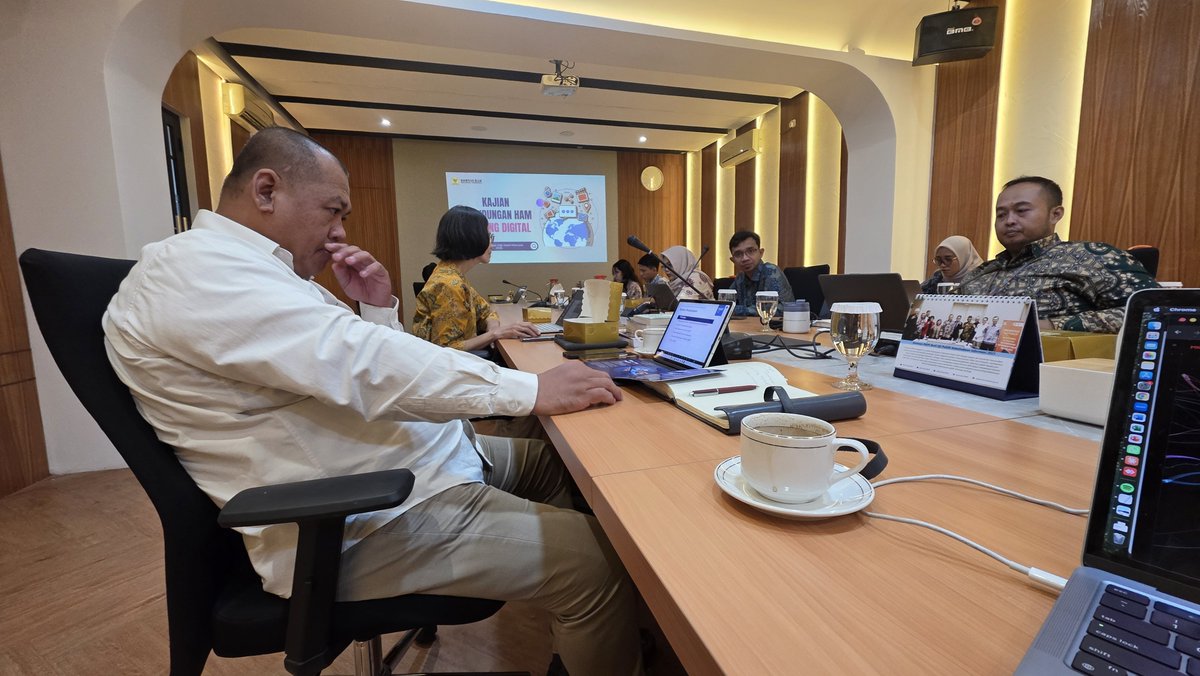
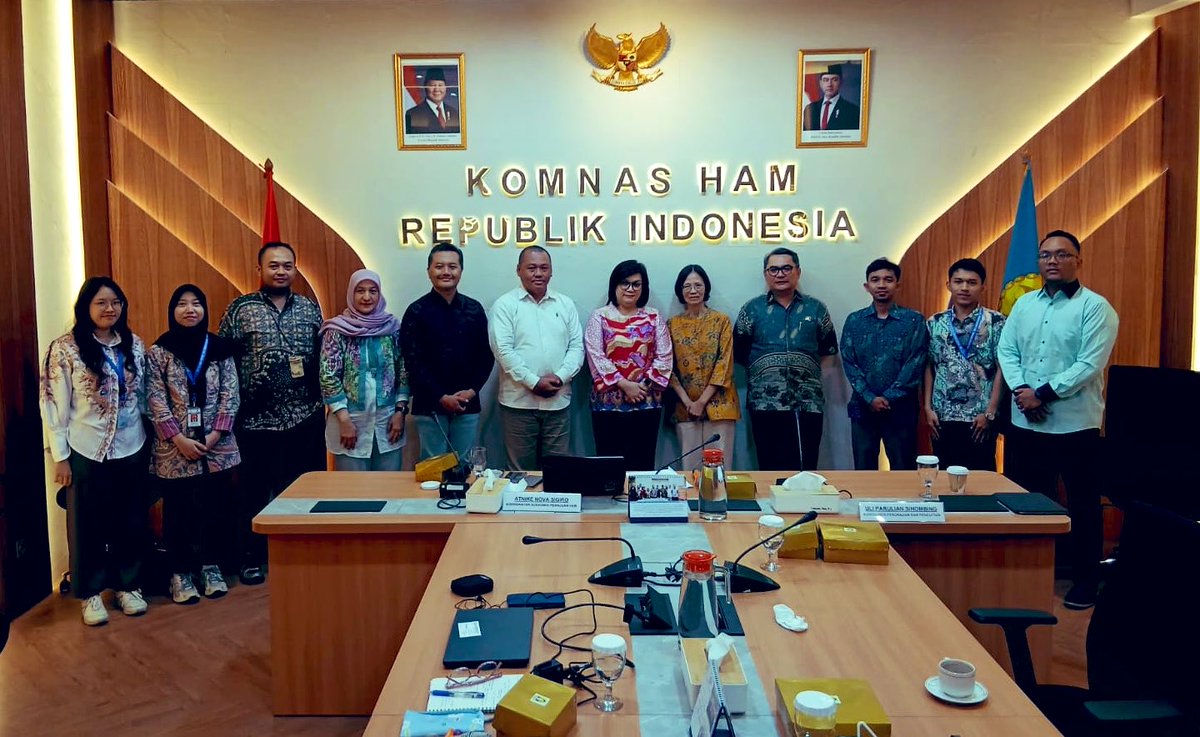
Hari ini diminta @KomnasHAM memberi masukan untuk Kajian HAM di Ruang Digital. Tadi bareng mas petani melon @ismailfahmi dan mbak Indri DS.
Jadi ingat 5-6 tahun diminta masukan buat susun Standar Norma Pengaturan No. 5.
Terima kasih atas kepercayaan pada @pikatdemokrasi
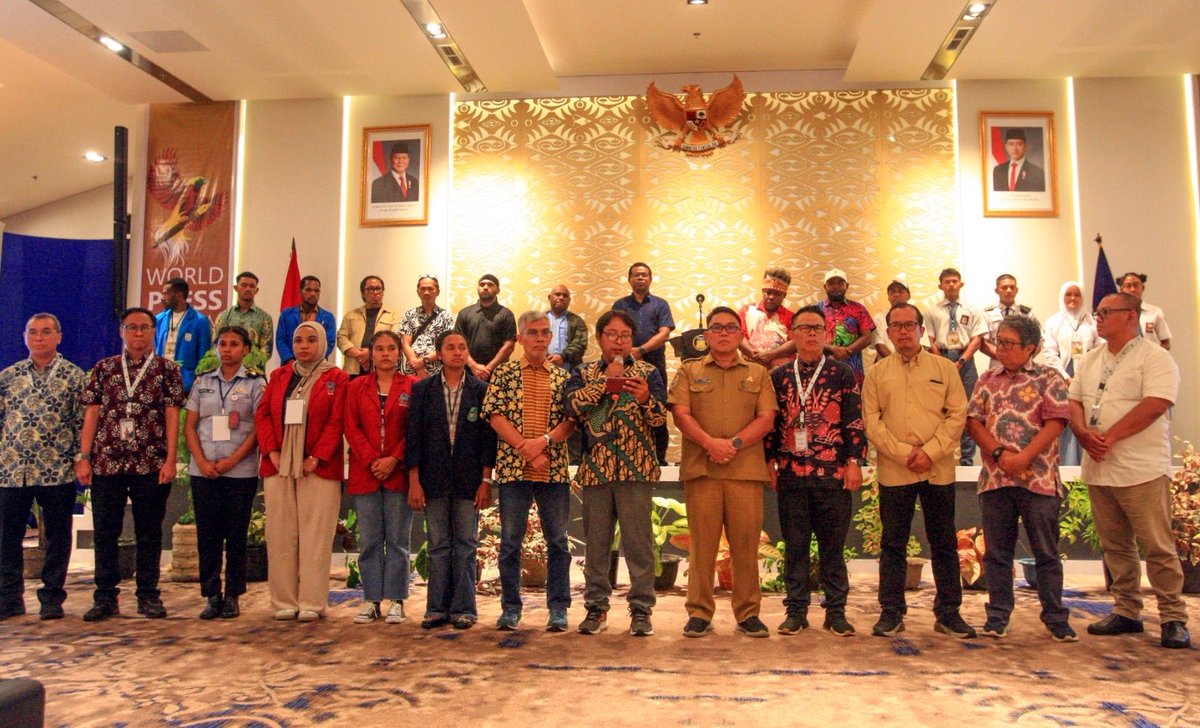
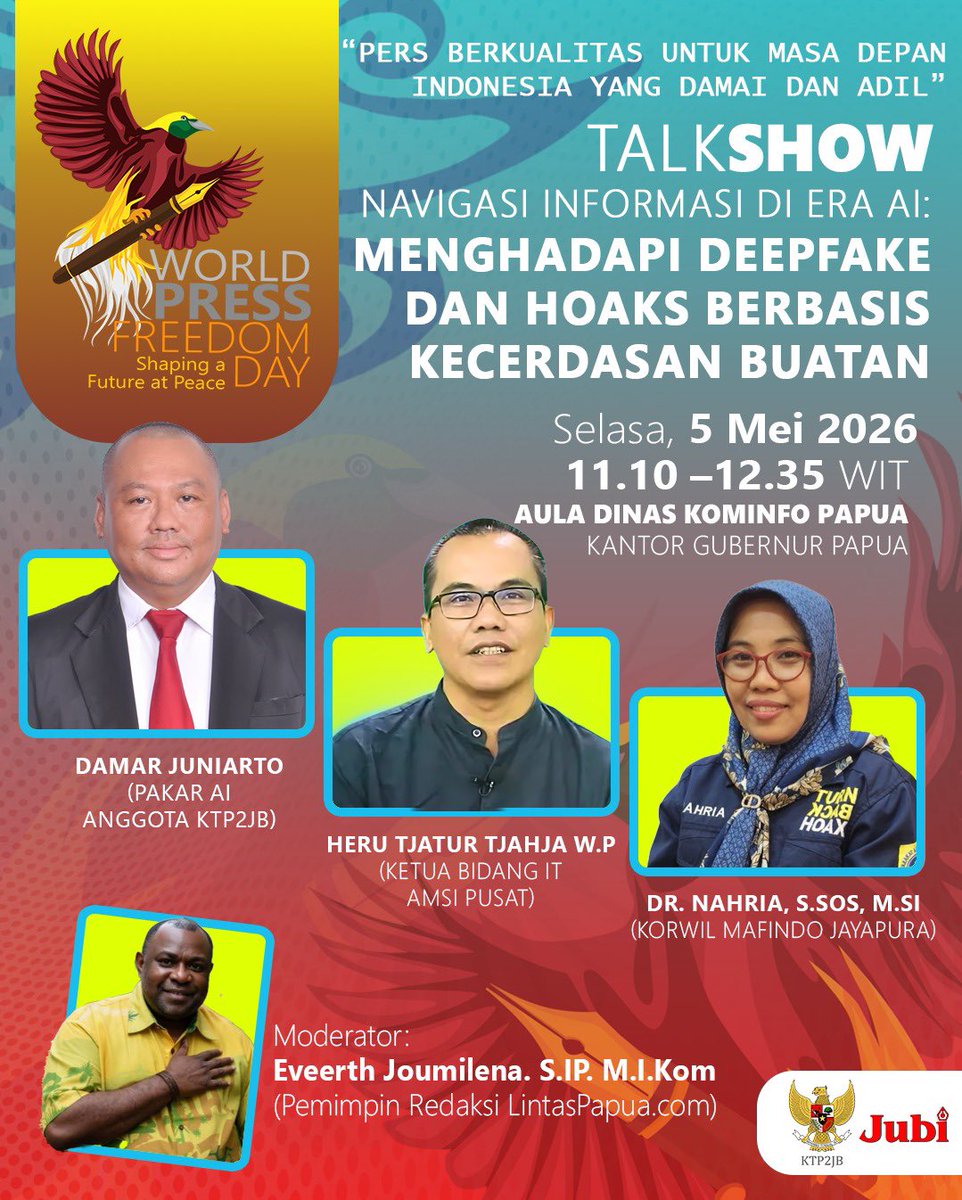
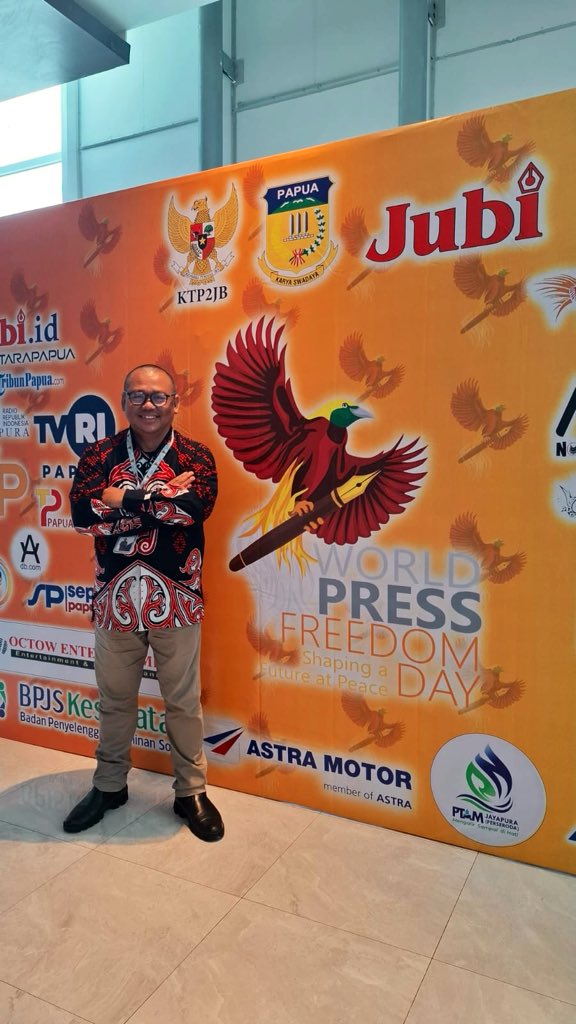
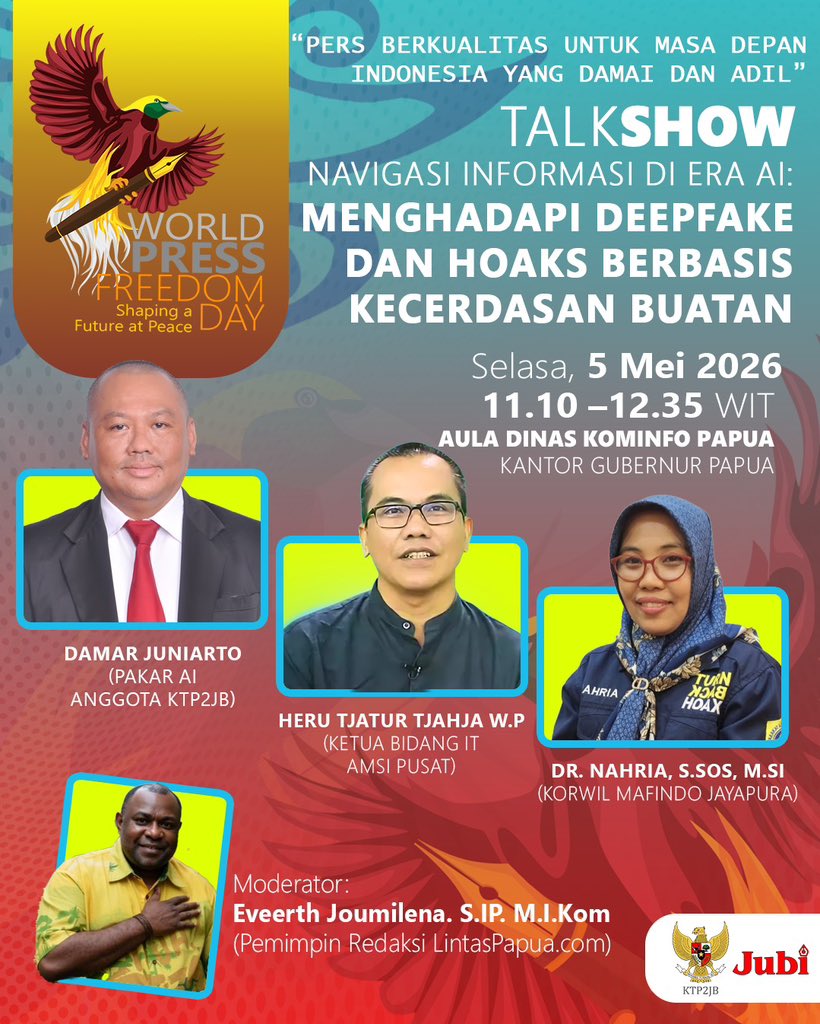
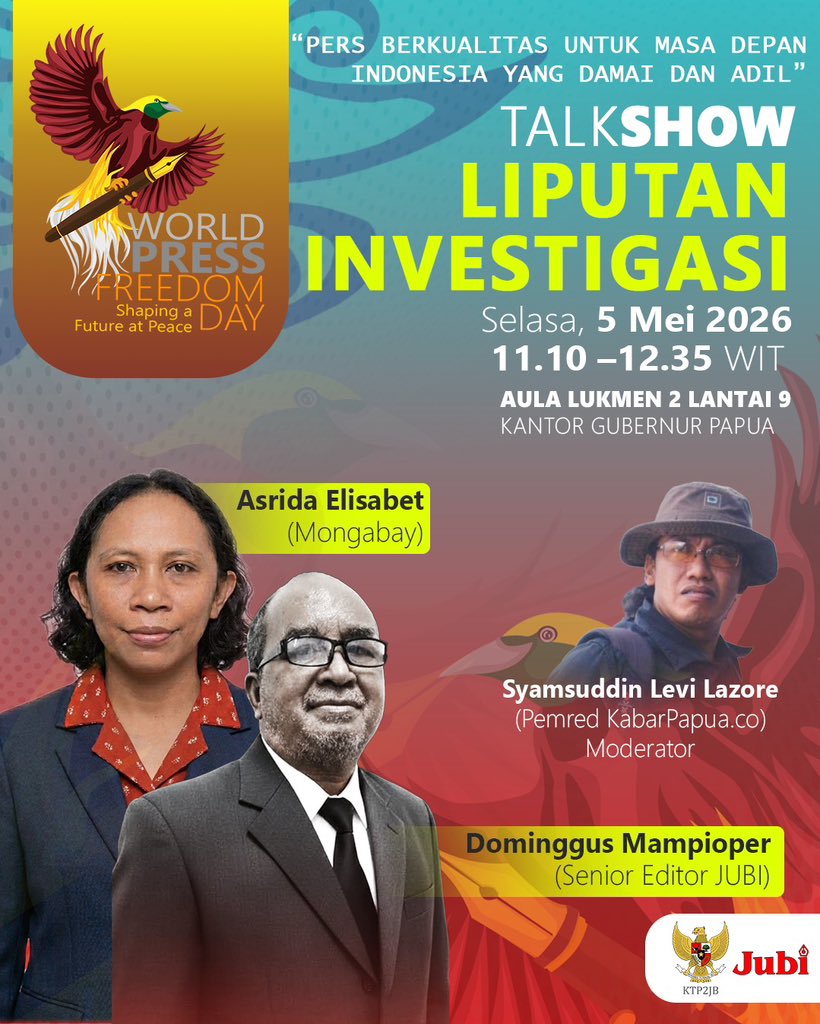
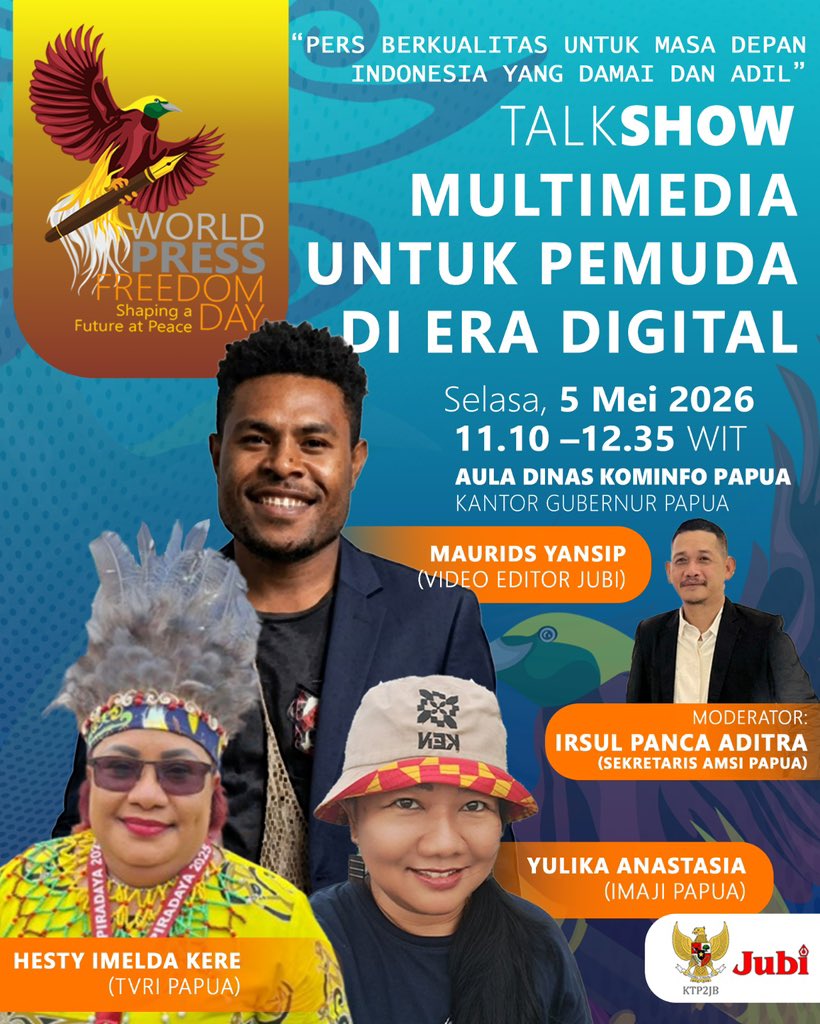
Dua hari sebelum ini, jadi pembicara di World Press Freedom Day di Tanah Papua. Saya share pandangan terhadap situasi pers di era disinformasi dan dominasi AI.
Terima kasih atas kesempatan dari @KTP2JB Pemprov Papua dan @tabloidjubi#WPFD2026
Selamat pagi.
Komite @KTP2JB bersama komunitas pers menyelenggarakan World Press Freedom Day di ujung timur Indonesia, di Jayapura, Papua.
SHAPING A FUTURE AT PEACE!
Pers Berkualitas Untuk Masa Depan Indonesia yang Damai dan Adil
#jurnalismeberkualitas#wpfd2026#persbebas
All freedom depends on press freedom.
Without it, there can be no human rights, no sustainable development & no peace.
On this World Press Freedom Day, let's protect the rights of journalists & build a world where the truth & the truth-tellers are safe.
Today we celebrate World Press Freedom Day, sponsored by UNESCO. Unfortunately, this right is often violated, sometimes flagrantly, sometimes in hidden ways. Let us remember the many journalists and reporters who are victims of war and violence.
A researcher spent two years documenting what AI is doing to the way humans think.
His conclusion fits in one sentence.
AI is standardizing human thought. Across societies. Across cultures. Across generations. Simultaneously. At a scale no technology in history has ever achieved.
The paper is called "The Impact of Artificial Intelligence on Human Thought." Published July 2025 on arXiv. Written by independent researcher Rénald Gesnot, categorized under Computers & Society and Human-Computer Interaction.
It is not a benchmark paper. It is not a capability paper. It is something rarer — a systematic analysis of what happens to human cognition, creativity, and intellectual diversity when billions of people outsource their thinking to the same machine.
Here is the mechanism the researcher describes.
When you ask an AI a question, you get an answer shaped by the model's training data, its fine-tuning, its alignment process, and the preferences of the company that built it. That answer is not neutral. It reflects a specific set of values, framings, and assumptions. Usually Western. Usually English-dominant. Usually optimized for engagement and approval.
When 500 million people ask the same AI similar questions and receive similar answers, those answers become reference points. People quote them. Build on them. Argue from them. The diversity of starting points — different cultures, different intellectual traditions, different ways of framing problems — begins to compress.
The researcher describes this as cognitive standardization.
Not censorship. Not propaganda. Something subtler and harder to reverse. A gravitational pull toward the outputs of a small number of models, trained by a small number of companies, reflecting a small number of worldviews.
The paper also documents algorithmic manipulation — AI systems that exploit cognitive biases to influence behavior. The way recommendation algorithms produce filter bubbles. The way AI-generated content exploits confirmation bias. The way personalization systems learn what you already believe and feed it back to you amplified.
And then the creativity question — the one nobody wants to answer directly.
When AI can produce a poem, an essay, a business plan, or a research summary in seconds — and when that output is often indistinguishable from or preferred over human-generated content — what happens to the human practice of creating those things? Not the output. The practice. The struggle. The failure. The slow development of a personal voice through years of imperfect attempts.
The researcher argues that cognitive offloading — delegating thinking tasks to AI — does not merely save time. It atrophies the mental capacity that the offloaded task was building.
Microsoft and Carnegie Mellon found this empirically in 2025: higher AI trust correlates directly with measurably lower critical thinking. The researcher provides the theoretical framework for why.
The paper ends with a question the researcher admits he cannot answer.
Once a generation grows up with AI as the default thinking partner — once the habit of outsourcing cognition is formed before the habit of independent thought is developed — what does intellectual autonomy even mean?
And is it already too late to find out?
Source: Gesnot, R. · "The Impact of Artificial Intelligence on Human Thought" · arXiv:2508.16628 · arxiv.org/abs/2508.16628 · July 2025
"At their core, both are about restoring trust."
The #GlobalDigitalCompact — annex to the Pact for the Future — is 193 Member States' roadmap for #DigitalCooperation & #AIGovernance.
Progress is underway: the AI Panel & Dialogue are already levelling the playing field. 🌐
Uncontrolled AI poses a severe danger to all of humanity.
On Wednesday, I'll be hosting a discussion with leading AI scientists from the US and China about the need for international cooperation against this existential threat. This is an enormously important issue. Join us.