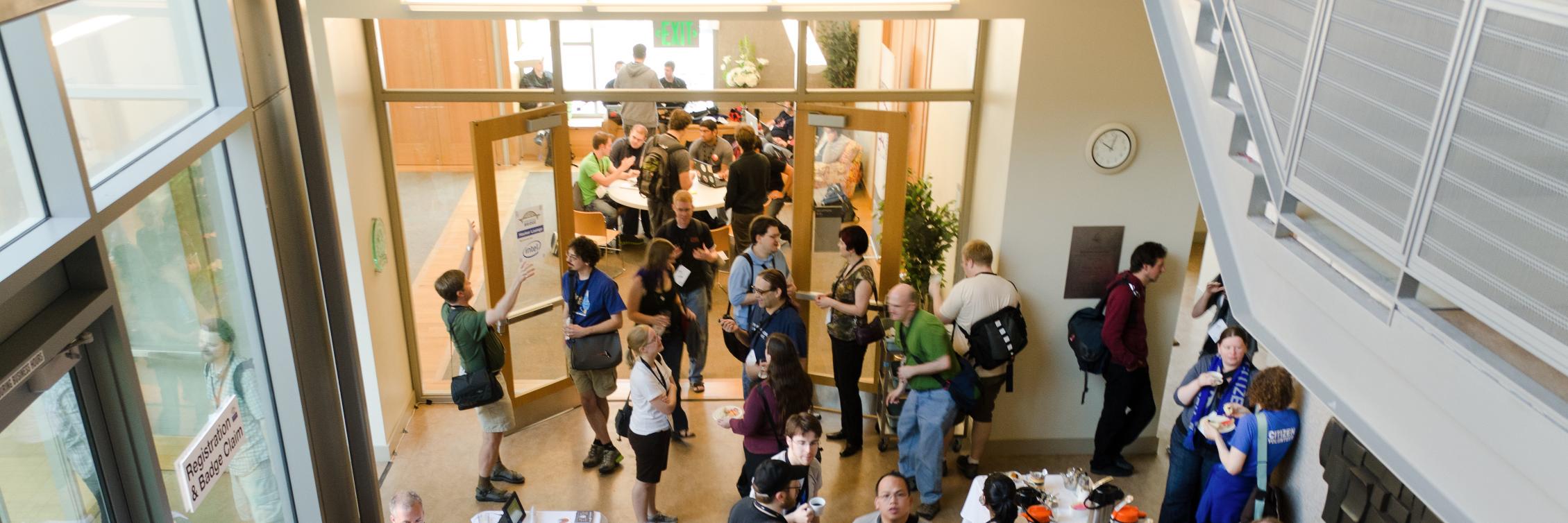
At the unconference today, we talked about ways to carry the @osbridge community forward.
One way is via a new Zulip chat server we just set up. Join today! osbridge.zulipchat.com
For those at @osbridge who appreciated @kronda's talk: her link is PayPal.me/kronda
I know how much I get paid an hour. That was worth at least an hour of my time. At least two.
In ten years, though, @osbridge has done good. New keynotes, new speakers, bringing things and people together, talking abt things that other conferences weren't interested in.
Thanks, everyone - participants, board members, sponsors, volunteers. Good work.
@christi3k at #osb18
And, well, things change. The questions and goals, the stakes involved, and how we talk about things, change. What do we want now? What do we want in ten years from now? How do we fund that? How do we work at that?
What, now?
@christi3k at #osb18
Sponsors shifted attention elsewhere, coding took place more in walled gardens, and forking software became regular. Stuff got tough. But also, new groups with the focus that @osbridge wanted started appearing. (Burnout among organizers also happened. Lots.)
@christi3k at #osb18
2013 was a rough year, as the community lost a luminary, and so @osbridge was both celebration and memorial.
Phase 3 of the conference is in a world that accepted the ecosystem of open source (especially in business), but changed its definition drastically.
@christi3k at #osb18
Years 1 and 2 helped establish the norms for what @osbridge would become, but there was a chance that things would have flopped because the original venues were not easy to work with (e.g. "No, wireless access points cannot be put on the statues.") #osb18
OsCon's lack of appearance in 2009 became the galvanizing force that brought forth @osbridge and the idea of Open Source Citizenship that it relied on - less focus on the tools and how they work, and more on the roles we have in regard to our software, like user or dev. #osb18
Good morning, #osb18. So glad to be here for the final huzzah. @christi3k is giving us the history of the conference, and how the open-source community in Portland came together to put on the conference. With lots of organizations, and eventually, Calagator to pull them together.