
Kortan
503 posts

Kortan
@overloadkortan
🗡️I am Overload Kortan .There can only be one.⚔️
Mogonda Katılım Mayıs 2025
190 Takip Edilen28 Takipçiler

New Township Alert,
Khayalami Estate, Next to Nkulumane 12, Bulawayo (Not to be confused with Khayalami Estate in Midrand, Gauteng).
Price: $35/m2
Ownership: cession
Stand sizes: 275m2-550m2
Payment terms ; 30% deposit +
Balance over 12 months
Contact: 0786507770 / 0777145471
📸 Guest & Tanner

English
Kortan retweetledi

A colleague bump her car, insurance says the damage is 10k which she must pay 6k access.
Took her to Pretoria West Panelbeaters, in less than 20 minutes it was clipped back together and they just asked for cold drink.

English
Kortan retweetledi

Zimbabwe is bad,I am a truck driver and always delivering paint at DULUX Harare 2 times a week and driving a tautliner.You get stopped about 4times between Beitbridge and Harare and everytime you must open the tarpaulin.I even sdked them why cant they stamp my documents at the first roadblock to show that i have been searched so that i cant be opening the truck at every roadblock since they will be looking for goods smuggled from SA.You end up delaying and tired of this nonsense and on top of that you still going to shaked like alcohol on those datours🚮🚮🚮🚮
English
Kortan retweetledi


Kortan retweetledi

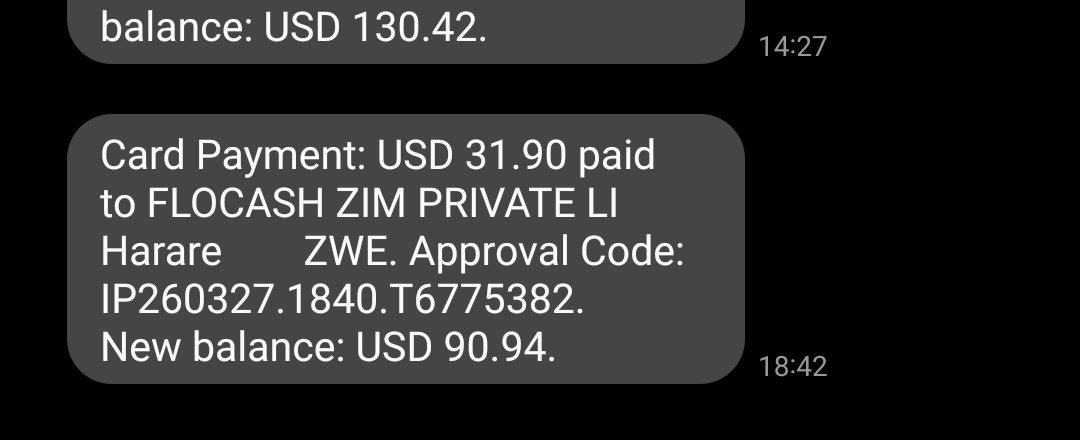
@Starlink Zimbabwe uses a locally registered company (Flocash) collecting VAT (15.5%) already. Yet @EcoCashZW charges an extra 15.5% Digital Services Withholding Tax! What's this madness??? Why are we double-taxed?? $8 gone to charges + double tax now?!? @Zimra_11

English
Kortan retweetledi
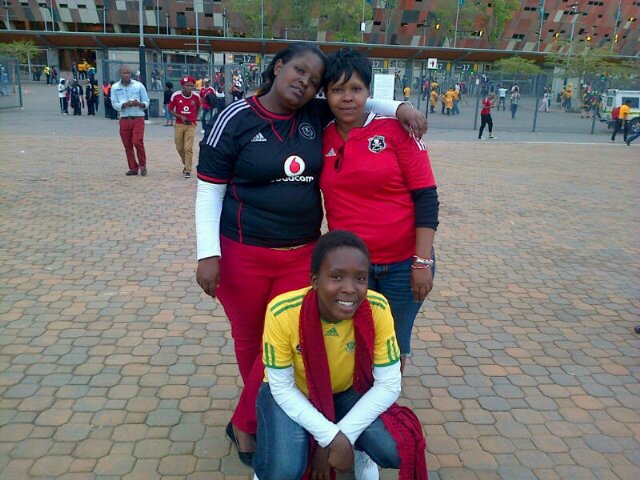
@zimpricecheck Powertel in Bulawayo was only taking Zig payments in the morning.
English

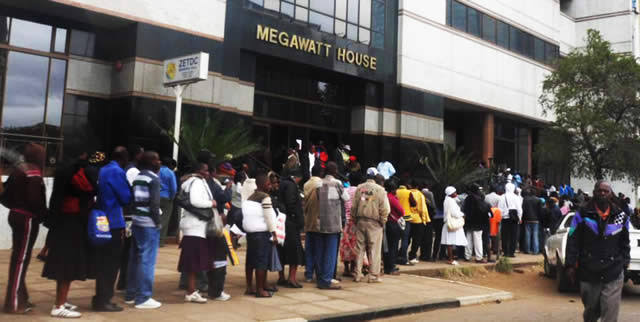
🚨 𝐙𝐄𝐒𝐀 𝐏𝐫𝐞𝐩𝐚𝐢𝐝 𝐒𝐲𝐬𝐭𝐞𝐦 𝐃𝐨𝐰𝐧
The ZESA prepaid platform has been down since Sunday, forcing people into 𝐦𝐚𝐬𝐬𝐢𝐯𝐞 𝐪𝐮𝐞𝐮𝐞𝐬 at banking halls.
All third-party sellers are offline—including, strangely, 𝐏𝐨𝐰𝐞𝐫𝐭𝐞𝐥. It’s a bit ridiculous considering they are the ones tasked with running and maintaining the entire platform.
How is the system administrator down along with the system? 🇿🇼
#ZESA #Zimbabwe #Powertel #ServiceDelivery #Energy
English
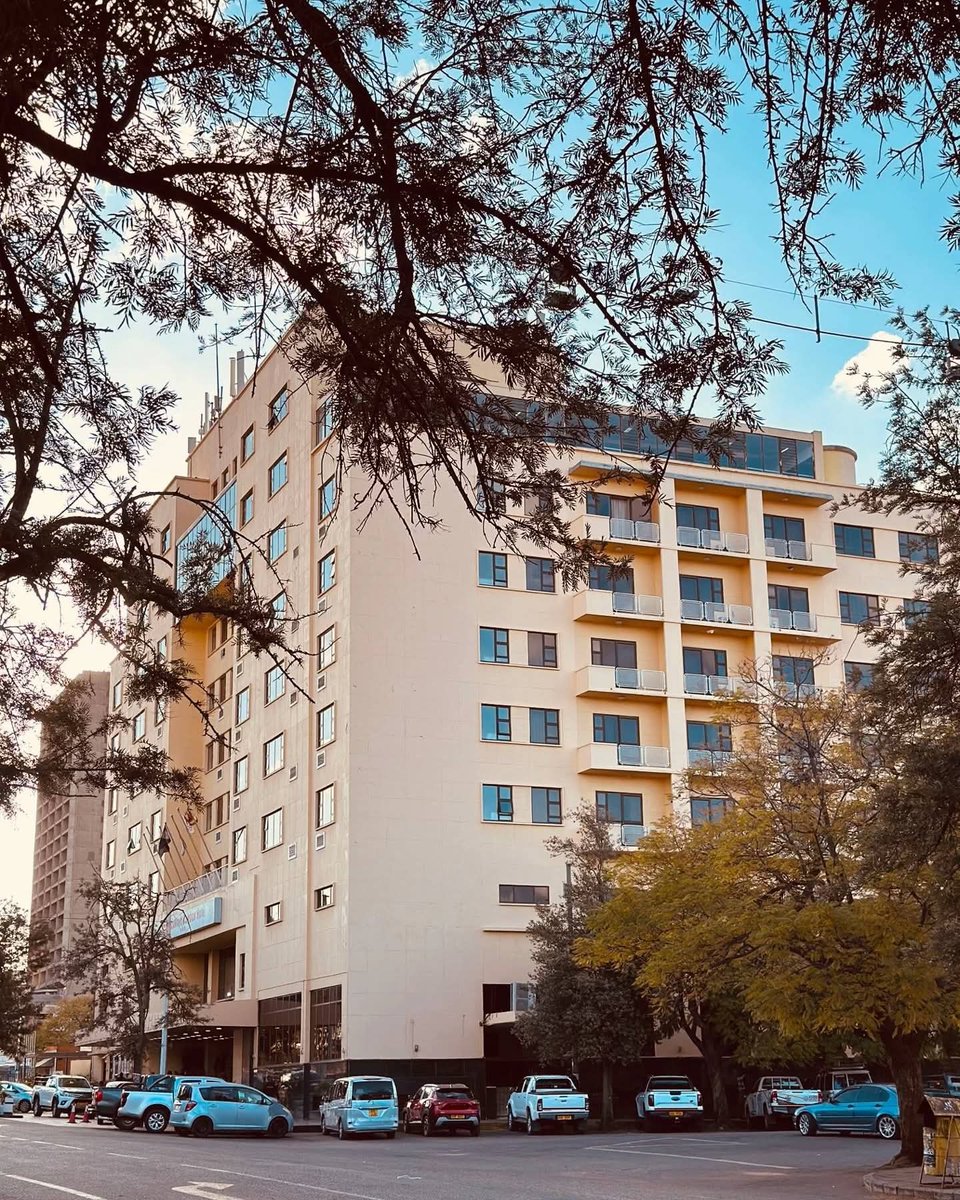
Does anyone have a list of EV charging stations in Bulawayo, i only know of the ZITF one. Ideal locations would be,
1. Rainbow Hotel
2. Holiday Inn
3. TM Hyper
4. Ascot Shopping Centre
5. Zonkizizwe Shopping Centre
6. NUST
7. Hillside Dams
8. Hillside Walk
9. Fazak Woodlands
10. City Hall Parking
11. BF stadium
English
Kortan retweetledi
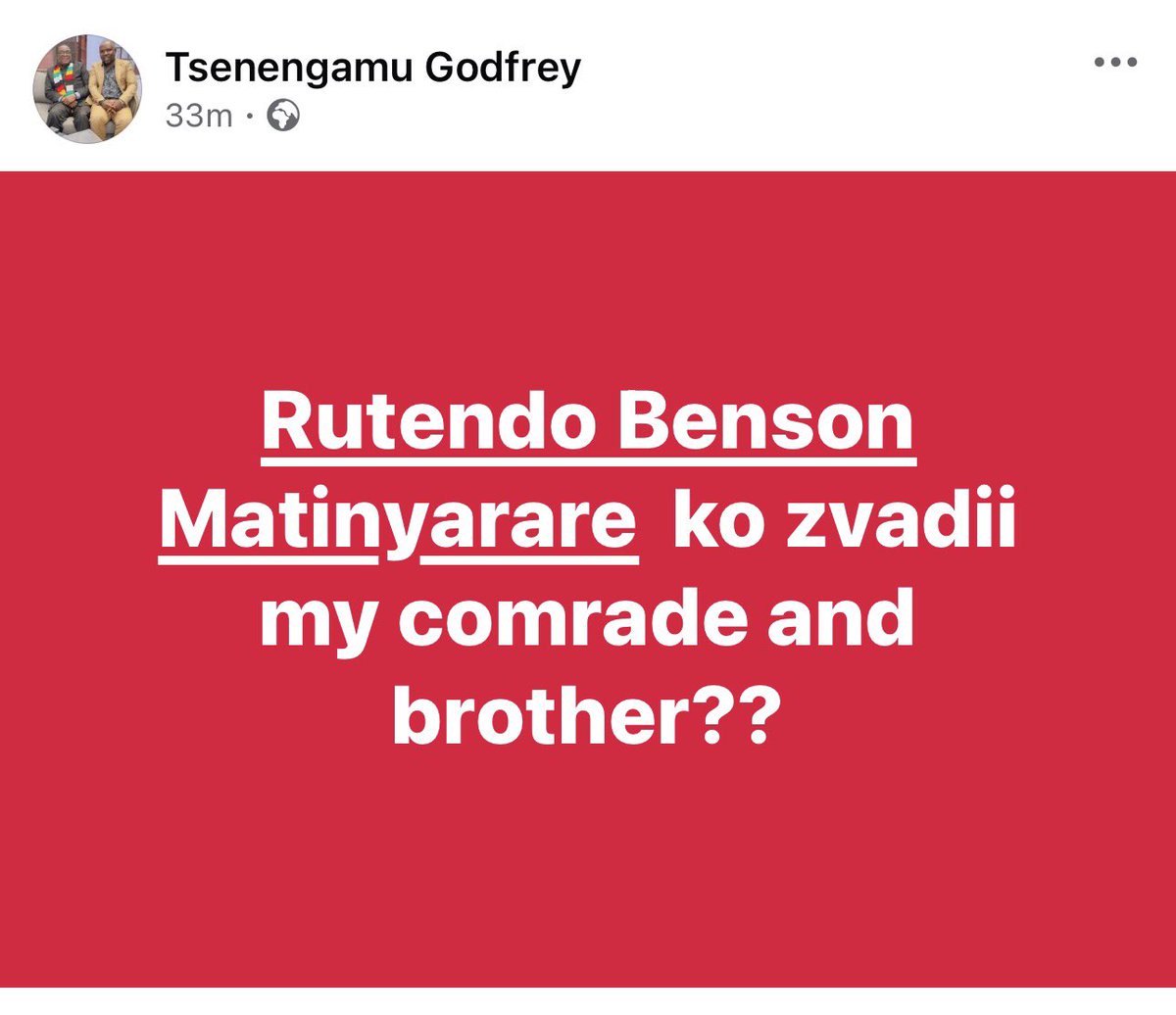
𝗪𝗛𝗬 𝗛𝗔𝗦 𝗥𝗨𝗧𝗘𝗡𝗗𝗢 𝗖𝗛𝗔𝗡𝗚𝗘𝗗 𝗦𝗜𝗗𝗘𝗦?
Hi my brother Godfrey,
Rutendo hasn't changed sides. I still believe in telling the good Zimbabwe story and promoting the nation BUT:
1. I don't believe in telling the good story for leaders that want to force a constitutional amendment that gives the President a term extension through parliamentary majority, without a referendum.
2. I don't want an underpaid, incompetent, and self-serving parliament like the one we have in Zimbabwe, picking our President based on who bribes the 200 MPs with more money, because then what happens in future when we as a nation don’t want a rich President (future President, not this one) who bribes parliament and only enriches himself and his allies, to continue governing?
3. I don’t want to give a term extension to a President who allows our state apparatus to be used to beat, imprison, and burn the property of those who disagree with him, risking the country being put under new sanctions or being invaded by the West.
4. For over seven years I told the good story about this administration, I fought sanctions, defended Zimbabweans working in South Africa from being deported so that they continue remitting foreign currency back home, and they [the administration] benefited immensely from my work because I believed in their vision and the nation. Despite all this good work, they did not appreciate me and instead they rewarded other people for the outcomes of my work.
So, am I bitter? No, I'm not because I followed a vision that I believed. However, I now disagree with the new vision of extending the term of the President without referendum, for the reasons I give above. As a result, I've stopped telling this new story because it’s not a good story, and I am openly giving reasons why I can’t support a term extension for this President, without referendum, as a warning of the dangers inherent in this new vision.
Some say that me no-longer telling their good story and being more critical is me selling out. No! It’s me choosing to stop telling the story of a vision/plan that I don’t believe in.
Let’s just remind each other that I was never paid to tell the good story in the first place, but I believed in their vision hence I supported it. However, now, I don’t believe in the new direction hence I have chosen to stop telling that story that I don’t believe in, and to give reasons why I don’t believe in it.
English
@shonapapi Vakapinda ne moyo trying to be loyal while others scooped the USD on the side.😁
English

How come Ok Supermarket was the mostly affected when Zig was introduced?
English
Kortan retweetledi

This is how we used to make friends back in the day
English
Kortan retweetledi
𝗭𝗜𝗠𝗕𝗔𝗕𝗪𝗘’𝗦 𝗩𝗢𝗧𝗜𝗡𝗚 𝗦𝗬𝗦𝗧𝗘𝗠: 𝗔 𝗕𝗨𝗜𝗟𝗧-𝗜𝗡 𝗦𝗔𝗙𝗘𝗧𝗬 𝗩𝗔𝗟𝗩𝗘 𝗙𝗢𝗥 𝗣𝗨𝗕𝗟𝗜𝗖 𝗙𝗥𝗨𝗦𝗧𝗥𝗔𝗧𝗜𝗢𝗡.
I hear the argument that ZANU PF wants the people to elect parliamentarians who will, in turn, elect the President—but there are a few things that this desire overlooks.
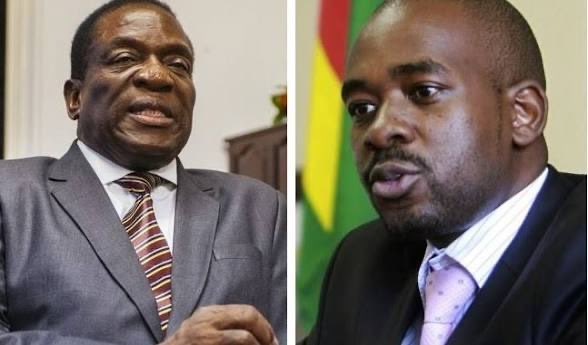
Our current electoral system has become a custom that allows the people, both legally and in practice, to elect their parliamentarians and their President separately in a harmonised election. What is even more interesting is that, in the last election, the electorate consciously gave 65% of their vote to ZANU PF MPs, but only 53% to the ZANU PF President.
This was neither a coincidence nor a mistake, but it is an insight that could help parties make better decisions, because the harmonised voting pattern is, in fact, an effective form of communication by the electorate and a stress test that illustrates one of two things:
1. Zimbabweans are relationship-oriented people who have trust, affinity, and goodwill toward the parliamentarians and councillors of the revolutionary party that liberated them and gave them land, but they feel less affinity toward the leaders (executive), whom they perceive as aloof, disconnected and are not adequately empowering their local representatives to deliver on promises.
2. Zimbabweans vote for their MPs because they have real, tangible, and personal relationships with them—more so than with top leadership, from whom they feel increasingly alienated, especially when service delivery is lacking.
However, the question remains: why does the electorate vote for the party’s MPs, but then give fewer votes to that same party’s presidential candidate—or even favour the opposition candidate more? Is this the electorate’s way of giving power to the ruling party while simultaneously using a protest vote to reduce the President’s vote share—signalling that the Presidency is not allocating adequate resources to their trusted representatives (MPs or councillors) for service delivery?
Or do they simply find the opposition presidential candidate more appealing or relatable—perhaps due to age or personality? Or are they signaling a desire to have the opposition and their party unite to govern together?
All these are the questions the ruling party’s think tanks should have explored scientifically over the past twenty-six years, through structured market research and contact groups, to understand the psychology of the electorate in order to deliver better outcomes.
More critically, this two-way voting system has also been used internally within ZANU PF as a strategic instrument to air grievances, as MPs have been known to encourage their supporters to vote for them while quietly permitting them to vote for a presidential candidate outside the party. This is the well-known “bora musango” strategy, used by MPs and party structures to express discontent with the President without direct confrontation.
Again, this should have been an opportunity for party leadership to assess how their internal structures truly feel—particularly in a party where grievances are not openly ventilated. However, as with the broader electorate, the party and its leadership have not been sufficiently perceptive to decode these subtle but powerful signals.
One thing is clear: this disparity between presidential and parliamentary votes in our harmonised elections is a goldmine of feedback—from both the electorate and internal party structures—that should be used to better understand their needs and expectations. More critically, it is a pressure valve that has stopped people from dumping the ruling party in previous elections.
It’s therefore important for ZANU PF to understand how this system has kept them in power by giving the electorate an outlet to signal dissatisfaction and issue warnings, before they close it down, leaving the electorate with no other outlet but to punish them at the ballot box or through civil disobedience.
English
Kortan retweetledi
As someone who has spent so much time defending the Zimbabwean government, protecting the image of the nation, and fighting sanctions imposed by the West, it's disappointing to see the image of the nation being trashed due to arbitrary arrests of opposition members who are merely debating a constitutional amendment that ZANU PF itself brought to the public for mandatory debate.
How can a few people tarnish the image of the entire nation just because they want to stop people debating a law that they proposed on their own, knowing that our constitution mandates the debating of the same law that they want? Why propose a bill if you can’t adhere to what is required to pass it? Why did ZANU PF give us this constitution if it doesn’t want to adhere to it?

English
Kortan retweetledi
𝗛𝗢𝗪 𝗪𝗢𝗨𝗟𝗗 𝗬𝗢𝗨 𝗥𝗔𝗧𝗘 𝗧𝗛𝗘 𝗣𝗥𝗘𝗦𝗜𝗗𝗘𝗡𝗧 𝗢𝗡 𝗥𝗢𝗔𝗗𝗦?
Yesterday, I was threatened for having insulted the President by saying that his performance in office has been mediocre for us to grant him a term extension. But how would you rate the President if:
1. Under Robert Mugabe, in his first 20 years in office, he built 9,000 km of new paved roads from the 10,000 km left by Ian Smith.
2. Currently, President Mnangagwa has, in the last 9 years, paved and rebuilt 80% of the existing 584 km of the Harare–Beitbridge road, and it is still not finished.
3. He has also been refurbishing and extending 45 km of the Mazowe Road. I would say that the 45km are entirely new.
4. He has also built about 90 km of road in and around Mount Hampden and has been refurbishing about 300 km in cities and Victoria Falls road.
5. This means that, in 9 years, the President has refurbished and built about 1,200 km (6.3%) of roads out of the 19,000 km of paved roads in Zimbabwe, which are in desperate disrepair.
6. The money required to fix all Zimbabwean roads, at an average of about $1 million per kilometre, is approximately $17.4 billion. Where will it come from?
Is the President’s performance on roads and raising money to fix them: excellent, good, average, bad, or poor?
How many more roads can he fix between now and 2030 at the current pace of 130km per year and the perpetual electioneering for 2030 that has stopped all real work?
Tomorrow we will look at healthcare, water, sanitation, electricity and other indicators.

English
Kortan retweetledi

Kortan retweetledi

Pleasing to note that Govt has intervened & re-introduced the Zimbabwe United Passenger Company (Zupco) buses to service intercity routes in some towns, providing relief to commuters by charging US$0.50 per trip compared to exorbitant charges by private players.

English
English

@ny_emman @KingMhare1 I love this landmark
Its a great shape for repurpose into residential
For a hotel it has limited parking
Sandton, South Africa 🇿🇦 English
Kortan retweetledi
Charter House, Bulawayo is up for sale.
The building comprises of 95 x offices & a penthouse, selling price is currently US $3 million.
Contact Pam Golding for details.
@KuraChihota conversion to apartments or hotel?
📸 property.co.zw

English