dexter st jock .CIEH.SMC.PMP.SPOC

295.4K posts

dexter st jock .CIEH.SMC.PMP.SPOC banner
dexter st jock .CIEH.SMC.PMP.SPOC

dexter st jock .CIEH.SMC.PMP.SPOC

@ovigho

Country Manager https://t.co/xg4dEcHSCV. Editor in chief https://t.co/TMdr6aWiaM.ng- HSE columnist https://t.co/VP3wfZoRfm

Katılım Nisan 2009
3.3K Takip Edilen1K Takipçiler
dexter st jock .CIEH.SMC.PMP.SPOC retweetledi
voided
voided@voided·
His name was Chris Gardner. In 1981 he was a medical supply salesman in San Francisco. He had a wife, a baby son, and about $10,000 in debt he couldn't climb out of. One day he saw a man parking a Ferrari outside a building downtown. He walked up to him. He asked two questions: what do you do, and how do you do it? The man was a stockbroker. Gardner went home that night and told his wife he wanted to become one. She left. He enrolled in a training program at Dean Witter Reynolds that paid almost nothing. He had to move out of their apartment. He had no place to live with his son. For nearly a year, Chris Gardner and his toddler son slept wherever they could. Shelters. Bathrooms. Parks. The floor of a subway station. Every morning he put his son in daycare, put on his best suit, and walked into the office like nothing was wrong. Nobody at Dean Witter knew. He became their top trainee. Got hired. Worked. In 1987 he started his own firm. By the mid-1990s he was a millionaire. He wrote a book. Will Smith played him in the movie. He tells the story in speeches now and always ends the same way. He looks at the audience and says: "The cavalry ain't coming. You have to be your own cavalry."
voided tweet mediavoided tweet media
English
71
708
5.2K
224K
dexter st jock .CIEH.SMC.PMP.SPOC retweetledi
Anish Moonka
Anish Moonka@anishmoonka·
Harvard scientists ran a simple test. They put adults under blue light for 6 hours one night, then under green light at the same brightness the next. Blue light pushed their bedtimes back by 3 hours. Green pushed them back by 1.5. And in kids, the same lights hit about twice as hard. The reason comes down to a tiny patch of cells at the back of every human eye. These cells have one job. They tell your brain whether it is day or night. They wake up most when light hits a very specific shade of blue, the same shade phone screens and modern bulbs are loaded with. When those cells fire after dark, the brain stops making melatonin, the chemical that pulls you toward sleep. Red light barely sets off those cells at all. A 2025 study from the University of Zaragoza put people under red lamps and blue lamps for three hours at night. Under blue, their melatonin stayed scraped to the floor. Under red, it climbed back up to more than three times higher. Same brightness. The color did all the work. Children get this worse than adults. Two reasons. Their pupils are bigger, so more light gets in. And the lens inside a kid's eye is still glass-clear, where adult lenses slowly yellow with age and filter blue out naturally. A 10-year-old's body clock is roughly twice as sensitive to evening light as a 45-year-old's. A bedside lamp that feels harmless to a parent can be wrecking a kid's sleep clock at the same time. Then there is the lag. Once the brain catches a dose of blue light, the wake-up signal it sends out keeps echoing for 3 to 4 hours after the lights go off. So a kid on an iPad at 9pm can still be wired at midnight even if you took the iPad away at 9:01. Modern LED bulbs and screens are tuned to roughly 6500 Kelvin. That is sunlight at noon. Old incandescent bulbs sit around 2700, mostly red and yellow with almost nothing in the blue range. To a human eye, a red-lit room is just about as close to no light at all as you can get. The brain reads it as nighttime. The fix is boring. Use warm bulbs at 2700 Kelvin or lower in any room a kid spends evenings in, switch off phones and tablets two hours before bed, and if a night light is needed for bathroom trips, make it red or amber. The science was pinned down to the exact color of light back in 2001.
Kiera 🌱@kieralwellness

Nephew apparently “never wants to go to sleep.” Apparently he’s in bed by 8 when there’s no blue light around.

English
41
302
3.1K
1.5M
dexter st jock .CIEH.SMC.PMP.SPOC retweetledi
Anish Moonka
Anish Moonka@anishmoonka·
On a TMZ documentary that aired this February, music journalist Steven Ivory said it plainly. "I really do believe that Michael would still be here today if he had not done the Pepsi commercial." Before January 27, 1984, by every account from his family, Mike had never touched a drug. After the burns, he tried to refuse the painkillers entirely. Twenty-five years later he was dead at 50, from a drug hospitals only use to put people under for surgery. Sixth take of the day. Shrine Auditorium in Los Angeles, in front of three thousand fans there to make the commercial look like a real concert. Pepsi wanted Mike walking down a staircase as fireworks went off behind him. They fired too early. His hair was packed with styling gel and went up like a candle. He kept dancing for a few seconds before the crew rushed in to put it out. Second- and third-degree burns on his scalp. In his 1988 autobiography Moonwalk, Jackson wrote that the burns on the back of his head "almost went through to my skull." Then came the surgeries. Doctors stuck balloons under his scalp to stretch healthy skin over the burn scars. His own hairstylist, Carol LaMere, later said the procedures just made his hair fall out worse. The pain from the burn itself never really left him. Doctors gave him Demerol, a strong painkiller, in 1984. That was the first. By 1993, he cancelled the rest of his Dangerous World Tour and checked into rehab for painkiller addiction. By 1996, an anesthesia doctor was traveling on tour with him to put him to sleep every night using propofol, the drug hospitals use during surgery. By 2009, his personal doctor Conrad Murray was being paid $150,000 a month to do the same thing every night so Mike could sleep. On the morning of June 25, 2009, Murray gave him a dose of propofol and stepped out of the bedroom. Mike stopped breathing. The LA County coroner ruled the death a homicide. Murray went to prison for two years. Pepsi paid Mike $1.5 million to settle, about $4.6 million in today's money. He gave every dollar to the burn unit that had treated him. The hospital renamed it in his honor. The Pepsi advertising executive who put the deal together, Phil Dusenberry, later titled his memoir "Then We Set His Hair on Fire."
Toluwase@Toluwase_x

The $5M Michael Jackson Pepsi ad (1983) He demanded that his face not be shown for more than 3 seconds. He never wanted to do the commercial; he did it so his brothers could make money. Nobody was getting paid when Mike left. $5M in 1983 was a BAG 💰

English
39
465
6.1K
1.3M
dexter st jock .CIEH.SMC.PMP.SPOC retweetledi
Jemele Hill
Jemele Hill@jemelehill·
Yes. He’s the most famous entertainer in history. All of the entertainers you mentioned can sit courtside at a NBA game. Michael Jackson could not. @MagicJohnson told the story of how he invited MJ to a Lakers game and it created so much chaos, they had to stop the game. MJ had to leave because fans were leaving their seats to try to get to him. None of the people you mentioned have that level of fame where they can’t attend public events.
Anna 🤍🥀@annhybri

Is Michael Jackson really bigger than Eminem, Jay z, Lil Wayne, Taylor swift, Rihanna and Beyonce all put together?

English
974
6.6K
42.1K
2.4M
dexter st jock .CIEH.SMC.PMP.SPOC retweetledi
Anish Moonka
Anish Moonka@anishmoonka·
In 1913, when America started taxing income, you owed nothing unless you made more than $3,000 a year. In today's money, that comes to about $100,000. Less than 1 in 100 Americans paid a thing, because the whole system was built for the rich. Then a war broke it. For the country's first 125 years, the federal government ran on tariffs and taxes on things like whiskey. In 1913, the constitution was changed to allow income tax. If you earned over $3,000, you owed 1%. The top rate was 7%, and only on income over $500,000, which is about $16.5 million today. Out of 97 million Americans, almost no one paid. Because only the rich paid, the rules were built around how rich people lived. They owned businesses. They had offices, employees, equipment, travel. So the law let them subtract those costs before tax. The phrase, then and now, is "ordinary and necessary" expenses. If it cost you money to make money, you only paid tax on the profit. For 30 years, that was the system. The rich paid and got to write off their business expenses. Everyone else paid nothing. Then WWII hit. A 1942 law gutted it. The tax-free amount was slashed to $1,200 for married couples and $500 for singles. A new "Victory Tax" took 5% of every dollar above $624. People paying income tax exploded from 7.7 million in 1939 to 36.7 million in 1942, to 50 million by 1945. The Treasury knew people would resist. So they hired Walt Disney. He made a cartoon where Donald Duck reluctantly does his taxes, then races across the country to hand-deliver them so they can fund the war effort. About 60 million Americans saw it. Tax filings doubled the next year. A sequel followed in 1943, the same year paycheck withholding became law. Your employer would now hand the tax to the government before you ever held it. When the system was rebuilt for workers, only the rules that taxed them changed. The rule letting businesses deduct stayed in place. There was never an "ordinary and necessary" rule for survival. Rent, groceries, healthcare, the bus you take to the job you're being taxed on, none of it deductible. Today, a single person in 2026 can earn $16,100 tax-free. The 1913 version, in real money, was about $100,000. The shield that once protected ordinary people has shrunk to a sixth of what it was. The tax code had one job: tax the wealthy on what was left after their expenses. WWII rewrote who had to pay. The right to deduct survived for businesses. For the rest of us, it was never written.
Lunix@SolLunix

Corporation: "We made $4B but spent $3.9B so we only owe taxes on $100M." Government: "Totally reasonable." You: "I made $60K but spent $58K on survival." Government: "You owe taxes on $60K." You: "That's not—" Government: "File by May 15."

English
6
29
94
10.9K
dexter st jock .CIEH.SMC.PMP.SPOC retweetledi
Charles Onyango-Obbo
People in Latin American, Asian and African countries are increasingly buying (mostly Chinese) electric vehicles to avoid spiking fuel prices.Sales in this grouping soared 79% in March on back of Persian Gulf war. nytimes.com/2026/05/03/bus…
English
2
8
21
5.3K
dexter st jock .CIEH.SMC.PMP.SPOC retweetledi
Nejeeb Bello Oyarese
Nejeeb Bello Oyarese@NejeebBello·
@asemota "Enter politics" isn't compulsorily partisan politics. As you explained in your tweet, it's more about leveraging on relationships and how to deliver value to your network. Some comments are limiting it to just running for government office under APC to go eat "national cake".
Nejeeb Bello Oyarese tweet media
English
2
8
51
6.4K
dexter st jock .CIEH.SMC.PMP.SPOC retweetledi
Osaretin Victor Asemota
“Someone” is too vague. 20-30 years old: Find a very good job in a place where you can get leverage to buy assets. Get married, save together. The other option is to start a business early but know that 99% of the time, it will die but the experience will be valuable. 30-40: Start thinking of starting a business from what you have learned. Find partners, mentors, funders. 40+ Enter politics. Seriously, after 40 wealth is more about connections than effort. This is the time you cash in on relationships built over time. Wealth is about relationships and compounding the benefits of those relationships. No matter how brilliant you are, nothing will bring you wealth if you don’t build relationships. Friends have always opened the doors for me and recommended me to rooms where I made money from.
Olúwatósìn Olaseinde@tosinolaseinde

If someone wants to build wealth intentionally over the next 10 years, what frameworks should guide their decisions?

English
42
655
2.5K
147.3K
dexter st jock .CIEH.SMC.PMP.SPOC retweetledi
Aakash Gupta
Aakash Gupta@aakashgupta·
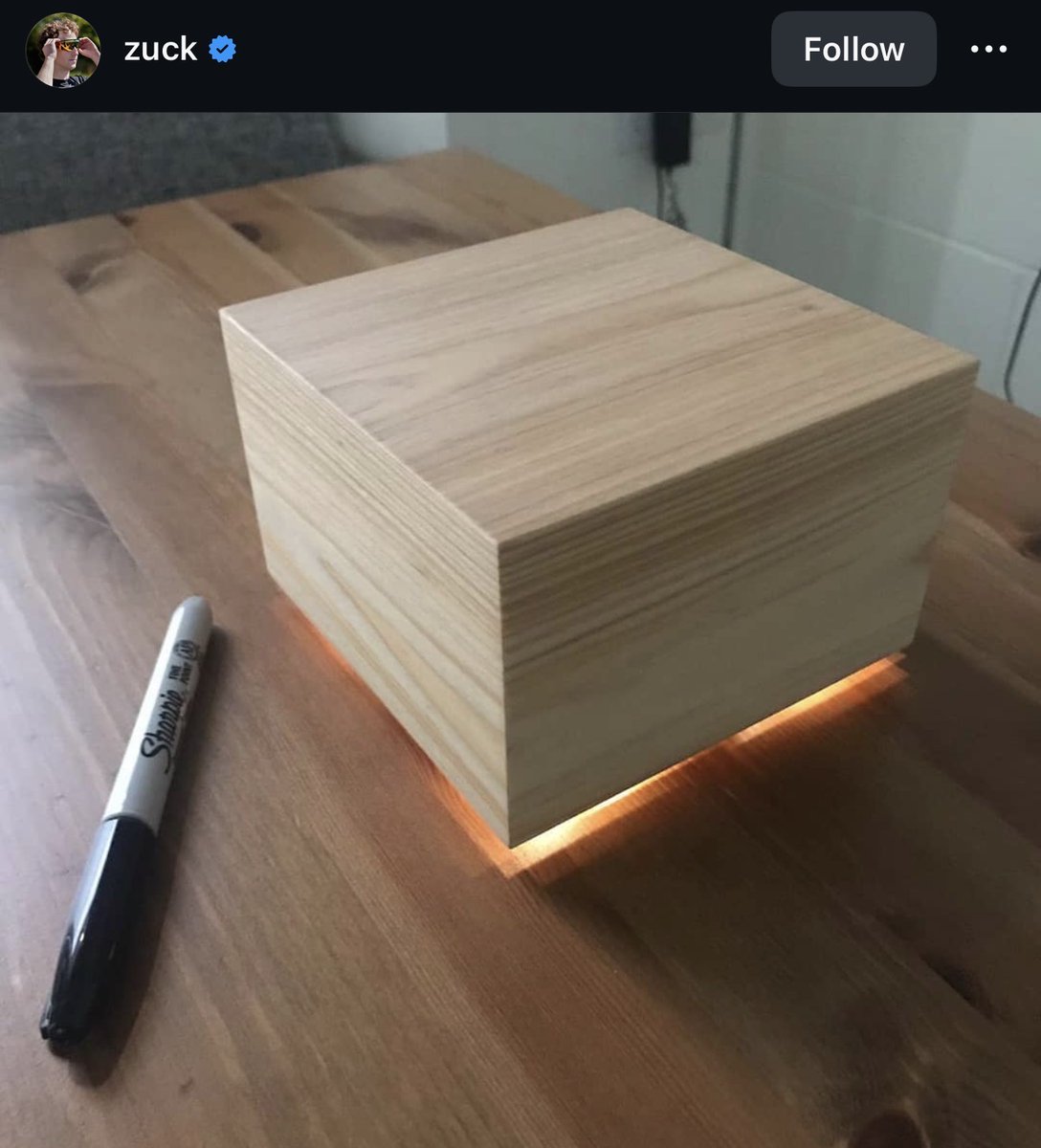
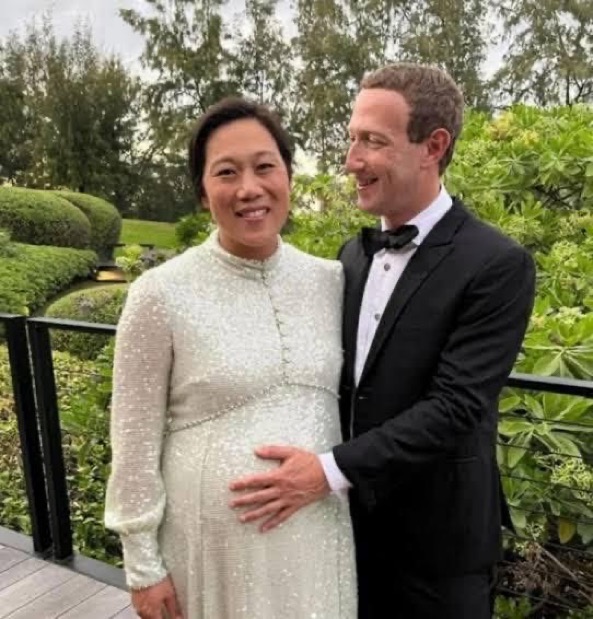
Mark Zuckerberg engineered a custom hardware device for his wife in 2019. No clock face. One faint light. A one-hour window. Priscilla had a specific problem. She'd wake up in the middle of the night, check her phone for the time, and the number itself spiked her anxiety. 4am meant worry about the kids waking soon. 5:30 meant calculating whether to just get up. The information was the trigger. Most engineers approach "can't sleep" by adding things to the bedroom. A meditation app. A Hatch alarm. A weighted blanket. A sleep coach. Mark removed the variable that was running the wake-up loop. The Sleep Box sits on Priscilla's nightstand and shows nothing for 23 hours a day. Between 6am and 7am it emits a single faint light. Faint enough not to wake her if she's still asleep. Visible enough that if she's already up, she knows it's okay to start the day. The rest of the night, dark. No clock. No time display. If she wakes at 3am she has no data to push her cortisol up with, so she goes back to sleep. He wrote the firmware and built the enclosure himself. No team, no procurement, no Meta resources. He posted the result on Instagram and said it worked better than he expected. The design move most CEOs would never run is the personal one. The instinct is to outsource a family problem to a specialist. A sleep coach. A doctor. A consumer electronics startup with a Series B and a marketing budget. Mark intervened at a specific link in the chain. Time data hitting Priscilla's brain at 3am was what broke sleep. The phone got moved off the nightstand and replaced with a box that physically cannot deliver that data. The box has no clock. That's the entire product.
Aakash Gupta tweet mediaAakash Gupta tweet media
English
658
915
25.6K
12.7M
dexter st jock .CIEH.SMC.PMP.SPOC retweetledi
Osaretin Victor Asemota
Lucky they didn't keep him and give him quinine. One of my biggest fears is having malaria outside Africa. They typically don't know how to handle it and go overboard. I carry anti-malaria drugs when I am traveling outside for over two weeks.
SKB@seyikanbai

Gilmore met a Nigerian man in the UK who said he’d been advised by UK health authorities not to donate blood in the UK, after tests showed traces of a malaria parasite still present in his system from the 10–12 years he lived in Nigeria 😭

English
27
100
437
58.8K
dexter st jock .CIEH.SMC.PMP.SPOC retweetledi
The Africa Report
The Africa Report@TheAfricaReport·
Renaissance CEO Tony Attah tells how the company is transforming Nigeria’s energy landscape through local expertise and a strategic shift toward energy security.
English
0
97
593
448.9K
dexter st jock .CIEH.SMC.PMP.SPOC retweetledi
Charlie Robertson
Charlie Robertson@CharlieTTEcon·
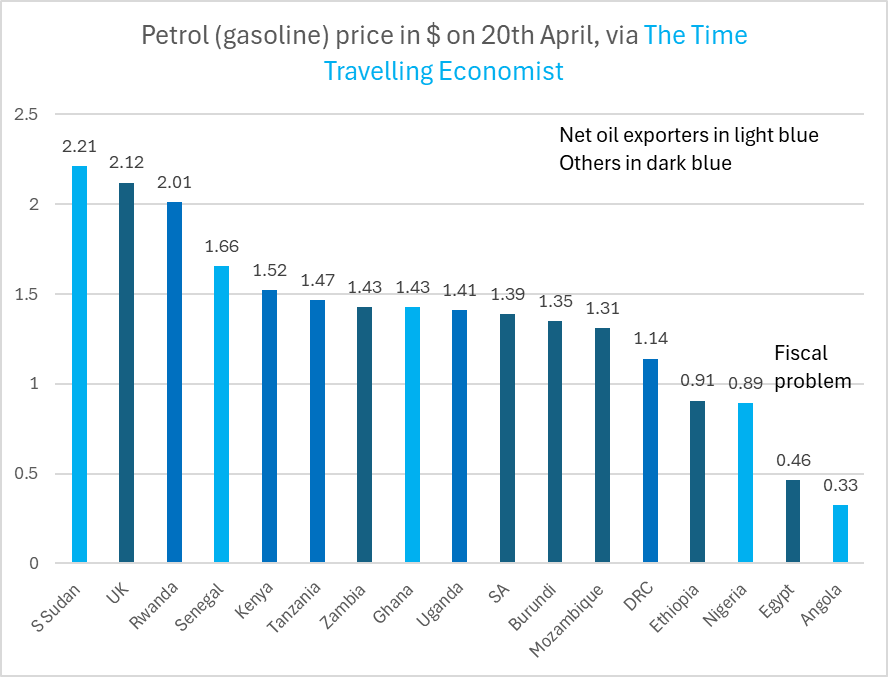
Who's paying most for a litre of petrol (gasoline) across Africa? South Sudan, even more than the UK, despite exporting oil. Getting refined product is expensive. Egypt and Angola are carry quite the fiscal burden with their low pricing. Helps explain Cairo's pollution
Charlie Robertson tweet media
English
4
36
57
7K
dexter st jock .CIEH.SMC.PMP.SPOC retweetledi
Anish Moonka
Anish Moonka@anishmoonka·
They put 17 people, married an average of 21 years, into a brain scanner and showed them a photo of their spouse. The same parts of the brain lit up that fire when a teenager has their first crush. Two decades together, and the chemistry was still going off like fireworks. The study ran at Stony Brook in 2011. What changes after 20 years is the anxiety. That panic of not knowing if they love you back, the wondering, the checking. All of that fades. The pull toward them stays. So that tells you what old love looks like in the brain. It doesn’t tell you how a couple gets there. A marriage researcher named John Gottman has spent 40 years on that question. He films couples arguing in his lab at the University of Washington and predicts whether they’ll divorce. He gets it right 93.6% of the time, from 15 minutes of footage. More than 3,000 couples now. He watches the two-second moments between sentences. The pauses. That’s where the prediction lives. The fights themselves matter less. His go-to example: your wife is staring out the window and says, look at that bird. You glance up and say, oh wow. Or you keep scrolling on your phone. That tiny choice, that little reach for your attention, is what he calls a bid. He watched newlyweds in his lab and followed them for six years. The couples who were still married had responded to each other’s bids 86 times out of 100. The couples who divorced had responded 33 out of 100. Same money fights. Same in-laws. Same dishes in the sink. The one thing that was different was the bird. This part stopped me. Gottman found that 69% of the things every couple fights about are problems that never get solved. The chores. The money. His mother. Whose family they spend Christmas with. The arguments repeat for 50 years. Happy couples and unhappy couples have roughly the same list of problems. The happy ones learned to argue about that list without contempt. The eye roll. The sigh. The little smile that says you are pathetic. Gottman calls contempt the sulfuric acid of relationships. He says it’s the single biggest sign that a marriage is over. When you see two old people asleep on each other on a plane, the forgiveness in that picture is real. They have absorbed thousands of small failures by now. There is something quieter underneath the forgiveness, though. Decades ago, one of them said look at that bird. The other one looked up.
Dear Self.@Dearme2_

Every time I see old couples, I always wonder how many times they’ve forgiven each other.

English
58
1.1K
9.6K
2.3M
dexter st jock .CIEH.SMC.PMP.SPOC retweetledi
Aakash Gupta
Aakash Gupta@aakashgupta·
VEVO was the only reason YouTube didn't get sued out of existence in 2009. Universal and Sony were ready to pull every music video off the platform. The labels argued YouTube was generating billions on their content while paying back almost nothing. Eric Schmidt's solution: let the labels build a parallel platform where they controlled the ad sales, the curation, and the branding. They called it Video Evolution. VEVO. The deal was simple. Every "official" music video would route through a VEVO-branded channel. The labels owned the inventory. They sold premium ad slots that regular YouTube videos couldn't access, charging advertisers top dollar to run alongside Beyoncé instead of a random gaming clip. The leverage was real. In 2010 when MTV.com tried to renegotiate licensing, UMG pulled every Universal video off the site. MTV's online platform collapsed. The labels had figured out something the platforms hadn't priced in. The platforms needed the labels far more than the labels needed any one platform. JustinBieberVEVO had 33.6 million subscribers. His personal YouTube channel had 4.2 million. TaylorSwiftVEVO had 27.3 million. Her personal channel had 2 million. The VEVO suffix marked the most valuable real estate on the platform. Then YouTube counter-punched with Content ID. Every fan upload using a licensed song could now be monetized directly for the labels. By 2016, YouTube had paid labels over $2 billion through Content ID alone. The labels stopped needing a parallel platform to get paid. YouTube was already paying. In 2018, YouTube started "consolidating" VEVO channels into Official Artist Channels. Artists could not opt out. The 33.6 million Bieber subscribers got auto-merged into a single channel without VEVO branding. Vevo.com shut down the same year, despite generating 25 billion monthly views. The VEVO logo still sits in the corner of every official music video. That's the only thing left of the last time a record label cartel had real leverage over a tech platform.
Nostalgia@NostalgiaFolder

Who remembers when every music artist on YouTube had VEVO in their name? 😭

English
60
1.9K
15.5K
2.3M
dexter st jock .CIEH.SMC.PMP.SPOC retweetledi
NTANetwork
NTANetwork@NTANewsNow·
NEWS FLASH! President Bola Tinubu has approved the following: * Exit Benefit Scheme (EBS) * Employee Compensation Scheme * 100% Duty Tour Allowance for Training * Review and Increase in Peculiar Allowance and * ₦10 Billion Housing Loan Scheme for Public Servants
NTANetwork tweet media
English
122
559
1.2K
242K
dexter st jock .CIEH.SMC.PMP.SPOC retweetledi
Dark Web Informer
Dark Web Informer@DarkWebInformer·
‼️🇳🇬 A threat actor operating under the group Nullsec Nigeria has made available a dataset allegedly scraped from Nigerias Economic and Financial Crimes Commission (EFCC). The leaked data reportedly includes agent names, phone numbers, agent code names, and password hashes.
Dark Web Informer tweet media
English
91
335
954
356.1K
dexter st jock .CIEH.SMC.PMP.SPOC retweetledi
Osaretin Victor Asemota
Osaretin Victor Asemota@asemota·
This is why people should look out for their friends within this age group. They sometimes mask this deep unhappiness with alcoholism and/or promiscuity. Suicidal tendencies are quite common if they don't have any strong religious faith or community around them. Worse when unmarried and childless.
Anthony Bradley@drantbradley

Men are extremely vulnerable to suicide between the ages of 45-54. A deep hopelessness sets in when they realize that they checked all of the so-called fulfillment boxes and life still feels empty. Why is that? Why are married men in their 40s so hopeless, depressed, and lonely?

English
9
56
181
22.4K