Maarten van den Berg

19.9K posts

Maarten van den Berg

Maarten van den Berg

@p1nc

Katılım Eylül 2012
12 Takip Edilen235 Takipçiler
Sabitlenmiş Tweet
Maarten van den Berg
Aspire to Greatness: Redefining Value in a Greedy World What is the last great wonder humanity has built? Where are the marvels that inspire nations to stand as beacons of aspiration, places where citizens dream of thriving? Too often, our celebrations of greatness are drowned out by a culture obsessed with fleeting fame and profit. It’s time to rethink what we value, not just in our wallets but in our hearts. Consider the dreams of today’s youth. Do young boys and girls still aspire to be police officers, teachers, doctors, inventors, scientists, philosophers, carpenters, or builders? Or have we let their ambitions shrink to chasing YouTube stardom, influencer status, or mere wealth? These modern idols—built on likes and followers—pale against the timeless contributions of those who shape society’s foundation. Yet, we undervalue the very professions that sustain us, both in wages and in esteem. Every profession, from the firefighter who risks all to save lives to the teacher who molds minds, deserves recognition for its unique contribution to society. But our current system is broken. How can we justify paying a marketing manager exponentially more than a paramedic who holds life in their hands? Our obsession with monetizing value has led us down a path of greed, where worth is measured in dollars rather than impact. This is not a call to erase competition or stifle ambition—far from it. Excellence must be rewarded, for it is the spark that drives progress. But the gap between professions, where some earn hundreds of times more than others, is indefensible. A fairer valuation of work is not about enforced equality but about recognizing the inherent dignity and societal worth of every role. A carpenter’s craft, a scientist’s discovery, a nurse’s care—these are the threads that weave a stronger society. It’s time to redefine greatness. Let us aspire to be the best in whatever we do, not for mediocrity but for pride in our craft. Let us value human beings, not just their output for profit-driven machines. Companies, too, must be judged not only by their bottom line but by their contribution to the common good. Only then can we build a world where every profession is honored, where every dream is noble, and where greatness is not a privilege but a universal pursuit. Will we rise to this challenge, or will we let greed define our legacy? The choice is ours. -P1nc
English
3
1
7
1.8K
Maarten van den Berg
@MINECRAFTUSD1 @CuriosityonX as for your earth is flat statement ... ask any sailor how far off they can see a lighthouse ... it depends on how high that lighthouse is .. since the earth is curved dummy ! even sailors know this by experience .. yet here you are in the dark ages basking in ignorance
English
1
0
0
13
Maarten van den Berg
@MINECRAFTUSD1 @CuriosityonX we are not far away yet to see the full earth ... not my picture ... I was explained this by someone who was kind enough to enlighten me since I found the absence of shadow strange
Maarten van den Berg tweet media
English
1
0
0
79
Curiosity
Curiosity@CuriosityonX·
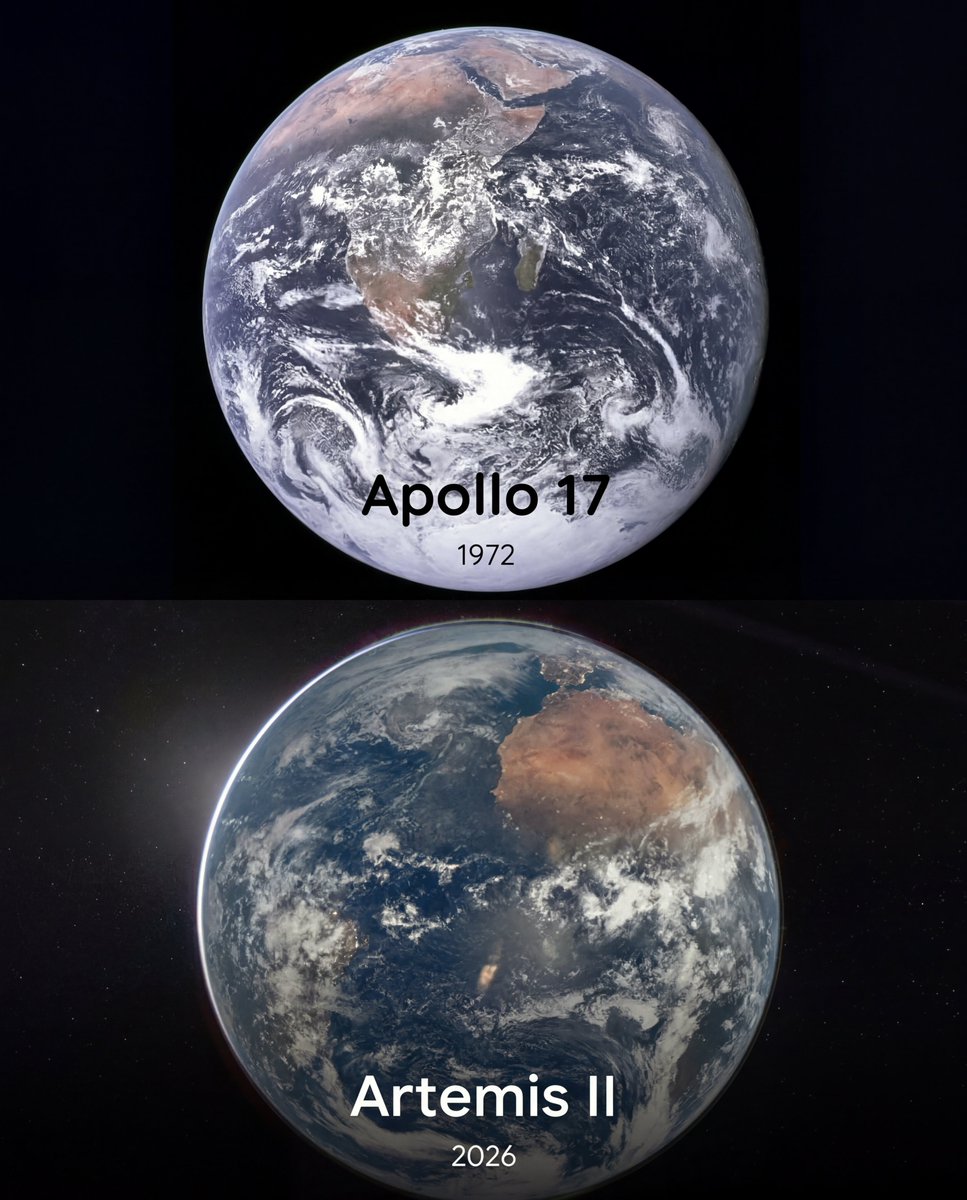
🚨: The Blue Marble Apollo 17 1972 vs Artemis II 2026 What changed?
Curiosity tweet media
English
3.1K
1.3K
14.2K
1.5M
Open Minded Approach
Open Minded Approach@OMApproach·
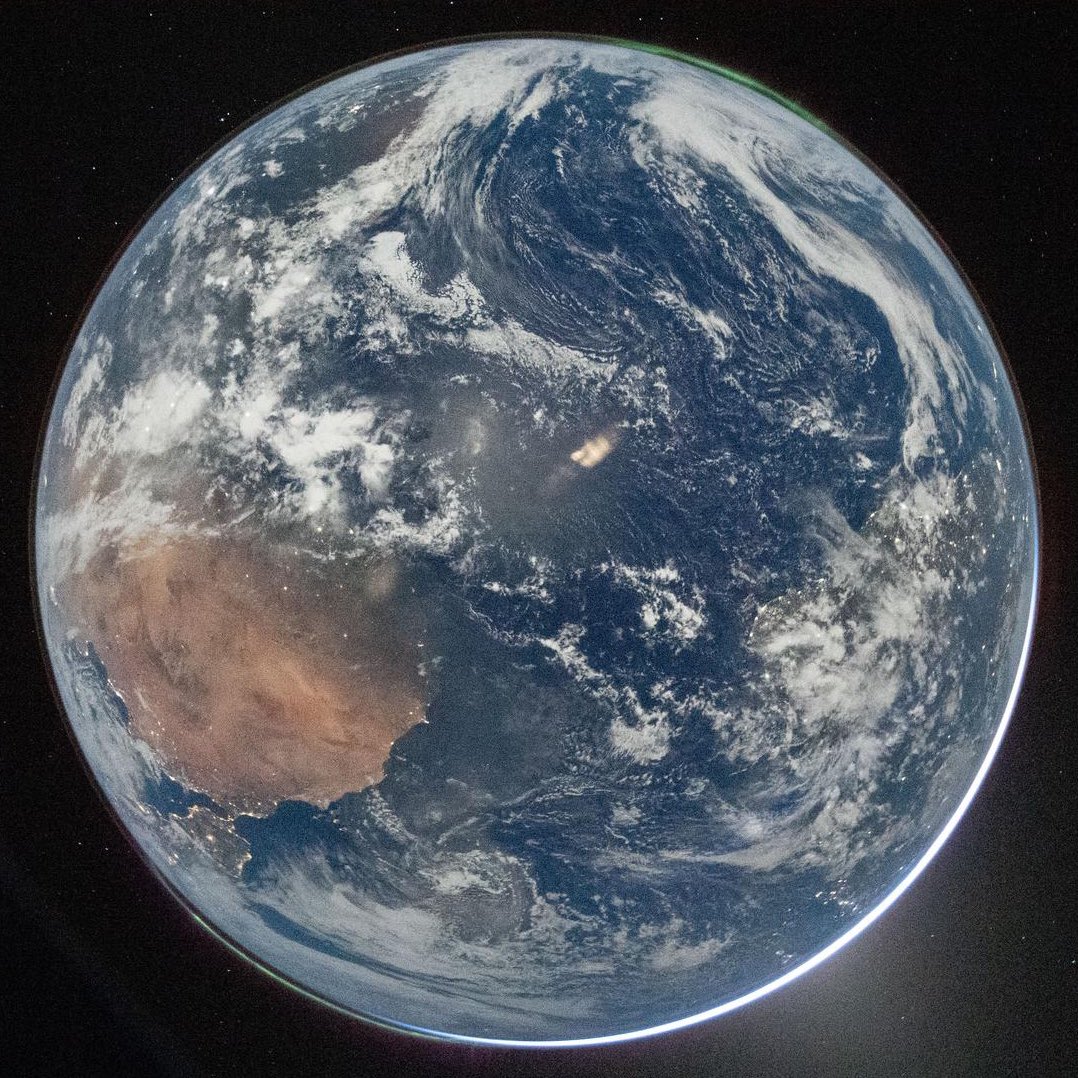
I had difficulty explaining to ChatGPT that this photo is real. It kept saying the photo wasn’t real and that it was a studio version. Once I showed it a screenshot and a link from NASA, it conceded… Strange…
Open Minded Approach tweet media
English
143
38
485
77.8K
Maarten van den Berg
and how big is earth ... compare that to being close to a basketball... now place a cone shape on that at 22mm 35mm sensor ... no they could not see HALF the earth but surely a lot which explains the absence of a tiny shadow since the moon is offset .. good night ... I got another film to develop
English
1
0
0
12
Maarten van den Berg
thanks again for your patience and explenation that argument about being not far enough immediatly made me visualize a cone shape looking at ball from close by .. I hit myself in the head how could I oversee such a thing .. thanks again man ! your argument was spot on ! and the patience you show, props to you ! not many people know how to debate like an adult, you are one who can !
English
1
0
1
13
Ghostbanned7a (Shadowbanned by Elon)
@p1nc @OMApproach It's not the Moon behind. It's the Sun behind - with a noticable glare bottom right. The Earth's surface is lit by moonshine. Artemis is headed away from Earth on an intercept course for a orbit insertion point ~6000 kilometres to the side of the Moon. x.com/i/status/20404…
Ghostbanned7a (Shadowbanned by Elon)@ghostbanned7a

@p1nc @OMApproach The hemisphere photographed was in Earth night - illuminated only by moonshine from the full Moon. Set your own quality camera and lens to these Artemis settings 👇, and take a picture of the Earth's countryside at night under a full Moon. You'll get much the same "day" results.

English
3
0
0
49
Ghostbanned7a (Shadowbanned by Elon)
@Whachutryin2say @p1nc @OMApproach I think Maarten understands it now perfectly. After a long and strong debate we've come to a rough consensus on the original. Though perhaps we differ on whether any post processing brightened it up from raw. Personally I'm happy with what we've been shown.
English
1
0
1
12
Maarten van den Berg
photographers would say faster ;-) ... again you do not understand what I tried to say think being close to a ball do you see half the ball or 90% of that half because you are too close ... thats what explains the absence of earth not being fully lit ... had they been further away you would have seen a tiny shadowy side since earth moon and sun are not perfectly aligned .. I missed that and the other poster pointed it out
English
1
0
0
8
Maarten van den Berg
almost all lenses have it .. especially wide angle .. its standard to apply correction ... a bit more difficult in analogue ... but there you can do it when printing ... but I must admit vignette can also make a picture better in a picture like this I would correct it a bit to please the eye ... standard procedure
English
0
0
1
10
Maarten van den Berg
the raw image most photographers never release, a standard jpeg from the camera looks better then the raw since no curves (contrast) no lense distortion etc are applied .. and exif does state manual exposure ... any decent photographer would do a manual exposure since its a shot in space with much black it would otherwise need to be set to overexposure if shot (automode) or you would get a white earth like some shoot the moon with no detail since a camera measure for neutral density grey
English
0
0
1
7
Ghostbanned7a (Shadowbanned by Elon)
@p1nc @Whachutryin2say @OMApproach I don't know the ins and outs of the fine details, but for the Nikon DS camera raw image at least, it appears to an untrained eye to have been set very "manual" What NASA do in post processing I couldn't say. Often they publish both, to give a pretty picture but also stay honest
Ghostbanned7a (Shadowbanned by Elon) tweet media
English
1
0
1
17
Ghostbanned7a (Shadowbanned by Elon)
@p1nc @Whachutryin2say @OMApproach But the Moon is ~30 Earth diameters away. For the purpose of the exercise, this is a two inch diameter cop's torch, illuminating a five foot woman standing yards away. The light DOES spread a bit further by the time it hits her head & feet. But not enough to notice.
English
1
0
1
7
Maarten van den Berg
@Whachutryin2say @ghostbanned7a @OMApproach perhaps you do not understand my reply ... good luck if we were to see the full earth we would see a small shadow side (we do not since we are not far away yet from earth) if you are close to a ball you do not see the full half of the ball due to perspective ...
English
2
0
0
12
Phil Free
Phil Free@Whachutryin2say·
Javier de la Cuadra@JavierDlacuadra

Ahora sí hablemos en serio de la foto. Este es un trino para interesados en fotografía, astrofotografía y el que quiera ¿Por qué esta foto es increíble? Algún conspiranóico, dándoselas de suspicaz, preguntó que por qué esta foto tomada por el comandante del Artemis II se veía más opaca que la foto tomada por la tripulación del Apolo 17 en 1972. Bueno. Acá viene lo emocionante. Esta fotografía hubiera sido imposible tomarla con una cámara análoga; y no cualquier cámara digital puede tomarla. El archivo original de esta foto está disponible para su descarga en la página de la NASA. En las propiedades del archivo se puede ver con qué cámara fue tomada y los ajustes de exposición que se usaron. Hasta el serial de la cámara. Esto, primero que todo, garantiza que la foto que estamos viendo no fue creada digitalmente, ni con IA, sino capturada por una cámara real por un humano. Sé que no es suficiente argumento para los conspiranóicos, pero ni modos. Esa que está ahí es la Tierra. Ahora sí lo interesante. ¿Por qué se ve como más opaca que la del 72? porque resulta que en la cara de la tierra que vemos en esa foto, está de noche; si hacen zoom pueden ver el brillo de la iluminación nocturna. Pero ¿cómo, si es de noche, puede verse como si fuera de día? Porque la foto se hizo con un altísimo ISO de 51200! El ISO es la sensibilidad del sensor a la luz. Con la mayoría de cámaras digitales, con ISOs de más de 6400, el ruido es tanto que la foto se ve prácticamente ilegible. Pero la cámara que tiene el comandante Reid Wiseman es una NIKON D5, que no es una cámara muy nueva; tiene 10 años de haber sido lanzada. Pero su sensor es reconocido por garantizar una calidad decente de imagen con ISOs altos. Y eso, para los que siempre preguntan cómo se hace una buena foto del cielo, es fundamental ¿Por qué? Pues para poder tomar fotos de los astros sin tener que bajar mucho la velocidad de exposición. Porque si bajas mucho la exposición apra que entre más luz, queda capturado el movimiento de los astros y de la rotación de la Tierra, cuando estás en la Tierra. Así que un iSO tan alto hizo posible que Wiserman pudiera disparar a una velocidad de 1/4 de segundo. Que es baja, pero no tanto. Es digamos, el límite para la astrofotografía. Por eso esta foto tiene ruido, porque de todas formas es un ISO altísimo. Pero lo que más me emociona a mí, es que la tomó con un lente 14 -24mm F2.8. Es decir, en terminos coloquiales, que esta foto no tiene zoom. Para que lo dimensionen: cuando uno quiere tomar una foto de la Luna desde la Tierra que salga así de "cerca" tiene que usar un lente de unos 400mm de distancia focal. Wiserman usó un ¡gran angular de 22mm! Es decir que él estaba viendo la Tierra asi de grande frente a sus ojos. Porque la foto no fue recortada en edición y eso lo sabemos porque en las propiedades del archivo siempre aparece cuando una foto fue editada. El archivo está limpio, tiene la resolución original de la cámara. La tierra era inmensa frente a su mirada. Hermoso. Pero para mí lo más mágico de esta foto, incluso más que las auroras boreales, es que se ve como la luz de sol, que está del otro lado de la tierra, ilumina nuestra atmosfera. Y eso es magia pura, porque esa atmosfera tiene una composición milimétricamente perfecta para permitir que la vida, tal y como la conocemos, sea posible. Esta foto, es un regalo precioso para la humanidad. Les dejo al link para que descarguen la foto en alta resolución y el pantallazo de las propuedades del archivo.

QME
1
0
0
15
Maarten van den Berg
@ghostbanned7a @OMApproach perhaps try responding to recent messages ... your answer that we are not far away yet from earth to see the entire globe is what explains it (half the earth) with an offset moon you see the part thats lit .. even though not the entire half is lit
English
0
0
1
5
Ghostbanned7a (Shadowbanned by Elon)
@p1nc @OMApproach You know you have had night where a class full Moon is figuratively "bright enough to read a newspaper by", right? The human eye adapts (somewhat) automatically. The owl is already there anyway, and is laughing at us. The Orion camera just needs opening up, to replicate that.
English
1
0
0
10
Maarten van den Berg
the only correct answer is what the other guy gave me we are not far away yet from earth to see the entire globe... we see part of it .. so it appears fully lit, but its not the entire half of earth ... thats what I did not take in to consideration ... extended exposure has nothing do with it !
English
1
0
1
10
Maarten van den Berg
@ghostbanned7a @Whachutryin2say @OMApproach no a smaller light source, rays hitting it at different angles ... there is more at play in such a view then just distance ;-) again we are not dealing with a HUGE relfector bigger then earth (like the sun is much bigger then earth) ... it be noticable in the raw picture
English
3
0
0
11
Maarten van den Berg
@ghostbanned7a @OMApproach its pretty common nowadays to do post processing on pics .. its impossible not to almost... white balance for one ... Im sure the astronaut didnt bring a white card for white balance ;-)
English
0
0
1
5
Ghostbanned7a (Shadowbanned by Elon)
@p1nc @OMApproach If the planet had no clouds around the periphery, and countries, then we could do more exact analysis of feature locations and distance apart. But they's not really enough here to work with for that.
English
1
0
0
2
Ghostbanned7a (Shadowbanned by Elon)
@p1nc @OMApproach Nope. I'll tell you the assumption you made which is incorrect: You assumed that Orion can "see" an entire hemisphere in the image. It can't. It's still a fraction too close in to describe it as "half the Earth". So a sliver edge can be lit, or in shadow, and we'd never know.
English
3
0
1
13