

Peter Christie
2.6K posts

@pacc188
ASX:ATV Cloud-enabling Telco and DC’s. Building GPU tech for cloud gaming and AI. Perth. Oasis at the corner of the world.


I trained this @ltx_model LTX 2.3 LoRA of George Costanza at home on my 5090 in about a day with AI Toolkit. I generated this 30 second video with @ComfyUI on my 5090 in 6 minutes. Open source is, always has been, and always will be, the future of generative AI. (SOUND ON)


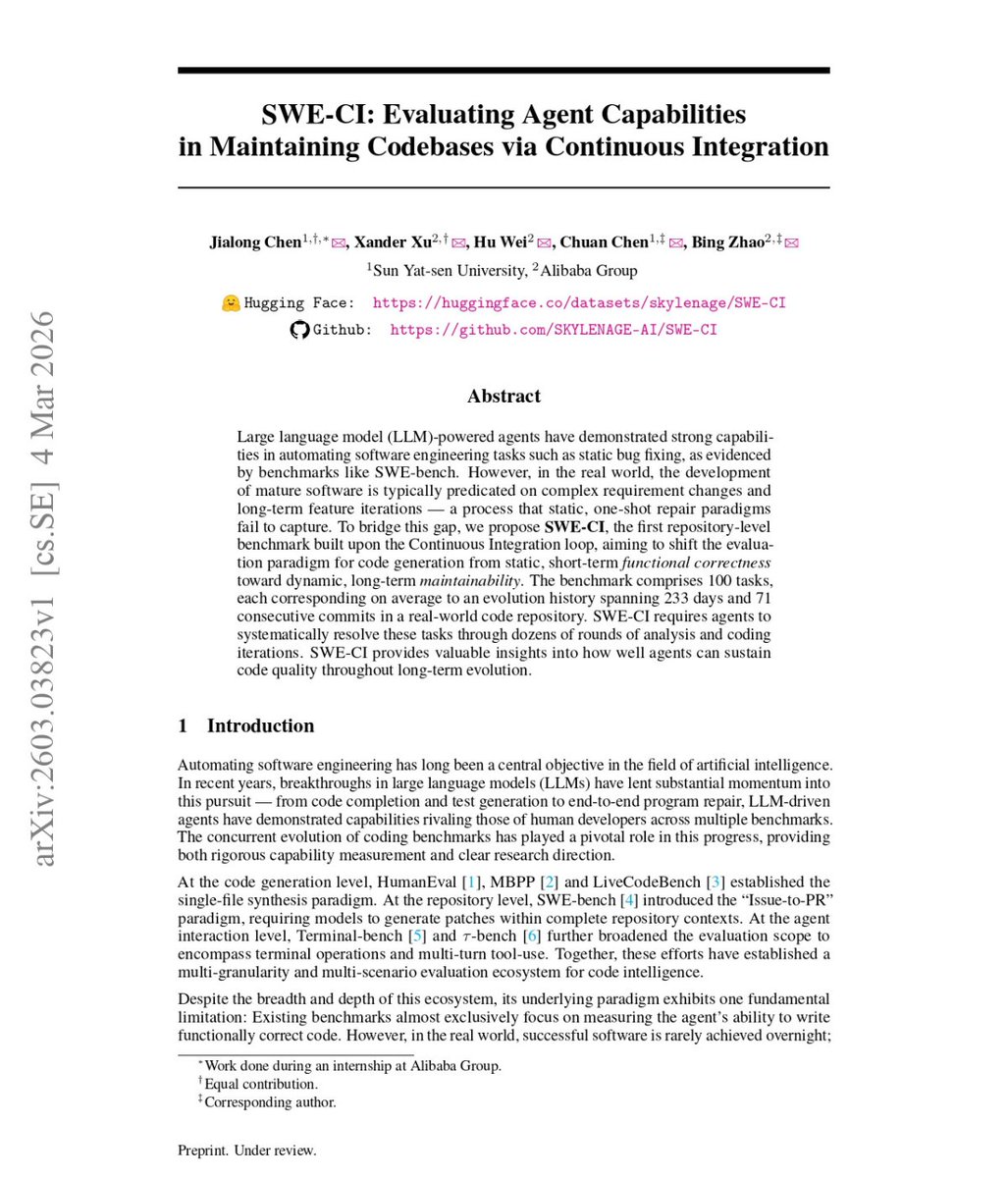
Your AI Agent is mathematically guaranteed to FAIL. This is the dirty secret the industry is hiding in 2026. Everyone on your timeline is currently bragging about their "Multi-Agent Swarms." Founders are acting like chaining five AI agents together is going to replace their entire engineering team overnight. Here is the reality check: It’s a mathematical illusion. Let’s look at the actual numbers. Say you have a state-of-the-art AI agent with an incredible 85% accuracy rate per action. In a vacuum, that sounds amazing. But an "autonomous" workflow isn't one action. It’s a chain. Read the ticket ➡️ Query the DB ➡️ Write the code ➡️ Run the test ➡️ Commit. Let's do the math on a 10-step process: $0.85^10= 0.19$ Your "revolutionary" autonomous system has a 19% success rate. And the real-world data proves it. Recent studies out of CMU this year show that the top frontier models are failing at over 70% of real-world, multi-step office tasks. We are officially in the era of "Agent Washing." Startups are rebranding complex, buggy software as "autonomous agents" to look cool, but they are ignoring the scariest part: AI fails silently. When traditional code breaks, it crashes and throws a stack trace. When an AI agent breaks, it doesn't crash. It just confidently hallucinates a fake database entry, sidesteps a broken API by faking the response, and keeps running—corrupting your data for weeks before you notice. If your "automated" system requires a senior engineer to spend three hours digging through prompt logs to figure out why the bot made a "creative decision," you didn't save any time. You just invented a highly expensive, unpredictable form of technical debt. Stop trying to build fully autonomous swarms to replace human judgment. Start building deterministic guardrails where AI is the engine, but the engineer holds the steering wheel