Francisco Carrillo-Perez

11.5K posts

Francisco Carrillo-Perez banner
Francisco Carrillo-Perez

Francisco Carrillo-Perez

@pacocp9

Imaging AI, Senior Scientist @ BMS. Ph.D. in ML applied to Bioinfo from the University of Granada. Fulbright alumnus. Doing things with data.


Sevilla, ES Katılım Şubat 2011
703 Takip Edilen526 Takipçiler
Francisco Carrillo-Perez
I'll be at #NeurIPS2025 this week! DM me if you want to talk about foundation models in biology, with a focus on digital pathology and multimodal data! Recommendations for nice food and coffee are more than welcomed ☕
English
0
0
3
161
Francisco Carrillo-Perez retweetledi
Christopher Potts
Christopher Potts@ChrisGPotts·
Severance as a show about interpretability research in AI (a clip from a talk; YouTube link just below):
English
7
25
218
44.7K
Francisco Carrillo-Perez retweetledi
Stefano Ermon
Stefano Ermon@StefanoErmon·
Tired of chasing references across dozens of papers? This monograph distills it all: the principles, intuition, and math behind diffusion models. Thrilled to share!
Chieh-Hsin (Jesse) Lai@JCJesseLai

Tired to go back to the original papers again and again? Our monograph: a systematic and fundamental recipe you can rely on! 📘 We’re excited to release 《The Principles of Diffusion Models》— with @DrYangSong, @gimdong58085414, @mittu1204, and @StefanoErmon. It traces the core ideas that shaped diffusion modeling and explains how today’s models work, why they work, and where they’re heading. 🧵You’ll find the link and a few highlights in the thread. We’d love to hear your thoughts and join some discussions! ⚡ Stay tuned for our markdown version, where you can drop your comments!
English
13
133
1.1K
126.7K
Francisco Carrillo-Perez retweetledi
Pint of Science ES
Pint of Science ES@pintofscienceES·
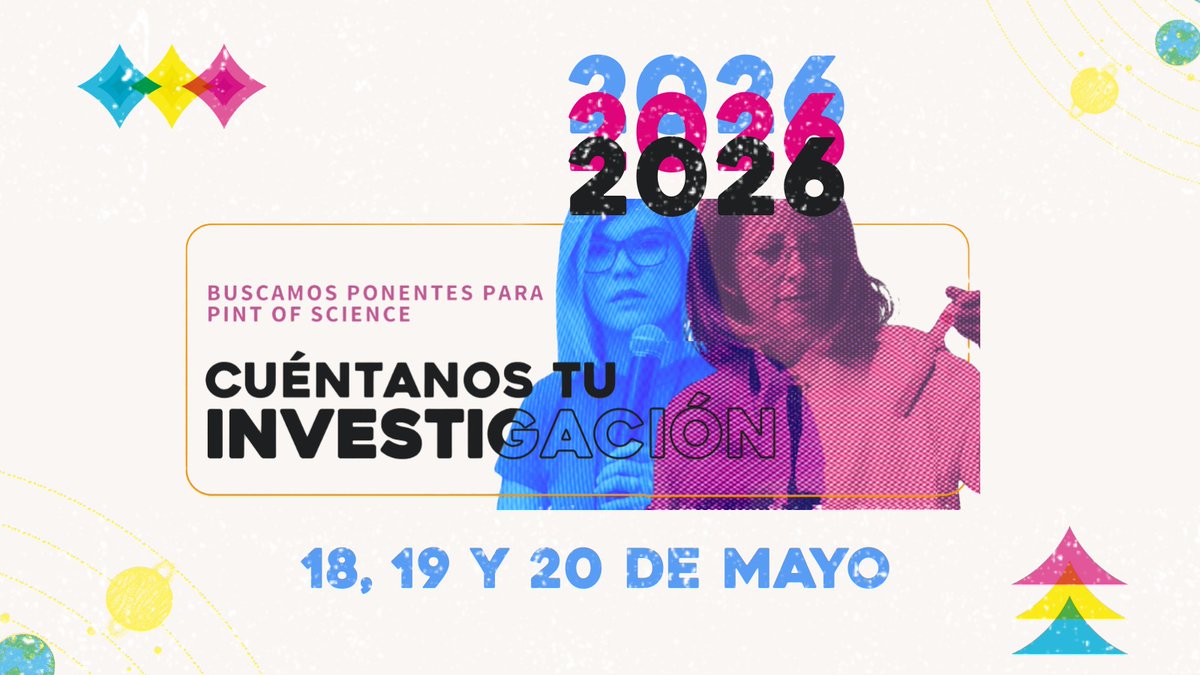
🔎BUSCAMOS PONENTES, SOLO 3 REQUISITOS🗣️ 📣¿Quieres contar tu investigación científica a la sociedad, de forma amena y cercana? ¡Anímate a dar una charla en #PINT26ES ! 🥳Solo hay 3 requisitos para ser ponente, tira del hilo para descubrirlo! 👇🏼
Pint of Science ES tweet media
Español
1
17
16
2.7K
Francisco Carrillo-Perez retweetledi
Dean W. Ball
Dean W. Ball@deanwball·
I think Demis is fundamentally correct here. The current systems are extremely impressive, and will get much more so soon, but it’s clear there are fundamental breakthroughs still needed. As I have written before, I expect us to get “superintelligence” (AI systems that can, say, autonomously advance the frontiers of math and physics) before we get “AGI.” AI systems will make novel contributions to group theory well before they can autonomously plan a wedding. Yet that’s no reason to be bearish on near-term AI. Indeed, in my view it’s one of the better imaginable scenarios. Here’s one way the near future could play out: 1. Significant productivity gains—first in software engineering, then cascading to other fields. 2. Increasing institutional comfort with AI and automation; as a civilization, we will have time (not a ton of time, but a period measured in years rather than months) to develop legal, financial, conceptual, and other infrastructural technologies that allow us to adapt to AI more effectively. 3. A mathematical and scientific renaissance, which itself will create new ideas and wealth. And with these, we go into the “real AGI” phase equipped with more wealth, more effective ideas and abstractions, more sophisticated knowledge of using AI, and better-prepared institutions than we have today. Perhaps I am naive, but I suspect we have been dealt a pretty good hand.
vitrupo@vitrupo

Demis Hassabis: calling today's chatbots “PhD intelligences” is nonsense. They can dazzle at a PhD level one moment and fail high school math the next. True AGI won't make trivial mistakes. It will reason, adapt, and learn continuously. We're still 5–10 years away.

English
19
26
364
93.8K
Francisco Carrillo-Perez retweetledi
Christopher Potts
Christopher Potts@ChrisGPotts·
One of my favorite inspirational quotes from a calendar @dilarafsoylu found for me:
Christopher Potts tweet media
English
5
9
55
12.3K
Francisco Carrillo-Perez retweetledi
Oriane Siméoni
Oriane Siméoni@oriane_simeoni·
1/ You might have seen it—DINOv3 is out! 🦖🦕In this thread, we share key insights on our Gram anchoring ⚓︎ and how it helps to get smooth feature maps. 👇
Oriane Siméoni tweet media
English
9
60
485
75K
Francisco Carrillo-Perez retweetledi
Lucas Beyer (bl16)
Lucas Beyer (bl16)@giffmana·
Now some of the downsides of my experience with "vibe-coding for serious work". First, recap the good sides I mentioned previously: it's amazing at quick prototyping things, making tiny throw-away hyper-specialized demos, taking care of boilerplate, setup, and writing tests for me. Now the bad part: the code it generates is insanely verbose, overly defensive, bloated, and sometimes plain dumb. The models (I tried Claude code 4 and Codex Gpt5) have two big issues: 1) The model fully trusts you and takes what you say to the extreme. If you mention a requirement, it applies it to everything like a pedant, even if that forces quite insane contortion. A real good human coder would be like "ok wait, but this will make things extremely convoluted for XYZ, do you really mean this to apply here too?" and the answer is most likely "no, I didn't intend that" 2) The model never takes a step back and reconsiders/refactors things. It loves piling shit on top of more shit. A good human programmer would suddenly go "ok, that's a lot, let's simplify/unify things here for a bit". Even if you ask the model to do this, it usually sucks at simplifying. Two concrete real-life examples I had: 1) I had some pytorch distributed issue where some gathers in a library of mine would sometimes hang or die out of sync. Claude correctly identified that the process group was not always correctly initialized. So it started writing hundreds of lines of bookkeeping boilerplate to my library to try fixing this (and eventually did fix). After I looked at its fix, I immediately notice that the real fix was just moving my library's init call after torch distributed init, not before🤦‍♂️ So the real fix involved not a single new line of code, but Claude loves writing more lines! 2) In another library I made rapid iterations with Codex on the design. The core of the library boils down to a kind of graph where you need to walk through the nodes and do work on a node, while stopping on loops. Codex did correctly implement it, and it works; however, it wrote very convoluted code for the core logic, about 200 lines of code with two functions recursing into each other, and a few stacks and queues for traversal bookkeeping. After looking at it and taking a step back, I rewrote the whole thing from scratch in maybe 40 clear lines of code. It was great having Codex's extensive unit-tests to see that my rewrite is correct. So, in conclusion, the current state of vibe-coding is good for boilerplate, rapid iteration/prototyping, or one-off throwaway tools. For code that you intend to use, keep, extend, maintain for a while, you're always better off (re)writing it by hand. Maybe only after the LLM-assisted exploration and unit-test writing, though!
Lucas Beyer (bl16)@giffmana

@suchenzang Literally me in half my code reviews lately. "Did you vibe code this?!" Is a meme over here now

English
52
59
709
138K
Francisco Carrillo-Perez retweetledi
Simone Scardapane
Simone Scardapane@s_scardapane·
*Alice's book got a (minor) upgrade!* Thanks to the dozens of people who gave feedback, now with 1000% less typos and errors, a novel set of Colab lab sessions, and a brand-new CC-BY-SA license. 🙃 sscardapane.it/alice-book/
Simone Scardapane tweet media
English
8
194
1.3K
59.5K
Francisco Carrillo-Perez retweetledi
Patrick Kidger
Patrick Kidger@PatrickKidger·
✨Cradle is hiring protein+ML researchers!✨ We operate ML for lab-in-the-loop lead optimization across all industries (pharma, synbio, ...), modalities (antibodies, enzymes, ...), properties (binding, activity, ...) We're a scaleup and already relied upon by 4 of the top 20 big pharma. Apply here! jobs.ashbyhq.com/cradlebio/92f8…
Patrick Kidger tweet media
English
2
7
67
10.8K
Francisco Carrillo-Perez retweetledi
Phillip Isola
Phillip Isola@phillip_isola·
Our computer vision textbook is now available for free online here: visionbook.mit.edu We are working on adding some interactive components like search and (beta) integration with LLMs. Hope this is useful and feel free to submit Github issues to help us improve the text!
English
34
601
2.9K
181.7K
Francisco Carrillo-Perez
Francisco Carrillo-Perez@pacocp9·
New manuscript out! We identify a 6-gene biologically significant signature in peripheral blood samples for the differentiation of PDAC and CP, training multiple machine learning models. Read the full manuscript here: sciencedirect.com/science/articl…
English
0
1
2
105
Francisco Carrillo-Perez retweetledi
prayingforexits 🏴‍☠️
Bro how was the show Silicon Valley so consistently 10 years ahead of its time 🤣
English
188
2K
27.4K
1.5M
Francisco Carrillo-Perez retweetledi
Michael Black
Michael Black@Michael_J_Black·
If you're an international PhD student at Harvard studying computer vision and your visa is cancelled, reach out to me or others in Europe. Don't despair. I'm sure we can find you a great place to carry on your research.
English
24
92
1K
98.8K
Francisco Carrillo-Perez retweetledi
EL PAÍS
EL PAÍS@el_pais·
"Si tuviera tiempo haría más por ver el mar y pasaría más tiempo sin hacer nada. Sostendría la brisa y nada más". La columna de José Luis Sastre dozz.es/h58ca4
EL PAÍS tweet media
Español
22
1.3K
5.2K
275.6K