

padre
210 posts


We acquired Haste.com for $2,000,000 to bring you the next generation token launchpad and blockchain.
Current launchpads drain you with hidden fees in the form of MEV, bundles, side wallets, priority fees, insiders and high frequency trading terminals.
We estimate there is a hidden cost of 30% per transaction when factoring in these variables on existing launchpads.
That is why it feels like it's impossible to win.
Haste is coming to fix that.
- Proprietary chain built for cheap and fast transactions
- 100ms block times
- No MEV
- No bundles
- No side wallets
- No insiders
- No priority fees
- No high frequency trading terminals
- Every account requires an X login
Built for simplicity and fairness, to bring the next billion on-chain

English

@ETHGasFNDN
DEAR FRIENDS, I'D LIKE TO KNOW WHY AM I NOT ELIGIBLE? I HAVE COMPLIED WITH ALL THE REQUIREMENTS. I MADE THIS TWEET BACK IN OCTOBER (LINK x.com/padrex100/stat…), I BURNED MUCH MORE THAN 0.5 ETH, AND MY BEAN COUNT EXCEEDS 4,000, BUT I'M STILL NOT ELIGIBLE. WHY?
English
padre retweetledi

padre retweetledi

Genesis Season Conclusion: Retroactive Airdrop 🪂
Claim your GOLD on the app now.
To celebrate the conclusion of the Fantasy Genesis Season, we're excited to award 700K @Blast_L2 GOLD to all our players.
––– Ensure your GOLD is secured by linking your Fantasy account to your Blast wallet at blast.io.
Learn more 🧵

English
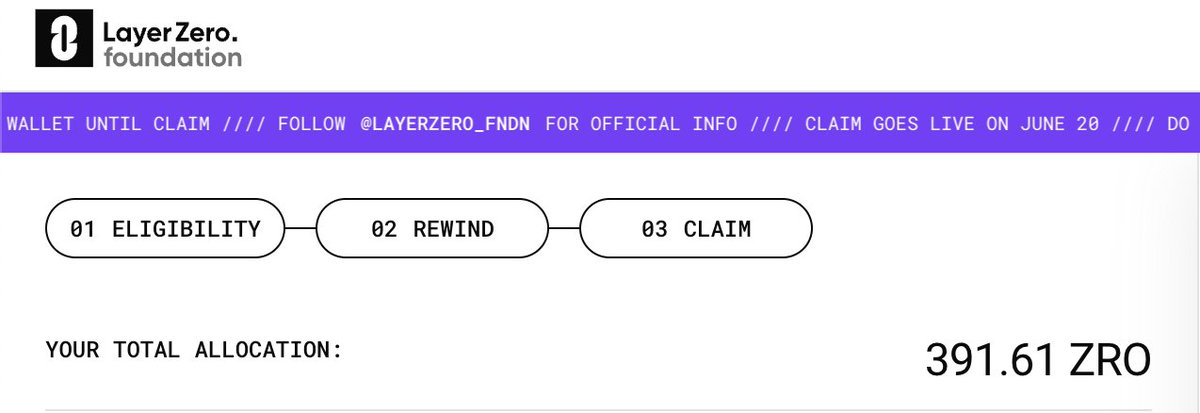
I received 390 tokens and that means a lot to me! in my village this is a lot of money and I think I can provide for my family for a long time.
thx for airdrop!
@PrimordialAA @LayerZero_Labs @LayerZero_Fndn
English

@padrex100 @TeamUnibot TY. Thinking about it after this thread, but only thing I can't get fully around is the tokenomics with so much still locked up.
English
I continue to be long $Unibot, but I like to challenge my thesis periodically to make sure I'm not succumbing to my biases
My thesis continues to be:
1. The best UX/UI on Telegram and as a standalone trading platform will be the way we onboard the masses to DeFi
2. Sniping is a PVP game and is by definition capacity constrained to launches on low-cap tokens, which constrains max volumes/users over the long term unless the user base or use case expands to something else
So I took a deep dive on volumes and traders on $Unibot and $Banana to see which aligns best with my thesis
My discoveries in some ways aligned with what I expected and in other ways completely surprised me
Here's what I discovered:
First, I took a look through the 200 largest trades by volume over the past 7 days for both Unibot and Banana. Some stats (and data tables below):
Unibot:
- 95 Buys, 105 sells
- $2.275mm total volume ($1.147mm buy volume, $1.127mm sell volume)
- Average trade: $11,377 ($12,080 on buys, $10,740 on sells)
- 60 total unique tokens traded (w/ 43 unique buys, 35 unique sells)
- Avg Unibot fee: 0.74%
Banana:
- 50 Buys, 150 sells
- $3.249mm total volume ($803k buy volume, $2.446mm sell volume)
- Average trade: $16,245 ($16,062 on buys, $16,307 on sells)
- 57 total unique tokens trades (w/ 21 unique buys, 40 unique sells)
- Avg Banana fee: 0.61%
When digging through all of this, the biggest surprise was the difference between buy and sell volumes. I was surprised that such a large percentage of the trades and volume was skewed towards sells for Banana. I expected both bots to look roughly balanced in buys/sells.
So that led me to believe that maybe Banana traders are just better traders with so many large sells vs buys...the epitome of buy low, sell high.
This got me to dig a bit deeper into the trading volumes of both sets of bot users.
Let's start with Banana:
In aggregate, using total buy volume ($226.7mm) and total sell volume ($274mm) by day and comparing the difference as a proxy for profit (yes, I know this ignores coins still held and not yet sold), Banana traders have earned $47.25mm in profit before bribes. On those trades, they've also spent $33.8mm on bribes, with $33.55mm of those bribes on buys and only $278k on sells.
Banana had over 1.34mm trades since launch so assuming half were for buys and sells, that gets us an average trade/profit of:
- Buy: $337.67
- Sell: $408.06
- Bribe: $50.39
- Profit: $19.99
Banana launched 163 days ago. Traders (excluding the costs of bribes) were profitable on 152 days and had losses on only 11 days. After accounting for bribes, those numbers drop to 116 profitable days and 47 loss days.
Clearly, these are insanely good numbers.
Now I'd note there were 57 days where there were no bribes spent (the first 57 days). Of those days, 8 of the 11 losses occurred during this period, so the remaining 3 days of losses (excluding the cost of bribes) have happened since Banana has allowed for users to bribe MEV bots & block builders. Basically, bribing has improved trader profitability on a gross basis. But after accounting for the cost of bribes, profitability is much lower.
So in percentage terms, the average return of all users was +20.8% before the cost of bribes and +5.9% after the cost of bribes
If we separate it into the periods before/after bribes were enabled, we see before bribes were enabled the performance among early users was even better, earning $4.5mm in profit on $17.4mm in buy volume for an average return of +25.7%.
After bribes were enables, users earned $42.8mm in profit before the cost of bribes and $9mm in profit after the cost of bribes on volume of $209.3mm for an average return of +20.4% and +3.6%, respectively.
Additionally, when we break this down by month, we can see that the aggregate profits of all users are very correlated with on-chain activity and volumes. So far, November is shaping up to as best month so far with an average of nearly $229k of profits across all users PER DAY. That's in sharp contrast to October which was the worst month when traders in aggregate made $10.2k per day. The impact of @friendtech is clearly visible in the profitability numbers for traders during that period. And when on-chain activity picks up, bribes spent also pick back up. See the tables below for more details.
Now let's dig into more specific wallets. I wanted to understand how much of this might be driven just by sniping where bribing a block builder translates to a better snipe, earlier in the block, and thus better return for the user.
So I started by looking at the top 200 wallets sorted by the amount of ETH they've spent on bribes. Eight of these 200 wallets had only buys or limited (1-2 sells) suggesting they had moved tokens to another wallet to hold or sell and so they've been excluded from the rest of the analysis (with the remaining 192 users as the representative sample).
The top 192 wallets by bribes spent 3,608 ETH on bribes across 149k trades (representing 25.7% of the 14,051 ETH spent on bribes by all Banana users). These 192 users represent $58.8mm of the total Banana volume (~11.7% of the $500.7mm in total Banana volume). They had $23.9mm of buy volume and sold them for $34.9mm, a gain of $11.0mm before the cost of bribes (23.4% of all profits before bribe costs) and I estimate** $4.9mm in profits after the cost of bribes (36.3% of all profits after bribe costs since Banana launched and 54.3% of all profits after bribe costs since Banana enabled people to bribe block builders on 7/29).
**For the estimate of the USD value of the 3,608 ETH, I used the average price from 7/29 to today using the average of the open and close prices listed on CoinGecko.
So very clearly, spending more on bribes than peers disproportionately improves your profitability. This cohort spent 25.7% of all bribes by Banana users, but earned 54.3% of all profits by Banana users since bribes went live.
They did this by spending on average ~0.025 ETH in bribes per trade, specifically focused on buys. Their average trade size was ~$320 (~0.15-0.2 ETH depending on ETH prices since July)
Statistically we can show this as well. I ran a regression on gross profitability as a percentage of the initial buy volume of each of these 192 users where the ETH spent on bribes as a percentage of their buy volume is the X variable and their gross return (i.e. their profits excluding the cost of the bribe) is the Y variable.
The R-squared of this regression was 0.275, meaning 27.5% of the return of each of these users can be attributed just to how much they spent in bribes.
Now, a few other points. The coefficient for bribes was 0.95, meaning for every 1% more spent on bribes, these users earned an additional 0.95% in return. This was highly statistically significant with a t-stat of 8.5. Now, there is clearly a wide range in return impact amongst users with some far more successful than others (the best trader got 4.88% back for every 1% spent on bribes, while the worst got only 0.38% back), but on average for every $1 you spent on bribes you got back about the same in return.
Additionally, it's clear that these users are very skilled. Within a traditional risk-return analysis (think CAPM for the TradFi nerds), the intercept of the regression is the trader's "alpha."
These traders, had an intercept of 35.6% (also statistically significant at a t-stat of 3.5), meaning if they spent 0 ETH on bribes, their expected return is 35.6%. Basically, it's not by random chance that they make money, they are good at identifying the right coins to snipe in the first place.
I've included the regression output and a chart showing the linear relationship between bribes paid and gross return in the graphics below. It's pretty clear from the chart that higher bribe = higher return, with the line of best fit sharply upward sloping.
Now, having said all this, these traders on average actually earned 102.7% before bribes, their bribes on average cost 70.3%, for a net return of 32.4%.
So what does this all say to me?
1) highly skilled traders use Banana and the top 200 traders by bribes spent are quite skilled traders, earning a disproportionally large percentage of profits
2) spending more on bribes improves your return. That doesn't necessarily mean that the bot is better or worse, faster or slower, more efficient or less efficient, it just shows that it is more profitable for traders to bribe block builders so they will put your trade first
If anything, the realized returns of these traders (+32.4%) is below what would be expected from the regression (+35.6%) after factoring in the cost for the ETH spent on bribes (though that difference is certainly not statistically significant and doesn't account for any holdings not yet sold since the gap is rather small). The point is you still have to successfully pick the right coins and then once you do that, spending more money on bribes improves your return on average
3) since the sample used in this analysis is just the traders who spent the most on ETH, it's possible when accounting for ALL traders who bribed block builders, the effects of the bribe might explain more or all of the profits and that these traders aren't in fact exceptional traders, they're just first to snipe on average because they pay the most and over a large sample size (the average trader of this cohort had 777 trades), the benefits of buying lowest allows the law of averages to work
Now for Unibot:
In aggregate, total buy volume was $226.1mm and total sell volume was only $194.1mm, implying a loss of -$32mm (again ignoring the value of tokens still held and not yet sold).
Unibot over this period had over 676k trades, so the average trade size was:
- Buy: $668.62
- Sell: $573.89
- Loss: -$94.73
This implies an average loss amongst all Unibot users of -14.1%.
Now interestingly, the average Unibot trade is about 2x larger than Banana, suggesting that it might be a different type of user using the bot
Unibot has been available to use for 176 days. Unibot traders lost money on 143 of those days, with gains on only 33 of those days.
Given the Unibot sniper is much newer and the Dune dashboard doesn't break out bribes, I can't run a similar analysis on the success of the Unibot sniper or the traders. But it's probably fair to assume that there are relatively few sniper trades being done given the limited history of the sniper bot.
However, the Unibot Dune dashboard does break out wallet-level PNL analysis using a similar methodology to the one I'm using (sells - buys = profit).
Interestingly, just the top 5 wallets when sorted by largest losses account for ~$14mm of the $32mm in losses above with a weighted average loss per wallet of -59%. Just five wallets are nearly 44% of the total losses. If we dive into each of these wallets you can see pretty quickly that they all still contain (or have moved to another wallet) millions or hundreds of thousands of dollars of tokens suggesting they may be holding longer-term positions in hardware wallets.
The point is, there's a lot more to these numbers than meets the eye when comparing just headline numbers or average trader profitability.
User comparison/analysis:
There's also some more information we can gather based on the user numbers, frequency, etc. that can help inform our opinion of the types of users of each platform and how we might assess whether each is successful
Specifically, the dreaded "how many 'true' users are there for each platform" question has been difficult to answer.
When comparing users, Banana has been off the charts. Here's a comparison of both:
Banana:
- Lifetime users: 41,138
- Daily avg users: 3,396
- Peak one-day users: 3,909
Unibot:
- Lifetime users: 19,425
- Daily avg users: 748
- Peak one-day users: 2,189
But when we look at repeat users, the story is a bit different. Here we're sorting by loyalty to each bot. The top user represents the user that's traded on the platform for the most total days, regardless of volume while bottom users are the newest users of each platform. I filtered this way because it helps us to understand how likely people are to continue to use the platform.
To set some of these cutoffs, I thought about the 80/20 principle that 80% of your usage comes from 20% of your users.
For Unibot, that's almost exactly the case. For Banana a smaller subset of users account for 80% of volumes.
Banana:
- ~80% of volume comes from the top ~13.2% users (5,418 users, these users used the bot at least ~12.5 different days)
- ~50% of volume comes from the top ~3.2% of users (1,311 users, at least 36 different days of use)
- 21% of lifetime volume comes from the most loyal 250 users
Unibot:
- ~80% of volume comes from the top ~20.8% of users (4,037 users, at least 12 different days of use)
- ~50% of volume comes from the top ~5.4% of users (1,052 users, at least 32 different days of use)
- 21.5% of volume comes from the most loyal 250 users
So the most loyal 250 users are loyal to both platforms in equal amounts. But the next set of users is slightly larger for Banana than Unibot by about 25-35% on an aggregate number basis, but as a percentage of of all users represent a smaller subset of lifetime users.
So what about newer users? When we look at newer users, we can see that Banana is worse at converting new users to repeat users.
Banana:
- 62.4% of lifetime users traded less than 3 different days (26,406 users, 4.7% of all trading volume)
- 40.2% of lifetimes users traded just 1 day (16,528 users, 1.7% of volume)
Unibot:
- 50.7% of lifetime users traded less than 3 different days (9,842 users, 5.1% of all trading volume)
- 27.0% of lifetime users traded just 1 day (5,238 users, 1.4% of volume)
Now, my suspicion is that many of Banana's newer/less loyal wallets are just new wallets of more loyal customers who don't want other people to mirror trade or track their wallets, but I haven't been able to verify that yet so that's a topic for another day.
When we compare how many active wallets there are to the number of loyal users (using the 80% of volume figure), we can see:
- Banana: 62.7% of loyal Banana users trade daily (3,396 of 5,418)
- Unibot: 18.5% of loyal Unibot users trade daily (748 of 4,037)
So the takeaway here is that Unibot is less reliant on its most loyal customers with a slightly wider base of users on a percentage basis, but that Banana still has a larger user base across the cohort of users that matters most, the most loyal users, in aggregate numbers. The gap in loyal users between both platforms is substantially smaller than the headline user numbers suggest when you check Dune (roughly 25-35% more loyal Banana users than Unibot). But Banana users are much more active traders, trading on average once every 1.6 days vs Unibot where users trade on average every 5.4 days. The big caveat to activity metrics is that active Unibot users were roughly 60% higher prior to the hack last week, which would bring it closer to 30% of loyal Unibot users trading daily or one trade every 3.3 days.
So what is the takeaway of all of this analysis of traders and users?
Unibot users are either average traders or they are investors with longer time horizons, where they continue to hold tokens they've bought and so those are not accurately reflected in this analysis.
Banana users are clearly very successful traders and a large percentage of them are primarily snipers playing a PVP battle where those who have the most ETH to spend on bribes make the most profit.
(The other possibility is that neither set of traders is better than the other and that this analysis just reflects people moving from using Unibot to Banana. This could be because Banana has a lower headline fee and launched an incentive program earlier than Unibot, so larger traders may have migrated from Unibot to Banana to save on trading fees and thus purchases made on Unibot 3-4 months ago are being recognized as profits on Banana.)
From a users perspective, both have loyal users bases. Unibot's user base is smaller in aggregate and among loyal users than Banana, but not nearly as small as the headline Dune figures would suggest.
That said, average daily volumes are still substantially higher for Banana than Unibot potentially reflecting higher sniper usage by Banana, decreased Unibot usage of late given the hack, and the migration of users given lower fees/higher incentives on Banana
However, Banana's volume is more concentrated among its top users suggesting its volumes/usage may be more susceptible to an adverse event, should one occur.
Bringing it back to my Thesis:
As I said at the outset, my thesis continues to be that a simple, easy to use UI/UX is how you convince "normal" people to trade on DEXes and that the majority of them will not be focused on sniping, they'll frankly be chasing whatever coin pumped most lately and want to be able to do that in whatever form is easiest to use.
My concern with a PVP sniping battle is that there's always a bigger fish who is willing to spend more than you to win the next block. In that world, it's possible that competition forces higher bribes and gas fees which negate much of the benefits of being early to trades.
Additionally, fees are a very real issue and any rational person in addition to focusing on which platform is easiest to use would look at trading fees, incentives, rebates, etc. when making an ultimate decision.
Today, Banana offers lower headline fees and has incentives based on volume.
Unibot has higher headline fees but offers discounts based on token holdings. Unibot also has an ecosystem fund to reward traders, but the details of that have not yet been announced.
But in practice, Banana's fees have still been modestly cheaper than Unibot (~10bps), at least across larger trades. In order to compete, Unibot will have to reconsider how it charges/rewards users for using its platform.
One other side note on fees I discovered while running this analysis is that 11 of the 150 Banana sells in the very first part of this post were categorized as sales of USDT into ETH. In total, it was $184k of volume. Ten of the 11 traders paid a full 1% to Banana swapping between stables and ETH (with one trader spending 0.5%), for an average fee of 0.95%.
Unibot offers FREE swaps between ETH and Stables, so that is one clear and obvious advantage, particularly as people start to lock in gains with markets up-only over the last few weeks and headed into 2024.
My Unibot position:
After doing all of this, I still feel confident in my Unibot position and continue to add at these levels. I continue to believe it best matches my long-term bull thesis focused on UI/UX and avoiding capacity constrained PVP sniping. But Banana is a strong, formidable competitor and the platform that addresses the needs and challenges of users best will win.
There's still more analysis I'd like to do...specifically a similar regression analysis for all Banana traders based on bribes and to compare the profitability of all traders who spend money on bribes versus those who didn't. But that can come later.
I've added several other charts, tables, and graphs in additional posts/comment below this.
Shoutout to @whale_hunter_ for the @DuneAnalytics dashboard I used to analyze this data
And finally, if you found this post helpful, please consider using my referal link for a 10% fee discount on Unibot: t.me/unibotsniper_b…


English
I'm claiming 100,78 YOLO — the native token for Blast's hottest on-chain gaming venue.
Start earning Points for Season 2's rewards pool now! yologames.io
English
padre retweetledi
The New Leagues Are Live – Register Now! 🏆
🟡 600,000 Blast GOLD
⚡️ 22 ETH
🃏 Cards
✨ Fan Points and 💫 Stars...
More Strategy.
More Fun.
Packed with Rewards!
We’re excited to announce our biggest gameplay update since launch.
Discover more 🧵
English
LFG! I'm qualified for @tradewithPhoton stimmies. Season 1 - Round 1 dropping on 6/17.
🚀LET THE BULL BEGIN🚀
photon-sol.tinyastro.io/en/stimmies
English

When Hyperliquid launched, the goal was to become the best perps DEX. Today, the vision has expanded to that of an entire financial ecosystem, starting with native spot trading and deployment through HIP-1 and HIP-2.
The L1 season of points starts today to reflect this growing ambition and welcome new use cases. 700,000 points will be distributed weekly for 4 months. The first snapshot will be for May 29-June 4.
Points criteria will be updated on a recurring basis. Distributions will be based on weekly activity ending Wednesdays at 00:00 UTC and take place on Fridays. There will be 1:5 affiliate points matching. Affiliates will need to reapply.
2,000,000 points per week will be distributed for activity from May 1-28. This bonus multiplier is to reward organic usage.

English