Ramraj Pai

3.4K posts

Ramraj Pai banner
Ramraj Pai

Ramraj Pai

@pairamraj

Financial Analyst. Runner, swimmer. Vegan. Chennai boy. Csk fan forever. Formerly President at CRISIL,

Mumbai, India Katılım Aralık 2011
193 Takip Edilen1.1K Takipçiler
Ramraj Pai
Ramraj Pai@pairamraj·
@abhymurarka always wondered why this man get this kind of airtime across ? he seems to be underperformed the market in any time frame you can consider.
English
0
0
0
189
Ramraj Pai
Ramraj Pai@pairamraj·
@WizardsUnknown Saurabh’s luck is such that the more conviction he has on something the greater the chances it will crash and burn !!
English
0
0
1
132
Unknown Market Wizards
Unknown Market Wizards@WizardsUnknown·
Two days ago, Saurabh Mukherjea came on TV and said he continues to hold his age-old large position in HDFC Bank. Beyond that, he thinks there are asset quality issues in banking, and even a large private bank may need a bailout! A day after, HDFC Bank part time chairman resigns citing differences over governance standards and ethical direction of the bank. You can't make this up. 😅
English
38
48
658
109.8K
Ramraj Pai
Ramraj Pai@pairamraj·
@Iamsamirarora All we can say is that further downside is limited. Rest is all in NAV already.
English
0
0
0
78
Samir Arora
Samir Arora@Iamsamirarora·
Since this tweet below confused so many people let me explain quickly: There are many comments on how people having cash in today's markets will have a feast. What I am saying is that people sitting on cash have already had a feast by saving money thus far and there is no additional feast in being able to buy now. Let us take 2 people : Each has 200 and one is fully invested and one 50% invested. Market falls 20%. First person now has 160. Second person has 180. So 2nd person is obviously and rightly ahead of first and this is already captured in the returns of the two today (similarly in a fund's NAV today). 2nd person now decides to invest all his money. So he is also now fully invested. Hereon if markets goes up/down x% both will go up down the same going forward. There is no additional benefit. Buying cheaply now is NOT a SECOND benefit- the benefit is already captured in your return/NAV saving so far ( it will obviously help in compounding for the rest of the life but the gain has already been captured). Note: I have removed all stock selection impacts otherwise answer for every discussion in markets becomes "it depends on what one chooses to buy/not buy" .
Samir Arora@Iamsamirarora

Wrong analysis. For example, If person sitting on cash invests on Monday then from Monday evening onwards he is in the same position as the one who was holding the same stock all through. There is no additional benefit in buying at these levels over and above whatever u have already saved in sitting on cash till now. You already know how much sitting in cash has helped u till now- there is in theory no further benefit ( from buying at current market compared to people already holding) unless u wait more and market falls more etc.
English
89
24
406
112.9K
Ramraj Pai
Ramraj Pai@pairamraj·
@Ajaya_buddy Nothing is free. If you want returns over risk free, you have to pay for with pain. we have created an entire generation of investors who cannot tolerate even moderate drawdowns. If you can’t take the heat, perhaps it’s time to take the hand off the stove.
English
1
0
1
580
Ajaya Sharma
Ajaya Sharma@Ajaya_buddy·
Over 2 decades i have worked w/ founders promoters & investors of all categories, new HNIs, Big HNIs, funds, FIIs, Family offices.. the whole 9-yards.. havnt seen sentiment so depressed, almost given up.. complete dejection among investors in a long long time.. sabra ka bandh
English
113
86
808
197.4K
Ramraj Pai
Ramraj Pai@pairamraj·
@anishmoonka @_grojo My view is just that access to new geographies or even new sectors within the same country is far more accessible now than before. Learning can be hyper customised to your intellectual capacity and curiosity in a very very short time
English
0
0
0
57
Anish Moonka
Anish Moonka@anishmoonka·
Good question. Context: I primarily invest in Indian markets, that's been my focus for years. US markets are new territory for me. When a company like Amazon catches my attention, I don't have the same level of context I have for Indian names. I don't instinctively know the margin structure, how AWS relates to retail, what the SBC situation looks like, or how the capex cycle has historically played out. The value is the understanding. Within an hour, I have a structured breakdown across every dimension that matters: financials, moats, management, segment economics, risks, scenarios. That's my foundation for entering a new market. And it doesn't stop at the report. I can ask follow-up questions, dig deeper into specific areas, create a dedicated Claude project for the company, and keep building. The report is the starting point. So yes, genuinely adding value.
English
1
0
2
2.3K
Anish Moonka
Anish Moonka@anishmoonka·
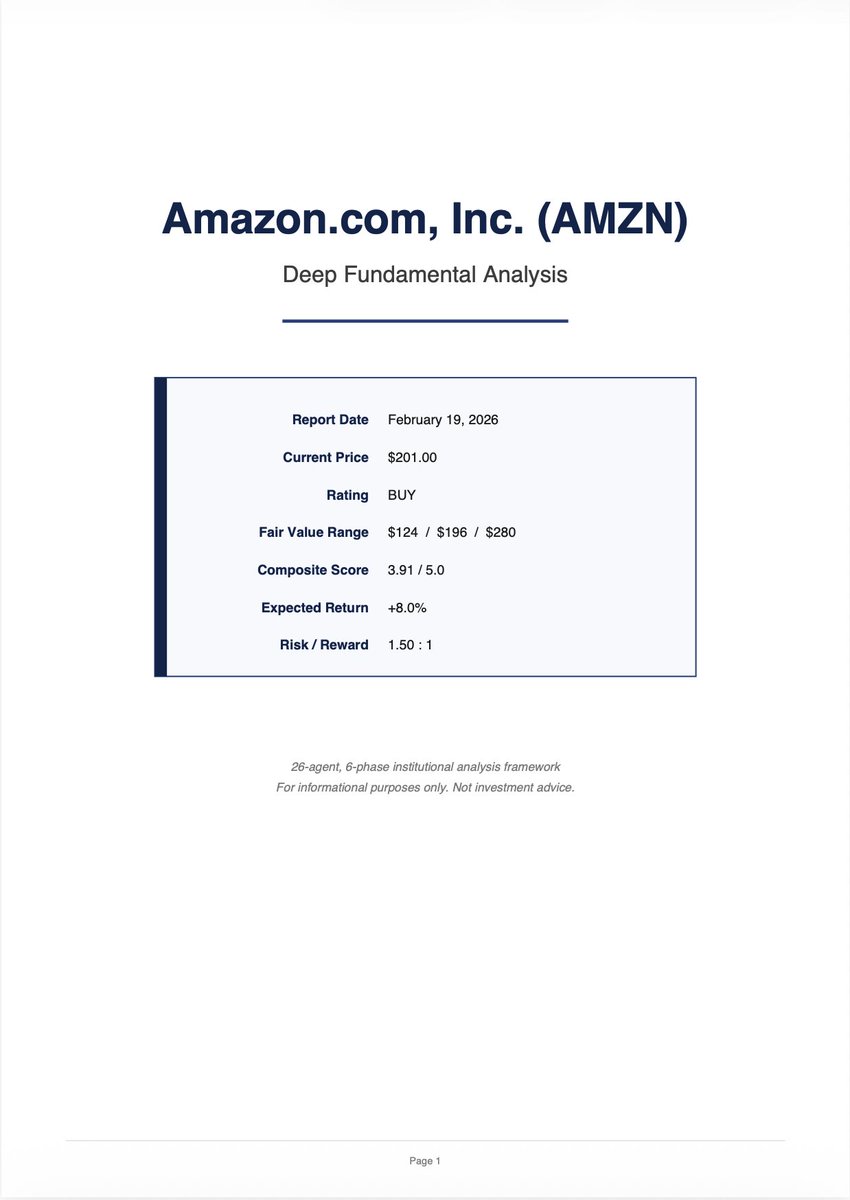
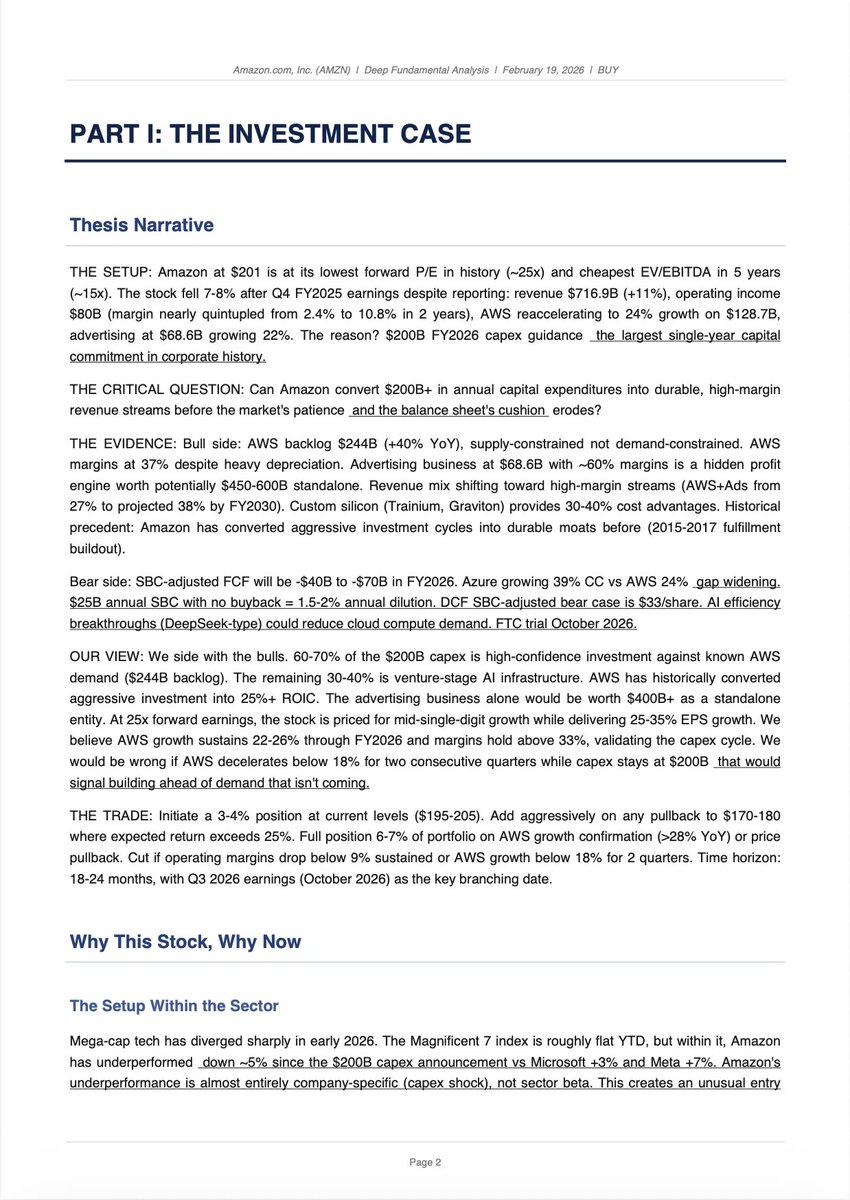
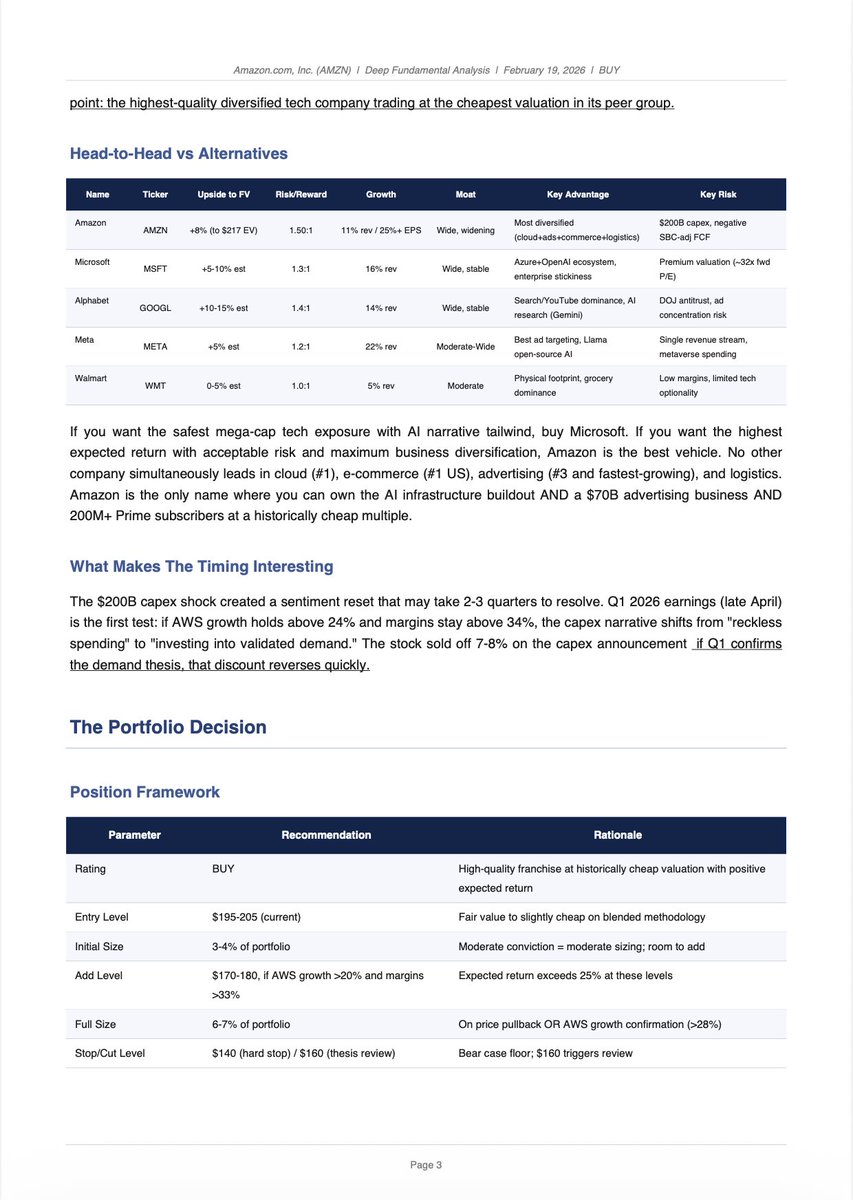
This is one of my most ambitious investment projects, and honestly, it's still very early. I built a system where 26 AI agents work together across 6 phases to produce deep equity research. The kind of analysis that takes a team of analysts weeks, condensed into an hour. And with models getting better every few months, this is only going to scale from here. Here's how it works. Phase 1: Four agents go out in parallel to collect data. > SEC filings, earnings call transcripts, market data, insider transactions, and competitive intelligence. > They cross-reference across sources; nothing gets taken at face value. > Each agent produces a full, detailed output and a compressed briefing that gets passed forward. Phase 2: Six agents break down the financials. > Revenue quality and growth trajectory with deceleration tracking. > GAAP vs non-GAAP margin reconciliation. > Balance sheet liquidity with dilution trajectory mapped against revenue growth. > Operating and free cash flow with SBC-adjusted FCF. > Historical beat/miss patterns on guidance. > Each dimension scored 1-5 with a weighted composite, and the key financial tension was identified. Phase 3: Four agents handle the strategic layer. > Competitive moats scored 0-3 across five dimensions: network effects, switching costs, cost advantages, intangible assets, and efficient scale. > Each one gets an AI-disruption overlay. Does AI strengthen or weaken this specific moat source? > Management is evaluated on the founder-led vs. professional track record, capital-allocation track record, insider alignment based on actual transaction data, and governance structure. > Industry analysis includes TAM sizing, adoption curve positioning, and an AI disruption taxonomy (additive vs. substitutive vs. deflationary, with specific evidence). > Sector vulnerability decomposes the stock's movement into sector-wide and company-specific components. Phase 4: Five agents build the forward-looking picture. > Head-to-head peer ranking across 4-6 alternatives on upside potential, risk/reward, growth durability, and moat strength. > Revenue evolution modeled by a stream, with per-stream gross margins and blended valuation-multiple implications. > Competitive threat scorecards with actual data cards per competitor: users, revenue, funding, growth signal, enterprise presence, classified as share taker vs TAM expander vs disruptive substitute. > Quarterly scenario progressions through 2027 for bull, base, and bear, with branching metrics identified. > And a thesis narrative that opens with the critical question the market is debating and takes a side. Phase 5: Four agents on risk and valuation. > Top 7 risks ranked by probability times impact with timeframes. > Three-scenario DCF with Year 5 revenue, FCF margin, WACC, terminal growth, and sensitivity matrix. > 5-8 peer comparable company analysis with growth-adjusted multiples. > Valuation convergence blending DCF at 40%, comps at 30%, historical at 10%, and revenue evolution at 20% into a probability-weighted expected value. Phase 6: Three agents synthesize everything the other 23 produced into a final report structured in five parts. > Investment case with thesis narrative. Investment debate with bull/bear arguments, each carrying confirmation and invalidation triggers. > The numbers with every section ending in "what this means for the thesis." Supporting evidence with competitive data cards and a catalyst calendar. > And a verdict with entry levels, sizing framework, add/cut triggers at specific metric thresholds, and a time horizon. The architecture handles context window limits by having each phase produce compressed briefings (600-800 words) that get passed to the next phase. Full outputs stay available if an agent needs to dig deeper. Parallel execution within each phase, sequential across phases. File-based handoffs between every stage. One important caveat: ignore the specific buy/sell recommendations and price targets in this version. The valuation models need more work. But what this system already does really well is give you a deep, structured understanding of the business. All the qualitative and quantitative aspects you need to actually make your own informed decision. The moat understanding, competitive dynamics, revenue quality breakdown, risk matrix, scenario mapping. That's the real value right now. Built it for US stocks first. India is next (to be added soon with data pipelines API help). Ran the first full test on Amazon. Still a lot to improve, but even at this stage, the depth of understanding it produces is genuinely useful. Link to the full report and all 6 phase outputs in the next tweet 🧵
Anish Moonka tweet mediaAnish Moonka tweet mediaAnish Moonka tweet media
English
71
140
1.2K
137K
Ramraj Pai
Ramraj Pai@pairamraj·
@iabhinavKhare Your friend doesn’t like cars fair. That cannot be generalised for the entire population. Investment and savings are important but if someone bought a Rolex or a Harley with a portion of his savings made him happy I would wish him well not vilify his choices
English
2
0
4
175
Ramraj Pai
Ramraj Pai@pairamraj·
@iabhinavKhare Pls go and see your tweet. Rich people don’t care for brands they discuss hobbies. Who buys the sports cars and the designer van cleef jewellary and patek Philippe watches . A lot of rich people care like hell for brands
English
1
0
3
98
Abhinav Khare
Abhinav Khare@iabhinavKhare·
My friend is a CTO with a Fortune 500. He runs their GCC in India. 3 crs fixed plus stock. Total around 8-9 crs/yr. Drives a 12 years old Fiat Linea. No luxury brands. No watches. Spends lavishly on his household staff… has 5 full time domestic aids. Invests everything else.
Pratham khanna@Portfolio_Bull

My sister earns ₹1.2L/month. Use 3yr old phone.
Rides a 6yr old Scooty
Lives in rented 2BHK. Her Office colleagues laughs & say “Sister, enjoy life.” Reality:
• Invests ₹60k/month
• ₹45L portfolio at 34
• Can survive 3 years without job After 10 years…Show more

English
48
64
1.6K
331.5K
Ramraj Pai
Ramraj Pai@pairamraj·
@iabhinavKhare What you are saying now is about spending relative to income. Doesnt mean rich people don’t care for brands. Whats your point If it is relative spending i agree else we can look at custom made vantara jacob and co watches akash Ambani or Zuckerberg brunello tshirts manymore
English
1
0
2
472
Abhinav Khare
Abhinav Khare@iabhinavKhare·
@pairamraj Anything that gives you pleasure is fine. Ambani’s spend just pocket changes on luxury stuff.
English
1
0
2
548
Ramraj Pai
Ramraj Pai@pairamraj·
@iabhinavKhare This kind of motherhood Apple pie generalities are completely irrelevant Look at ambanis and their events, watches. Why do we vilify consumption so much as if it is a sin ? If you can afford it and want it go ahead as long as you are conscious in spending.
English
1
0
5
7.2K
Abhinav Khare
Abhinav Khare@iabhinavKhare·
Middle class people try to buy status via brands… wealthy folks do what they want. They buy what gives them happiness and rest they invest. I’ve never seen a rich guy discussing brands. They almost always discuss investments or travels or their hobbies.
English
3
5
109
15.6K
Ramraj Pai
Ramraj Pai@pairamraj·
@nsitharaman Cannot agree more with mr Pai on this one. To be arrested on a Friday evening for gst evasion by business partners smacks of a witch hunt of extreme proportions. Comes across as very unfair. @TVMohandasPai
English
0
0
3
508
Ramraj Pai
Ramraj Pai@pairamraj·
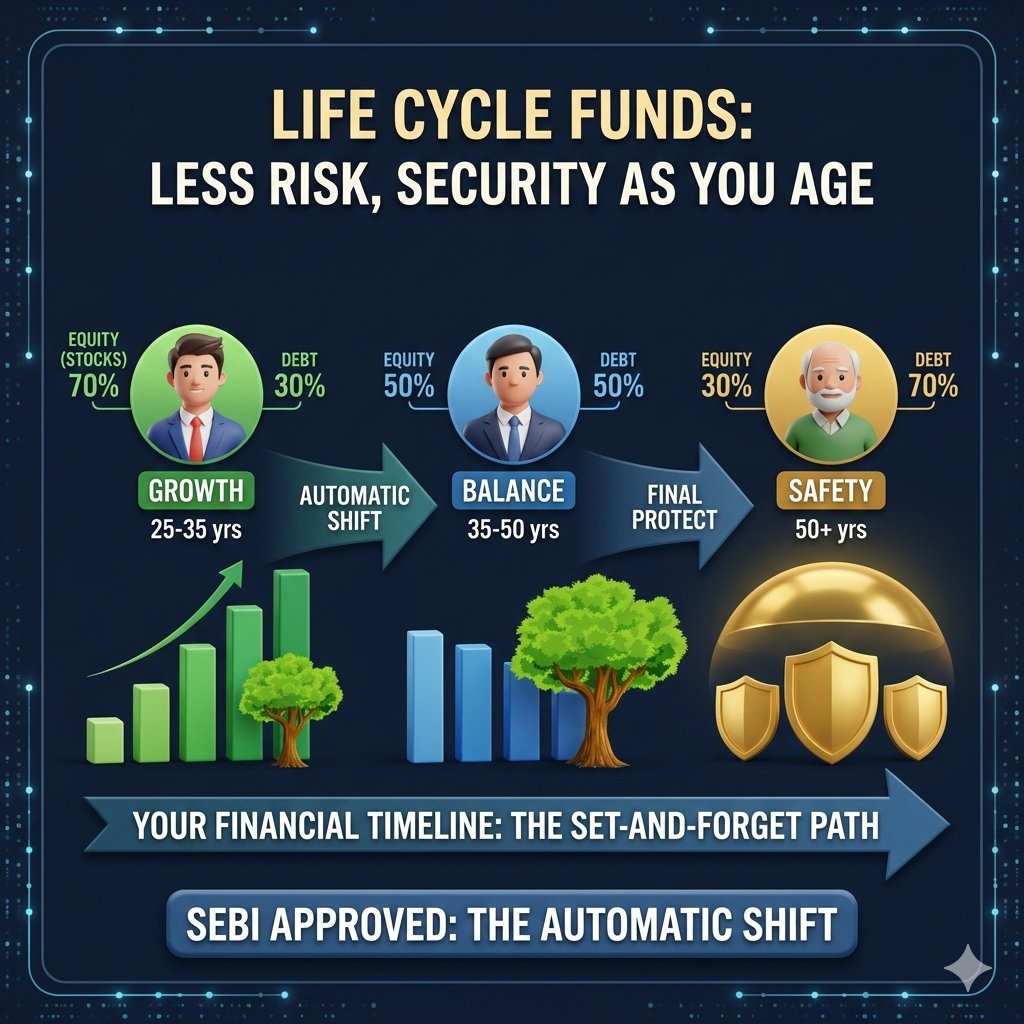
@harvirs i just find this young and equity, old and debt idea very anachronistic. is there any back testing of this model available to prove its superior performance vis a vis a more actively managed portfolio ?
English
0
0
0
17
H ☆singH
H ☆singH@harvirs·
Finance 101: Life Cycle Funds 👶➡️👴 ​SEBI’s new Life Cycle Funds are a "Set-and-Forget" tool for the public. ​The Lesson: It manages risk for you. When you’re young, it bets on Equity (Growth). As you age, it automatically shifts to Debt (Safety) to protect your retirement. 📈🛡️
H ☆singH tweet media
English
1
0
1
27
Ramraj Pai
Ramraj Pai@pairamraj·
unclear about the benefits of the new life cycle fund. taper equity and ramp up debt over time assumes returns have been generated early on from equity. what happens if initial returns from equity is weak but they start moving up towards end of life cycle. double whammy.
English
0
0
0
60
Ramraj Pai
Ramraj Pai@pairamraj·
@abhymurarka I have no personal interest in this bank but an operational branch level fraud has no correlation with these macro challenges rights as they are. Your biggest public sector banks have had multiple such instances over years and at large scale. Weak operational controls perhaps
English
1
0
0
282
Abhishek Murarka 💹🐂
Abhishek Murarka 💹🐂@abhymurarka·
The IDFC fiasco is a reminder of an old mental model: Banking is a self-selecting model - the credit worthy borrowers go the best banks, depositors largely park their deposits in trustable large Banks. This creates a virtuous cycle of better systems and processes. For smaller banks, the route to success is inherently shrouded with risks as you have to cater to riskier borrowers and pay higher to attract depositors. This leaves the bank to more macro risks as you hope the broader economic cycle in your favour when you are taking those risks. Success often comes with some luck, and more importantly led by quality of experienced leadership who can caliberate these risks. Often Banking sector works better when Economy is booming as credit offtake is strong, so leverage works in its favour (Banking and NBFCs lending operates at high leverage).
English
12
10
169
20.1K
Ramraj Pai
Ramraj Pai@pairamraj·
@ApedaRondo @daniel1245am You guys are really sweet and these tourists really gutsy. In most places the locals would have been beaten the shit out of these types. They have come to NE and confronting locals so rudely and you guys are taking this shit.
English
0
0
1
96
Apeda Rondo
Apeda Rondo@ApedaRondo·
The Gujarati tourist and their behaviour in Mishmi Hills Resort in Anini. Cannot express in few words! Very sad.
English
179
346
1.2K
130.3K
Ramraj Pai
Ramraj Pai@pairamraj·
@amitgupta0310 I remember this dialogue from Masaan “yeh Dard khatam kyo nahin hota be” when I read this SC ruling and then the IDFC news. Always some excitement nowadays making the the same time one year back seem very genteel in comparison :) :)
English
0
0
1
323
Amit Kumar Gupta
Amit Kumar Gupta@amitgupta0310·
Interesting Monday coming up: A 590 cr fraud at a listed private bank in India, major tax evasion caught via AI in multiple restaurants in Hyderabad (likely tip of the iceberg), tariff confusion from US amid exemptions and Trump bickering, Claude new version impacting cybersecurity firms directly and Iran geopolitical situation to be watched as winter Olympics end this Sunday.
English
12
16
186
33K
Ramraj Pai
Ramraj Pai@pairamraj·
@Nithya_Shrii This is malamaal old nasseruddin shah movie plot and also made into Tamil as Arunachalam with Rajni just fyi.
English
0
0
0
16
Nithya Shri
Nithya Shri@Nithya_Shrii·
You’re given $20M and you have 20 mins to spend to. You can’t buy a car, house, yacht, plane, gold or diamonds. What are you buying?
English
480
13
313
42.2K
Ramraj Pai
Ramraj Pai@pairamraj·
Most people who haven’t grown up in Tamil Nadu in the 70s or 80s will not even have a clue what this means for fans, what a big deal it is to see this again in our lives. KH x RK Reunion - Tamil | Kamal Haasan | Rajinikanth | Nelson... youtu.be/TROFVicWrTE?si… via @YouTube
YouTube video
YouTube
English
0
0
0
125
Ramraj Pai
Ramraj Pai@pairamraj·
This woman has a fine fine career ahead perhaps in public life somewhere if she somehow crosses this hump unscathed. Her communication skills and poise in the face of such high pressure interrogation is admirable. Gutsy
Vinay Kumar Dokania@VinayDokania

After the grand success of "My 6 is your 9", Neha Singh of Galgotias University is back with a brand new banger "Roko,mat jaane do! Roko mat,jaane do! Poora matlab badal jata hai!" No one can stop her,she is gone take away jobs of some news anchors or BJP spokespersons soon!

English
0
0
1
86
Ramraj Pai
Ramraj Pai@pairamraj·
@dr_sumit_sharma Yes. IMHO changing nothing on your thali just the proportions is all we need to do. Treat carbs as precious fuel and protein as abundance instead of other way around would be a big help.
English
0
0
0
11
Dr Sumit Sharma
Dr Sumit Sharma@dr_sumit_sharma·
@pairamraj Build systems around your life choices that keep your hormones balanced!
English
1
0
0
12
Dr Sumit Sharma
Dr Sumit Sharma@dr_sumit_sharma·
Your grandmother’s thali is mocked as “carb-heavy.” My grandfather ate the same thali for 90 years. Never diagnosed diabetic. Never on medication. Never dependent on care. The problem wasn’t the thali. It was what we replaced it with:
Dr Sumit Sharma tweet media
English
12
17
170
37.9K