Patrick Tu

534 posts

Patrick Tu banner
Patrick Tu

Patrick Tu

@patr2ck_

Product and Data Guy | Building in LegalTech & AI | 👨🏻‍💻 Ex-McK

Munich, Bavaria Katılım Mayıs 2015
633 Takip Edilen417 Takipçiler
Justin Mitchel
Justin Mitchel@JustinMitchel·
So... Postgres is now basically a search engine? pg_textsearch was just open sourced. It enables BM25 to search your database.... massive upgrade for key word search. Google uses BM25 in their search engine. Claude told me: "if you're already on Postgres, you can now skip the whole sync-your-data-to-Elasticsearch dance for search." (ps, how can you not love Claude). Now I got to figure out how to implement in my Django querysets... future course? Grab it at github.com/timescale/pg_t… #sponsored
English
84
405
5K
507.2K
damien
damien@damienghader·
Better than most designers Took 10 minutes with @lovable Want the prompts? Drop a "❤️" below, I’ll DM you
English
873
44
1.7K
130.4K
Jacob Klug
Jacob Klug@Jacobsklug·
After generating $250K (last 2 months) I built a playbook for @lovable apps—and I’m giving it away. In just two months, we cracked the code to building apps with AI. I’ve distilled everything we learned into this single document. Comment "Build" and drop a follow. I’ll DM it to you. P.S. This will likely blow up, so give me some time to reply.
English
6.3K
193
3.2K
743.3K
Patrick Tu
Patrick Tu@patr2ck_·
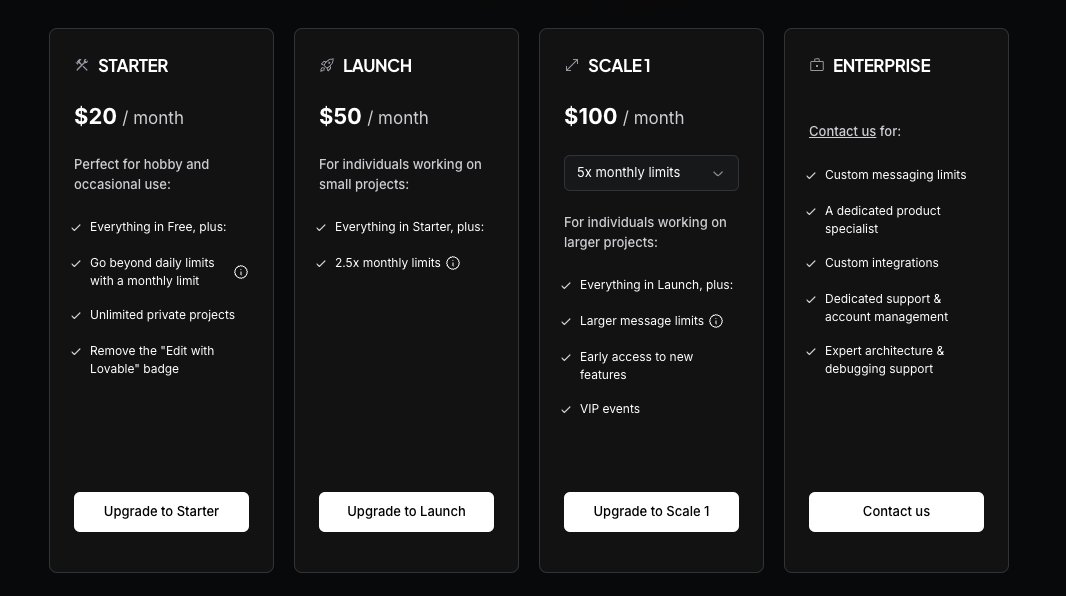
@lovable can I upgrade / top-up plans on the go? So if I run out of limits on the launch plan switch to scale / buy new limits?
Patrick Tu tweet media
English
1
0
0
31
Patrick Tu
Patrick Tu@patr2ck_·
As we will slowly reach the physical capacity of datasets to train, I think foundational models will converge towards a similar quality level. Super curious to hear your thoughts on how this will further develop. (8/n)
English
0
0
0
114
Patrick Tu
Patrick Tu@patr2ck_·
Market Consolidation: With Inflection AI’s recent moves (and almost OpenAI last November), we see early signs of consolidation. Larger gaps between market leaders and competitors will further raise the question of whether those huge R&D investments drive ROI. (7/n)
English
1
0
0
113
Patrick Tu
Patrick Tu@patr2ck_·
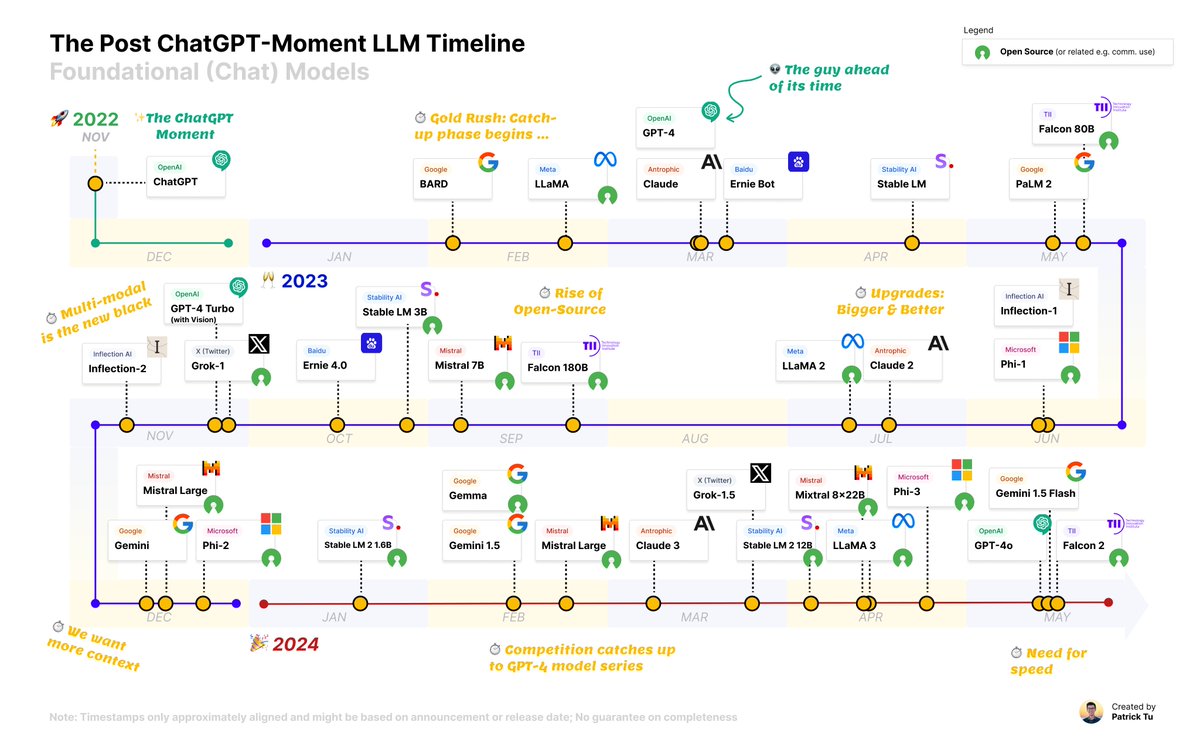
🧵 Introducing the Post ChatGPT-Moment LLM Timeline It’s been only 18 months since the groundbreaking ChatGPT moment. Since then, the race for foundational models has been on and PaLM, GPT, LLAMA … I quickly lost track of who released what 🤷🏻‍♂️ (1/N)
Patrick Tu tweet media
English
1
0
3
195
Patrick Tu retweetledi
Anthony Simon
Anthony Simon@anthonynsimon·
"Let's do startups" - Germany edition But first... some paperwork: 1. Put aside €25,000 for company formation 2. Find a notary to draft articles of incorporation (1-2 weeks) 3. Open bank account (4-6 weeks) 4. Deposit share capital and send to notary 5. Entry into commercial registry 6. Ignore official looking scam letters asking for money 7. Entry into transparency register 8. Register with local trade office 9. Register with tax office 10. Wait for your company's VAT ID 11. You need an official address (don't use your home, can't use PO box), so rent virtual office 12. Buy company insurance 13. Buy accounting software 14. Set up payroll (you have to employ yourself as manager) 15. Pay for on-going accounting costs (€2-3k a year) 16. Prepare monthly, quarterly and yearly taxes 17. Make sure you have a GDPR-compliant privacy policy, and DPAs with all service providers 18. Make sure you have a compliant legal notice on your website and emails, or risk getting a €50,000 fine 19. Make sure your invoices are actually compliant with regulations 20. Don't ever move out of Germany while owning the company, or else go bankrupt due to the exit-tax with no liquidity problem Now you may invoice your first customer - if you dare ;) (obviously not legal/tax advice, this is satire)
English
197
307
3.2K
816.5K
James Pog
James Pog@jamescodez·
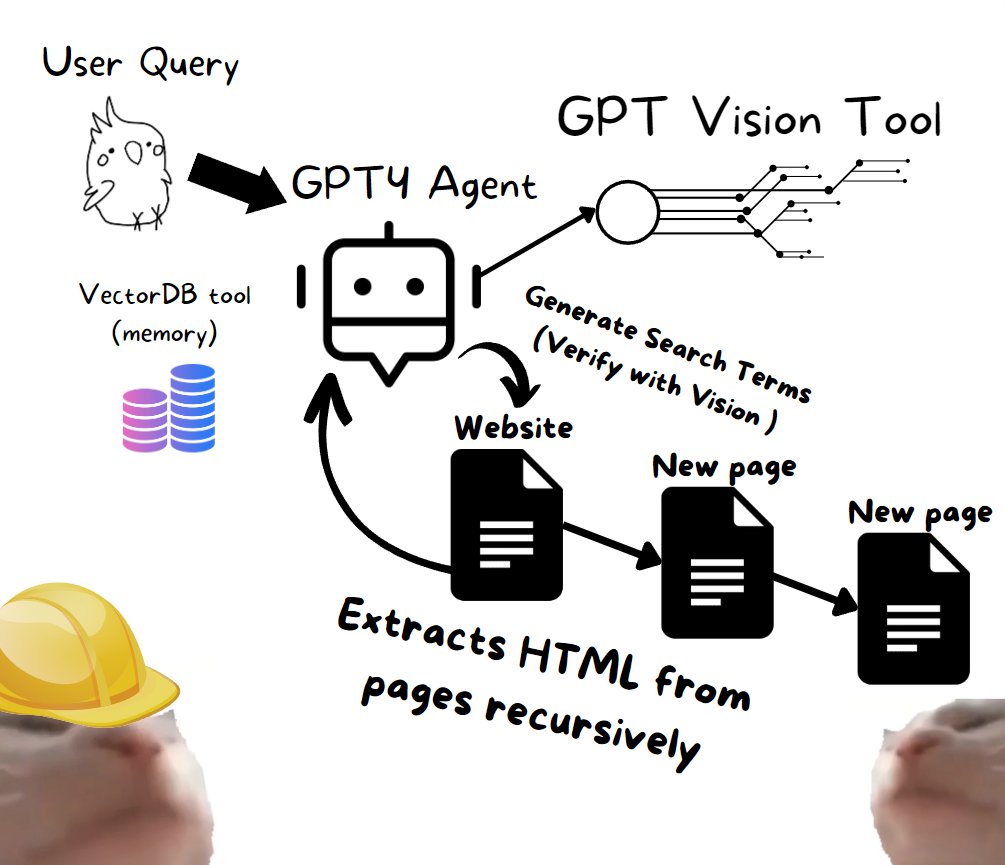
guys.. its kind of working finally?! The idea: the ultimate autonomous web scraper, that can scrape any information from any website using a combination of Playwright, GPT-4, and GPT-4 Vision. Here's how it works I'm using a @langchain agent as the decision maker, and as an easy way to setup tools for it to use. The most important one is the "retrieve HTML" tool that generates search terms based on a webpages URL + goal of the user + the GPT Vision description of the screenshot of the page, and returns matching HTML elements. Vision is useful because it helps in generating the right terms and sometimes the description will have the answer to the users query right away, and the agent will just return that. If it didn't find it, once it has its list of HTML elements, it will make a decision on whether the answer to the query is available and it can end/return to the user, or if it should recursively call retrieve HTML on a link it found. Example: If I'm on the home page of a companies website, they might not have pricing available with all the numbers needed right there, but one of the HTML elements returned might be the link to the pricing page. The agent would then decide to call retrieve HTML tool on the link and repeat the process. Seeing the agent navigate to the correct page and find the answer was just crazy 🤯 This is only the first step, since this navigation approach doesn't work for all websites. I'm excited to try out @var_epsilon idea, he used Vimuim + GPT Vision to make it easier for an AI agent to interact and navigate pages, which is exactly what we need next. I think this idea will work better than generating selectors based on the returned HTML, but we'll see! BTW, pictured below was my initial design 😎 It's changed a lot! If anyone is interested in the code or a further deep dive LMK.
James Pog tweet media
English
56
84
771
153.5K
Enzo Avigo
Enzo Avigo@0zne·
𝑾𝒉𝒚 𝒕𝒉𝒆 𝑳𝒆𝒂𝒏 𝑺𝒕𝒂𝒓𝒕𝒖𝒑 𝑨𝒑𝒑𝒓𝒐𝒂𝒄𝒉 𝑫𝒐𝒆𝒔𝒏’𝒕 𝑾𝒐𝒓𝒌 (𝒂𝒔 𝑶𝒇𝒕𝒆𝒏), 𝑾𝒉𝒚 𝑷𝑴𝑭 𝑺𝒖𝒓𝒗𝒆𝒚𝒔 (𝑨𝒍𝒐𝒏𝒆) 𝑨𝒓𝒆𝒏’𝒕 𝑻𝒉𝒂𝒕 𝑯𝒆𝒍𝒑𝒇𝒖𝒍, 𝒂𝒏𝒅 𝑶𝒕𝒉𝒆𝒓 𝑵𝒐𝒕𝒆𝒔 𝒐𝒏 𝑩𝒖𝒊𝒍𝒅𝒊𝒏𝒈 𝑶𝒑𝒊𝒏𝒊𝒐𝒏𝒂𝒕𝒆𝒅 𝑺𝒐𝒇𝒕𝒘𝒂𝒓𝒆. Here are 6 lessons I learned going through YC that I wish I had known sooner. 1. 𝑪𝒓𝒐𝒔𝒔𝒊𝒏𝒈 𝒕𝒉𝒆 𝒑𝒓𝒐𝒅𝒖𝒄𝒕-𝒎𝒂𝒓𝒌𝒆𝒕 𝒇𝒊𝒕 𝒅𝒆𝒔𝒆𝒓𝒕 Today, a lot of people are building stuff. We’re bombarded with products all day long. So there’s just an overall set of stronger expectations around the quality of solutions. Because of which, trying to validate whether you’re on to something with your idea can, in many senses, take more time. Moving from “am I on the right track?” to “I’ve built something that people want” can be much longer than even just a couple of years ago. > The traditional, lean-startup approach (where: you talk to someone, they have a problem, you build something, then you charge them, and try to do all that in two weeks) doesn’t work as often. You need to build more. You need to understand problems better. And it takes a while. That’s why starting with a problem that you’re convinced is real can help. I call this stage, crossing the desert. You’re doing so until you have some product-market fit signals. If the desert is vast and long and you don’t have a strong belief in the direction, it’s very likely that you’d give up. Because starting up is tough. You might not find those early customers as soon as you expected. Maybe you’re not charging yet. Or not repeatedly enough to prove that you’re headed towards PMF sometime soon. > But you can always turn to your own convictions and be like, “I’m not crazy!” “There’s a problem. I know it exists. I had it. There must be other people that do, too.” What you don’t know yet is how many other people will have it, if there’s a big market or you’re just a very special person with special problems. :)) That’s why you keep hearing about scratching one’s own itch, again and again and again. June was the same story. I had been a product manager for seven plus years. Having worked at a fintech startup, an enterprise ecommerce company, and a B2B scaleup, I had experienced the same problem everywhere. That B2B scaleup was Intercom. That’s where I met my co-founder and we decided to leave and build June. That’s where I had the big epiphany. @intercom is supposed to be among the really great companies for product management. And they are! I can’t say enough good things about them. Amazing people. Amazing team. They figure things out. But we were paying more than $100K for the leading product analytics tool in the space and no one was using it. There had to be something that was broken. Witnessing that validated the legitimacy of the problem. When we left and others (customers, employees, and advisors) joined us, all our past experiences helped prove that we were not insane. That there was something to this idea. 2. 𝑾𝒉𝒚 𝒆𝒂𝒓𝒍𝒚-𝒔𝒕𝒂𝒈𝒆 𝒓𝒆𝒔𝒆𝒂𝒓𝒄𝒉 𝒊𝒔 𝒅𝒊𝒇𝒇𝒆𝒓𝒆𝒏𝒕 Product managers, in 90% of the cases, operate in the post-product-market-fit stage. Places where PMF has already been established. What’s needed is to iterate and solidify it. Or if they’re lucky, maybe they’d get to work in some sort of innovation team. Where they get to expand PMF to a new vertical/persona with a new product, a new experience, or a new feature. That doesn’t happen often, of course. Most of the time, research at a post-PMF business means saying: “I know you’re an existing customer, I know you’re facing the following problems. I’ve collected and structured them. I’ve also tried solving them and I want you to tell me if I’m on the right track.” > There’s lots of usability testing. Lots of usage and qualitative data gets collected. But one thing which is true across all of this research is that once you’ve built a product, every piece of feedback falls within the realms of possibilities of the product. That’s why, for June, an analytics product, feedback mostly takes the following color: “can I have an extra button here?” or “can you also do revenue analytics?” Very rarely do we have outliers. “Oh, June does my analytics, can it also drive my car?” :)) All this research that product teams do is extremely valuable. Because for large companies, the biggest risk is losing sight of their customers. The PMs are there to say: “We’re big, we have a lot of layers. We’re maybe at the 50th floor of the building of the financial district and our customers are Gen Z and in high school. We never meet them. Not even in the streets when we get lunch.” A PM’s job is to be a bridge between the real world and that 50th floor. In the early stages, though, it’s a completely different job. 3. 𝗧𝗵𝗲 𝗱𝗶𝘀𝗰𝗼𝘃𝗲𝗿𝘆 𝗽𝗿𝗼𝗰𝗲𝘀𝘀 (𝘁𝗵𝗮𝘁 𝗹𝗲𝗱 𝘁𝗼 𝗝𝘂𝗻𝗲) When we were starting out with June, we conducted proper user discovery. In the most traditional sense of that discipline. Which is a very broad-canvas exercise. As you need to talk to multiple potential customers and for each one of them you need to understand a wide set of problems. > Let’s say you have five personas with 20 problems each. We’re already talking about 100 different challenges. Then you might solve them in two/three different ways. Then we’re already talking about 100s of potential different startup ideas. It’s a maze, honestly. Going that broad into the discovery process can mean that you end up doing it forever. That’s why you need to begin with a strong sense of who has the biggest pain that you’re motivated enough to fix with the shape of a solution you’ve long envisioned. I think this is where most early-stage projects fail. Time is always ticking as you try all these combinations of solutions. Whether you’ve raised money or are bootstrapping, reality soon kicks in. For June, we interviewed people from around 80 companies. We spoke with folks we thought would have this problem. Data engineers. Product managers. Designers. And others. We knew we wanted to build a data tool. But we didn’t know it was going to be an analytics solution. So we went through a thorough jobs-to-be-done research where we asked them questions such as: what is the moment of the day where you involve data? What are the problems with that data? In the end, we had this huge map with colors. Each persona was a different color. > That’s how we identified the first big problem we wanted to solve. And quickly learned that people weren’t willing to pay for it. We iterated. Got to another one. Which turned into June. We started from the premise that the world doesn’t need another analytics solution. It’s a crowded, competitive space. We were certain we didn’t want to build there. But after running the JTBD exercise again and again, we learned that no matter the number of data tools around, people just seem to hate them. It’s horrible. So we decided on building something delightful. Realizing that here’s a potential billion-dollar opportunity for us. That’s what we’ve been after. In case you’d like a detailed overview, my co-founder, @0xferruccio wrote about it here 3 ferrucc.io/posts/building…. 4. 𝑻𝒉𝒆 𝒕𝒉𝒊𝒓𝒅 (𝒐𝒑𝒊𝒏𝒊𝒐𝒏𝒂𝒕𝒆𝒅!) 𝒈𝒆𝒏𝒆𝒓𝒂𝒕𝒊𝒐𝒏 𝒐𝒇 𝑩2𝑩 𝑺𝒂𝒂𝑺 “Opinionated software” can be a fuzzy phrase. But, to me, it represents the current generation of B2B software. The first generation with the likes of Salesforce was about digitizing the business world. You had servers, CDs, and records. Now they were on the cloud. Boom. The second generation was all about verticalization and unbundling. Providing SaaS for all specific job functions/industries one could think of. The third (ours) generation has been all about: “how can we do what the second generation software did, but 10x better?” This can mean 10x faster or 10x cheaper. > And you can’t automate things, streamline processes, or make software cheaper if you don’t have opinions. Really. This is what we’re attempting with June as well. When product analytics started 10-15 years ago, the tools were very generic. They were built to make sure they did everything and opened up to all use cases. Because product teams weren’t quite sure what to measure and then every business was different. Turns out, 15 years later, PMs are among the most opinionated operators. They care deeply about adopting advanced best practices and constantly tap into each other’s expertise. They demand more from their software. Another interesting facet to this persona is that they never have time. Whether it’s 2010 or 2023, a startup or a huge enterprise company, PMs are always busy. And thus they want incredibly efficient software. A last word here. You and I have grown up with a lot of great B2C software. WhatsApp. Snap. Instagram. Maybe even Facebook. We text a friend on the WhatsApp app and then go back to our laptop and open Salesforce and freak out! Why?? That’s why HubSpot and other new-age CRMs are taking people away from Salesforce. We all want something modern that feels like it’s doing the job for us. WhatsApp is a great example of this. Because it seems like a place where you can do everything. It’s not. The amount of decisions that WhatsApp makes for you is absolutely insane. Most users can’t even tell. That’s what great, opinionated software is about. 5. 𝑾𝒉𝒚 𝒎𝒆𝒂𝒔𝒖𝒓𝒊𝒏𝒈 𝑷𝑴𝑭 𝒓𝒆𝒒𝒖𝒊𝒓𝒆𝒔 𝒎𝒖𝒍𝒕𝒊𝒑𝒍𝒆 𝒔𝒊𝒈𝒏𝒂𝒍𝒔 PMF is gradual. A big misunderstanding is to get convinced of the opposite. Because the startup stories that you read are often post-facto summaries. “We tried this, then this, and that, and then one day we pivoted and found PMF.” Those stories happen. But mostly, there are multiple steps that inform PMF. The first happens very early. When you start doing discovery, I think people’s willingness to talk about the problems you’ve identified is a good signal. > If you think there are issues with managing payments and you send over 100 emails to qualified folks who you feel might have those issues and you get no responses, there’s something off. If you cannot book enough discovery calls, you really have to ask whether you’re headed in the right direction. The next one is when you’ve built a prototype for the first few potential users and they take time to offer you feedback. That matters. Another healthy early indicator of their interest for sure. Then, further down the commitment chain. If people are willing to sign a letter of intent or pay for your prototype, you’re probably on to something. Then, once you’ve put out a version 1, there’s product usage (combined with qualitative feedback). If you have great product retention, something above 40% in B2B and 60% in B2C at six months. With decent-sized (50-100) cohorts of people. That’s significant. That’s why I love retention. > Sometimes people forget what lies behind good retention. In practice, it means that you’re part of people’s lives and it’s likely that enough of them will pay when you monetize. There’s a qualitative take to this as well. The Sean Ellis survey which Superhuman helped popularize, I don’t think it’s that relevant. It’s nice to get some color on your PMF. We tried it at June. Very early on. We were above 40%. But I don’t think we were at PMF back then. Far from it. So I’ve always had doubts about it. And would prefer usage and then revenue as better indicators any day. YC’s @paulg has this amazing article where he recommends if you can grow revenue 5-10% week over week, you’re clearly at PMF. Then there’s the Marc Andreesen take that you’d just know when you have it. The reality, to be honest, is a mix of all of these things. I wouldn’t just look at a single indicator. 6. 𝑻𝒉𝒆 𝒊𝒏𝒔𝒑𝒊𝒓𝒂𝒕𝒊𝒐𝒏𝒂𝒍-𝒚𝒆𝒕-𝒈𝒓𝒐𝒖𝒏𝒅𝒆𝒅 𝒑𝒐𝒔𝒊𝒕𝒊𝒐𝒏𝒊𝒏𝒈 𝒃𝒂𝒍𝒂𝒏𝒄𝒆 What have we learned about positioning? > Positioning is always the way you want to go forward, what you want to become, what you want to evolve into. So, by definition, you can’t ask people for ideas about it. Because they’ll frame their feedback based on what you’ve already built. Whereas, a positioning exercise should make us think at least 3-6 months ahead. Not 5-10 years ahead. That’s too far off. And will lead us to something inaccurate/misleading. Users will sign up expecting one thing and get surprised by the actual state of the product. There’s this tension you ideally want to play with. A tension between what you have and where you want to be. That gives folks a compelling reason to join. Positioning is also a way to filter out people who might not be a fit for your product. Our earliest positioning was around @segment, because we had only built on top of it. The thinking there was not, “if you don’t have Segment, don’t sign up,” it was more about evoking something like: “oh, this company has deliberately chosen Segment as a platform and has spent a year developing, they must have done it the right way.” We also wanted to convey that they could just plug and play. Over time, we evolved. We brought in more sources. So we dropped the Segment version. Grew into the plug-and-play idea as “instant product analytics” which also resonated with a persona (founders) we were targeting. Then we realized that positioning ourselves only around product analytics, even though that’s what we then did mostly, might be too restricting for June’s future. So we tried, “a toolkit for great product teams.” A lot more aspirational, but also somewhat fuzzy. People didn’t immediately get what that “toolkit” might comprise. > Across our experimentation with taglines we’ve tried striking a balance between being too broad and being too direct, between evolving our product vision and immediate conversion rates. The frame of positioning needs to be inspiring enough to help you stand out and grounded enough to tie well with the current product. It’s tough. Probably among the toughest things startups need to do well. We’re actually releasing a new positioning soon, building upon JTBD interviews with our most passionate users. We think we’ve addressed the tension really well this time. Stay tuned. That's it! Hope these learnings are useful.
Enzo Avigo tweet media
English
5
6
78
16.7K
Patrick Tu
Patrick Tu@patr2ck_·
@0zne Thanks for this great post!
English
1
0
1
113
Patrick Tu
Patrick Tu@patr2ck_·
@jxnlco Which frameworks did you try and on which metrics ?
English
0
0
0
51
jason
jason@jxnlco·
I have a sinking suspicion that many of these rag evaluation frameworks are written with terrible Python async/concurrency models. How is evaluating 150 questions taking 1 hour?
English
13
0
75
16.9K
Patrick Tu retweetledi
Taranjeet
Taranjeet@taranjeetio·
Inspired by @langchain's discord bot, we tried creating a similar discord bot for @nextjs using @embedchain. We failed to make it work for diff queries from Next.js Discord, but learned a ton about building & running dev support RAG systems in production. Learnings below 👇🏻
English
2
3
35
10.8K