patrickruch
5.4K posts

patrickruch
@patrickruch
Head of research @ HES-SO, HEG Geneva. Biosciences & text mining. Opinions are mine - at least that is my naive belief.
46.1833 6.125 Katılım Kasım 2009
231 Takip Edilen444 Takipçiler

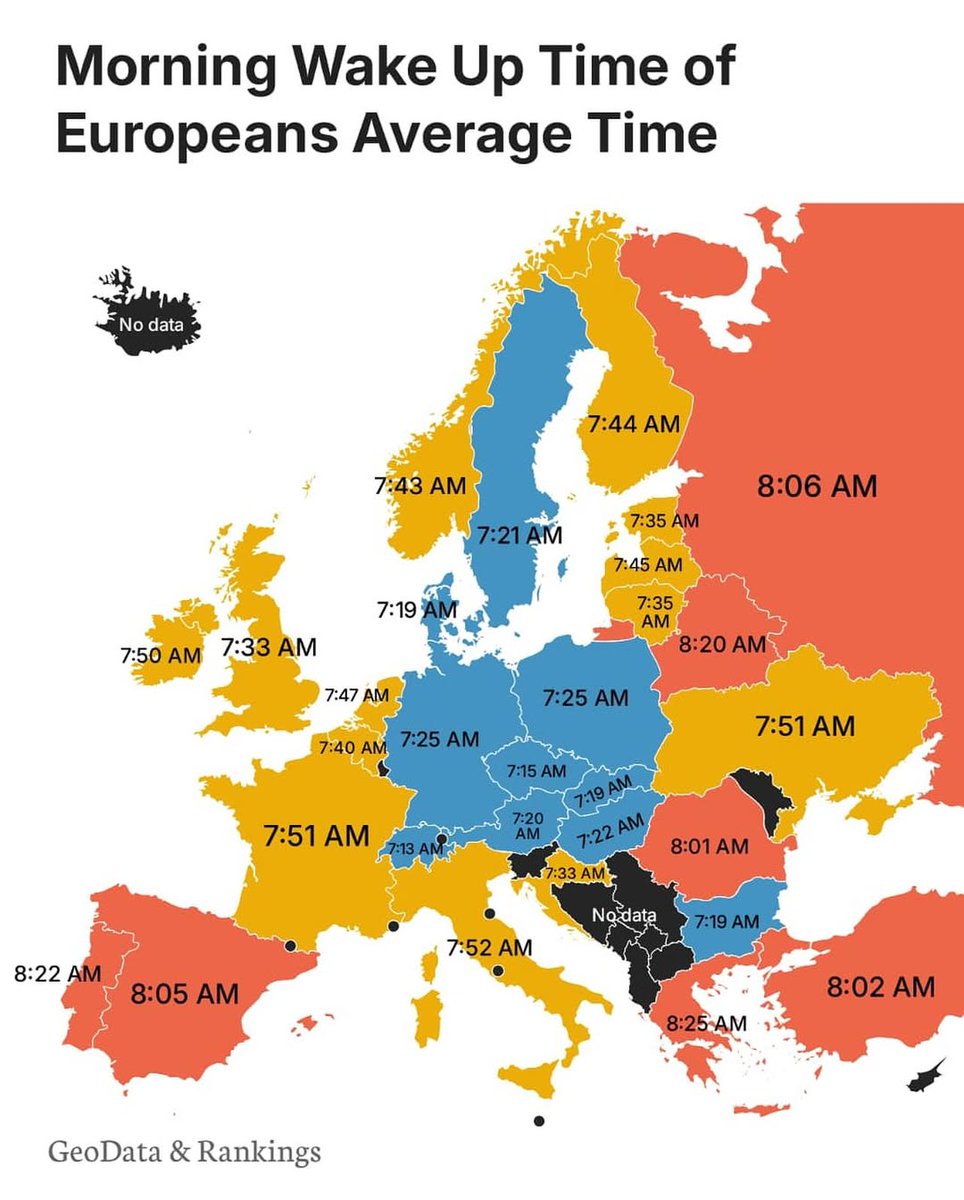
@theepicmap The color cutoff is usually more interesting than the map itself :-)
English

@ItaiYanai "Friday, I'm in love" [The Cure]. We all know working late at night on Friday is meaningless !
English

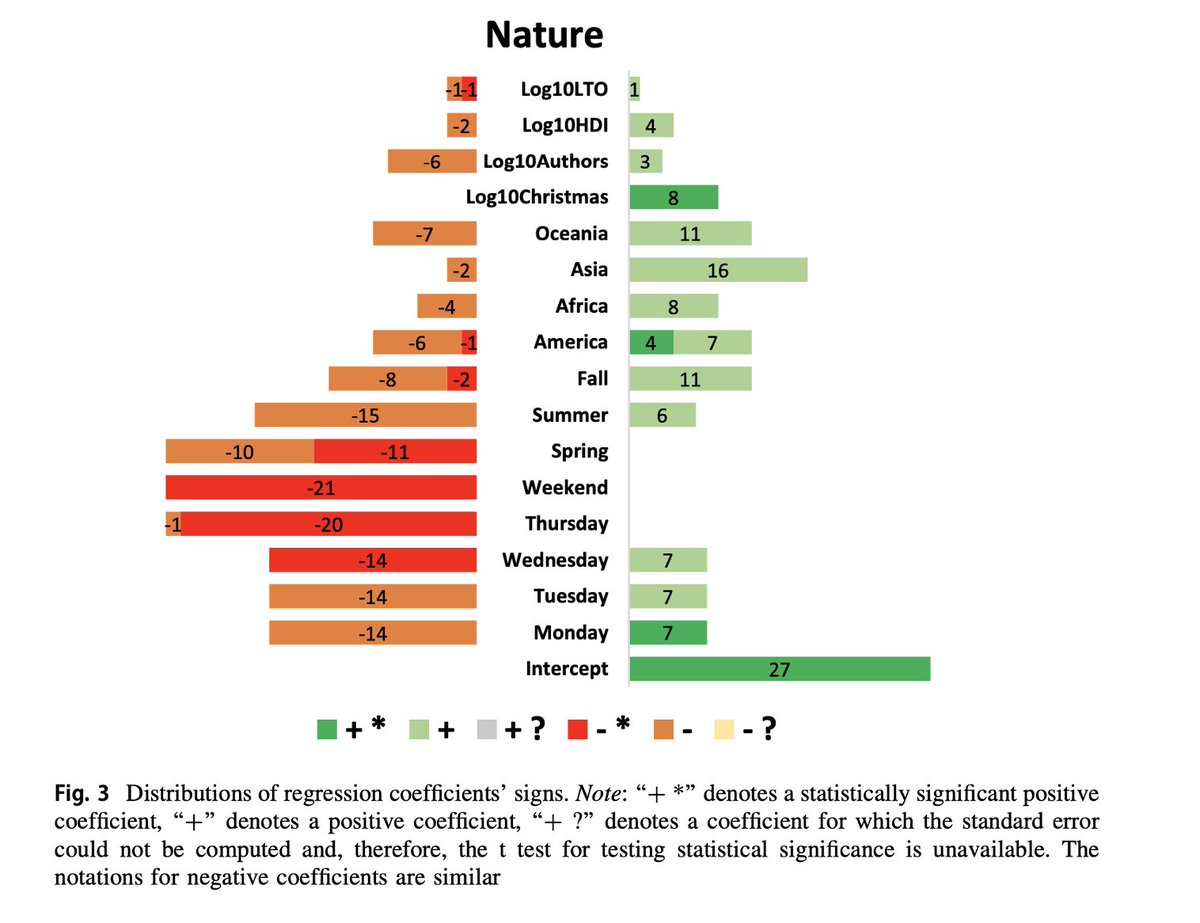
Papers submitted on Tuesdays are more likely to be accepted by Nature whereas Wednesdays seem the most likely day to submit and secure acceptance to PLOS ONE. For Cell, Mondays and Tuesdays seem the best submission days in case of accepted papers.
link.springer.com/article/10.100…

English

@OdedRechavi Understanding ? You mean like predicting some protein folding properties ?
English

@SpringerIME Ask a librarian #results-section" target="_blank" rel="nofollow noopener">biodiversitypmc.sibils.org/?query=Which%2… and you'll get CD19, CD19, CD19... CD20 !
English

@AdrianoAguzzi It could work but occasionally it does not and kill your code... so make a safe copy !
English

@LocasaleLab If "no one has seriously examined whether this track delivers genuine scientific or medical value", then your observations do sound very exaggerated !
English

The physician–scientist track (MD/PhD) in academic medical centers has become one of the great illusions of modern science - a path that promises to unite medicine and science but rarely fulfills either goal. Training stretches on for years as one person is expected to learn two professions at once, and in practice, they seldom master either. Many hold a token clinic for a few hours a week while running labs that produce derivative “translational” research — supposedly aimed at improving patient care. In reality, these efforts seldom advance either basic knowledge or clinical practice in a meaningful way.
The personal rewards, however, are significant: MD/PhDs are paid far more than PhDs alone, face far less competition for faculty positions, are treated better by upper administration, and are freed from the full clinical responsibilities of practicing physicians. They also enjoy privileged access to administrative roles in medical centers, journals, and professional societies - positions that often pay handsomely. Yet almost no one has seriously examined whether this track delivers genuine scientific or medical value, or if it merely sustains another bureaucratic layer within an already bloated healthcare system.
students-residents.aamc.org/md-phd-dual-de…

English

@ismaelminchala @ThePhDPlace Research has always been somehow risky... impact is more randomly distributed.
English

@ThePhDPlace He’s partially right. Unfortunately, academia these days is about “publishing” with no certainty in the impact of the research.
English

@sarvk Some people like to be thrilled for no particular reason.
English

@AdrianoAguzzi Congrats but that does not count... it's endogeneous money :-)
English

@BMuellerSN @AdrianoAguzzi It is nowhere worse than in medical faculties but maybe in Asian medical faculties...
English

@AdrianoAguzzi It may be worse in Germany than elsewhere, and worse in big collaborations. Sometimes it is connection with a delusion of excellence - nominally high productivity resulting from huge resources inherited from people's mentors.
English

@AdrianoAguzzi I am less optimist than you with the accumulating bad news (austerity measures in CH, NIH/NSF cuts, investments in guns all around) but surely chocolate is badly needed... even if those are actually macarons !
English
patrickruch retweetledi

@GobeillJulien @deb_caucheteur @patrickruch 🗂️ The extracted data is accessible and searchable through the BiodiversityPMC platform, supporting enhanced literature discovery and curation workflows: biodiversitypmc.sibils.org
English
patrickruch retweetledi

📚 Explore the latest from Bioinformatics Advances: "Unlocking the potential of PubMed Central Supplementary Data Files"
Full article available: doi.org/10.1093/bioadv…
Authors include: @GobeillJulien, @deb_caucheteur, @patrickruch

English

@matthiassamwald Thank you for sharing !
The main issue with cybersecurity is that it is rarely evidence based, e.g. anti-spam filters... I fear the AI act is likely to inflate the burden on AI developers and users with no or little impact on security but sizeable loss of productivity !
English

Great summary thread of the code of practice and Safety & Security chapter
Markus Anderljung@Manderljung
The challenge: the AI Act imposes requirements on providers of the most advanced models – like OpenAI, Anthropic, Google, Mistral, Meta. But these requirements are very high level. It says they should “assess and mitigate systemic risk”. But what does that mean?
English

@AdrianoAguzzi @LaviniaMaddalu1 Interesting because for me, Milano is the place where I connect trains, a sort of Italian Bern :-)
English

@AdrianoAguzzi If so, then a correction might be more appropriate than a retraction, imho.
English