paulo dimas menezes

26.5K posts

paulo dimas menezes banner
paulo dimas menezes

paulo dimas menezes

@paulodima

pai, professor, galodoido

Katılım Haziran 2009
5.4K Takip Edilen2.5K Takipçiler
paulo dimas menezes retweetledi
Jean Wyllys
Jean Wyllys@jeanwyllys_real·
Maravilhoso! Consciência de classe 👏🏽👏🏽👏🏽👏🏽👏🏽💙
Português
0
305
1.5K
20.5K
paulo dimas menezes retweetledi
Broca
Broca@alexcrfla·
sempre bom lembrar essa CANETADA do Rene Simões sobre o Neymar 16 anos atrás
Português
122
1.5K
12.5K
164.7K
ZANZAG
ZANZAG@Zanzagmizazag·
@RogerioAni85995 esta página aqui surfou com a audiência antissemita histérica da esquerda no caso Epstein, e agora está defendendo torturas e assassinatos do regime militar. Para que inimigo se a esquerda já tem ela mesma. @leonardo56611 @paulodima @JesamariSolang1 @julianoolivetti
Arquivo Epstein@FilesEpstein26

@Zanzagmizazag Queria entender pq o twitter insiste em jogar as idiotices que você escreveu na minha TL. São assassinadas violentamente mais pessoas em uma semana na DEMOcraCIA brasileira que em 21 anos pelo regime militar. Então foda-se a sua falsa choradeira talmudista.

Português
6
2
6
95
Dedé Fidusi
Dedé Fidusi@andrefidusi·
Bora buscar o Robinho jr?
Português
2
0
7
315
paulo dimas menezes retweetledi
Ana MDLT
Ana MDLT@ana_m_delatorre·
ORMUZ: EL MATADERO DEL SIGLO XXI 1. ​EL PROYECTO LIBERTAD Y LA INFRAESTRUCTURA DE LA AGRESIÓN ​Washington ha canjeado la farsa de la diplomacia por el asalto directo bajo el nombre de Proyecto Libertad. El despliegue de 15.000 soldados en el Golfo este lunes 4 de mayo representa el músculo del capital intentando estrangular la geografía soberana. EEUU busca secuestrar las venas por las que late el comercio mundial, imponiendo un orden de bota y acero sobre el Estrecho de Ormuz para anular la capacidad de decisión de Irán. La soberanía persa se mantiene como una realidad material objetiva que el imperio intenta quebrar mediante el despliegue de fuerza. El movimiento sitúa a la administración Trump en una postura de ocupación marítima. Cualquier nación con un mínimo de respetabilidad y dignidad debe rechazar esta violación intolerable de la integridad territorial. 2. ​EL ATAQUE NAVAL EN JASK COMO ARTEFACTO DE GUERRA PSICOLÓGICA ​La ofensiva armada reportada cerca del puerto de Jask representa el primer corte real en la carne de esta nueva fase del conflicto. La agencia Fars sostiene que dos misiles de crucero reventaron la línea de flotación de un destructor de EEUU mientras el Pentágono se encierra en su búnker del silencio sobre el estado de su flota. Esta asimetría informativa funciona como pura dialéctica de guerra diseñada para ganar tiempo mientras la maquinaria logística imperial termina de engrasarse. La proyección de una imagen de invulnerabilidad resulta esencial para la supervivencia del relato de dominio estadounidense. Washington oculta sus heridos para evitar una respuesta que todavía carece de capacidad para gestionar. La arrogancia tecnológica muestra su miedo ante la realidad material del suelo y el agua. 3. ​LA RUPTURA ESTRATÉGICA DE LA DIPLOMACIA DE ABRIL ​Los acuerdos de abril son hoy ceniza bañada en crudo tras la incursión armada en el estrecho. La presencia de destructores extranjeros escoltando el capital flotante conforma un acto de piratería institucionalizada que escupe sobre cualquier compromiso de paz previo. La Guardia Revolucionaria ha despertado sus baterías de misiles en las entrañas de la montaña, dominando el paso con ojos de acero que vigilan al invasor. El tiempo de la palabra ha muerto bajo el peso del metal para dar paso a la confrontación directa. La prioridad de la defensa soberana reside ahora en demostrar que el Proyecto Libertad tiene un precio en sangre que la sociedad estadounidense difícilmente podrá pagar. Esta realidad se impone por la fuerza de los hechos. 4. ​LA VULNERABILIDAD DEL CUELLO DE BOTELLA ENERGÉTICO ​El Estrecho de Ormuz funciona como la yugular de un sistema financiero global que sangra hoy por el 25% del petróleo mundial. La presencia de minas inteligentes y drones kamikaze en las aguas profundas ha inyectado un cáncer de pánico en los mercados de seguros marítimos controlados por la City y Wall Street. El impacto de un solo proyectil convertiría un superpetrolero en una pira de acero y crudo en mitad del canal, provocando un colapso de suministros histórico. La economía del capital pende del hilo de un corredor de apenas 33 kilómetros saturado de sensores de muerte y armamento de precisión. El hambre de energía de las metrópolis imperiales choca finalmente con la pared infranqueable de la soberanía nacional. 5. ​EL SEGUIDISMO EUROPEO Y SU SUICIDIO SOBERANO ​La Unión Europea continúa renunciando a tener una voz propia para actuar como altavoz de los delirios belicistas de Washington. Al aceptar el marco del Proyecto Libertad, Bruselas sacrifica los intereses materiales de sus propios pueblos en el altar de la hegemonía del dólar. El seguidismo mediático europeo funciona hoy como la herramienta necesaria para que la población del continente ignore por qué se apoya un cerco que encarece la vida de cada trabajador mientras se protege el complejo militar-industrial estadounidense. La sumisión de la estructura política europea a las directrices del Pentágono ⬇️
Español
21
247
412
12.6K
paulo dimas menezes retweetledi
Patricia Marins
Patricia Marins@pati_marins64·
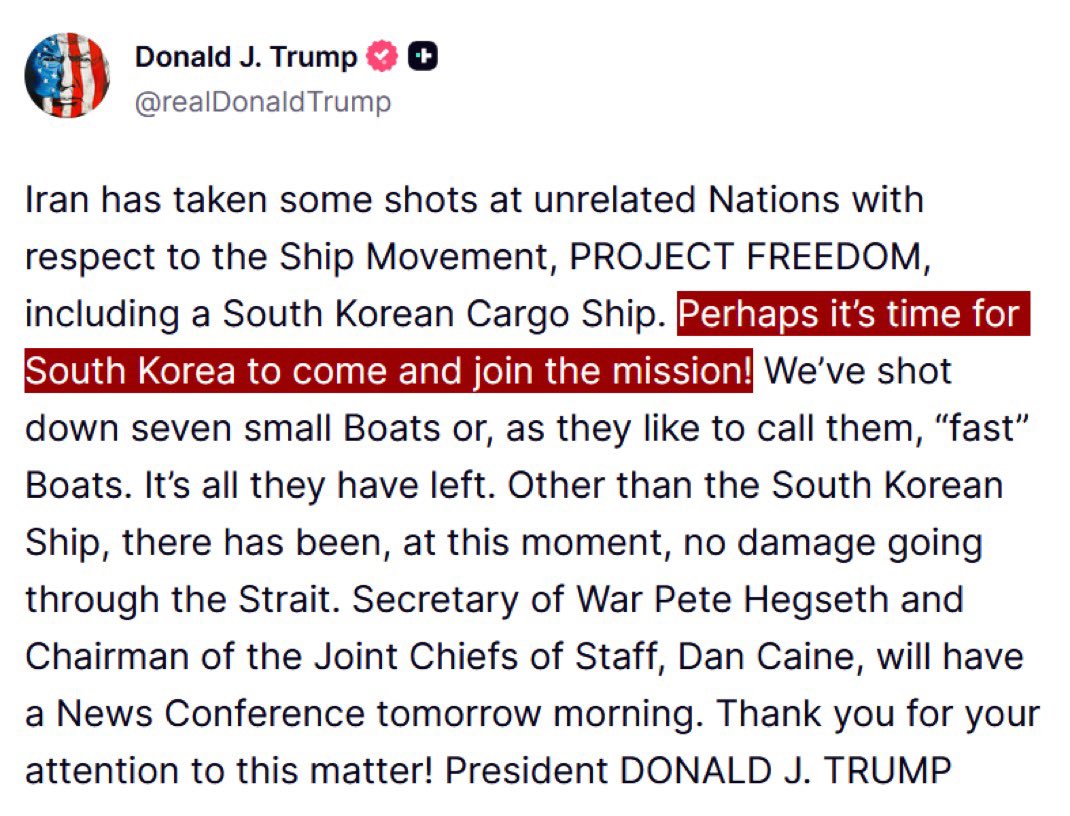
Hard times President Trump is making yet another attempt to rally support for the liberation of the strait, this time calling on South Korea. The American administration started a war, but achieved none of its objectives and is now seeking help to solve a problem in Hormuz that didn’t even exist before the war. The great uncertainty remains how Donald Trump might find a way to escape this quicksand victoriously. I believe he will repeat his original error by relying on aggressive, short-term strikes. Escaping quicksand requires distributing one’s weight over the surface; those who believe intense force is the answer tend to sink further. In this landscape, Donald Trump coordinates, Netanyahu decides, and the world suffers. A completely unnecessary war, even though negotiations were already well advanced. No, there is no short-term solution, and the world needs to prepare because the real impacts are only just beginning. Those who mispriced this conflict made a huge mistake. We are on the path to a scorched-earth scenario with global impacts that will continue to amplify over time. This new phase should involve more actors, but they will not be the South Koreans.
Patricia Marins tweet media
English
64
394
1.6K
66.7K
paulo dimas menezes retweetledi
Ollie Vargas
Ollie Vargas@Ollie_Vargas_·
Neoliberal Ecuador: Violent crime is so high the govt just declared a military curfew on a majority of its cities, including the capital. You can't be outside after 11pm for the next month. 10 years ago 🇪🇨 ranked as 2nd safest country in region under leftist President Correa.
English
37
1K
3.8K
71.1K
paulo dimas menezes retweetledi
Cássio Oliveira
Cássio Oliveira@cassioolivveira·
Leda Nagle declarou apoio ao trabalho infantil, em defesa de Romeu Zema que exibiu sua carteira de trabalho como troféu de que “trabalhou desde criança”. O que nenhum dos dois se deu ao trabalho de esclarecer foi que no texto da Leda tem que ela trabalhou no armazém da própria FAMÍLIA, e a carteira de trabalho de Zema foi assinada pelo AVÔ. Privilégio, portanto. Enquanto isso milhões de crianças seguem sendo exploradas em lavouras, LIXÕES e fábricas mundo a fora, sem avô empresário para assinar carteira, sem armazém familiar para chamar de “experiência de vida”. Para essas crianças o trabalho rouba infância, saúde e futuro. Dois representantes da ELITE brasileira romantizando uma REALIDADE que jamais viveram de fato, enquanto usam sua memória afetiva de “trabalho em família” como argumento para naturalizar a exploração alheia.
Português
154
538
3.3K
92.5K
paulo dimas menezes retweetledi
Gazeta do Mundo
Gazeta do Mundo@gazetadomundo·
Se essas cenas estivessem acontecendo Teerã, a mídia ocidental ficaria descontrolada, mas como é em Berlim, ninguém liga...
Português
6
79
212
1.8K
paulo dimas menezes retweetledi
Patricia Marins
Patricia Marins@pati_marins64·
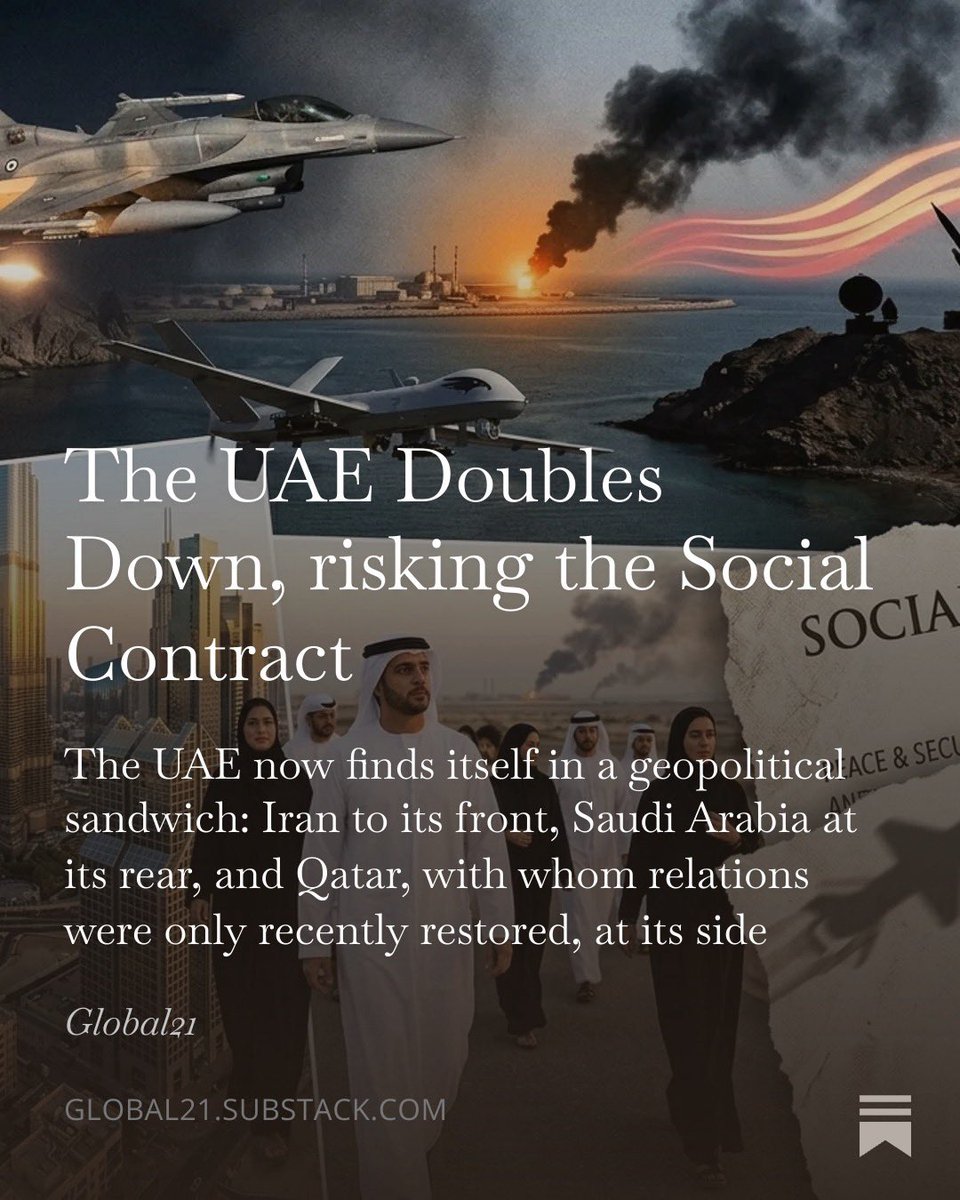
The UAE doubles down, risking the social contract On May 3rd, Iran confirmed that the United Arab Emirates (UAE) used fighter jets to bomb Iranian territory. This comes weeks after Iran downed at least four Chinese-made Wing Loong drones. At that time, Tehran was uncertain whether the drones belonged to the UAE or Saudi Arabia, as both operate the same model. Today, Iran confirmed that the UAE has fully entered the war, deploying both drones and manned aircraft. Until now, the Emirati regime had denied any offensive collaboration with the coalition. In the first week of the war, Abu Dhabi claimed it had not authorized the use of its soil or airspace for strikes against Iran. This proved to be a mere performance. As soon as Iran began targeting HIMARS positions on UAE soil, hundreds of American soldiers sought refuge in hotels across Dubai, Abu Dhabi, and Ras Al Khaimah. In recent weeks, the UAE has stopped hiding its collaboration with Israel. During the recent truce, Emirati officials attended a meeting in Israel alongside the Commander of CENTCOM. By doing so, the UAE sealed its role as Israel’s staunch ally, a stance that goes beyond military cooperation and is marked by a deep diplomatic rupture with Saudi Arabia. The UAE now finds itself in a geopolitical sandwich: Iran to its front, Saudi Arabia at its rear, and Qatar, with whom relations were only recently restored, at its side. This posture, dictated by Abu Dhabi, is extremely dangerous on economic, military, and social levels. The UAE was built on a Social Contract: the government provides wealth, security, and world-class services in exchange for absolute political loyalty. This contract depends on a strong economy; as long as prosperity is guaranteed, most citizens accept foreign policy decisions, even if they disagree with them. Currently, the greatest social risk is religious, the fear that the alliance with Israel will be perceived as a betrayal of Islam. To mitigate this, Abu Dhabi invests heavily in the narrative of Moderate Islam and coexistence (exemplified by the Abrahamic Family House), attempting to reframe the alliance as a tool for peace rather than war. All this occurs while the UAE maintains one of the world’s most sophisticated internal surveillance systems, ensuring any organized dissent is neutralized before it gains momentum. The UAE has decided to bet everything against Iran, but why is this a high-stakes gamble? Because no one expects regime change in Iran anymore. On the contrary, the Iranian government appears solid. This is where Abu Dhabi’s strategy begins to threaten its own survival. The UAE is now Iran’s primary target. In a possible second phase of the war, the scale of the Iranian retaliatory strike will be devastating now that they have confirmed Emirati jets are bombing Iranian facilities. Even looking toward the future, this move may be the final nail in the coffin for everything the UAE has built. Full article: open.substack.com/pub/global21/p…
Patricia Marins tweet media
English
136
1.3K
3.7K
371.3K
paulo dimas menezes
paulo dimas menezes@paulodima·
O sentimento de vitória do Irã transforma seus pontos em exigências Tramp rosna e late, tá resolvendo se vai morder - e ser mordido - ou se vai declarar vitória e voltar triunfante pra casa sem qualquer resultado alcançado mas com o bolso cheio de grana Expectativa no Maracanã
Português
0
0
1
29
Inara
Inara@theestardust_·
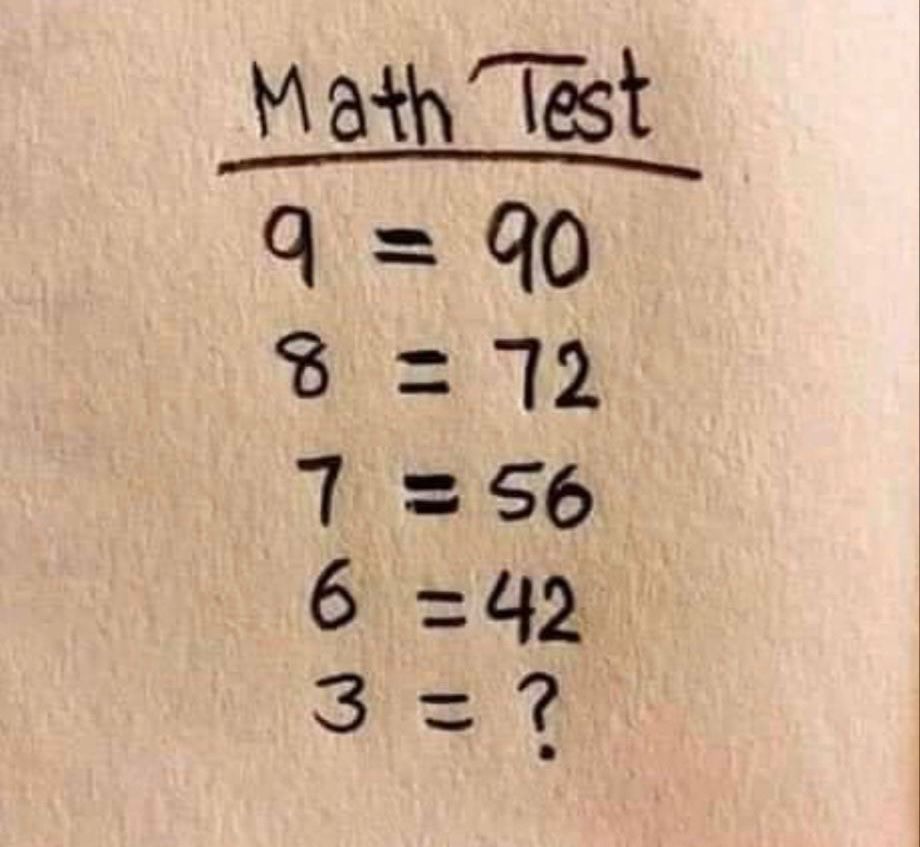
Morning Genius people😁😁 Do you know the answer 🤔😁?
Inara tweet media
English
44
20
50
578
♡
@Elsie_560·
Don't use pen and paper🤔 Simple math, tricky answer
♡ tweet media
English
1.7K
103
349
50.7K
paulo dimas menezes retweetledi
Milton Ribeiro 🚩
Milton Ribeiro 🚩@ribeirotrilhas·
A corporação está cheio de bandidos fardados. Não respeitam nem criança.
Português
90
576
1.9K
18.6K
paulo dimas menezes retweetledi
Sou Palestina🇵🇸🇪🇭
🇮🇱🏴‍☠️🇵🇸 Soldados judeus israelenses estão invadindo bancos e casas de câmbio na Cisjordânia, e roubando o máximo de dinheiro possível. Eles são bons nisso!
Português
43
559
1.3K
11.7K
paulo dimas menezes retweetledi
Rick Azevedo
Rick Azevedo@rickazzevedo·
NÃO SEREI SILENCIADO! É com muita revolta e tristeza que venho a público confirmar as agressões físicas e verbais que sofri. Foi uma tentativa clara de intimidação e silenciamento. Como vocês acompanharam por aqui, o @movimento_vat participou de uma ação pacífica pelo fim da escala 6x1 ontem, durante o show da Shakira, em Copacabana. Ao final do evento, eu, meus assessores e amigos fomos agredidos e hostilizados por PMs bolsonaristas, que nos impediram de chegar até o carro, em um local reservado para parlamentares e figuras públicas. Ficou claro que era algo pessoal contra mim. Desde que me tornei conhecido, sofro ameaças, mas não deixo nada disso me abalar, porque sei da importância da minha luta. Querem calar a voz da classe trabalhadora a todo custo, porque sabem que estamos conquistando algo grandioso. Não vou abaixar a cabeça. As devidas providências já estão sendo tomadas para que os responsáveis sejam punidos. NÃO VAMOS RECUAR. Se eu já incomodava, agora vou incomodar muito mais. Agradeço as mensagens de solidariedade e tenho certeza de que continuarei firme e forte.
Rick Azevedo tweet media
Português
202
3.9K
15.9K
145.8K
paulo dimas menezes retweetledi
Arnaud Bertrand
Arnaud Bertrand@RnaudBertrand·
What China just did with the blocking statutes against U.S. extraterritorial sanctions sets quite a major precedent, probably the financial equivalent of what happened with rare earths last year (in the sense that this is China taking a major step to push back against a U.S. hostile measure as opposed to taking it on the chin). It's a little complex but, to start with, what many people ignore (and will probably be surprised by) is that - by and large - Chinese companies and financial institutions have largely complied with extraterritorial U.S. sanctions. Anecdotal story on this: I know for a fact, because I personally know the person, that a very famous guy (whose name I won't reveal but that everyone of you would know) sanctioned by the U.S. was in China recently and tried to exchange money at the counter of a random Chinese bank. Just simply exchange dollars for a Chinese yuan, in mainland China. And he was refused, because he is sanctioned by the U.S. - despite the fact that China as a country has absolutely no problem with the person. This goes to illustrate just how much goodwill China extended to the U.S. on this - a Chinese bank, in China, refusing to serve someone China has no problem with, just to comply with U.S. extraterritorial sanctions. It also goes to illustrate why this blocking order marks such a sharp departure. What triggered it is not new sanctions by the U.S. but recent efforts under the so-called "Operation Economic Fury" to dramatically ramp up enforcement of existing sanctions on Iran. The U.S. notably issued at the end of April alerts to financial institutions worldwide - including in China - on "the sanctions risks associated with independent 'teapot' oil refineries in China, primarily in Shandong Province, given their continued role in importing and refining Iranian crude oil" (home.treasury.gov/news/press-rel…) Even more importantly, they also specifically went after Hengli Petrochemical Dalian (home.treasury.gov/news/press-rel…), one of China's largest private refineries, with 400,000 barrels per day capacity and a parent company (the Hengli Group) that's a Fortune Global 500 company. In effect, what the U.S. extraterritorial sanctions mean is that Hengli - and all other Chinese 'teapot' oil refineries being targeted - is cut off from the dollar system, and any bank, insurer, or trading partner anywhere in the world - including in China - that deals with them risks being cut off too. Which is obviously a major hostile move by the U.S. against China (and, of course, Iran). Except that China, this time around, is not having it. Since 2021 they've had regulations ("Measures to prevent the improper extraterritorial application of foreign laws and measures", mofcom.gov.cn/zcfb/zhzc/art/…) that gives the Chinese government power to formally prohibit compliance with foreign sanctions, and that, since this April (morganlewis.com/pubs/2026/04/c…) are also extraterritorial in nature. In effect what these regulations - and their April addendum - say is that if you comply with U.S. extraterritorial sanctions by cutting off a Chinese company, you are violating Chinese law. Any entity - Chinese or foreign - that refuses to deal with a sanctioned Chinese company because Washington told them to can be sued in Chinese courts, fined by MOFCOM, and since April, placed on a 'Malicious Entity List' with asset freezes and trade restrictions. In a nutshell on one side you have the U.S. saying "cut them off or we cut you off" and now China says "well, if you do cut us off we're going to be real nasty with you, in China and potentially beyond." These regulations were - until yesterday - purely theoretical: they've never actually been applied. But, yesterday, China's MOFCOM made it crystal clear this time is different: they used a statement with a triple negative, saying the U.S. sanctions "shall not be recognized, shall not be enforced, shall not be complied with" ("不得承认、不得执行、不得遵守", mofcom.gov.cn/zwgk/zcfb/art/…). In effect you now have companies that are in the middle of this - for instance financial institutions serving Hengli - caught in quite a bind: face U.S. or Chinese hostility. It's a no-win, they need to choose a camp on this. Concretely speaking, given that the overwhelming majority of companies affected are operating inside China, they'll obviously choose the China side. The real question therefore is: Is the U.S. ready to act on its threat and cut off Chinese banks or other institutions that keep servicing these refineries? Because that probably means sanctioning major Chinese financial institutions, which is a whole different level of escalation. The moment the U.S. designates a major Chinese bank for dealing with Hengli, this stops being about Iranian oil and becomes a direct financial confrontation between the two largest economies on earth, which is a much bigger deal with probable consequences for the entire global financial system. Or will the U.S. back off, meaning China would have effectively caught their bluff, showing that extraterritorial sanctions are a lot of bark but not a lot of bite? We'll know in the next couple of weeks I guess. One thing is sure though: whatever happens with these refineries, the broader damage is done. China used to extend remarkable goodwill on sanctions compliance - voluntarily cooperating with extraterritorial sanctions inside its own borders even though it had no legal obligation to respect them. That goodwill has been spent. And, from a U.S. standpoint, a China with less goodwill vis a vis U.S. financial hegemony is undoubtedly a far bigger issue than a few teapot refineries buying Iranian oil.
Drop Site@DropSiteNews

🇨🇳 China Invokes Blocking Statute for First Time China’s Ministry of Commerce has for the first time activated its 2021 Blocking Rules, ordering all Chinese firms and individuals not to comply with U.S. sanctions targeting five independent Chinese oil refineries accused of purchasing Iranian crude. Beijing called the U.S. measures, imposed under two executive orders, an “unjustified” and “improper” use of extraterritorial law. The move puts multinational companies operating in both markets in direct legal conflict: compliance with U.S. sanctions now risks violating Chinese law, and vice versa. Global banks and firms with dollar exposure face secondary sanctions risk if they continue dealing with the affected refineries. Analysts describe the order as a significant step toward competing legal frameworks for global trade, accelerating the path to potential economic “decoupling” between the two powers.

English
106
1.1K
3.7K
369.2K