Peter Buda

363 posts

Peter Buda banner
Peter Buda

Peter Buda

@peter1buda

Applied History | NatSec, IR & Religion | Existential Risks || Ex-CI Officer | @GVAGrad | https://t.co/pMpxJmLdlE | https://t.co/GiTY8Q6Fuy

Geneva, Switzerland | Hungary Katılım Ocak 2024
917 Takip Edilen1.3K Takipçiler
Sabitlenmiş Tweet
Peter Buda
Peter Buda@peter1buda·
Reading the text of the charter of Trump’s Board of Peace, the role of the organization’s leader—who would, of course, be Donald Trump—is emerging as one that evokes political models not seen in the Western world for a long time. open.substack.com/pub/peterbudae…

Peter Buda tweet media
English
0
8
20
2.1K
Peter Buda
Peter Buda@peter1buda·
"The talk of false-flag operations has never been proven true," Viktor Orbán declared the day after a false-flag operation, at the site of the false-flag operation.
English
7
18
62
1.7K
Peter Buda retweetledi
Pete
Pete@splendid_pete·
‼️‼️‼️‼️‼️‼️‼️‼️‼️‼️‼️‼️‼️‼️ This clip is from a video published on 444’s YouTube channel on March 9, nearly a month ago. Watch it carefully. The speaker is Péter Buda, a former national security officer, national security analyst, and expert on Russian hybrid warfare. Buda argues that the Russian influence operation affecting Hungary is not an isolated or improvised action, but part of a long term, historically rooted strategy that follows patterns established during the Soviet era. In his view, what is happening is a centrally coordinated campaign that is integrated into Russia’s broader geopolitical objectives and directed at the highest levels of power, ultimately under Vladimir Putin. The involvement of figures such as Sergei Kiriyenko indicates that this is not a minor intelligence effort, but something embedded in state level political planning. He emphasizes that Russian influence activity is continuous and global. It does not appear only during election periods, but is always present, with its intensity adjusted to the political situation in the target country. Russia conducts similar operations in many regions, especially in countries within or near its former sphere of influence, so Hungary is not unique in being targeted. The real issue, he suggests, is that Hungarian society and political actors have only recently begun to recognize a phenomenon that should have been expected. According to him, the current political situation in Hungary is particularly significant because there is now a realistic possibility of a change in government. This increases the stakes for Russia, which benefits from the existing political alignment. As a result, influence operations may become more visible, more intense, and potentially more direct, including the presence of intelligence operatives on the ground. Buda describes Russian methods as covering a wide range. The central arena is the information space, where disinformation, propaganda, and narrative manipulation play the main role. These are supported by more active measures such as fabricated documents, smear campaigns, influence networks, and possibly covert financial support. In more extreme situations, the toolkit can include provocations, sabotage, or false flag operations, although these are used carefully and only when necessary to avoid exposure. He explains in detail how disinformation campaigns are structured. A typical pattern begins with the release of an obviously false or exaggerated story. This spreads briefly and then fades without being defended. Later, a similar but more plausible story appears. Because the public has a vague memory of the earlier claim, the new version feels familiar and therefore more credible. This process allows false narratives to gain acceptance over time. He provides a concrete Hungarian example involving a fabricated corruption story about an opposition politician who was accused of transporting stolen Ukrainian funds. The story contained clear logical flaws, appeared on an anonymous website with a recently created domain, and disappeared soon afterward. He interprets this as a classic tactic in which a temporary platform is created to inject disinformation into public discourse and then removed. Beyond information manipulation, he raises the possibility of escalation into more direct provocations. He outlines hypothetical scenarios such as staged incidents involving explosives near critical infrastructure, potentially marked in a way that suggests Ukrainian involvement. The goal of such actions would be to influence public perception, generate fear, and connect external threats with domestic political actors. He stresses that these scenarios are based on known historical practices and are not purely speculative. In the Hungarian context, he is critical of the political response. He notes that, unlike many European countries, Hungary has not expelled Russian intelligence officers, despite signs of significant activity. The size of the Russian diplomatic presence also appears unusually large. He interprets this as an indication of political tolerance or alignment, although he does not claim direct operational cooperation between intelligence services. He also places Hungary within a broader strategic framework. He argues that the country plays an important role for Russia within the European Union and NATO, as it can influence or obstruct decisions related to Russia and Ukraine. This makes Hungary particularly valuable from Moscow’s perspective. Looking ahead, he warns that the outcome of elections will not end these operations. If the current government remains in power, influence activities will continue in support of maintaining the status quo. If a new government takes power, the focus may shift toward destabilization, including undermining public trust, supporting extreme movements, and creating a sense of insecurity. In both cases, the operations are ongoing and adaptable. Finally, he stresses that the main battlefield is the public sphere. The most important defense would have been early public awareness and preparation. Society needs to understand how disinformation works, recognize manipulation patterns, and critically evaluate sources. He argues that people must actively verify information, avoid relying on unverified social media content, and accept that navigating this environment requires sustained intellectual effort.
English
11
243
550
34.5K
Peter Buda
Peter Buda@peter1buda·
"We had some solid preliminary information about this operation, including details about the place and possible timing," former senior Hungarian counter-intelligence officer, Peter Buda, told the BBC. bbc.com/news/articles/…
English
35
101
316
14.3K
Peter Buda retweetledi
Lili Bayer
Lili Bayer@liliebayer·
A former Hungarian intelligence official told us there were discussions in Hungarian security circles over the past days about a precise plan for a false-flag operation impacting the pipeline in Serbia as part ​of effort to influence Hungary’s election. reuters.com/world/hungarys…
English
93
1.1K
2.3K
196.2K
Peter Buda
Peter Buda@peter1buda·
If, as the wiretap transcript made public today suggests, Péter Szijjártó (Hungarian MFA) was willing to pull every string with his Russian counterpart to ensure Moscow's assistance in influencing the Slovakian elections in accordance with the Hungarian government’s interests, what are the chances he will not do at least as much to ensure Moscow's assistance in influencing the Hungarian elections in the government’s favour?
English
0
14
64
1.8K
Peter Buda
Peter Buda@peter1buda·
“Hungary was already involved in this war before February 24, 2022. It just wasn’t the Ukrainians who dragged it in, but the Russians. So today, the stakes are whether the country will continue to have a government that, as an unchecked agent of war for Moscow, is leading our nation into a very predictable tragedy.” open.substack.com/pub/peterbudae…
English

0
8
47
1.8K
Peter Buda
Peter Buda@peter1buda·
The Russian Embassy in Budapest has dismissed accusations that Russia is interfering in the Hungarian election campaign by disparaging the chances of the Hungarian opposition winning. :) That's not good enough, comrades. 444.hu/2026/03/08/mag…
English
5
12
57
2.1K
Peter Buda
Peter Buda@peter1buda·
In his State of the Nation address, Viktor Orbán: "The oil business has lined up behind the Tisza [opposition party]." At the same time: “If Fidesz wins, there'll be [Russian] oil and gas.” Then there's the question of who's lined up behind Orbán. Or: who’s Orban lined up behind?
English
7
4
50
1.4K
Peter Buda
Peter Buda@peter1buda·
@MoniXmaths Orbán in 2007: “We don't want to be Gazprom's happiest barracks.”
English
2
0
9
201
MoniX
MoniX@MoniXmaths·
@peter1buda The right questions are: Why Kapitány (Shell) lined up behind Tisza all of a sudden? Who do you believe will represent people's energy interest (law prices for people and industry): Shell (Tisza) or the good old Drushba pipeline (Fidesz)? Why should people opt for Shell (Tisza)?
English
3
0
0
125
Peter Buda
Peter Buda@peter1buda·
A circle of the champions of traditional values: - Epstein to Bannon: “I suggest focus on Europe. Salvini, Orban…” - Bannon: Orbán is “the most significant guy on the scene right now.” - Orbán about Bannon: it is good that someone from the US was coming to Europe to spread conservative thinking instead of liberal values. - Musk: Bannon is evil.” - Bannon: "Elon was always evil.”
English
1
25
127
6.7K
Peter Buda
Peter Buda@peter1buda·
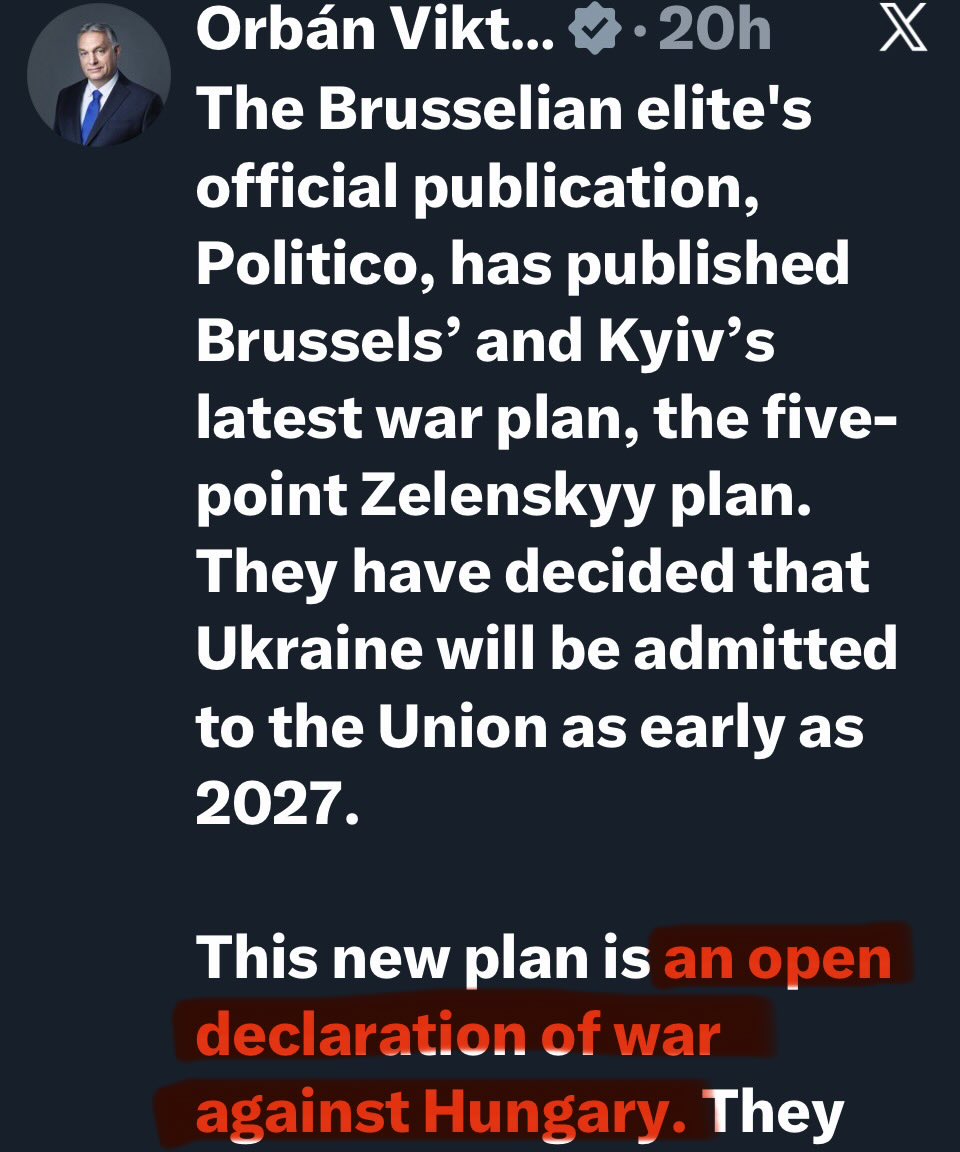
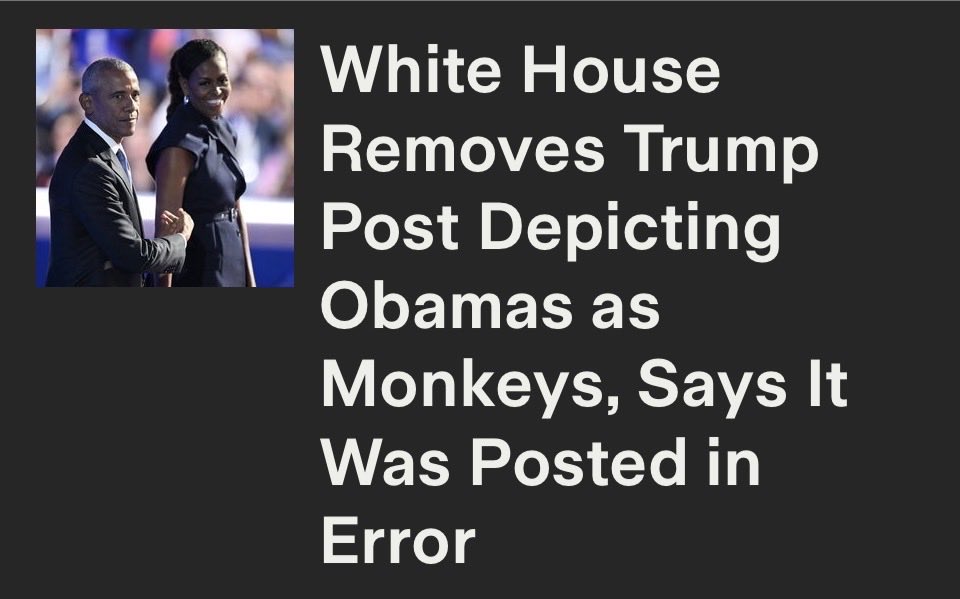
So, I guess now you're going to give 20 % of Hungary to the “attacker” to make a peace deal, like you used to say Ukraine should do in the Ukraine-Russia war?
Peter Buda tweet media
English
4
4
33
876
Peter Buda
Peter Buda@peter1buda·
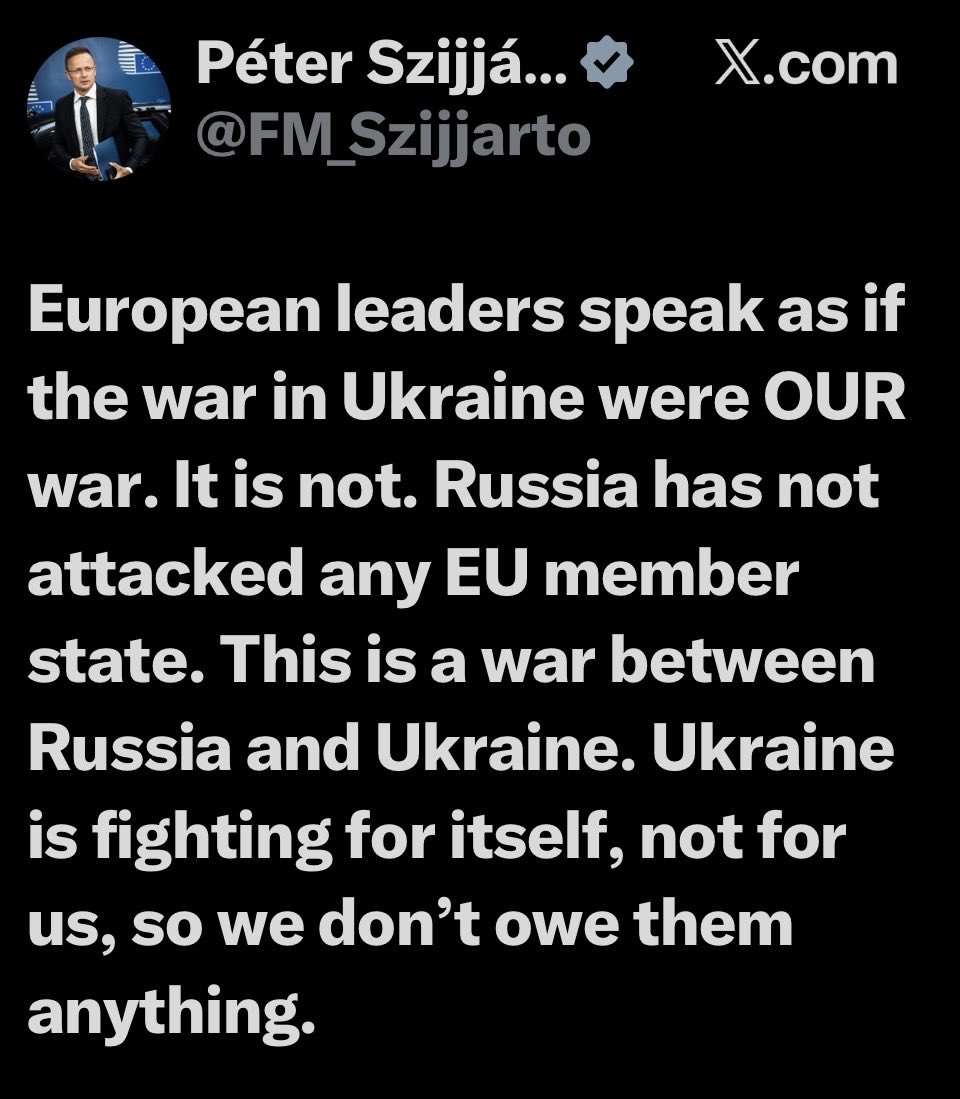
If this isn't our war, then why do you seize every opportunity to support Russia?
Peter Buda tweet media
English
4
5
49
969
Peter Buda
Peter Buda@peter1buda·
@Tiswa80 It is the activity that Russia is backing Orban for.
English
0
0
1
58
Peter Buda
Peter Buda@peter1buda·
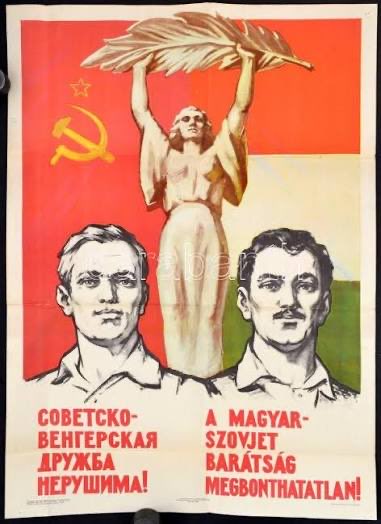
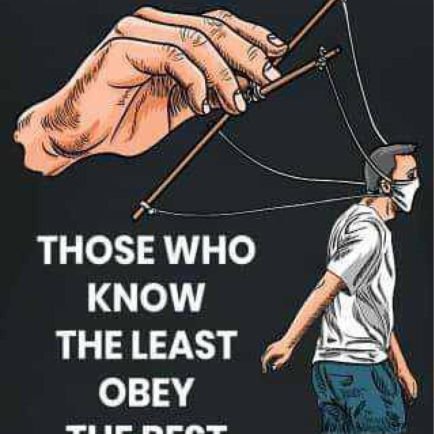
2026, Earth.
Peter Buda tweet media
English
0
1
9
282
Peter Buda
Peter Buda@peter1buda·
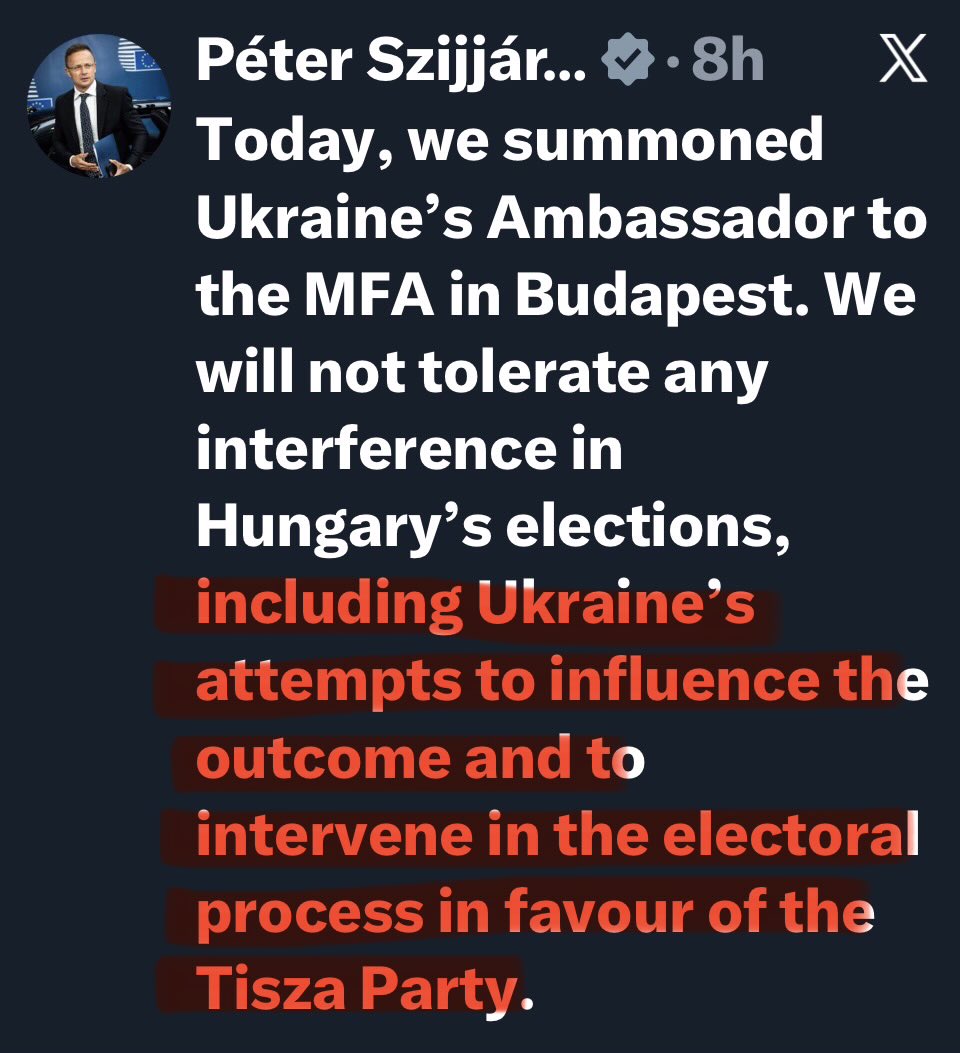
… but excluding Russia’s attempts to influence the outcome and to intervene in the electoral process in favour of the Fidesz party.
Peter Buda tweet media
English
0
7
67
1.6K
Peter Buda
Peter Buda@peter1buda·
The lizard people again: "There is a secondary motive behind the war, because war is the best excuse to indebt the entire continent, thereby eliminating the independence of nations and creating a United States of Europe, which is the old dream of federalists." (Viktor Orbán) According to this, Putin, who started the war and has been continuously attacking Ukraine ever since, is actually working for the European federalists. Now it's really time to put on our tin foil hats. Even more so, it's time to finally climb out of Putin's... pocket.
Peter Buda tweet media
English
0
3
29
792