Sabitlenmiş Tweet

PetrAnto
17.3K posts

@petranto
Happy Life Maximalist - Money | Art | Tech
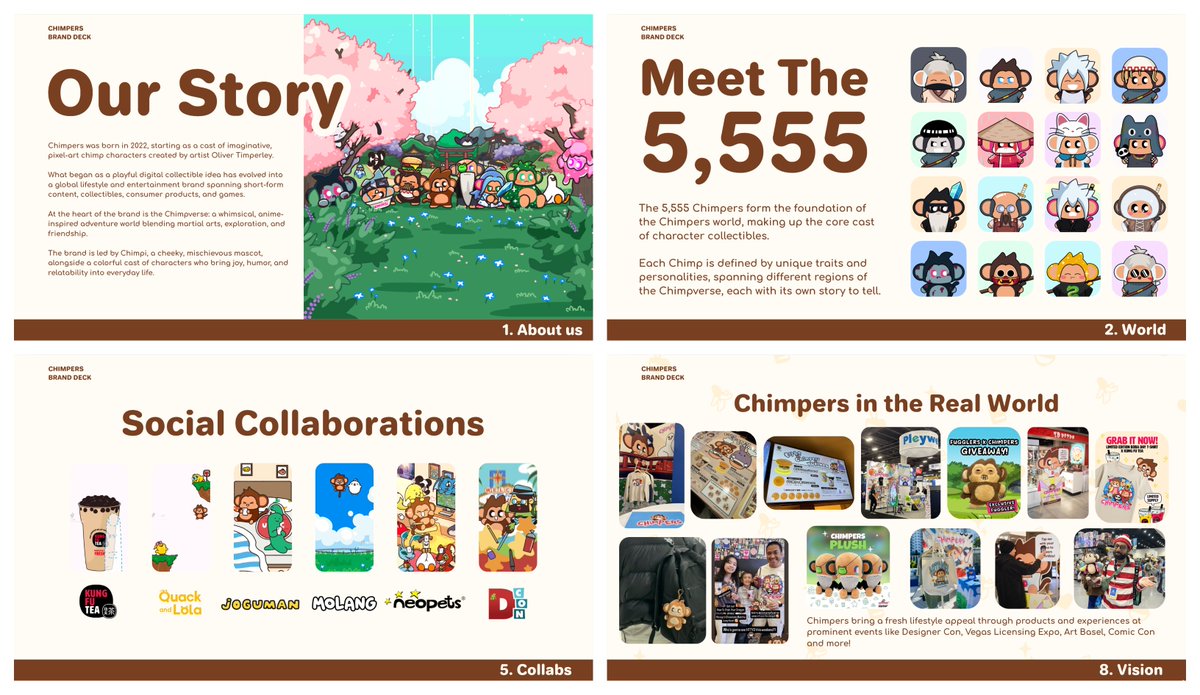
Bear market or not... amazing job by @ChimpersHQ ! 有信 - Arinobu it is for me


Your work tools in Claude are now available on mobile. Explore Figma designs, create Canva slides, check Amplitude dashboards, all from your phone. Give it a try: claude.com/download




The Missing Link: Why Solana Perps Are the Structural Threat to Centralized Exchanges Solana has definitively won the retail spot market, anybody actually using DeFi and being active in web3 knows that... But capturing institutional leverage requires a fundamentally different architecture: deep, capital-efficient perpetual futures... and about this Solana is more or less nothing - even the flagship wallet Phantom is using Hyperliquid. This week, Chase Barker - a foundational Solana architect and current Solana Foundation executive who literally built the network's early developer ecosystem - published a highly deliberate graphic titled "Perps on Solana: The Missing Link." When a verified Solana insider with Barker's track record signals a macro shift, it is not idle speculation. It is a roadmap. Is the network actively assembling the final pieces to execute a structural threat against centralized exchanges? ⬇️ ◽️ The Institutional Requirement The macro equation is binary: the most complete and liquid financial stack absorbs the market. 🔹 The Baseline: Solana already controls the daily active user count, leads in stablecoin inflows, and processes massive spot DEX volumes. Major institutions are actively building treasuries and filing ETFs natively on the chain. 🔹 The Strategic Gap: Spot markets attract retail capital, but perpetuals attract institutional leverage. Barker highlighted this exact vulnerability, noting that bringing every spot asset on-chain is useless without providing competitive perpetuals simultaneously. You need the complete risk layer to unlock real capital flows. ◽️ The Appchain War: Solana vs. Hyperliquid Solana is not fighting Ethereum for derivative dominance; it is fighting specialized application chains. 🔹 The Appchain Advantage: Hyperliquid engineered a bespoke Layer-1 strictly optimized for an on-chain order book. It currently dominates decentralized derivative volume by offering zero gas fees and centralized exchange-level execution speed. 🔹 The Solana Counter-Offensive: Solana relies on a generalized state machine. Its structural upside is absolute composability - lending protocols, spot markets, and perps all interact within the exact same shared state, drawing from the same underlying $USDC liquidity pools. ⚠️ The Downside Risk: Generalized chains naturally fracture liquidity. Historically, Solana's perp liquidity has been split across multiple protocols (Drift, Zeta, Jupiter...). If that fragmentation persists, high-frequency quantitative firms will bypass Solana entirely and route directly to Hyperliquid or Binance. ◽️ The March 2026 Rollout The ecosystem is actively solving this fragmentation through a new wave of protocol launches designed to bridge the gap between spot assets and derivative liquidity. 🔹 Byreal Perps (The Liquidity Bridge): Incubated by Bybit, Byreal just launched as an AI-agent native DEX. Their strategic breakthrough is pragmatic: rather than competing with Hyperliquid, they are integrating it. Byreal offers up to 40x leverage by directly tapping into the Hyperliquid on-chain order book, funneling that massive liquidity directly into Solana wallets. They also deployed RWAs (Real World Assets), enabling native trading of physical commodities like Gold and Crude Oil. 🔹 Flash .Trade (The Equity Expansion): Operating on the open-source Solana Labs reference implementation, Flash. Trade just pushed traditional equity perps live. Traders can now access up to 20x leverage on traditional equities like $AMZN, $NVDA, $AAPL, and $TSLA, priced entirely on-chain via Pyth Network oracles. ➡️ The Macro Baseline for On-Chain Capital ▫️ The traditional exchange model relies on siloing user funds. The decentralized model wins by unifying them. ▫️ Established protocols like Drift Protocol have proven the volume model, while platforms like Flash. Trade are proving the asset diversity model by listing traditional equities alongside crypto. 👉 The missing risk layer is finally operational. Once Solana successfully merges its absolute dominance in spot liquidity with a hyper-efficient perpetuals market, the centralized exchange model functionally collapses.

The Crypto Panic Over the SEC/CFTC Taxonomy: Decoding the "Not Final" Warning Many crypto analysts such as Coin Bureau correctly noted that the new 68-page joint SEC and CFTC crypto taxonomy is interpretive guidance, not codified legislation. Regulators explicitly stated this framework is not final and could technically be altered without congressional approval. 📉 Retail is reading this as a structural vulnerability. 📈 Institutional capital is reading it as the operational green light they have been waiting a decade for. ➡️ The reality is that if you are waiting for permanent, immutable legislation before allocating capital, you do not understand how financial market structures actually work. ⬇️ ◽️ The Power of Interpretive Consensus Interpretive guidance frequently becomes the de facto law of the land for decades. It dictates the immediate boundaries for institutional compliance and agency enforcement. ▫️ The Bitcoin Precedent: In 2015, the CFTC issued interpretive guidance classifying BTC as a commodity. That was not a law passed by Congress - it was an agency interpretation. Yet, that single piece of guidance served as the undisputed bedrock for Bitcoin’s regulatory safety, its futures markets, and its eventual ETFs for over a decade without issue. ▫️ The Operational Reality: The March 17 release formally designates assets like $ETH, $SOL, and $ADA as digital commodities. It explicitly exempts decentralized staking and airdrops from the Howey test. Wall Street compliance departments do not need an act of Congress to structure products or deploy capital; they just need formal agency non-objection. They now have a 68-page framework explicitly providing it. ◽️ The Cost of the Regulatory Void To understand the magnitude of this document, you must measure it against the absolute chaos of the alternative. ▫️ Regulation by Enforcement: From 2017 to 2025, the absence of clear law or structured guidance allowed agencies to arbitrarily sue protocols and exchanges. Billions of dollars in institutional liquidity were sidelined globally, completely paralyzed by the legal vacuum. ▫️ The Bridge: This joint release instantly fills that vacuum. It ends the era of arbitrary litigation by establishing a rigid, five-category token taxonomy. It is a federally sanctioned bridge that protects the market while Congress slowly drafts comprehensive market structure bills. ◽️ The Myth of Legislative Permanence The argument that guidance is fragile because a future administration could rewrite it relies on the false premise that congressional laws are permanent. ▫️ Statutory Reversals: Codified federal laws are rewritten, diluted, and repealed constantly based on political shifts. The Glass-Steagall Act strictly separated commercial and investment banking for over 60 years until it was wiped out by new legislation. The sweeping regulations of the Dodd-Frank Act were systematically rolled back within years of their implementation. ➡️ Nothing in financial regulation is permanently safe. Capital allocation is always a calculation of current enforcement risk. 🟦 The Macro Baseline for Wise Traders ▫️ You do not trade theoretical legislative permanence; you trade the operational reality of the current macro cycle. ▫️ The operational reality is that the SEC and CFTC have formally laid down their weapons. They have provided a clear, principles-based taxonomy that officially clears the vast majority of the crypto market from securities classification. ➡️ Institutional allocators now have the exact compliance cover required to deploy deep liquidity into the major Layer-1 ecosystems. The regulatory discount on the asset class has just been erased.


⚡️SEC and CFTC: NOTHING IS FINALIZED The SEC and CFTC released 68 pages of guidance last week classifying stablecoins, digital commodities, and digital tools as 'not securities'. However, regulators said the interpretation is NOT FINAL and could change without legislation.


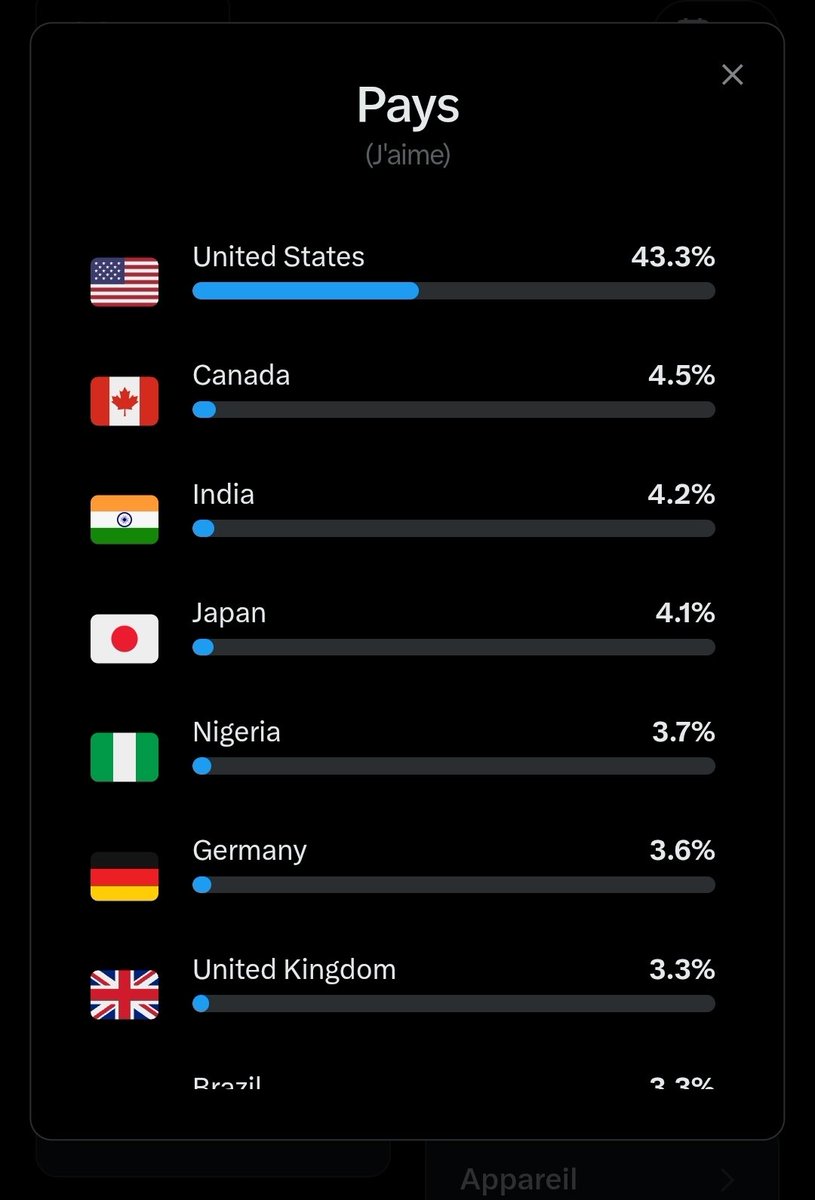
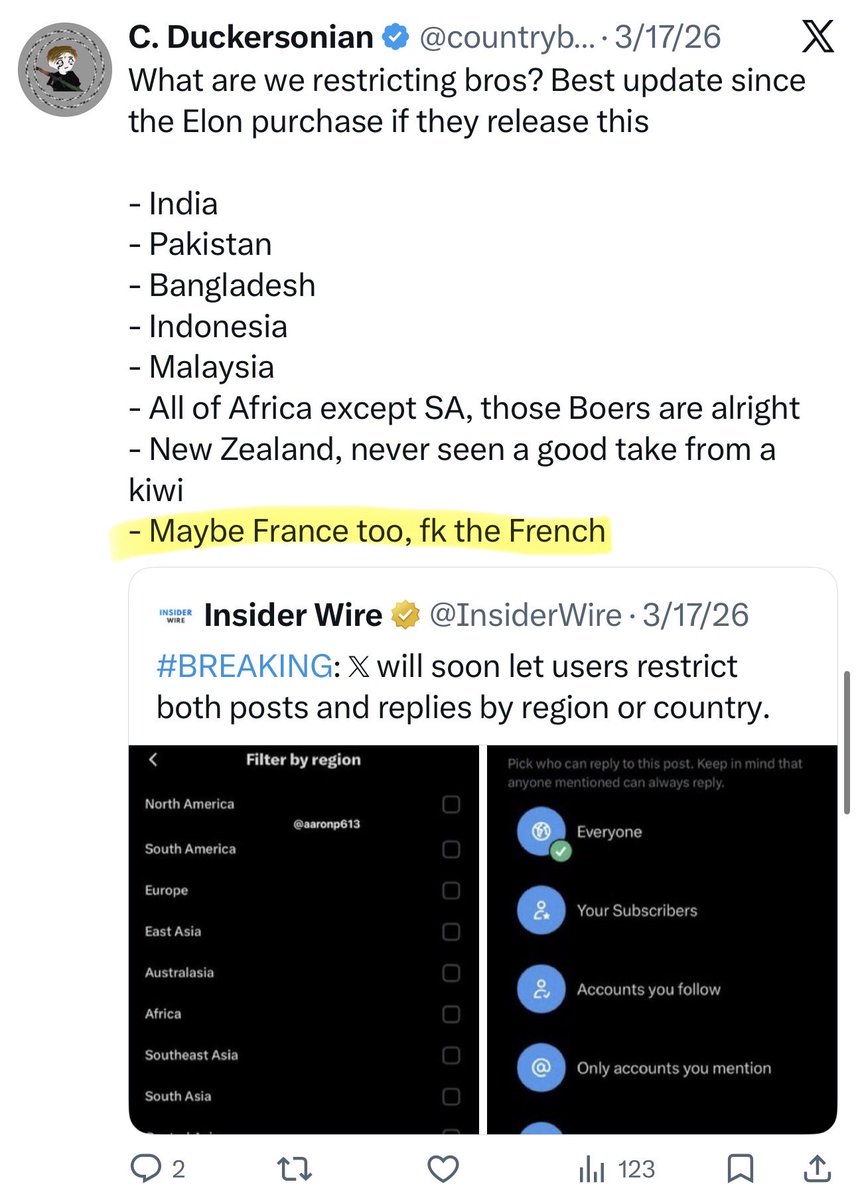
Starting Thursday, we'll be updating our revenue sharing incentives to better reward the content we want on X: We will be giving more weight to impressions from your home region—to encourage content that resonates with people in your country, in neighboring countries and people who speak your language. While we appreciate everyone's opinion on American politics, we hope this will disincentivize gaming the attention of US or Japanese accounts and instead, drive diverse conversations on the platform. We invite creators to start building an audience locally. X will be a much richer community when there's relevant posts for people in all parts of the world.

The New Hegemony: How Sunni States Are Leveraging the US-Iran War to Redraw the Middle East The kinetic decapitation of the Iranian regime is not just a bilateral US-Israeli military operation. It is the violent birth of a new, undisputed Sunni geopolitical hegemony. As the conflict enters its fourth week following the February 28 strikes that eliminated Supreme Leader Ali Khamenei, the mainstream narrative focuses heavily on the immediate devastation: 2,100 casualties, shattered nuclear infrastructure, and a paralyzed Strait of Hormuz. The underlying reality is far more calculated. The Gulf Cooperation Council (GCC) states are executing a masterful, dual-track geopolitical strategy to permanently dismantle the Axis of Resistance and establish absolute regional supremacy. ⬇️ ◽️ The Sectarian Fault Line: Geopolitics Masked as Religion To understand this tectonic shift, you must understand the historical fault line driving it. The Sunni-Shia schism originated centuries ago over the succession of the Prophet Muhammad, but today, it operates strictly as a battle for regional dominance. 🔹 The Sunni Bloc: Representing roughly 85-90% of the global Muslim population, the Sunni world is geopolitically anchored by Saudi Arabia and the Gulf states. Their priority is economic integration, regional stability, and the defense of the traditional Arab state system. 🔹 The Shia Crescent: Iran, operating under a revolutionary Shia theocracy, represents the minority faction. To project power against the wealthier Sunni states, Tehran spent decades building a land bridge of proxy militias across Iraq, Syria, Lebanon, and Yemen. 👉 This war is the final collision of these two spheres. The Sunni bloc is using American military hardware to dismantle Iran's proxy network once and for all. ◽️ The Dual Doctrine: Public Defense, Private Offense The Sunni bloc is not a passive bystander... they are the silent architects of the post-war order. Their crisis management relies on a strict bifurcation of public messaging and private lobbying. 🔹 The Public Shield: Saudi Arabia, the UAE, and Qatar have unified entirely under the banner of international law. After Iranian retaliatory strikes hit Gulf infrastructure, the GCC universally condemned the aggression. They are actively utilizing advanced, US-supplied air defenses to protect their sovereign airspace, projecting an image of measured, reluctant self-defense. 🔹 The Private Sword: Behind closed doors, the diplomatic posture evaporates. Gulf leadership is aggressively pressuring the US administration to prosecute the war to its absolute conclusion. The GCC understands that a wounded, surviving Iranian regime is an existential threat. They are leveraging their status as indispensable US military hosts to ensure Washington dismantles the IRGC entirely. ◽️ Dismantling the Proxy Architecture If the US-Israeli campaign achieves its stated military goals, the geopolitical map of the Middle East will undergo its most profound transformation since the 2003 Iraq War. 🔹 Severing the Proxy Artery: The absolute destruction of Tehran's military-industrial complex instantly severs the financial and logistical lifelines to militia forces across the region. The land corridor that allowed Iran to project asymmetric power to the Mediterranean functionally collapses. 🔹 The Abrahamic Consolidation: With the primary external threat neutralized, the path for expanded, frictionless normalization between Israel and the broader Arab world clears completely. The GCC gains undisputed security primacy, allowing them to funnel hundreds of billions previously earmarked for proxy defense directly into sovereign wealth projects and domestic Vision 2030 diversification. ◽️ The Macroeconomic Sacrifice This geopolitical reset is currently being paid for by the global energy consumer. The Sunni states are accepting immense short-term economic damage to secure permanent regional dominance. 🔹 The Hormuz Paralysis: Iran’s retaliation has effectively frozen the Strait of Hormuz. With 20% of global oil and LNG offline, Brent crude has aggressively spiked into the $100-$120 range. 🔹 The Stagflation Threat: The macroeconomic ripple effects are severe. A sustained blockade guarantees a baseline global inflation spike, dragging down growth and threatening a 1970s-style recessionary environment that will severely test Western political resolve. ➡️ The Macro Baseline and Prospective Outlook for Traders and Observers Let us be completely precise about the endgame: this could not be about eradicating the Iranian people or wiping out the Shia religion. Believe it or not but even the dumbest political leaders know that you cannot bomb theology or People out of existence. ▫️ The strategic objective of the GCC and Washington is the structural decapitation of the Islamic Revolutionary Guard Corps (IRGC) and the collapse of the clerical command structure. ▫️ The Sunni states are engaged in the ultimate geopolitical arbitrage. They are utilizing American operational aggressiveness to force a regime collapse in Tehran, all without committing their own conventional forces to offensive operations. However chaotic it was, traders and investors must recognize yesterday’s Trump pivot. The United States cannot withstand a prolonged, multi-year energy crisis. 👉 The future will hinge on two divergent scenarios, depending entirely on the true resilience of the Islamic Revolution: 🔹 If it is confirmed that the Iranian regime has survived the initial kinetic onslaught, expect Washington to aggressively force a transactional off-ramp in the coming days, weeks at most. The US administration will do whatever it takes to unblock the Strait of Hormuz and crash oil prices - even if that means cutting a short-term deal, unfreezing assets, or financially subsidizing the reconstruction of a battered Iranian leadership (compliant or not). 🔹 If, at any time - with US support or not - any Iranian alternative emerges that is strong enough to overtake the IRGC and willing to normalize relations with the Sunni states of the GCC, Israel, and the US - thereby bringing more opportunities for development and prosperity to Iran - one could foresee a historic opportunity for a hyper-integrated economic boom across the Gulf.