Petruchio

364 posts

Petruchio banner
Petruchio

Petruchio

@petruch10

HUWHITE BOI IN CHYNA

America Katılım Ekim 2020
1.6K Takip Edilen2.6K Takipçiler
Aba Last Born; Dozzy
Aba Last Born; Dozzy@KCDozzyBenjamin·
@petruch10 Confucian officials, suspicious of foreign contact and hostile to the eunuchs running the program, persuaded the emperor to abandon it" Basically saying They had the might to they chose not no because they considered the motivation unworthy Give they credit for that decision.
English
1
0
0
63
Petruchio
Petruchio@petruch10·
A lot of the responses to this image have used it to argue that China had the technology to explore the world, chose not to, and thereby missed the great age of European expansion through cultural sclerosis or bureaucratic timidity. The argument has the comparative outcome right, but the structural picture it implies is wrong, and the actual story is more interesting than Twitter's little morality play would suggest. Zheng He was a Muslim eunuch admiral of the Yongle Emperor of the Ming dynasty, who between 1405 and 1433 (the original poster say "14th century", which is wrong) led seven enormous diplomatic-tributary expeditions across the Indian Ocean to Southeast Asia, India, Arabia, and the East African coast. The voyages involved fleets of over 250 ships and 27,000 personnel, with the largest treasure ships running probably 200 to 250 feet long, several times larger than anything contemporary Europe was building. The purpose wasn't commercial. The voyages were prestige projects designed to enroll foreign rulers in the Ming tribute system, with the Chinese state distributing more wealth in gifts than it received back. They projected the Yongle Emperor's status as the cosmic center of a world order that extended to the African coast, and they were one element in his broader program of grand imperial assertion that included the construction of Beijing as the new capital and the campaigns against the Mongols. After Zheng He's death on his seventh voyage, the program was discontinued. The largest treasure ships were broken up, the shipyards were closed, and the technical knowledge of building vessels at that scale was lost within a generation. The standard explanation for this is that Confucian officials, suspicious of foreign contact and hostile to the eunuchs running the program, persuaded the emperor to abandon it. The actual reasoning, though, was less ideological. The voyages cost enormous sums and did not produce an economic return commensurate with their cost. The empire's strategic threat lay overland on the Mongolian steppe, where naval power was useless, and the post-Yongle state was already running deficits the agricultural tax base could not sustain. The bureaucracy that argued against the voyages was making a budgetary case rather than a cultural one. The Tumu Crisis of 1449, in which the emperor was personally captured by Mongols at a battle the Ming should have won, vindicated the people who had argued that the empire's military attention needed to be on the steppe. The deeper question is why the Ming did not subsequently develop a global navy and colonize the world the way the European states would. The answer is structural rather than cultural. The European maritime expansion was driven by Ottoman closure of land routes to Asia, by the search for precious metals to fund European debt, by Christian missionary imperatives, and above all by competitive pressure among rival European states forced to match each other's overseas capabilities. None of these conditions obtained in the Chinese case. China already had access to the goods Europeans were crossing the oceans for. It had no debt crisis overseas gold could solve. It had no missionary religion. And it had no rival of comparable resources whose maritime expansion would have forced China to respond. For the Ming to have undertaken European-style colonization would have been the strategic equivalent of Rome at its height pivoting to Atlantic exploration. The technology was available but the incentives were not. The framing that China was sclerotic for not colonizing the world treats European maritime imperialism as the default trajectory any healthy civilization would have taken. The reverse framing is at least as defensible: European colonization was the response of small, capital-poor, militarily-pressured peripheral states under specific competitive and ideological conditions, with consequences the responding states themselves often could not predict or control. China's continental imperial form, sustained for two thousand years across multiple dynasties, is the historical norm. European maritime imperialism is the historical anomaly. The Ming made a defensible decision to remain the historical norm.
DaVinci@BiancoDavinci

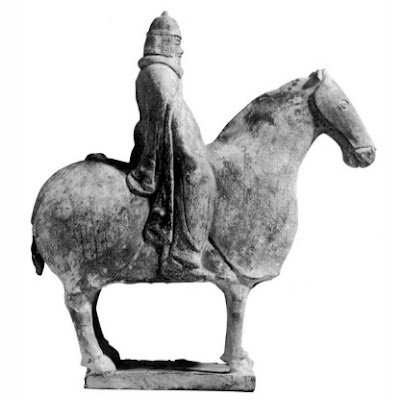
14th century Chinese explorer Zheng He's ship compared to Columbus's.
English
56
207
1.1K
103.8K
Petruchio
Petruchio@petruch10·
@Sim89776996 @BraneRunner I assumed he was asking about ancestry. He was indeed Hui, but his origin story is interesting so 🤷.
English
0
0
0
103
Sim
Sim@Sim89776996·
@petruch10 @BraneRunner He was Hui, meaning ethnically Chinese. It would be like arguing these Native American women are European, just because they have a tiny bit of European ancestry from centuries ago.
Sim tweet media
English
1
0
0
116
神秘张上将
神秘张上将@SHGeneral4Z·
@petruch10 Thanks for the quality content If I remember correctly this is almost exactly identical to our history textbook... Great information!
English
1
0
3
817
Aba Last Born; Dozzy
Aba Last Born; Dozzy@KCDozzyBenjamin·
In other words the Chinese didn't seek to conquer the world like the Europeans even though they had the resources to. Why was it so; The had the incentives to; resources they need to sponsor the expedition, yet they cancelled instead. Morality; Confucianism like you explained
Petruchio@petruch10

A lot of the responses to this image have used it to argue that China had the technology to explore the world, chose not to, and thereby missed the great age of European expansion through cultural sclerosis or bureaucratic timidity. The argument has the comparative outcome right, but the structural picture it implies is wrong, and the actual story is more interesting than Twitter's little morality play would suggest. Zheng He was a Muslim eunuch admiral of the Yongle Emperor of the Ming dynasty, who between 1405 and 1433 (the original poster say "14th century", which is wrong) led seven enormous diplomatic-tributary expeditions across the Indian Ocean to Southeast Asia, India, Arabia, and the East African coast. The voyages involved fleets of over 250 ships and 27,000 personnel, with the largest treasure ships running probably 200 to 250 feet long, several times larger than anything contemporary Europe was building. The purpose wasn't commercial. The voyages were prestige projects designed to enroll foreign rulers in the Ming tribute system, with the Chinese state distributing more wealth in gifts than it received back. They projected the Yongle Emperor's status as the cosmic center of a world order that extended to the African coast, and they were one element in his broader program of grand imperial assertion that included the construction of Beijing as the new capital and the campaigns against the Mongols. After Zheng He's death on his seventh voyage, the program was discontinued. The largest treasure ships were broken up, the shipyards were closed, and the technical knowledge of building vessels at that scale was lost within a generation. The standard explanation for this is that Confucian officials, suspicious of foreign contact and hostile to the eunuchs running the program, persuaded the emperor to abandon it. The actual reasoning, though, was less ideological. The voyages cost enormous sums and did not produce an economic return commensurate with their cost. The empire's strategic threat lay overland on the Mongolian steppe, where naval power was useless, and the post-Yongle state was already running deficits the agricultural tax base could not sustain. The bureaucracy that argued against the voyages was making a budgetary case rather than a cultural one. The Tumu Crisis of 1449, in which the emperor was personally captured by Mongols at a battle the Ming should have won, vindicated the people who had argued that the empire's military attention needed to be on the steppe. The deeper question is why the Ming did not subsequently develop a global navy and colonize the world the way the European states would. The answer is structural rather than cultural. The European maritime expansion was driven by Ottoman closure of land routes to Asia, by the search for precious metals to fund European debt, by Christian missionary imperatives, and above all by competitive pressure among rival European states forced to match each other's overseas capabilities. None of these conditions obtained in the Chinese case. China already had access to the goods Europeans were crossing the oceans for. It had no debt crisis overseas gold could solve. It had no missionary religion. And it had no rival of comparable resources whose maritime expansion would have forced China to respond. For the Ming to have undertaken European-style colonization would have been the strategic equivalent of Rome at its height pivoting to Atlantic exploration. The technology was available but the incentives were not. The framing that China was sclerotic for not colonizing the world treats European maritime imperialism as the default trajectory any healthy civilization would have taken. The reverse framing is at least as defensible: European colonization was the response of small, capital-poor, militarily-pressured peripheral states under specific competitive and ideological conditions, with consequences the responding states themselves often could not predict or control. China's continental imperial form, sustained for two thousand years across multiple dynasties, is the historical norm. European maritime imperialism is the historical anomaly. The Ming made a defensible decision to remain the historical norm.

English
1
0
0
74
Aba Last Born; Dozzy
Aba Last Born; Dozzy@KCDozzyBenjamin·
@petruch10 In other words the Chinese didn't seek to conquer the world like the Europeans even though they had the resources to. Why was it so; The had the incentives to; resources they need to sponsor the expedition, yet they cancelled instead. Morality; Confucianism like you explained
English
1
0
7
1.6K
Steve Sailer
Steve Sailer@Steve_Sailer·
@petruch10 European history is crazier than Chinese history, which tends to follow more predictable grooves (e.g., rise and fall of dynasties).
English
4
1
62
2.9K
Yult
Yult@YeTao10993710·
@petruch10 wow… what made twitter deserve such a quality post? lol The post certainly can be still argued on a number of points like the comments others already made here, but this is one of the rarer twits I see lately that explains a concept and logic quite cleanly and elegantly. Kudos!
English
1
0
20
2.4K
Petruchio
Petruchio@petruch10·
@BraneRunner His ancestry was "central Asian muslim" and they were brought over by the Mongol invasians of the 13th century. So, it depends how precise your definition of "Persian" is, since they may have been Perianized Turks or Persian or...we can't be sure.
English
2
0
16
1.7K
Petruchio
Petruchio@petruch10·
@EasternAesth Hate this. I want elegant stewardesses and will actively avoid badly choreographed monkey dance airlines.
English
0
0
1
38
firmament
firmament@firmament33a·
@petruch10 @Arefsoid @elon_age The locations of the plague outbreaks at the end of the Ming Dynasty largely overlapped with the areas visited by missionaries. Moreover, the plague disappeared after the Qing army occupied these areas.
English
1
0
1
49
Petruchio
Petruchio@petruch10·
A useful follow-up case for the religious-licensing framework: Catholics. China has roughly ten to twelve million Catholics, organized for the past sixty years into two parallel structures. The state-licensed body, the Chinese Patriotic Catholic Association, was founded in 1957, and its bishops were initially selected and ordained without papal approval. The underground Catholic Church, an unlicensed network loyal to Rome, ordained its own bishops with papal approval, sometimes in secret. Its members were periodically arrested and harassed, and the two churches regarded each other with mutual suspicion bordering on (mutual) excommunication. Western observers generally read the situation as straightforward persecution of authentic Catholics by China, which demanded an inauthentic and unacceptable alternative. In 2018, the Vatican and the People's Republic of China signed a provisional agreement that has substantially resolved the dispute. Under the agreement, Chinese bishops are now jointly approved by the Pope and the Chinese government, with each side holding veto power over candidates the other proposes. The result is that the great majority of practicing Chinese Catholics today, including those worshiping in legally recognized Patriotic Association churches, are in canonical communion with Rome under a procedure the Vatican has accepted as an acceptable, if imperfect, compromise. The agreement has been renewed every two years since, most recently in 2024. The structural point worth highlighting is that this is the Chinese state's licensing framework functioning as advertised. The state identified a religion whose internal authority structure ran outside Chinese institutions and refused to register it on those terms. The religion's central authority eventually agreed to a procedural arrangement that satisfied the state's monopoly on legitimate religious organization while preserving the religion's essential theological commitments. The Yellow Turbans, the White Lotus, the Taiping, and Falun Gong were all unauthorized parallel networks that the state suppressed. Catholicism was, from the Chinese state's perspective, a similar** kind of network with the unusual feature of being headquartered abroad, and the eventual accommodation looks different from suppression only because the negotiating partner was the Vatican rather than a fugitive guru. Westerners watching the Vatican-China agreement have often described it as a betrayal of authentic Catholicism by a Pope willing to compromise with a hostile state. Chinese Catholics living under the agreement have generally described it as a workable arrangement that lets them practice their faith openly. ----- **I don't mean similar in any other way except that Catholicism was likewise a religious network in an unacceptable state of 'noncompliance' with regulations until 2018. This is not to say--and I am not doing apologetics here--that it shares any other nontrivial aspects with, for instance, Falun Gong. Nor that it doesn't, either. That is, anything outside the aforementioned institutional concern is quite beside the point of this post.
Petruchio tweet media
Petruchio@petruch10

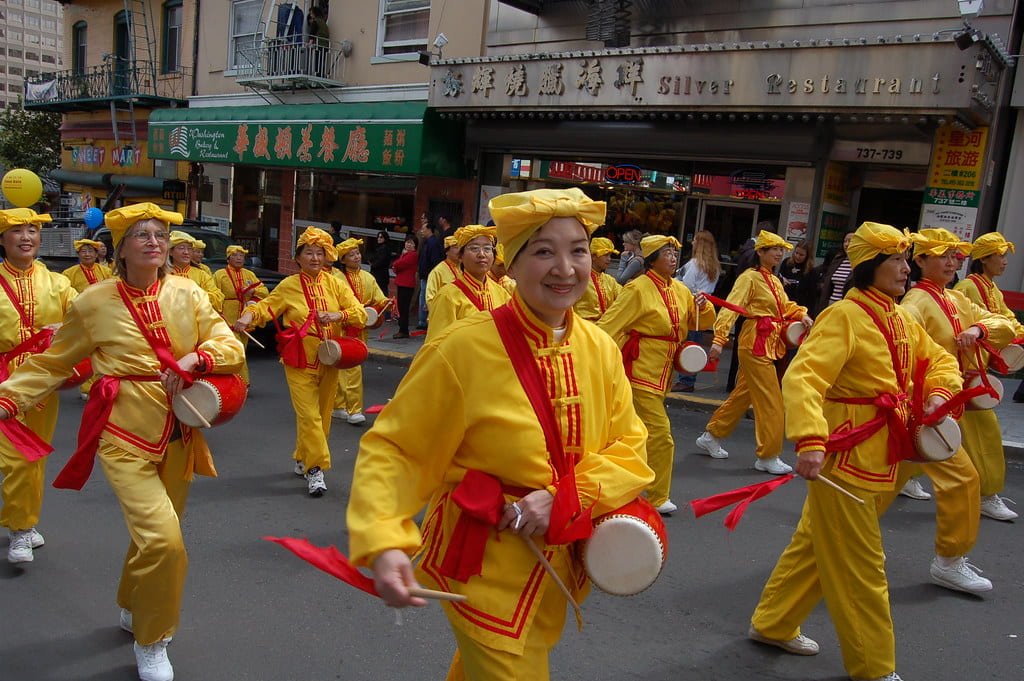
To Western eyes, the Chinese state's suppression of Falun Gong looks like persecution of a harmless meditation cult. This framing misunderstands** what the Chinese state is responding to. The Chinese state has tolerated religion as private belief for two thousand years. Buddhism, Daoism, Christianity, Islam, Zoroastrianism, Manichaeism, and Judaism have operated in China across the imperial centuries, mostly without state interference and often with state patronage. What the Chinese state has consistently and ruthlessly suppressed is the organized religious mass network when it reaches a scale at which it constitutes a parallel authority structure capable of mobilizing populations. The doctrine is incidental to the real issue, which is the structure. The pattern is established under the Han with the Yellow Turban Rebellion of 184 AD, which was a millenarian Daoist movement called the Way of Great Peace and which began as a healing-and-charity ministry. It accumulated several hundred thousand adherents organized into thirty-six commands across eight provinces, developed an apocalyptic doctrine that the Han mandate had ended, and rose in coordinated rebellion. The rebellion was eventually crushed but the Han never recovered. The pattern repeats with the White Lotus movements of the Yuan, Ming, and Qing: a continuously regenerating Buddhist-derived sectarian network that produced uprising after uprising for six centuries. It repeats most catastrophically with the Taiping Heavenly Kingdom of 1851–1864, a syncretic Christian-millenarian movement led by a failed examination candidate who (like your author) believed he was the younger brother of Jesus Christ. The Taiping Rebellion killed somewhere between 20 and 70 million people, depending on the estimate. It is the deadliest civil war in human history and it nearly ended the Qing dynasty. The Chinese state's view, developed through this experience, is that the unsanctioned charismatically-led mass-religious network is not a category of religious activity but rather a category of state-security threat. The Western framing--religion as private belief, the state as obligated to tolerate it absent demonstrated individual harm--is a product of post-Reformation Western political theory. The Chinese tradition does not share that framing and never has, because the Chinese historical record contains too many cases where exactly the kind of harmless-looking spiritual movement that Western observers were prepared to tolerate metastasized into civilizational catastrophe. In April 1999, ten thousand Falun Gong practitioners assembled silently around Zhongnanhai, the central party leadership compound in Beijing. They had organized this without the state knowing they were coming, they had transported themselves to Beijing without the state knowing, and they had arrayed themselves at the most sensitive site in Chinese politics without the state knowing. From the perspective of the Chinese security apparatus, this was the Yellow Turban scenario in modern clothing. A charismatically-led, cosmologically-heterodox, mass-organized network had demonstrated that it could mobilize tens of thousands at the heart of the capital without state oversight. Whether the doctrine was harmful, harmless, or beneficial was, in this framing, beside the point. The structure itself was the threat. The state's response was the historically standard one. The Yellow Turbans, the White Lotus, the Eight Trigrams, the Taiping, and Falun Gong are five points on the same line. The institutional logic that responds to all of them is also the same. ----- **Not a misunderstanding on @PhilGarber5 's part, below, but rather one he correctly identified.

English
3
4
23
2K
Ascetic Virtues
Ascetic Virtues@AsceticVirtues·
@petruch10 Falun Gong has Shen Yun, which actually looks pretty based. idk what the rest of them are doing but if their plan for running China looks anything like their shows, then it's probably an improvement over the CCP
English
1
0
0
41
Petruchio
Petruchio@petruch10·
To Western eyes, the Chinese state's suppression of Falun Gong looks like persecution of a harmless meditation cult. This framing misunderstands** what the Chinese state is responding to. The Chinese state has tolerated religion as private belief for two thousand years. Buddhism, Daoism, Christianity, Islam, Zoroastrianism, Manichaeism, and Judaism have operated in China across the imperial centuries, mostly without state interference and often with state patronage. What the Chinese state has consistently and ruthlessly suppressed is the organized religious mass network when it reaches a scale at which it constitutes a parallel authority structure capable of mobilizing populations. The doctrine is incidental to the real issue, which is the structure. The pattern is established under the Han with the Yellow Turban Rebellion of 184 AD, which was a millenarian Daoist movement called the Way of Great Peace and which began as a healing-and-charity ministry. It accumulated several hundred thousand adherents organized into thirty-six commands across eight provinces, developed an apocalyptic doctrine that the Han mandate had ended, and rose in coordinated rebellion. The rebellion was eventually crushed but the Han never recovered. The pattern repeats with the White Lotus movements of the Yuan, Ming, and Qing: a continuously regenerating Buddhist-derived sectarian network that produced uprising after uprising for six centuries. It repeats most catastrophically with the Taiping Heavenly Kingdom of 1851–1864, a syncretic Christian-millenarian movement led by a failed examination candidate who (like your author) believed he was the younger brother of Jesus Christ. The Taiping Rebellion killed somewhere between 20 and 70 million people, depending on the estimate. It is the deadliest civil war in human history and it nearly ended the Qing dynasty. The Chinese state's view, developed through this experience, is that the unsanctioned charismatically-led mass-religious network is not a category of religious activity but rather a category of state-security threat. The Western framing--religion as private belief, the state as obligated to tolerate it absent demonstrated individual harm--is a product of post-Reformation Western political theory. The Chinese tradition does not share that framing and never has, because the Chinese historical record contains too many cases where exactly the kind of harmless-looking spiritual movement that Western observers were prepared to tolerate metastasized into civilizational catastrophe. In April 1999, ten thousand Falun Gong practitioners assembled silently around Zhongnanhai, the central party leadership compound in Beijing. They had organized this without the state knowing they were coming, they had transported themselves to Beijing without the state knowing, and they had arrayed themselves at the most sensitive site in Chinese politics without the state knowing. From the perspective of the Chinese security apparatus, this was the Yellow Turban scenario in modern clothing. A charismatically-led, cosmologically-heterodox, mass-organized network had demonstrated that it could mobilize tens of thousands at the heart of the capital without state oversight. Whether the doctrine was harmful, harmless, or beneficial was, in this framing, beside the point. The structure itself was the threat. The state's response was the historically standard one. The Yellow Turbans, the White Lotus, the Eight Trigrams, the Taiping, and Falun Gong are five points on the same line. The institutional logic that responds to all of them is also the same. ----- **Not a misunderstanding on @PhilGarber5 's part, below, but rather one he correctly identified.
Petruchio tweet media
Zionspilger@PhilGarber5

@petruch10 "the load-bearing element of a recurring institutional problem" Is this why the Chinese government has ruthlessly suppressed Falun Gong which to Western eyes is a harmless meditation cult? What is the institutional problem which its existence represents?

English
37
71
434
30.6K
Sylvia Koffi
Sylvia Koffi@MOSSAFAN666·
"legally recognized Patriotic Association churches" Just resounds with the bells of liberty
Petruchio@petruch10

A useful follow-up case for the religious-licensing framework: Catholics. China has roughly ten to twelve million Catholics, organized for the past sixty years into two parallel structures. The state-licensed body, the Chinese Patriotic Catholic Association, was founded in 1957, and its bishops were initially selected and ordained without papal approval. The underground Catholic Church, an unlicensed network loyal to Rome, ordained its own bishops with papal approval, sometimes in secret. Its members were periodically arrested and harassed, and the two churches regarded each other with mutual suspicion bordering on (mutual) excommunication. Western observers generally read the situation as straightforward persecution of authentic Catholics by China, which demanded an inauthentic and unacceptable alternative. In 2018, the Vatican and the People's Republic of China signed a provisional agreement that has substantially resolved the dispute. Under the agreement, Chinese bishops are now jointly approved by the Pope and the Chinese government, with each side holding veto power over candidates the other proposes. The result is that the great majority of practicing Chinese Catholics today, including those worshiping in legally recognized Patriotic Association churches, are in canonical communion with Rome under a procedure the Vatican has accepted as an acceptable, if imperfect, compromise. The agreement has been renewed every two years since, most recently in 2024. The structural point worth highlighting is that this is the Chinese state's licensing framework functioning as advertised. The state identified a religion whose internal authority structure ran outside Chinese institutions and refused to register it on those terms. The religion's central authority eventually agreed to a procedural arrangement that satisfied the state's monopoly on legitimate religious organization while preserving the religion's essential theological commitments. The Yellow Turbans, the White Lotus, the Taiping, and Falun Gong were all unauthorized parallel networks that the state suppressed. Catholicism was, from the Chinese state's perspective, a similar** kind of network with the unusual feature of being headquartered abroad, and the eventual accommodation looks different from suppression only because the negotiating partner was the Vatican rather than a fugitive guru. Westerners watching the Vatican-China agreement have often described it as a betrayal of authentic Catholicism by a Pope willing to compromise with a hostile state. Chinese Catholics living under the agreement have generally described it as a workable arrangement that lets them practice their faith openly. ----- **I don't mean similar in any other way except that Catholicism was likewise a religious network in an unacceptable state of 'noncompliance' with regulations until 2018. This is not to say--and I am not doing apologetics here--that it shares any other nontrivial aspects with, for instance, Falun Gong. Nor that it doesn't, either. That is, anything outside the aforementioned institutional concern is quite beside the point of this post.

English
1
0
1
24
Petruchio
Petruchio@petruch10·
@power_ethics @CLGLZR Several reasons, none particularly hard to understand. > mongol threat to the north > no Ottomans blocking trade networks > no competition with other maritime rivals > no evangelist mission > tributary networks already established > for the above reasons, not fiscally sound
English
0
0
0
13
The Fatigued
The Fatigued@power_ethics·
@CLGLZR Didn’t they burn it around the same time too for some hard to understand eastern reason?
English
3
0
5
125