
Pete Hodgson (@thepete.net on bluesky)

7.7K posts

Pete Hodgson (@thepete.net on bluesky) banner
Pete Hodgson (@thepete.net on bluesky)

Pete Hodgson (@thepete.net on bluesky)

@ph1

@thepete.net on bluesky Independent consultant helping engineering teams tackle thorny problems. Sociotechnical architect 🧐. Formerly Earnest, ThoughtWorks.

Pacific Northwest, USA Katılım Mart 2009
469 Takip Edilen3.2K Takipçiler
Pete Hodgson (@thepete.net on bluesky)
@dexhorthy @theo The quality signals they're measuring aren't based on an LLM, they look like pretty traditional (deterministic) academic measures based on things like cyclometric complexity. Those types of measures have their own flaws, but it's not model-judging-model.
English
1
0
0
35
dex
dex@dexhorthy·
@ph1 @theo I read it and the methods behind it and I am not convinced. Building a Benchmark where models judge whether it’s sloppy or not is the biggest clown circus. If one could genuinely stop slop by throwing more tokens at the problem, this would not be a thing we talk about
English
1
0
1
72
Theo - t3.gg
Theo - t3.gg@theo·
How much better do the models have to get before you'll stop reading the code?
English
1.1K
62
3.4K
2M
dex
dex@dexhorthy·
@theo I will need to see a benchmark that scores code maintainability
English
4
0
41
2K
Pete Hodgson (@thepete.net on bluesky)
Very excited about this - an opinionated agentic software engineering framework from folks who really get it.
dex@dexhorthy

At HumanLayer, we’re on a mission to solve the AI slop code problem. In 2025 we open-sourced our Research, Plan, Implement framework, now deployed inside fortune 500s like Block and Uber - places where shipping slop is just not an option And that was just the beginning. Today, we’re opening access to HumanLayer - an Agentic IDE, collaboration platform, and building blocks for your software factory. HumanLayer enables engineers solving hard problems in complex codebases to: > move 2-3x faster across the entire SDLC (not just coding) > maintain rigorous standards for system architecture and program design Hundreds of engineers at companies of all sizes are already using HumanLayer to ship fast without sacrificing quality. I'm excited to invite you to try humanlayer today at humanlayer.com, and I'm even more excited to see what you build. @0xblacklight and I are deeply grateful to our team, our customers who give us so much incredible energy and feedback, our investors who have always been in our corner, and our friends and family who have supported us along this crazy journey if you're a staff or principal engineer trying to make AI coding work at scale for your team, we'd love to hear from you as @swyx likes to say - let's make this the year of no more slop

English
1
0
8
1.8K
Pete Hodgson (@thepete.net on bluesky) retweetledi
Mitchell Hashimoto
Mitchell Hashimoto@mitchellh·
I've got an agent in a loop optimizing a renderer with the goal to minimize frame times (and tests to measure). It got times down from 88ms to 2ms and allocations down from ~150K to 500. Sounds good, right? Wrong. This is exactly why agent psychosis is a big fucking problem. As an experiment, I rewrote the Ghostty core render state in Go, with access to identically laid out data structures as Ghostty and the exact same validation tests. I made a purposely naive renderer (simple, correct, but slow). 88ms per frame with 150,000 allocations (horrendous, lol)! I then kickstarted a Ralph loop to bring the frame times down. I told it it can't modify input data structures or the public API or tests (they're correct), but it can do anything else it wants. It got to work. It has worked for about 4 hours. I've spent around $350 on this experiment so far. The results? 88ms => 1.5ms 150K allocs => ~500 allocs Incredible right? Nope. My hand-written renderer I ported has frame times (same benchmark) of ~20us (0.020ms) and 0 allocations in the update path. This is the problem with psychosis and lacking systems understanding. If you don't understand the system, you're going to accept that this is an incredible result. If you understand the system, you'll see better solutions immediately and can do roughly 75x better on throughput. The people who blindly trust agent output are in the former camp. They're sheeple, overdrinking from a fountain of mediocrity. Standard disclaimer: I use AI all the time. I like AI. The point I'm making is to not blindly accept results. Think. Analyze. Learn.
English
311
994
9.1K
802.6K
Pete Hodgson (@thepete.net on bluesky) retweetledi
Joe Walnes
Joe Walnes@joewalnes·
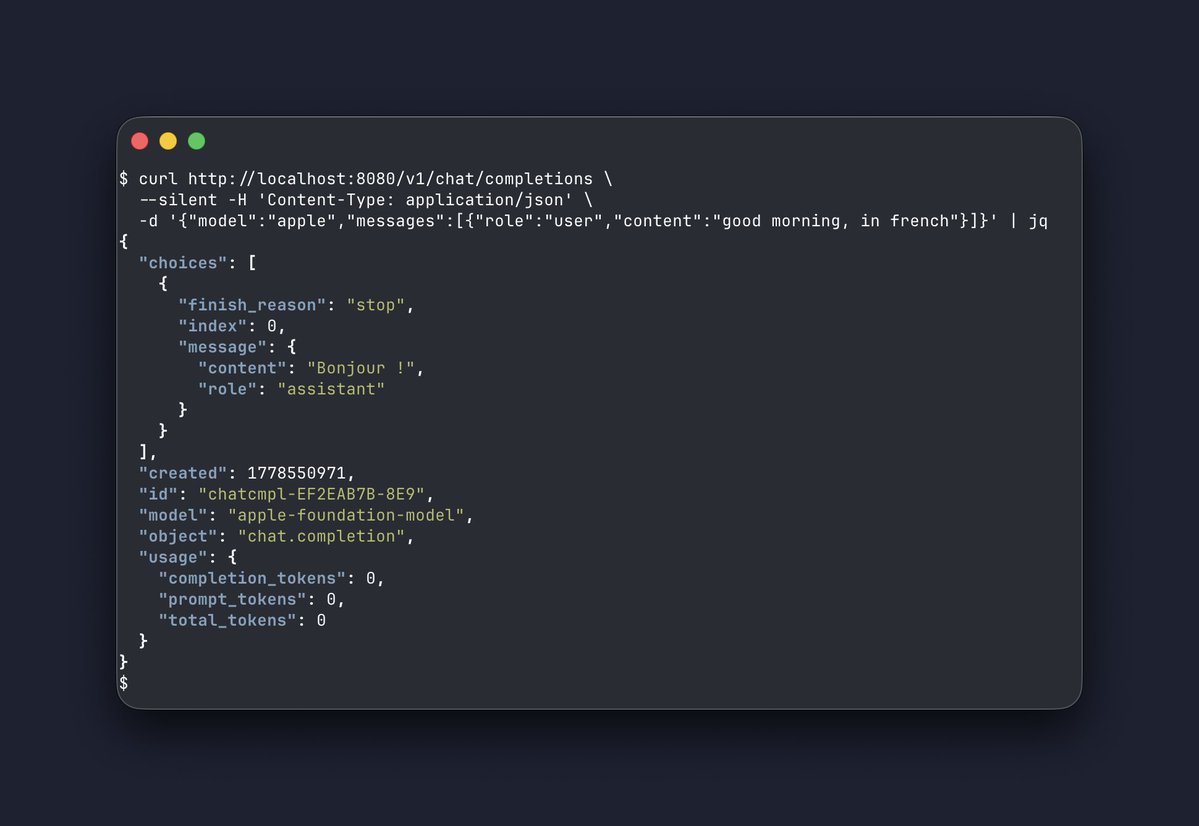
Modern macOS contains a fully local inference model. No network calls, stays fully on device. Here's a single file script to turn it into an OpenAI API compatible completions server: github.com/joewalnes/ones…
Joe Walnes tweet media
English
3
1
9
986
Pete Hodgson (@thepete.net on bluesky)
@shubhamJReacts @mattpocockuk I think you have it backwards. Markdown is interpreted pretty permissively, but HTML way more so. HTML is probably the most permissively interpreted file format out there. Renderers and parsers will wade on no matter how malformed it is.
English
1
0
0
113
Pete Hodgson (@thepete.net on bluesky)
@techgirl1908 100% agree on "just give it more context" being unhelpful. But I remain skeptical on automatically managed memories, until I see compelling results. I'm not ready to trust the quality of context being injected behind the scenes, at least when it comes to coding agents.
English
0
0
1
54
Angie Jones
Angie Jones@techgirl1908·
The more I work with agents, the more I'm convinced that "just give it more context" can't be the whole answer. I'm not seeing enough discourse about memory. More specifically, memory design... like what gets stored, what gets retrieved, what gets summarized, what triggers the agent to look things up again. I'll be spending time with @oracledevelopers soon, getting hands-on with agentic memory patterns. Very excited to get into the weeds!
English
25
5
111
13.5K
Pete Hodgson (@thepete.net on bluesky) retweetledi
dex
dex@dexhorthy·
the funniest thing about the token grift is most folks who pushed token burn in q1 are now having a falling out with their CFOs because they don’t have a metric that correlates to business outcomes Inputs -> outputs -> outcomes If you can’t measure revenue, measure KPIs If you cant measure KPIs, measure customer outcomes If you cant measure customer outcomes, measure task throughput (features, tickets, bugs) If you cant measure task throughput, measure work throughput (PRs) If you cant measure PRs, measure LOC If you cant measure LOC, measure tokens if you’re a leader and you’re not focused on improving your ability to measure things that matter, you’re cooked
Alex Bouaziz@Bouazizalex

Token spend will be on your next performance review. Maybe not next quarter. But soon. Boards and CEOs are already asking. Everyone bought Claude Code, Cursor, and a dozen other AI tools. Nobody can tell you what came out of it. Adoption isn't proficiency, and most companies have zero idea who's actually getting value from any of it. Deel Engage closes that gap. We integrate with Anthropic and every major LLM. AI usage lands next to KPIs, feedback, and competencies in your reviews module. One view of AI maturity across every location, time zone, and employment type. No manual stitching. What we measure: token spend across every major LLM provider. Where direct data isn't available, we approximate from usage patterns. One number, consistent across every tool and team. Is it the whole story? No. It's gameable. Anyone can burn tokens to look busy. But it's a real signal in a space where most companies have zero. And as Anthropic and the other model providers ship deeper analytics, Engage absorbs them. Sharper signal, faster than you could build it. Your next review cycle is the test. Walk in with data, or walk in guessing. Deel Engage is the difference! Full article below

English
8
8
95
14.8K
Pete Hodgson (@thepete.net on bluesky) retweetledi
Andrej Karpathy
Andrej Karpathy@karpathy·
Judging by my tl there is a growing gap in understanding of AI capability. The first issue I think is around recency and tier of use. I think a lot of people tried the free tier of ChatGPT somewhere last year and allowed it to inform their views on AI a little too much. This is a group of reactions laughing at various quirks of the models, hallucinations, etc. Yes I also saw the viral videos of OpenAI's Advanced Voice mode fumbling simple queries like "should I drive or walk to the carwash". The thing is that these free and old/deprecated models don't reflect the capability in the latest round of state of the art agentic models of this year, especially OpenAI Codex and Claude Code. But that brings me to the second issue. Even if people paid $200/month to use the state of the art models, a lot of the capabilities are relatively "peaky" in highly technical areas. Typical queries around search, writing, advice, etc. are *not* the domain that has made the most noticeable and dramatic strides in capability. Partly, this is due to the technical details of reinforcement learning and its use of verifiable rewards. But partly, it's also because these use cases are not sufficiently prioritized by the companies in their hillclimbing because they don't lead to as much $$$ value. The goldmines are elsewhere, and the focus comes along. So that brings me to the second group of people, who *both* 1) pay for and use the state of the art frontier agentic models (OpenAI Codex / Claude Code) and 2) do so professionally in technical domains like programming, math and research. This group of people is subject to the highest amount of "AI Psychosis" because the recent improvements in these domains as of this year have been nothing short of staggering. When you hand a computer terminal to one of these models, you can now watch them melt programming problems that you'd normally expect to take days/weeks of work. It's this second group of people that assigns a much greater gravity to the capabilities, their slope, and various cyber-related repercussions. TLDR the people in these two groups are speaking past each other. It really is simultaneously the case that OpenAI's free and I think slightly orphaned (?) "Advanced Voice Mode" will fumble the dumbest questions in your Instagram's reels and *at the same time*, OpenAI's highest-tier and paid Codex model will go off for 1 hour to coherently restructure an entire code base, or find and exploit vulnerabilities in computer systems. This part really works and has made dramatic strides because 2 properties: 1) these domains offer explicit reward functions that are verifiable meaning they are easily amenable to reinforcement learning training (e.g. unit tests passed yes or no, in contrast to writing, which is much harder to explicitly judge), but also 2) they are a lot more valuable in b2b settings, meaning that the biggest fraction of the team is focused on improving them. So here we are.
staysaasy@staysaasy

The degree to which you are awed by AI is perfectly correlated with how much you use AI to code.

English
1.2K
2.5K
20.9K
4.5M
Pete Hodgson (@thepete.net on bluesky) retweetledi
Matt Pocock
Matt Pocock@mattpocockuk·
Doing some experiments today with Opus 4.6's 1M context window. Trying to push coding sessions deep into what I would consider the 'dumb zone' of SOTA models: >100K tokens. The drop-off in quality is really noticeable. Dumber decisions, worse code, worse instruction-following. Don't treat 1M context window any differently. It's still 100K of smart, and 900K of dumb.
English
151
58
1.2K
160.2K
Pete Hodgson (@thepete.net on bluesky) retweetledi
boris
boris@boristane·
slop creep is what happens when you turn your brain off and hand the thinking to coding agents each individual change is fine, but all together, you have a pile of crap we're witnessing this happen in real-time across everything boristane.com/blog/slop-cree…
English
39
61
649
90.4K
Pete Hodgson (@thepete.net on bluesky)
Being an Old, I have a bit of nostalgia for The Good Old Days of OSS where you shared a thing and maybe some people used it, and there wasn't any influencing or fancy websites or weird drama. It's nice to rediscover that vibe in the 3D printing community...
Pete Hodgson (@thepete.net on bluesky) tweet media
English
1
0
2
147
Sam Parr
Sam Parr@thesamparr·
How is everyone getting team adoption for Claude? I spent a lot of time on Twitter, as do you. We see all this AI stuff popping up. We're on top of it, or at least sorta. I know what's going on and are testing all these fringe ideas. But how are all you people getting your team to actually use it effectively without spending all their time on Twitter and learning, which we know they won't and probably shouldn't be?
English
270
20
511
286.7K
Pete Hodgson (@thepete.net on bluesky)
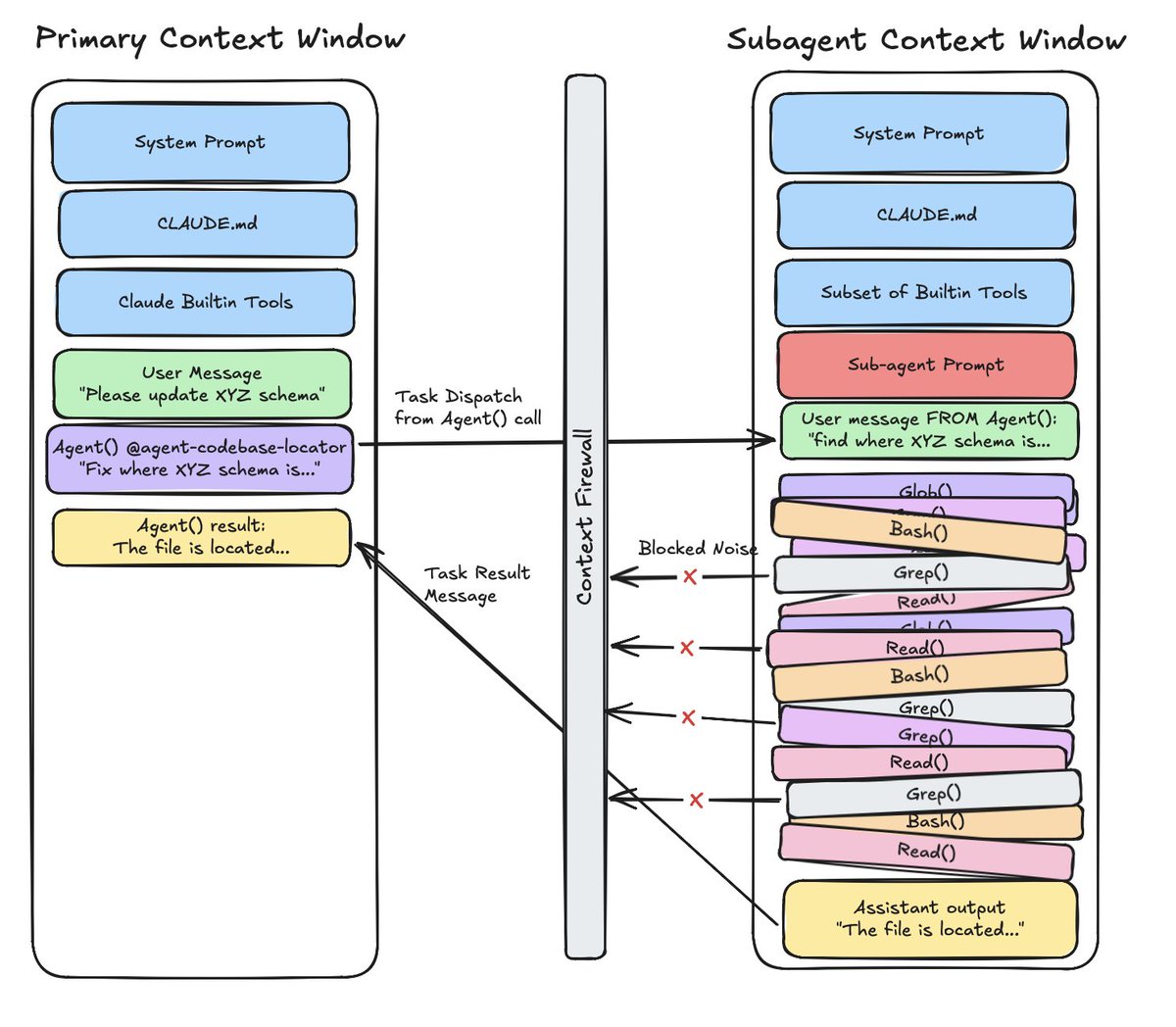
@0xblacklight Amazing write-up! Can I steal your subagent context window visualization for a presentation (w. credit!)? Also FYI in "Distributing Tools with Skills" you say you can't package MCPs, scripts etc. in a skill. It's true, but Claude Code's plugins solve exactly for that.
English
1
0
1
108
Pete Hodgson (@thepete.net on bluesky) retweetledi
dex
dex@dexhorthy·
Here’s what’s gonna happen: - you replace your code review with feedback loops (sentry, datadog, support tickets, etc) - you stop reading the code - software factory fixes everything - one day something breaks at 3am, agent can’t fix it - nobody’s read the code in 3 months - you have 3 weeks of downtime trying to re-onboard and fix it - you lose significant % of your contracts and users - your company is now dead
dex@dexhorthy

@gregpr07 this may surprise you that thus is coming from me but I think we’re in for a 1-3 year period where stuff might break at 3am and if you’re relying on loops to fix it and nobody understands what’s under the hood, you’re looking at an existential threat to your company

English
254
551
6.8K
629.4K