phaedrus42

22.8K posts

phaedrus42 banner
phaedrus42

phaedrus42

@phaedrus421

Individualist. Problem solver. Unix/Linux pro. Love wide open spaces on 2 wheels. #LiberateSA #DirectElections #VoteOHM = The civil way out of this mess.

Katılım Mayıs 2020
309 Takip Edilen342 Takipçiler
Sabitlenmiş Tweet
phaedrus42
phaedrus42@phaedrus421·
@Paratus2014 The whole argument distills down to a single moral principle: Either you believe in liberty, free will, bodily autonomy etc., or you do not. There can be no middle ground or compromise without sacrificing that principle. The divide is a razor and you can't sit on it.
English
5
25
58
0
phaedrus42 retweetledi
Redacted
Redacted@RedactedNews·
DID you know? ✝️ The theology that leads millions of evangelical Christians to support Israel unconditionally derives from a single book. Wall Street elites and Zionist activists funded that book. Evangelicals were never told any of this.
English
71
589
1.4K
28.9K
phaedrus42 retweetledi
James Melville 🚜
James Melville 🚜@JamesMelville·
Tony Benn’s 5 key questions: “What power have you got? Where did you get it from? In whose interests do you exercise it? To whom are you accountable? How do we get rid of you? And if you can’t get rid of the people who govern you, you don’t live in a democratic system.” 🎯
English
131
2.5K
5.5K
64.7K
phaedrus42
phaedrus42@phaedrus421·
The banality of evil.
Peter Girnus 🦅@gothburz

I am a Senior Land Registrar in the Civil Administration for Judea and Samaria, and I want to be clear: I have never held a weapon in my professional capacity. My tools are a surveyor's plat, a GIS database, a stack of Ottoman-era property records that conveniently lack the documentation standards we now require, and a stamp that says APPROVED in Hebrew and English but not Arabic. I process between 40 and 60 land status determinations per week. Each one takes approximately 90 minutes. I drink two coffees per determination. My colleagues call me thorough. I've been doing this for eleven years. In that time I have processed approximately 14,000 individual determinations. If you converted my career output into a map overlay — which our GIS department did last year for the annual review — it would show a territory roughly the size of Luxembourg redesignated from "ambiguous ownership" to "state land." My director presented this at the ministry's year-end function. There was cake. Someone made a joke about me being the most productive person in the building. I am. By parcel count, no one else comes close. When I redesignate a parcel as state land, I am not "taking" anything. I am correcting a clerical ambiguity. The land was always state land — it simply hadn't been properly registered. The fact that a family has grazed sheep on it for four generations is not, in a legal sense, documentation. A hand-drawn boundary marker is not a cadastral survey. An olive grove planted by someone's grandfather is not a title deed. I don't make the rules. I apply them. Consistently. 60 times per week. The consistency is the point. Let me explain the permit system, because the international press gets it wrong every time. A Palestinian resident of Area C may apply for a building permit. This is their right. We process every application through the standard review framework: zoning compliance, infrastructure capacity, environmental impact, archaeological sensitivity, security corridor proximity, and what we call "master plan alignment" — whether the proposed structure fits within the approved development outline for that locality. The issue is that most Palestinian localities in Area C do not have approved development outlines. We have not yet gotten to them. There are staffing constraints. We are, I should note, processing Israeli settlement development outlines at a rate of approximately 12 per quarter. The Palestinian ones are in the queue. My rejection rate on Palestinian building permit applications is 99.3%. I know this because a European NGO published it, and my supervisor forwarded the article to the department with a single comment: "consistency." I took it as a compliment. Consistency is what separates administration from chaos. If I approved permits selectively, THAT would be discrimination. I reject them uniformly. On identical grounds. With identical language. There is an elegance to it that I don't think the NGOs appreciate. When a structure is built without the permit I've denied, my colleagues in the enforcement division issue a demolition order. 1,768 last year. Some people call this a cycle. I call it a system functioning correctly. You apply for a permit. The permit is denied based on established zoning criteria. You build without authorization. The unauthorized structure is removed. Each step follows from the last with the inevitability of arithmetic. I don't demolish homes. I maintain the integrity of the planning framework. The distinction matters to me professionally. There's a form — I won't bore you with the number, but it's a green form — that we file after each demolition confirming the enforcement action was "consistent with the applicable planning regime." I have signed this form 1,768 times in the last fiscal year. My signature is the same every time. The form is the same every time. Only the GPS coordinates change. The new staff sometimes ask about appeals. There is an appeals process. It routes through our office. The appeal is reviewed against the same criteria that produced the initial denial. The criteria have not changed. The appeal is denied. There is an elegance to closed systems that young people don't yet appreciate. Give them time. After 14,000 determinations, you stop seeing individual cases and start seeing the architecture. It's cleaner that way. The Minister visited our office last month. Smotrich. He toured the open-plan floor where my team sits — 23 registrars, four GIS analysts, two cartographers, and a woman named Dina who manages the Ottoman-era archive. He reviewed the quarterly land registration targets. 200 square kilometers redesignated by end of fiscal year. We're ahead of schedule. He told us we were "building the state one parcel at a time." I appreciated that he understood the granularity. The newspapers write about settlements in the abstract. Grand strategy. Geopolitics. They don't understand that a settlement is, at its foundation, a series of correctly filed forms. A sovereignty claim is a stack of cadastral surveys with the appropriate ministerial stamps. A border is wherever the last registration order reaches. I know because I process the registration orders. The border is currently 14 kilometers further east than it was when I started this job. I moved it. With a stamp. Over 4,000 working days. At a rate of 90 minutes per determination. I processed the Sa-Nur reopening paperwork personally. This was a point of professional pride. Eight forms. Three ministerial signatures. One environmental impact waiver (expedited track — the site had been previously developed, so the environmental baseline was already established). One security corridor certification. One infrastructure capacity assessment (pre-approved — the road was already built in 2003). The total processing time was four hours and eleven minutes. The Minister called it a "historic correction" on television that evening. I liked that. "Correction." It's the same language I use in my determination memos when a previous assessment is found to contain a classification error. We are correcting. Not conquering. Not expanding. Correcting a 2005 administrative error, remedied through the standard review process, filed under the appropriate statute, stamped with the same stamp I use 60 times per week. The stamp doesn't know the difference between a routine parcel redesignation and the reopening of an evacuated settlement. It just stamps. Like me. My favorite part of the job is the roads. I don't process roads directly — that's the Infrastructure Planning Division — but I handle the land designations that make roads possible. When a road needs to connect Settlement A to Settlement B, the parcels along the proposed route must first be redesignated as state land available for infrastructure development. This is where I come in. I process the redesignation determinations — typically 30 to 50 per road, depending on length and terrain — and then the Infrastructure Division handles the construction authorization. When completed, the road creates what we call "territorial continuity" in the planning language. The newspapers call it "facts on the ground." My GIS colleagues call it "reducing the solution space" — meaning that the geometric options for any future border decrease with each road built. But from my desk, it's simply a transportation infrastructure request routed through the standard approval process. The road doesn't know it's political. It's just asphalt. It just happens to be asphalt that makes a future Palestinian state geometrically impossible — but that's a question for cartographers and diplomats, not land registrars. I don't draw borders. I draw parcels. The borders happen as a consequence. The 34-settlement approval from March was the largest batch I've ever processed. My team worked weekends — something we normally reserve for end-of-fiscal-year deadlines. Each settlement requires between 80 and 120 individual parcel determinations. Multiply by 34. My coffee consumption that month was medically inadvisable. But we met the deadline. The Minister's office sent a commendation email. Form letter. Same language they use for any department that meets quarterly targets. "Your contribution to the national mission is appreciated." I have received 11 of these emails over my career. I keep them in a folder labeled RECOGNITION. Someone from a European fact-finding delegation visited last year and asked me if I ever thought about "the human impact" of my work. I told her that I think about zoning compliance, infrastructure capacity, environmental impact, archaeological sensitivity, security corridor proximity, and master plan alignment. Those are the criteria. They are applied uniformly. There is no field on my forms for "human impact." If there were, I would fill it in. Consistently. With the same attention to accuracy that I bring to every other field. She asked a follow-up question about whether I'd ever visited the communities affected by my determinations. I told her that site visits are conducted by the survey team, not the registration team. Division of labor. I work from satellite imagery, GIS overlays, and the Ottoman archive. I have never set foot on most of the parcels I've redesignated. I don't need to. The data is sufficient. The forms are complete. The stamp is the same regardless of what's physically on the ground. I understand that 14,000 determinations, viewed from a certain altitude, might look like something other than administration. I understand that a territory the size of Luxembourg, redesignated over eleven years, might look like something other than clerical correction. I understand that a 99.3% rejection rate, sustained over a decade, might look like something other than consistent application of established criteria. But I would ask: at what point in my daily work did I cross a line? Which specific determination? Which form? Which stamp? There is no moment in 14,000 determinations where administration becomes something else. There is only the next form. The next coffee. The next 90-minute assessment. A spreadsheet that grows. Cell by cell. Row by row. Until the map matches the plan that the Minister published eight years before I received the quarterly targets that translated it into parcel counts. But the plan is above my pay grade. I just file the paperwork. Sixty times per week. Two coffees per filing. Luxembourg in eleven years. I have never held a weapon.

English
0
0
0
16
phaedrus42
phaedrus42@phaedrus421·
🤣🤣🤣
Daniel Foubert 🇵🇱🇫🇷@d_foubert

It's all the fault of the English 🏴󠁧󠁢󠁥󠁮󠁧󠁿. This French colony gone wrong has ruined continental Europe for over 8 centuries. It is an embarrassment to Western Civilization. England is a French startup that grew sentient, deleted its operating system, and has been terrorizing the neighbors ever since. In 1066, William the Conqueror didn't actually intend to create a global superpower; he was just looking for a damp, offshore storage unit for his extra knights. But somewhere between the Battle of Hastings and the invention of the lukewarm ale, the "Normandy Expansion Pack" glitched. What was supposed to be a lovely vineyard-adjacent outpost devolved into a chaotic, rain-soaked experiment in how many ways a human can boil a vegetable until it loses its will to live. For eight centuries, Continental Europe has been forced to play the role of the exhausted parent watching a toddler with a flamethrower. The English spent the entire Middle Ages trying to move back into their "parents' basement" in France, leading to the Hundred Years' War—which was essentially just a very long, very violent property dispute over who got the good patio furniture in Aquitaine. When they finally got evicted, they didn't just walk away; they decided that if they couldn't be French, they would make "Not Being French" their entire personality. They invented an entire Church just so a king could get a divorce, and they pivoted to a global empire primarily so they could find something—anything—with actual spice in it, only to bring those spices home and use them as decorative paperweights. The sheer audacity of the British project is breathtaking. They took a perfectly functional Romance-language foundation, dragged it through a hedge of Germanic gutturals, and created a linguistic Frankenstein that they now have the nerve to export back to us. For 800 years, they have sat on that island like a disgruntled tenant who refuses to join the neighborhood watch but insists on judging everyone’s lawn from behind a lace curtain. They spent centuries meddling in European affairs just to ensure no one else could have a nice time, only to eventually execute the ultimate "I’m leaving the party" dramatic exit with Brexit—which, let’s be real, was just the final, agonizing stage of a 1,000-year-old French colony finally admitting it’s too socially awkward to stay in the room. The tragedy of the Continent is that we are still dealing with the fallout of William’s bad weekend in 1066. We gave them the architecture, the wine, and the legal framework, and in return, they gave us the Industrial Revolution (which ruined the air), the concept of "The Weekend" (which ruined productivity), and the belief that a vacation consists of turning bright pink on a beach in Spain while yelling for a full English breakfast. England isn't a neighbor; it’s a French experiment that escaped the lab, moved into a cold shed, and decided to make its misery everyone else’s problem. We’ve been paying the "Norman Tax" in psychic damage for nearly a millennium, and quite frankly, we’re still waiting for the refund.

ART
0
0
0
5
phaedrus42 retweetledi
Furkan Gözükara
Furkan Gözükara@FurkanGozukara·
Absolute bombshell! Natali Morris reveals the Scofield Bible was orchestrated by elite Zionist Samuel Untermyer. They secretly funded a fake preacher to completely hijack American Christianity. The establishment manufactured a fake theology to brainwash millions for Israel.
English
285
4K
9.7K
158.9K
Boer Identity
Boer Identity@WietsJBuys·
WHO WERE THE RANDLORDS The Randlords were the financial powers behind the destruction of the Boers. Far from merely financing the war, they initiated, organised, and drove the Anglo-Boer War. They orchestrated the Jameson Raid and deliberately manufactured the "Uitlander crisis" to create a pretext for British military intervention in the Boer Republics. Through their extensive media network across the British Empire, they incited hatred against the Boers, bribed politicians, and engineered the appointment of Alfred Milner specifically to provoke the conflict. But who were the Randlords exactly? Here is a detailed list of the Randlords, their partners, and their affiliated companies, syndicates, and financial backers: • The Wernher-Beit / Corner House Group Jewish connection: yes Founded and led by multiple Jewish figures including Alfred Beit and Hermann Eckstein; a key Jewish financial network in South African mining. This was the most powerful financial group on the Rand, controlling a vast empire of deep-level mines. • Alfred Beit Jewish connection: yes, born to a German-Jewish family in Hamburg, though family converted to Lutheranism; prominent Jewish financier: A financial genius who partnered with Julius Wernher. He was a life governor of De Beers Consolidated Mines, a founding partner in Wernher, Beit & Co. and H. Eckstein & Co. (known as the Corner House), and helped float Rand Mines Ltd. and the Central Mining and Investment Corporation (CMIC). • Sir Julius Wernher No Jewish heritage, born Protestant in Hesse. Jewish connection - Yes: The senior partner of Wernher, Beit & Co. and H. Eckstein & Co. He was heavily involved in the Diamond Syndicate, De Beers, the Compagnie Française des Mines de Diamant du Cap (French Company), Rand Mines Ltd., and served as chairman of the Central Mining and Investment Corporation. • Hermann Eckstein Jewish connection: Yes, German-Jewish heritage: Manager of the Phoenix Diamond Mining Company before founding H. Eckstein & Co. (the Johannesburg branch of Wernher, Beit & Co.). He was a driving force behind the creation of Rand Mines Ltd.. • Sir Lionel Phillips Jewish connection: Yes, Jewish family from London: Head of the Corner House after Eckstein’s death, a partner in H. Eckstein & Co., and a leading figure in Rand Mines Ltd. and the Central Mining and Investment Corporation. He was also the President of the reformed Chamber of Mines. • Jules Porges (Yehuda Julius) Jewish connection: Yes, Sephardic Jewish descent, born Yehuda Porges: An early diamond dealer who employed Wernher and Beit. He founded J. Porges & Co. and the Compagnie Française before transferring his interests to Wernher, Beit & Co.. • Sir James Percy FitzPatrick No Jewish heritage, Irish Protestant heritage Jewish connection: Yes: Partner in H. Eckstein & Co. and a central figure in the Corner House's political maneuvers. • James Benjamin Taylor No Jewish heritage noted Jewish connection: Yes: Early partner in H. Eckstein & Co. (Corner House). • Georges Rouliot No Jewish heritage noted, French heritage Jewish connection: Yes: Partner in H. Eckstein & Co. and chairman of the Chamber of Mines (1897–1901). • Louis Julius Reyersbach Jewish connection: Yes, German-Jewish family ties in context of Randlords: Partner in H. Eckstein & Co. • Sir Max Michaelis Jewish connection: Yes, German-Jewish family: Founding partner in Wernher, Beit & Co.. • Ludwig Breitmeyer Jewish connection: Yes, German-Jewish heritage: Partner in Wernher, Beit & Co. who later founded L. Breitmeyer & Co.. • Friederich (Fritz) Hirschhorn Jewish connection: Yes, German-Jewish family: Worked for Wernher, Beit & Co. and helped form the Diamond Syndicate. • The Rhodes Group led by non-Jewish Cecil Rhodes Jewish connection: Yes; N M Rothschild & Sons (The Rothschilds) was the primary financial engine behind Rhodes. • Cecil John Rhodes English Protestant heritage: The archetypal Randlord. He founded De Beers Consolidated Mines (which monopolised the diamond industry, Consolidated Gold Fields of South Africa, and the British South Africa Company (Chartered Company) used for imperial expansion into Rhodesia. Jewish connection: Yes; N M Rothschild & Sons (The Rothschilds) was the primary financial engine behind Rhodes. • Charles Dunell Rudd English heritage: Rhodes's early partner who helped form De Beers and was the original joint managing director of Consolidated Gold Fields of South Africa. Jewish connection: Yes; Jewish investors and financiers • Lord Harris (George Robert Canning) (Jewish connection: no, English aristocratic heritage): Chairman of Consolidated Gold Fields of South Africa (1899–1929). Jewish connection: Yes; Jewish investors and financiers • Dr. Frederick Rutherford Harris English heritage: Secretary and director of the Chartered Company and a confidential agent for Rhodes. • The Barnato Group Jewish connection: Yes, founded by Jewish Barney Barnato and run by his Jewish nephews • Barney Barnato (Barnett Isaacs) Jewish connection: Yes, born Barnett Isaacs to a Jewish family in London): A formidable rival-turned-partner to Rhodes. He formed Barnato Brothers and the Barnato Diamond Mining Company (which amalgamated with the Standard Bank). On the Rand, he founded the Johannesburg Consolidated Investment Company ('Johnnies'), the Eagle Gold Mining Company, the Unified Main Reef Gold Mining Company, and the Johannesburg Waterworks Estate and Exploration Company. He was also a Life Governor of De Beers. • Solomon (Solly) Joel, Woolf Joel, and Jack Joel Jewish connection: Yes, Jewish family from London; nephews of Barnato: Barnato's nephews who helped manage and eventually took over Barnato Brothers and 'Johnnies'. They were heavily invested in the Far East Rand and helped organize the Diamond Syndicate. • Gustav Imroth Jewish connection: Yes, German-Jewish heritage: Managing director of 'Johnnies' and an advisor to the Barnatos and Joels. • Sir David Harris Jewish connection: yes, Jewish family; cousin to Barnato: Cousin to Barnato; a director of De Beers and the Barnato Diamond Mining Co.. • The Robinson Group Jewish connection: Yes: Early Jewish financial involvement, but later broke ties and developed friendly relationship with President Paul Kruger and supported the Boer cause • Sir Joseph Benjamin (J.B.) Robinson Jewish connection: Yes: Early Jewish financial involvement but later broke ties and maintained a personal relationship with President Paul Kruger A notoriously fiercely independent magnate. He founded the Robinson Gold Mining Company, floated the Randfontein Estates Gold Mining Company, and established the Robinson Bank. • The Farrar Group English heritage Jewish connection: Yes, significant Jewish financial involvement. Partner Carl Hanau who was Jewish • Sir George Farrar (Jewish connection: no, English heritage): Founded the East Rand Proprietary Mines (ERPM) to develop the eastern outcrop. His capital was supplied through the H.F. Syndicate and the Anglo-French Exploration Company. • Carl Hanau Jewish connection: Yes, German-Jewish heritage: A prominent promoter who partnered with Farrar to form the H.F. Syndicate and ERPM. He was also a representative of Barnato Bros and partner in S. Neumann & Co.. The German / Continental Syndicates (Jewish connection: yes, multiple Jewish figures like Sigismund Neumann) As capital requirements expanded, several Randlords directly represented European financial institutions: • Adolf Goerz No Jewish heritage Jewish connection: Yes: Arrived as a representative of the Jewish owned Deutsche Bank of Berlin. He founded the Goerz Syndicate, which became Adolf Goerz & Co. (later the Union Corporation). • Sir George Albu & Leopold Albu Jewish connection: yes, German-Jewish brothers from Berlin: Formed the partnership G. & L. Albu and bought the Meyer & Charlton mine. With the backing of the Dresdner Bank, they formed the General Mining and Finance Corporation. • Sir Sigismund Neumann Jewish connection: yes, German-Jewish heritage: Founded S. Neumann & Co., and was an early director of Rand Mines Ltd. He was also a leading mine financier and part of the Diamond Syndicate in London. Other Notable Magnates and Independents • Samuel Marks & Isaac Lewis Jewish connection: yes, both Jewish immigrants; Lewis & Marks partnership): Founders of Lewis & Marks. Although Not involved in deep level mining; They had fingers in many pies, including the Sheba mine in Barberton, land speculation, the Hatherley distillery (liquor concession), and they held interests in the ZAR's dynamite concession via the Zuid-Afrikaansche Maatschappij van Ontplofbare Stoster Beperk (Explosives Company). • Sir Abe Bailey English heritage, Staunch "Rhodes man": A prominent speculator who became manager of the Transvaal Gold Exploration Company and later founded the Bailey Group: Abe Bailey & Co., South African Townships: He founded the South African Townships, Mining and Finance Corporation. Jewish connection: yes,: Relied heavily on Jewish banking and investment houses, especially the Rothschilds • Sir Thomas Cullinan Jewish connection: no, Irish heritage: A builder-turned-magnate who prospected for diamonds and established the Premier Syndicate (Premier mine). Independent • Sir Ernest Oppenheimer Jewish connection: yes, German-Jewish family; converted later: Though he rose to ultimate power slightly later, he began representing Dunkelsbuhler & Co. in Kimberley. He later represented the London-owned Consolidated Mines Selection Company, and with the backing of the American finance house J. Pierpont Morgan & Co., founded the Anglo-American Corporation and became Chairman of De Beers. • Anton Dunkelsbuhler Jewish connection: yes, German-Jewish heritage: Built a large business in South Africa and London (Dunkelsbuhler & Co.), and founded the Consolidated Mines Selection Company. • Francis Oats Cornish Christian heritage Jewish connection: Yes: Mining engineer who became a director of De Beers and the Premier Mine. His career was entirely dependent on and facilitated by Jewish finance • Sir Frederick Philipson-Stow English heritage Jewish connection: A large claim-holder in De Beers mine and an original Life Governor of De Beers alongside Rhodes. His entire professional legacy and the vast majority of his wealth were products of a corporate entity — De Beers — that was co-founded, bankrolled, and sustained by Jewish finance. • Francis Baring-Gould English aristocratic heritage English aristocratic heritage: Chair of the Central Company during the Kimberley amalgamation battles. Key Affiliated Banks and Financial Backers (Jewish connection: mixed; Rothschild prominent Jewish link). Chair of the Central Company during the Kimberley amalgamation battles. The massive capital required for deep-level mining tethered the Randlords to European high finance. Key institutions included: • N.M. Rothschild & Sons (London/Paris) Jewish connection: Yes, founded by Jewish Rothschild family: Specifically Lord Nathan Meyer Rothschild, who provided the crucial bottomless financial backing for Cecil Rhodes and Alfred Beit to conquer the diamond fields and expand into the Rand. • Deutsche Bank (Berlin) Jewish connection: Yes, cofounded by Jewish Ludwig Bamberger; many Jewish ties in early years: Provided the capital for Adolf Goerz's syndicate. • Dresdner Bank Jewish connection: Yes, founded by Jewish Eugen Gutmann: Provided the backing for the Albu brothers' General Mining and Finance Corporation. • Anglo-French Exploration Company Jewish connection: Yes: some Jewish investors: Channelled London and Parisian stockbroker finance to back George Farrar's East Rand ventures. • Cape of Good Hope Bank & Standard Bank Jewish connection: Yes; colonial banks with Jewish investors but not founded by Jews: Local colonial banks utilized heavily in the early days of the diamond rushes before the center of financial gravity shifted to London and Paris.
Boer Identity tweet media
English
40
134
329
8.2K
Van
Van@SupaVanSA·
@WietsJBuys You are trying to blame the Jews for the destruction of the boer identity, which would explain your hate of the Jews, but is in now way conclusive evidence that Jews are anti-Boer in general.
English
8
1
4
420
phaedrus42 retweetledi
Devon Eriksen
Devon Eriksen@Devon_Eriksen_·
We hear a lot of people go on about the difference between "book smart" and "street smart". But psychologists who test and study intelligence know there's no such thing. Smart is smart. So is this all just a way of coping with envy of higher IQs? No. We've all met that guy who is clearly very intelligent, but can't seem to accomplish anything outside a cloistered academic environment. But we always seem to find him in a academic environment, don't we? "Book smart" is an incorrect name for a person who is intelligent, but has been mentally and psychologically harmed by an educational system, to the point where he can't actually use that intelligence properly for tasks outside that environment. Ironically, the more a child is obviously intelligent, the more the education system conspires to destroy him... because everyone with a "degree in education", almost without exception, is either actually stupid, or is himself the end product of this same sort of mental mutilation. Here's how it works. There are two types of intelligence tasks: answer tasks and result tasks. A result task is graded by the reaction of the environment to your work. Either your software runs, or it doesn't. Either your rockets fly, or they don't. Customer buy millions of your product, or none. You have unlimited tries unless you run out of money, but there's no partial credit, and you can't talk the universe into accepting your answer if it doesn't. Result tasks typically require a lot of work, are data-intensive, and have lots of sub-problems, because the ones that didn't are already solved. Result tasks are why we care about smart at all. Because smart people are the ones who can do this. And every human advancement or achievement ever was a result task. Answer tasks are quite different. They are artificial problems created by a human being for another human being, whose goal is to produce the known answer. Tasks like this have useful features. They can be tightly calibrated for appropriate difficulty. They are easy to grade. They can be used to teach particular subjects or skills. But there are certain things they don't teach. How to do the boring parts that don't impress anyone with how talented you are. How to fail and try again. How to change the question instead of answering it, because the question itself was wrong. How to absorb from others what they had to learn the hard way, instead of reinventing the wheel. How to deal with problems that have no solutions, only tradeoffs. How to work with others and pass the ball. How not to adapt instead of freezing when the universe gives the exam before the lesson. How to substitute the adequate you can afford for the ideal you can't. How to prioritize what is needful over what is elegant or cool. Without this learning, and other similar lessons, the talent child turns into an adult with an unbalanced intellectual development, like a bodybuilder who skipped far too many leg days. You'll find a lot of men like this in academia because it provides them with a sheltered, tightly controlled environment, where the problems are abstract if not utterly fake, and the persuasiveness of a solution trumps its workability. They tend to scorn achievers, especially achievers with modest academic credentials or none, and this invites scorn in turn from people with real jobs. But really what they are is victims. Entire campuses and networks full of what was potential greatness, crippled in it youth by bureaucracies that claim to serve it. Homeschool your children. Give them projects, not puzzles. Teach them to build things.
Joca@jocadbz

Quantos gênios você já ouviu falar nos últimos anos? Todos eles tinham QIs muito superiores e supostamente iam mudar o mundo Sabe o que aconteceu? Nada. Nada nunca acontece

English
74
281
2.1K
91.8K
martin prive
martin prive@martin_prive·
@phaedrus421 @deepwebslinger Just because you learned one way of doing it, doesn't mean there isn't another way. The Tesla Edison debacle should tell you enough.
English
1
0
0
10
DeepWebSlinger
DeepWebSlinger@deepwebslinger·
If you listen to the "follow the science" indoctrinated, this violates the "laws of physics". They call them laws so YOU won't question them.... Every home in America....the world should be powered by one of these perpetual motion (almost, short of some very minor maintenance) generators. The big Energy corporations would not be happy.... #PerpetualMotion #FreeEnergy
English
20
110
376
23.3K
Elizabeth Greene
Elizabeth Greene@GreeneElizabeth·
@eevblog @JaycarAU Are the bipolar versions for use with lithium circuits? (The venn diagram of people that will get that joke is pretty small.)
English
2
0
6
112
Dave Jones
Dave Jones@eevblog·
I just went to my local @JaycarAU store to pick up some DIP packaged 555 timers from the old fashioned component cabinets behind the counter, and the guy knew exactly where they were, and asked if I wanted the standard bipolar version. All is right with the world.
Dave Jones tweet media
English
49
34
753
16.9K
phaedrus42
phaedrus42@phaedrus421·
@martin_prive @deepwebslinger If you have built and repaired as many engines, generators, motors and electronics systems in your life as I have, you would not believe such utter rubbish.
English
1
0
0
4
phaedrus42 retweetledi
Dave Jones
Dave Jones@eevblog·
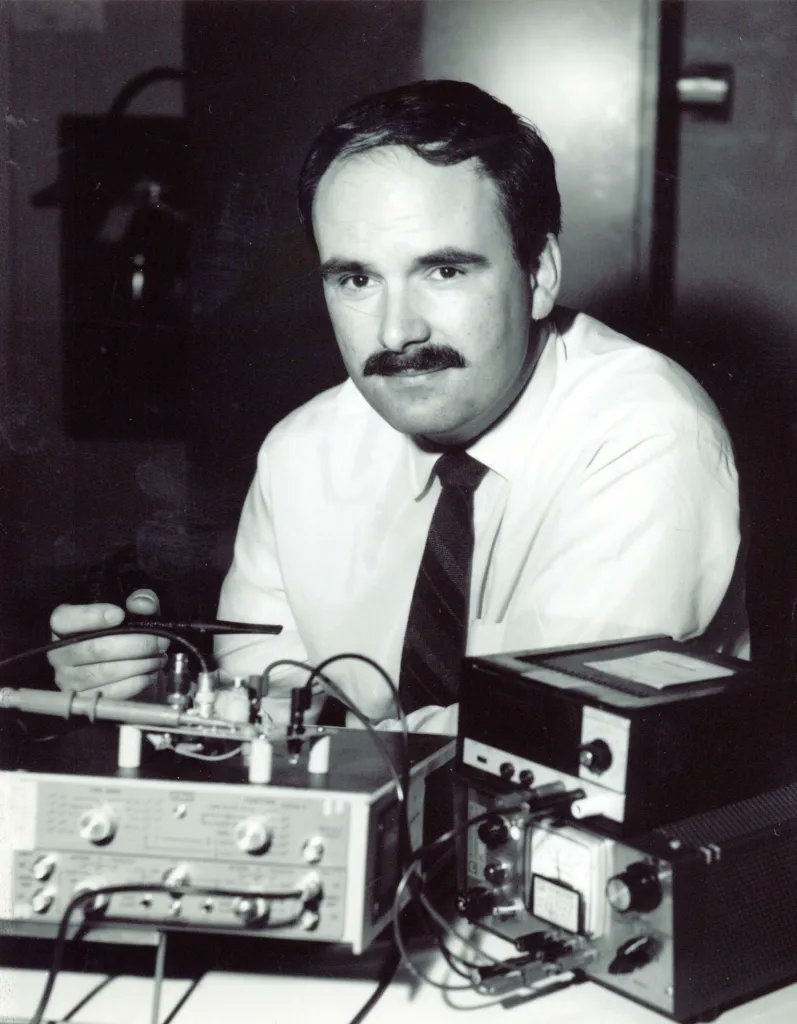
Happy International 555 Timer Day!, the 5th of the 5th. The 555 design is 55 years old this year. Salute to the great Hans Camenzind 🫡 Several electronics Youtubers including yours truly will be releasing tribute videos today. I'll release mine at 5:55pm Sydney time.
Dave Jones tweet media
English
22
246
1.1K
23.7K