Dave H.

4.3K posts

Dave H.

Dave H.

@phaedrus_dh

Kingston, ON Katılım Temmuz 2010
677 Takip Edilen213 Takipçiler
Dave H. retweetledi
Neil Stone
Neil Stone@DrNeilStone·
"Only very sick kids should die from measles" No, Secretary Kennedy NO child should die from measles. Because there's a vaccine to prevent it.
English
714
11.1K
56.8K
568.4K
Premski_SG
Premski_SG@Premski_SGP·
will write a script to monitor L2 data of illiquid microcaps that i am accumulating and alert me when needed
Premski_SG tweet media
English
2
0
3
506
Dave H.
Dave H.@phaedrus_dh·
@BeegJj Great work. Thanks for everything. I hope you will be continuing to support children's hospitals across the country. We spent more than 3 months at both CHEO and Holland Bloorview. I have directly seen how those donations make a difference! I will be following your lead there.
English
1
0
1
139
Dave H. retweetledi
KHALID
KHALID@H0H0v·
This is how geometry demonstrates its own formula.
English
17
337
3.2K
595.4K
Dave H. retweetledi
Dominic Beaudry
Dominic Beaudry@DhkBeau·
In Ojibwe our word for earth is aki (a-ki).
Dominic Beaudry tweet media
English
7
124
670
9.1K
Dave H. retweetledi
Mike Kalar
Mike Kalar@mfkalar·
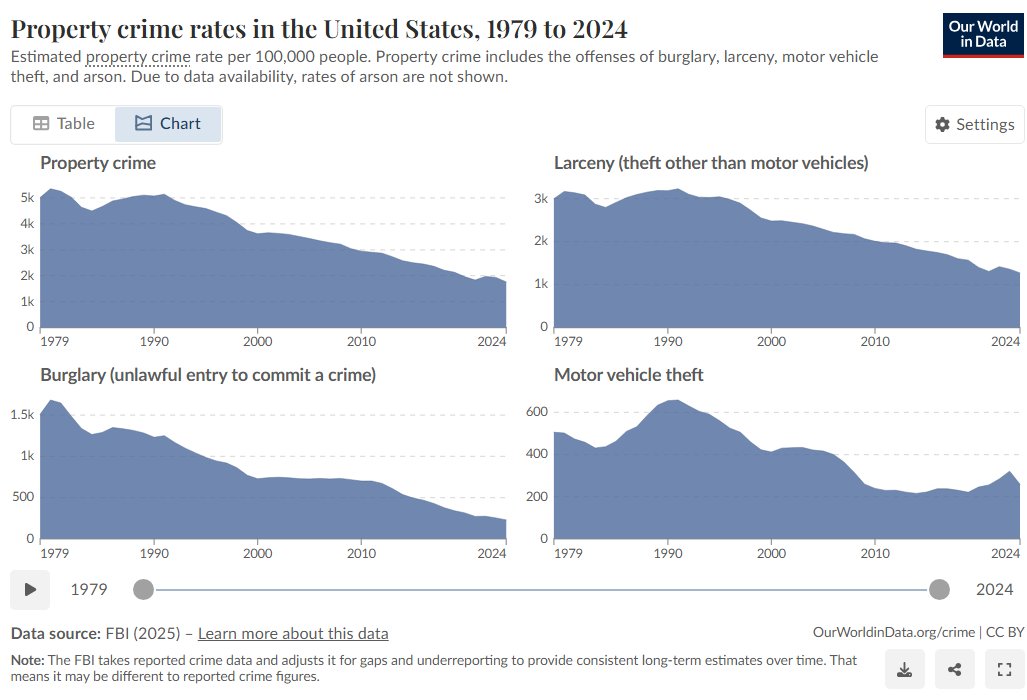
Skeptics: the number of murders is only falling because the health-care system is better at treating trauma, saving lives that would have been lost 20 years ago Reality: Violent crime is trending down too More reality: Property crime is falling too!
Mike Kalar tweet mediaMike Kalar tweet media
Ramez Naam@ramez

News outlets should publish long term graphs as a matter of course. Every crime story should come with a 60 year graph showing per capita trends in that crime. Every micro story on any topic should have a graph on the macro trend.

English
0
5
25
1.9K
Dave H.
Dave H.@phaedrus_dh·
@MsMelChen @scoopercooper The authoritarian imperialism of Trump's America might be starting to feel a bit like the threat of communist China to its Asian neighbours.
English
0
0
0
240
Melissa Chen
Melissa Chen@MsMelChen·
May I offer a different perspective on the whole transatlantic family feud brewing over NATO. Europeans are furious at what they call American unilateralism and "wars of choice," while Americans are done subsidizing allies who won't lift a finger when Washington actually needs them. Given all the sentimentality and historical baggage, there’s been a lot of bad blood and high grade insults thrown both ways. A lot of pride here is at stake. But given that I am not American or European, what I can provide is an Asian perspective. The whole thing looks very different as there are no blood ties or cultural nostalgia to pull me either way. Because of distance, the default Asian lens on America has always been colder, clearer, and far more pragmatic than the European one. Asians have never lived under the illusion that their relationship to the US is one based on shared values. If they ever did, the illusion was shattered during the Cold War. Instead, Asian nations saw the relationship to America as a cold, interest-driven bargain in a dangerous neighborhood full of communists, insurgents, and bigger powers. Fast forward to today, and this lesson still holds. Japan, South Korea, the Philippines, Vietnam, Singapore and Indonesia all partner with America because their interests (not values) align - especially when it comes to countering China. These nations have reasons to be alarmed about Beijing's ambitions in the South China Sea, around Taiwan, and across the Indo-Pacific. They don't need lectures about democracy or liberal international order to see the value in US forward presence, intelligence sharing, tech transfers, and security guarantees. It's a straight-up transactional deal: the US keeps the sea lanes open and the PLA at bay. Meanwhile, Asian nations host your bases, buy your weapons, and join your alliances (Quad, AUKUS, etc.). When interests diverge, they adjust pragmatically, without the drama and meltdown. Probably not many in the West know this, but one of the forces that shaped this attitude was the US pullout of Vietnam and the rest of America’s Cold War shenanigans. Lee Kuan Yew was one of America’s loudest cheerleaders in Southeast Asia. In 1967 he flew to Washington, testified to Congress, and begged Lyndon Johnson (and later Nixon) not to cut and run in Vietnam. He warned that a hasty US exit would trigger the dominoes - Vietnam, Cambodia, Laos, and then pressure on the rest of Southeast Asia. Singapore became a logistical hub, providing a haven for US troops on R&R, oil refineries supplying the American war machine, and Lockheed servicing aircraft. At one point, US military-related spending made up 15% of Singapore’s entire GDP. Singapore didn’t support the war because it loved American democracy but because it kept the communists tied up and bought Southeast Asia time to build up its own economy and military. Then came the pullout - the Paris Accords in 1973 and then Saigon falls in 1975. Despite all the lobbying, despite the blood and resources America had spent, domestic politics in the US (the anti-war movement, Congress, Vietnam syndrome etc.) ended it. LKY watched in disbelief as the superpower that had promised to hold the line simply walked away. The lesson was that American commitments are real only as long as they serve American interests and American voters don’t get tired. It’s a brutal one to internalize. LKY was disappointed and noted American “unreliability” but Singapore didn’t collapse into panic or anti-Americanism. They just recalibrated and kept pursuing pragmatism by building its own deterrent, diversifying partners, and later offered the US naval logistics access (Sembawang port) when the Philippines kicked them out of Subic Bay in the early 1990s. Malaysia drew the same conclusion. The Tunku was pro-Western and anti-communist early on, but Malaysia never joined SEATO and pushed ZOPFAN (Zone of Peace, Freedom and Neutrality) instead. When the British announced their East-of-Suez withdrawal in 1968 and Nixon’s Doctrine (1969) told Asians “you defend yourselves first, we’ll just help,” Kuala Lumpur accelerated its neutralist tilt. The message was clear - don’t count on Washington to bleed indefinitely for distant allies. South Korea is similarly pragmatic but it operates under far higher stakes due to baggage from the Korean War and the ongoing North Korean threat. American intervention literally saved the South from conquest, resulting in a bond that is forged in blood. While South Korea had to learn the same lessons - that the American umbrella isn’t permanent, sharing a border with a nuclear-armed adversary forces tighter coupling with Washington. The reverberations of Nixon’s 1973 opening to Beijing cannot be understated. It shocked the entire region that America, the great anti-communist crusader, suddenly would cozy up to Mao to counter the Soviets. If Washington could flip on core principles when interests demanded it, why should smaller states pretend the relationship was about anything deeper? The core Asian critique of the European approach to dealing with America is that it is entirely bound up in moral values and civilizational kinship. This means that every disagreement feels like a betrayal and breeds resentment on both sides. Because Europe is so hyped up on abstract values, it makes NATO feel like a sacred club that America is disrespecting. Asia's interest-based lens sees alliances as tools - useful until they're not. Maybe Europe thinks the Asian approach is cynical but the irony is that this is actually what keeps Indo-Pacific partners far more reliable counterweights to China than many NATO members ever were against Russia.
Marc Thiessen 🇺🇸❤️🇺🇦🇹🇼🇮🇱@marcthiessen

So many longtime NATO supporters saying the same thing right now. I helped bring Poland, Hungary and Czech Republic into NATO. But denying us basing and overflight is inexcusable, as is their failure to help with Strait of Hormuz. No one asking them to bomb Iran, just let us use our bases and help escort ships. If they can’t do that, NATO has no purpose.

English
395
830
4.4K
664.9K
Dave H. retweetledi
ThePatrioticBlonde™🇺🇸
ThePatrioticBlonde™🇺🇸@ImBreckWorsham·
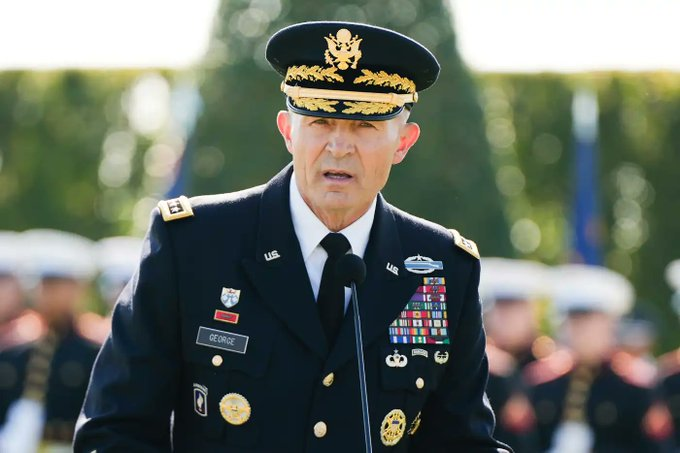
An hour after announcing his resignation, the US Army Chief of Staff says: "A madman is about to lead the great US military to ruin."
ThePatrioticBlonde™🇺🇸 tweet media
English
3.3K
32.8K
118.5K
6M
Dave H. retweetledi
Javier de la Cuadra
Javier de la Cuadra@JavierDlacuadra·
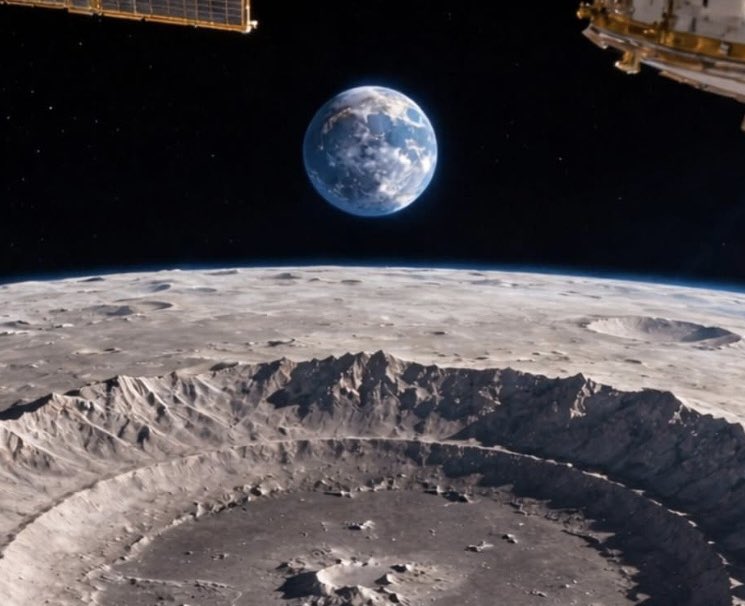
Ahora sí hablemos en serio de la foto. Este es un trino para interesados en fotografía, astrofotografía y el que quiera ¿Por qué esta foto es increíble? Algún conspiranóico, dándoselas de suspicaz, preguntó que por qué esta foto tomada por el comandante del Artemis II se veía más opaca que la foto tomada por la tripulación del Apolo 17 en 1972. Bueno. Acá viene lo emocionante. Esta fotografía hubiera sido imposible tomarla con una cámara análoga; y no cualquier cámara digital puede tomarla. El archivo original de esta foto está disponible para su descarga en la página de la NASA. En las propiedades del archivo se puede ver con qué cámara fue tomada y los ajustes de exposición que se usaron. Hasta el serial de la cámara. Esto, primero que todo, garantiza que la foto que estamos viendo no fue creada digitalmente, ni con IA, sino capturada por una cámara real por un humano. Sé que no es suficiente argumento para los conspiranóicos, pero ni modos. Esa que está ahí es la Tierra. Ahora sí lo interesante. ¿Por qué se ve como más opaca que la del 72? porque resulta que en la cara de la tierra que vemos en esa foto, está de noche; si hacen zoom pueden ver el brillo de la iluminación nocturna. Pero ¿cómo, si es de noche, puede verse como si fuera de día? Porque la foto se hizo con un altísimo ISO de 51200! El ISO es la sensibilidad del sensor a la luz. Con la mayoría de cámaras digitales, con ISOs de más de 6400, el ruido es tanto que la foto se ve prácticamente ilegible. Pero la cámara que tiene el comandante Reid Wiseman es una NIKON D5, que no es una cámara muy nueva; tiene 10 años de haber sido lanzada. Pero su sensor es reconocido por garantizar una calidad decente de imagen con ISOs altos. Y eso, para los que siempre preguntan cómo se hace una buena foto del cielo, es fundamental ¿Por qué? Pues para poder tomar fotos de los astros sin tener que bajar mucho la velocidad de exposición. Porque si bajas mucho la exposición apra que entre más luz, queda capturado el movimiento de los astros y de la rotación de la Tierra, cuando estás en la Tierra. Así que un iSO tan alto hizo posible que Wiserman pudiera disparar a una velocidad de 1/4 de segundo. Que es baja, pero no tanto. Es digamos, el límite para la astrofotografía. Por eso esta foto tiene ruido, porque de todas formas es un ISO altísimo. Pero lo que más me emociona a mí, es que la tomó con un lente 14 -24mm F2.8. Es decir, en terminos coloquiales, que esta foto no tiene zoom. Para que lo dimensionen: cuando uno quiere tomar una foto de la Luna desde la Tierra que salga así de "cerca" tiene que usar un lente de unos 400mm de distancia focal. Wiserman usó un ¡gran angular de 22mm! Es decir que él estaba viendo la Tierra asi de grande frente a sus ojos. Porque la foto no fue recortada en edición y eso lo sabemos porque en las propiedades del archivo siempre aparece cuando una foto fue editada. El archivo está limpio, tiene la resolución original de la cámara. La tierra era inmensa frente a su mirada. Hermoso. Pero para mí lo más mágico de esta foto, incluso más que las auroras boreales, es que se ve como la luz de sol, que está del otro lado de la tierra, ilumina nuestra atmosfera. Y eso es magia pura, porque esa atmosfera tiene una composición milimétricamente perfecta para permitir que la vida, tal y como la conocemos, sea posible. Esta foto, es un regalo precioso para la humanidad. Les dejo al link para que descarguen la foto en alta resolución y el pantallazo de las propuedades del archivo.
Javier de la Cuadra tweet media
Español
722
8K
31.3K
1.7M
Dave H.
Dave H.@phaedrus_dh·
@CoopTory it won't actually, because stops will be limited to the major metropolitan areas. the corridor would be better served by investing the same money to increase train speeds/reliability/frequency within the existing VIA network along the corridor, which has highest ridership.
English
0
0
0
13
Dave H. retweetledi
Aakash Gupta
Aakash Gupta@aakashgupta·
Let me explain exactly why every new subdivision in America looks like the top photo, because the math is wild. A mature tree increases a home's value by 7 to 19 percent. On a $400,000 house, that's $28,000 to $76,000. A single shade tree produces the cooling equivalent of ten room-size air conditioners running 20 hours a day. One tree on the west side of a house cuts energy bills by 12 percent within 15 years. The bottom photo is worth more, costs less to live in, and sells faster. This has been documented by the University of Washington, Clemson, Michigan State, and the USDA. The data is not in dispute. Removing those trees saves the builder roughly $5,000 per lot. Concrete trucks need twice the dripline radius of every standing tree. Utility trenches need flat ground. A bulldozer flattens 200 lots in an afternoon. Preserving trees adds weeks and thousands per home. So the developer pockets $5,000 in savings and the buyer eats $50,000 in lost value for the next two decades. The person making the decision and the person paying for it have never been in the same room. The Woodlands, Texas is the proof of what happens when they are. George Mitchell bought 28,000 acres of Houston timberland in 1974 and preserved 28% as permanent green space. He forced McDonald's to build behind the tree canopy. That McDonald's became one of the highest-volume locations in Texas. The first office building, designed to reflect the surrounding forest so you couldn't see it from the street, leased completely. The Woodlands median home price today: $615,000. Katy, a comparable Houston suburb that clear-cut: $375,000. Named #1 community to live in America two years running. Fifty years of data. The trees are worth more than removing them saves. Developers clear-cut anyway because they sell the house once and leave. You live in it for 30 years.
bitfloorsghost@bitfloorsghost

we ruined such a good thing

English
1.3K
11K
74.3K
8.6M
Dave H.
Dave H.@phaedrus_dh·
@GoldForecast Love your work and was an early subscriber on YT, but $35/mo on this platform is insane.
English
0
0
0
3
Correlation Economics
Correlation Economics@GoldForecast·
Don't tell me I need to update my entire gold miner excel to reduce AISC by -20% again? 😒
English
4
1
68
3.5K
Dave H.
Dave H.@phaedrus_dh·
@Pete__Panda since there is only one Z tile in the English bag, this is incorrect.
English
1
1
1
33
🅿🅴🆃🅴
🅿🅴🆃🅴@Pete__Panda·
"Jazz" is 29 in English, but just 13 in Dutch
English
1
0
0
755
🅿🅴🆃🅴
🅿🅴🆃🅴@Pete__Panda·
TIL that scrabble has a different point system for different languages. Obvious of course.
English
2
0
2
1.5K